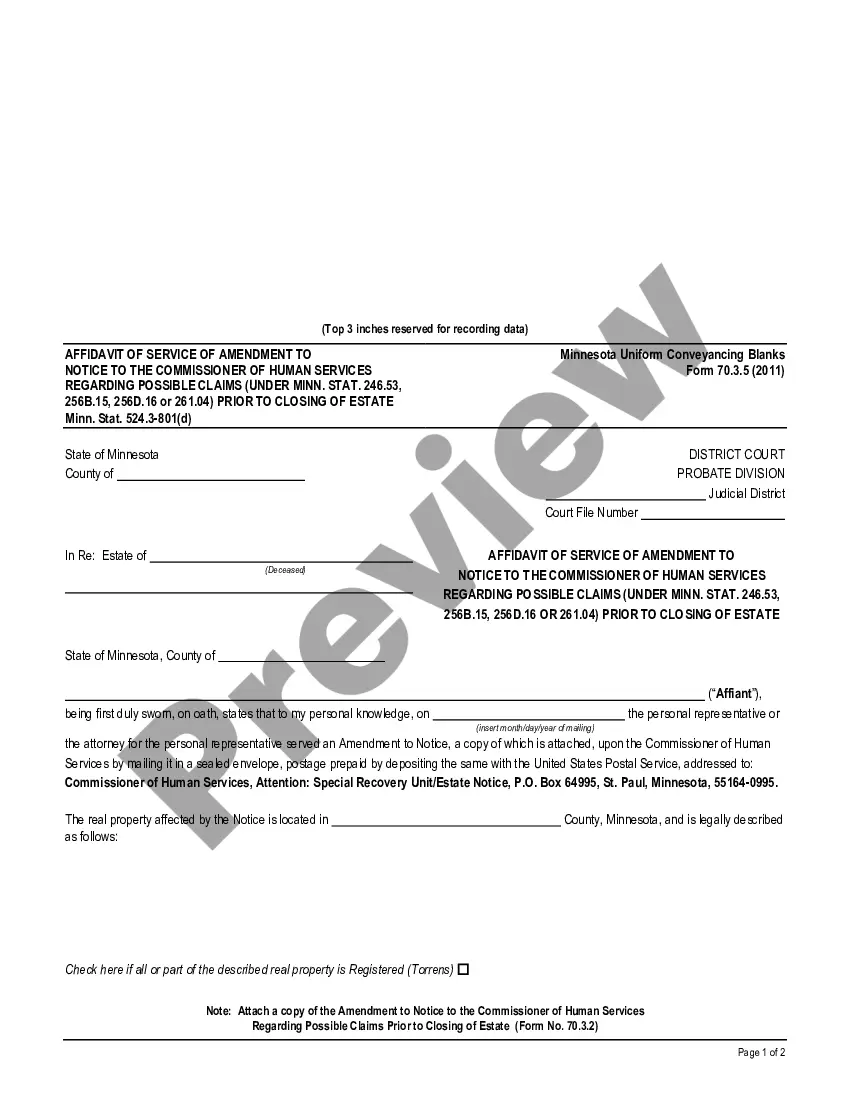
Minnesota Home Sale Forms
Minnesota home sale forms cover every step — from offer to closing. All templates are attorney-drafted, so you can move forward with confidence.

Similar documents: key differences
- Purchase Agreement vs. Letter of Intent — a purchase agreement is a binding contract with full terms; a letter of intent is a preliminary, non-binding expression of interest.
- Warranty Deed vs. Quitclaim Deed — a warranty deed guarantees clear title and seller's right to convey; a quitclaim deed transfers only whatever interest the seller currently holds, with no guarantees.
- Seller's Disclosure vs. Home Inspection Report — a seller's disclosure is a seller's self-report of known issues; a home inspection report is an independent professional assessment of property condition.
- Earnest Money Receipt vs. Closing Statement — an earnest money receipt records the initial deposit at the offer stage; a closing statement reconciles all funds and fees at the final settlement.
- Purchase Agreement vs. Land Contract — a purchase agreement transfers title at closing; a land contract transfers possession immediately but defers the title transfer until the buyer completes installment payments.
- Real Estate Closing Disclosure vs. Title Commitment — a closing disclosure details final loan and settlement costs; a title commitment is the insurer's promise to issue title insurance upon satisfying listed conditions.
Search for more forms
Common Minnesota Home Sale Forms documents
- Purchase Agreement — sets out the terms, price, and conditions of the home sale between buyer and seller.
- Property Disclosure Statement — informs the buyer of known defects, hazards, or material conditions affecting the property.
- Deed Transfer Form — legally conveys ownership of the property from the seller to the buyer.
- Earnest Money Receipt — acknowledges the buyer's good-faith deposit and records how it will be applied at closing.
- Home Inspection Contingency Addendum — makes the sale contingent on a satisfactory inspection, protecting the buyer's right to negotiate or withdraw.
- Lead-Based Paint Disclosure — required for homes built before 1978, documenting known lead paint presence or absence.
- Closing Statement — itemizes all financial credits, debits, and fees for both parties at the final settlement.
FAQs
Minnesota does not legally require an attorney to be involved in a residential real estate transaction. However, many sellers and buyers choose to consult one, especially for complex deals or FSBO transactions, to review documents and ensure everything is in order.
Minnesota sellers must provide a Seller's Property Disclosure Statement covering known material defects, and a lead-based paint disclosure for homes built before 1978. Failing to disclose known issues can expose the seller to legal liability after closing.
Earnest money is a good-faith deposit made by the buyer after an offer is accepted. It is held in escrow and credited toward the purchase price at closing. If the buyer backs out without a valid contingency, the seller may be entitled to keep the deposit.
At closing, both parties sign the final documents — including the deed and closing statement — the lender funds the loan if applicable, and the net proceeds are distributed to the seller. The deed is then recorded with the county, completing the ownership transfer.
Yes. FSBO (For Sale By Owner) sales are entirely legal in Minnesota. You are still responsible for completing all required disclosures, drafting a valid purchase agreement, and filing the deed with the county recorder after closing.
Key legal points
- Minnesota sellers are required by state law to provide a written disclosure of known material defects before a purchase agreement is signed.
- A valid Minnesota purchase agreement must include a description of the property, the agreed purchase price, and the signatures of both parties.
- Earnest money is typically held in a neutral escrow account and is applied toward the purchase price at closing.
- Minnesota law requires lead-based paint disclosure for any residential property built before 1978, regardless of whether the seller has tested for it.
- The deed must be recorded with the county recorder in the county where the property is located to complete the legal transfer of ownership.
- Home inspection contingencies give buyers a defined window — typically agreed upon in the purchase agreement — to conduct inspections and request repairs or credits.
- Minnesota does not impose a mandatory attorney review period, but buyers and sellers may include one as a contingency in their agreement.
- FSBO (For Sale By Owner) sellers in Minnesota are still bound by all state disclosure requirements and must use legally compliant transfer documents.
- Title insurance is not legally required in Minnesota but is strongly recommended to protect against undiscovered liens, claims, or title defects.
How to get started
Start your home sale in minutes with these simple steps.
- Search the forms library and find the Minnesota home sale template that matches your transaction.
- Preview the document to review all sections before committing to a subscription.
- Subscribe to get full access to the complete library of attorney-drafted real estate forms.
- Open the form in the online editor and fill in your property details, names, dates, and agreed terms.
- Export the completed document as a PDF, print for signatures, or send directly to the other party.
Practical tip
In Minnesota, the seller's disclosure form must be delivered to the buyer before the purchase agreement is signed — delivering it afterward can give the buyer the right to rescind the deal.