Hawaii Home Sale Forms
Hawaii home sale forms cover every step from offer to closing. Browse attorney-drafted templates you can trust to get the deal done right.

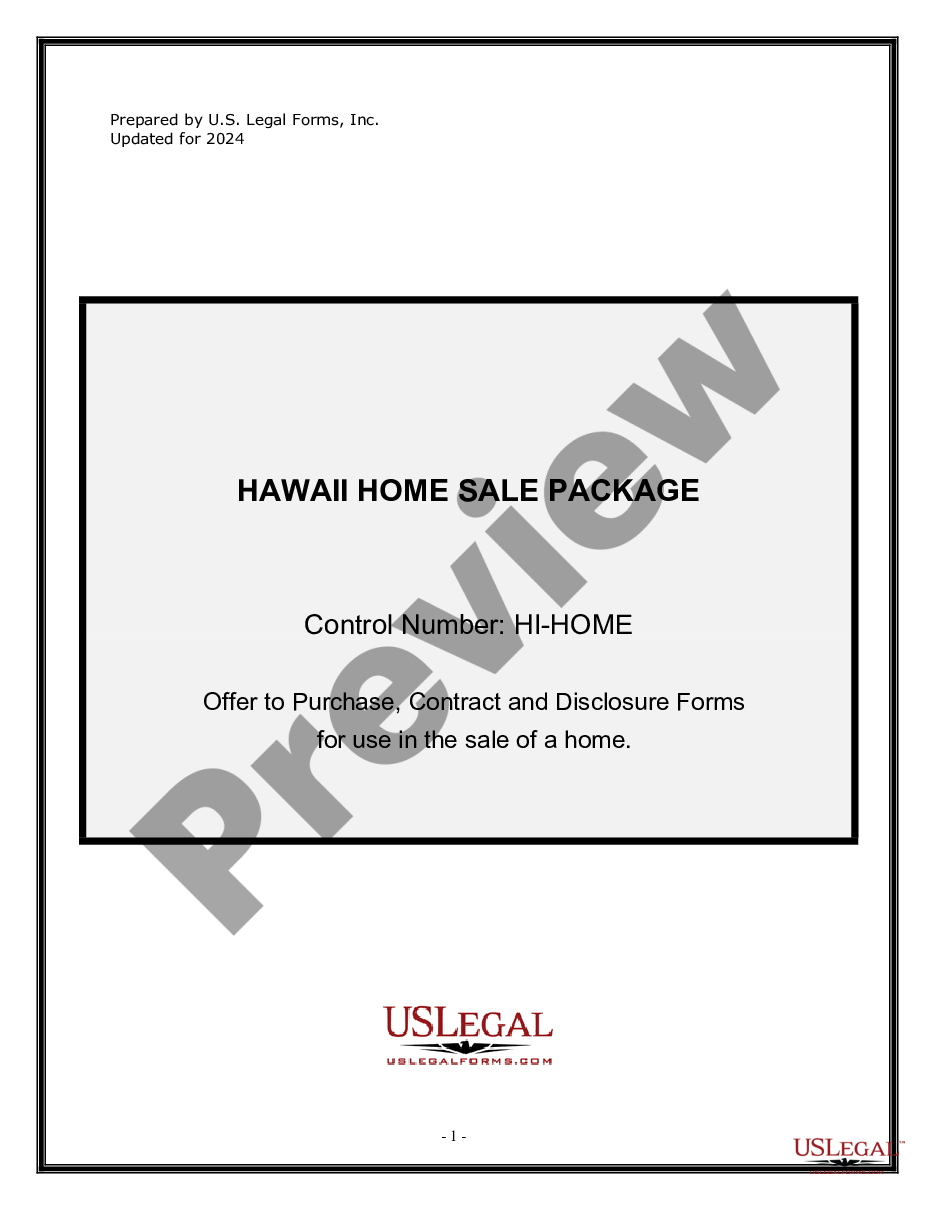
Similar documents: key differences
- Purchase Agreement vs. Counter Offer — a purchase agreement sets the original terms; a counter offer modifies them during negotiation.
- Warranty Deed vs. Quitclaim Deed — a warranty deed guarantees clear title; a quitclaim deed transfers only whatever interest the seller holds.
- Earnest Money Receipt vs. Deposit Receipt — both acknowledge funds received, but an earnest money receipt is tied specifically to a real estate contract.
- Property Disclosure vs. Home Inspection Report — a disclosure is completed by the seller; an inspection report is prepared by a licensed inspector.
- Closing Statement vs. Settlement Statement — these terms are often used interchangeably, though settlement statements may include additional lender details.
- FSBO Agreement vs. Agent-Assisted Agreement — both are binding purchase contracts; an FSBO agreement is used when no real estate agent is involved.
Search for more forms
Common Hawaii Home Sale Forms documents
- Purchase Agreement — establishes the price, terms, and conditions both buyer and seller agree to.
- Property Disclosure Statement — informs the buyer of known defects, hazards, or material facts about the property.
- Deed Transfer Form — legally conveys ownership of the property from seller to buyer at closing.
- Earnest Money Receipt — acknowledges the buyer's good-faith deposit and outlines how it is held.
- Home Inspection Contingency — allows the buyer to request repairs or withdraw based on inspection results.
- Lead-Based Paint Disclosure — required for homes built before 1978 to notify buyers of potential lead hazards.
- Closing Statement — itemizes all costs, credits, and funds exchanged by both parties at settlement.
FAQs
Hawaii does not require an attorney to complete a residential sale. Many sellers and buyers work with a title company or escrow agent to handle closing. That said, an attorney can review documents if the transaction is complex.
Hawaii's conveyance tax is a transfer tax paid when real property is sold. The rate is based on the sale price and is typically the seller's responsibility at closing.
Sellers must complete a Seller's Real Property Disclosure Statement covering known defects, boundary issues, and environmental concerns. Federal law also requires a lead-based paint disclosure for homes built before 1978.
Earnest money is a good-faith deposit made by the buyer when submitting an offer. It is generally refundable if a contingency in the contract — such as financing or inspection — is not met, but may be forfeited if the buyer backs out without cause.
At closing, both parties sign the final documents, funds are transferred through escrow, and the deed is recorded with the Bureau of Conveyances or Land Court. Once recorded, ownership officially transfers to the buyer.
Key legal points
- Hawaii requires sellers to provide a written disclosure statement revealing known material defects before a purchase agreement is signed.
- The state follows a dual agency disclosure rule, meaning agents representing both parties must disclose that relationship in writing.
- Earnest money deposits in Hawaii are typically held in a neutral escrow account until closing or contract termination.
- Hawaii uses a conveyance tax when real property changes hands; the amount is based on the sale price.
- Residential properties built before 1978 require a federally mandated lead-based paint disclosure regardless of the state.
- A deed must be recorded with the Hawaii Bureau of Conveyances or the Land Court to complete the transfer of ownership.
- Home inspection contingencies give buyers a defined window to inspect the property and negotiate repairs without losing their deposit.
- Title insurance is strongly recommended in Hawaii to protect buyers and lenders against undiscovered liens or ownership disputes.
- FSBO transactions follow the same disclosure and documentation requirements as agent-assisted sales under Hawaii law.
How to get started
Start your home sale in minutes with these simple steps.
- Search the library by document type or keyword to find the Hawaii home sale form you need.
- Preview the template to confirm it matches your transaction before making any changes.
- Subscribe to unlock full access to the complete library of attorney-drafted real estate forms.
- Fill in the details using the built-in editor — no special software required.
- Download, print, or share the completed document with your buyer, seller, or closing agent.
Practical tip
In Hawaii, closing timelines can run longer than the national average due to Land Court title issues, so build extra time into your contract deadlines.