Alabama Home Sale Forms
Alabama home sale forms cover every step from offer to closing. All templates are attorney-drafted, so you can move forward with confidence.

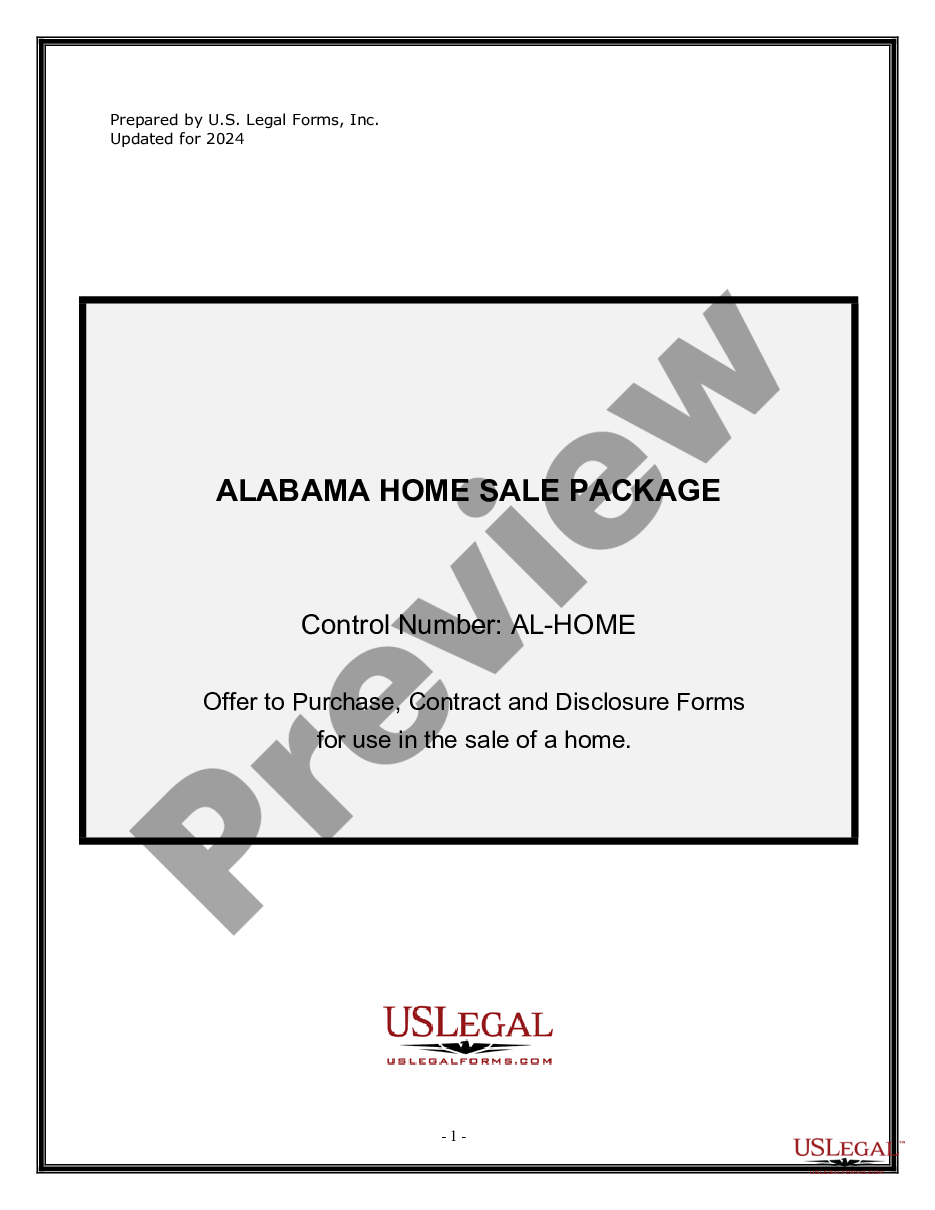
Similar documents: key differences
- Purchase Agreement vs. Letter of Intent — A purchase agreement is a binding contract; a letter of intent signals interest but is generally non-binding.
- Warranty Deed vs. Quitclaim Deed — A warranty deed guarantees clear title; a quitclaim deed transfers only whatever interest the grantor currently holds, with no guarantee.
- Property Disclosure vs. Home Inspection Report — A disclosure is the seller's self-report of known issues; an inspection report is an independent professional assessment.
- Earnest Money Receipt vs. Purchase Agreement — The receipt confirms a deposit was received; the purchase agreement is the full contract governing the sale.
- Closing Statement vs. Loan Estimate — A closing statement reflects the final, settled figures; a loan estimate is the lender's earlier projection of costs.
- General Warranty Deed vs. Special Warranty Deed — A general warranty deed covers the property's entire title history; a special warranty deed covers only the period the seller owned it.
Search for more forms
Common Alabama Home Sale Forms documents
- Purchase Agreement — Sets the price, contingencies, and closing date for a residential property sale.
- Property Disclosure Statement — Seller's written account of known defects, hazards, and material conditions of the home.
- Deed Transfer Form — Legally conveys title from the seller to the buyer upon closing.
- Earnest Money Receipt — Acknowledges the buyer's good-faith deposit and states conditions for its return or forfeiture.
- Home Inspection Addendum — Documents inspection contingency terms and the process for negotiating repairs or credits.
- Lead-Based Paint Disclosure — Required federal notice for homes built before 1978, informing buyers of potential lead hazards.
- Closing Statement — Itemized summary of all credits, debits, and fees settled between buyer, seller, and lender at closing.
FAQs
No. Alabama law allows homeowners to sell their property without an agent through a For Sale By Owner (FSBO) transaction. You are still responsible for completing all required documents and disclosures.
Alabama does not have a single mandatory statewide disclosure form, but sellers are legally obligated to disclose known material defects. Using a written disclosure statement protects both parties and is standard practice.
The outcome depends on the terms written in the purchase agreement. If the buyer exits for a reason covered by a contingency — such as a failed inspection or financing issue — the deposit is typically returned. If the buyer backs out without a valid contingency, the seller may keep it.
Ownership transfers when a properly executed deed is delivered and accepted by the buyer. The transfer becomes public record when the deed is recorded with the county Probate Court.
Escrow is a neutral arrangement where a third party — typically a title company or closing attorney — holds funds and documents until all conditions of the sale are met. It is widely used in Alabama closings to protect both buyer and seller.
Key legal points
- Alabama follows a caveat emptor (buyer beware) tradition, but sellers are still required to disclose known material defects that a buyer could not reasonably discover.
- A real estate purchase agreement must be in writing to be enforceable under Alabama's Statute of Frauds.
- Alabama does not require a real estate attorney to be present at closing, but many buyers and sellers choose to involve one.
- Earnest money is typically held in escrow by a broker or title company and is governed by the terms written into the purchase agreement.
- Federal law requires a lead-based paint disclosure for any residential property built before 1978, regardless of state rules.
- Title searches are standard practice in Alabama to confirm the seller holds clear, marketable title before transfer.
- The deed must be signed, notarized, and recorded with the county Probate Court to complete the legal transfer of ownership.
- Alabama has no mandatory statewide seller disclosure form, but completing a thorough written disclosure is strongly recommended to reduce legal exposure.
- FSBO (For Sale By Owner) transactions in Alabama use the same core documents as agent-assisted sales and carry the same legal obligations.
How to get started
Start your Alabama home sale in minutes with these simple steps.
- Find the right template by browsing the Home Sale category and selecting the form that matches your transaction.
- Preview the document to confirm it covers the terms and disclosures you need before committing.
- Subscribe to access the full template library and unlock all Alabama home sale forms.
- Complete the form in the online editor, filling in property details, parties, dates, and agreed terms.
- Export the finished document as a PDF or Word file, then sign, notarize, and share it with the other party.
Practical tip
In Alabama, record the signed and notarized deed with the Probate Court in the county where the property is located as soon as possible after closing — delays in recording can create title complications.