Georgia Articles of Incorporation for Domestic For-Profit Corporation
Overview of this form
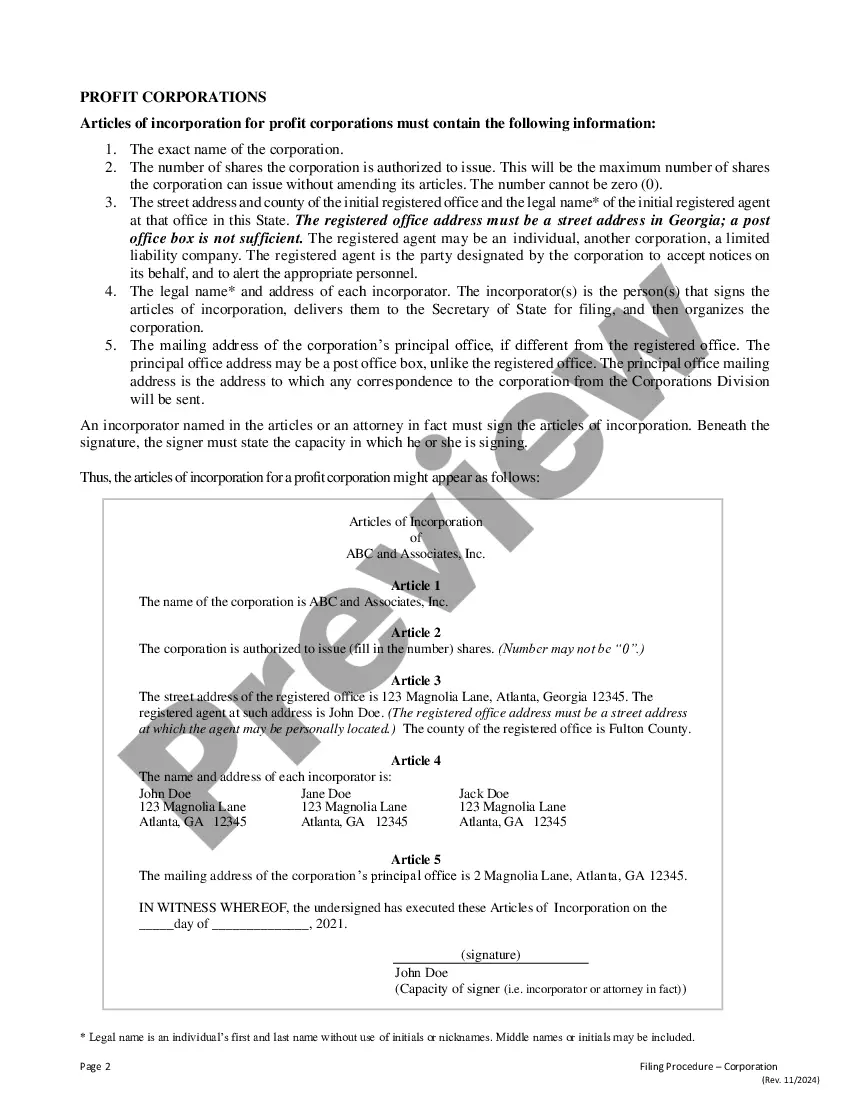
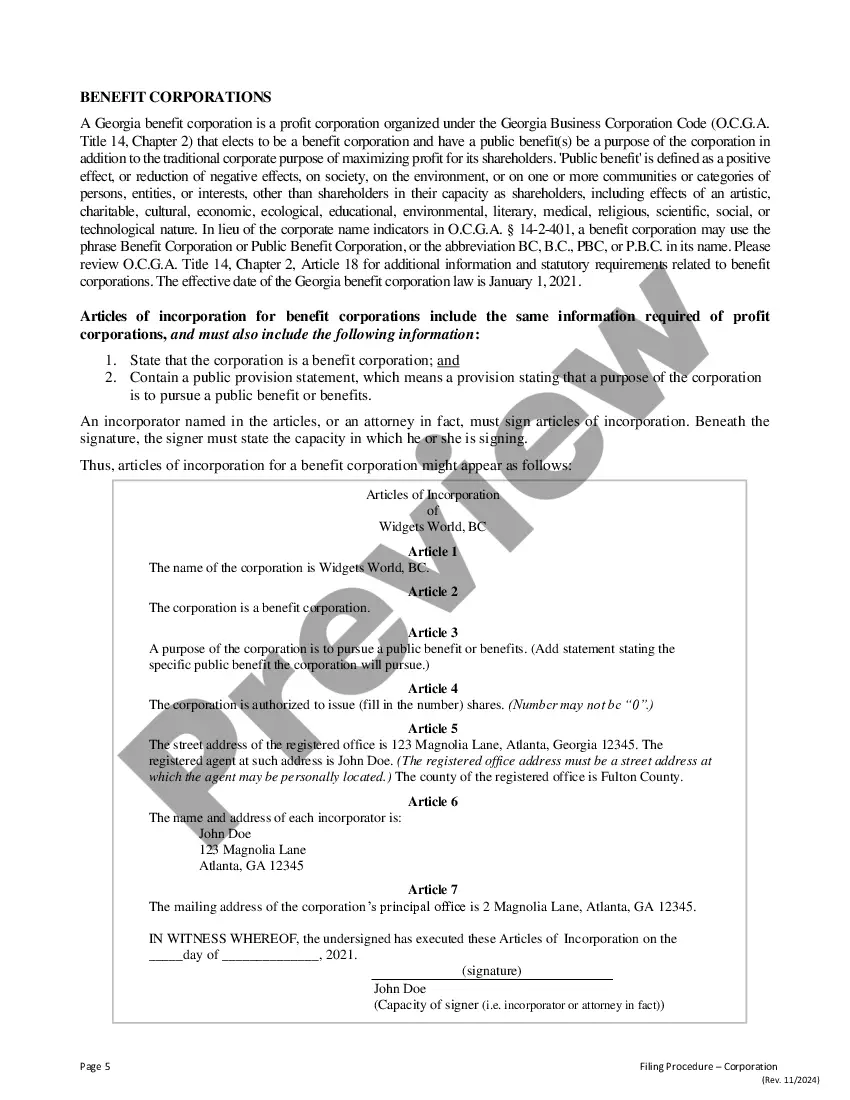
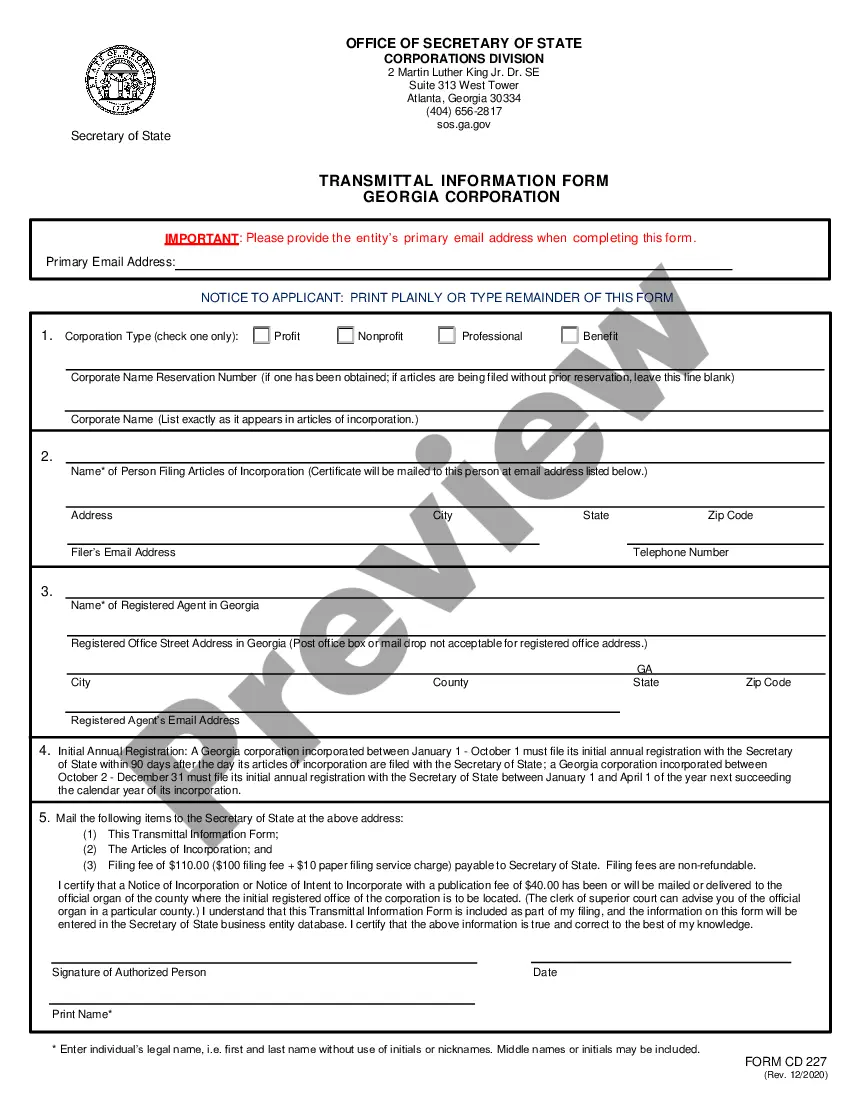
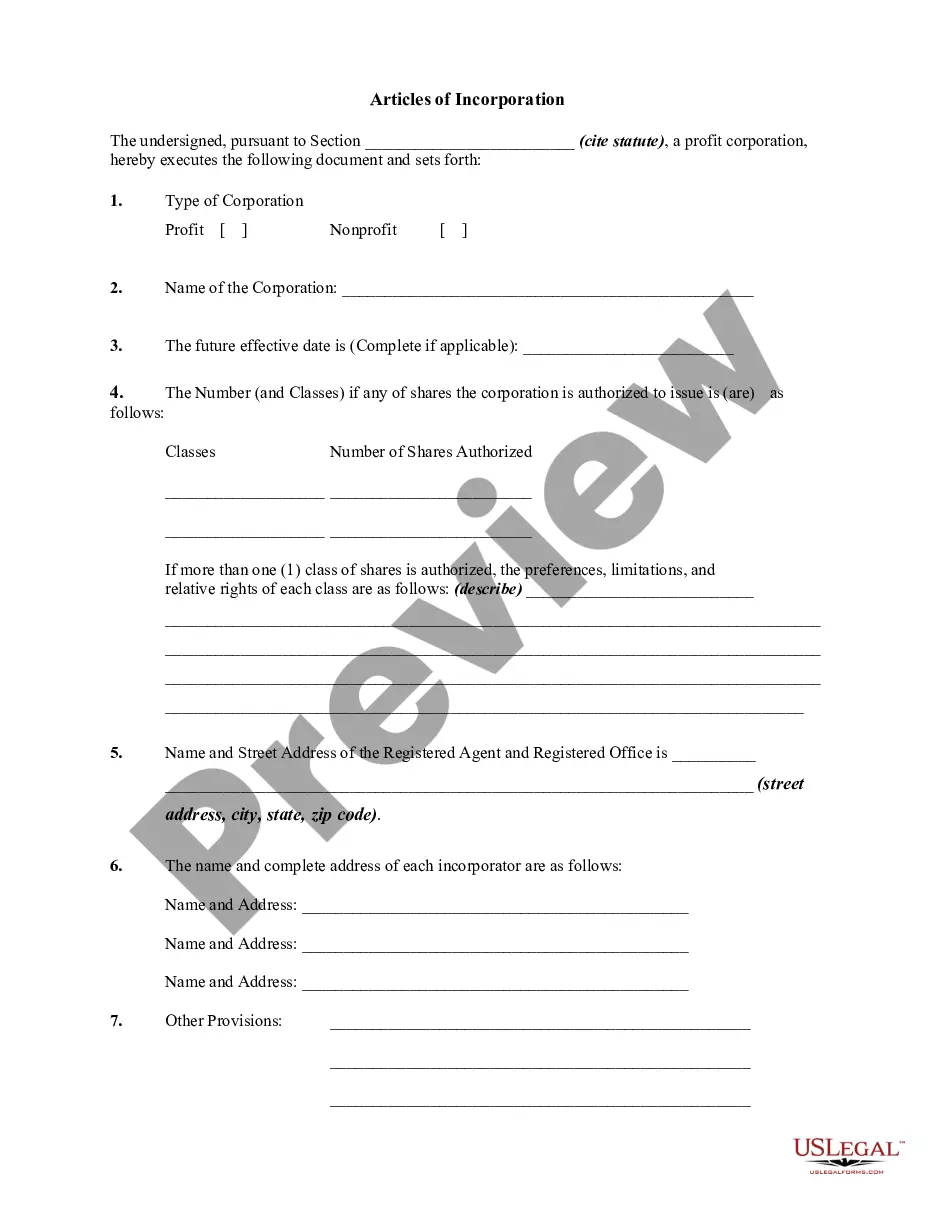
The Georgia Articles of Incorporation for Domestic For-Profit Corporation is a legal document required to establish a new for-profit corporation in Georgia. This form outlines essential details about the corporation, such as its name, the number of shares to be issued, and information about the incorporators and officers. It is crucial for compliance with state law and differs from other forms by specifically addressing the formation of profit-based entities, ensuring legal recognition and protection for the business and its stakeholders.
Key parts of this document
- The exact name of the corporation.
- The number of shares the corporation is authorized to issue.
- The street address and county of the registered office, along with the registered agent's name.
- The name and address of each incorporator.
- The mailing address of the corporationâs principal office.

When to use this document
This form should be used when you are ready to start a new for-profit corporation in Georgia. It is required to legally register your business structure, ensuring you can operate under state laws and regulations. Companies seeking to limit personal liability, attract investors, or establish a formal business identity will need to file these articles as a critical step in their incorporation process.
Who this form is for
- Entrepreneurs planning to establish a for-profit corporation in Georgia.
- Business partners looking to formalize their corporate structure.
- Individuals seeking limited liability protection for their business activities.
- Anyone wanting to issue corporate shares and raise capital through equity financing.
How to prepare this document
- Choose a name for your corporation that complies with Georgia naming requirements.
- Specify the total number of shares the corporation will be authorized to issue.
- Provide the street address and name of the registered agent in Georgia.
- List the names and addresses of all incorporators signatory to the form.
- Ensure the form is signed by an incorporator and includes their title or capacity.
Does this document require notarization?
Notarization is not commonly needed for this form. However, certain documents or local rules may make it necessary. Our notarization service, powered by Notarize, allows you to finalize it securely online anytime, day or night.
Get your form ready online
Our built-in tools help you complete, sign, share, and store your documents in one place.
Make edits, fill in missing information, and update formatting in US Legal Forms—just like you would in MS Word.
Download a copy, print it, send it by email, or mail it via USPS—whatever works best for your next step.
Sign and collect signatures with our SignNow integration. Send to multiple recipients, set reminders, and more. Go Premium to unlock E-Sign.
If this form requires notarization, complete it online through a secure video call—no need to meet a notary in person or wait for an appointment.
We protect your documents and personal data by following strict security and privacy standards.

Make edits, fill in missing information, and update formatting in US Legal Forms—just like you would in MS Word.

Download a copy, print it, send it by email, or mail it via USPS—whatever works best for your next step.

Sign and collect signatures with our SignNow integration. Send to multiple recipients, set reminders, and more. Go Premium to unlock E-Sign.

If this form requires notarization, complete it online through a secure video call—no need to meet a notary in person or wait for an appointment.

We protect your documents and personal data by following strict security and privacy standards.
Mistakes to watch out for
- Failing to provide an authorized number of shares to be issued.
- Using a post office box for the registered office address.
- Not providing signatures from the required incorporators.
- Incorrectly completing the mailing address, which may differ from the registered office.
Benefits of completing this form online
- Convenience of completing and filing from anywhere with internet access.
- Easy to edit and update information as needed.
- Secure and legally recognized submission process.
Quick recap
- The Georgia Articles of Incorporation is essential for starting a for-profit corporation.
- This form requires specific information about your corporation and its principals.
- Properly filing the articles provides legal recognition and protection under state law.
Looking for another form?

Form popularity
FAQ
The Georgia Articles of Incorporation for Domestic For-Profit Corporation is the filing used to form a Georgia domestic for-profit corporation. It provides the basic information required by Georgia law and is filed with the Georgia Secretary of State’s Corporations Division to create the corporation’s legal existence and establish its authority to operate in Georgia.
Georgia’s Articles of Incorporation are obtained from the Georgia Secretary of State. The form can be filed online through the SOS Corporations Division or submitted by mail with the required filing fee. The Secretary of State’s website also provides the form, filing instructions, and status checks for forming a domestic for-profit corporation.
To file, prepare the information required by Georgia law, then submit the Articles of Incorporation to the Georgia Secretary of State’s Corporations Division with the applicable filing fee. Filing can be completed online or by mail, and the SOS site provides step-by-step filing guidance.
Yes. Georgia Articles of Incorporation are public records. After filing, you can view the document by searching the Georgia Secretary of State’s business database, and you may request a certified copy for official use.
After filing, your Articles of Incorporation appear in your entity record with the Georgia Secretary of State. Access the SOS online portal to download a filed copy or order certified copies; you’ll typically need the entity name or filing number.
Georgia Articles of Incorporation apply to forming a corporation, specifically a domestic for-profit entity, while Articles of Organization are filed to form a limited liability company (LLC). The two forms establish different legal structures and governance, and they are filed with the same state agency but for different types of business entities.