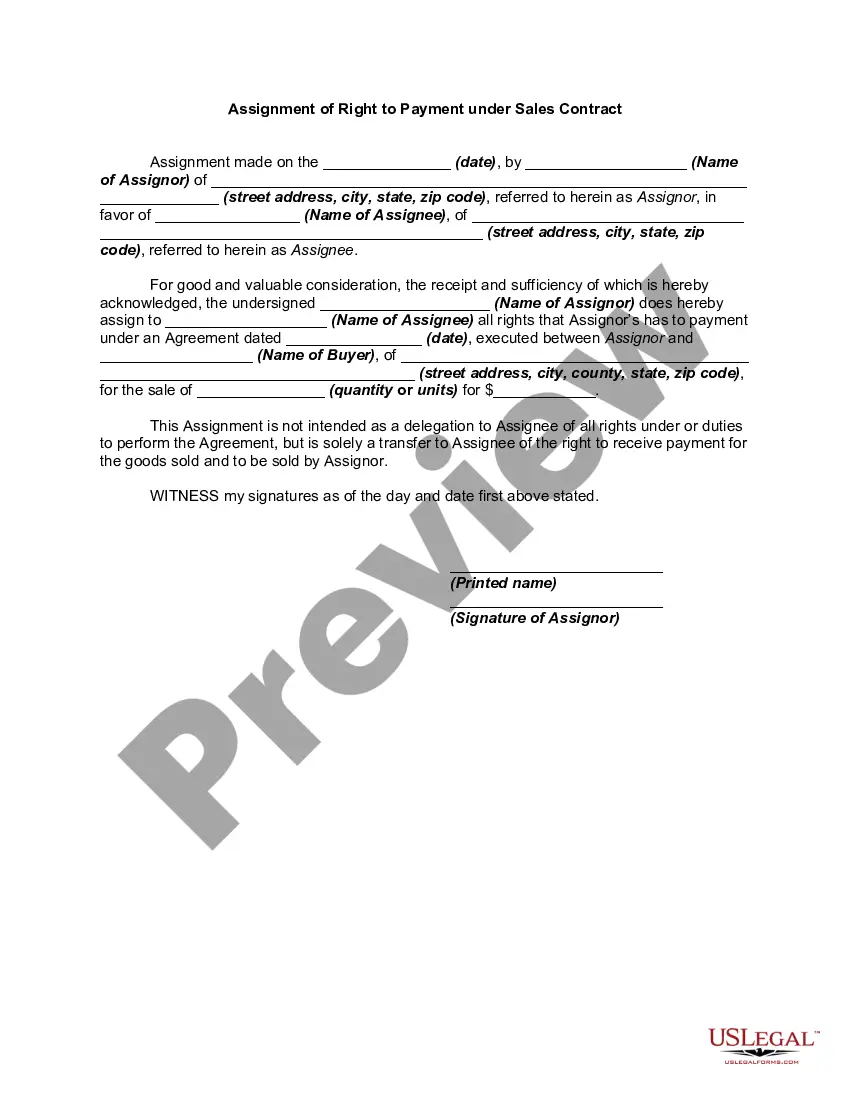
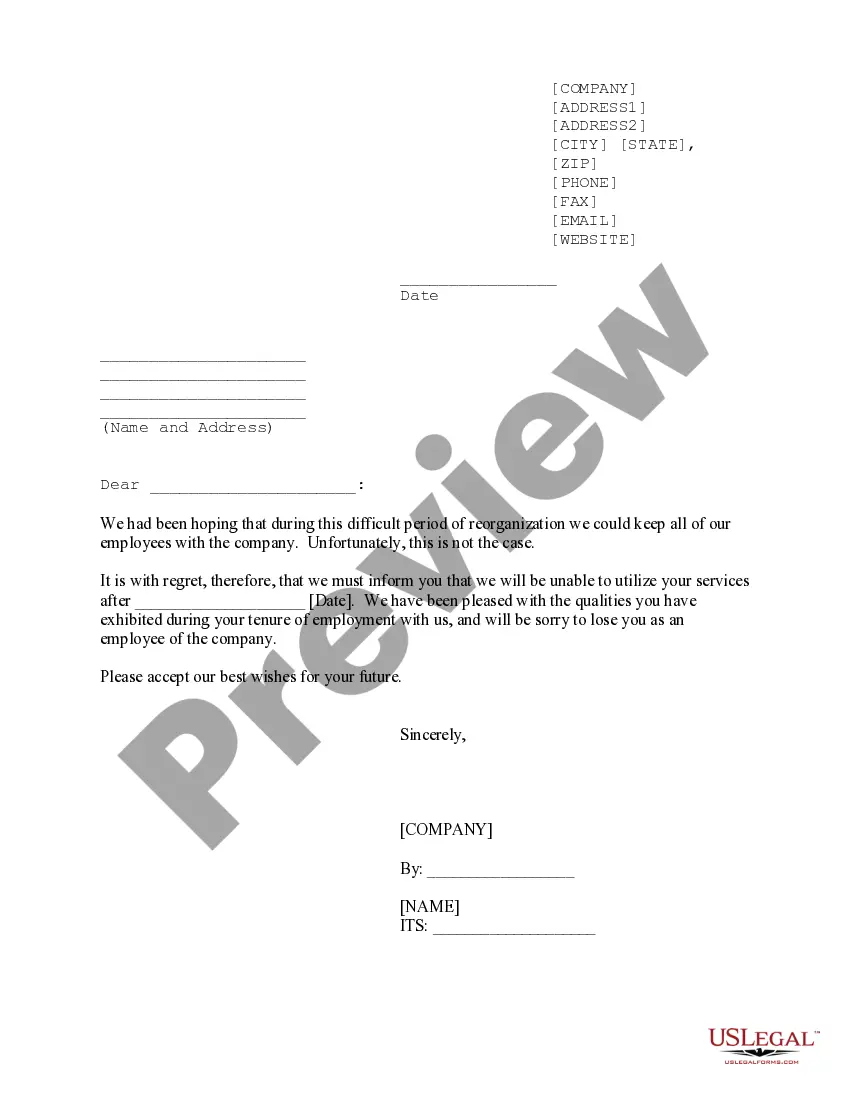
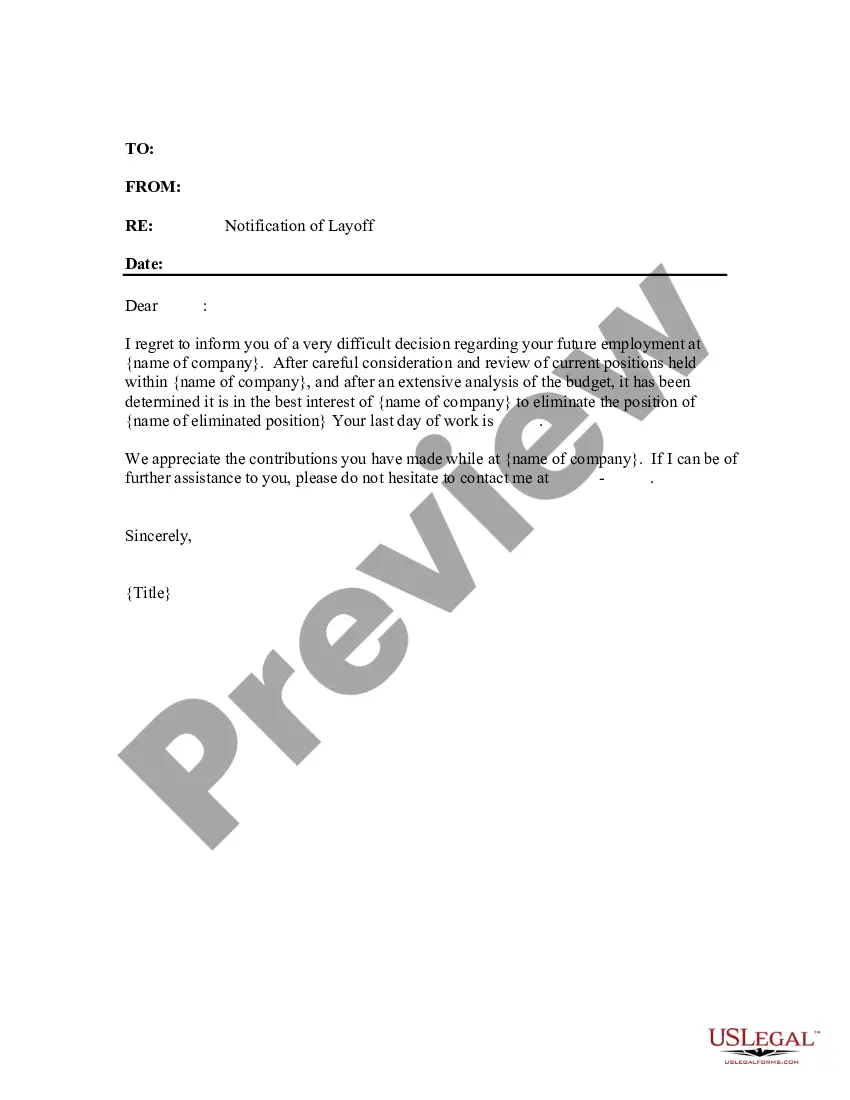
Wyoming Notice of Layoff
Description

Get your form ready online
Our built-in tools help you complete, sign, share, and store your documents in one place.
Make edits, fill in missing information, and update formatting in US Legal Forms—just like you would in MS Word.
Download a copy, print it, send it by email, or mail it via USPS—whatever works best for your next step.
Sign and collect signatures with our SignNow integration. Send to multiple recipients, set reminders, and more. Go Premium to unlock E-Sign.
If this form requires notarization, complete it online through a secure video call—no need to meet a notary in person or wait for an appointment.
We protect your documents and personal data by following strict security and privacy standards.

Make edits, fill in missing information, and update formatting in US Legal Forms—just like you would in MS Word.

Download a copy, print it, send it by email, or mail it via USPS—whatever works best for your next step.

Sign and collect signatures with our SignNow integration. Send to multiple recipients, set reminders, and more. Go Premium to unlock E-Sign.

If this form requires notarization, complete it online through a secure video call—no need to meet a notary in person or wait for an appointment.

We protect your documents and personal data by following strict security and privacy standards.
Looking for another form?
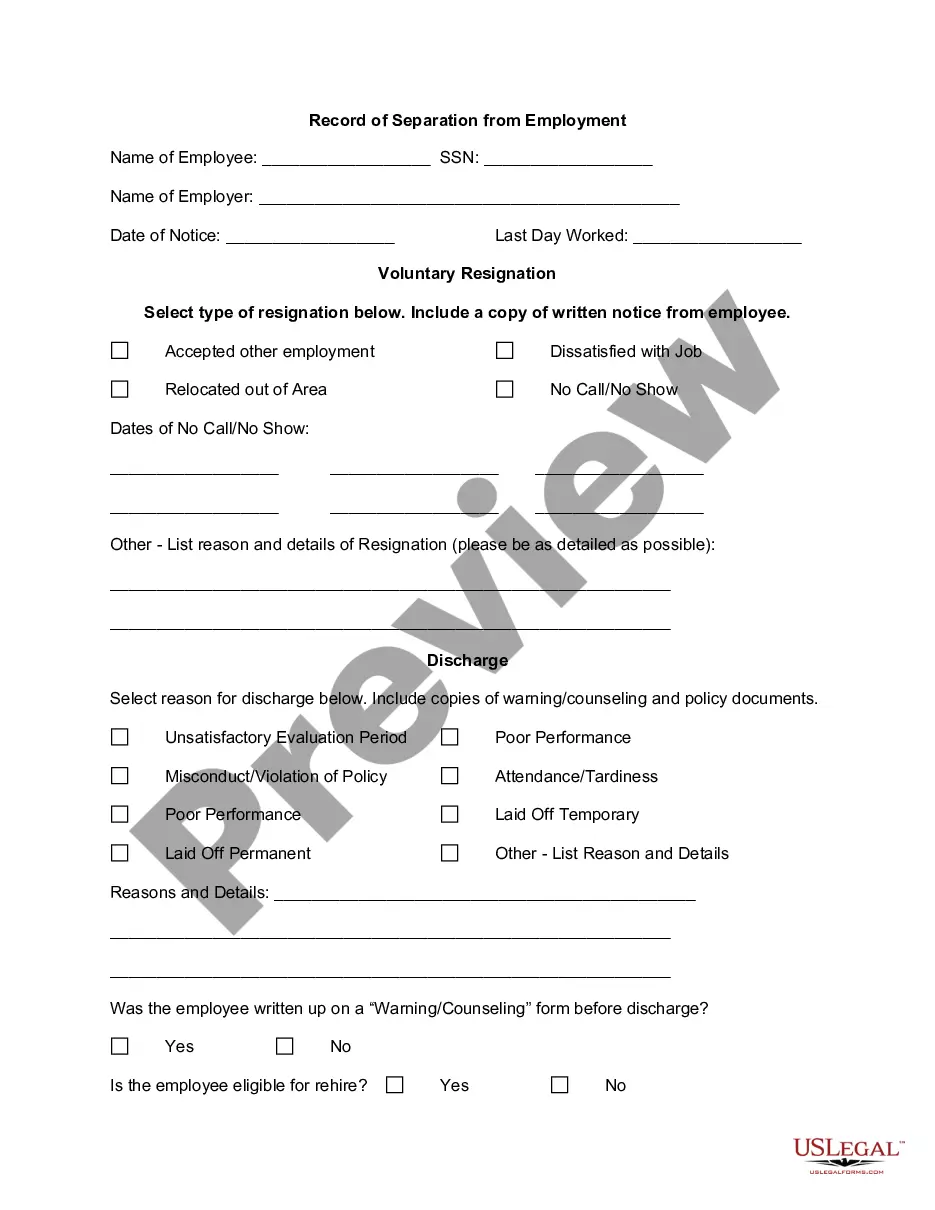
How to fill out Notice Of Layoff?
It is feasible to allocate time online trying to locate the appropriate legal document template that meets the state and federal regulations you require.
US Legal Forms offers a vast array of legal forms that are reviewed by professionals.
You can easily obtain or print the Wyoming Notice of Layoff from their services.
If available, utilize the Review button to examine the document template as well.
- If you have an account with US Legal Forms, you can Log In and click the Obtain button.
- Then, you can fill out, edit, print, or sign the Wyoming Notice of Layoff.
- Every legal document template you acquire is yours permanently.
- To get an additional copy of the downloaded form, go to the My documents section and click the relevant button.
- If you are using the US Legal Forms website for the first time, follow these simple instructions.
- First, ensure you have chosen the correct document template for the state/region you select.
- Review the form information to confirm you have selected the right form.
Form popularity
FAQ
Instead of using the term 'laid off', you may opt for more professional language such as 'experienced a workforce reduction' or 'transitioned out of the company'. These phrases can convey respect and understanding of the situation. When discussing this in the context of the Wyoming Notice of Layoff, framing the conversation around business needs can help soften the message.
It's normal (but not a legal requirement) to give two weeks of notice. However, a "reasonable" resignation period is based on several factors. These include the employee's position, length of service, pay, and time it would likely take to replace the employee.
MSS requires you to select who to retrench (not a choice for employees) and negotiate appropriate notice periods and compensation with the soon-to-be ex-employee. VSS gives employees a choice to leave voluntarily with a letter of termination and lay-off benefits.
The WARN (Worker Adjustment and Retraining Notification) Act requires businesses who employ over 100 workers to either give their employees 60 days' notice in writing of a mass layoff or plant closing, or to pay the employees if they fail to give the notice.
What Happens If You Don't Give 2 Weeks' Notice? You could break the provisions of your contract, and that could have legal repercussions. If you have no choice, then notifying your employer and giving as much notice as possible (or perhaps even working out a new deal) can potentially make the fallout less serious.
According to section 25C of Industry and dispute Act 1947, maximum days allowed to Layoff of employee by employer is 45 days, for those days, employee who is laid-off is entitled for compensation equal to 50% of the total of the basic wages and dearness allowance that would have been payable to him, had he not been so
If you don't give proper notice, you will be in breach of contract and it is possible for your employer to sue you for damages. An example of this would be if they had to pay extra to get a temp to cover your work.
Submission of a written notice of dismissal to the employee specifying the grounds for dismissal at least 30 days before the date of termination; and. A copy of the notice which shall be provided to the Regional Office of the Department of Labor and Employment (DOLE) where the employer is located.
Although the doctrine often is interpreted as one-sided in the favor of employers, the truth is that employees have equal rights under the employment-at-will doctrine. Therefore, the practice of giving two weeks' notice isn't a requirement -- it's a professional courtesy.
As long as you haven't breached the contract, you don't have to pay someone for their notice if they refuse to work it. Do you have to work your notice period? Yes, employees will normally be contractually obligated to work their notice period.