West Virginia Right of Way Agreement
Description
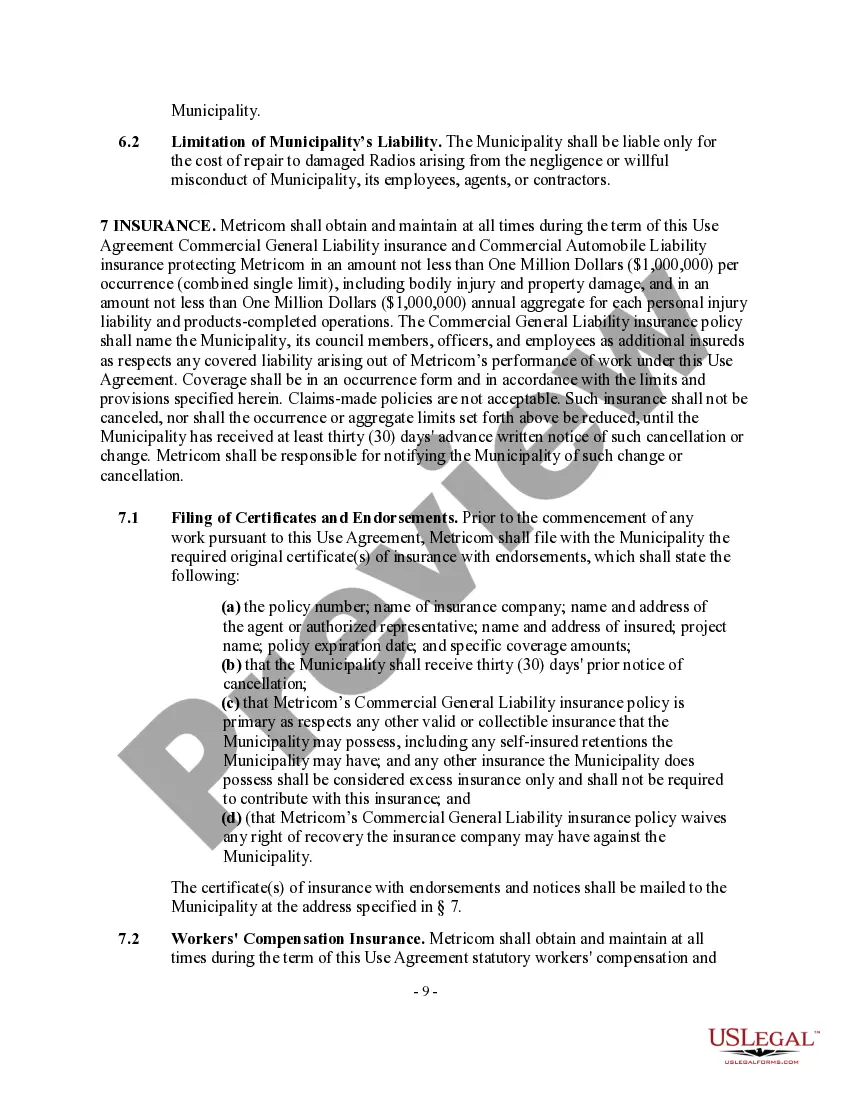
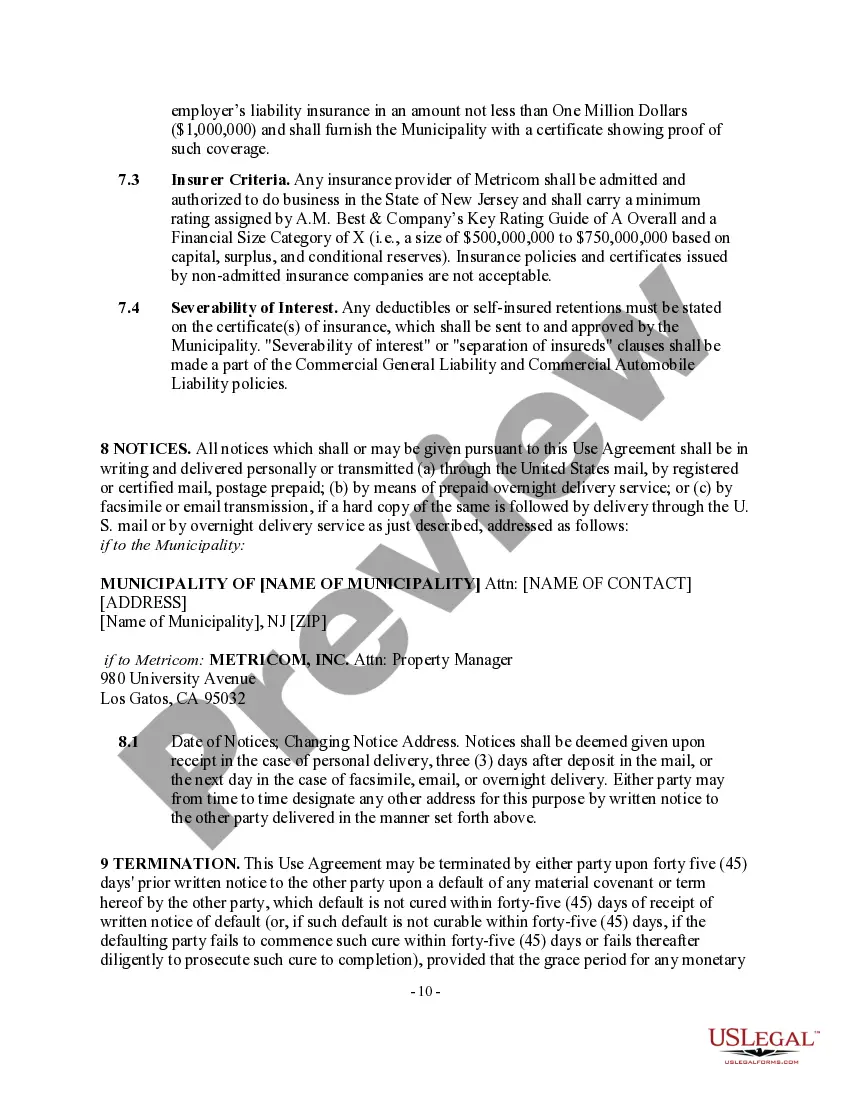

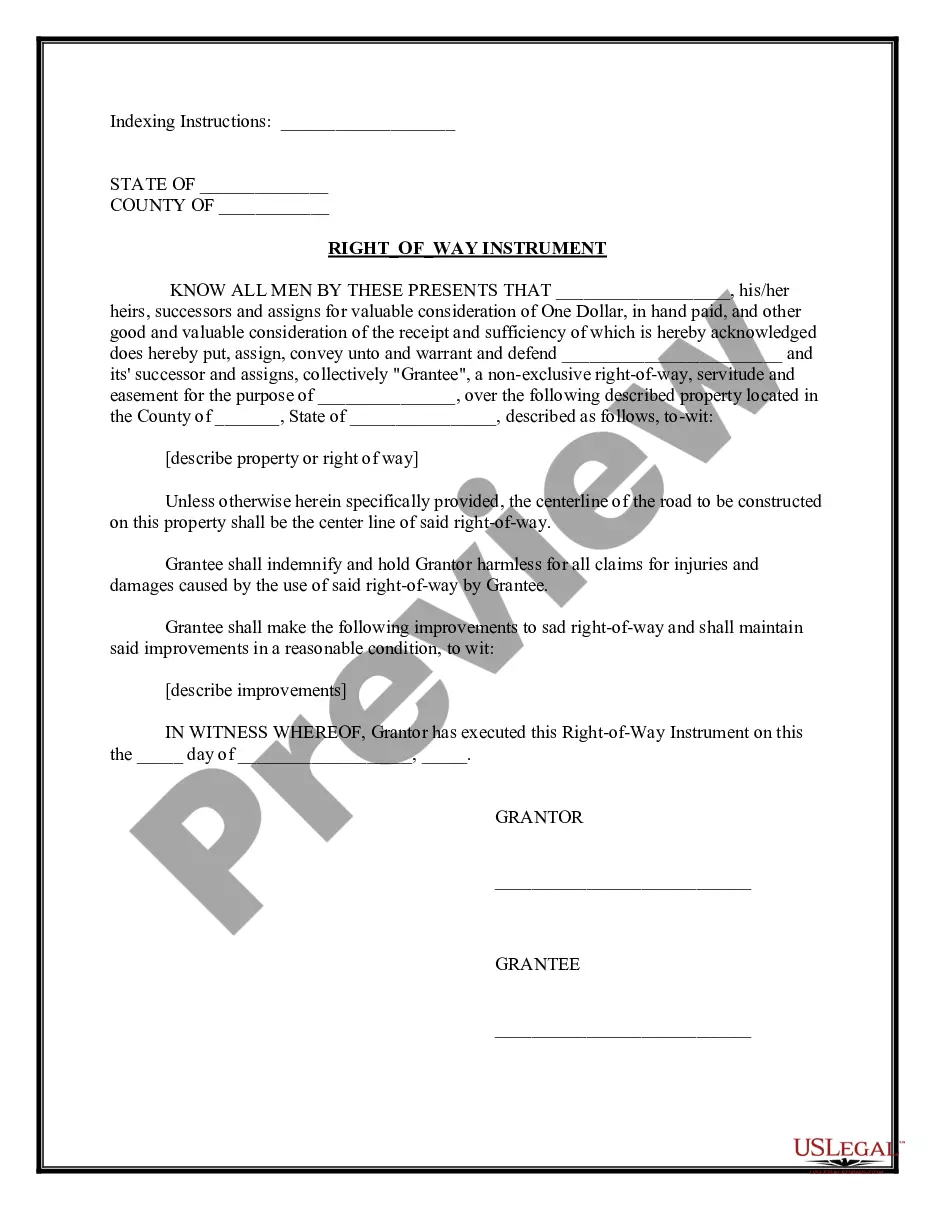
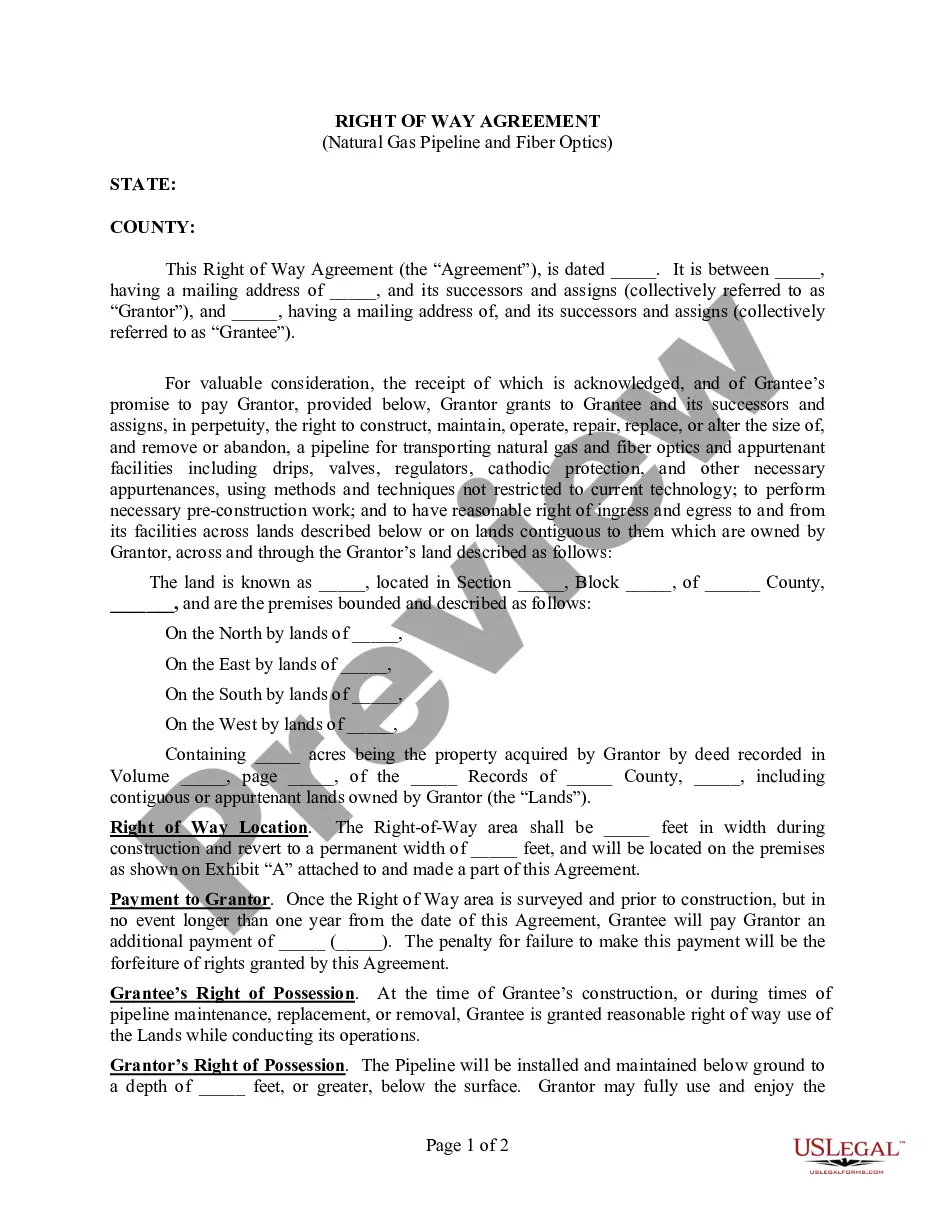
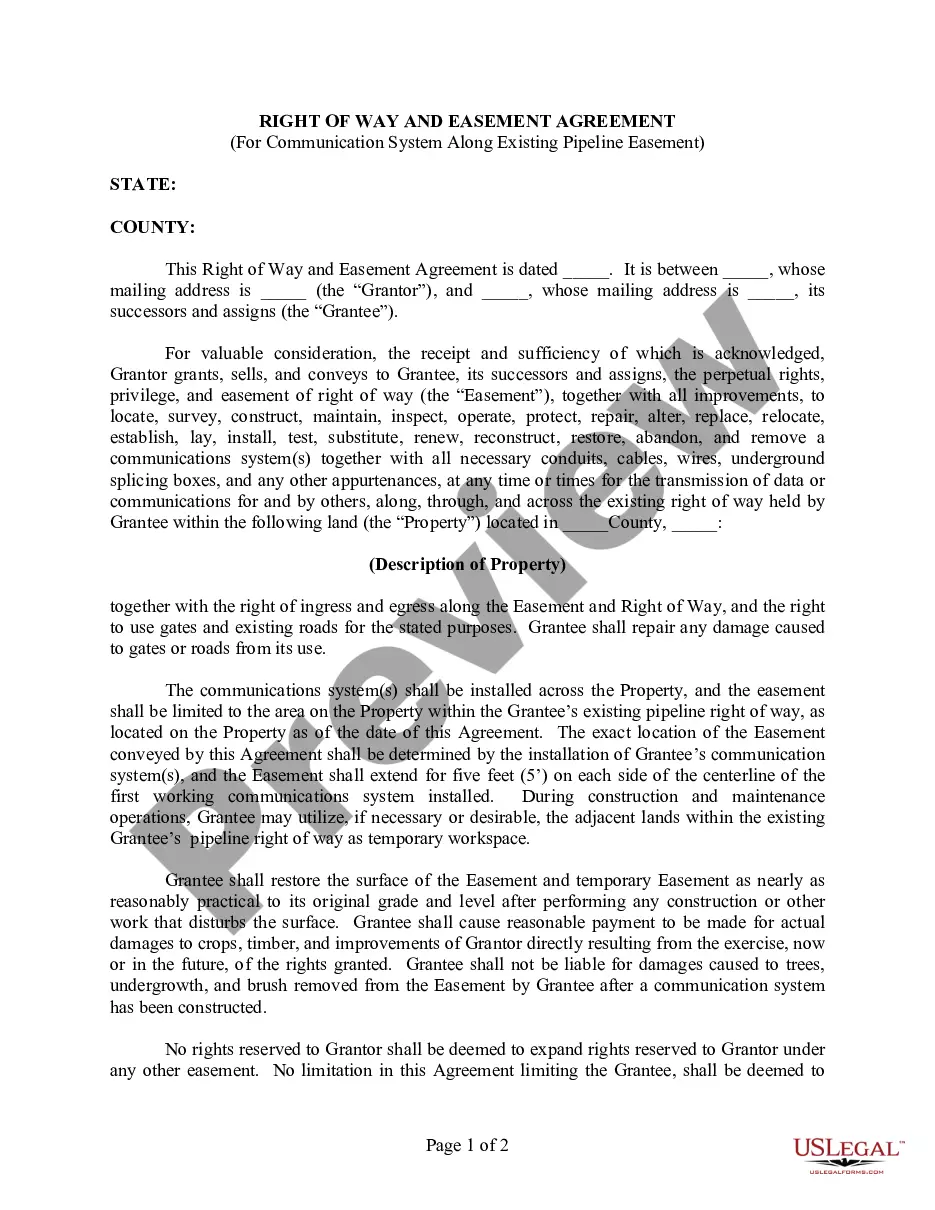
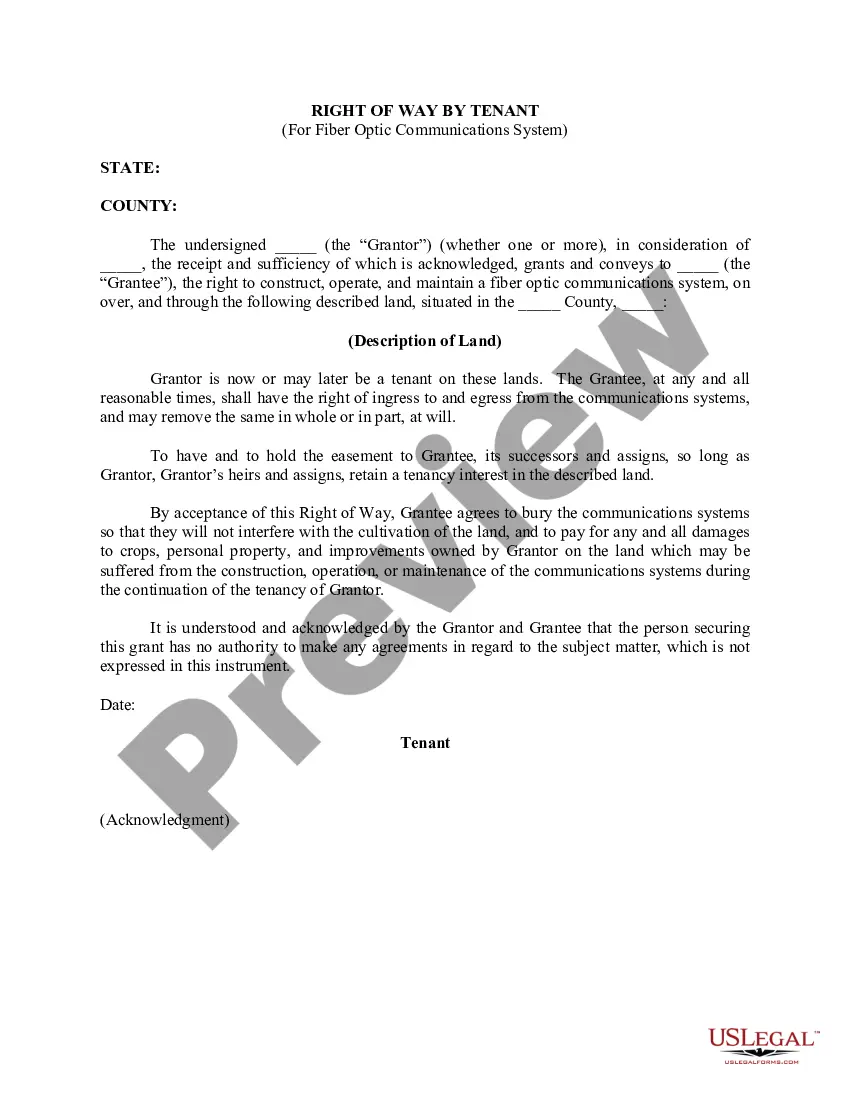
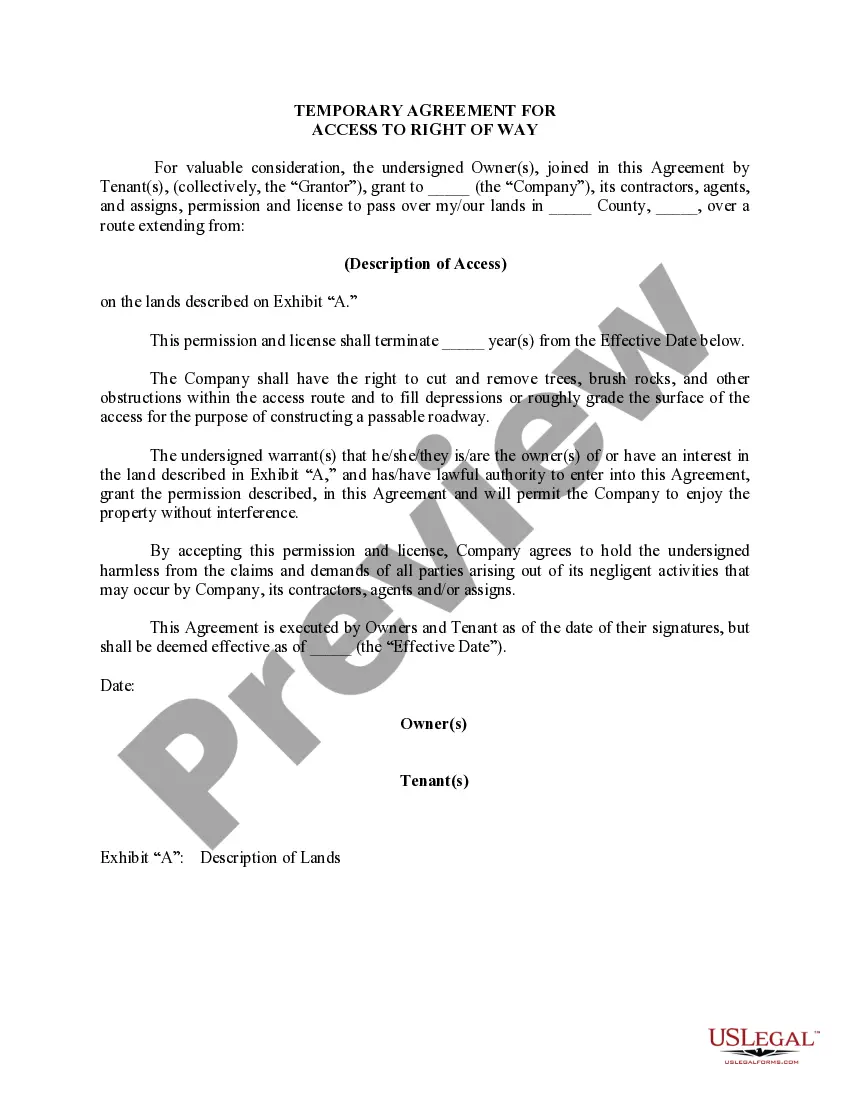
Get your form ready online
Our built-in tools help you complete, sign, share, and store your documents in one place.
Make edits, fill in missing information, and update formatting in US Legal Forms—just like you would in MS Word.
Download a copy, print it, send it by email, or mail it via USPS—whatever works best for your next step.
Sign and collect signatures with our SignNow integration. Send to multiple recipients, set reminders, and more. Go Premium to unlock E-Sign.
If this form requires notarization, complete it online through a secure video call—no need to meet a notary in person or wait for an appointment.
We protect your documents and personal data by following strict security and privacy standards.

Make edits, fill in missing information, and update formatting in US Legal Forms—just like you would in MS Word.

Download a copy, print it, send it by email, or mail it via USPS—whatever works best for your next step.

Sign and collect signatures with our SignNow integration. Send to multiple recipients, set reminders, and more. Go Premium to unlock E-Sign.

If this form requires notarization, complete it online through a secure video call—no need to meet a notary in person or wait for an appointment.

We protect your documents and personal data by following strict security and privacy standards.
Looking for another form?
How to fill out Right Of Way Agreement?
If you need to total, download, or print legal document templates, utilize US Legal Forms, the largest collection of legal forms available online.
Employ the site's straightforward and convenient search to find the documents you require. A range of templates for business and personal purposes are organized by categories and states, or keywords.
Use US Legal Forms to acquire the West Virginia Right of Way Agreement with just a few clicks.
Every legal document template you purchase is yours permanently. You will have access to every form you saved in your account. Navigate to the My documents section and select a form to print or download again.
Stay competitive and download, and print the West Virginia Right of Way Agreement with US Legal Forms. There are millions of professional and state-specific forms you can utilize for your business or personal needs.
- When you are already a US Legal Forms customer, sign in to your account and click the Download button to access the West Virginia Right of Way Agreement.
- You can also access forms you previously saved in the My documents section of your account.
- If you are using US Legal Forms for the first time, follow the steps below.
- Step 1. Ensure you have selected the form for the correct city/state.
- Step 2. Utilize the Preview feature to review the content of the form. Remember to read the summary.
- Step 3. If you are not satisfied with the form, use the Search field at the top of the screen to find other versions of the legal form template.
- Step 4. Once you have found the form you desire, click the Buy now button. Choose the payment plan you prefer and enter your details to register for an account.
- Step 5. Process the payment. You can use your credit card or PayPal account to complete the transaction.
- Step 6. Select the format of the legal form and download it to your device.
- Step 7. Complete, edit, and print or sign the West Virginia Right of Way Agreement.
Form popularity
FAQ
In West Virginia, a landowner may block a right-of-way, but this depends on the nature of the right-of-way and the terms of the agreement. If the right-of-way is established as a public easement, the landowner might face challenges in blocking it. Consulting a legal expert familiar with West Virginia Right of Way Agreements can provide clarity on this issue and help you navigate any legal complexities.
Ownership of a road right-of-way typically belongs to the government or the entity that holds the easement rights. However, the adjoining property owners may have certain rights over the right-of-way, depending on the West Virginia Right of Way Agreement. It’s essential to review the specific terms to understand the obligations and rights of all parties involved.
In West Virginia, property owners may be able to block an easement under specific circumstances. Factors such as the type of easement, its purpose, and the terms outlined in the West Virginia Right of Way Agreement play a significant role. Engaging with a legal professional can help clarify your rights and navigate any potential disputes.
Yes, a property owner can block an easement if certain conditions are met. If the easement was not properly established or if it has expired, the property owner may have the right to deny access. However, it is important to consult the specifics of your West Virginia Right of Way Agreement to understand your rights and obligations fully.
In West Virginia, while it is not legally required for an attorney to prepare a deed, it is highly recommended. An attorney can ensure that the deed complies with the local laws and includes all necessary provisions. This can help prevent future disputes regarding your property rights, especially if it involves a West Virginia Right of Way Agreement.
Pedestrians on roadways; soliciting rides. (a) Where sidewalks are provided it shall be unlawful for any pedestrian to walk along and upon an adjacent roadway.
The driver of a vehicle about to enter or cross a highway from a private road or driveway shall yield the right-of-way to all vehicles approaching on said highway.
The requisites of compulsory easement of way can be summarized as follows:That the dominant estate is surrounded by other immovables and has no adequate outlet to a public highway;After the payment of property indemnity.That the isolation was not due to acts of the proprietor of the dominant estate.More items...?
To establish an easement implied by necessity (which in West Virginia is called a way of necessity), a party must prove four elements: (1) prior common ownership of the dominant and servient estates; (2) severance (that is, a conveyance of the dominant and/or servient estates to another); (3) at the time of the
(b) The driver of a vehicle may overtake and pass another vehicle upon the right only under conditions permitting such movement in safety. In no event shall such movement be made by driving off the pavement or main- traveled portion of the roadway.