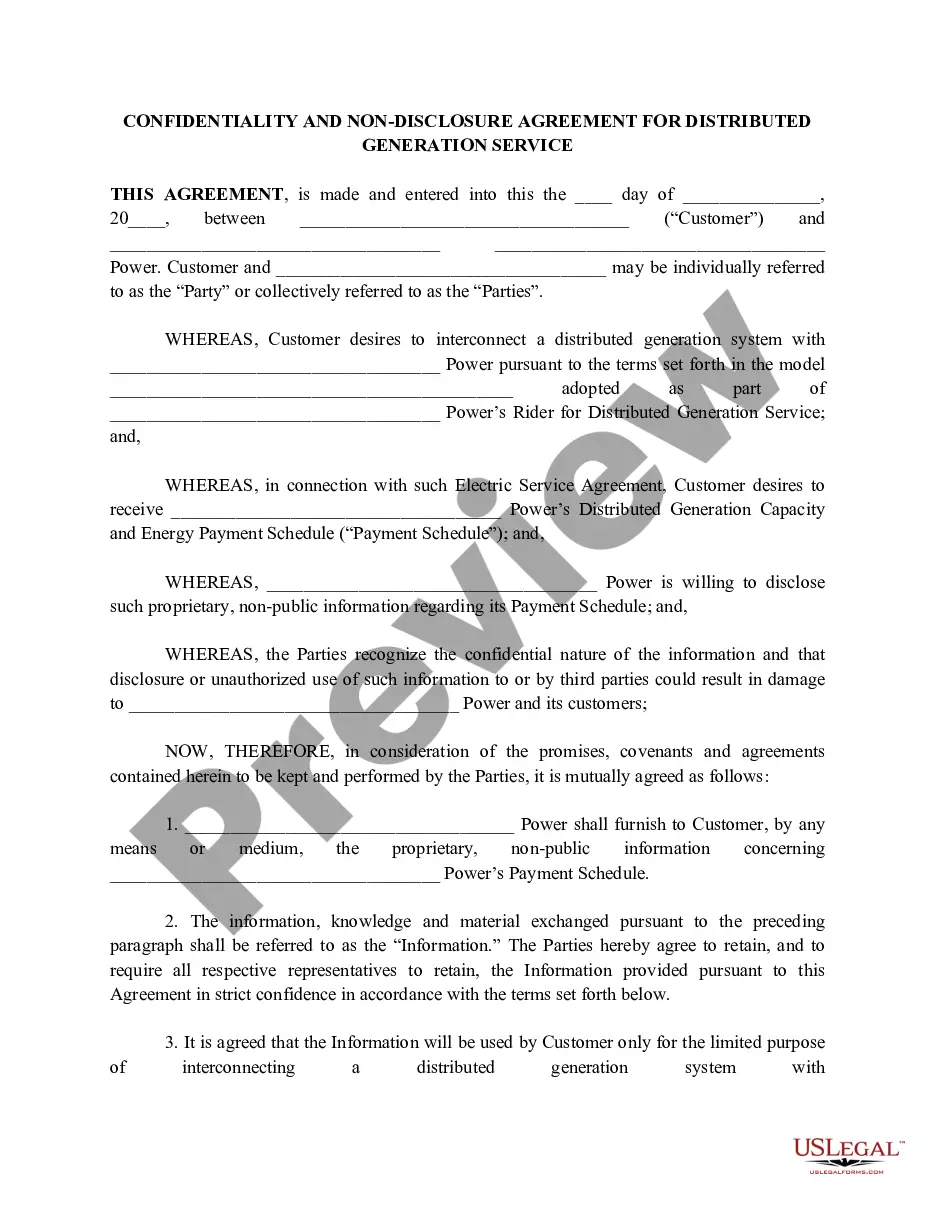
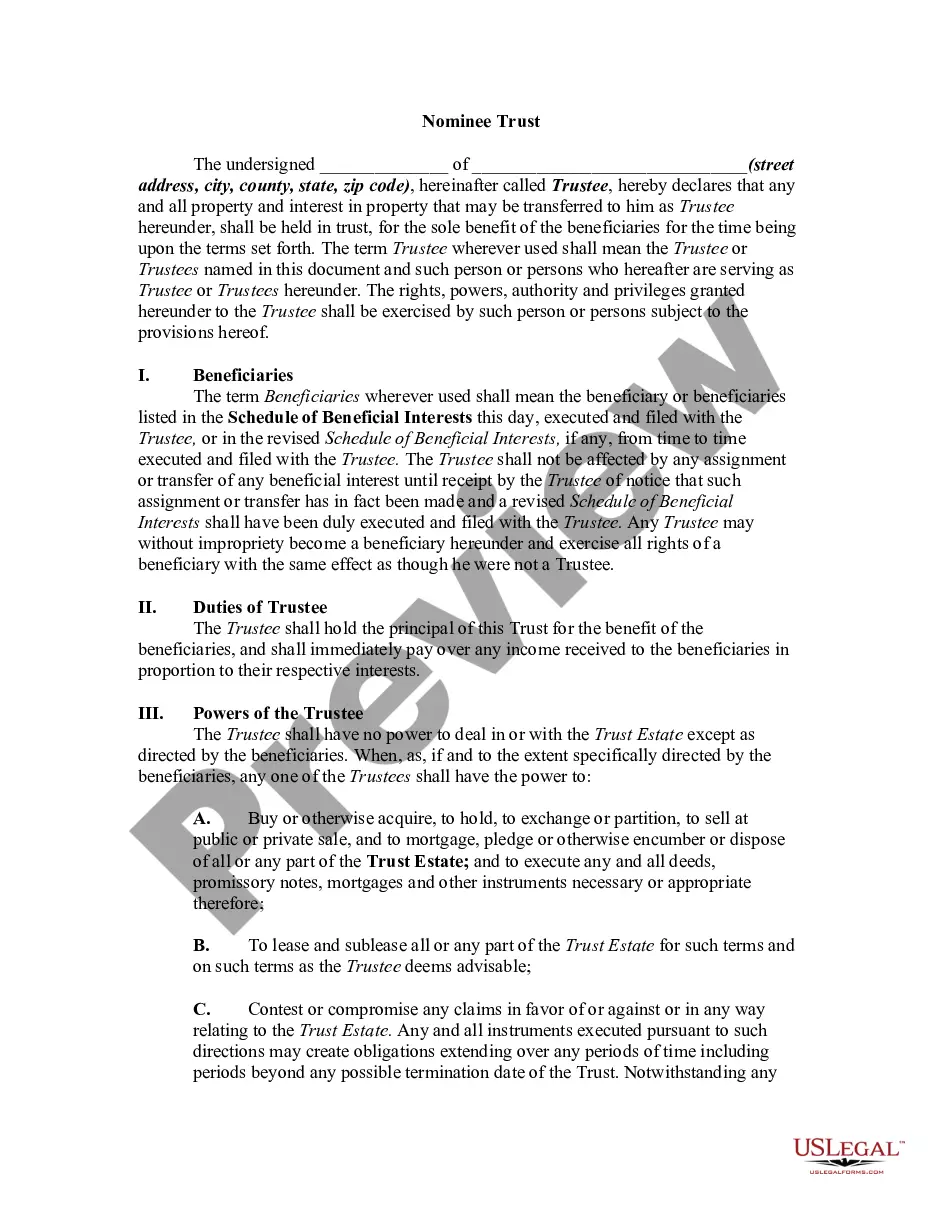
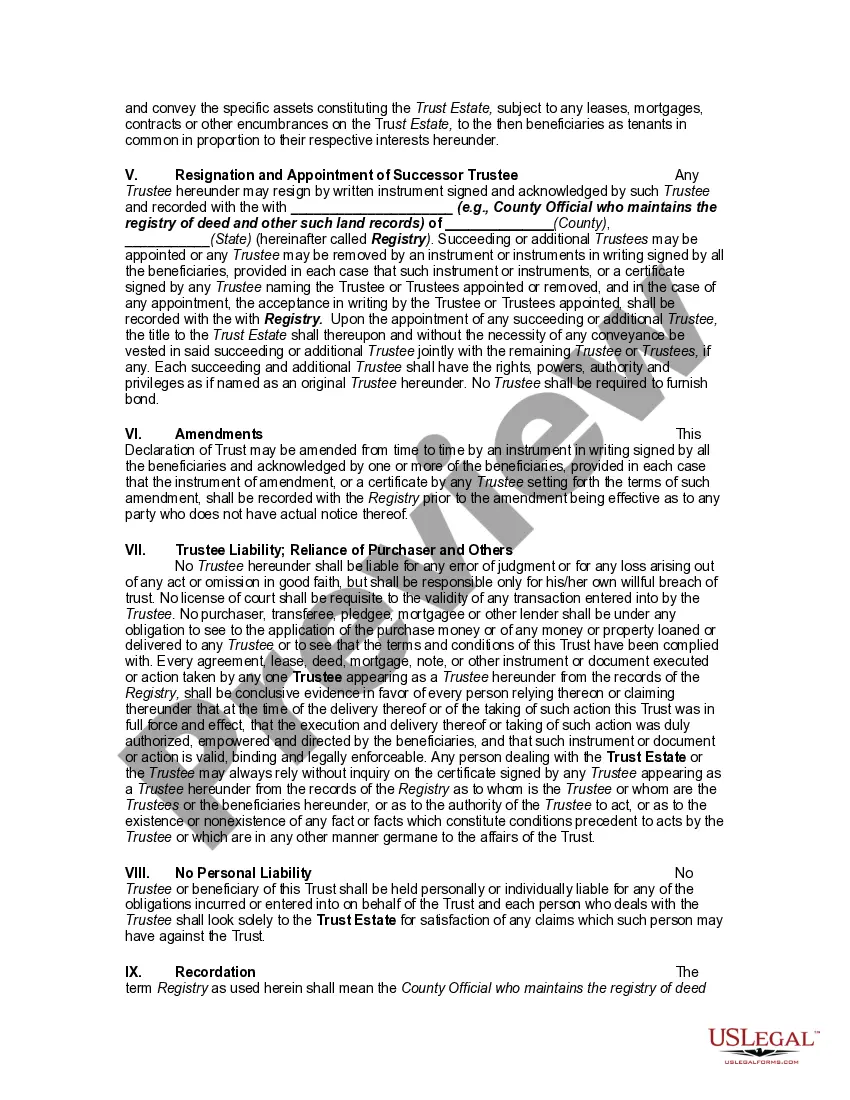
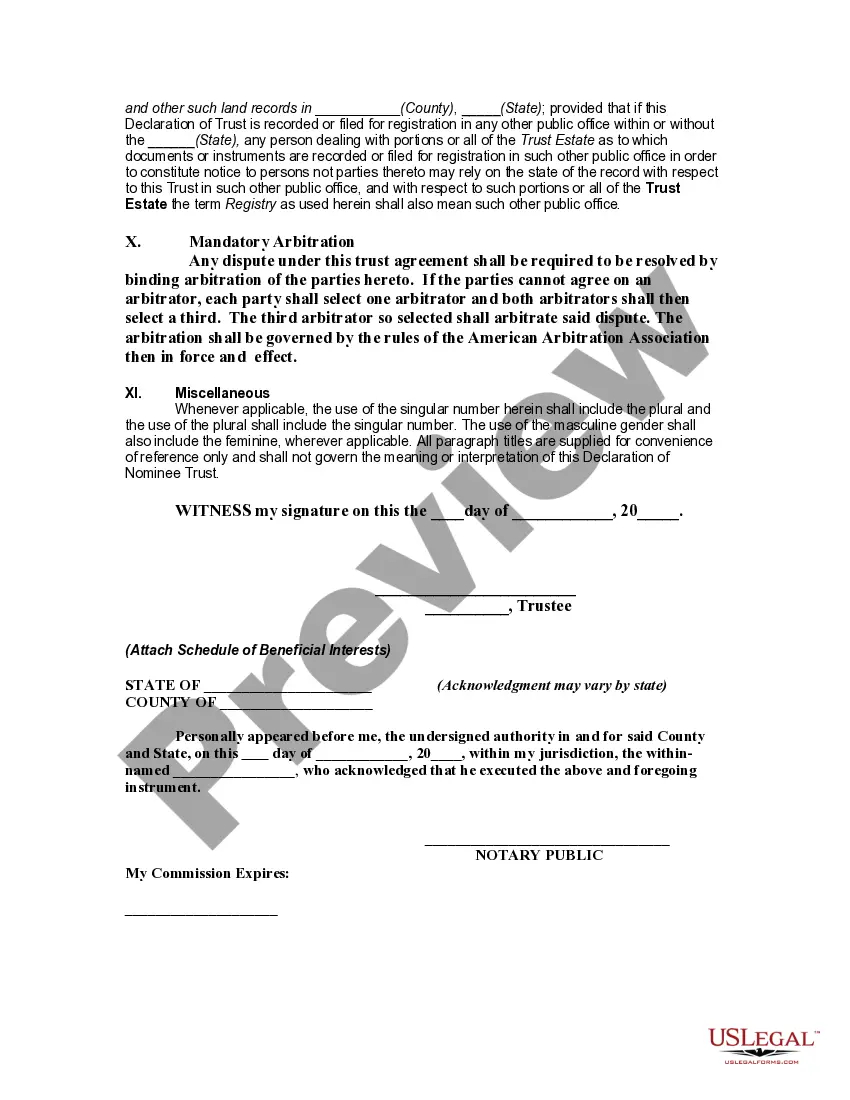
A nominee trust is a trust in which the trustee holds legal title to the trust property for the trust's beneficiaries, but the beneficiaries exercise the controlling powers, and the actions that the trustees may take on their own are very limited. Such trusts are a common device for holding title to real estate, and afford certain tax advantages. A nominee trust is not a trust in the strict classical sense, because of the trustee-beneficiary relationship. Despite a nominee trust's nontraditional relationship between trustee and beneficiary, such a trust must still adhere to the rule that no trust exists when the same individual is the sole settlor, sole trustee, and sole beneficiary. The trustees of a nominee trust act at the direction of the beneficiaries.
West Virginia Nominee Trust
Description
Get your form ready online
Our built-in tools help you complete, sign, share, and store your documents in one place.
Make edits, fill in missing information, and update formatting in US Legal Forms—just like you would in MS Word.
Download a copy, print it, send it by email, or mail it via USPS—whatever works best for your next step.
Sign and collect signatures with our SignNow integration. Send to multiple recipients, set reminders, and more. Go Premium to unlock E-Sign.
If this form requires notarization, complete it online through a secure video call—no need to meet a notary in person or wait for an appointment.
We protect your documents and personal data by following strict security and privacy standards.

Make edits, fill in missing information, and update formatting in US Legal Forms—just like you would in MS Word.

Download a copy, print it, send it by email, or mail it via USPS—whatever works best for your next step.

Sign and collect signatures with our SignNow integration. Send to multiple recipients, set reminders, and more. Go Premium to unlock E-Sign.

If this form requires notarization, complete it online through a secure video call—no need to meet a notary in person or wait for an appointment.

We protect your documents and personal data by following strict security and privacy standards.
Looking for another form?






How to fill out Nominee Trust?
Have you found yourself in a situation where you need documents for both professional or personal reasons almost every time.
There is a multitude of authentic document templates available online, yet acquiring forms you can rely on isn’t simple.
US Legal Forms offers an extensive collection of form templates, including the West Virginia Nominee Trust, crafted to meet federal and state requirements.
If you locate the correct form, click Get now.
Choose the pricing plan you desire, provide the necessary information to create your account, and pay for the transaction using your PayPal or credit card.
- If you are already acquainted with the US Legal Forms website and have an account, simply Log In.
- After that, you can download the West Virginia Nominee Trust template.
- If you don’t have an account and want to start using US Legal Forms, follow these steps.
- Obtain the form you need and ensure it is for the correct city/state.
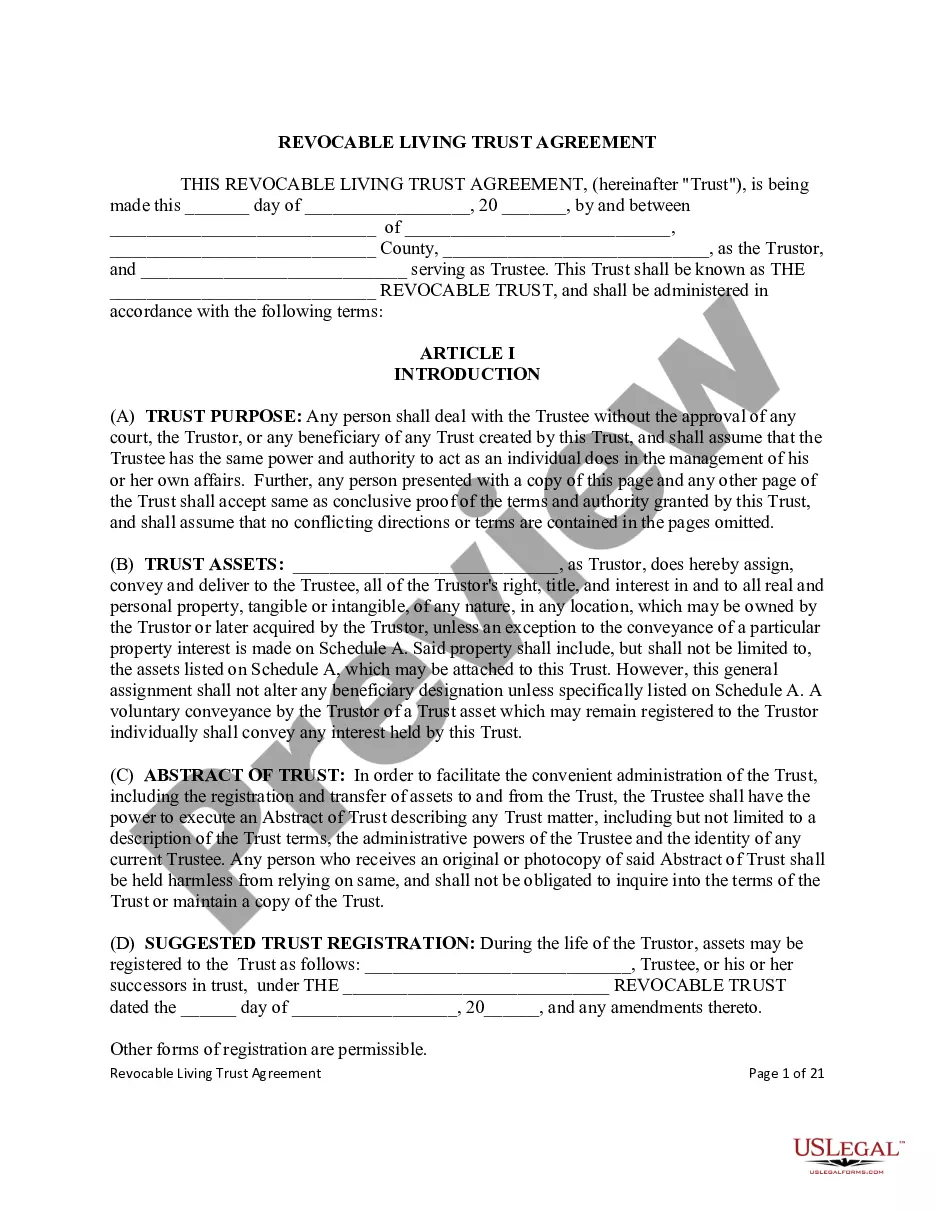
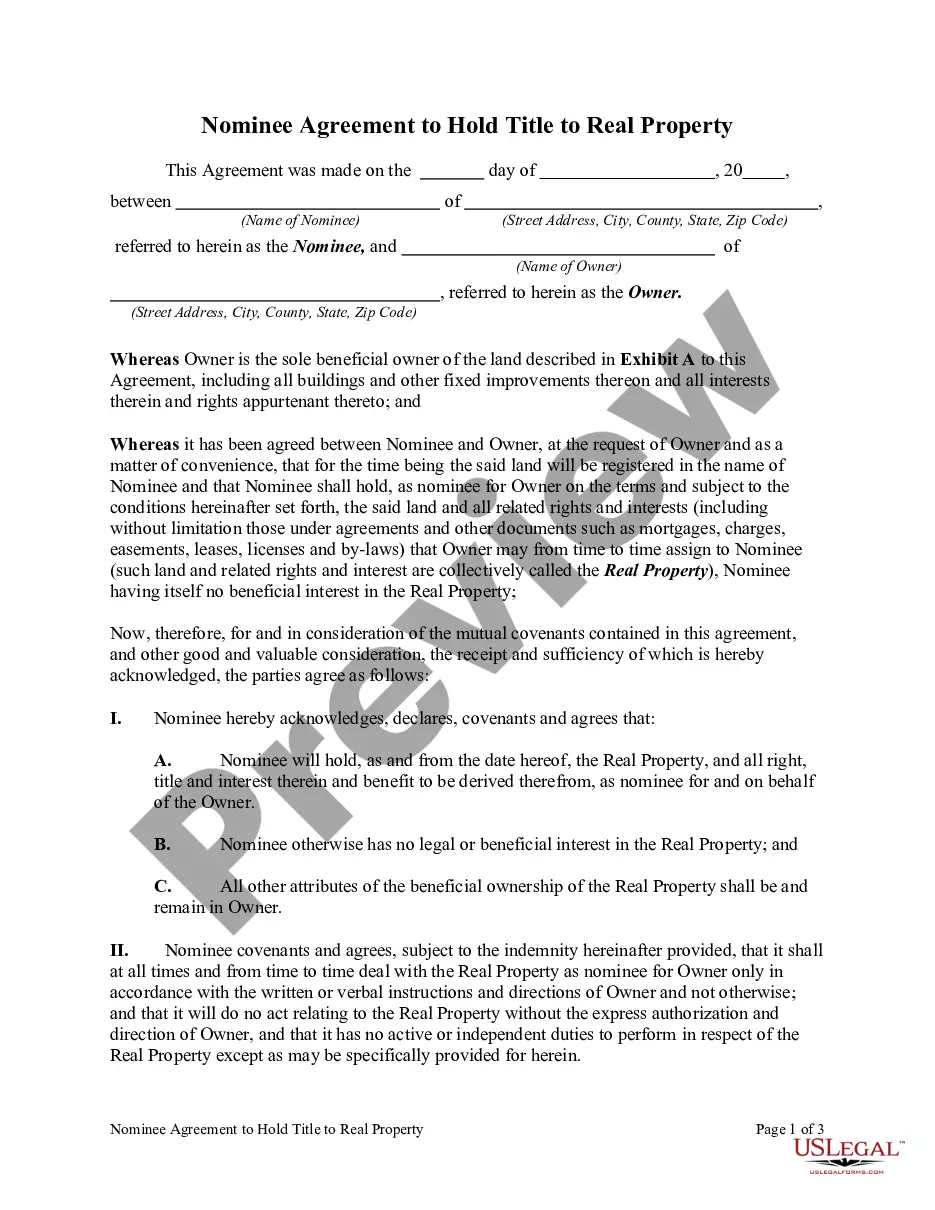
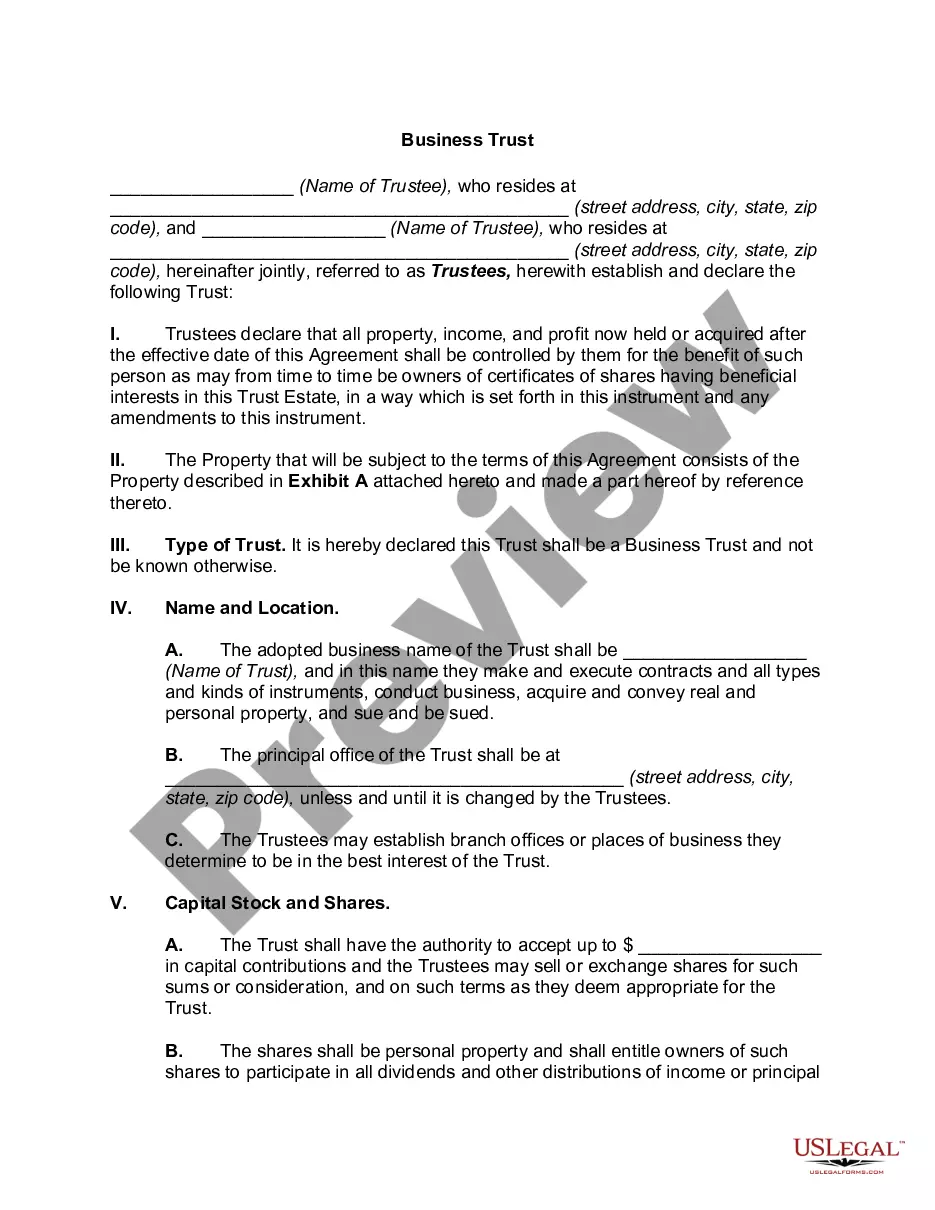
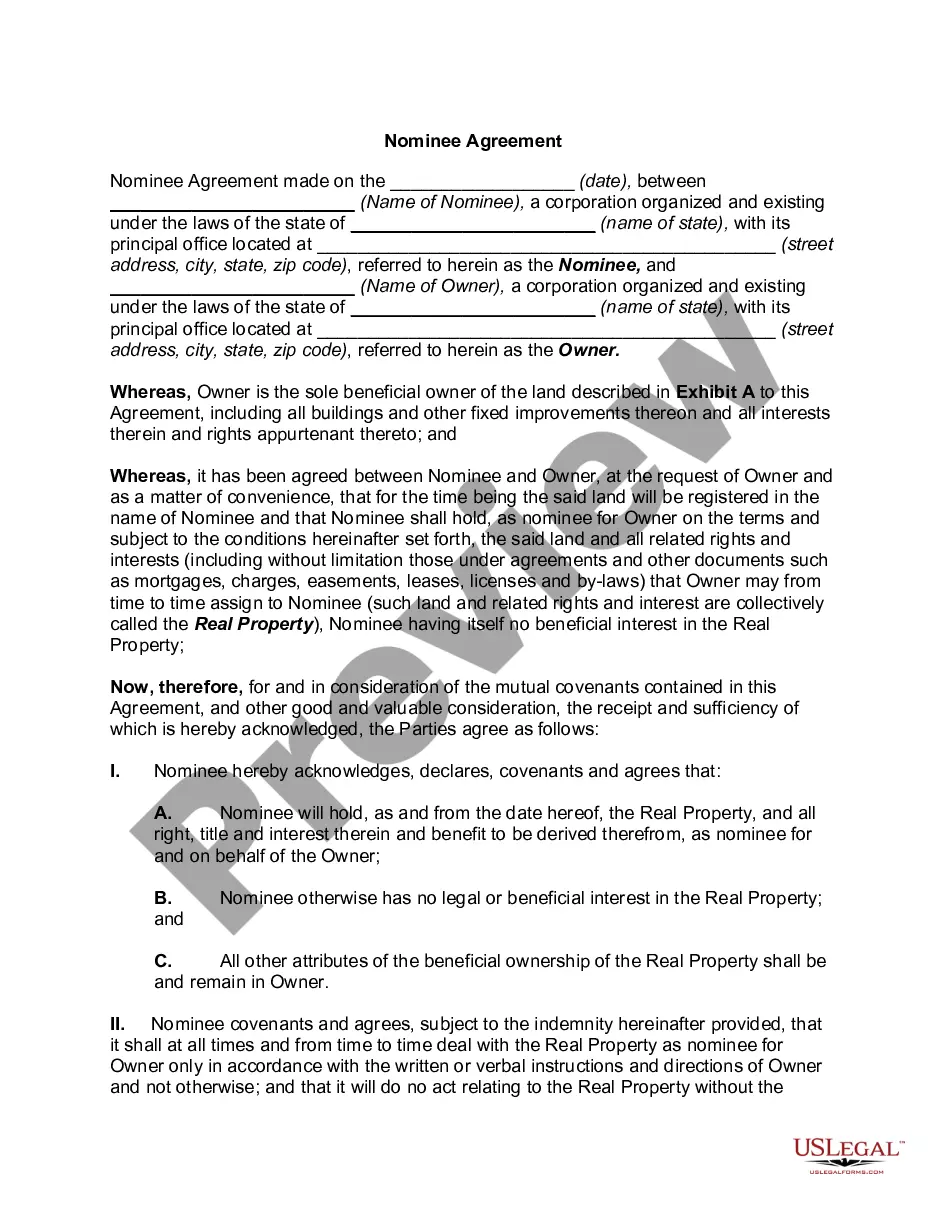
- Utilize the Preview button to review the form.
- Read the description to confirm that you have selected the appropriate form.
- If the form isn’t what you are looking for, use the Search field to find the form that suits your needs.
Form popularity
FAQ
"Qualified beneficiary" means a beneficiary who, on the date the beneficiary's qualification is determined, (i) is a distributee or permissible distributee of trust income or principal; (ii) would be a distributee or permissible distributee of trust income or principal if the interests of the distributees described in ...
If there is no will, the court will appoint an estate administrator. Typically, a person has to apply to the court to be an administrator, usually a spouse or other family member.
If there is no will, the court will appoint an estate administrator. Typically, a person has to apply to the court to be an administrator, usually a spouse or other family member.
Assets won't need to go through probate if they are listed in a will or living trust. Additionally, West Virginia does not require probate for estates worth less than $100,000. Real estate assets do not count toward the $100,000 total.
To make a living trust in West Virginia, you: Choose whether to make an individual or shared trust. Decide what property to include in the trust. Choose a successor trustee. Decide who will be the trust's beneficiaries?that is, who will get the trust property. Create the trust document.
If you die intestate and are not survived by a spouse, your estate will pass down in the following order: (1) descendents (children, then grandchildren, etc.) related to you by blood; (2) parents; (3) brothers and sisters; (4) grandparents; (5) other relatives.
If such will directs the sale of testator's real estate but names no executor, or names an executor and the executor dies, resigns or becomes incapable of acting, and an administrator with the will annexed is appointed, the administrator with the will annexed may sell such real estate as aforesaid.
You might be able to avoid probate in West Virginia by: Establishing and funding a Revocable Living Trust. Titling property smartly: in Joint Tenancy.