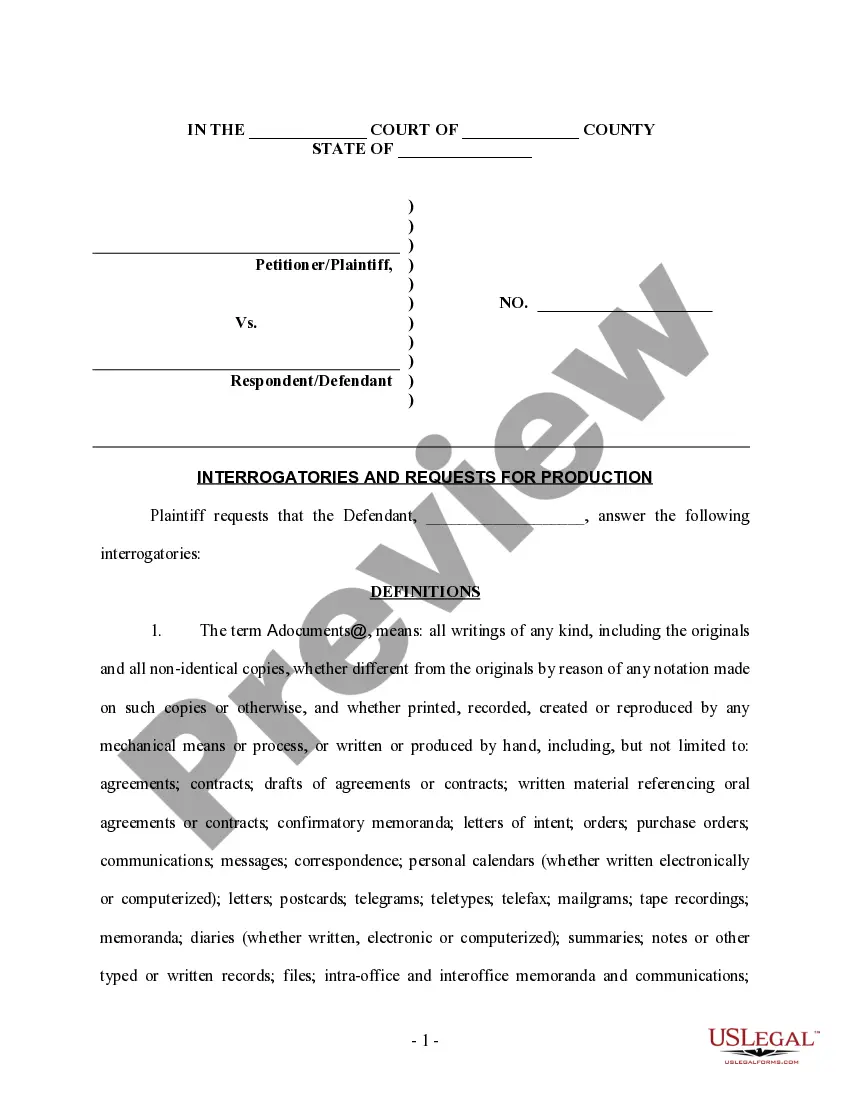
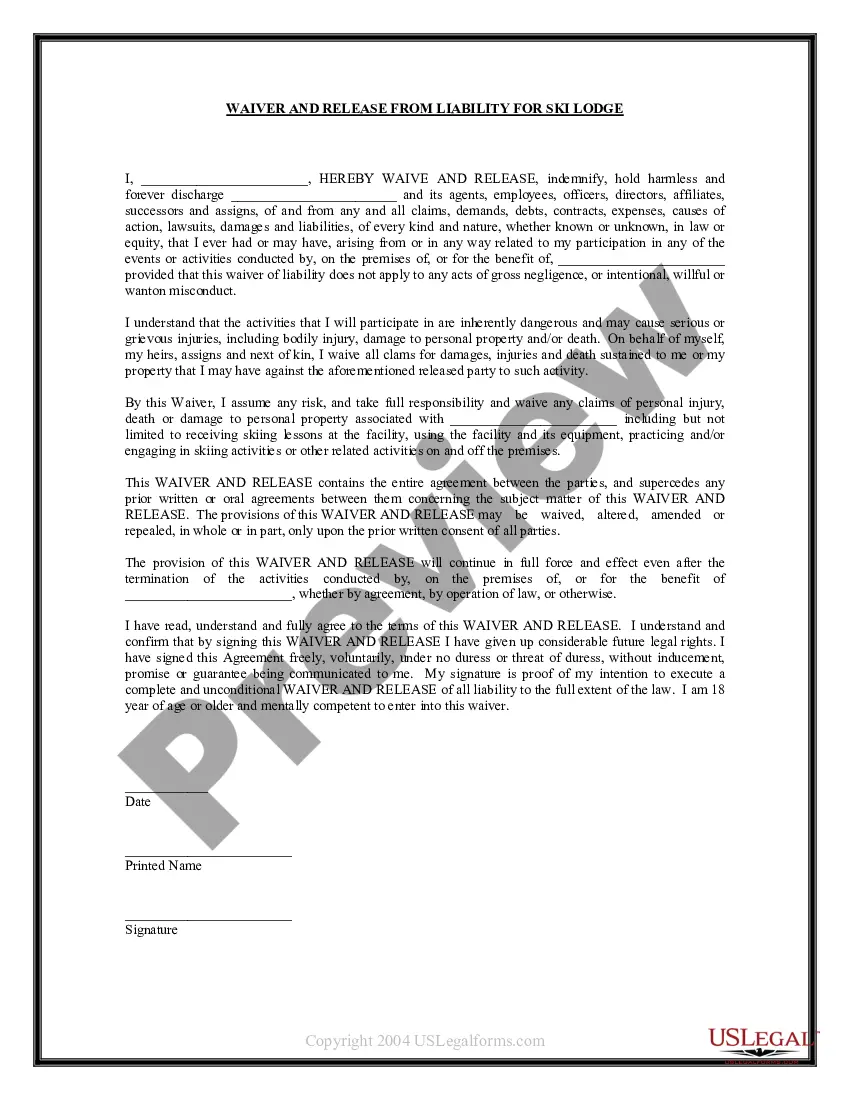
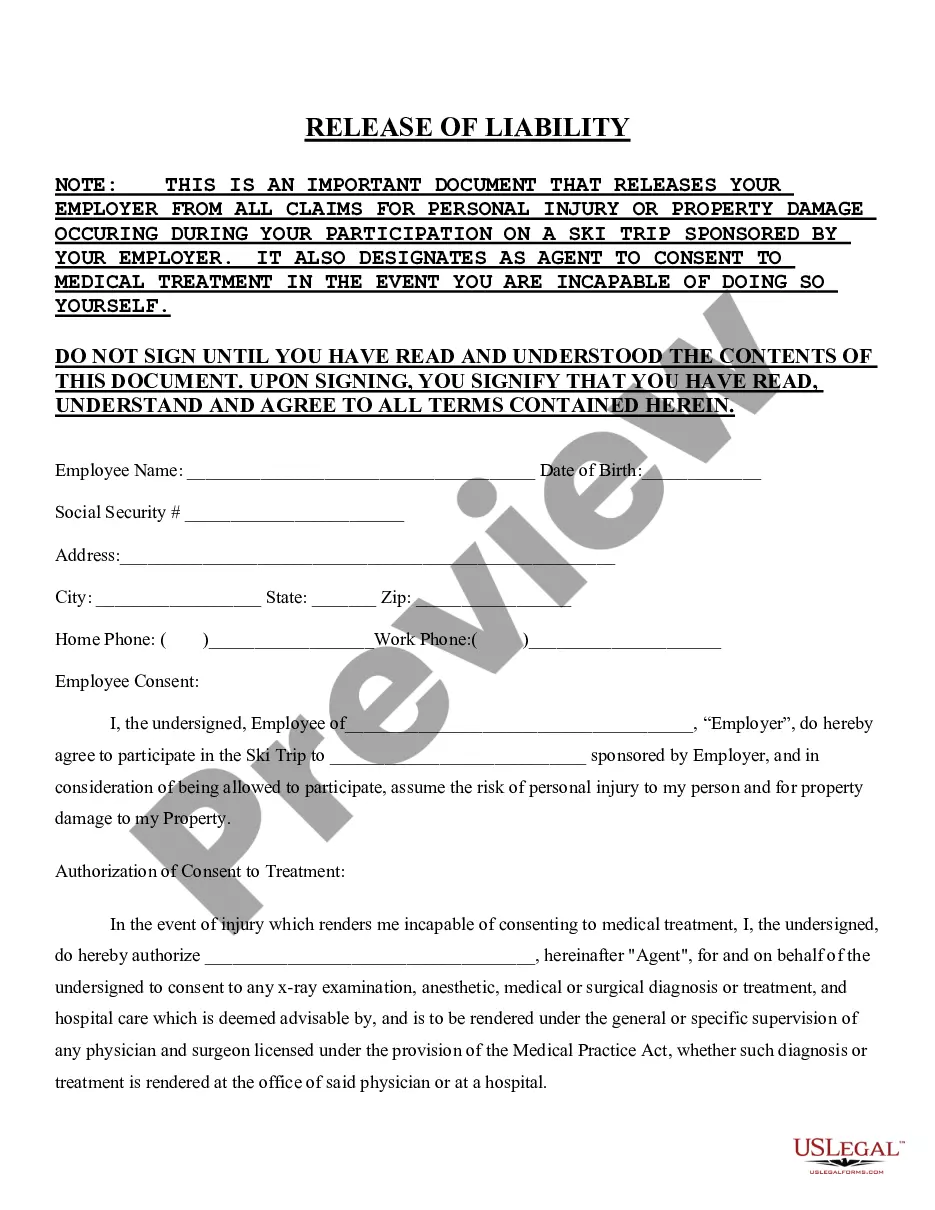
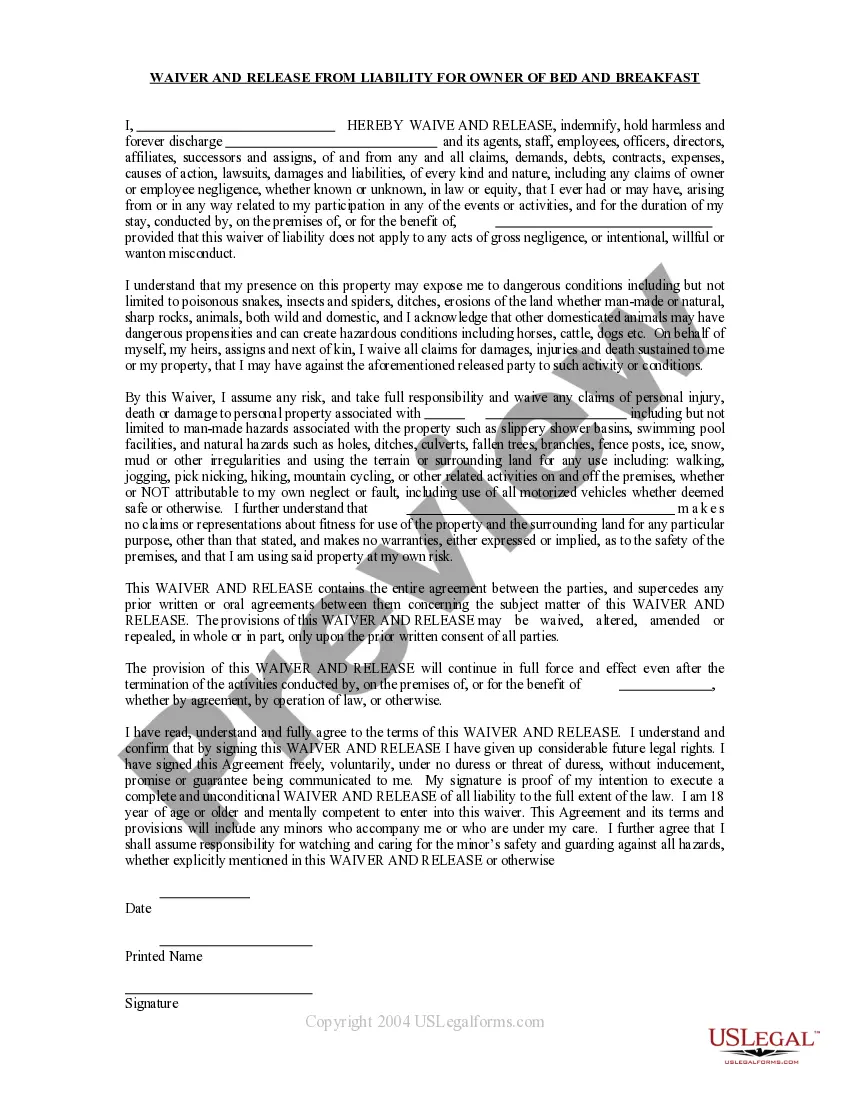
Wisconsin Waiver and Release From Liability For Adult for Ski Lodge
Description
How to fill out Waiver And Release From Liability For Adult For Ski Lodge?
Selecting the optimal authentic document format can be quite challenging. Clearly, there are numerous online templates accessible, but how do you obtain the authentic type you require.
Utilize the US Legal Forms website. The service offers thousands of templates, including the Wisconsin Waiver and Release From Liability For Adult for Ski Lodge, that can be utilized for both business and personal purposes. All of the forms are reviewed by experts and meet state and federal regulations.
If you are currently registered, sign in to your account and click on the Download button to find the Wisconsin Waiver and Release From Liability For Adult for Ski Lodge. Use your account to browse through the legal forms you have previously purchased. Visit the My documents section of your account and obtain another copy of the document you need.
Complete, edit, print, and sign the acquired Wisconsin Waiver and Release From Liability For Adult for Ski Lodge. US Legal Forms is the largest library of legal forms where you can find numerous document templates. Utilize the service to obtain professionally crafted papers that adhere to state requirements.
- If you are a new user of US Legal Forms, here are simple instructions for you to follow.
- First, ensure that you have selected the correct form for your city/state. You can review the document using the Review option and read the document description to confirm this is suitable for you.
- If the form does not meet your requirements, use the Search field to find the appropriate form.
- When you are confident that the form is correct, click the Acquire now button to obtain the form.
- Choose the pricing plan you prefer and enter the necessary information. Create your account and complete the purchase using your PayPal account or credit card.
- Select the file format and download the legal document to your device.
Form popularity
FAQ
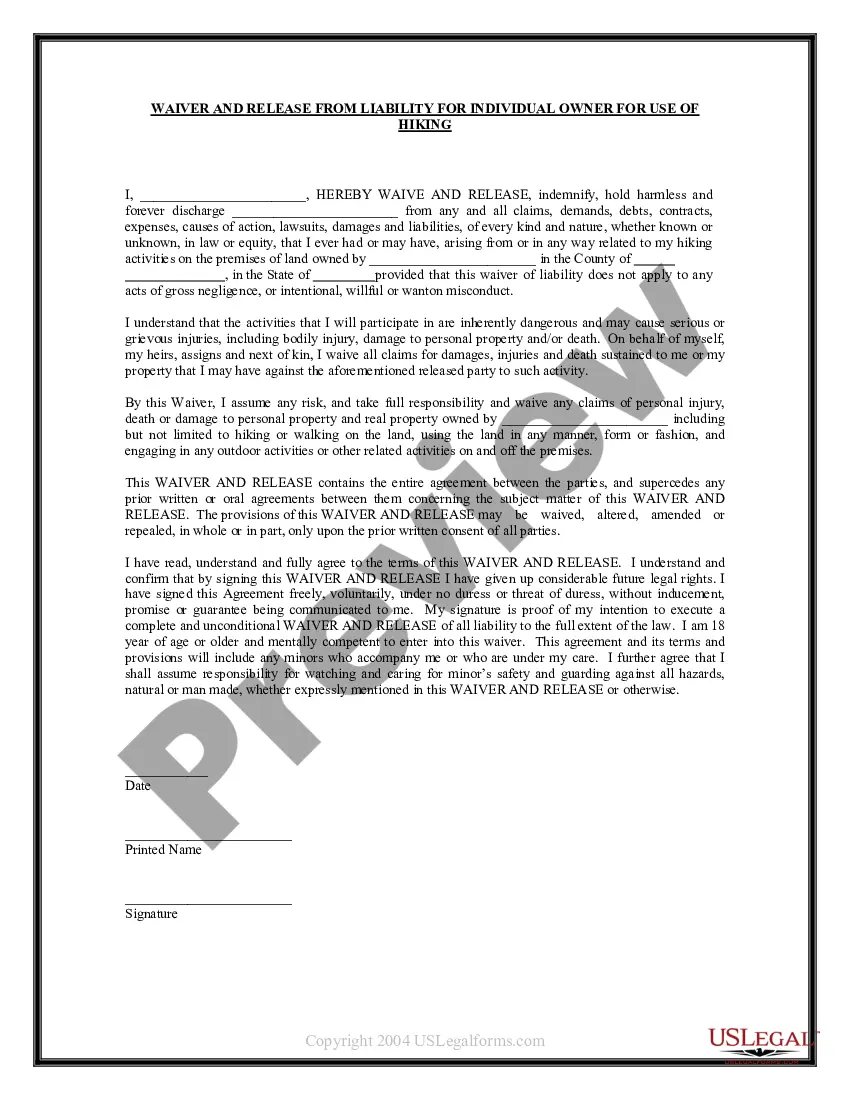
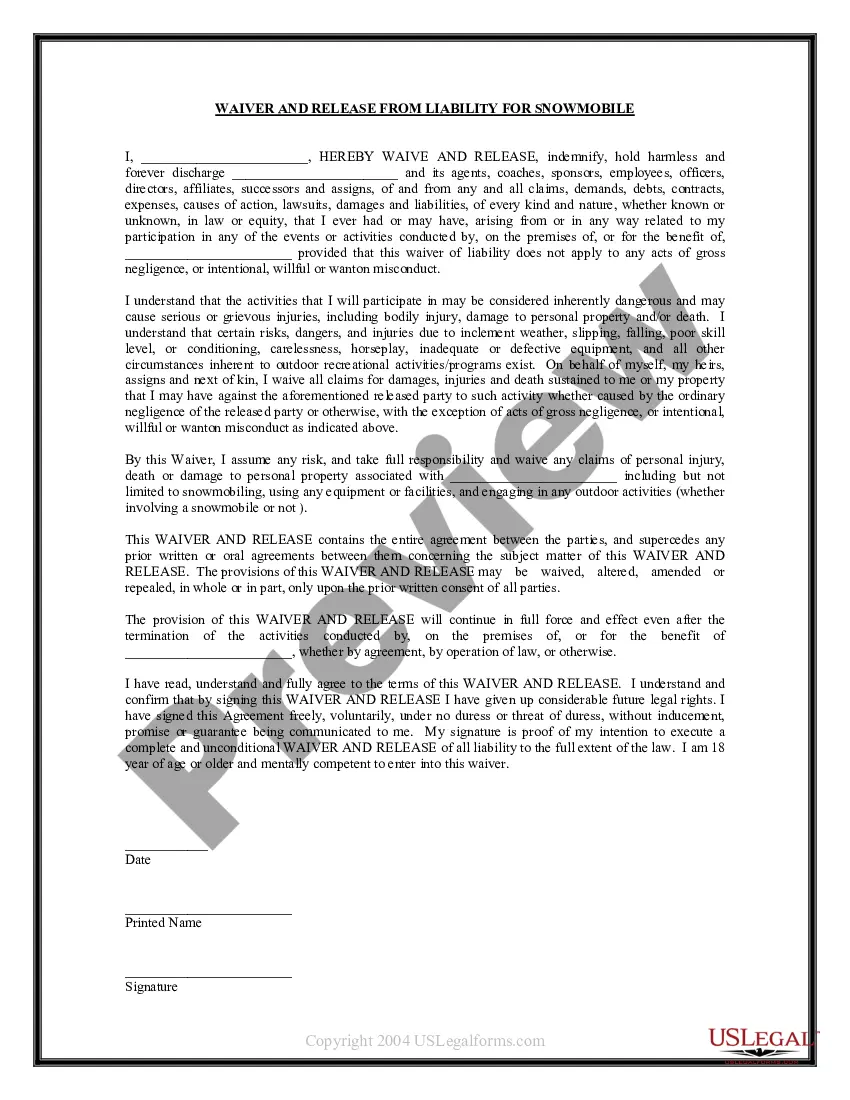
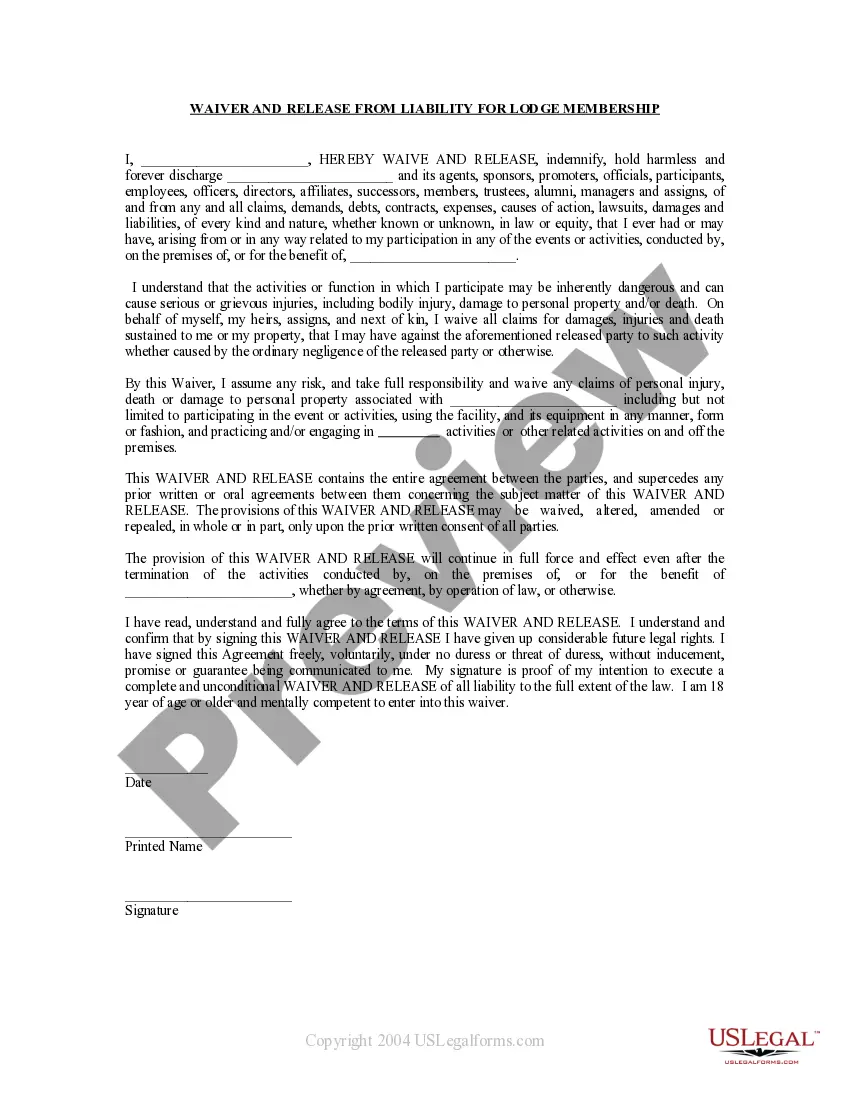
Yes, most ski resorts require participants to sign a waiver before engaging in skiing activities. These waivers, often referred to as a Wisconsin Waiver and Release From Liability For Adult for Ski Lodge, are designed to protect the resort from legal claims arising from accidents. It's crucial for skiers to understand these documents, as they outline the risks and responsibilities involved in skiing at the resort.
Yes, liability waivers are generally enforceable in Wisconsin, provided they meet certain legal criteria. A Wisconsin Waiver and Release From Liability For Adult for Ski Lodge must be clear, specific, and not violate public policy. Courts typically uphold waivers that adequately inform participants of the risks and that are signed voluntarily, reinforcing the need for clear language and understanding.
Yes, you can write your own liability waiver, but it is essential to ensure that it complies with Wisconsin laws. A well-crafted Wisconsin Waiver and Release From Liability For Adult for Ski Lodge should address specific risks associated with skiing and be clear and concise. However, to ensure your waiver is legally sound, consider using a reliable template or service like USLegalForms to guide you in drafting an effective document.
For a Wisconsin Waiver and Release From Liability For Adult for Ski Lodge to be effective, it must meet three key requirements. First, it should clearly state the risks involved in skiing. Second, it must be signed voluntarily by the adult participant. Lastly, the language used should be easy to understand, ensuring that the participant comprehends the waiver's implications.
Under California law, waivers of liability may not prevent people from suing for injuries resulting from gross negligence, recklessness, intentional torts or illegal acts.
Ambiguous language or missing information can invalidate a waiver. The waiver contains errors that make it invalid. The language of the waiver must obey relevant state laws. An improperly worded or drafted waiver, as well as one that violates the law or public policy, may not hold up in court.
A liability waiver, or release waiver, is a legal document that a company or organization requires members of the public to sign in order to protect their organization from being sued if you sustain an injury.
A waiver is an exculpatory contract. That means it's used to excuse a party from responsibility when the other contracted party is injured by either known or unknown risks in a particular activity. This includes inherent risks and ordinary negligence.
So, if an accident happens and injury occurs, is a Waiver effective in protecting the institution from liability and preventing a lawsuit from the injured party? The answer is that, if properly worded and signed, the Waiver is likely valid and will preclude legal claims for injuries.
Generally, a liability waiver document is a legally binding agreement that relinquishes the right of one party to pursue legal remedy for injuries accrued on the property, regardless of fault involved.