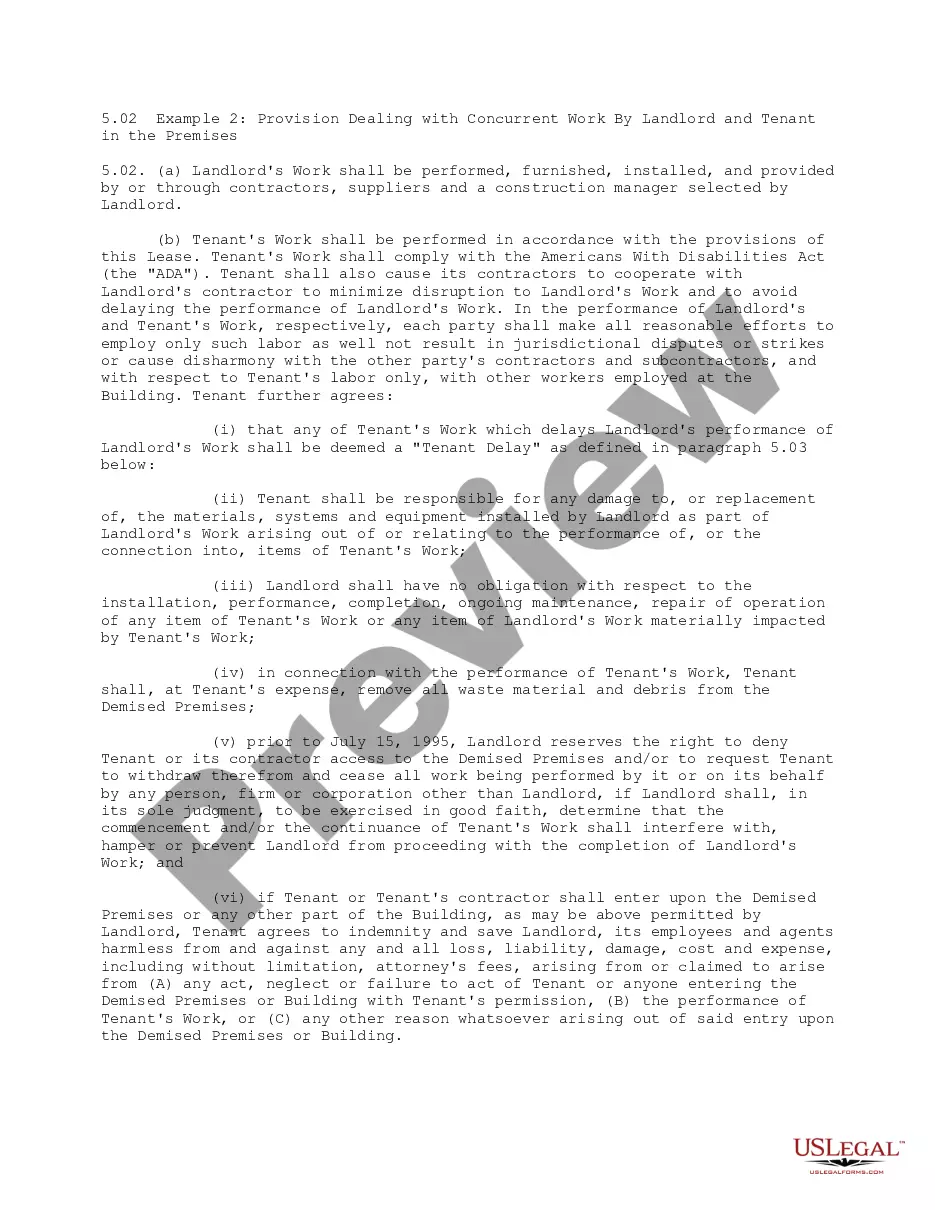
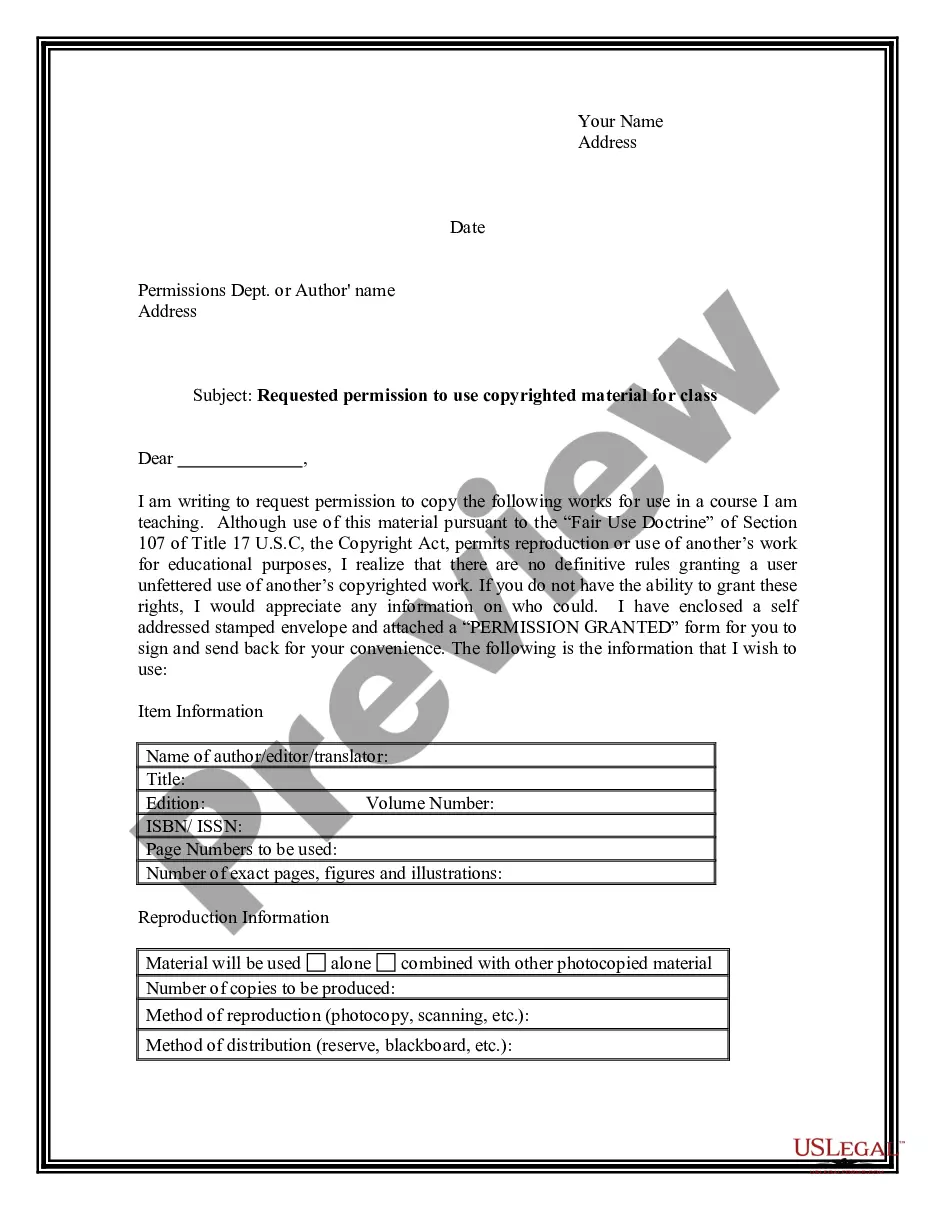
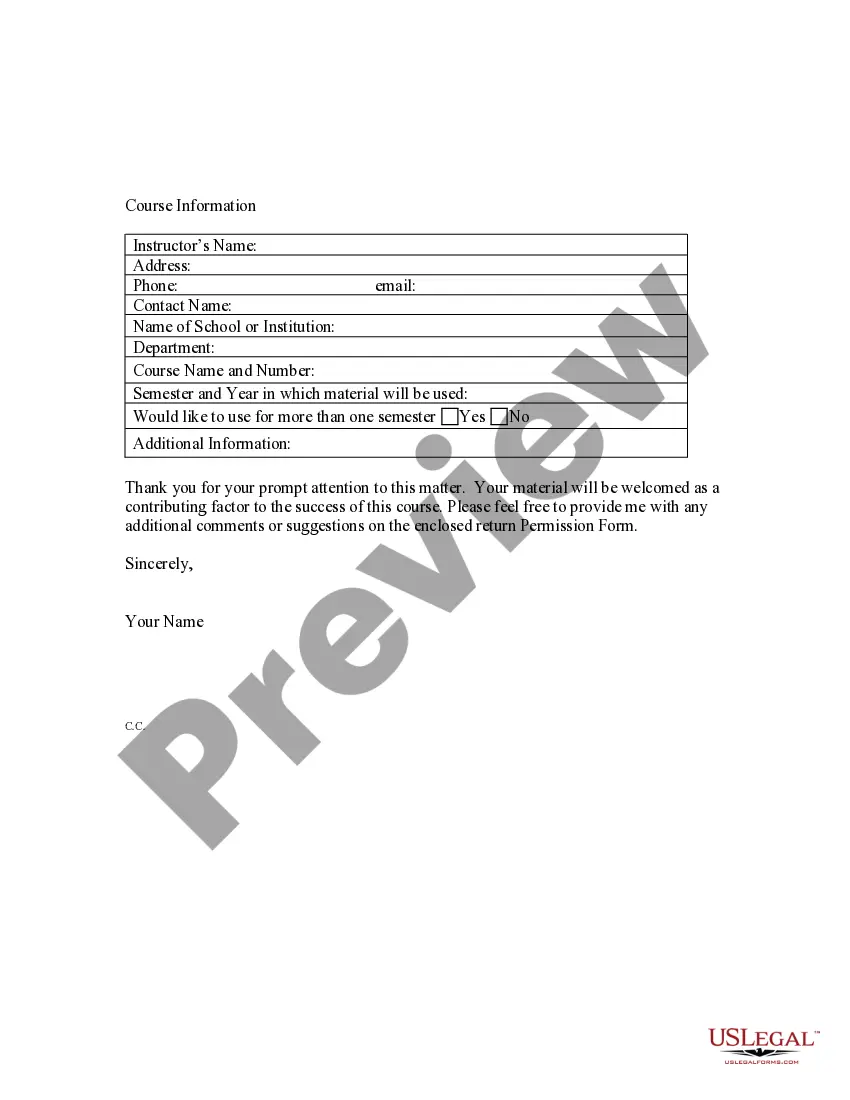
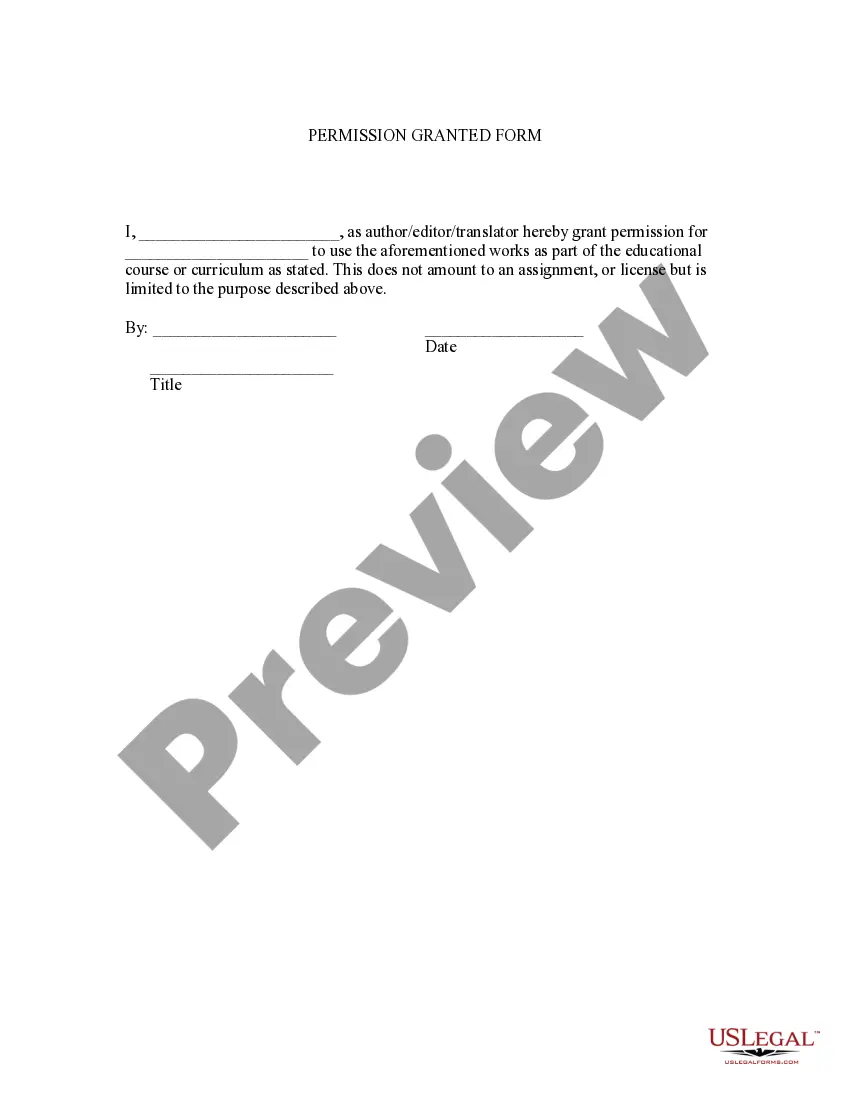
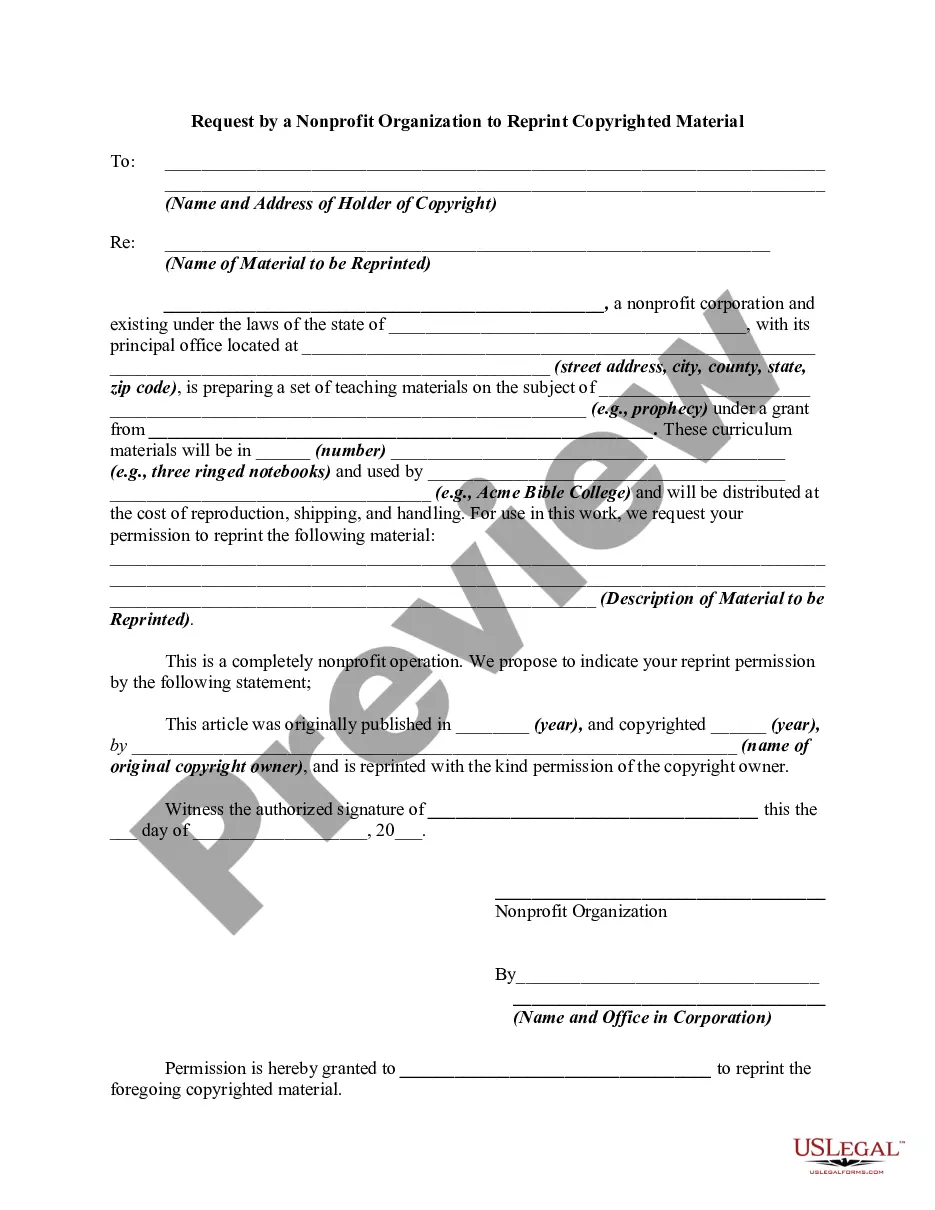
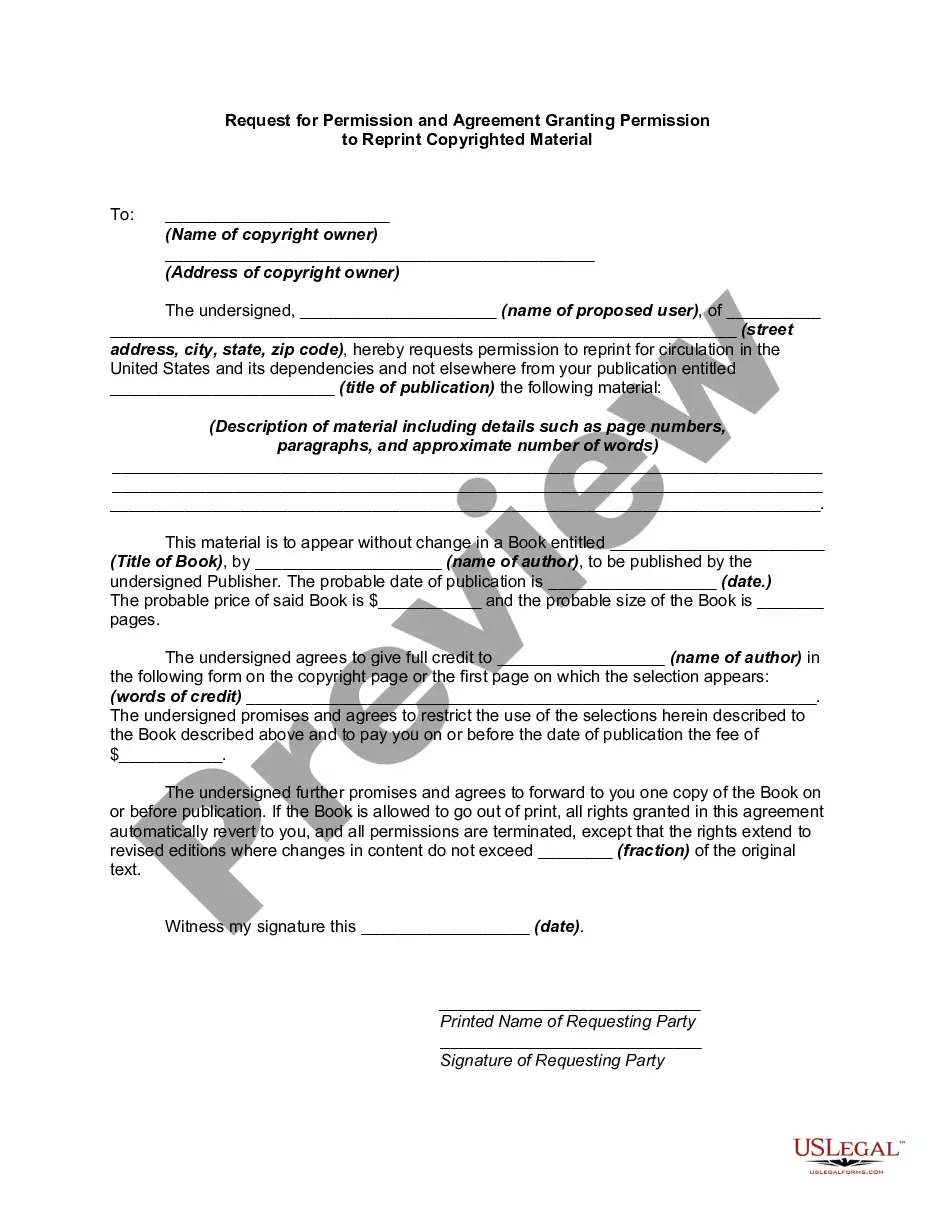
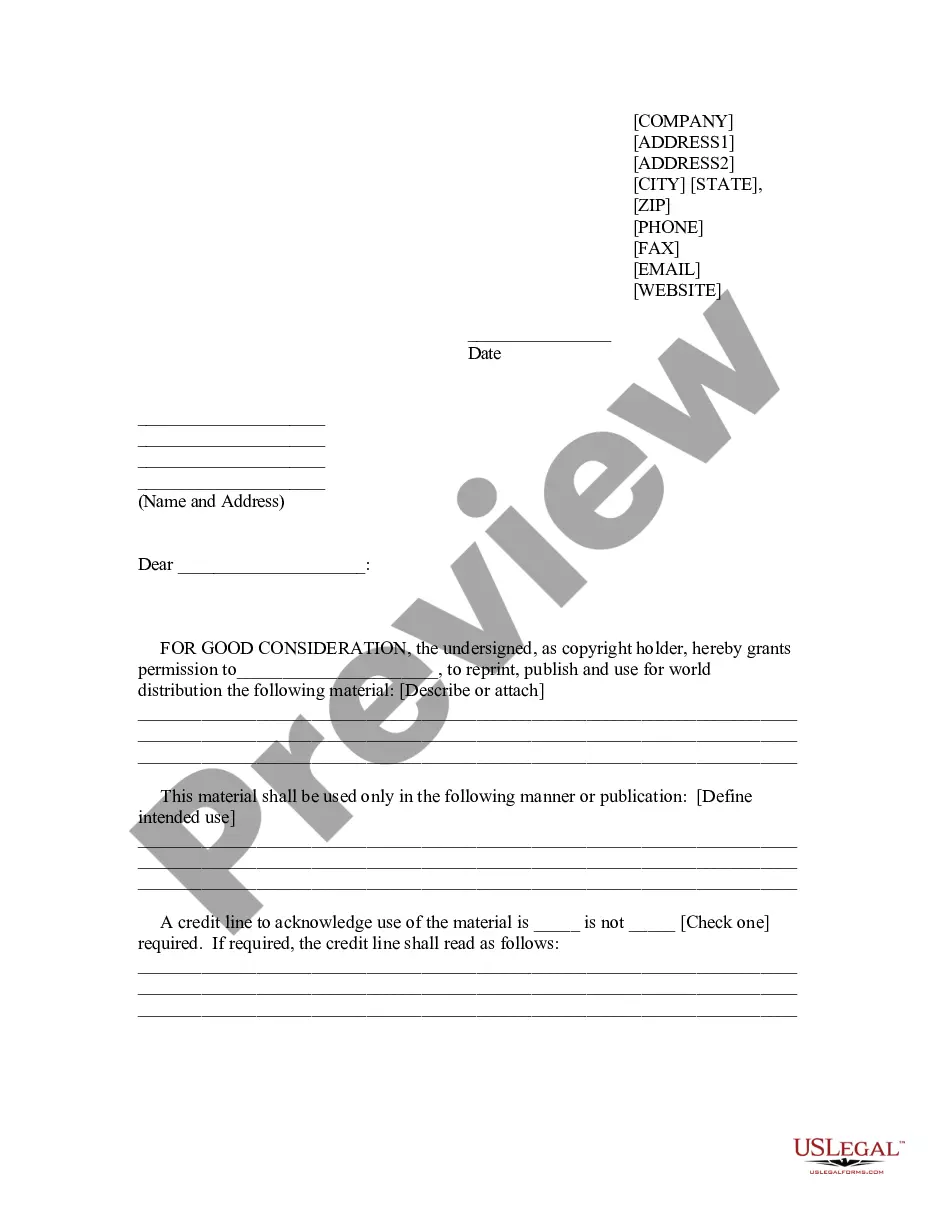
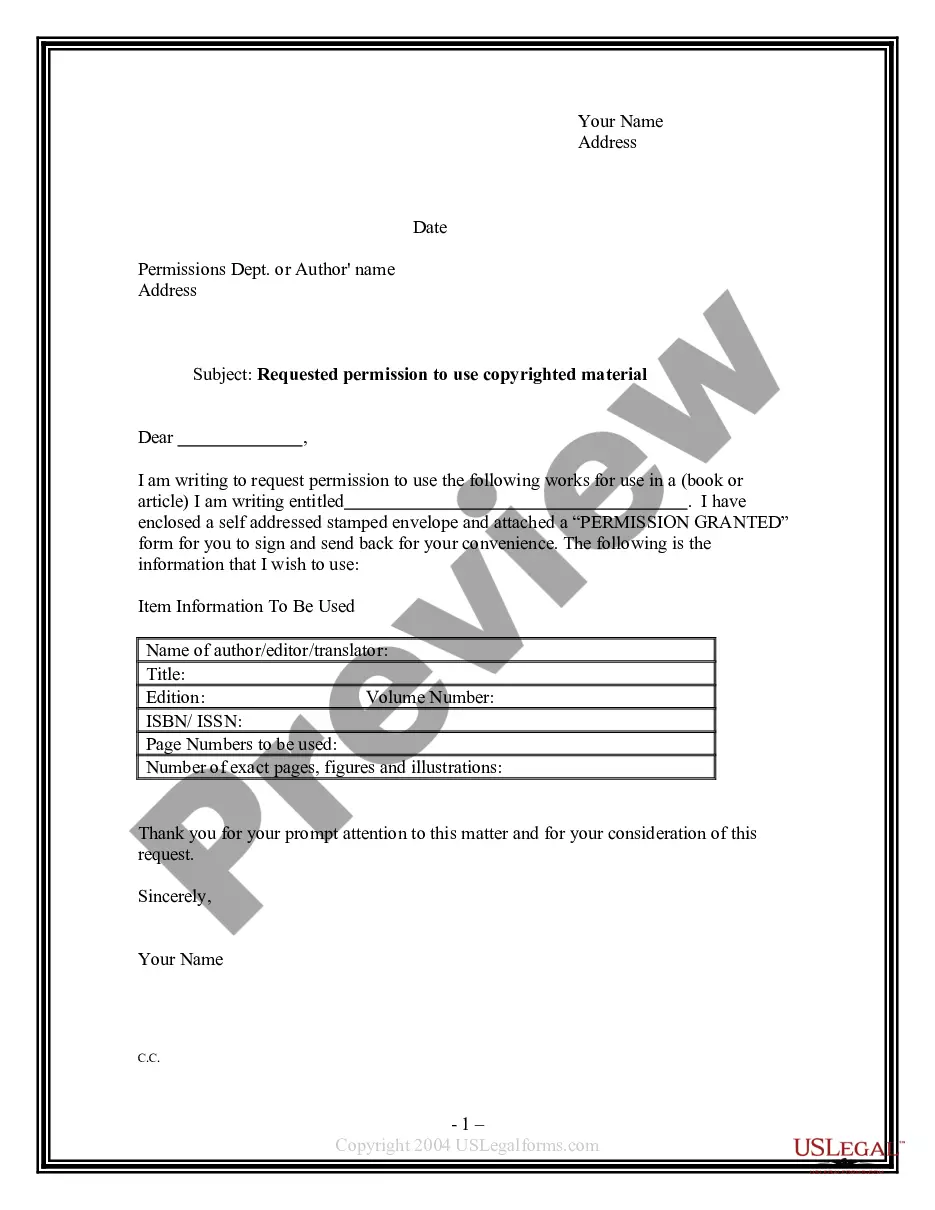
This is a permission request made by a teacher or professor requesting the right to use an author's material for a class or as part of a school curriculum. This form also includes an addendum for the author or editor to sign and send back to the teacher granting permission.
Wisconsin Permission Request to Use Copyrighted Material For Class
State:
Multi-State
Control #:
US-PRM-04
Format:
Word;
Rich Text
Instant download
Description
Free preview

Get your form ready online
Our built-in tools help you complete, sign, share, and store your documents in one place.
Built-in online Word editor
Make edits, fill in missing information, and update formatting in US Legal Forms—just like you would in MS Word.
Export easily
Download a copy, print it, send it by email, or mail it via USPS—whatever works best for your next step.
E-sign your document
Sign and collect signatures with our SignNow integration. Send to multiple recipients, set reminders, and more. Go Premium to unlock E-Sign.
Notarize online 24/7
If this form requires notarization, complete it online through a secure video call—no need to meet a notary in person or wait for an appointment.
Store your document securely
We protect your documents and personal data by following strict security and privacy standards.

Make edits, fill in missing information, and update formatting in US Legal Forms—just like you would in MS Word.

Download a copy, print it, send it by email, or mail it via USPS—whatever works best for your next step.

Sign and collect signatures with our SignNow integration. Send to multiple recipients, set reminders, and more. Go Premium to unlock E-Sign.

If this form requires notarization, complete it online through a secure video call—no need to meet a notary in person or wait for an appointment.

We protect your documents and personal data by following strict security and privacy standards.
Looking for another form?



How to fill out Permission Request To Use Copyrighted Material For Class?
Are you in a location where you require documentation for either business or personal reasons almost daily.
There are numerous official form templates accessible online, but finding reliable ones is challenging.
US Legal Forms provides a vast selection of form templates, such as the Wisconsin Permission Request to Use Copyrighted Material For Class, designed to comply with federal and state regulations.
Utilize US Legal Forms, the largest collection of official forms, to save time and minimize errors.
The service offers professionally designed legal document templates that can be used for various purposes. Create an account on US Legal Forms and start making your life a bit easier.
- If you are already familiar with the US Legal Forms website and have an account, simply Log In.
- Then, you can download the Wisconsin Permission Request to Use Copyrighted Material For Class template.
- If you do not have an account and wish to start using US Legal Forms, follow these steps.
- Find the form you need and ensure it is for the correct city/county.
- Use the Review button to examine the form.
- Check the summary to confirm that you have selected the right form.
- If the form is not what you are looking for, utilize the Search box to find a form that meets your needs and requirements.
- Once you find the appropriate form, click Buy now.
- Select the payment plan you prefer, provide the necessary details to create your account, and complete the transaction using your PayPal or credit card.
- Choose a convenient document format and download your copy.
- Access all the form templates you have purchased in the My documents section. You can obtain an additional copy of the Wisconsin Permission Request to Use Copyrighted Material For Class anytime, if needed. Click the desired form to download or print the document template.
Form popularity
FAQ
To ask for permission to use copyrighted material in your class, start by identifying the copyright holder. You can often find this information in the material itself or through a simple online search. Next, draft a Wisconsin Permission Request to Use Copyrighted Material For Class, clearly stating your intention and how you plan to use the material. Finally, send your request to the copyright holder and wait for their response, ensuring you provide all necessary details to facilitate a timely decision.
Students can use copyrighted materials for school use, but they must follow certain guidelines. Obtaining permission is crucial unless the use qualifies as fair use, which can be complex. It is advisable for students to familiarize themselves with these rules to avoid copyright infringement. Utilizing the Wisconsin Permission Request to Use Copyrighted Material For Class from USLegalForms can help ensure compliance and protect your educational efforts.
To request permission to use copyrighted material, draft a formal letter or email to the copyright holder. Clearly outline how you plan to use the material, the duration of use, and the audience. Be polite and respectful, and ensure to include your contact information for any follow-up. For added assistance, rely on the Wisconsin Permission Request to Use Copyrighted Material For Class tool on USLegalForms to simplify your request.
You can legally use copyrighted material in a school project by obtaining permission from the copyright owner or by using content that falls under fair use. Fair use typically includes limited excerpts for educational purposes, but it is essential to understand its boundaries. If you are unsure, it’s wise to create a Wisconsin Permission Request to Use Copyrighted Material For Class and submit it through the proper channels. USLegalForms offers resources to guide you through this process.
To write a letter requesting permission to use copyrighted material, start by clearly stating your intent. Include specific details about the material, such as its title, author, and the context in which you plan to use it. Mention the purpose of your request, whether for educational use or another reason. For a streamlined process, consider using the Wisconsin Permission Request to Use Copyrighted Material For Class template available on USLegalForms.
I am writing to request permission to (photocopy, scan, post to Blackboard, put on library reserve, put on electronic reserve, include in a course pack, whatever, but be specific) the following material to which, I believe, you hold the copyright.
Section 107 of the Copyright Act gives examples of purposes that are favored by fair use: criticism, comment, news reporting, teaching (including multiple copies for classroom use), scholarship, and research. Use for one of these illustrative purposes is not automatically fair, and uses for other purposes can be
One way to make sure your intended use of a copyrighted work is lawful is to obtain permission or a license from the copyright owner. Contact a copyright owner or author as far as pos- sible in advance of when you want to use the material specified in your permissions request.
In general, the permissions process involves a simple five-step procedure:Determine if permission is needed.Identify the owner.Identify the rights needed.Contact the owner and negotiate whether payment is required.Get your permission agreement in writing.
The term public domain refers to creative materials that are not protected by intellectual property laws such as copyright, trademark, or patent laws. The public owns these works, not an individual author or artist. Anyone can use a public domain work without obtaining permission, but no one can ever own it.