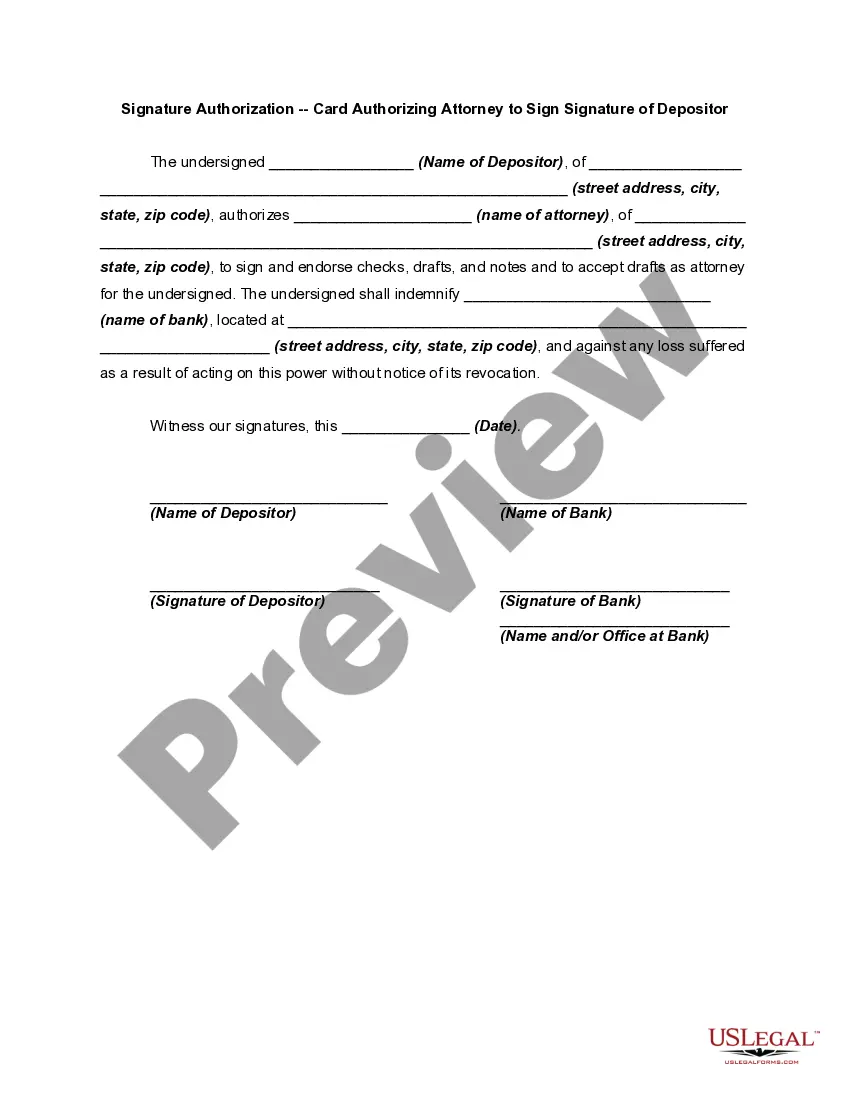
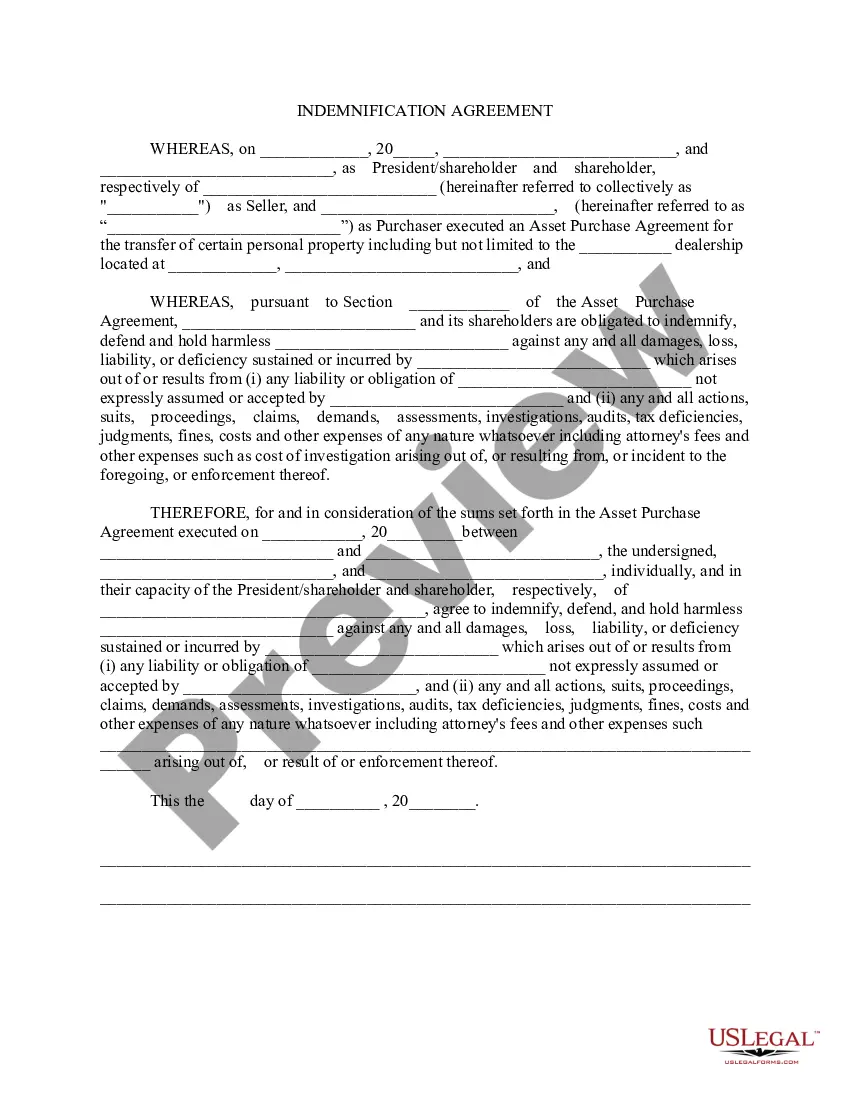
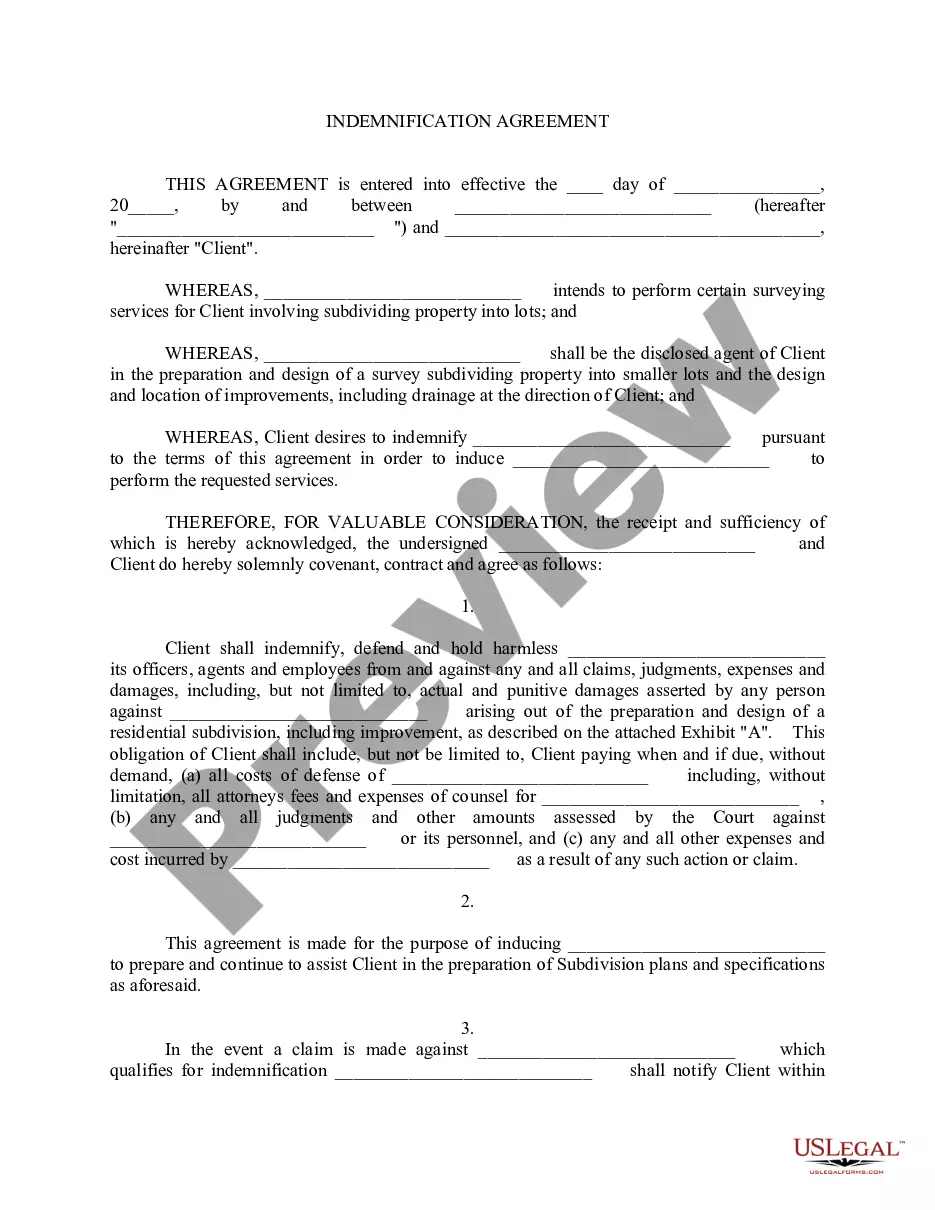
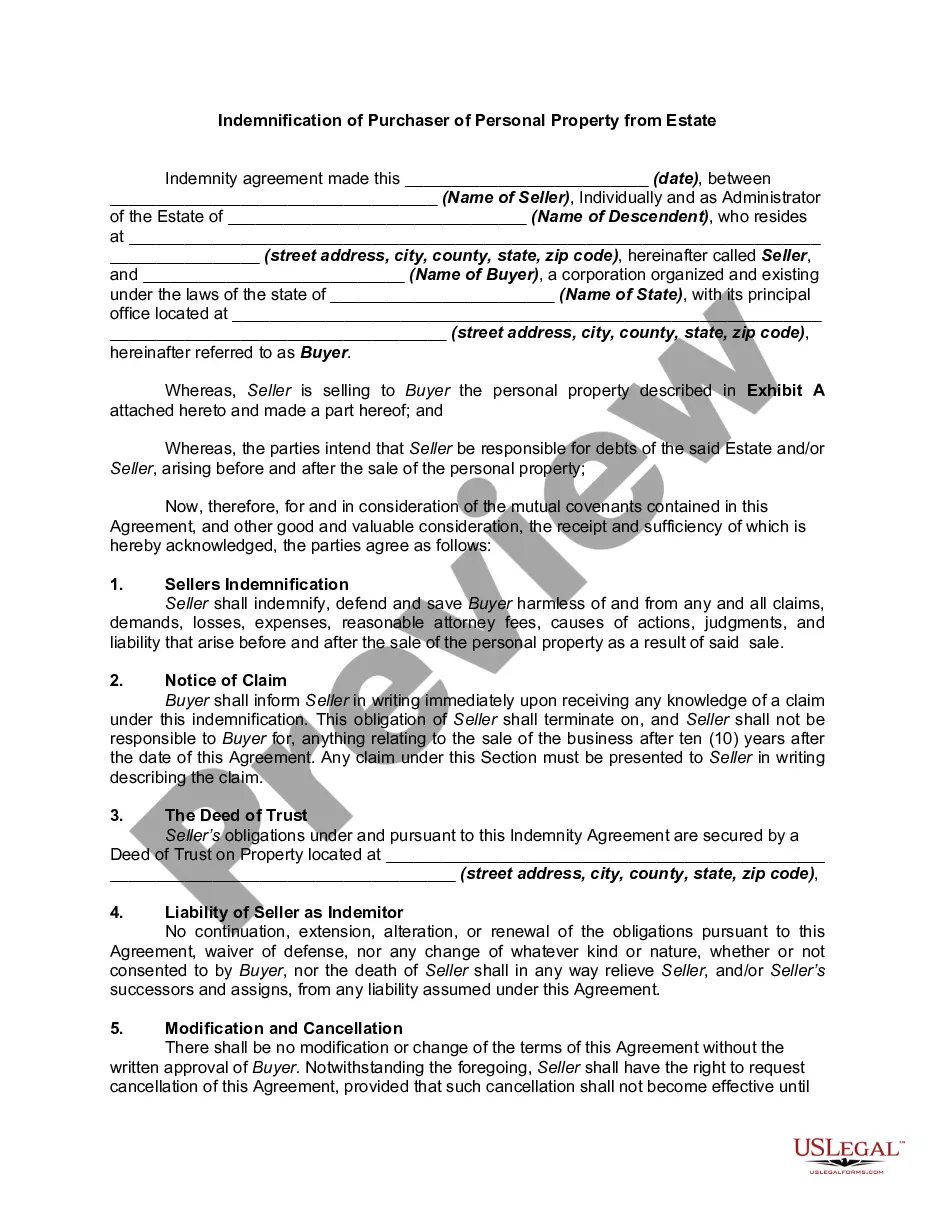
Wisconsin Indemnification Agreement for Personal Property
Description
Get your form ready online
Our built-in tools help you complete, sign, share, and store your documents in one place.
Make edits, fill in missing information, and update formatting in US Legal Forms—just like you would in MS Word.
Download a copy, print it, send it by email, or mail it via USPS—whatever works best for your next step.
Sign and collect signatures with our SignNow integration. Send to multiple recipients, set reminders, and more. Go Premium to unlock E-Sign.
If this form requires notarization, complete it online through a secure video call—no need to meet a notary in person or wait for an appointment.
We protect your documents and personal data by following strict security and privacy standards.

Make edits, fill in missing information, and update formatting in US Legal Forms—just like you would in MS Word.

Download a copy, print it, send it by email, or mail it via USPS—whatever works best for your next step.

Sign and collect signatures with our SignNow integration. Send to multiple recipients, set reminders, and more. Go Premium to unlock E-Sign.

If this form requires notarization, complete it online through a secure video call—no need to meet a notary in person or wait for an appointment.

We protect your documents and personal data by following strict security and privacy standards.
Looking for another form?

How to fill out Indemnification Agreement For Personal Property?
US Legal Forms - one of the largest collections of legal templates in the United States - provides a variety of legal document formats available for download or printing.
While using the website, you will find thousands of templates for business and personal purposes, organized by types, states, or keywords.
You can find the latest versions of documents such as the Wisconsin Indemnification Agreement for Personal Property in just a few minutes.
Review the form description to confirm that you've chosen the right form.
If the form doesn't meet your needs, utilize the Search field at the top of the page to find one that does.
- If you already have a subscription, Log In and download the Wisconsin Indemnification Agreement for Personal Property from your US Legal Forms library.
- The Acquire button will appear on every form you view.
- You can access all previously downloaded templates from the My documents section of your account.
- To use US Legal Forms for the first time, follow these simple steps to help you get started.
- Ensure you have selected the correct form for the city/county.
- Click the Review button to examine the form's content.
Form popularity
FAQ
Example of Indemnity in Business If the building sustains significant structural damages from fire, then the insurance company will indemnify the owner for the costs to repair by way of reimbursing the owner or by reconstructing the damaged areas using its own authorized contractors.
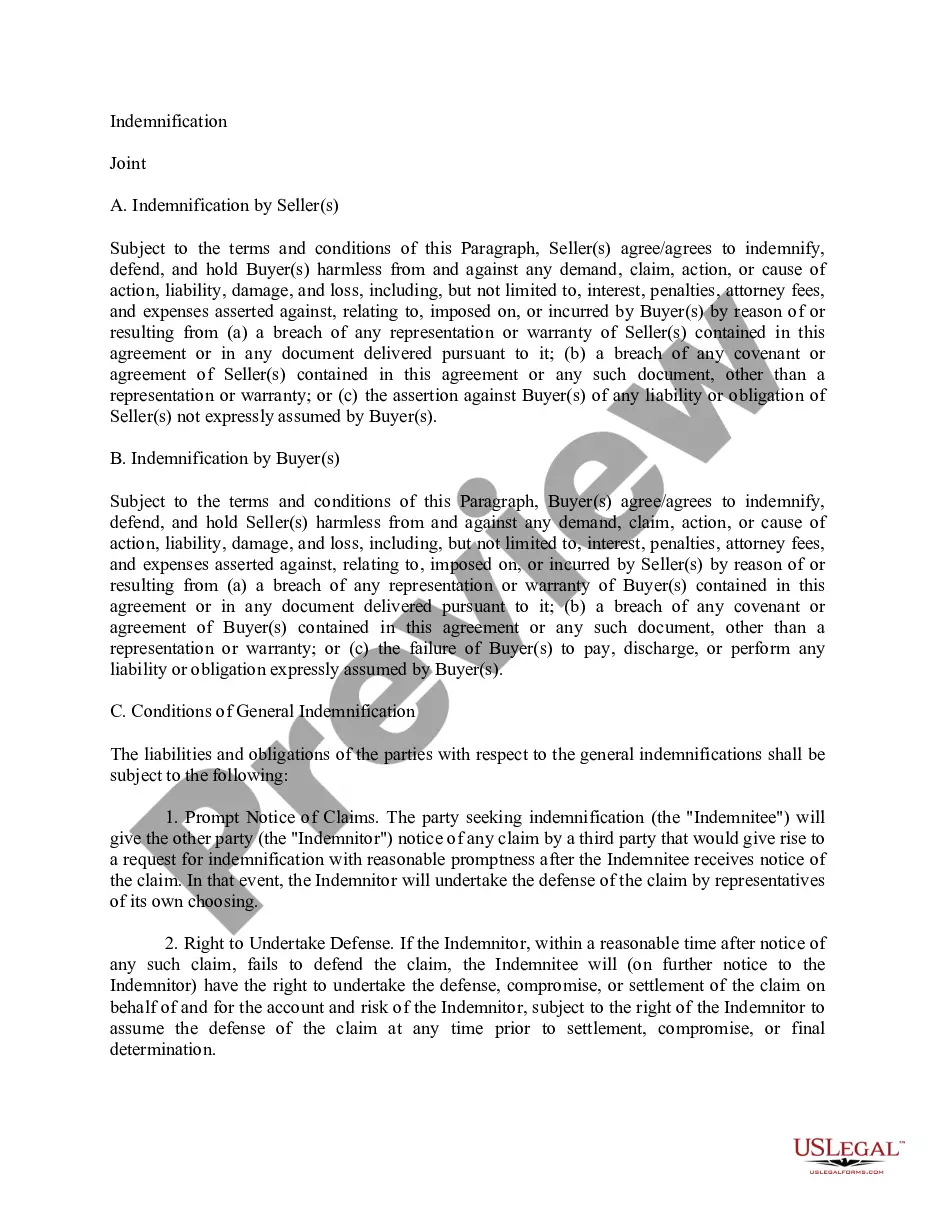
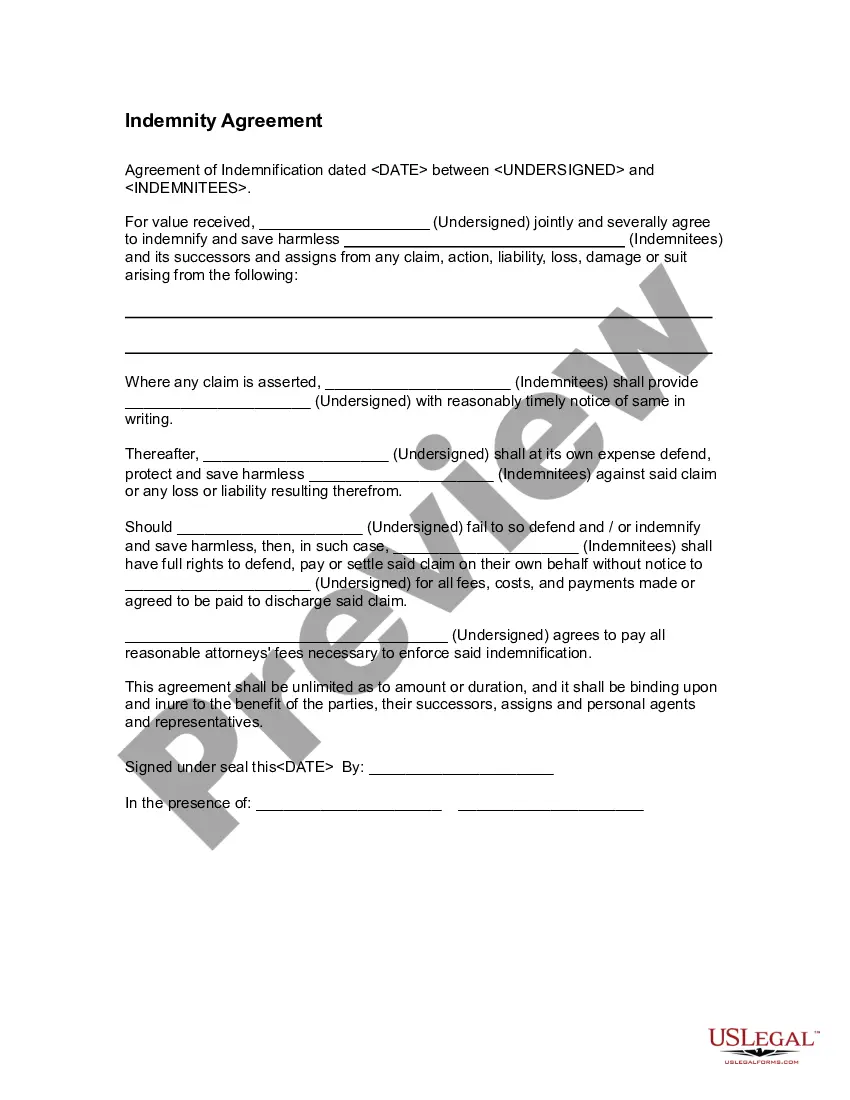
What is an Indemnity Agreement? An indemnity agreement, also known as a hold harmless agreement, waiver of liability, release of liability, or no-fault agreement, safeguards the indemnified party against loss or damages associated with a third-party business arrangement.
"Each party agrees to indemnify, defend, and hold harmless the other party from and against any loss, cost, or damage of any kind (including reasonable outside attorneys' fees) to the extent arising out of its breach of this Agreement, and/or its negligence or willful misconduct."
Indemnification provisions are generally enforceable. There are certain exceptions however. Indemnifications that require a party to indemnify another party for any claim irrespective of fault ('broad form' or 'no fault' indemnities) generally have been found to violate public policy.
Example 1: A service provider asking their customer to indemnify them to protect against misuse of their work product. Example 2: A rental car company, as the rightful owner of the car, having their customer indemnify them from any damage caused by the customer during the course of the retnal.
A personal indemnity agreement is an agreement between you and the bond company that states that you will compensate the surety company for any losses.
Company/Business/Individual Name shall fully indemnify, hold harmless and defend and its directors, officers, employees, agents, stockholders and Affiliates from and against all claims, demands, actions, suits, damages, liabilities, losses, settlements, judgments, costs and expenses (including but not
When the term indemnity is used in the legal sense, it may also refer to an exemption from liability for damages. Indemnity is a contractual agreement between two parties. In this arrangement, one party agrees to pay for potential losses or damages caused by another party.
To indemnify something basically means to make good a loss. In other words, it means that one party will compensate the other in case it suffers some losses. For example, A promises to deliver certain goods to B for Rs. 2,000 every month.
California courts have held that indemnify and hold harmless confer distinct rights: (1) Indemnify is an offensive right, allowing the indemnified party to seek indemnification from the indemnifying party; (2) Hold harmless is a defensive right, protecting the indemnified party from being bothered by the other