Wisconsin Employment Agreement with Business Development Manager with Covenant not to Compete
Description
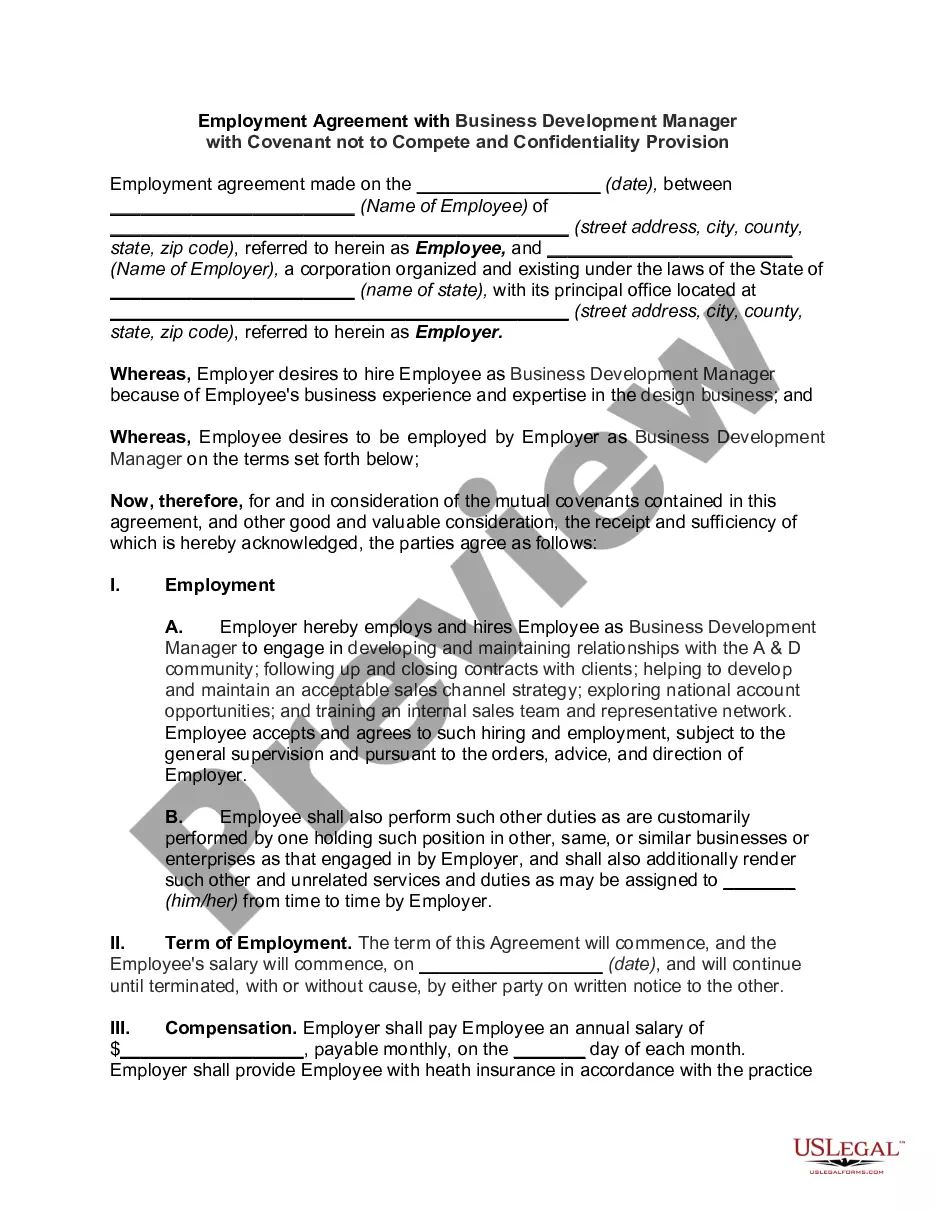
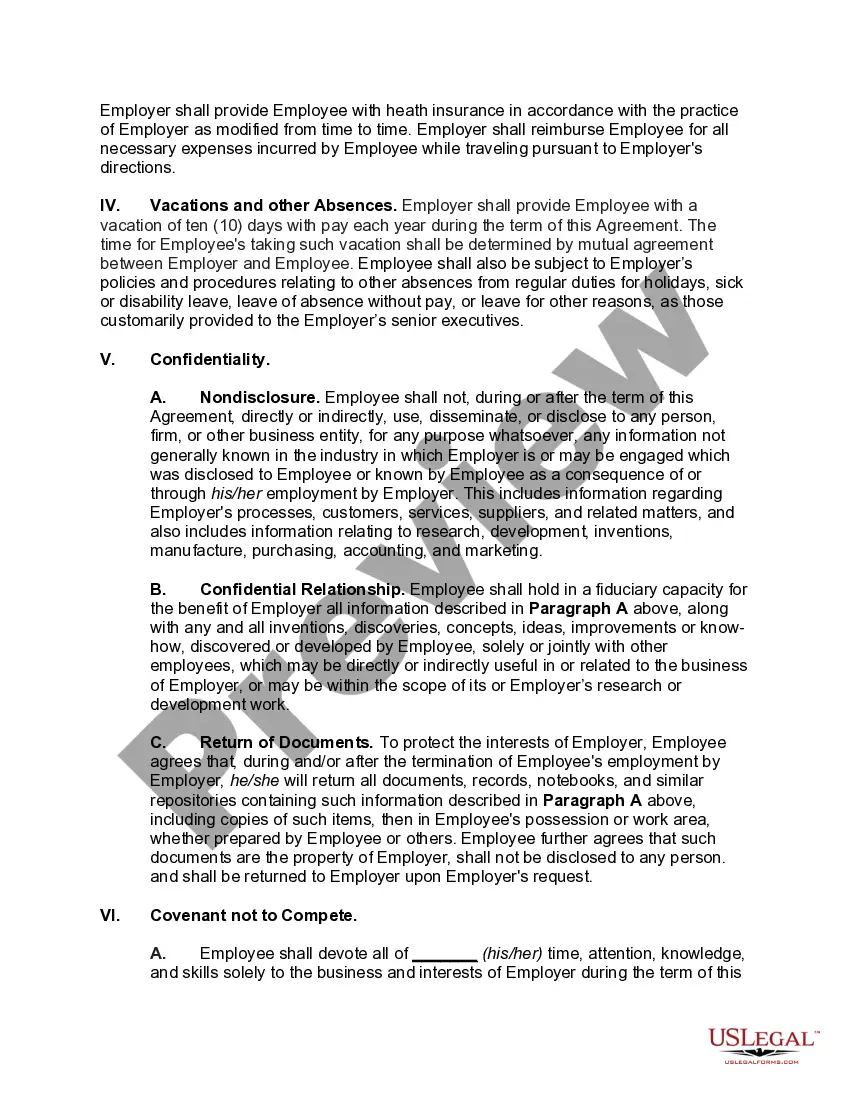
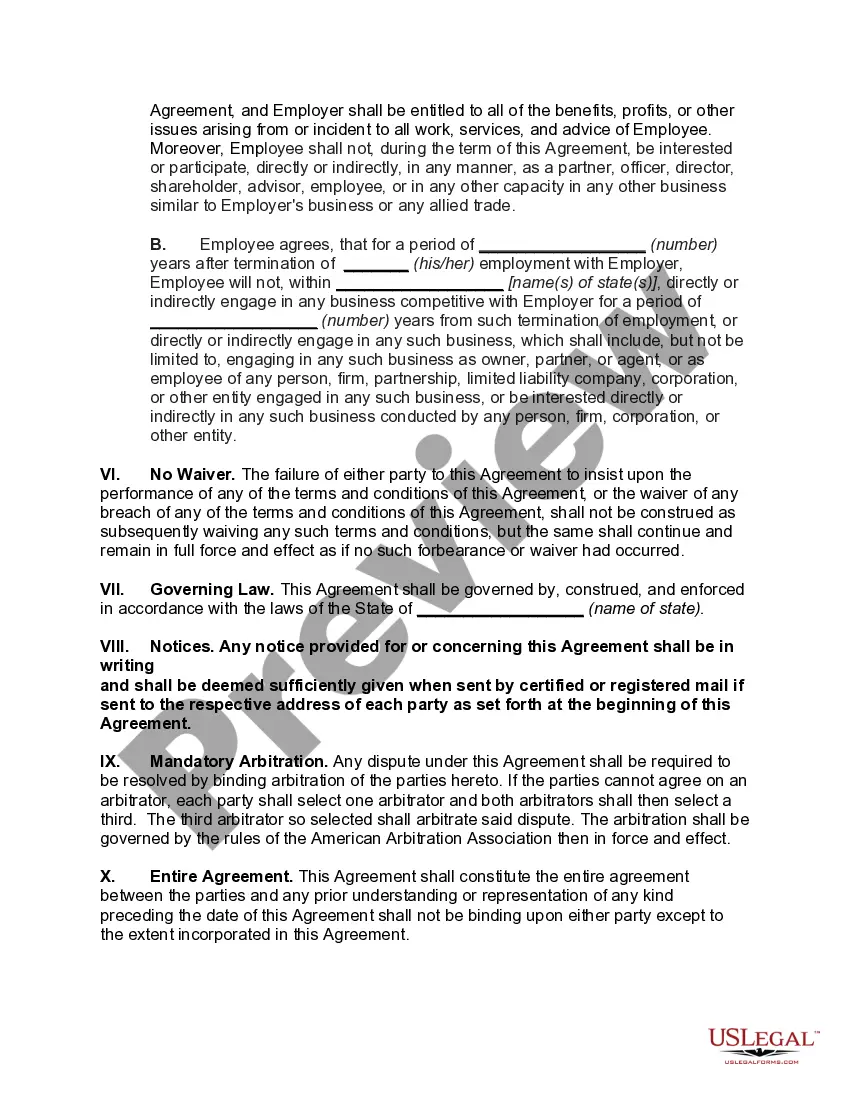
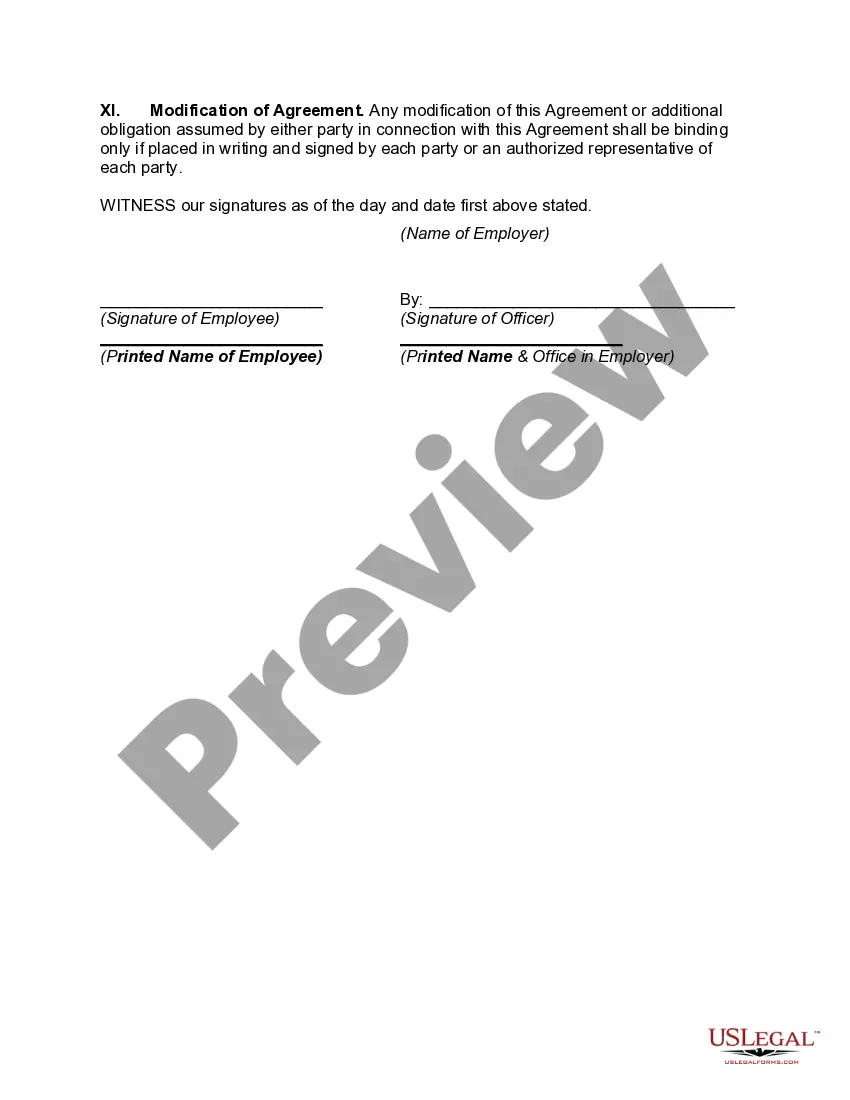
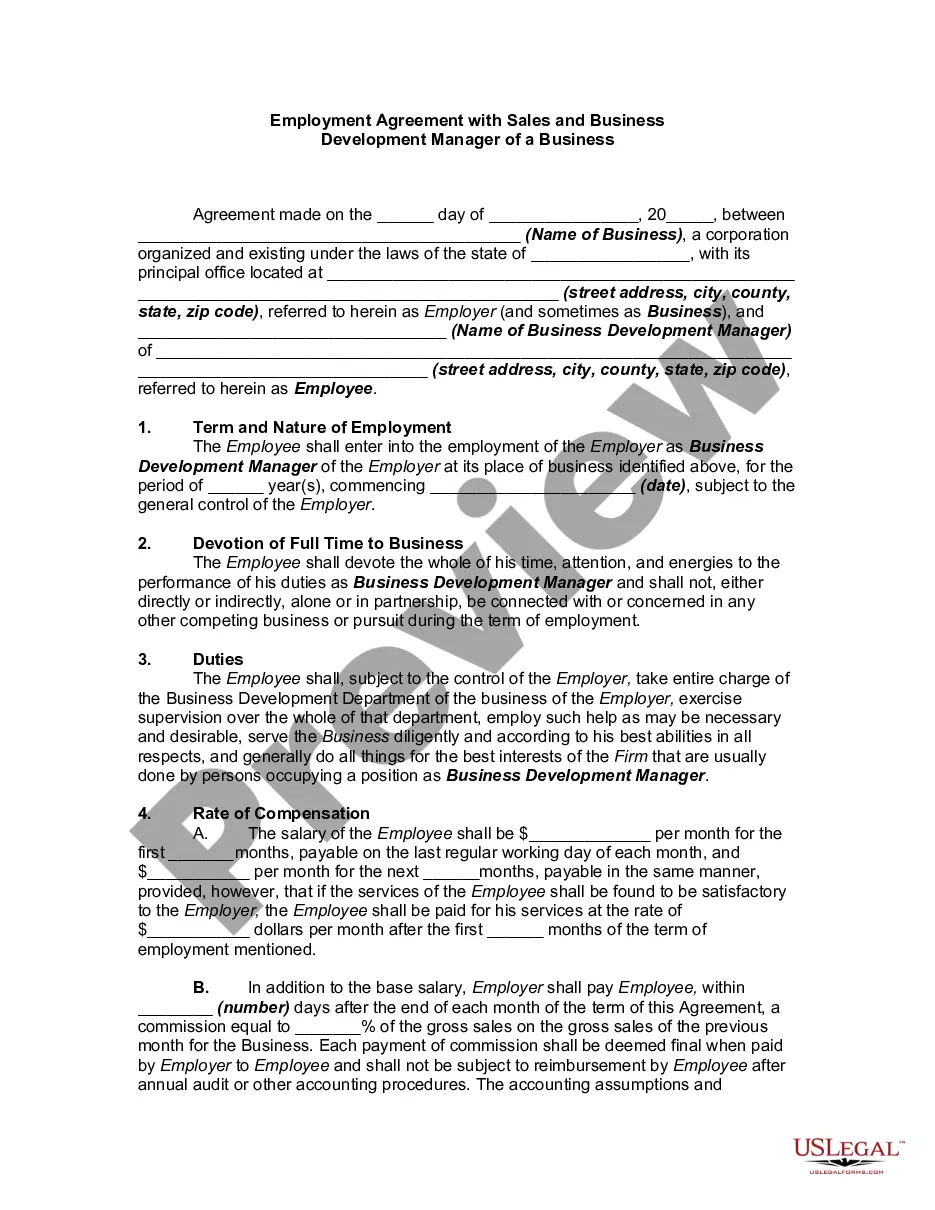
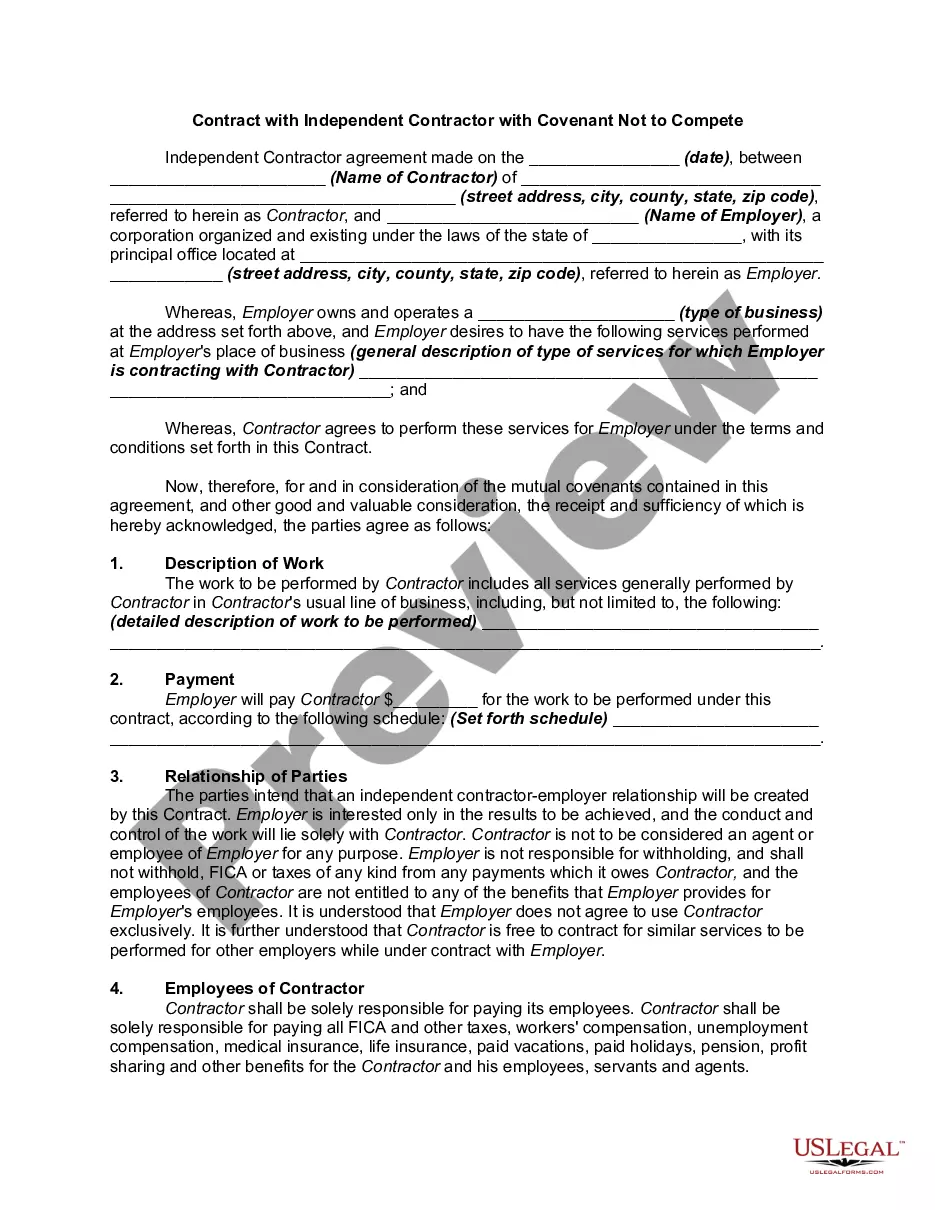
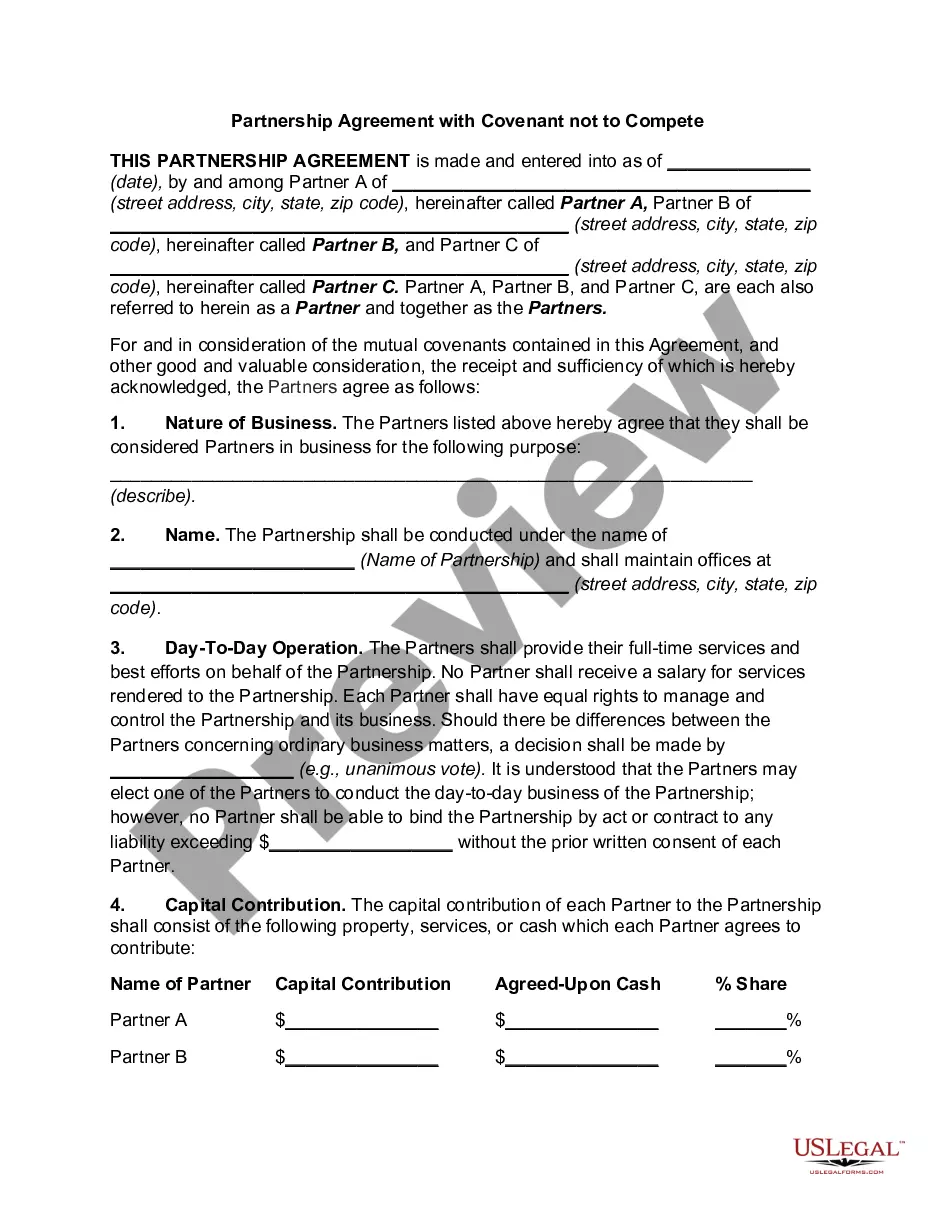
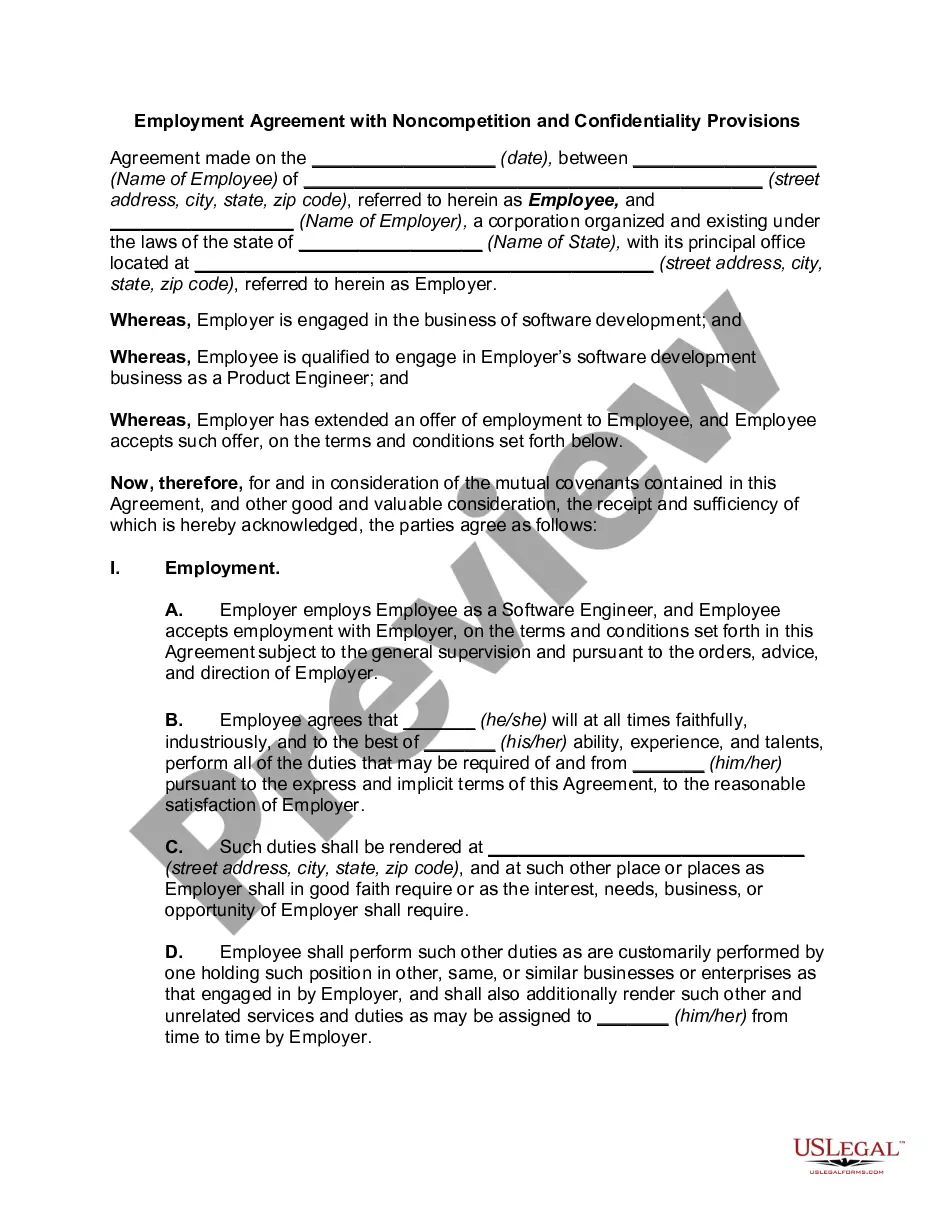




How to fill out Employment Agreement With Business Development Manager With Covenant Not To Compete?
Are you currently in a situation where you need documents for either business or personal use nearly every single day.
There are numerous legal document templates accessible online, but finding versions you can trust is challenging.
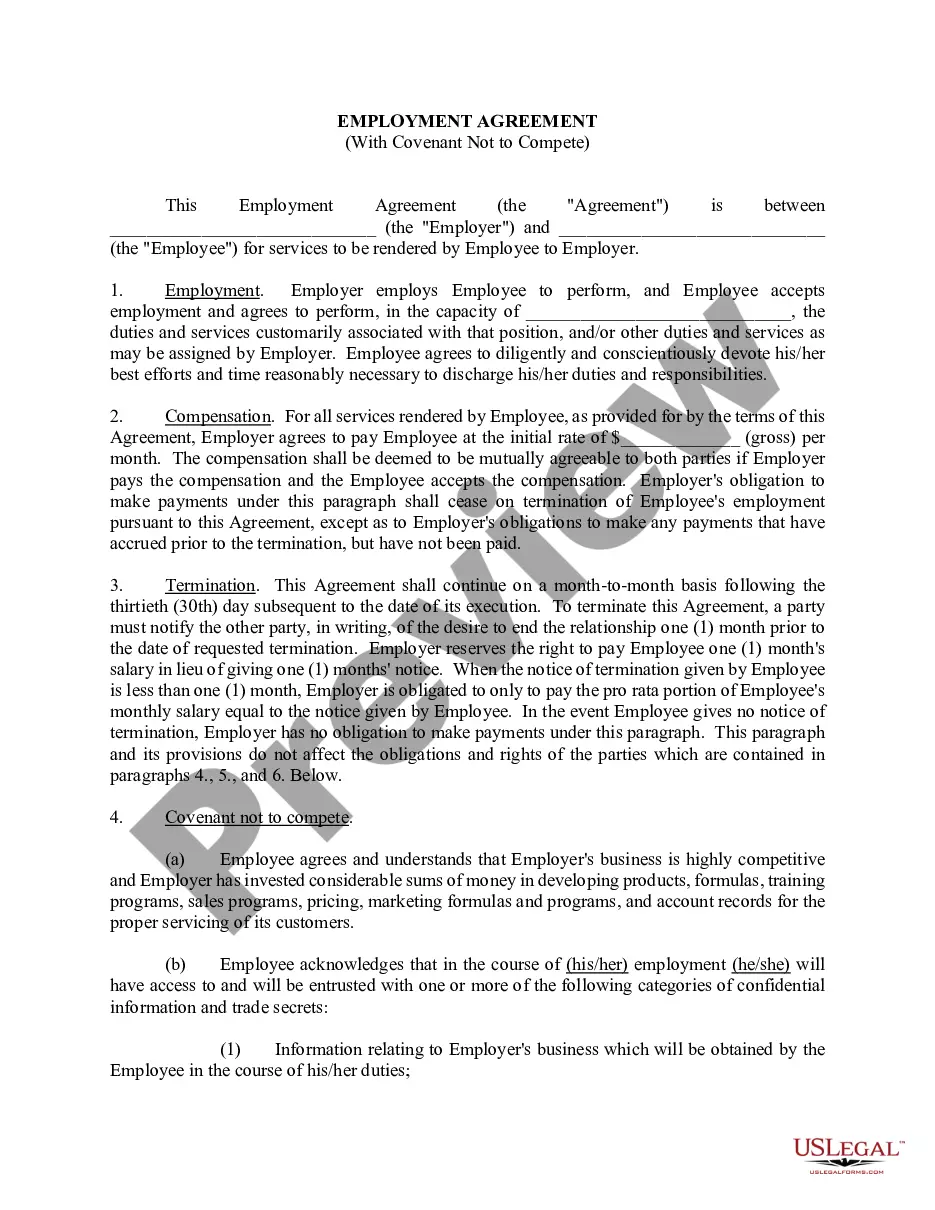
US Legal Forms offers a wide array of form templates, including the Wisconsin Employment Agreement with Business Development Manager with Non-Compete Clause, which can be customized to comply with state and federal regulations.
Select a convenient document format and download your copy.
Find all of the document templates you have purchased in the My documents section. You can acquire an additional copy of the Wisconsin Employment Agreement with Business Development Manager with Non-Compete Clause at any time, if needed. Just select the necessary form to download or print the document template.
- If you are already familiar with the US Legal Forms website and have an account, simply Log In.
- After that, you can download the Wisconsin Employment Agreement with Business Development Manager with Non-Compete Clause template.
- If you do not have an account and want to start using US Legal Forms, follow these steps.
- Find the form you need and ensure it is for the correct city/region.
- Use the Review button to preview the form.
- Check the summary to make sure you have selected the correct form.
- If the form is not what you're looking for, use the Search field to find the form that meets your needs.
- Once you obtain the right form, click on Get now.
- Choose the pricing plan you desire, fill in the required information to create your account, and pay for the order with your PayPal or credit card.
Form popularity
FAQ
The enforceability of non-compete agreements varies by state in the US. Generally, the agreement must be reasonable in scope and duration to be upheld in court. Specifically, the Wisconsin Employment Agreement with Business Development Manager with Covenant not to Compete must comply with state laws to ensure validity and protect business interests.
The general position is that post-termination restrictive covenants are void on public policy grounds as being in restraint of trade, unless they are being used by the employer to protect a legitimate business interest.
It is possible to find non-compete loopholes in certain circumstances in order to void a non-compete contract. For instance, if you can prove that you never signed the contract, or if you can demonstrate that the contract is against the public interest, you may be able to void the agreement.
Wisconsin has a statute, Section 103.465, that addresses non-compete agreements and provides that if the non-compete agreement is reasonably necessary to protect the employer and is reasonable in geographic scope and reasonable in time limitation, it will be enforceable.
A covenant not to compete, also called a "nompete agreement" or "non compete clause," is an agreement where one party promises not to compete with the other party in a specified area for a certain period of time. A covenant not to compete can be found in an employment contract or a sale of business contract.
Where an employer claims a financial remedy or damages for breach of a restrictive covenant in an employment contract, the employer will need to show some loss resulting from the breach. This will normally be loss of profits on contracts or opportunities diverted by the employee.
Ignoring a restrictive covenant means that you could potentially be faced with a legal claim against you and injunctions to stop you from making the changes you wish to. You may have to pay damages to the other party to compensate for the breach too.
In general, if you rely on a one size fits all policy when drafting restrictive covenants, it risks them being unenforceable. Certain restrictive covenants will be enforceable, if you are able to prove that they are: reasonable. necessary to protect legitimate business interests; and.
This is because of its potential to be anti competitive, and therefore against public policy. Restrictive covenants are only enforceable if their effect is stringently restricted to what is essential to protect particular business relationships and information.
A covenant not to compete has three elements: (1) a limitation on the work that may be pursued by the employee, (2) a definite time, and (3) a definite geographical area. The time and geographical restrictions are usually straightforward; the limitation on work is a little more complex.