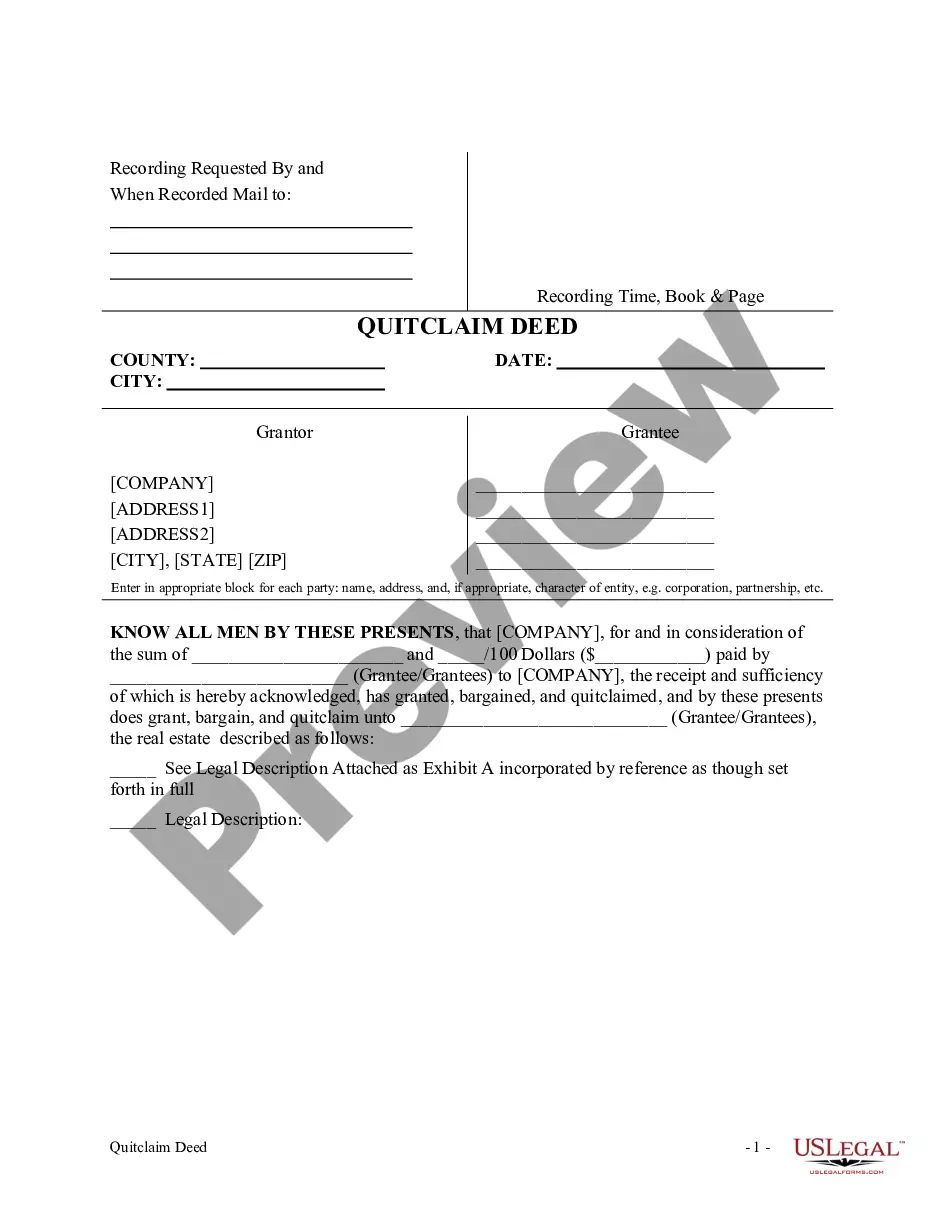
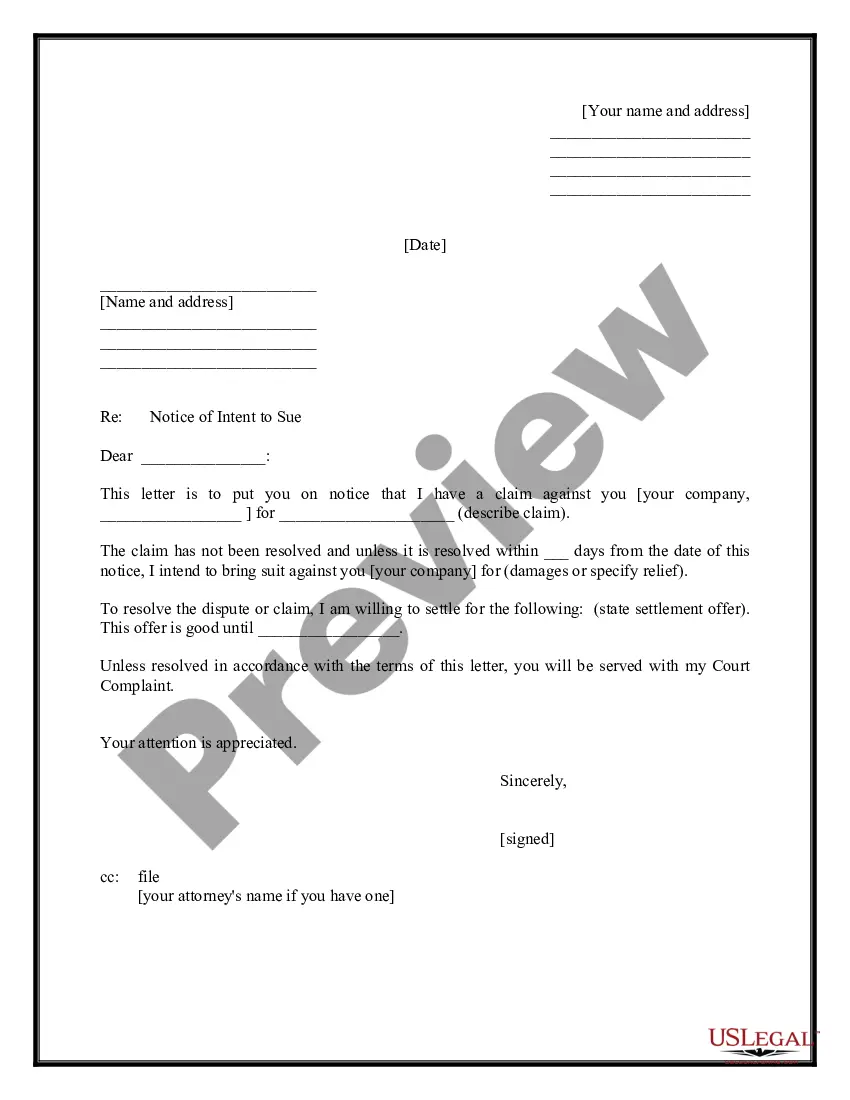
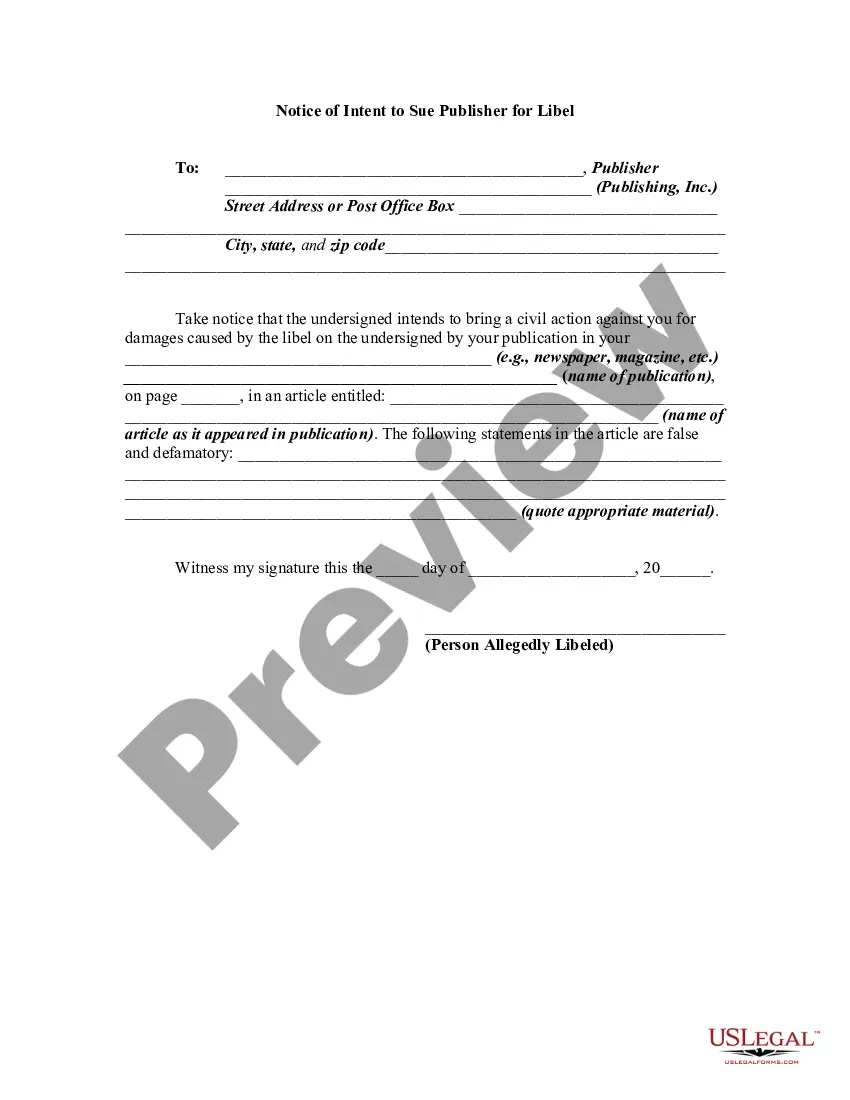
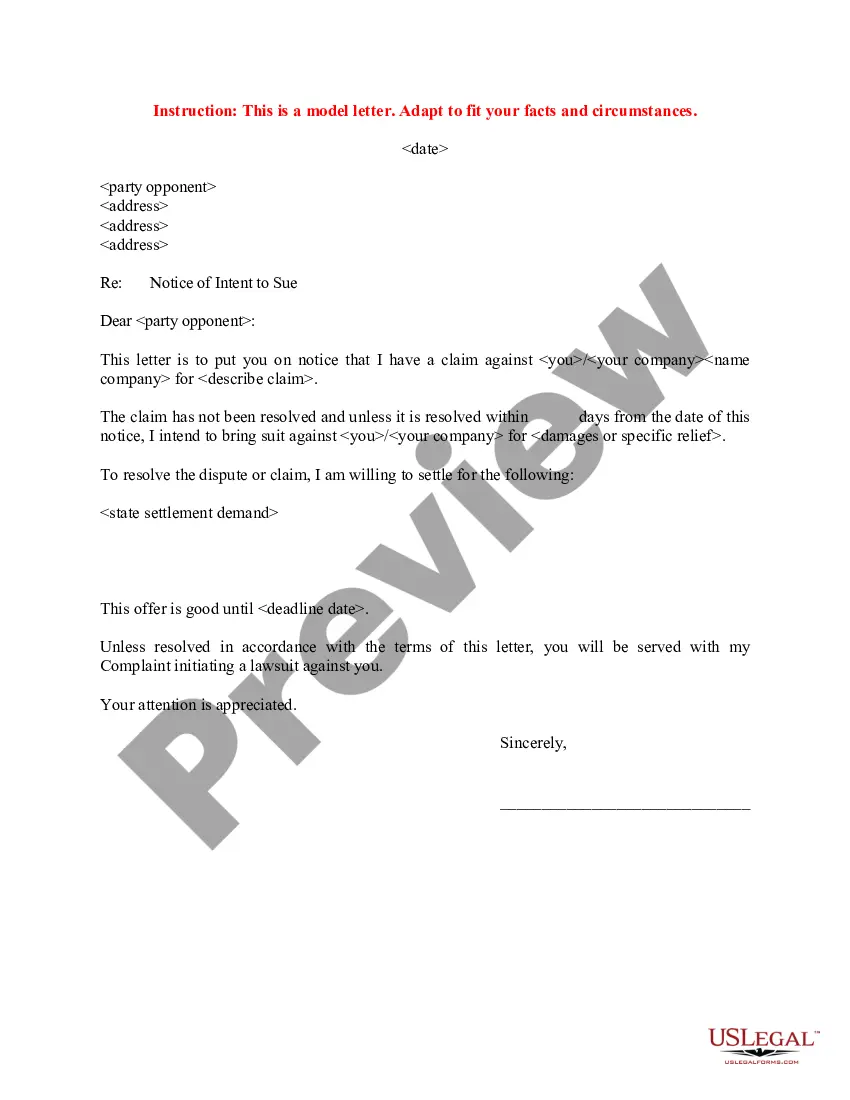
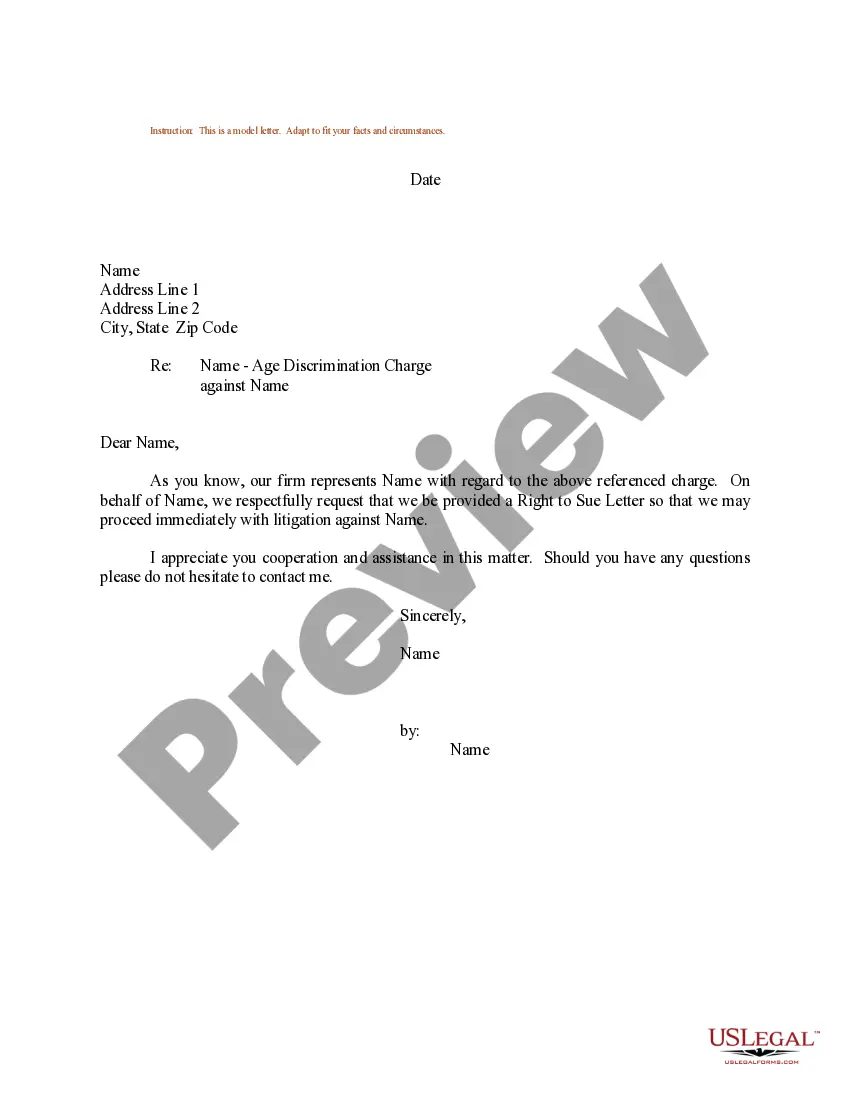
Washington Letter of Intent to Sue
Description
Get your form ready online
Our built-in tools help you complete, sign, share, and store your documents in one place.
Make edits, fill in missing information, and update formatting in US Legal Forms—just like you would in MS Word.
Download a copy, print it, send it by email, or mail it via USPS—whatever works best for your next step.
Sign and collect signatures with our SignNow integration. Send to multiple recipients, set reminders, and more. Go Premium to unlock E-Sign.
If this form requires notarization, complete it online through a secure video call—no need to meet a notary in person or wait for an appointment.
We protect your documents and personal data by following strict security and privacy standards.

Make edits, fill in missing information, and update formatting in US Legal Forms—just like you would in MS Word.

Download a copy, print it, send it by email, or mail it via USPS—whatever works best for your next step.

Sign and collect signatures with our SignNow integration. Send to multiple recipients, set reminders, and more. Go Premium to unlock E-Sign.

If this form requires notarization, complete it online through a secure video call—no need to meet a notary in person or wait for an appointment.

We protect your documents and personal data by following strict security and privacy standards.
Looking for another form?
How to fill out Letter Of Intent To Sue?
Are you in a scenario where you require documents for either business or personal reasons almost all the time.
There are numerous legal document templates available online, but locating reliable ones is not easy.
US Legal Forms offers a multitude of form templates, such as the Washington Letter of Intent to Sue, that are designed to meet state and federal regulations.
Avoid altering or removing any HTML tags. Only synonymize plain text outside of the HTML tags.
- If you are already familiar with the US Legal Forms website and have an account, simply Log In.
- Then, you can download the Washington Letter of Intent to Sue template.
- If you do not have an account and wish to start using US Legal Forms, follow these instructions.
- Find the document you need and confirm that it is for the correct area/state.
- Use the Preview option to review the document.
- Check the outline to ensure you have selected the right form.
- If the document is not what you seek, utilize the Search field to find the form that meets your needs and requirements.
- Once you obtain the correct document, click Purchase now.
- Select the pricing plan you want, complete the required information to create your account, and pay for your order using PayPal or a credit card.
- Choose a convenient file format and download your copy.
- Find all the document templates you have purchased in the My documents section.
- You can retrieve another copy of the Washington Letter of Intent to Sue at any time if necessary. Just access the required form to download or print the document template.
- Utilize US Legal Forms, the most extensive collection of legal forms, to save time and avoid errors.
- The service provides professionally crafted legal document templates that can be used for a variety of purposes.
- Create your account on US Legal Forms and start simplifying your life.
Form popularity
FAQ
Summons and Complaint ? Two separate documents that go together to start a civil lawsuit.
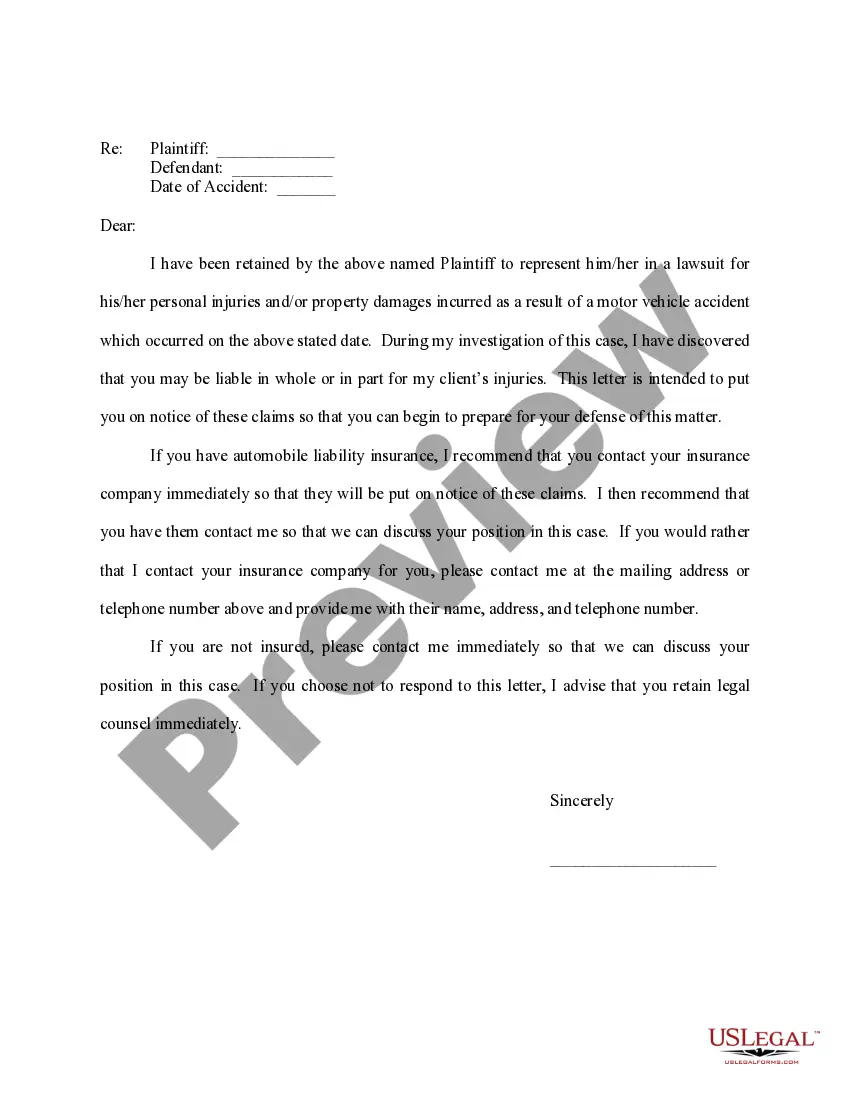
A letter of intent to sue is used to notify an individual or business that legal action may be taken against them if the demands included in the letter are not met. By sending an intent to sue letter, you may be able to resolve the dispute without having to initiate a costly lawsuit.
After filling out the Notice of Small Claim form: Get at least two copies of the form. ... Give the court clerk the original. Pay the clerk a small fee to file the claim. ... Sign the form in front of the clerk, if your county requires it. Mail a copy of the Notice of Small Claim or have it delivered in person to Defendant.
An intent to sue letter should have the addresses of both parties, a detailed description of the dispute, the settlement demand (e.g., payment amount, cease and desist, repair damages, etc.), the sender's contact information, and the deadline for the proposed settlement.
Under Washington's civil statute of limitation laws, personal injury claims have a three-year limit for filing, as do fraud, injury to property, and trespassing. Debt collection has a six-year limit. Statutes of limitations aren't suggestions. They are mandatory time limits that the state imposes on most lawsuits.
But, now that you filed the lawsuit, you have to let the defendant know formally that you are suing. This is called "service". You have to have all papers "served" on every party in the whole lawsuit. To start your case, you have to have the defendant served with a Summons, Complaint and Civil Lawsuit Notice.
Lawsuits are initiated in Washington State by the filing and service of a complaint and a summons to each defendant in the case. The filing process is different in each county; some counties require paper filings and some offer electronic filing.
The filing fee will be either $35 or $50 depending on whether the county in which you file the lawsuit supports a dispute resolution center.