Washington Answer Or Response Cover Sheet (Answer Counter Petition Cross Claim Counter Claim Third Party Complaints)
What is this form?
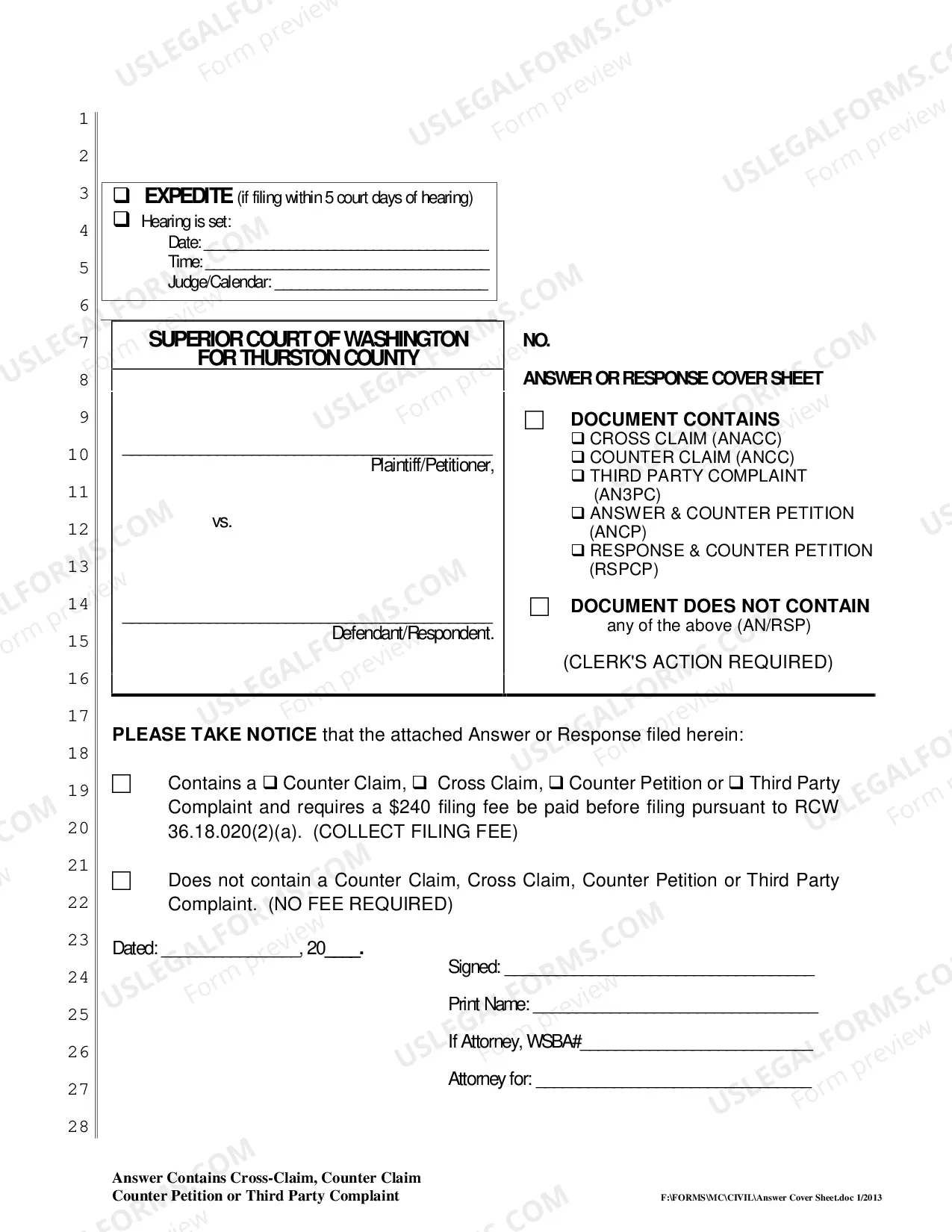
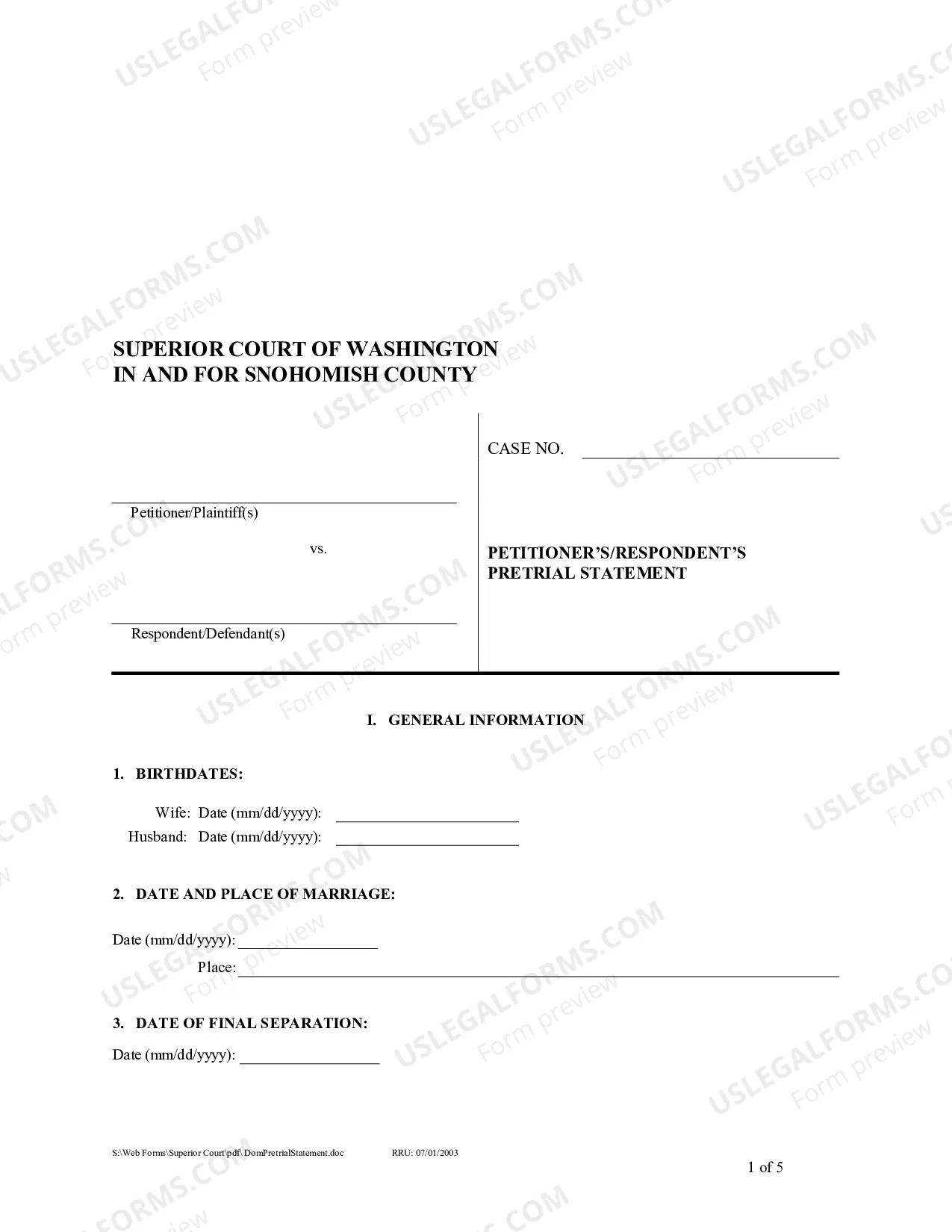
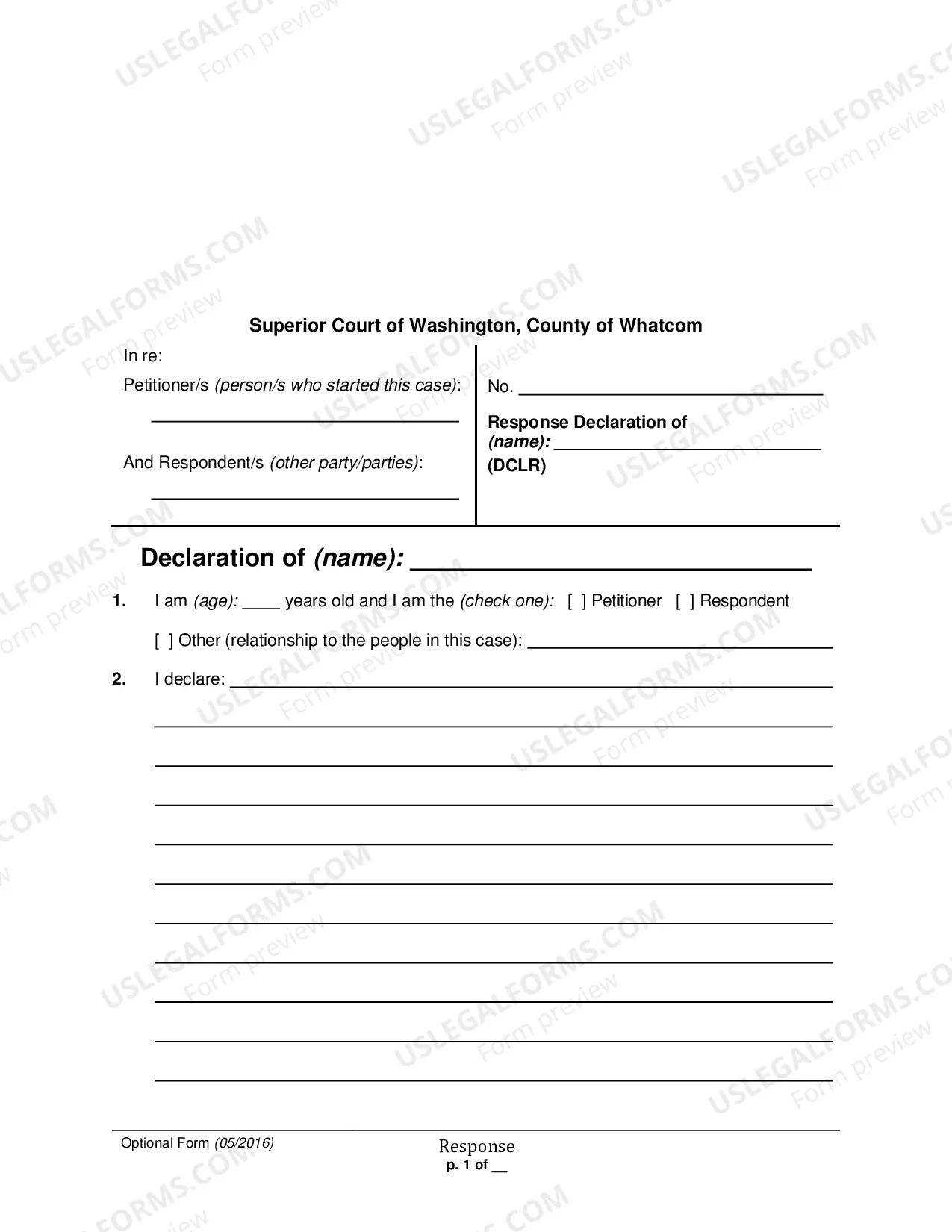
The Answer or Response Cover Sheet is a legal document used in the Superior Court of Washington to accompany various types of legal responses, such as an answer, counterclaim, cross claim, or a third-party complaint. This form helps to clearly identify the nature of the document being submitted, facilitating the court's processing and ensuring that all relevant information is included at the time of filing. It is essential for managing many types of civil cases.
Key parts of this document
- Identification of the parties involved: Plaintiff/Petitioner and Defendant/Respondent.
- Checkboxes to indicate if the document contains a Counter Claim, Cross Claim, Counter Petition, or Third Party Complaint.
- Notification regarding applicable filing fees based on the contents of the document.
- Signature line for the attorney or party submitting the form, including their WSBA number if applicable.
- Options to expedite the processing if the filing occurs within five court days of a scheduled hearing.
When to use this document
This form is needed when you are responding to a legal claim and your response includes additional claims like a counterclaim or cross claim. It is used in civil proceedings where multiple claims or parties are involved, ensuring that the court has a complete understanding of the issues being addressed.
Who this form is for
This form is intended for:
- Defendants or respondents in civil cases who need to submit an answer.
- Parties filing counterclaims or cross claims against other parties involved in the case.
- Attorneys representing clients in civil litigation requiring a formal response to the court.
How to prepare this document
- Begin by filling in the case number at the top of the cover sheet.
- Clearly identify the Plaintiff/Petitioner and Defendant/Respondent names.
- Select the appropriate checkboxes to indicate the type of claims included in the document.
- Enter the date and sign the form, including your printed name and WSBA number if you are an attorney.
- If applicable, indicate whether you wish to expedite the processing of the form.
Does this form need to be notarized?
Notarization is generally not required for this form. However, certain states or situations might demand it. You can complete notarization online through US Legal Forms, powered by Notarize, using a verified video call available anytime.
Avoid these common issues
- Failing to include the case number, which is essential for tracking the case.
- Not checking the correct boxes for the type of claims contained in the document.
- Omitting the signature or date, rendering the form invalid.
- Forgetting to specify the need for expedited processing if applicable.
Benefits of completing this form online
- Convenience of completing the form digitally, saving time and effort.
- Ability to edit and customize the form to fit your specific needs before printing.
- Access to reliable forms drafted by licensed attorneys, ensuring compliance with legal standards.
Legal use & context
- Enables formal responses to civil lawsuits, essential for maintaining your legal rights.
- Properly completing this form contributes to the enforceability of any claims you make in your response.
- Makes sure all parties and the court are aware of the claims being brought against them.
Summary of main points
- The Answer Or Response Cover Sheet is crucial for documenting responses to civil lawsuits.
- Correct completion ensures that your legal claims are processed effectively by the court.
- Be aware of specific filing requirements in Thurston County to avoid common pitfalls.

Form popularity
FAQ
The Plaintiff must reply to the Answer and Counterclaim for Divorce. If you file an Answer & Counterclaim for Divorce, the Plaintiff will have twenty (20) days to reply to your Answer & Counterclaim for Divorce by filing a Reply to Counterclaim.
An answer to a counterclaim is a written response by a Plaintiff to a Defendant's counterclaim. The answer to counterclaim must also state defenses to each of the Defendant's counterclaims in short, plain statements.
In law, an answer refers to a defendant's first formal written statement to a plaintiff's initial petition or complaint. This opening written statement will admit or deny the allegations, or demand more information about the claims of wrongdoing.
Respond to their counterclaim ? the answer deny any allegations of fact that you do not admit ? you will be deemed to admit facts that you forget to plead to; and. make sure that you have provided an adequate Defence to their claim (either based on the facts, based in law, or a combination of both).
Example- Claim: Cell Phones should be allowed in the classroom. Counterclaim: Cell Phones should not be allowed in the classroom. Rebuttal: By allowing cell phone use in the classroom, students learn how to use and manage their cell phones as a digital resource as they should outside of school.
You should respond to the counterclaim as though it were a Statement of Claim and you were drafting a Defence: respond to every paragraph ? you can do this paragraph by paragraph if necessary; deny any allegations of fact that you do not admit ? you will be deemed to admit facts that you forget to plead to; and.
A crossclaim is normally a claim filed by one defendant against another in a civil case, while a counterclaim is a claim filed by a defendant against a plaintiff.