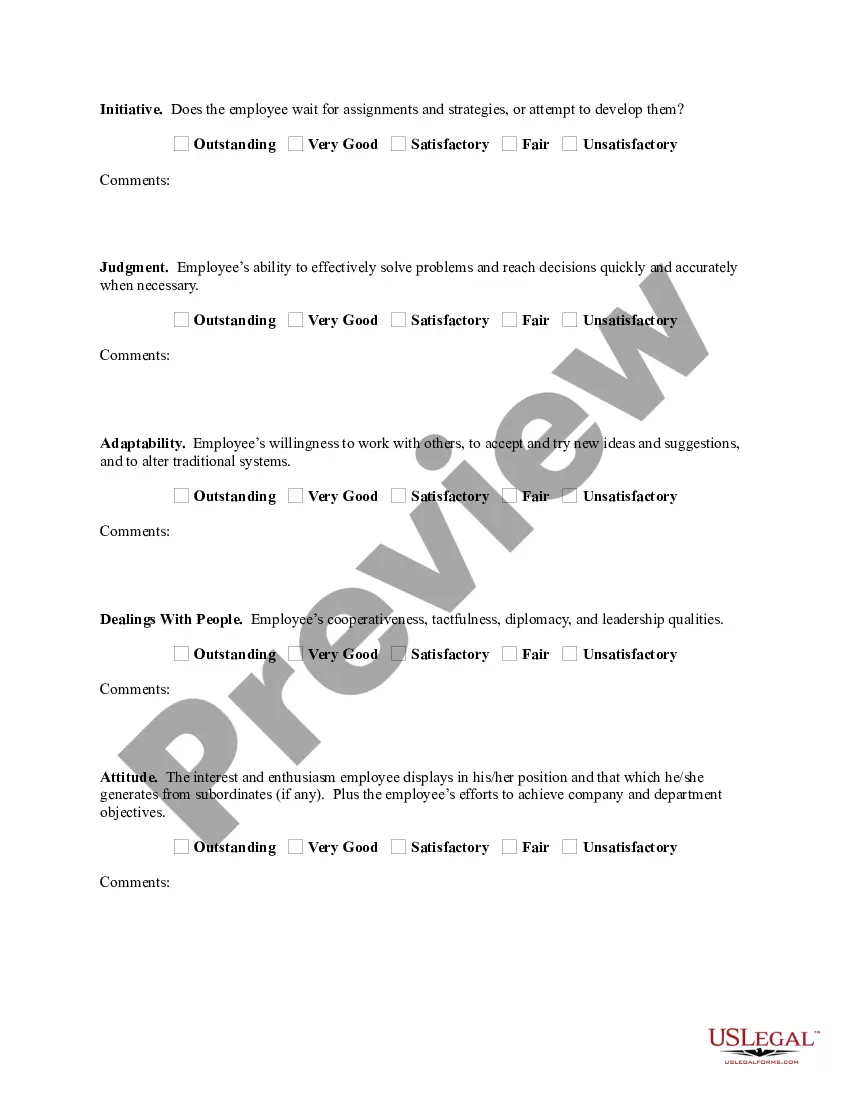
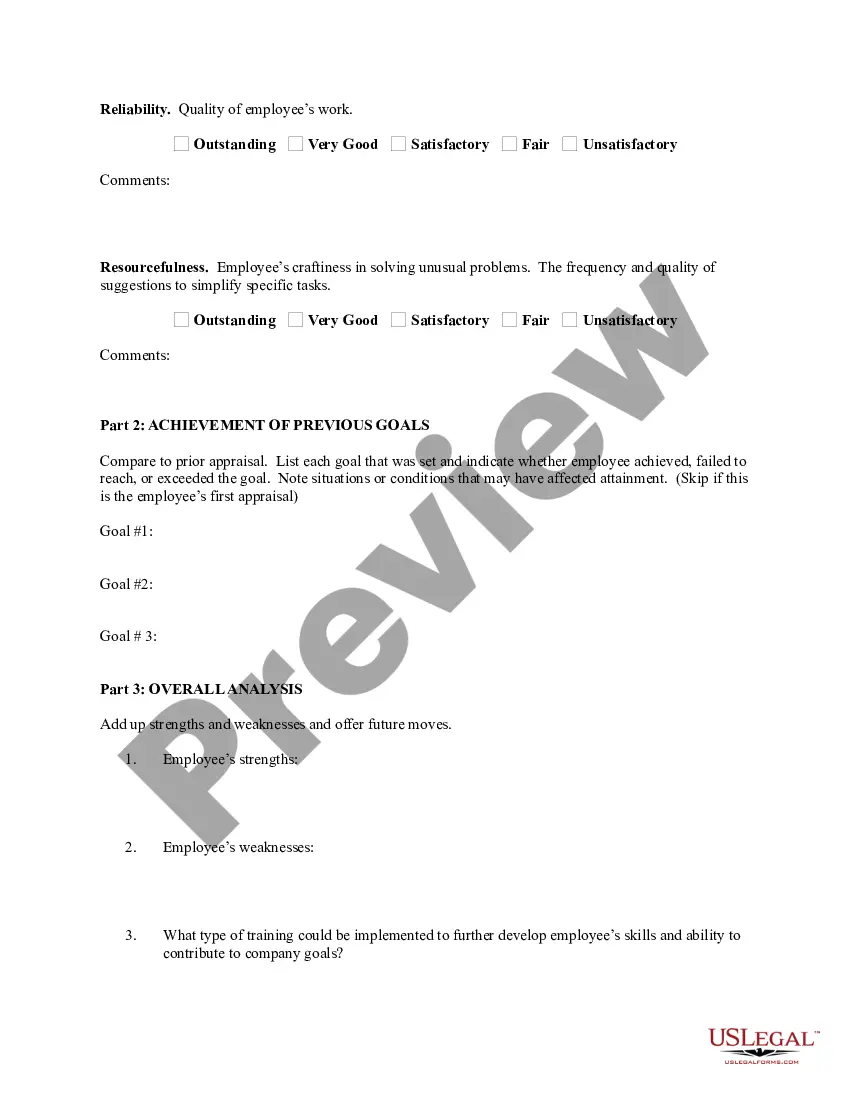
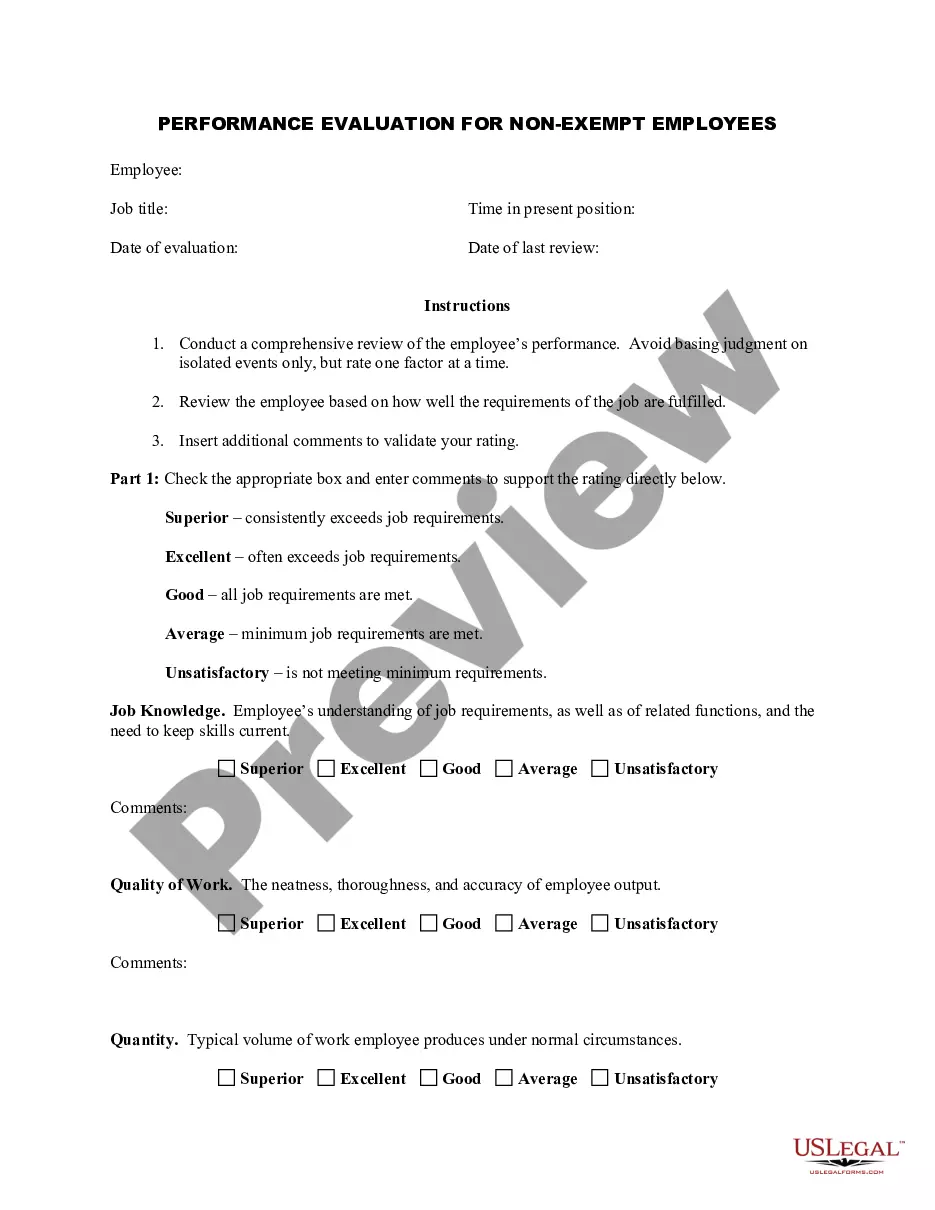
Vermont Performance Evaluation for Exempt Employees
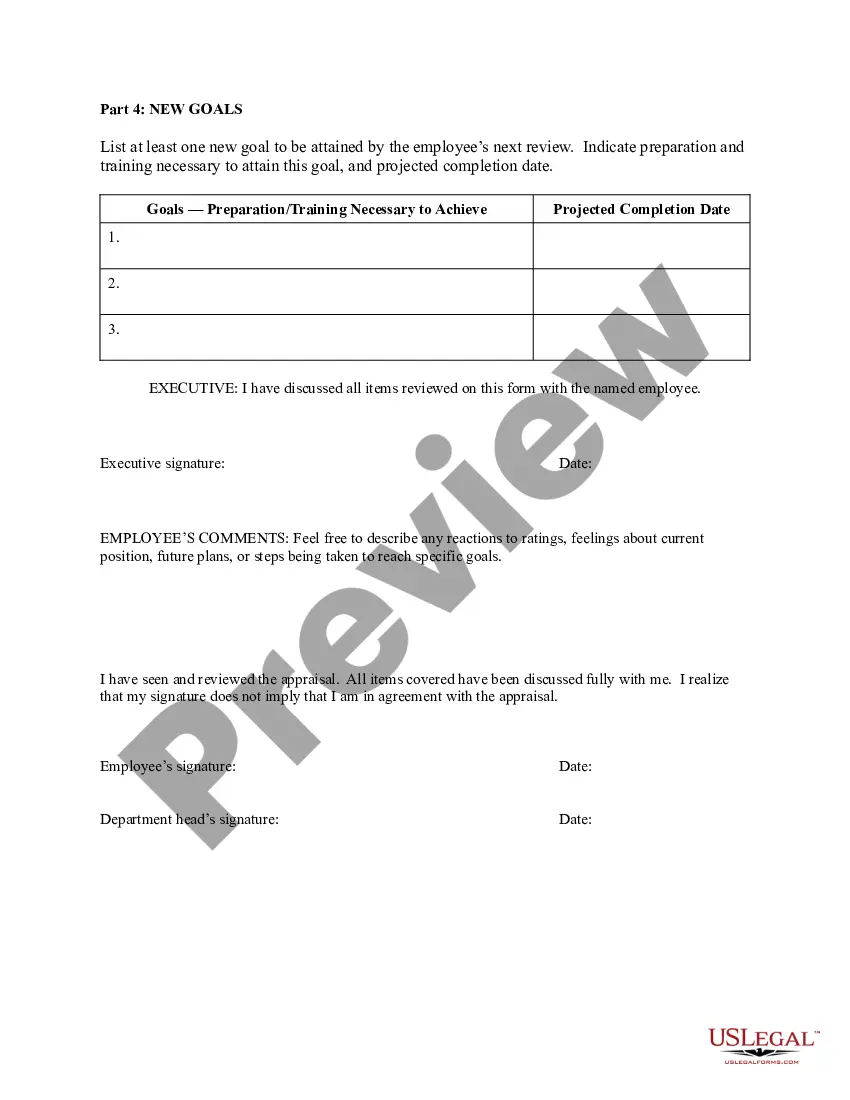
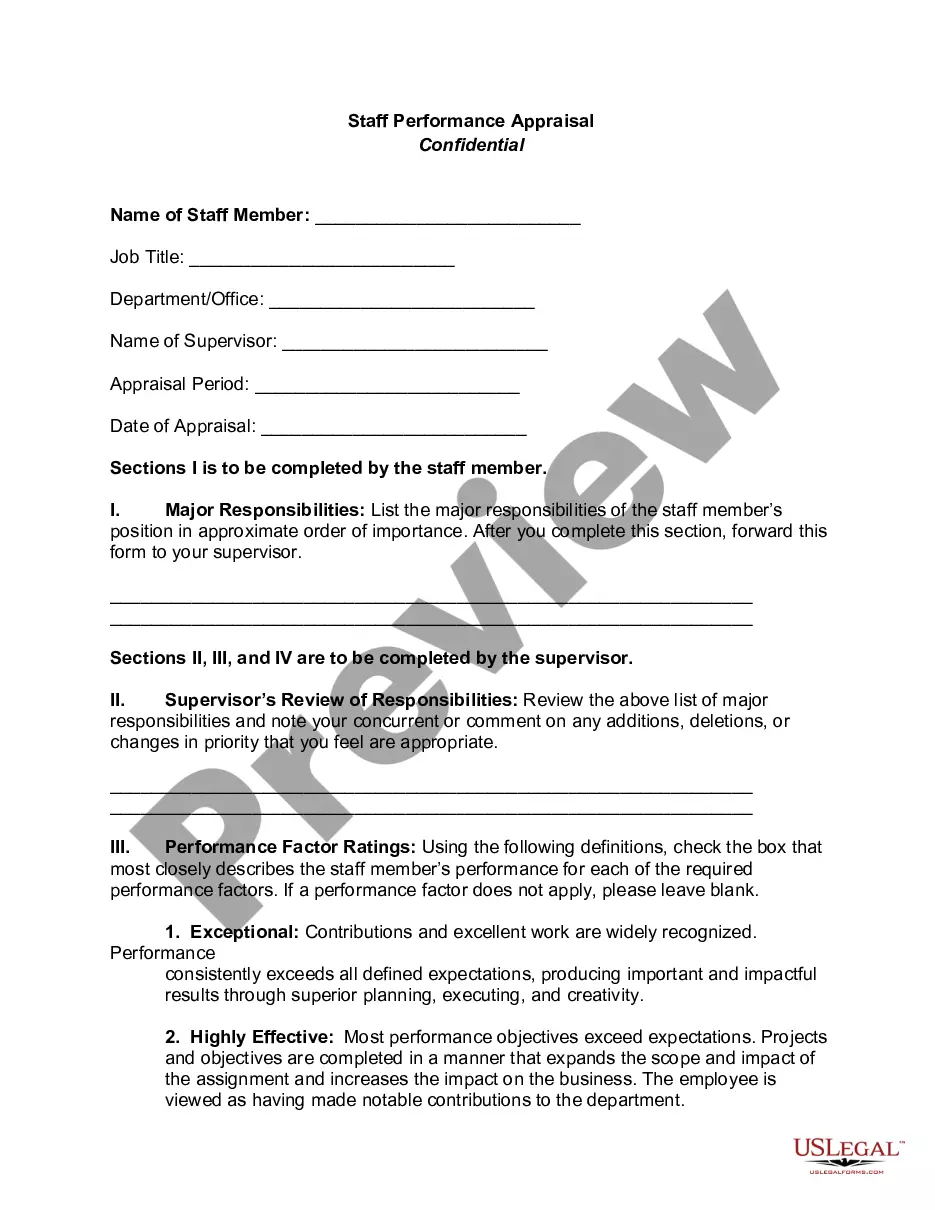
Description
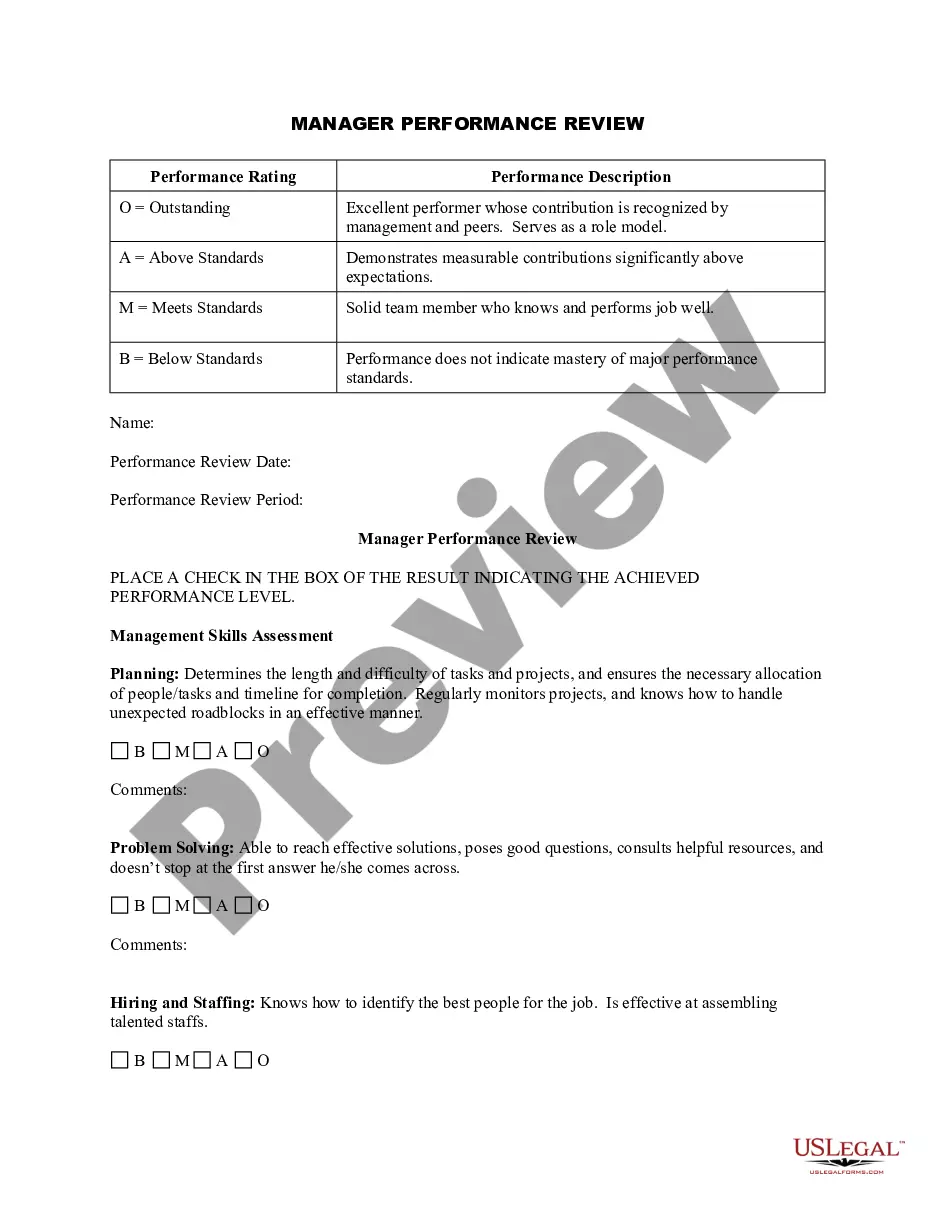
Get your form ready online
Our built-in tools help you complete, sign, share, and store your documents in one place.
Make edits, fill in missing information, and update formatting in US Legal Forms—just like you would in MS Word.
Download a copy, print it, send it by email, or mail it via USPS—whatever works best for your next step.
Sign and collect signatures with our SignNow integration. Send to multiple recipients, set reminders, and more. Go Premium to unlock E-Sign.
If this form requires notarization, complete it online through a secure video call—no need to meet a notary in person or wait for an appointment.
We protect your documents and personal data by following strict security and privacy standards.

Make edits, fill in missing information, and update formatting in US Legal Forms—just like you would in MS Word.

Download a copy, print it, send it by email, or mail it via USPS—whatever works best for your next step.

Sign and collect signatures with our SignNow integration. Send to multiple recipients, set reminders, and more. Go Premium to unlock E-Sign.

If this form requires notarization, complete it online through a secure video call—no need to meet a notary in person or wait for an appointment.

We protect your documents and personal data by following strict security and privacy standards.
Looking for another form?


How to fill out Performance Evaluation For Exempt Employees?
Selecting the optimal sanctioned document template can be a challenge.
Naturally, there are numerous designs available online, but how do you obtain the sanctioned form you require? Utilize the US Legal Forms website.
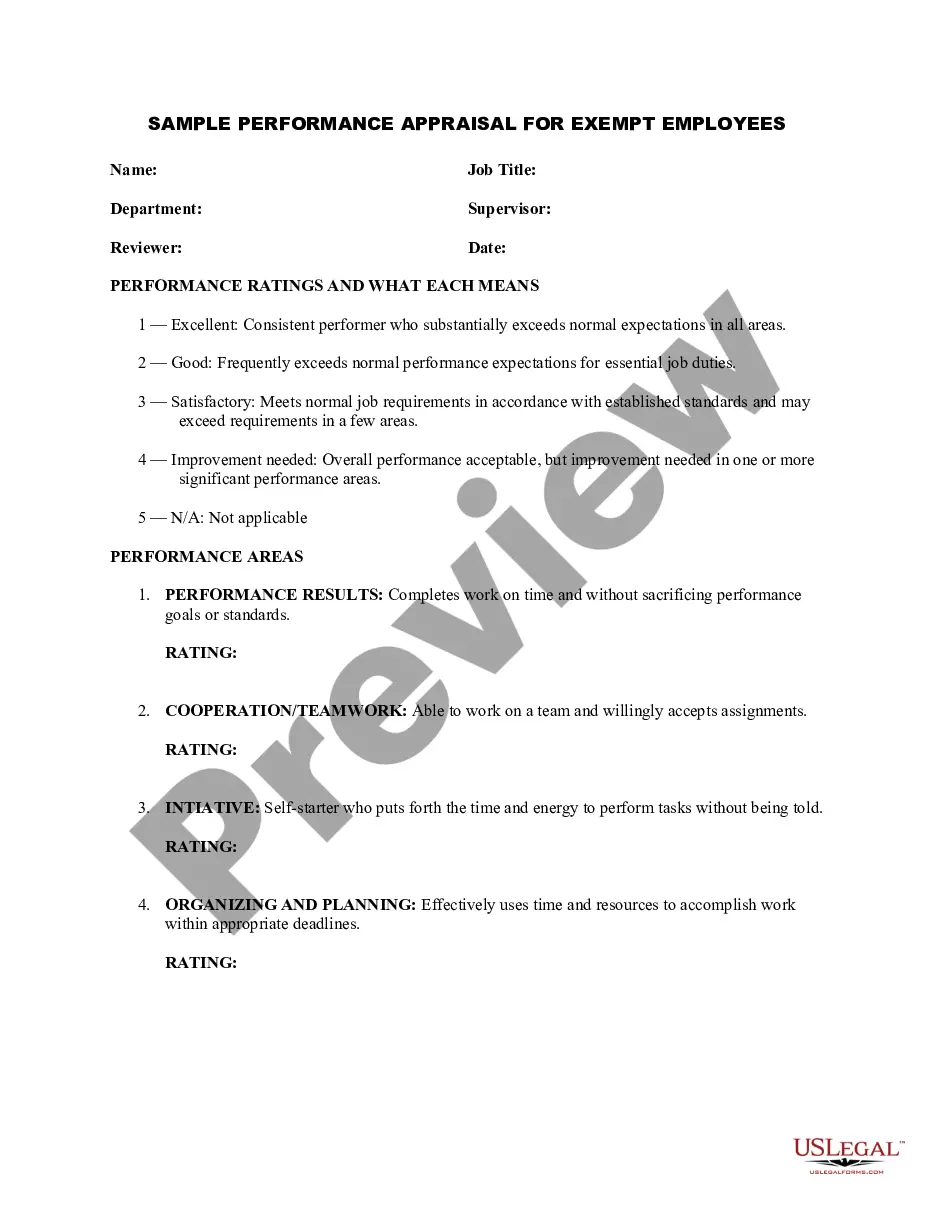
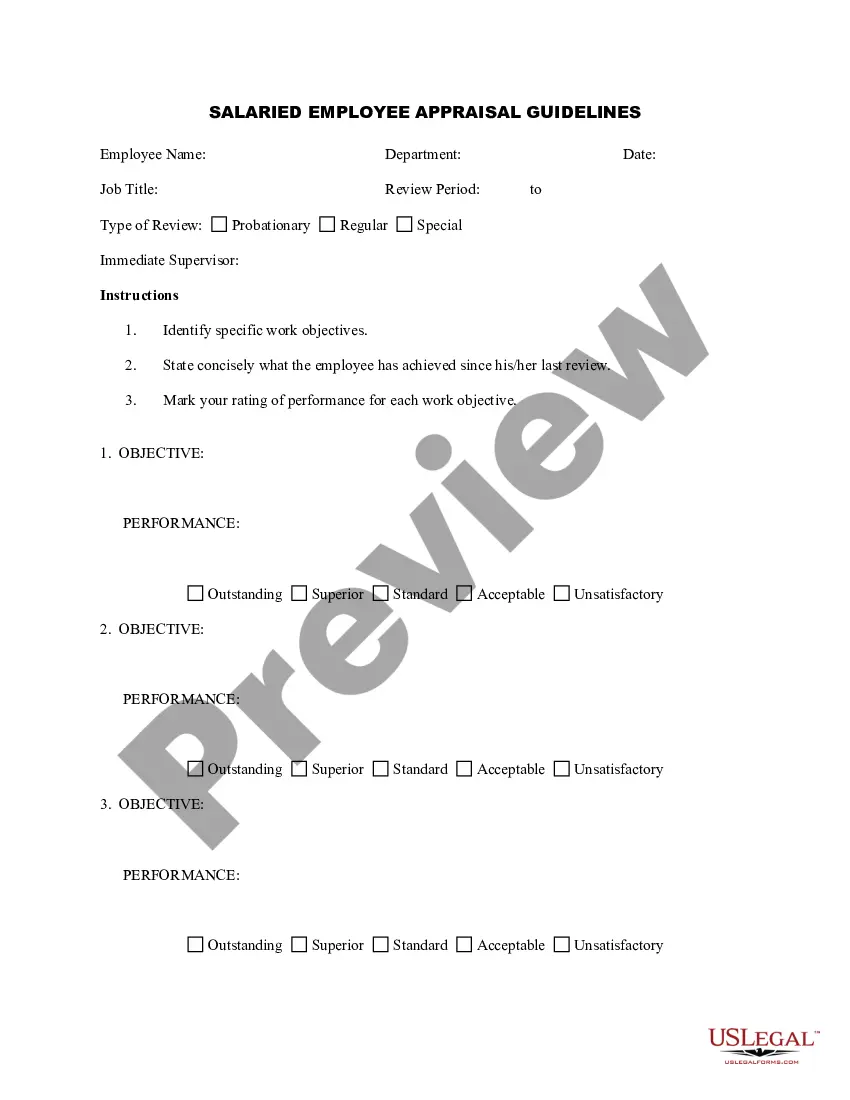
The service offers thousands of templates, such as the Vermont Performance Evaluation for Exempt Employees, which you can employ for business and personal purposes.
You can preview the form using the Preview button and read the form description to confirm it is the appropriate one for you.
- All documents are verified by experts and comply with federal and state regulations.
- If you are already registered, Log In to your account and click the Download button to obtain the Vermont Performance Evaluation for Exempt Employees.
- Use your account to browse the authorized forms you have previously purchased.
- Go to the My documents tab in your account and retrieve another copy of the document you need.
- If you are a new user of US Legal Forms, here are some basic guidelines you should follow.
- First, ensure you select the correct form for your city/state.
Form popularity
FAQ
An exempt employee is an employee who does not receive overtime pay or qualify for minimum wage. Exempt employees are paid a salary rather than by the hour, and their work is executive or professional in nature.
Performance evaluations are not mandatory, according to the U.S. Department of Labor. They are a matter between you and your employees or your employees' representative. Performance evaluations help you to determine merit increases and come up with employee development strategies.
Quality of Work.Goals and Target Achievement.Level of Productivity.Initiative and Motivation.Teamwork and Leadership Skills.Ability to Problem Solve.Written and Verbal Communication Skills.Performance Self-Appraisal.
Farm workers, domestic employees, some nonprofit employees, taxi drivers, newspaper deliverers, salespeople, and students working during the school year are all exempt from overtime pay. Any executive, professional, or administrative employees are also exempt from overtime under the Federal FLSA.
No law requires companies to conduct job reviews, but businesses that do may have a better understanding of their employees. The information gained from performance reviews can be used to determine raises, succession plans and employee-development strategies.
Vermont law does not require overtime pay when you work more than eight hours in a day, or for work on weekend or holidays.
Effective performance management systems typically include the following three broad elements: goal setting, performance review and a performance improvement process.
The Fair Labor Standards Act (FLSA) does not require performance evaluations. Performance evaluations are generally a matter of agreement between an employer and employee (or the employee's representative).
Under federal law, it's illegal to discriminate against a worker on the basis of age (over 40), disability, race, nationality, gender, religion or pregnancy status. Many states add additional categories to this list, too.
Performance appraisals can be highly useful in the talent management process and can help ensure that employers are doing their best to retain high-performing employees.