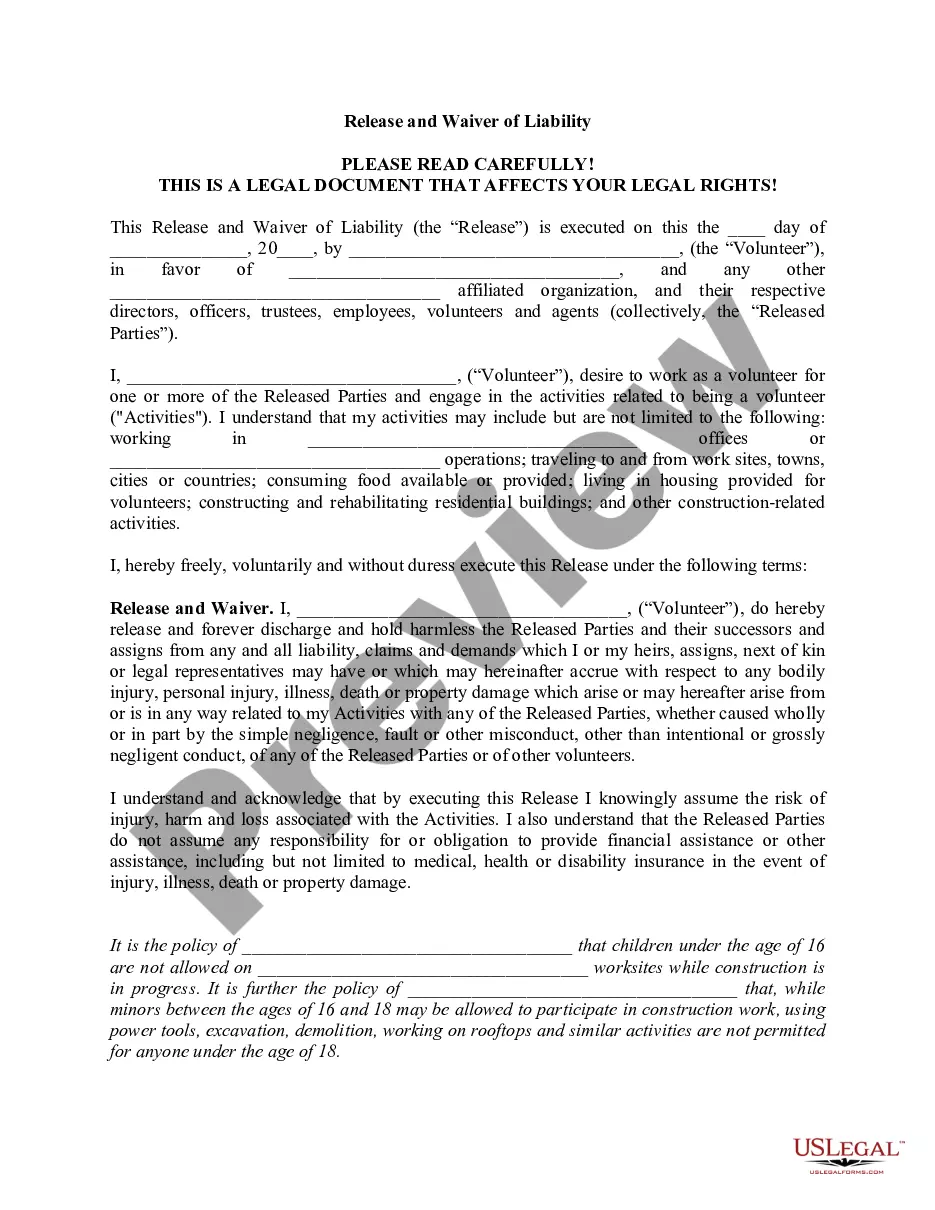
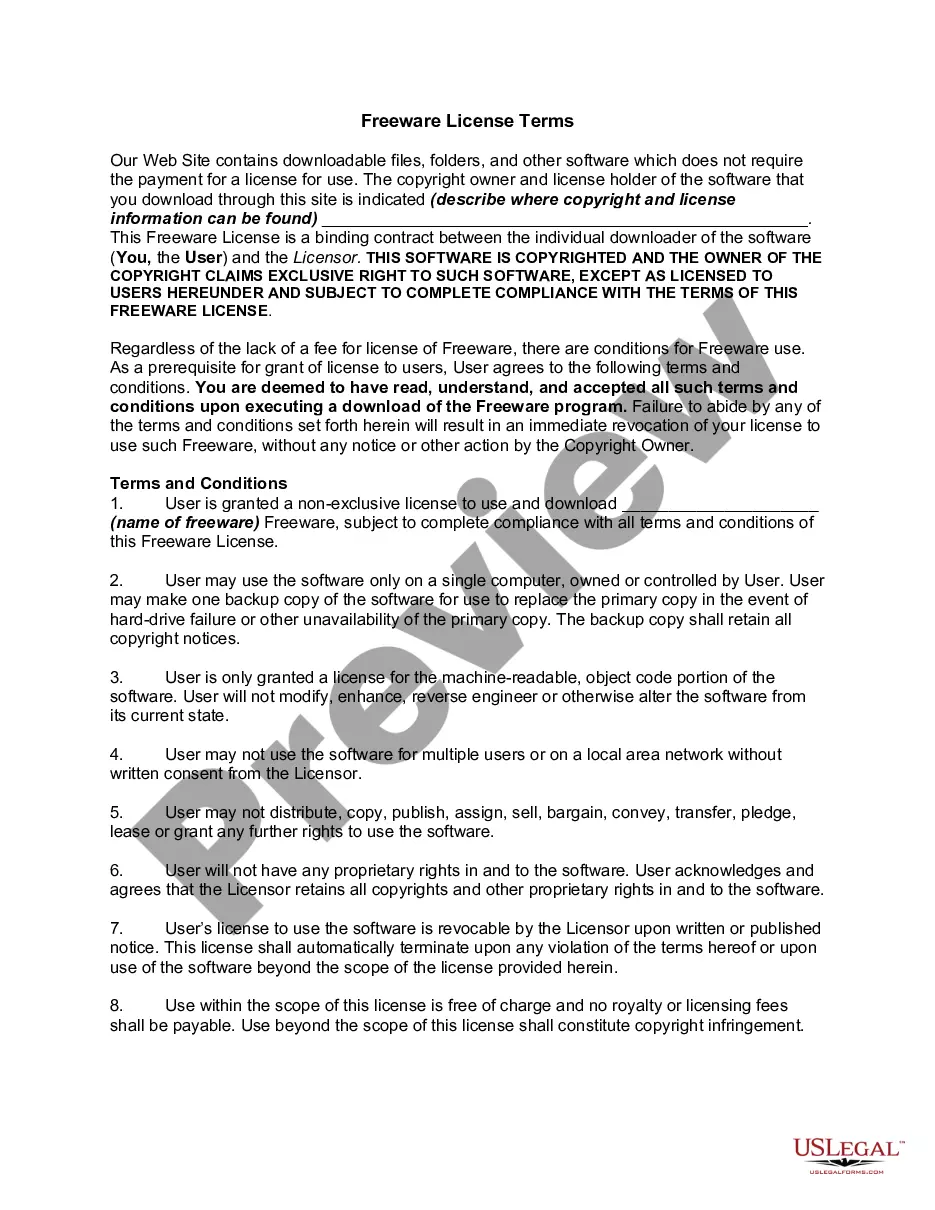
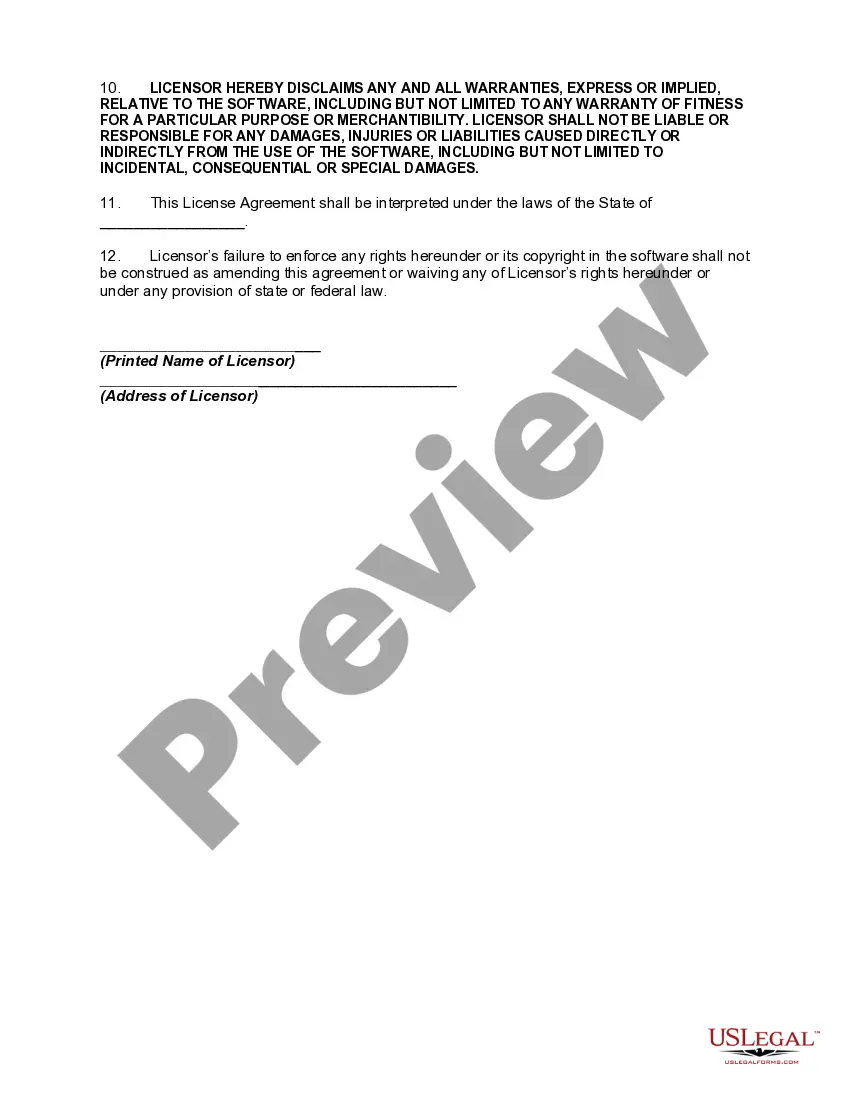
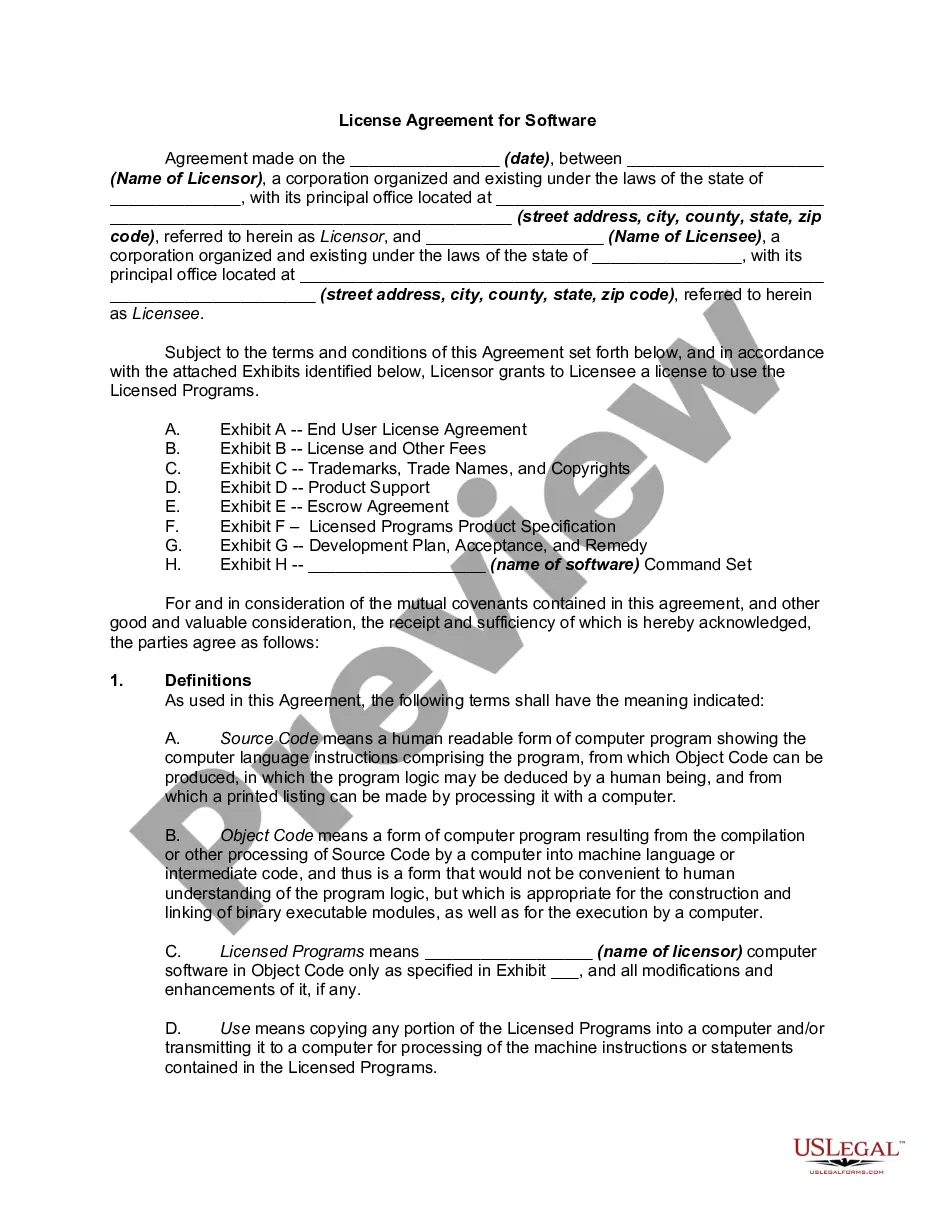
Vermont Freeware License Terms
Description
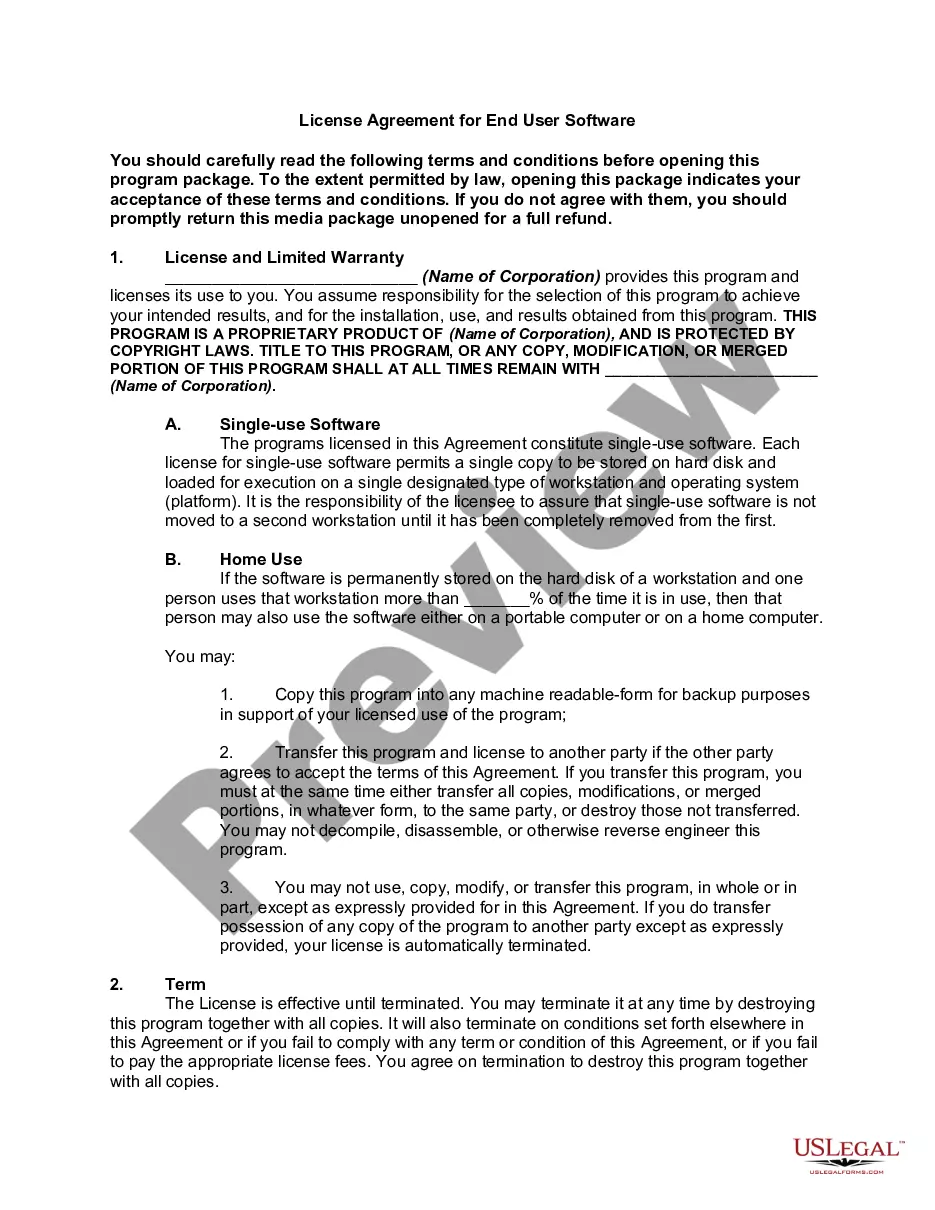
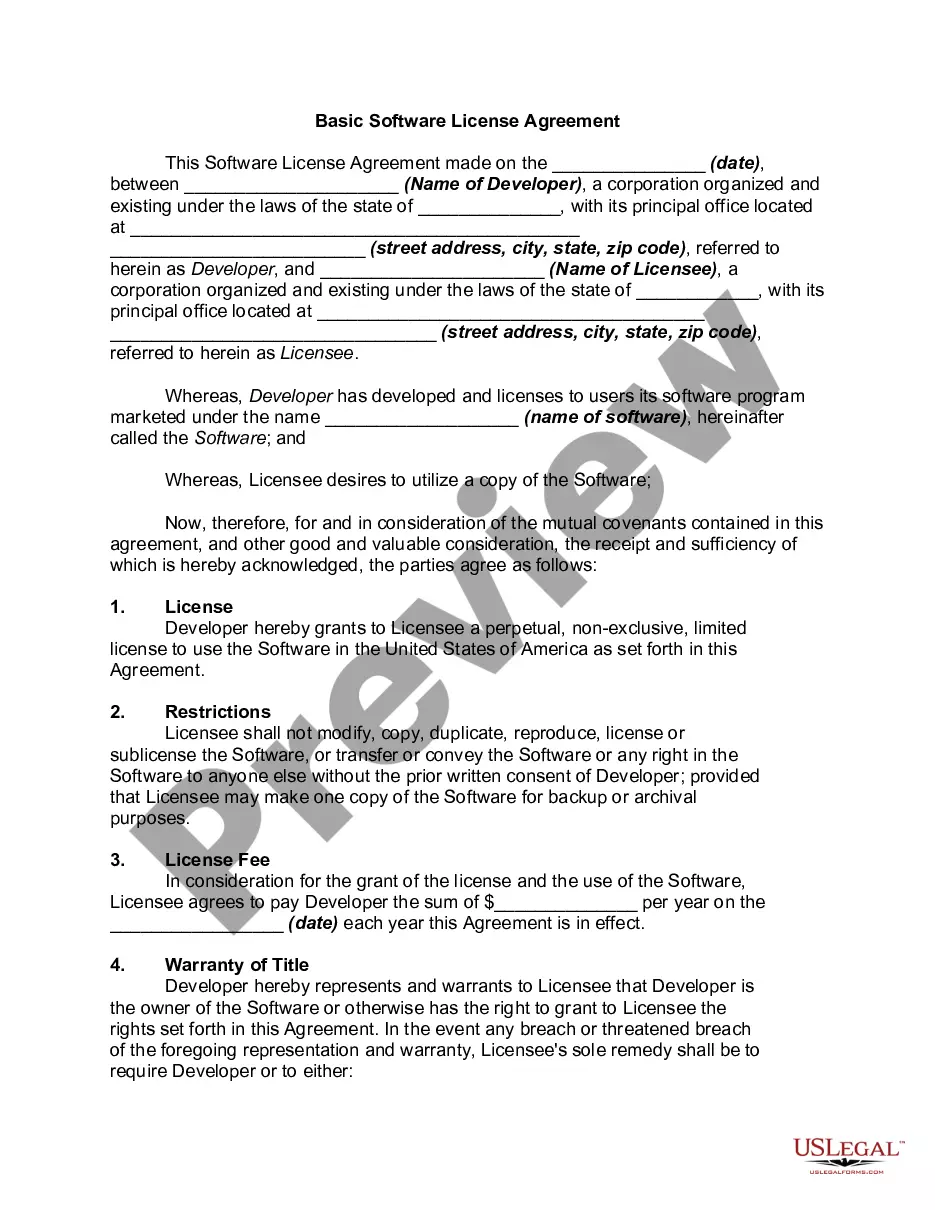
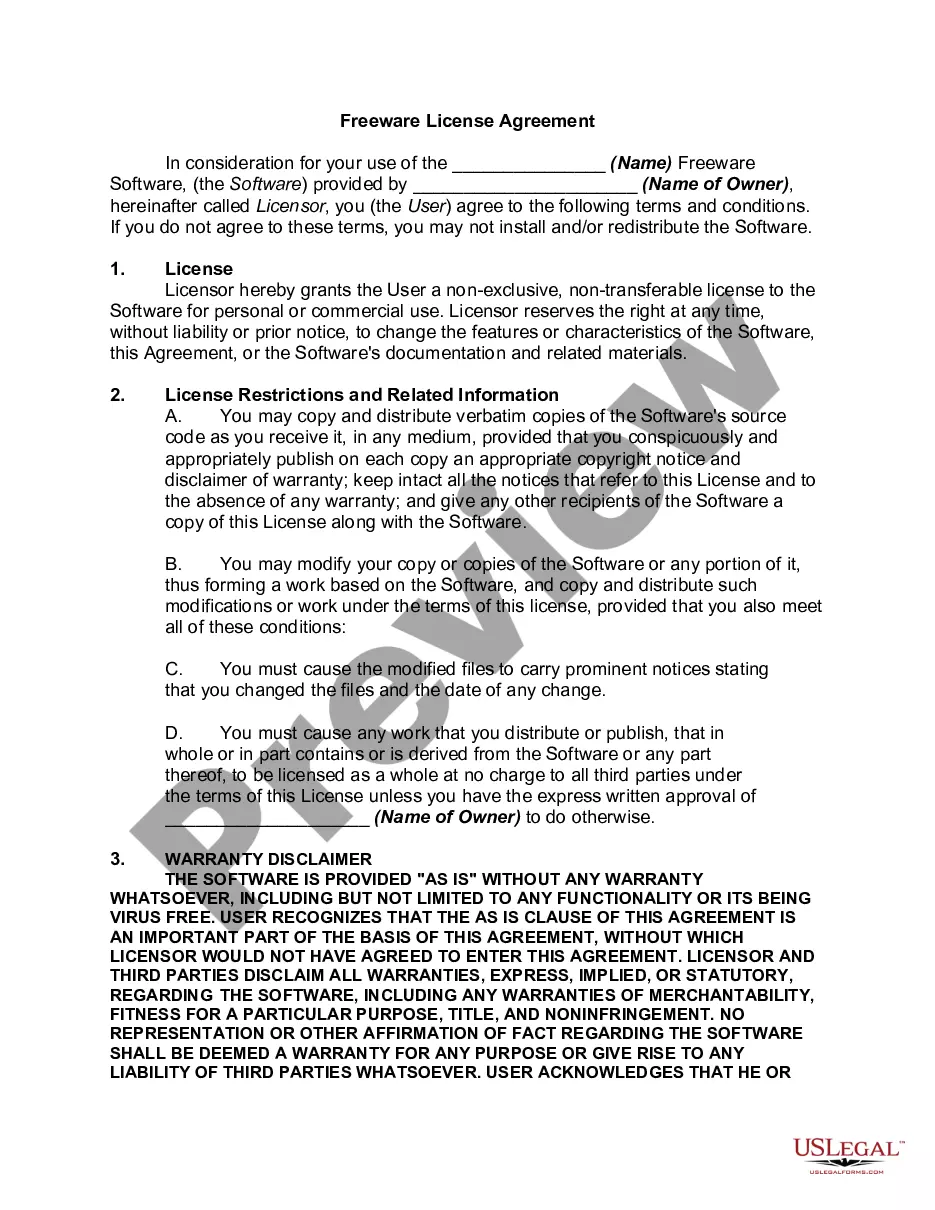
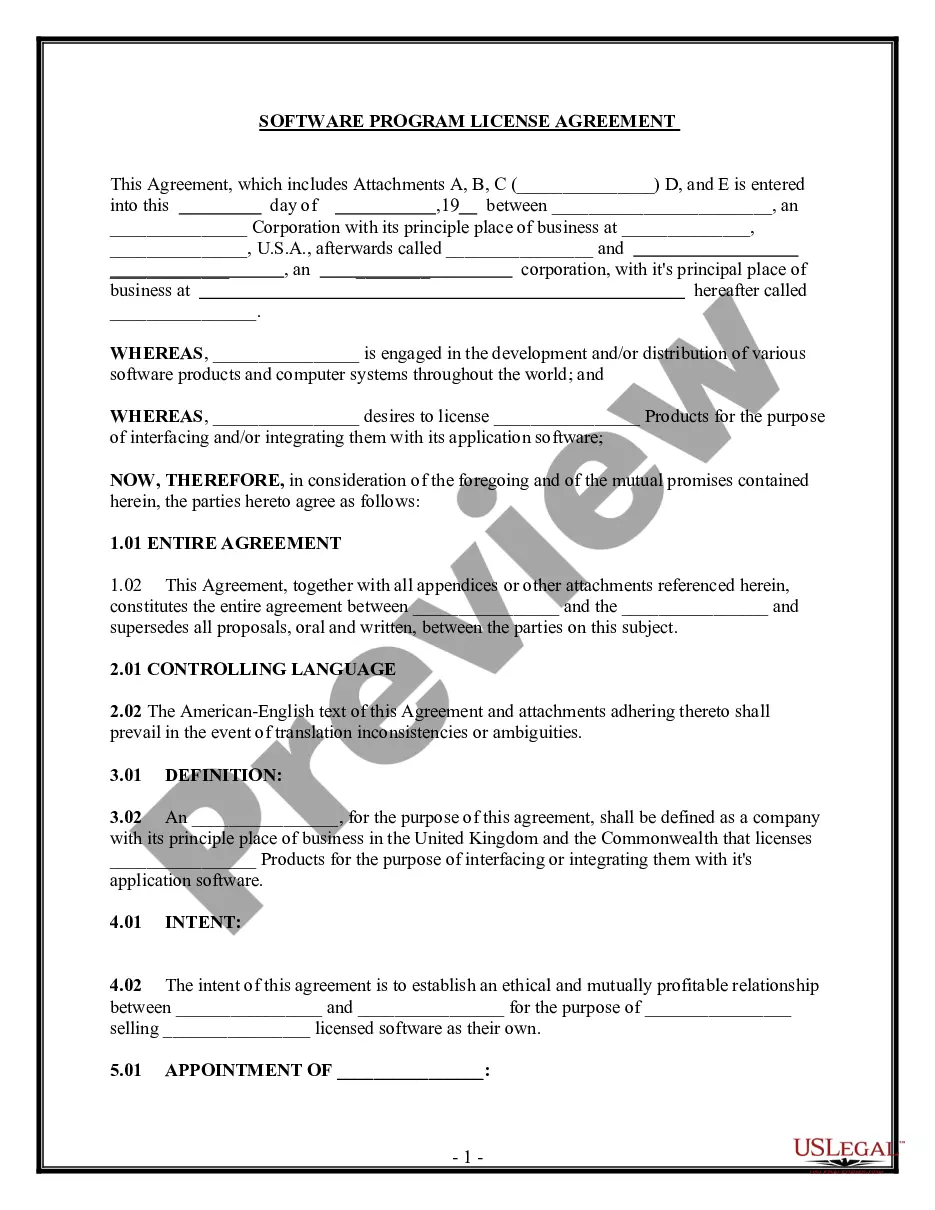
Get your form ready online
Our built-in tools help you complete, sign, share, and store your documents in one place.
Make edits, fill in missing information, and update formatting in US Legal Forms—just like you would in MS Word.
Download a copy, print it, send it by email, or mail it via USPS—whatever works best for your next step.
Sign and collect signatures with our SignNow integration. Send to multiple recipients, set reminders, and more. Go Premium to unlock E-Sign.
If this form requires notarization, complete it online through a secure video call—no need to meet a notary in person or wait for an appointment.
We protect your documents and personal data by following strict security and privacy standards.

Make edits, fill in missing information, and update formatting in US Legal Forms—just like you would in MS Word.

Download a copy, print it, send it by email, or mail it via USPS—whatever works best for your next step.

Sign and collect signatures with our SignNow integration. Send to multiple recipients, set reminders, and more. Go Premium to unlock E-Sign.

If this form requires notarization, complete it online through a secure video call—no need to meet a notary in person or wait for an appointment.

We protect your documents and personal data by following strict security and privacy standards.
Looking for another form?

How to fill out Freeware License Terms?
Have you ever found yourself in a situation where you require documents for either business or personal reasons almost every day.
There are numerous legal document templates available online, yet obtaining forms you can trust can be quite challenging.
US Legal Forms provides thousands of form templates, such as the Vermont Freeware License Terms, which can be tailored to meet state and federal regulations.
Utilize US Legal Forms, the most extensive collection of legal forms, to save time and avoid mistakes.
The service offers meticulously crafted legal document templates that can be used for various purposes. Create your account on US Legal Forms and start simplifying your life.
- If you are already familiar with the US Legal Forms website and have an account, simply Log In.
- Then, you can download the Vermont Freeware License Terms template.
- If you do not have an account and wish to start using US Legal Forms, follow these instructions.
- Obtain the form you require and ensure it is for your specific area/state.
- Use the Review button to verify the form.
- Read the description to ensure you have chosen the correct form.
- If the form is not what you’re looking for, utilize the Search section to find the form that meets your needs and requirements.
- Once you find the correct form, click on Get now.
- Select the payment plan you prefer, provide the necessary information to create your account, and pay for your order using your PayPal or credit card.
- Choose a convenient file format and download your copy.
- Locate all the document templates you have purchased in the My documents section.
- You can obtain an additional copy of the Vermont Freeware License Terms at any time if needed. Just select the desired form to download or print the document template.
Form popularity
FAQ
To ensure your licensing contract is legally binding, you need to include several critical components. These include clear terms regarding rights, duties, and limitations, as well as mutual consent and valid consideration. Additionally, the contract must abide by the Vermont Freeware License Terms and relevant laws. Using templates from platforms like USLegalForms can simplify this process and enhance the contract’s legal standing.
License agreements can be legally binding if they meet specific criteria outlined in Vermont Freeware License Terms. When both parties consent to the terms and conditions, and the agreement includes valid consideration, its enforceability is established. However, it is important to ensure the agreement does not violate any local or federal laws. Consulting with a legal professional can provide clarity and help you draft a robust license agreement.
To create a legally binding contract, four key requirements must be met: offer, acceptance, consideration, and legality. Firstly, one party must present an offer to another, who then accepts it. Consideration refers to the value exchanged, and legality ensures the contract does not violate any laws. Familiarizing yourself with Vermont Freeware License Terms will help you understand how these elements function together to form enforceable agreements.
Vermont has implemented a unique captive insurance model, leading to favorable tax treatment. The captive insurance tax rate is subject to specific regulations under the Vermont Freeware License Terms. Captives must adhere to these rules to maintain compliance while enjoying tax benefits. For businesses considering this path, understanding local tax laws is crucial for maximizing savings and ensuring compliance.
Creating licensing agreements involves clearly defining the rights and responsibilities between the licensor and licensee. You should include essential elements, such as the scope of use, payment terms, and duration of the agreement. Utilizing resources like USLegalForms can help you draft these agreements in compliance with Vermont Freeware License Terms, ensuring legal validity. A well-constructed agreement protects both parties and promotes a positive relationship.
In Vermont, obtaining an adjuster license is necessary for individuals who wish to act as insurance adjusters. The Vermont Freeware License Terms highlight the legal framework for engaging in insurance-related activities. Without this license, you cannot legally adjust claims on behalf of an insurance company. Ensure you meet all requirements laid out by the Vermont Department of Financial Regulation to navigate this process smoothly.
In Vermont, certain minor plumbing tasks may not require a license, such as small repairs or maintenance work. However, significant plumbing installations and modifications typically fall under the Vermont Freeware License Terms, requiring a licensed professional. It's important to verify which activities qualify for exemption to avoid legal issues. For any significant plumbing work, consider consulting a licensed contractor to ensure compliance.
Yes, Vermont does require a contractor's license for construction, electrical, plumbing, and other specialized work. Obtaining this license involves meeting Vermont Freeware License Terms and demonstrating your qualifications. This requirement ensures that all contractors have the necessary skills and knowledge to complete projects safely and effectively. If you plan to establish your business in Vermont, it is vital to understand these licensing rules.
Yes, contractors need a license in Vermont to perform most types of construction work. Vermont requires that contractors adhere to specific Vermont Freeware License Terms to ensure quality and safety in their projects. Whether you are a general contractor or specialize in a trade, understanding these requirements is crucial. This helps protect both you and your clients.
Not all states require contractors to be licensed. Each state has its own laws regarding contractor licensing, including the specific requirements for different trades. In many states, such as Vermont, contractors must meet certain Vermont Freeware License Terms to operate legally. It's essential to research the regulations in your state to ensure compliance.