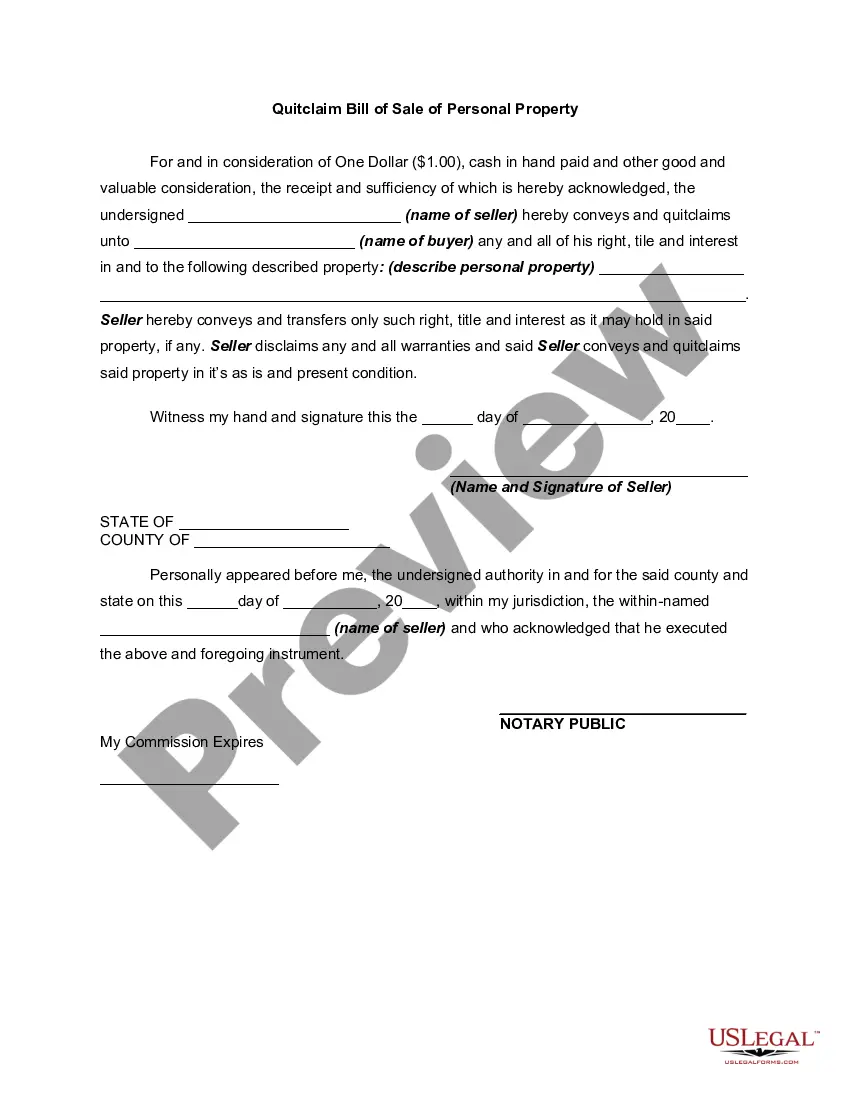
Vermont Quitclaim Bill of Sale of Personal Property

State:
Multi-State
Control #:
US-02012BG
Format:
Word
Instant download

Description

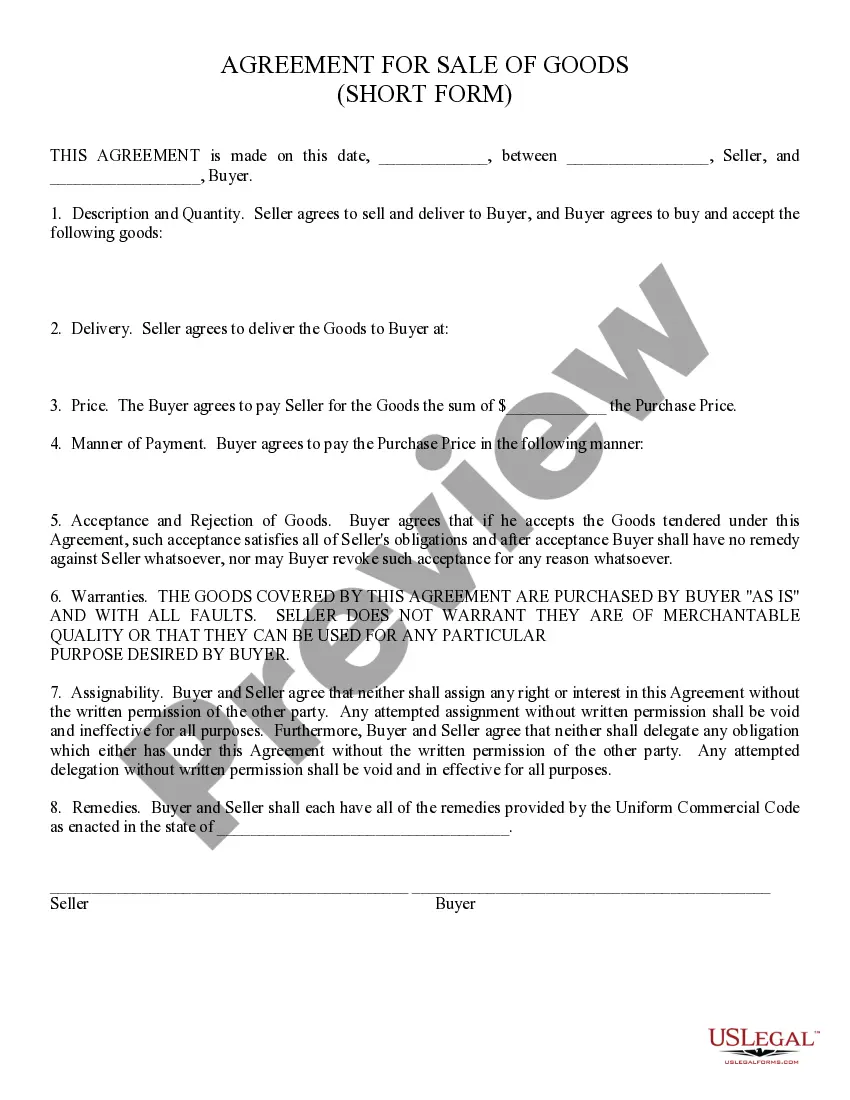
Section 2-105 of the Uniform Commercial Code defines Goods as follows:


Goods means all things which are movable at the time of identification to the contract for sale other than the money in which the price is to be paid. This would include tangible personal property.


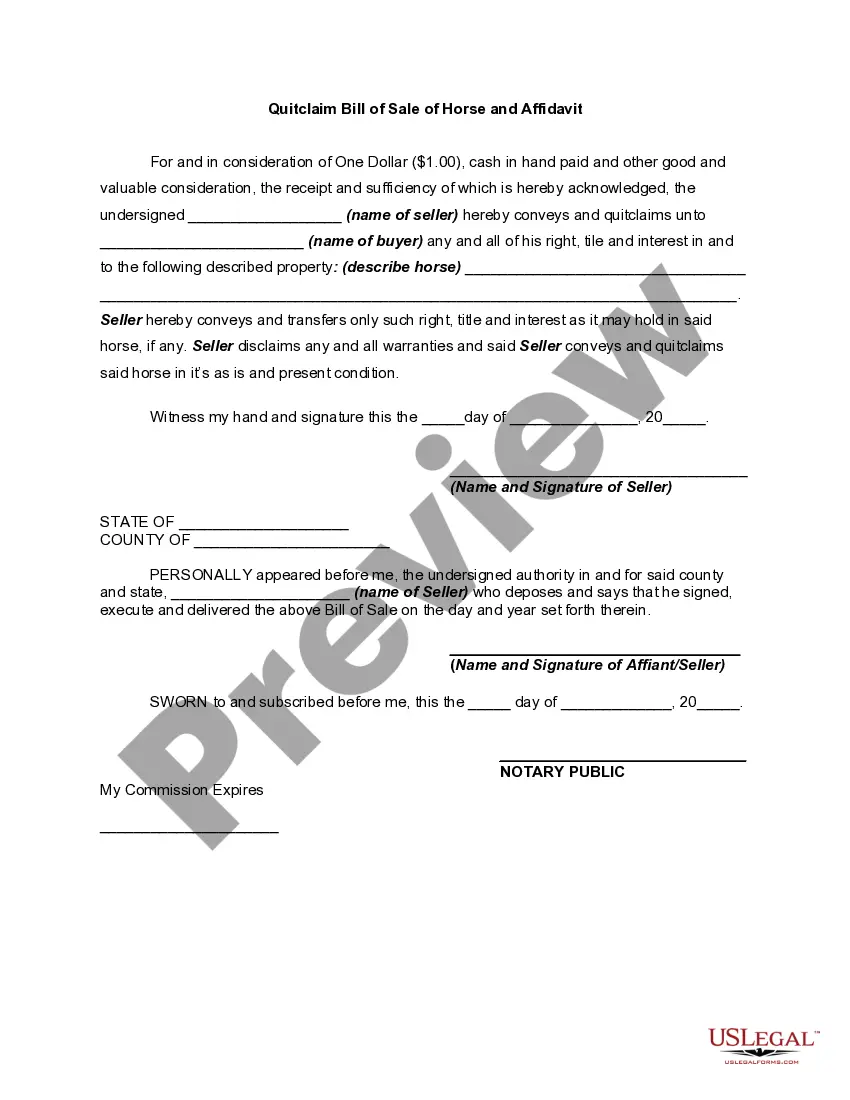
Quitclaim means to transfer whatever interest, if any, a grantor may have in the property, without specifying the interest in any way. No warranty of ownership is given.
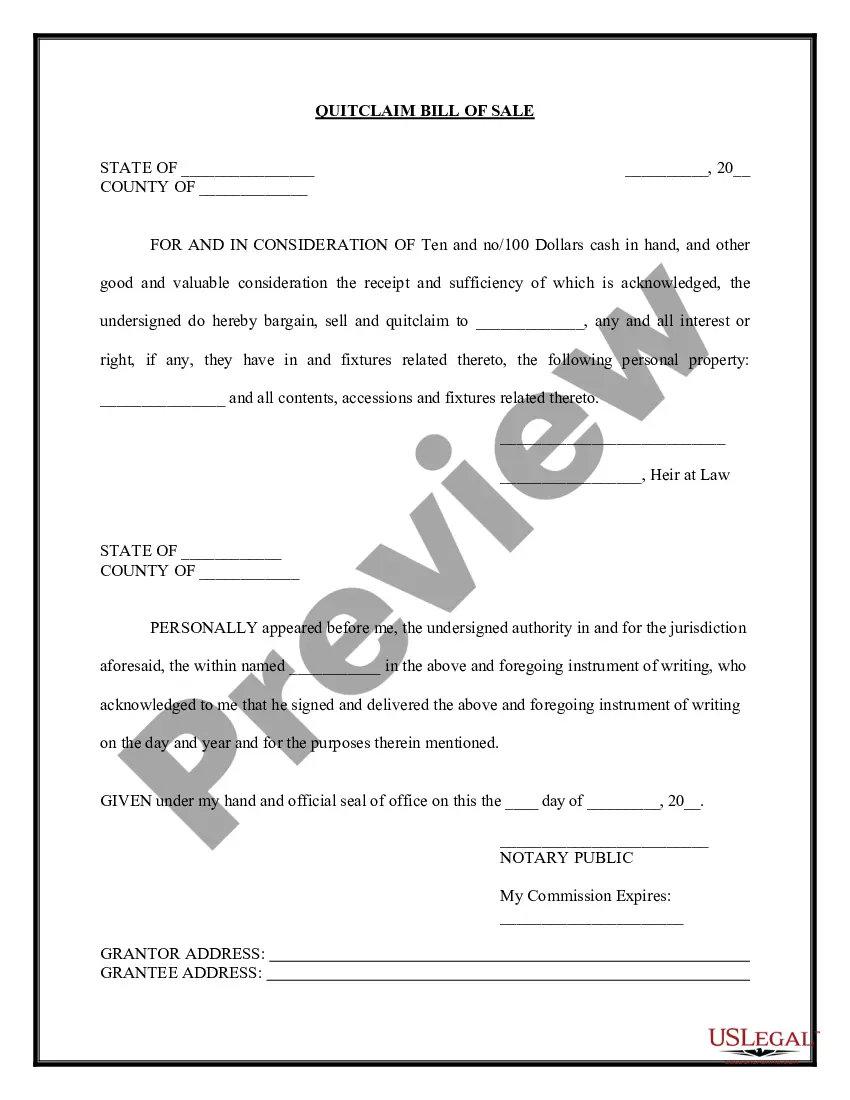
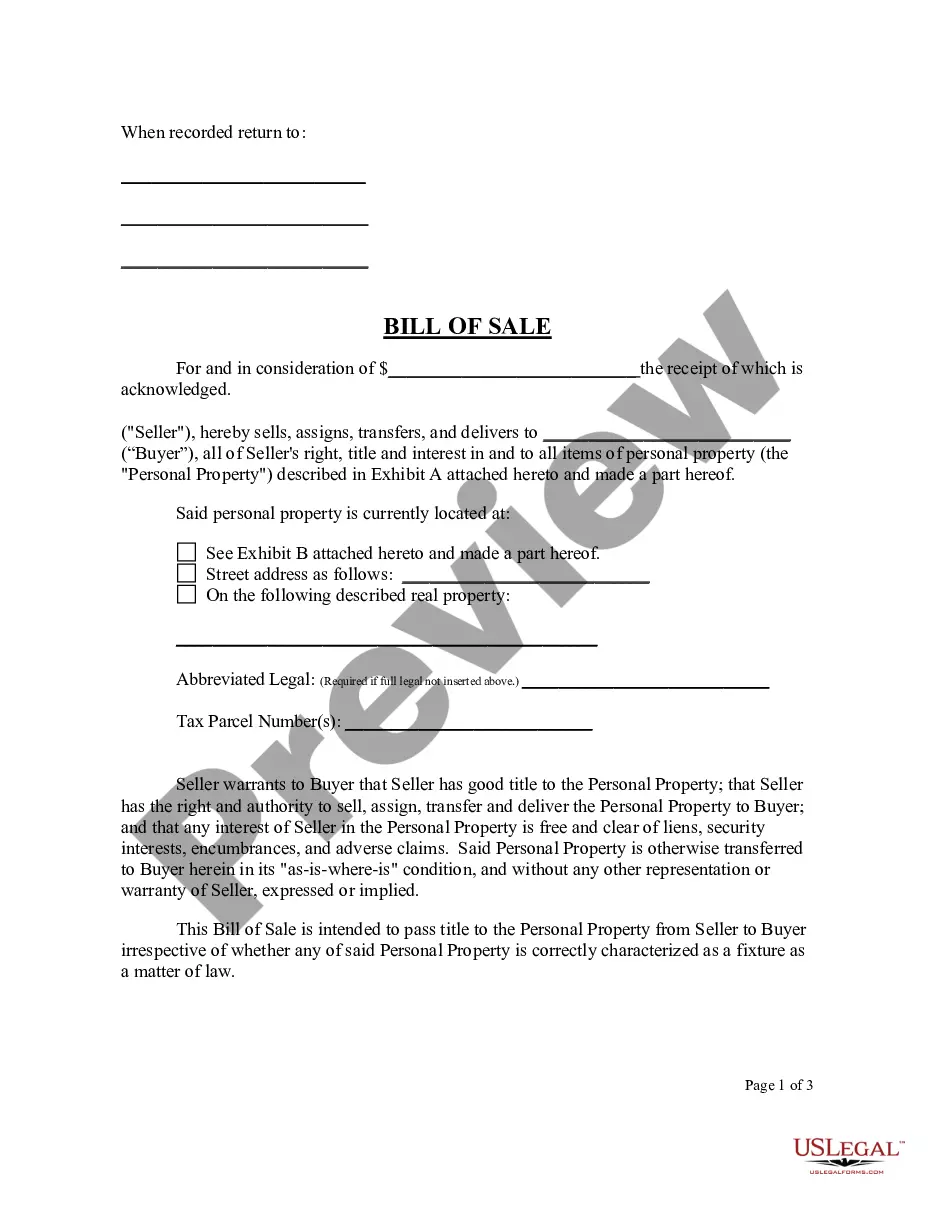
How to fill out Quitclaim Bill Of Sale Of Personal Property?

You might spend numerous hours online looking for the legal document format that meets the federal and state requirements you need.

US Legal Forms offers a wide array of legal documents that are reviewed by professionals.

You can download or print the Vermont Quitclaim Bill of Sale for Personal Property from this service.

If available, use the Review button to browse the document format as well.

  1. If you have a US Legal Forms account, you can Log In and click the Download button.
  2. Then you can complete, modify, print, or sign the Vermont Quitclaim Bill of Sale for Personal Property.
  3. Every legal document format you purchase is yours permanently.
  4. To obtain another copy of any purchased form, visit the My documents section and click the corresponding button.
  5. If you're using the US Legal Forms website for the first time, follow the simple instructions below.
  6. First, ensure that you have chosen the correct document format for the region/town of your choice.
  7. Review the document information to make sure you’ve selected the appropriate form.

Form popularity

FAQ

Filling out a Vermont Quitclaim Bill of Sale of Personal Property form is straightforward. Start by entering the names of both the seller and buyer, along with a description of the property being transferred. Ensure you include the date of the transaction and any necessary signatures. If you seek a reliable template or need assistance, consider using the resources available at uslegalforms, which can guide you through the process.

One key disadvantage of using a Vermont Quitclaim Bill of Sale of Personal Property is that it does not provide any guarantees regarding the property’s title. Without warranties, the buyer may face legal issues later if claims arise. Additionally, if the property is encumbered or has liens, the buyer inherits those problems. Thus, potential buyers should approach quitclaim transactions with caution.

Yes, a Vermont Quitclaim Bill of Sale of Personal Property is indeed a type of sale, but it differs from more conventional sales. In a quitclaim transaction, the seller transfers whatever interest they possess in the property, without any warranty. This means the buyer assumes the risk if the title is not clear. Therefore, while it is a sale, it carries specific implications for both parties.

A Vermont Quitclaim Bill of Sale of Personal Property serves as a legal document that transfers ownership of personal items from one person to another. Unlike other sales agreements, a quitclaim does not guarantee that the seller holds clear title to the property. It simplifies the process for the buyer, as they accept the item without assurances from the seller. This document is often used for items like vehicles, furniture, or collectibles.

People often use a quitclaim deed for various reasons, including transferring property among family members or resolving ownership issues. It provides a quick way to relinquish interest without extensive disclosure of the property's history. When you employ a Vermont Quitclaim Bill of Sale of Personal Property, you expedite simple transfers. However, remember that this method lacks the protections of other deeds, so consider your situation carefully.

Yes, you can sell your property using a quit claim deed, but it's essential to exercise caution. This type of deed conveys your interest in the property without guaranteeing a clear title, which may deter buyers. When using a Vermont Quitclaim Bill of Sale of Personal Property for a sale, ensure all parties understand its implications. Clarifying these points can facilitate a smoother transaction.

To execute a quit claim deed in Vermont, you must start by drafting the document, including information about the property and the parties involved. Once completed, both parties should sign the deed in the presence of a notary. Finally, file the Vermont Quitclaim Bill of Sale of Personal Property with the local clerk’s office for it to take effect legally. This process ensures a clear transfer of interest in the property.

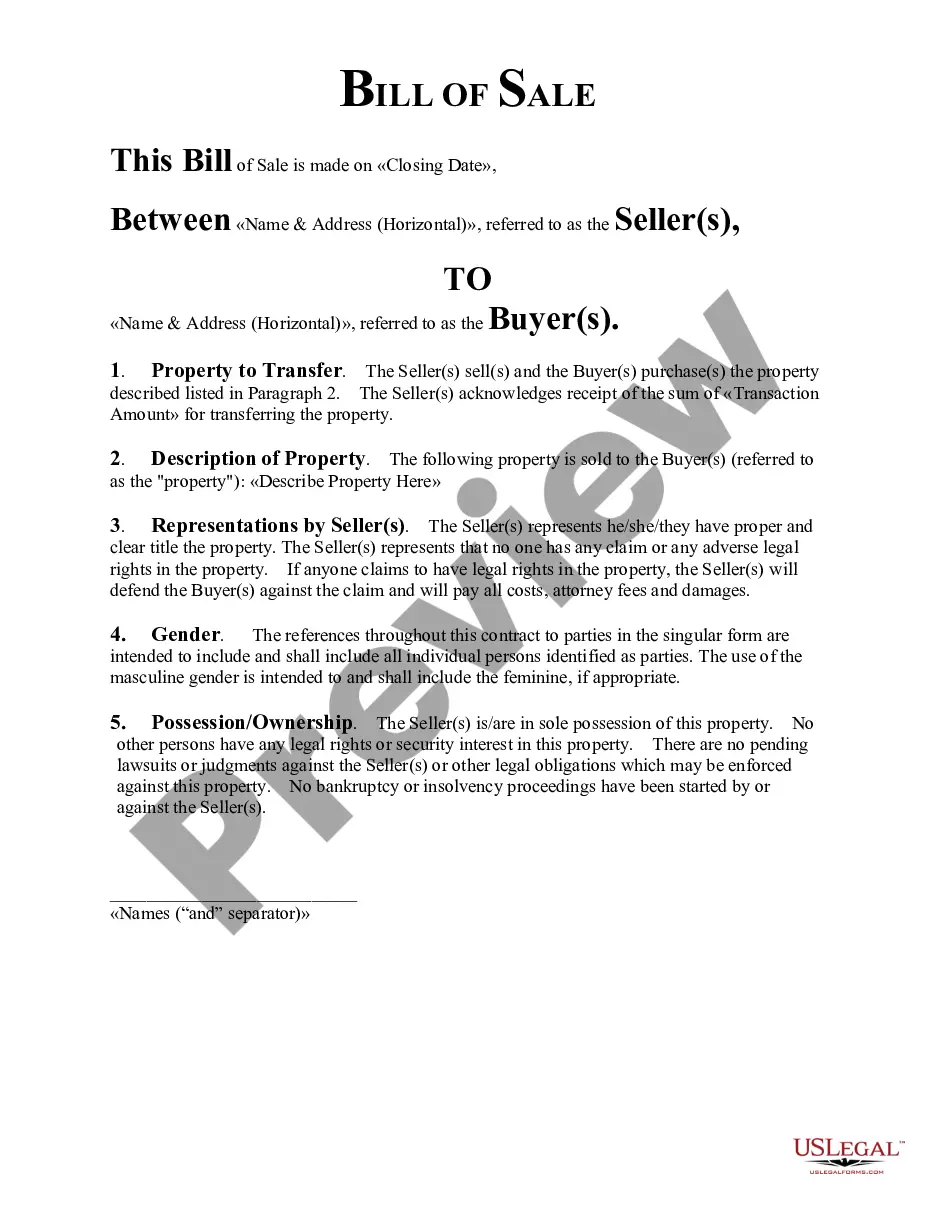
No, a bill of sale and a deed serve different purposes in property transfers. A bill of sale transfers personal property, while a deed, including the Vermont Quitclaim Bill of Sale of Personal Property, conveys real estate ownership. Although both documents play essential roles in transactions, it's important to understand their distinctions to ensure proper legal procedure. Always consider your specific needs when deciding which document to use.

The strongest form of deed is typically a warranty deed. This type of deed provides maximum protection to the buyer, ensuring that the seller has clear title to the property and will defend it against any claims. While a Vermont Quitclaim Bill of Sale of Personal Property transfers ownership, it does not offer the same guarantees as a warranty deed. Understanding the differences can help you choose the right option for your needs.

To file a quitclaim deed in Vermont, start by drafting the deed accurately with all necessary information, including the names of both parties. After signing and notarizing the document, submit it to your local town clerk's office for recording. You can also explore templates for the Vermont Quitclaim Bill of Sale of Personal Property online to simplify the filing process.

Trusted and secure by over 3 million people of the world’s leading companies

Vermont Quitclaim Bill of Sale of Personal Property