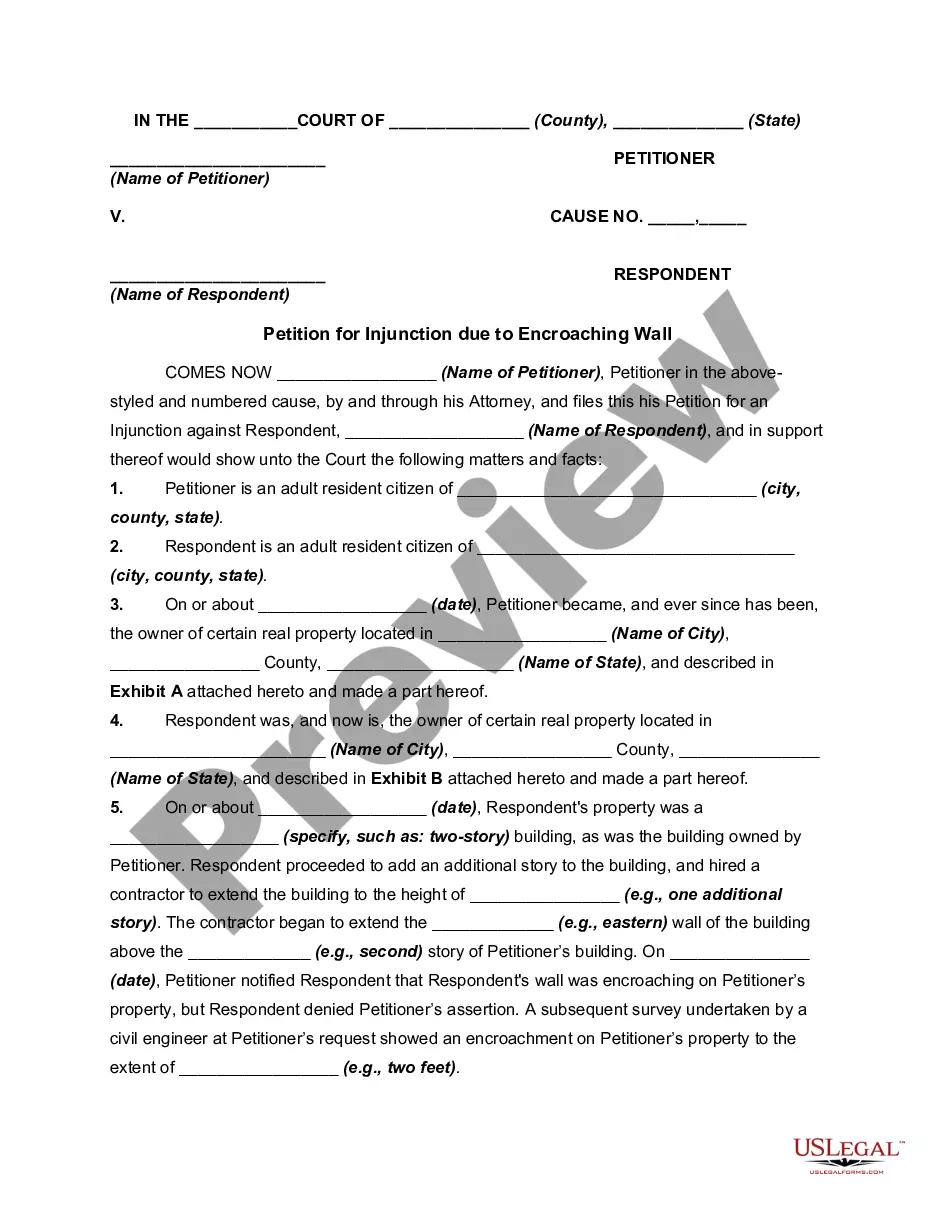
A building and construction contract must fulfill the same requirements as any other type of contract in regard to matters such as offer and acceptance, sufficiency of consideration, certainty, and the like. Such a contract generally provides not only for the construction of the project, but also for many matters that are incidental to the project. Thus, it may provide for the carrying of liability, workers' compensation, and fire insurance policies, designating which party is responsible for obtaining particular insurance. A building and construction contract will typically specify the duties, responsibilities, and liabilities of each of the parties, as well as those of any employed architect or engineer. The amount and method of compensation is, of course, an important part of such a contract.
Vermont Construction Contract for New Residential Dwelling
Description
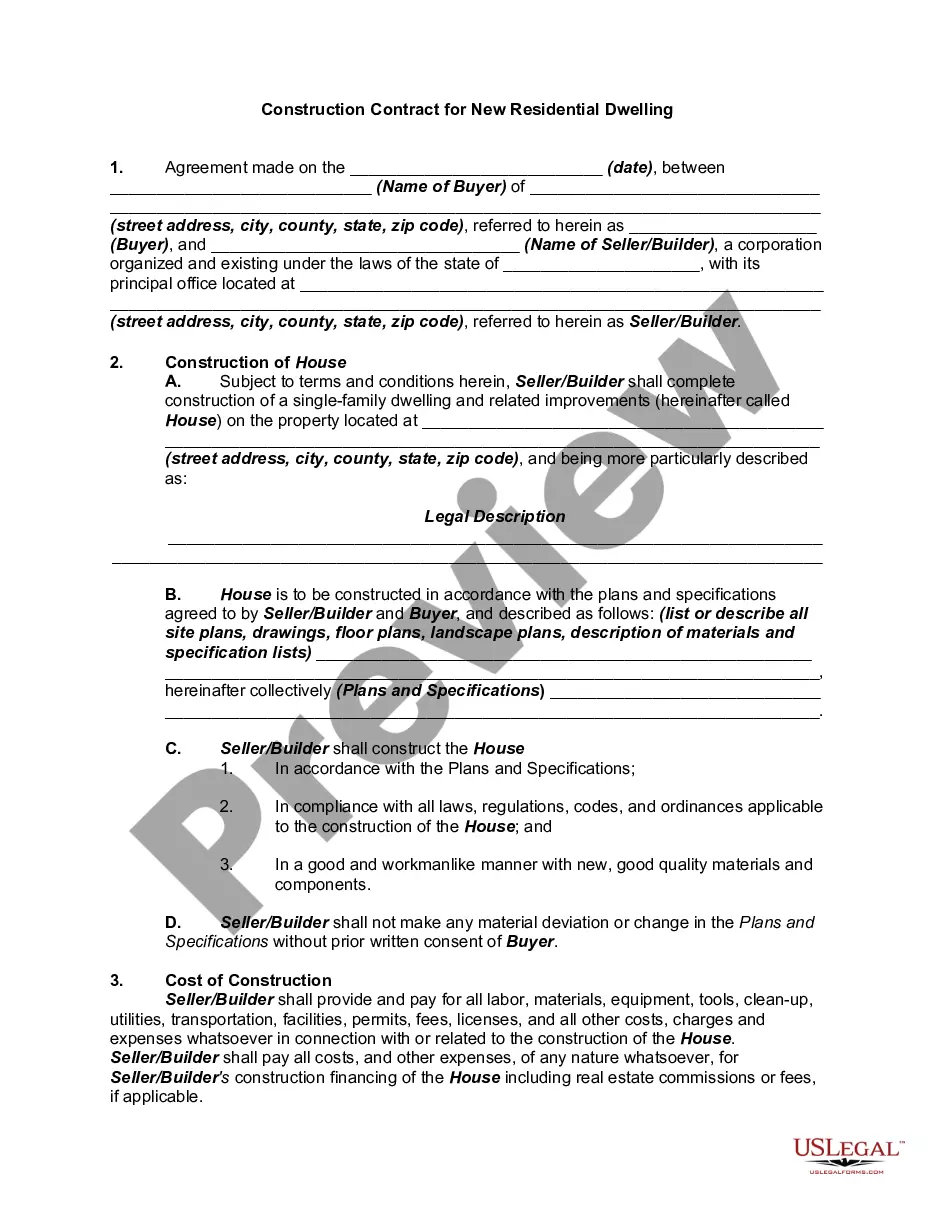
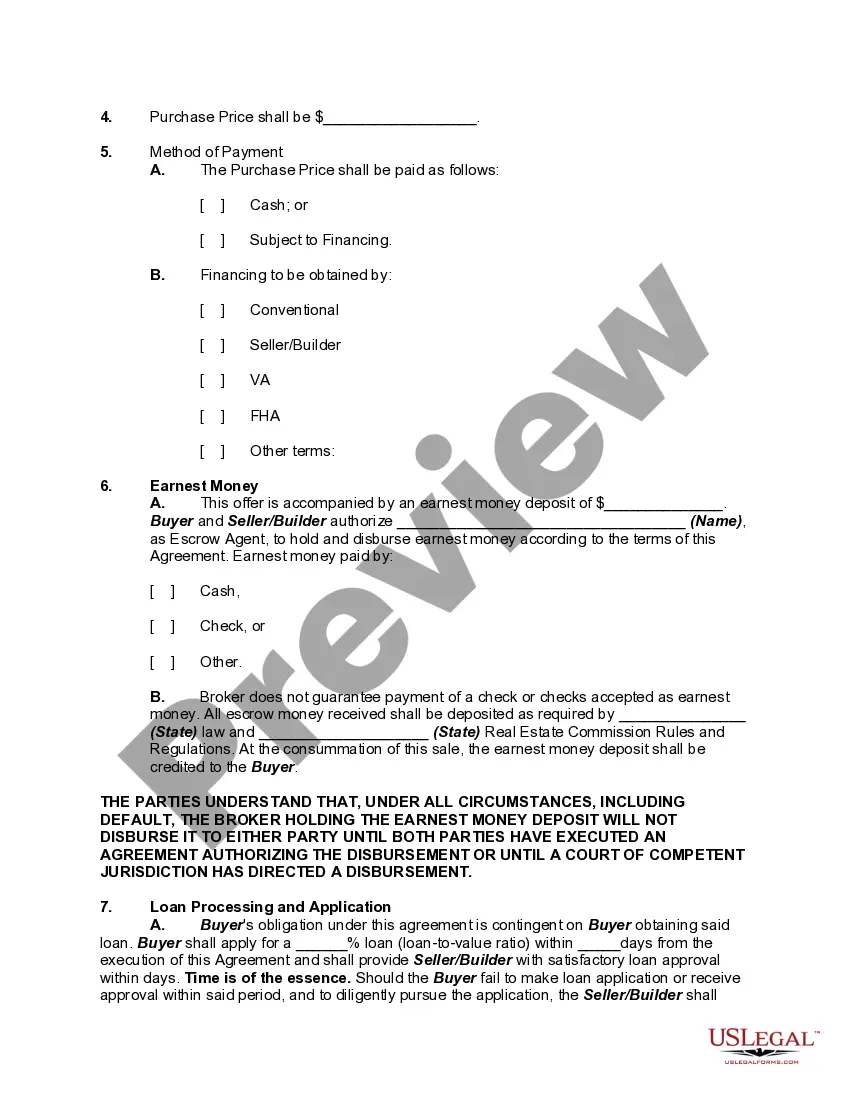
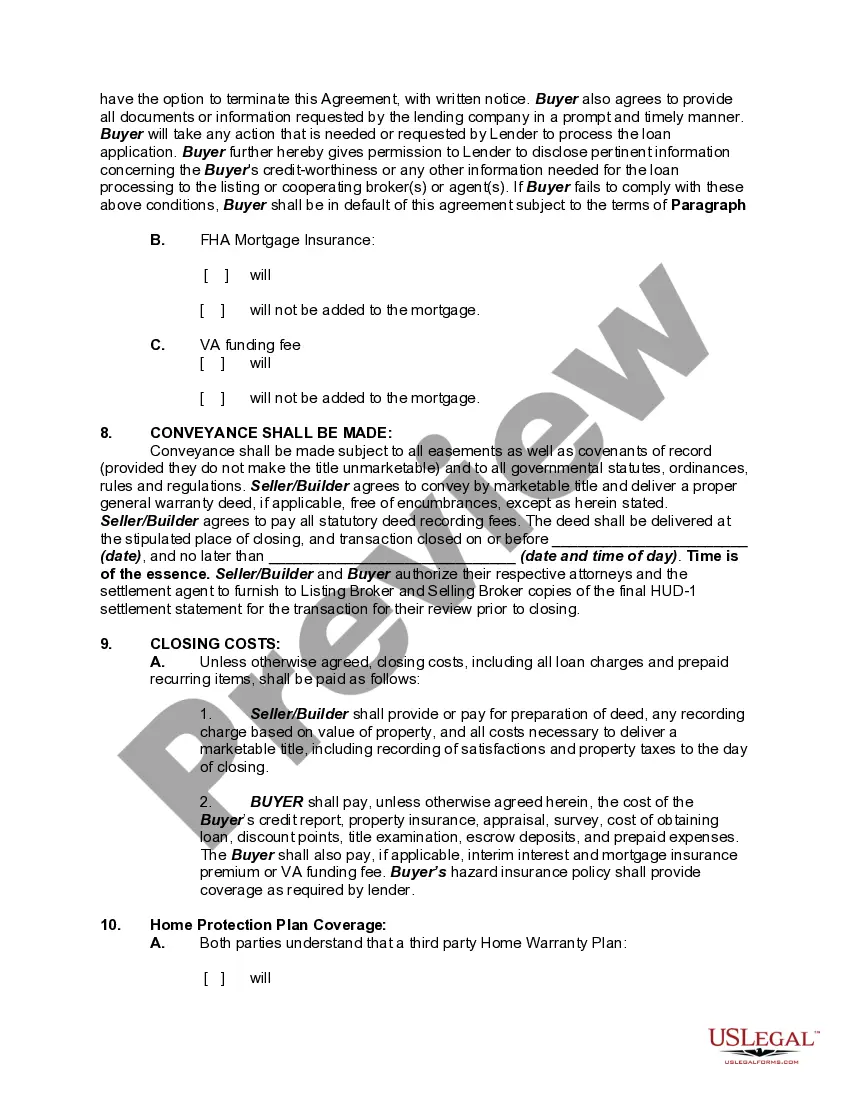
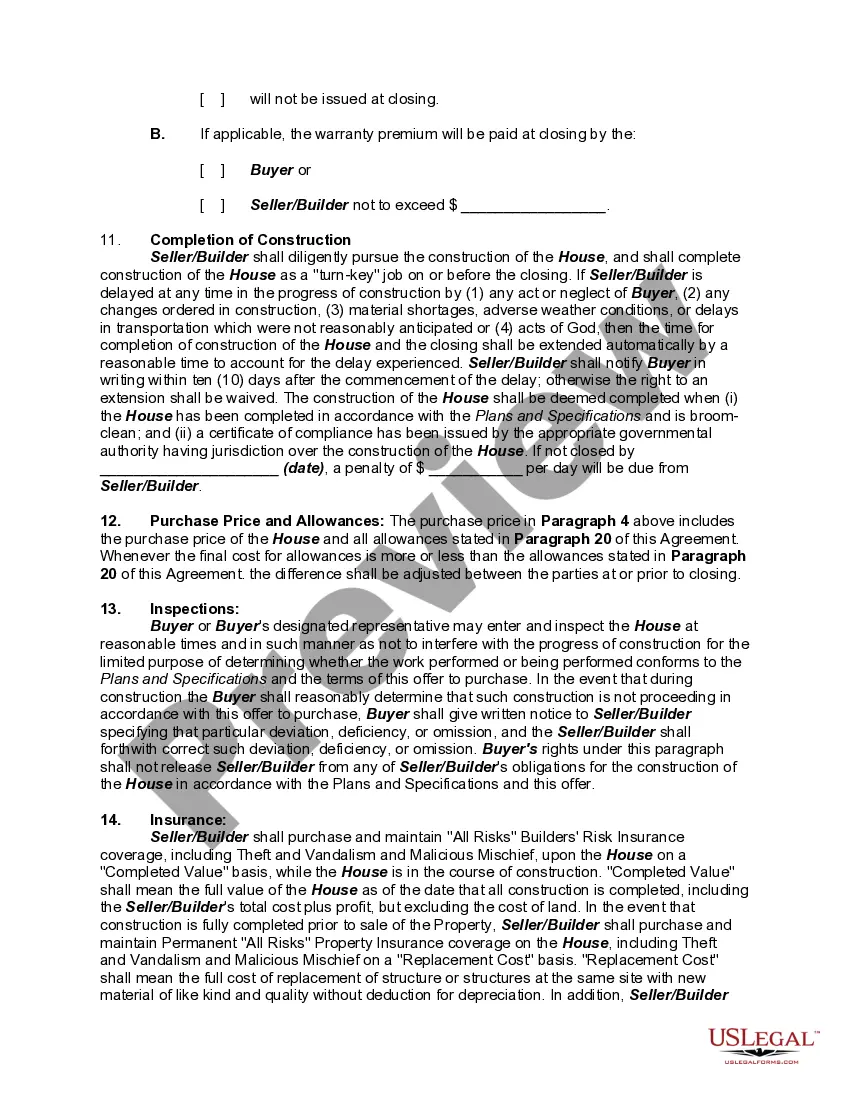
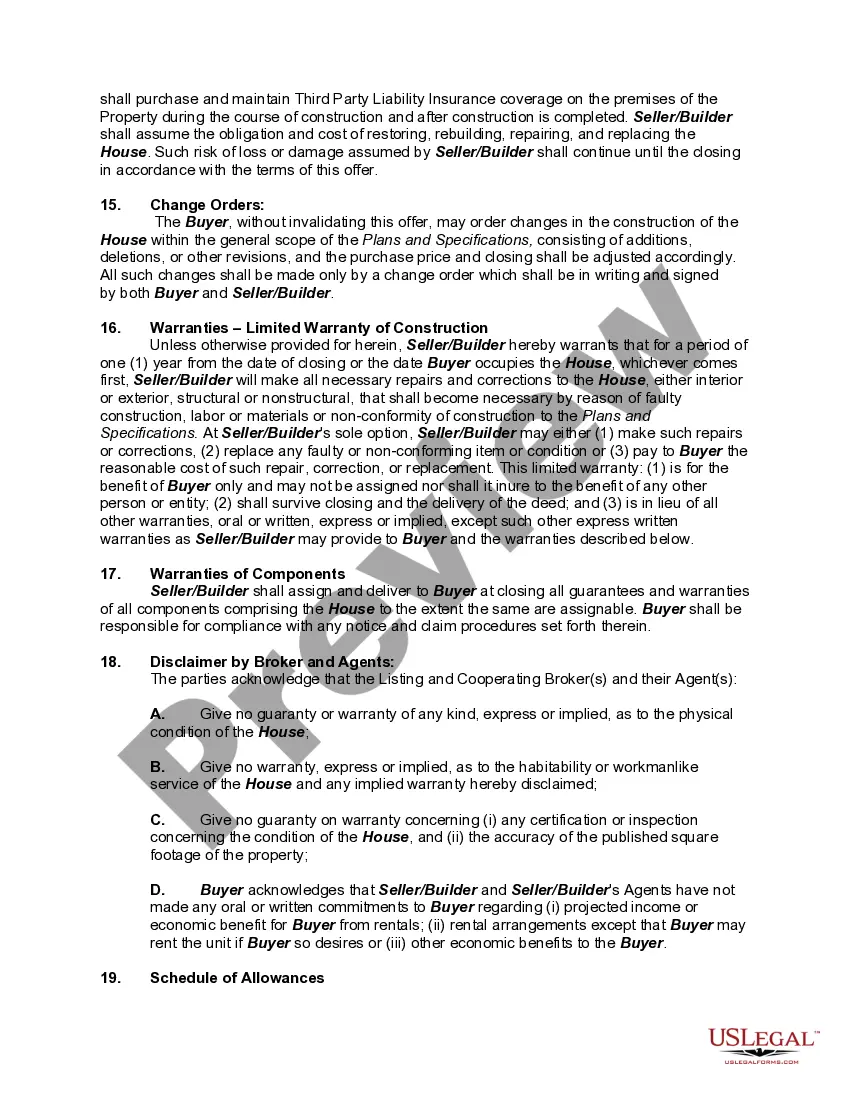
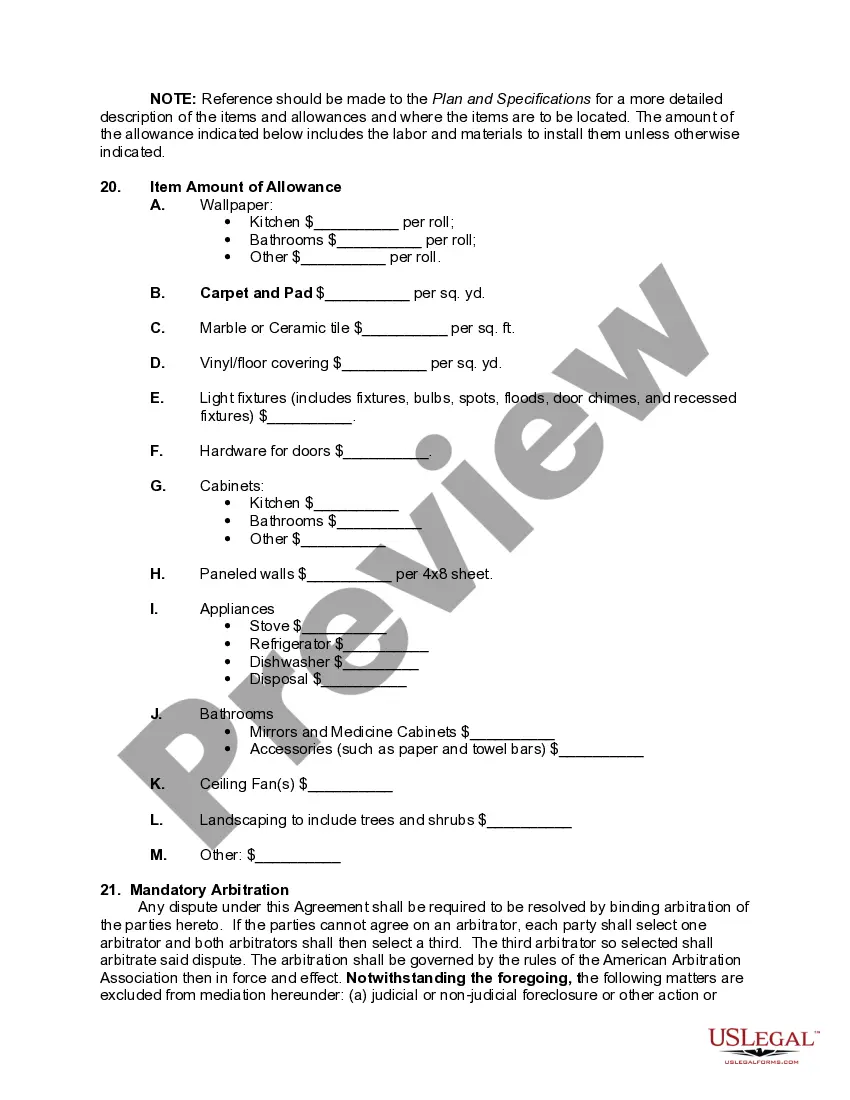
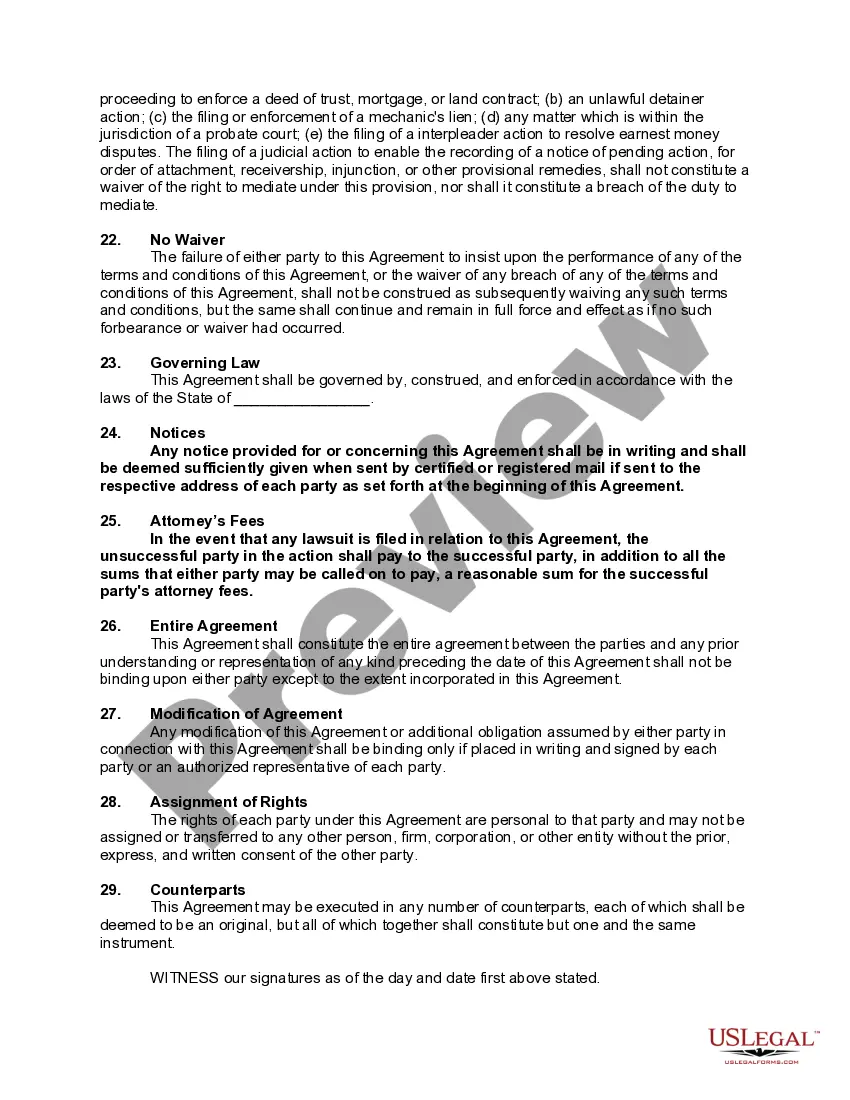
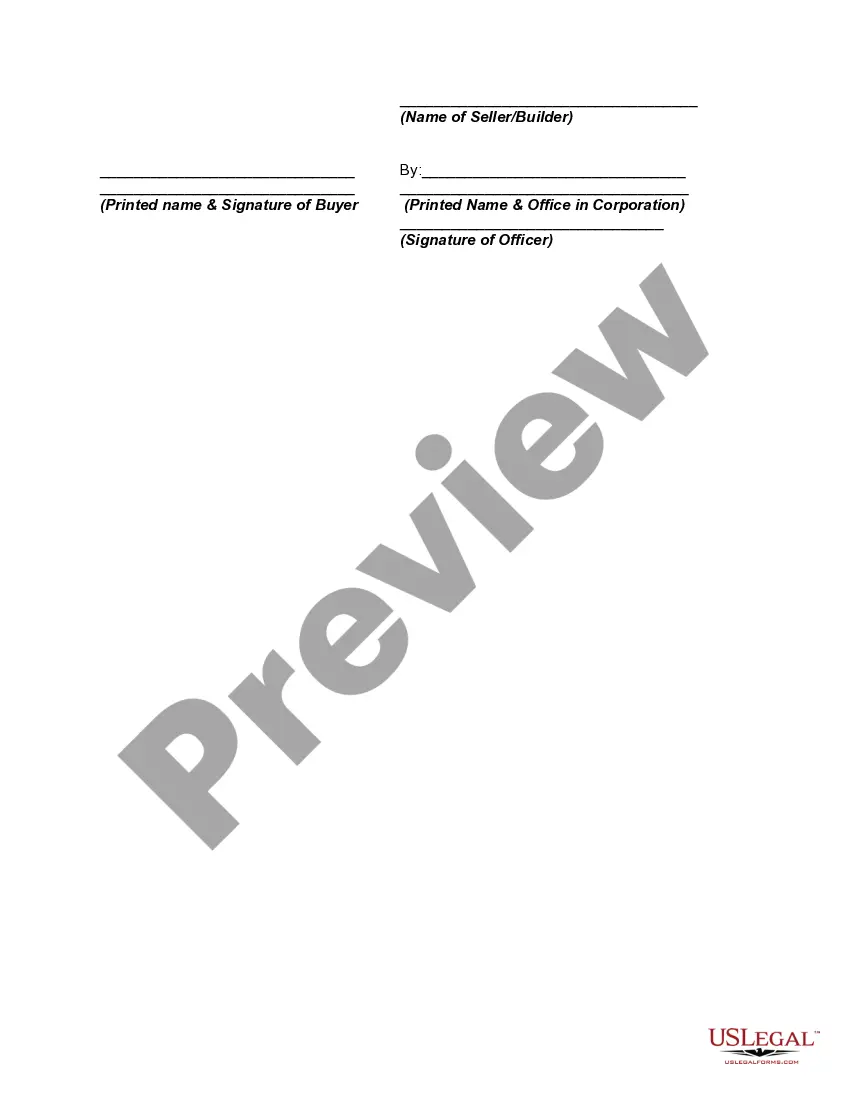
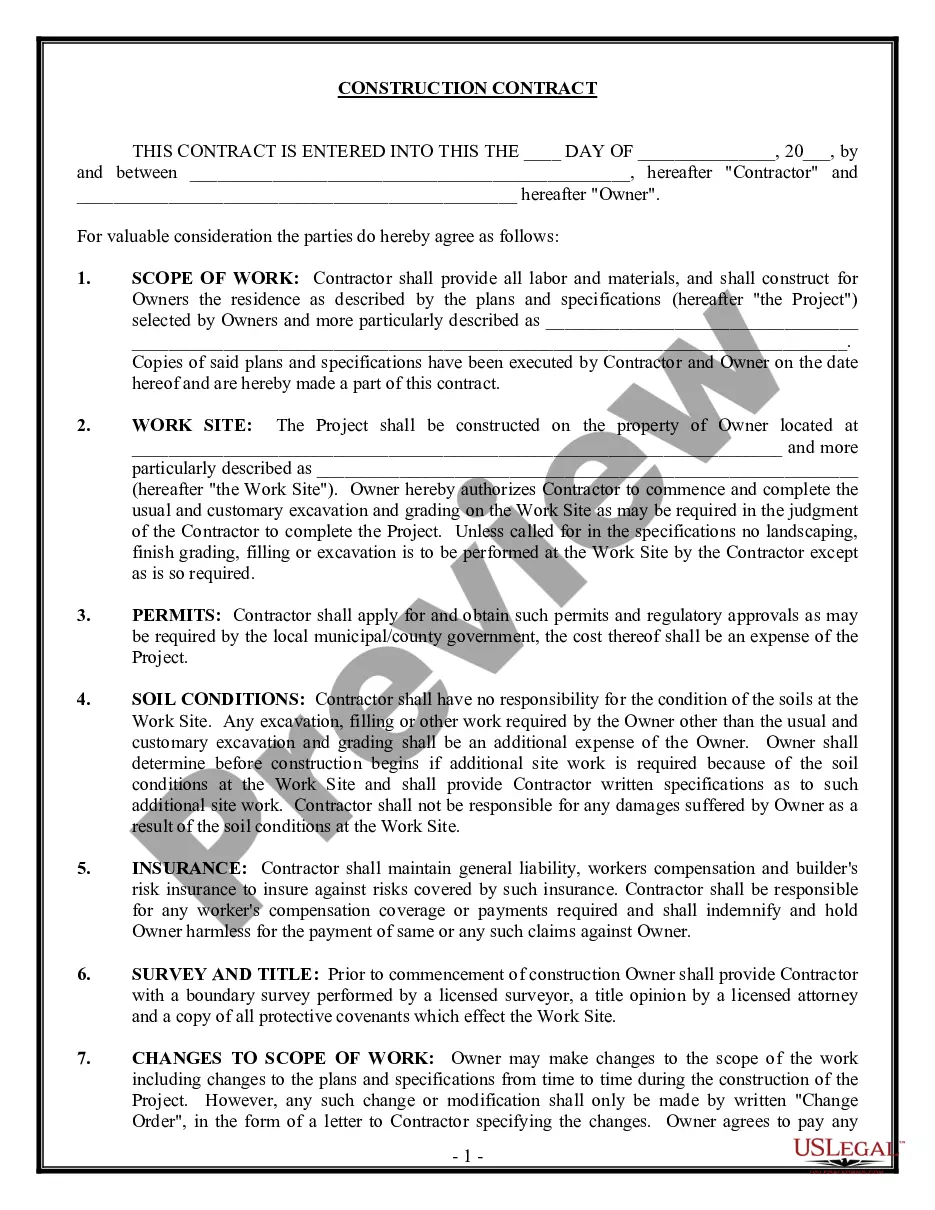
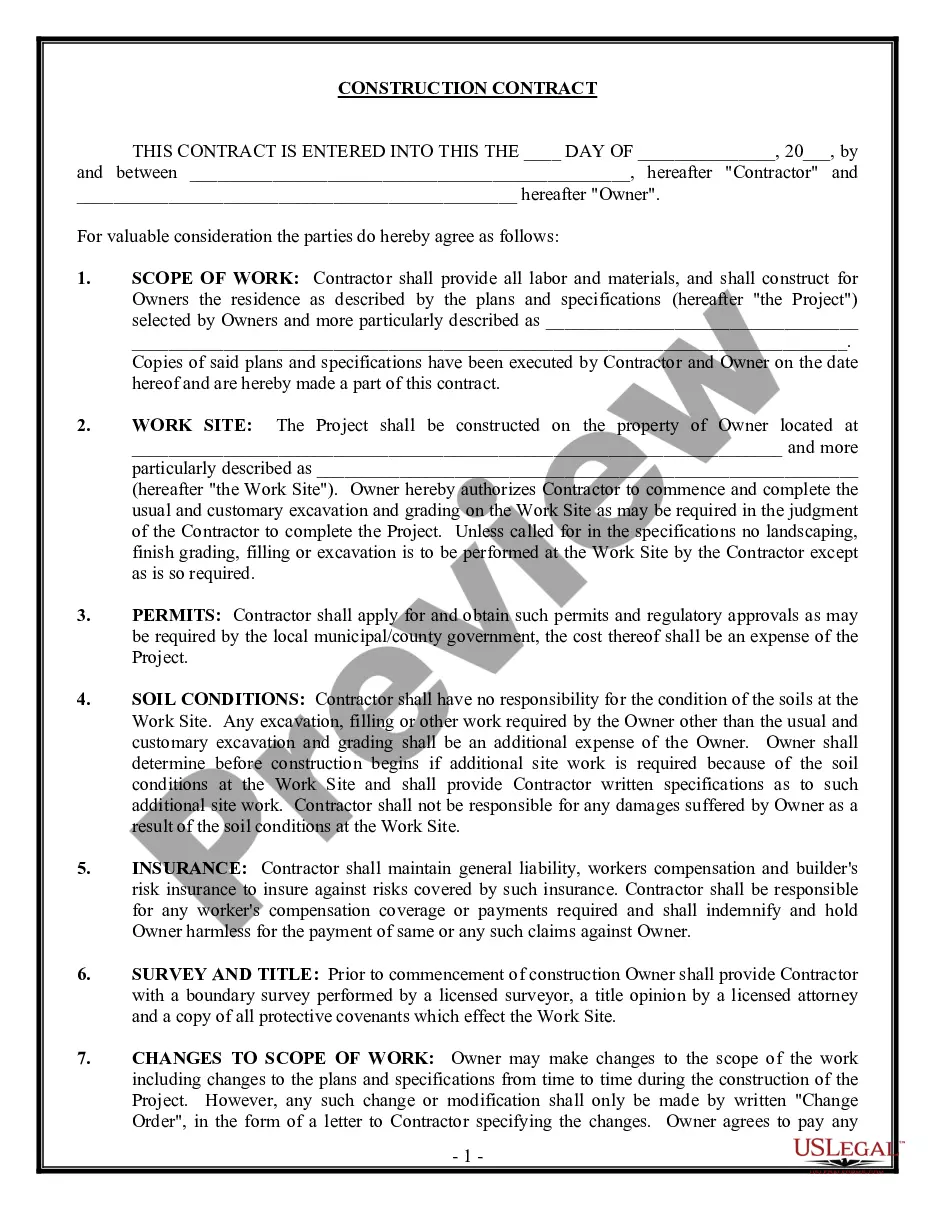
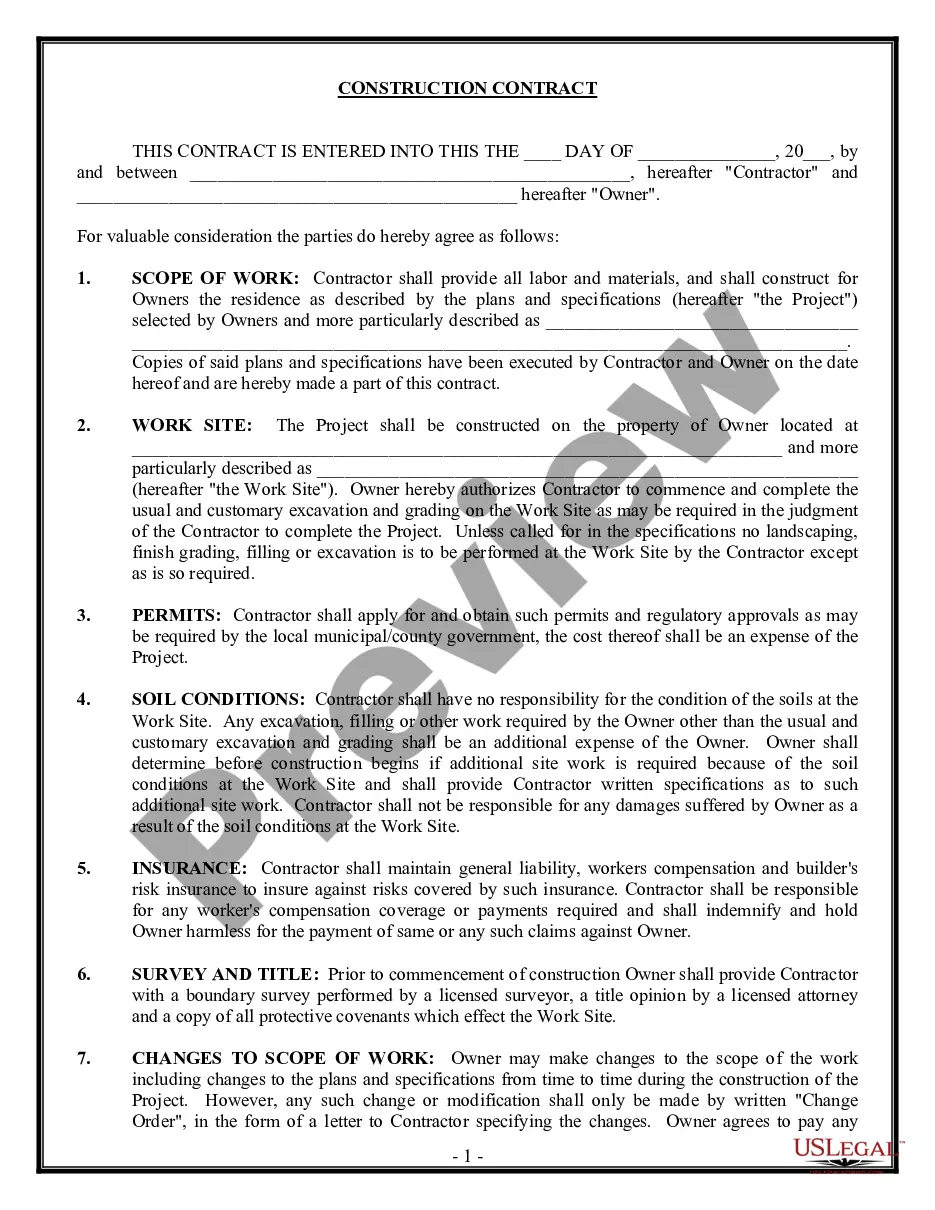
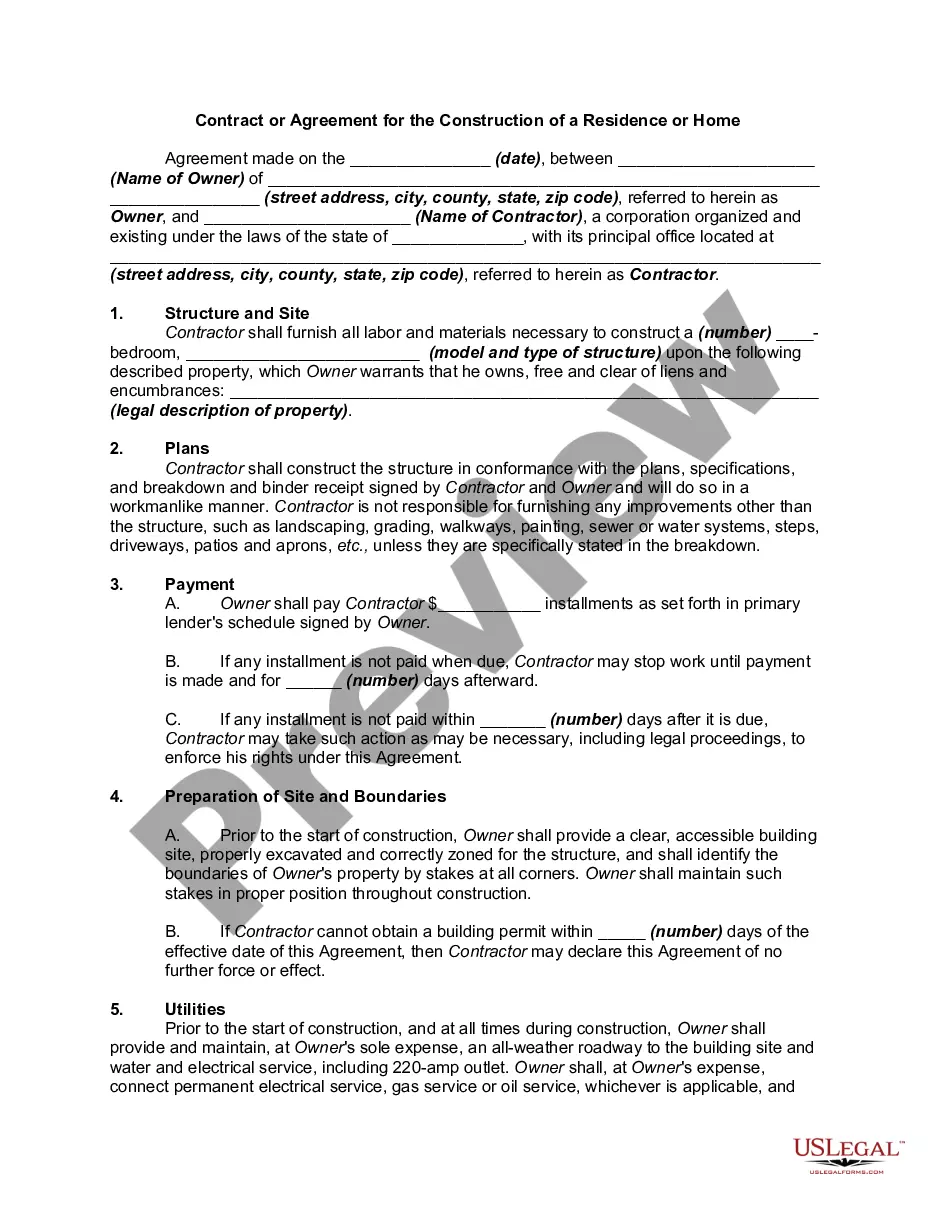
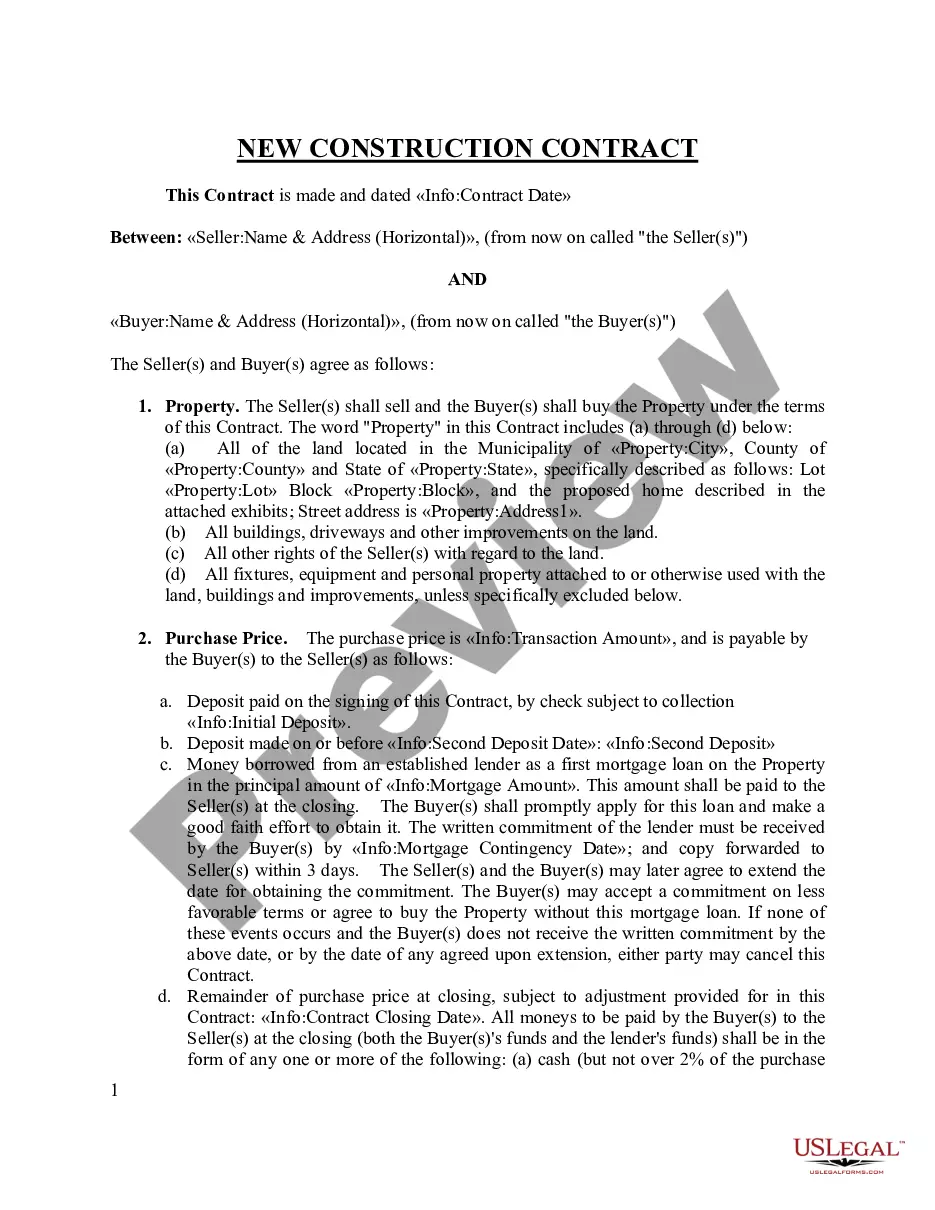
How to fill out Construction Contract For New Residential Dwelling?
US Legal Forms - one of the largest collections of legal documents in the United States - offers a wide selection of legal document templates that you can download or print.
By using the site, you can find thousands of forms for business and personal use, categorized by types, states, or keywords. You can locate the latest versions of documents like the Vermont Construction Contract for New Residential Dwelling in moments.
If you already have a subscription, Log In to download the Vermont Construction Contract for New Residential Dwelling from your US Legal Forms library. The Download button will appear on each template you view. You can access all previously downloaded forms from the My documents tab in your account.
Proceed with the transaction. Use your credit card or PayPal account to complete the purchase.
Choose the format and download the document to your device. Edit. Fill out, modify, and print and sign the downloaded Vermont Construction Contract for New Residential Dwelling. Every template you add to your account has no expiration date and is yours forever. Therefore, if you wish to download or print another copy, simply visit the My documents section and click on the document you need.
- Make sure to select the correct document for your area/region.
- Click the Preview button to review the form's content.
- Check the form details to ensure you have chosen the correct document.
- If the form does not meet your needs, use the Search box at the top of the page to find one that does.
- If you are satisfied with the form, confirm your choice by clicking the Download now button.
- Then, select the payment plan you prefer and provide your credentials to register for the account.
Form popularity
FAQ
The term 'contractor' can refer to anyone who undertakes construction work, while 'general contractor' signifies an individual with broader responsibilities. A general contractor manages the overall operation of a project, coordinating various trades and ensuring project completion. Understanding these roles is essential when discussing a Vermont Construction Contract for New Residential Dwelling.
Yes, a general contractor can build a house, as this is within their scope of services. They manage all aspects of a construction project, including hiring subcontractors and ensuring compliance with building codes. If you plan to create a Vermont Construction Contract for New Residential Dwelling, working with an experienced general contractor is advisable to navigate the complexities of residential building.
Landing government construction contracts involves understanding tender processes and meeting specific requirements. You must register your business and often submit detailed bids that comply with government specifications. Resources like uslegalforms can assist you in preparing an accurate Vermont Construction Contract for New Residential Dwelling that meets these standards.
The main difference lies in the focus of their expertise. General contractors typically manage a variety of construction projects, while residential contractors specialize in home building and renovations. Understanding these distinctions can provide clarity when drafting a Vermont Construction Contract for New Residential Dwelling, ensuring the right expertise is engaged for your project.
Yes, Vermont requires general contractors to adhere to specific licensing regulations. Depending on the project scope, some contractors may need to obtain a license to operate legally. It is advisable for contractors to review local guidelines to ensure compliance when working on a Vermont Construction Contract for New Residential Dwelling.
While both roles involve overseeing construction projects, they serve different purposes. A residential contractor focuses specifically on residential buildings, while a general contractor may handle a variety of projects, including commercial work. When creating a Vermont Construction Contract for New Residential Dwelling, knowing the difference is crucial for delineating responsibilities.
Writing a building contract requires clarity and detail. Start by outlining the scope of the project, including the timeline and specific tasks. Include terms regarding payment schedules, warranties, and dispute resolution. Utilizing a Vermont Construction Contract for New Residential Dwelling template from platforms like uslegalforms can simplify this process significantly.
The five essential elements of a contract are mutual agreement, consideration, competence, legality, and certainty. These components are vital in any agreement, ensuring that both parties have a clear understanding of their commitments. For a solid Vermont Construction Contract for New Residential Dwelling, it’s important to incorporate these elements to avoid misunderstandings and protect all parties involved.
The five essential elements of a construction contract include offer, acceptance, consideration, legal purpose, and competency of parties. These components ensure that a Vermont Construction Contract for New Residential Dwelling is valid and enforceable. Having a contract that includes these elements protects both you and your clients, helping to ensure projects proceed without issues.
When drafting construction contracts, avoid vague language that can lead to misinterpretation and potential legal disputes. Additionally, steer clear of overly complicated terms that may confuse the parties involved. By focusing on a clear Vermont Construction Contract for New Residential Dwelling, you ensure that all terms are straightforward and mutually understood, facilitating smoother project execution.