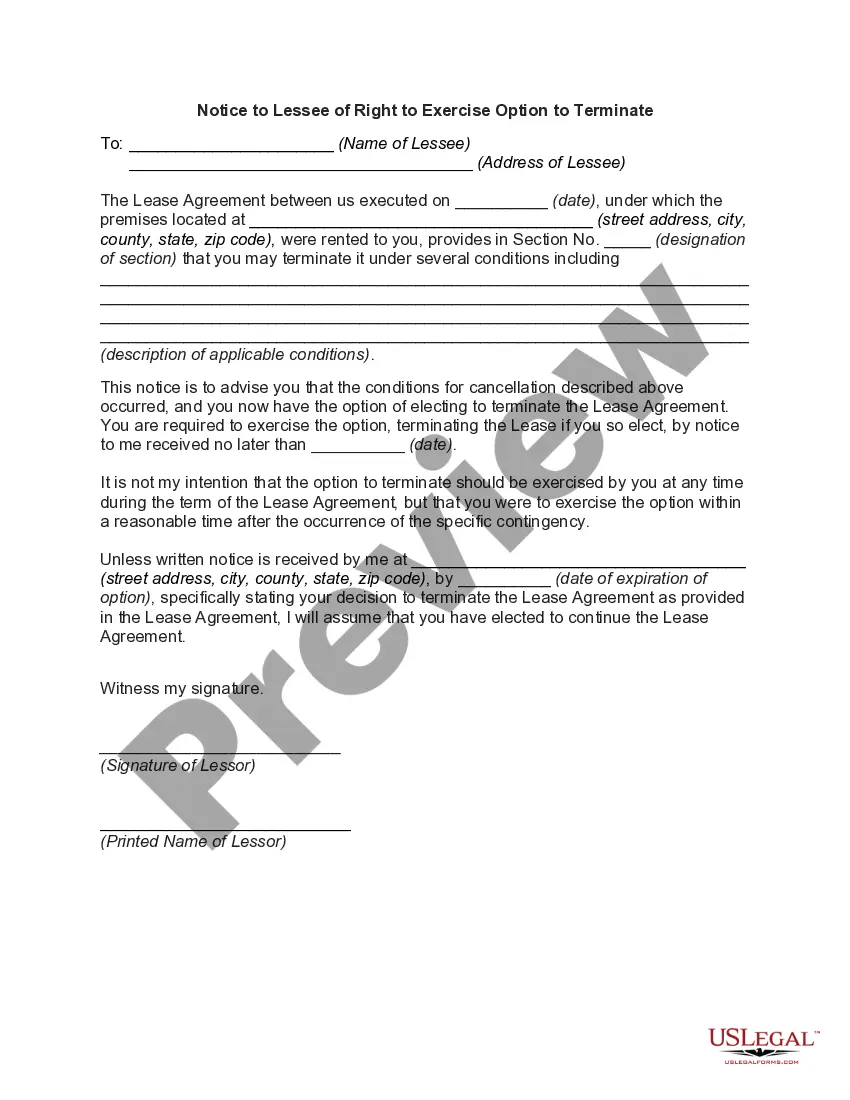
Vermont Furniture Lease Agreement
Description
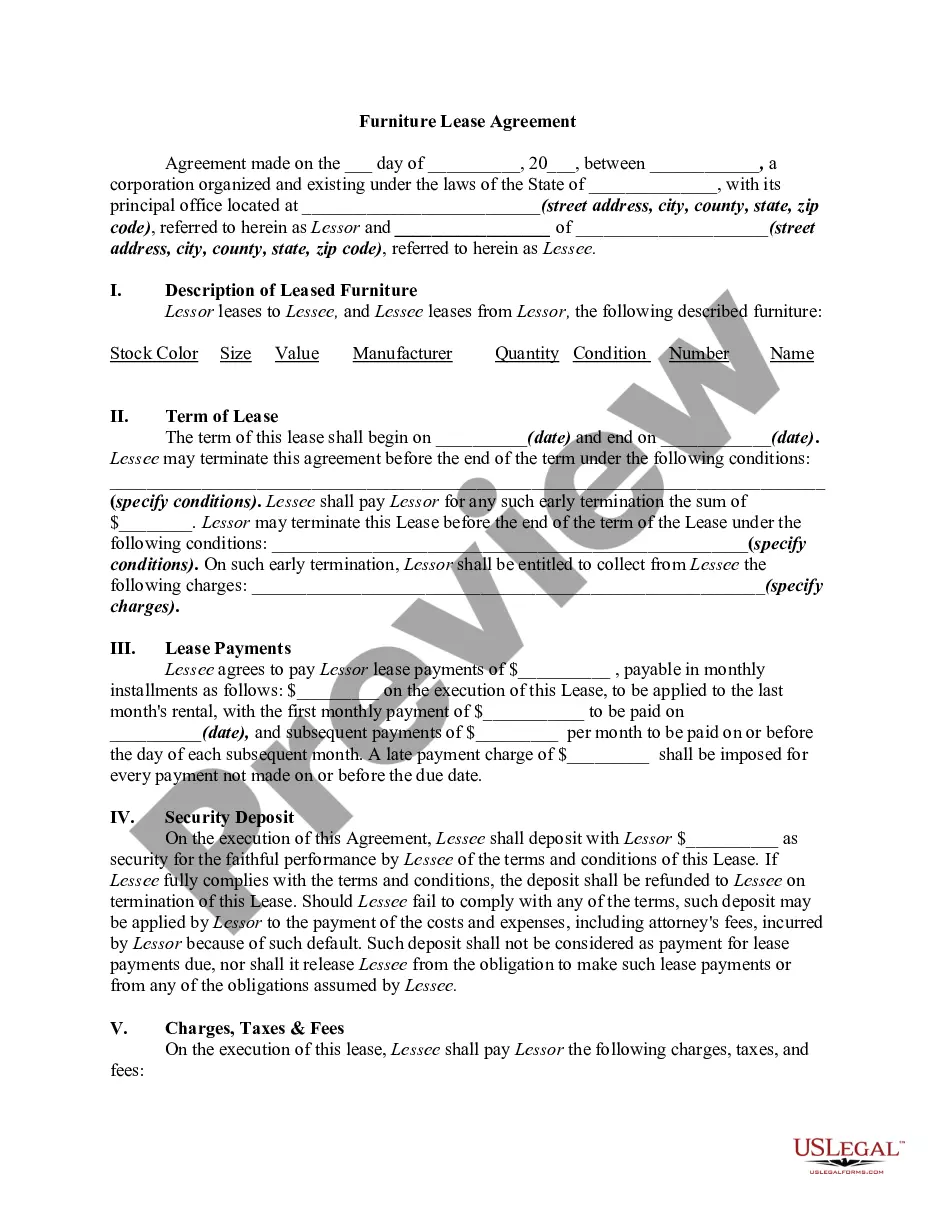
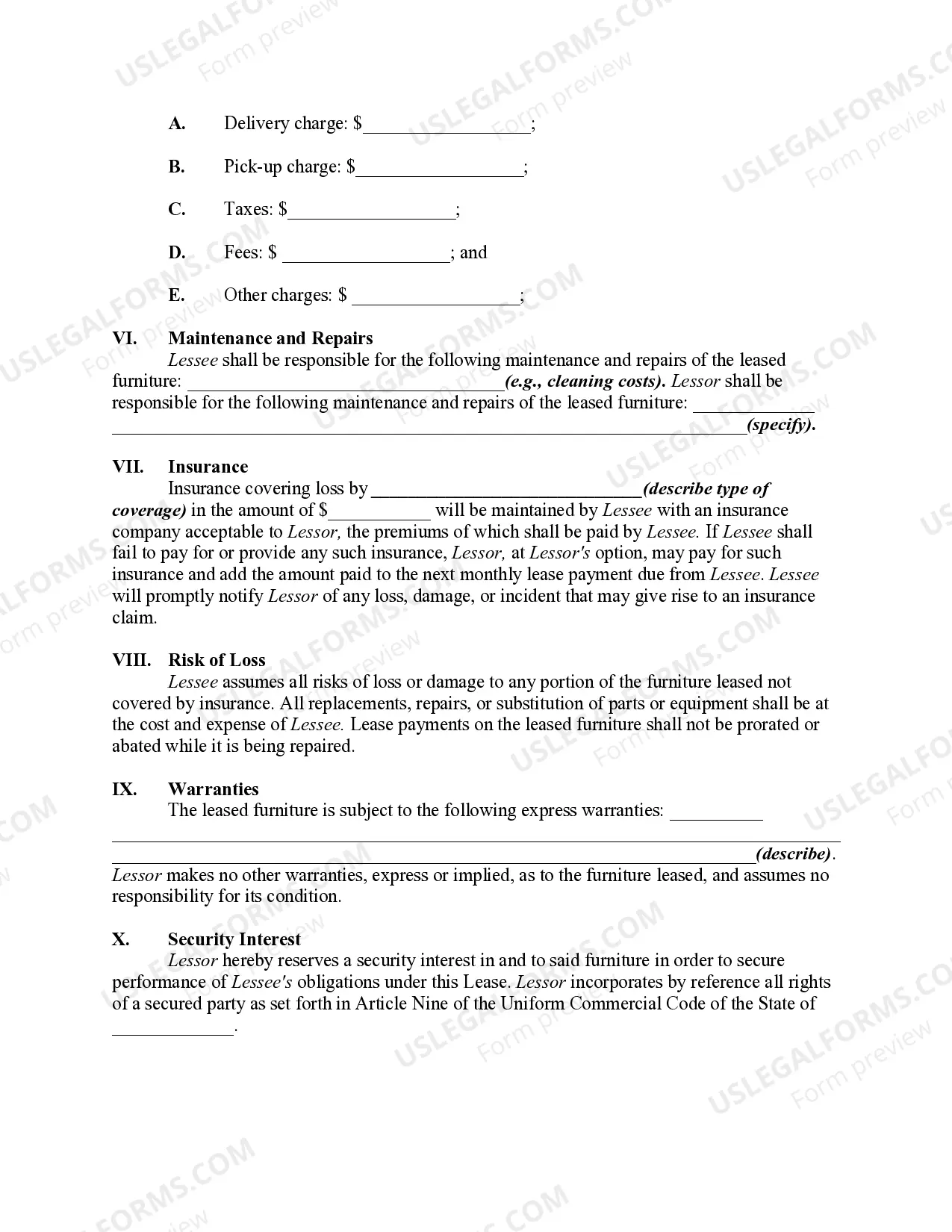
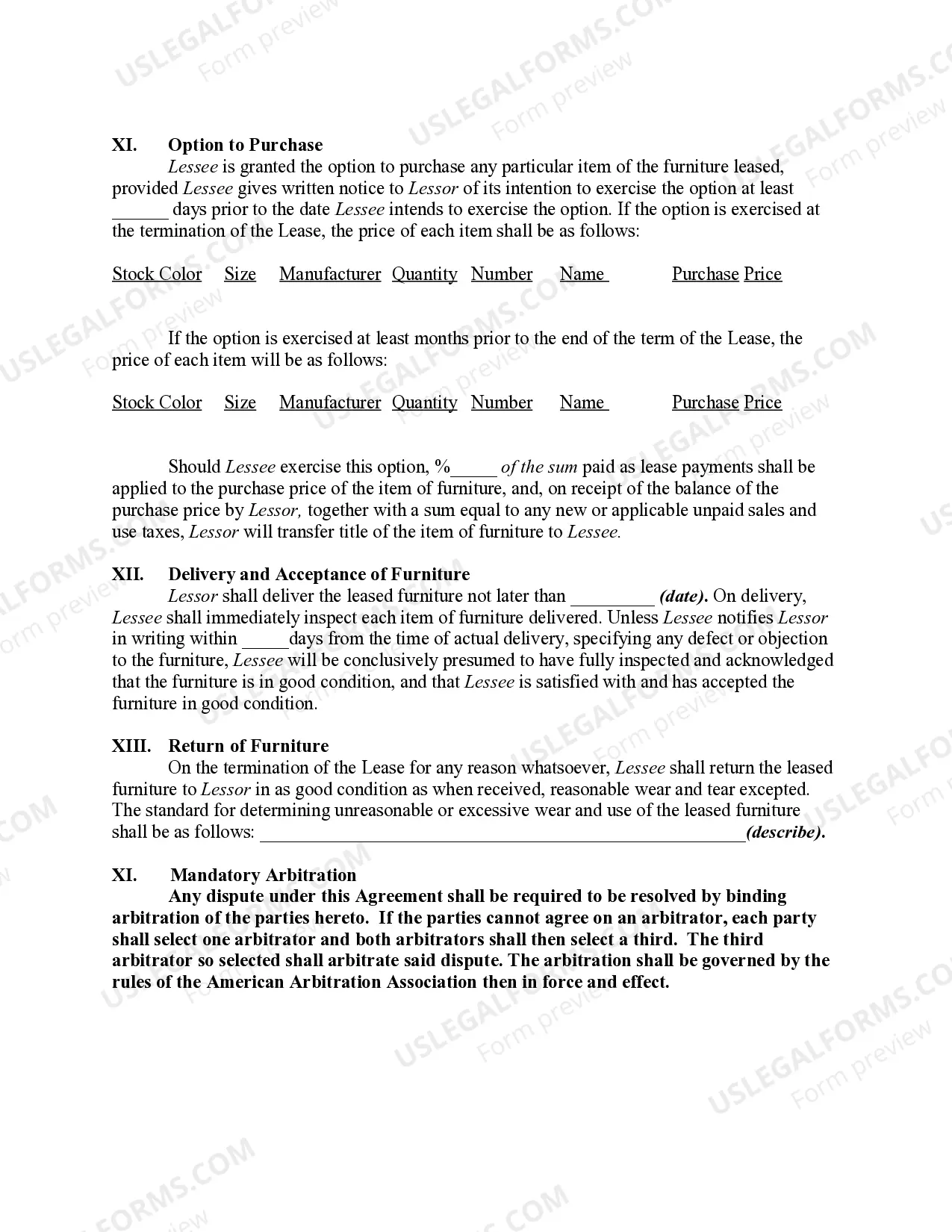
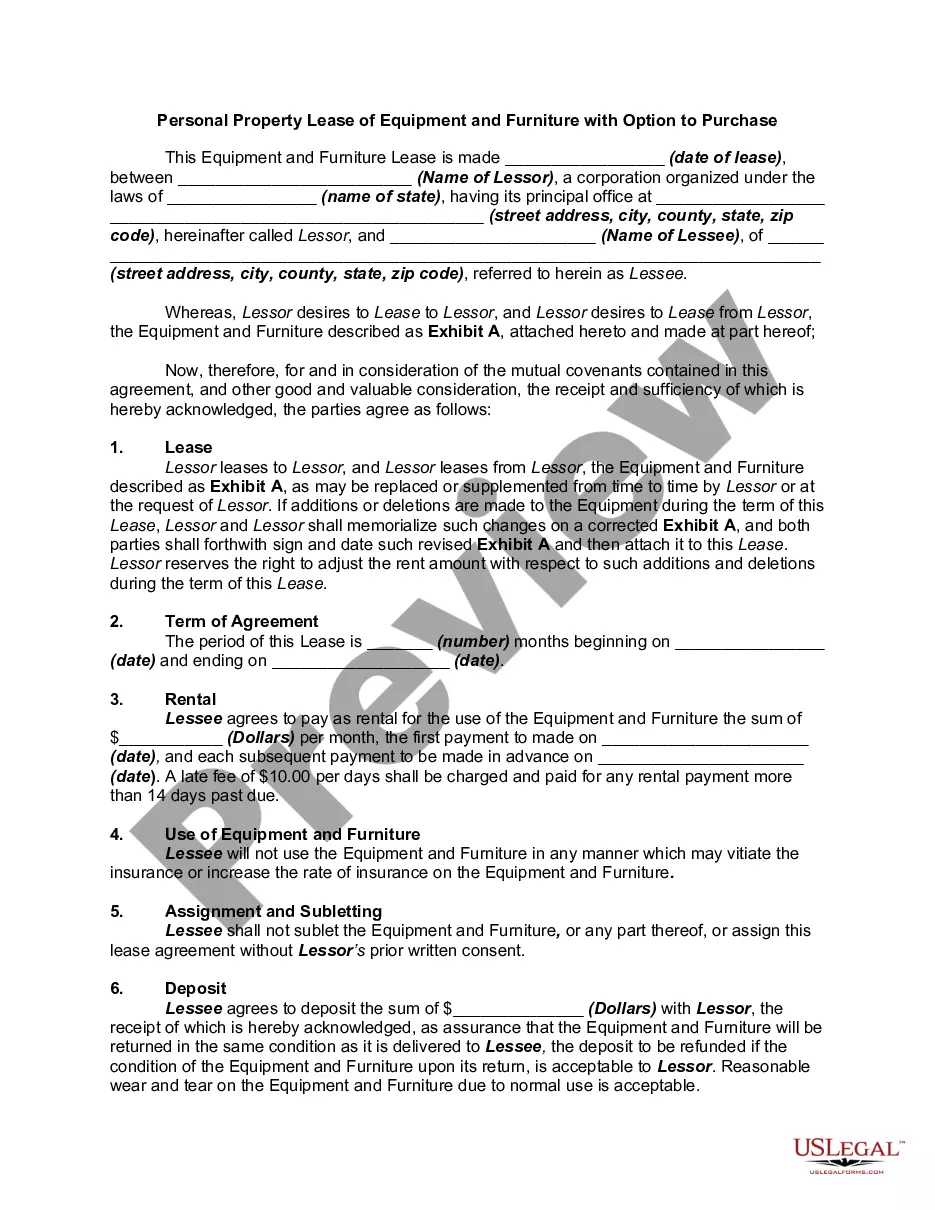
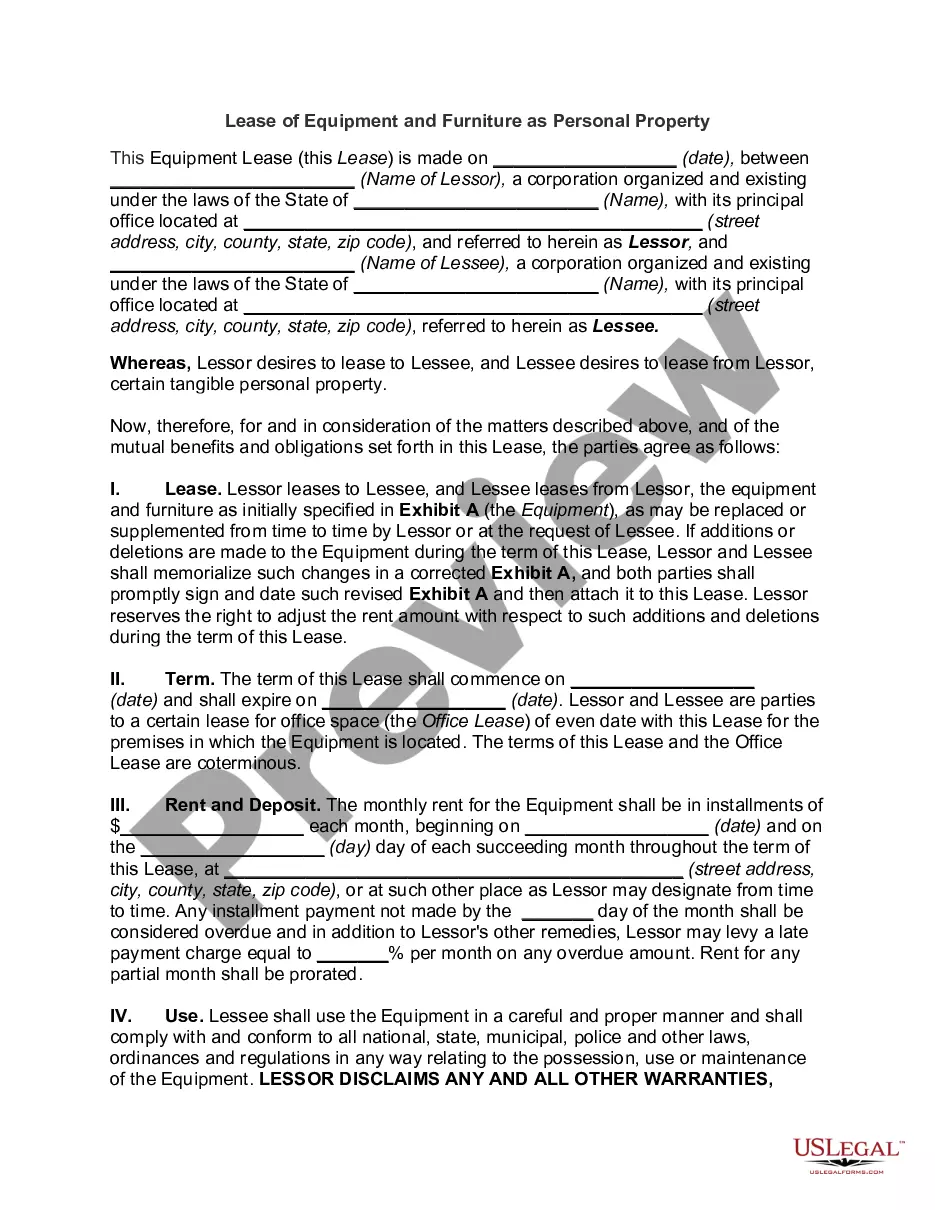
How to fill out Furniture Lease Agreement?
US Legal Forms - one of the largest collections of legal documents in the country - offers a variety of legal form templates that you can download or print.
By using the website, you can access thousands of forms for both business and personal use, categorized by types, states, or keywords.
You can find the latest versions of forms like the Vermont Furniture Lease Agreement in mere moments.
If the form does not meet your needs, utilize the Search field at the top of the screen to find one that does.
When you are satisfied with the form, confirm your selection by pressing the Get now button. Then, select your desired payment plan and submit your credentials to create an account.
- If you maintain a monthly subscription, Log In and retrieve the Vermont Furniture Lease Agreement from your US Legal Forms library.
- The Download option will be visible for every form you view.
- You can access all previously downloaded forms in the My documents section of your account.
- To use US Legal Forms for the first time, here are simple guidelines to assist you.
- Ensure you select the correct form for your area/region.
- Click on the Preview option to inspect the form's details.
Form popularity
FAQ
Vermont is often viewed as a tenant-friendly state due to its specific laws that protect renters. These laws can impact how landlords manage Vermont Furniture Lease Agreements. Landlords may face challenges with security deposit regulations and eviction processes. However, understanding these laws can help landlords create fair agreements that protect both their interests and those of their tenants.
Yes, in Vermont, it is permissible for landlords to request first and last month's rent along with a security deposit. This requirement provides landlords with additional financial security at the beginning of a lease term. When considering this arrangement, ensure your Vermont Furniture Lease Agreement clearly outlines these payment terms to avoid any confusion or disputes.
Landlords in Vermont have several key obligations, including maintaining the property in good repair, complying with local housing codes, and respecting tenants' rights to privacy. They must also adhere to the provisions outlined in the Vermont Furniture Lease Agreement. Understanding these obligations helps both landlords and tenants maintain a respectful and legally compliant rental relationship.
In Vermont, landlords can increase rent as often as they wish, but they must provide tenants with a written notice at least 60 days before implementing the increase. This requirement is crucial for tenants to adjust their budgets accordingly. However, it's advisable to check your Vermont Furniture Lease Agreement for any specific terms regarding rent increases, as they may vary depending on the lease provisions.
tomonth lease agreement in Vermont allows tenants to rent property on a flexible basis, typically renewing every 30 days. This arrangement provides both parties with the option to terminate the lease with appropriate notice, as specified in your Vermont Furniture Lease Agreement. This flexibility can benefit tenants who may not want a longterm commitment while still securing their living situation.
In Vermont, landlords must provide at least 30 days' notice before a tenant must vacate the rental unit, unless a different timeline is specified in the Vermont Furniture Lease Agreement. During this notice period, you can prepare for your transition or discuss potential lease renewals. It's essential to understand your rights concerning notice to avoid unexpected changes.
When communicating with your landlord, it's wise to avoid making accusations or using aggressive language. Negative comments about the condition of the rental property may create tension. Instead, frame your concerns constructively and refer to your Vermont Furniture Lease Agreement for guidance. Good communication fosters a better relationship and leads to more timely resolutions.
In Vermont, landlords typically have a reasonable amount of time to repair issues, which generally ranges from 24 hours to several days, depending on the severity of the problem. For urgent repairs, such as plumbing or heating failures, prompt action is necessary. According to your Vermont Furniture Lease Agreement, you can explicitly outline repair timelines to prevent misunderstandings. If repairs are not made in a timely manner, tenants may have the right to seek further recourse.
In Vermont, a landlord's duties include maintaining the rental property and ensuring it is habitable. This involves fixing leaks, managing pest control, and meeting safety standards. Additionally, landlords must adhere to the terms outlined in the Vermont Furniture Lease Agreement, providing tenants with notice before entering the property. Landlords are also responsible for returning security deposits as per state regulations.
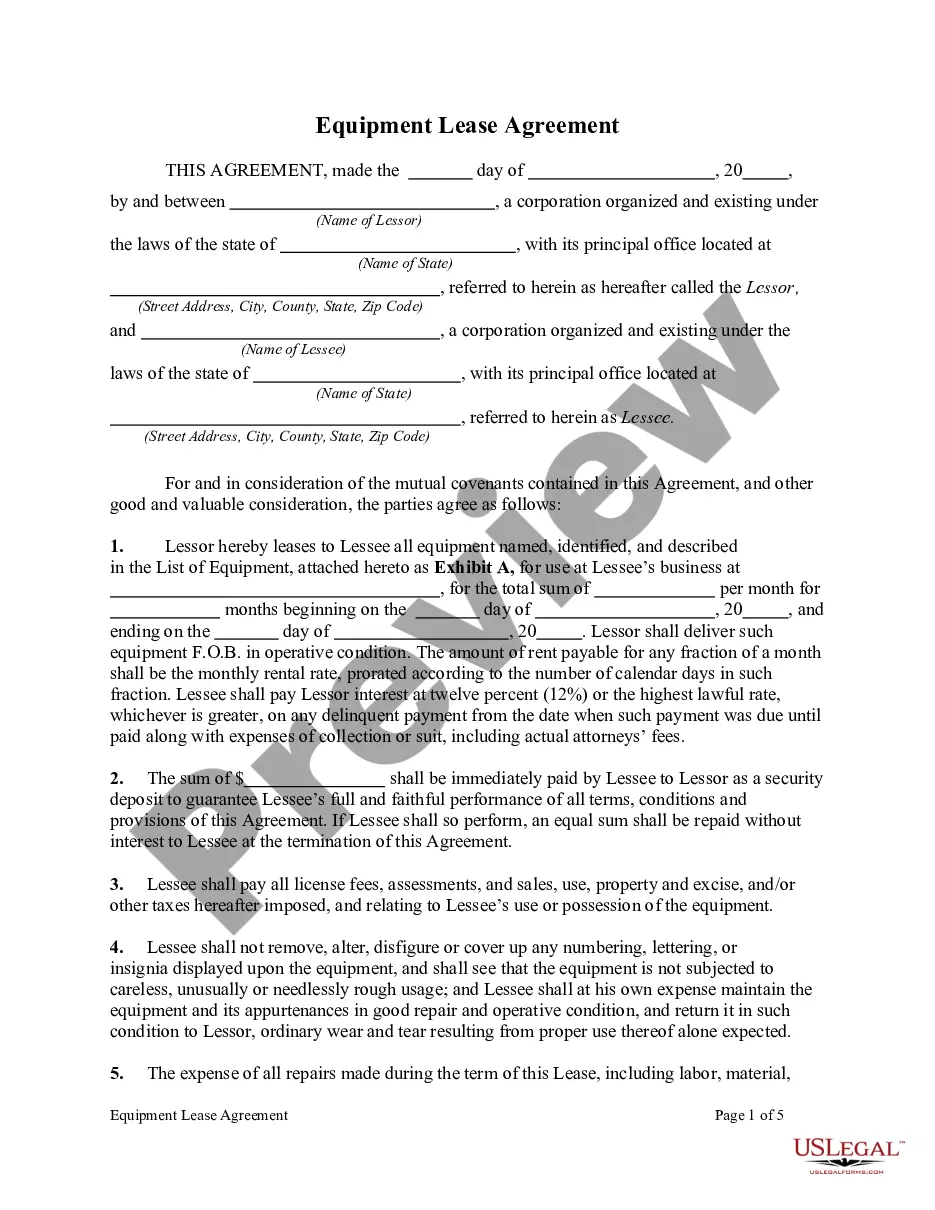
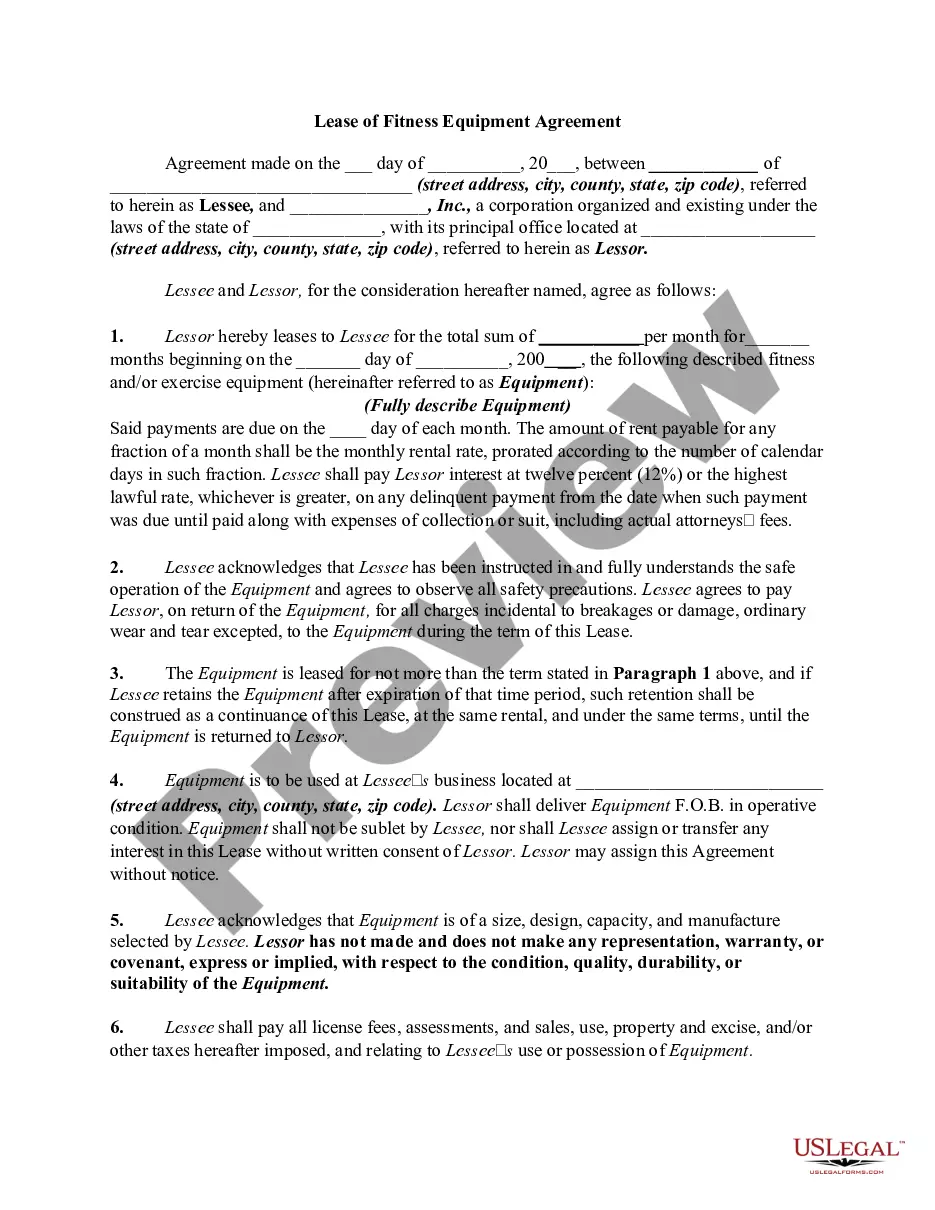
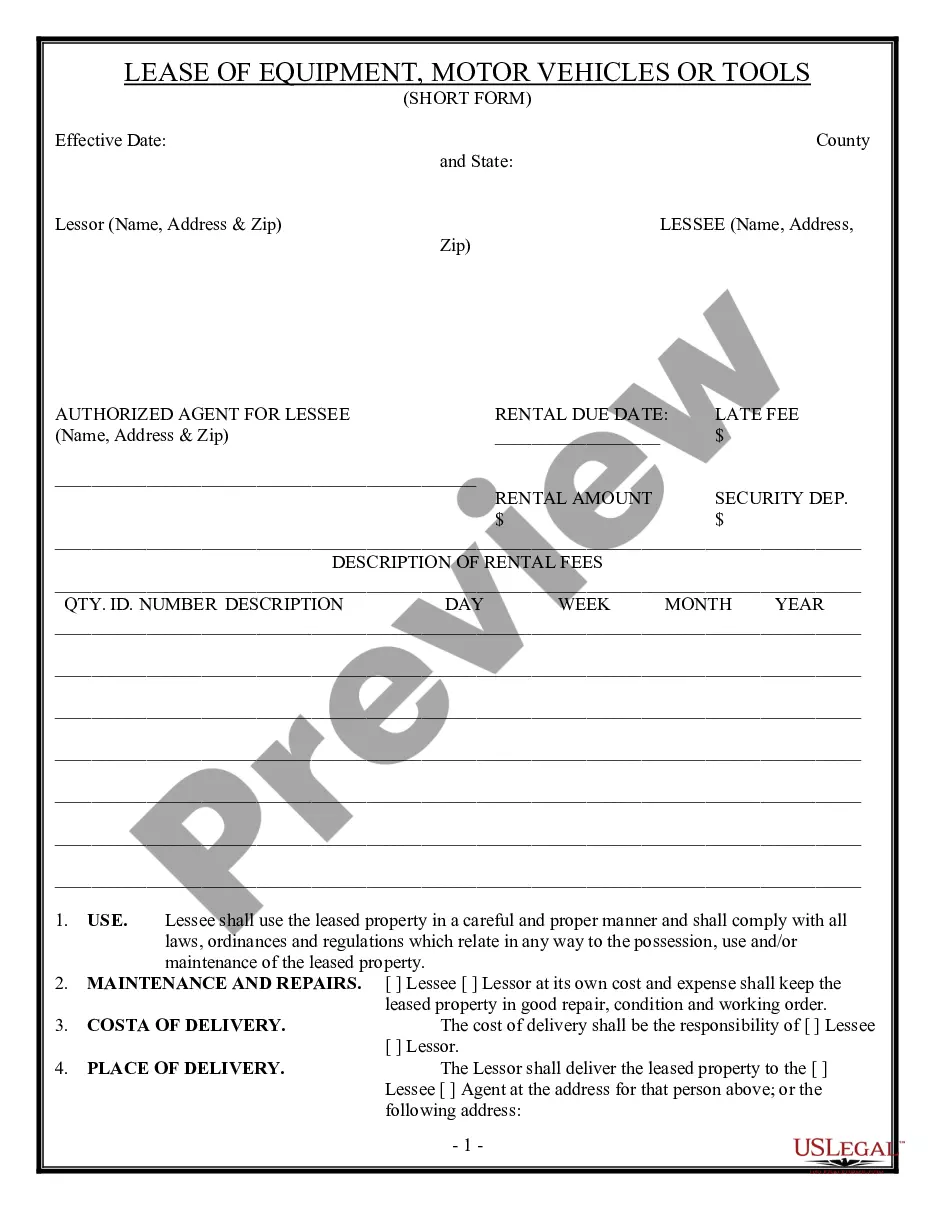
To properly fill out a lease agreement, start by clearly writing the names of all parties involved. Include specific terms such as payment amount, due dates, and duration of the agreement. In a Vermont Furniture Lease Agreement, you should specify the condition of the furniture and any maintenance responsibilities. Utilizing a structured template from US Legal Forms can streamline this process and help avoid common mistakes.