Virgin Islands Insurance Agent Agreement - Self-Employed Independent Contractor
Description
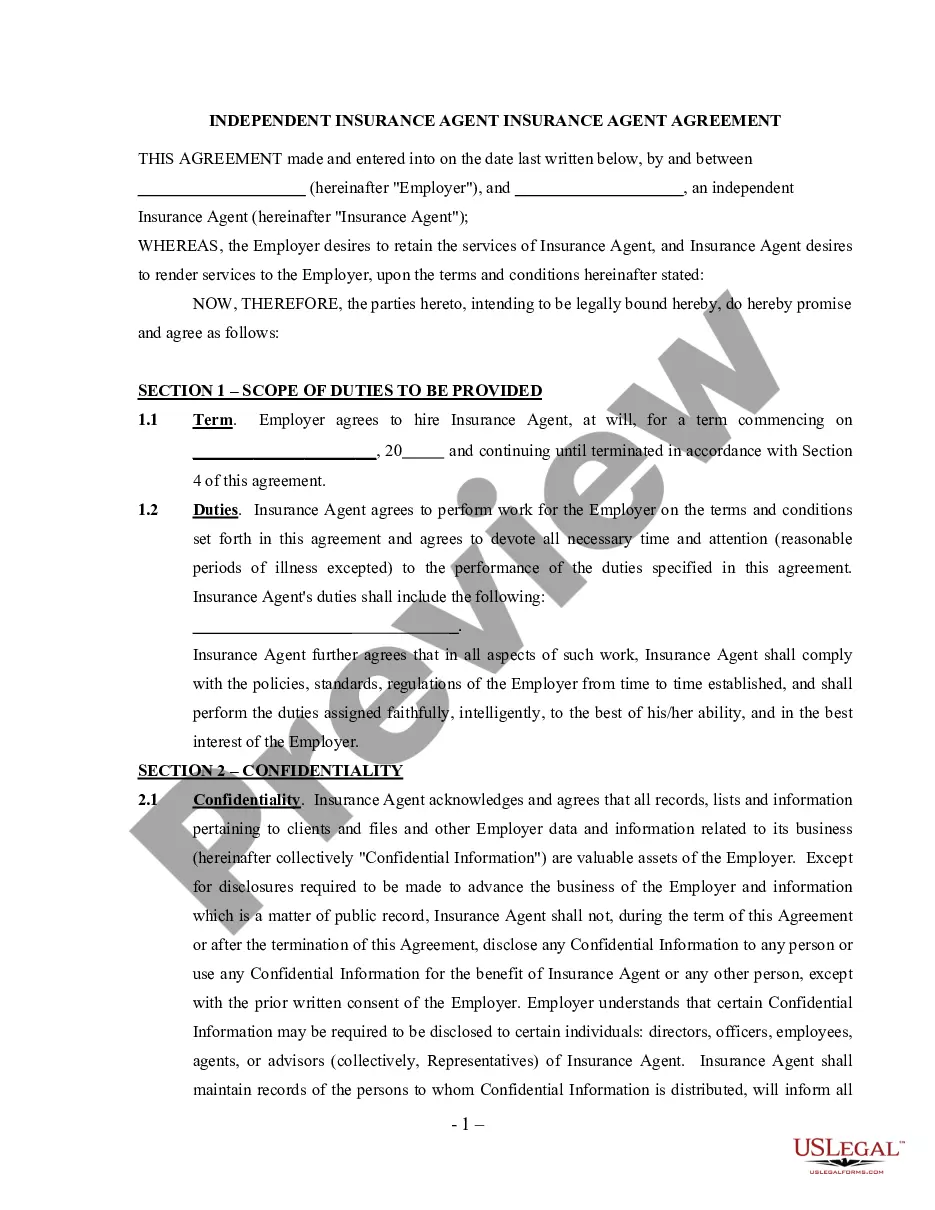
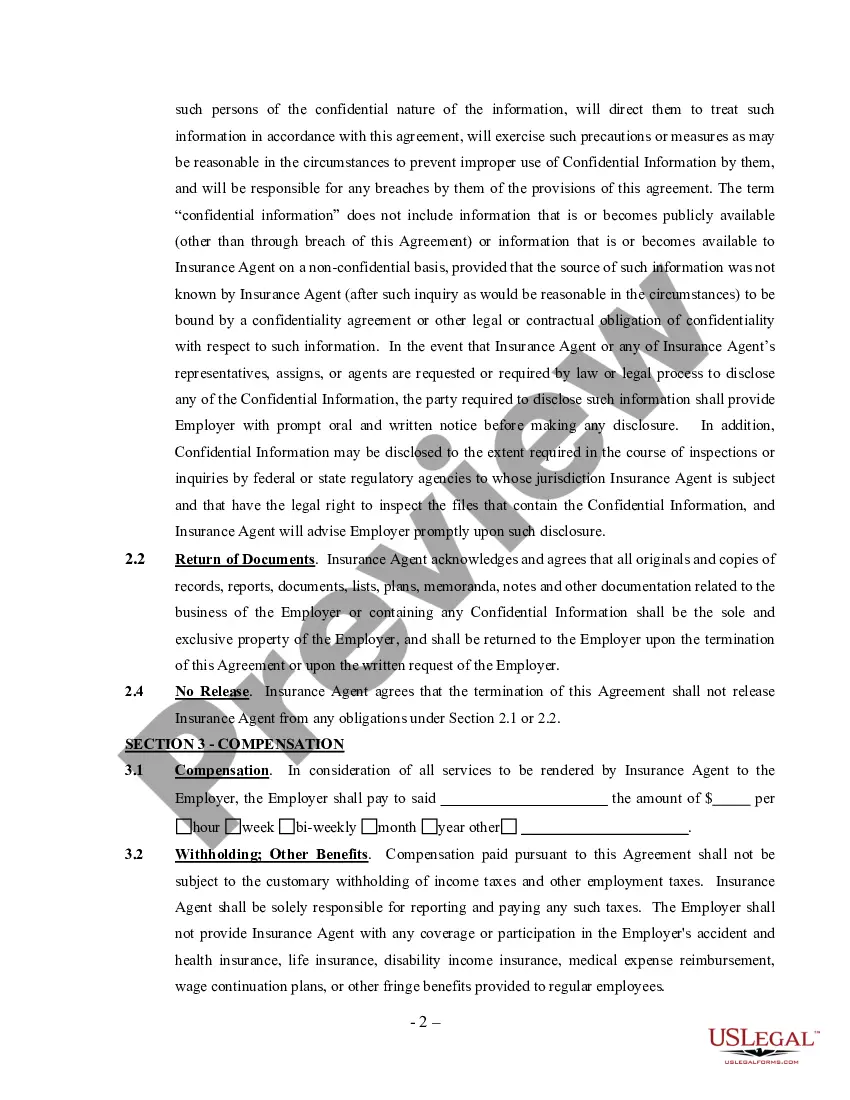
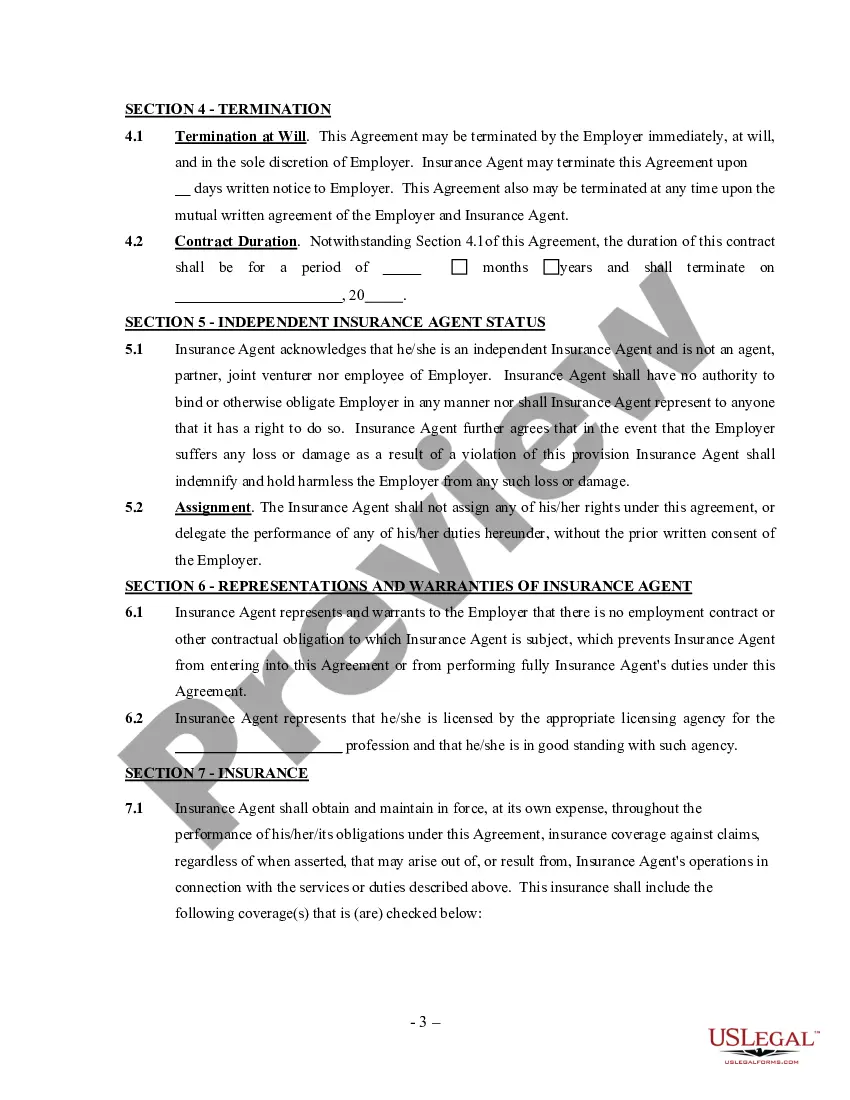
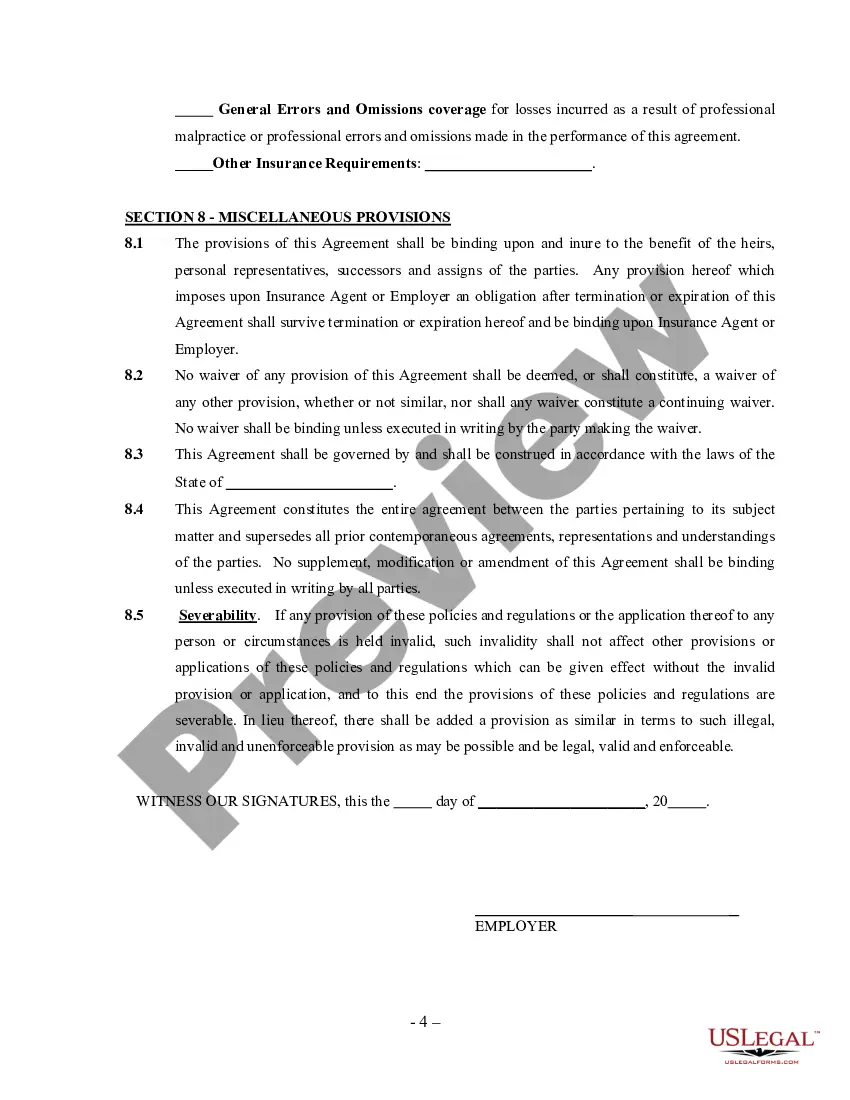

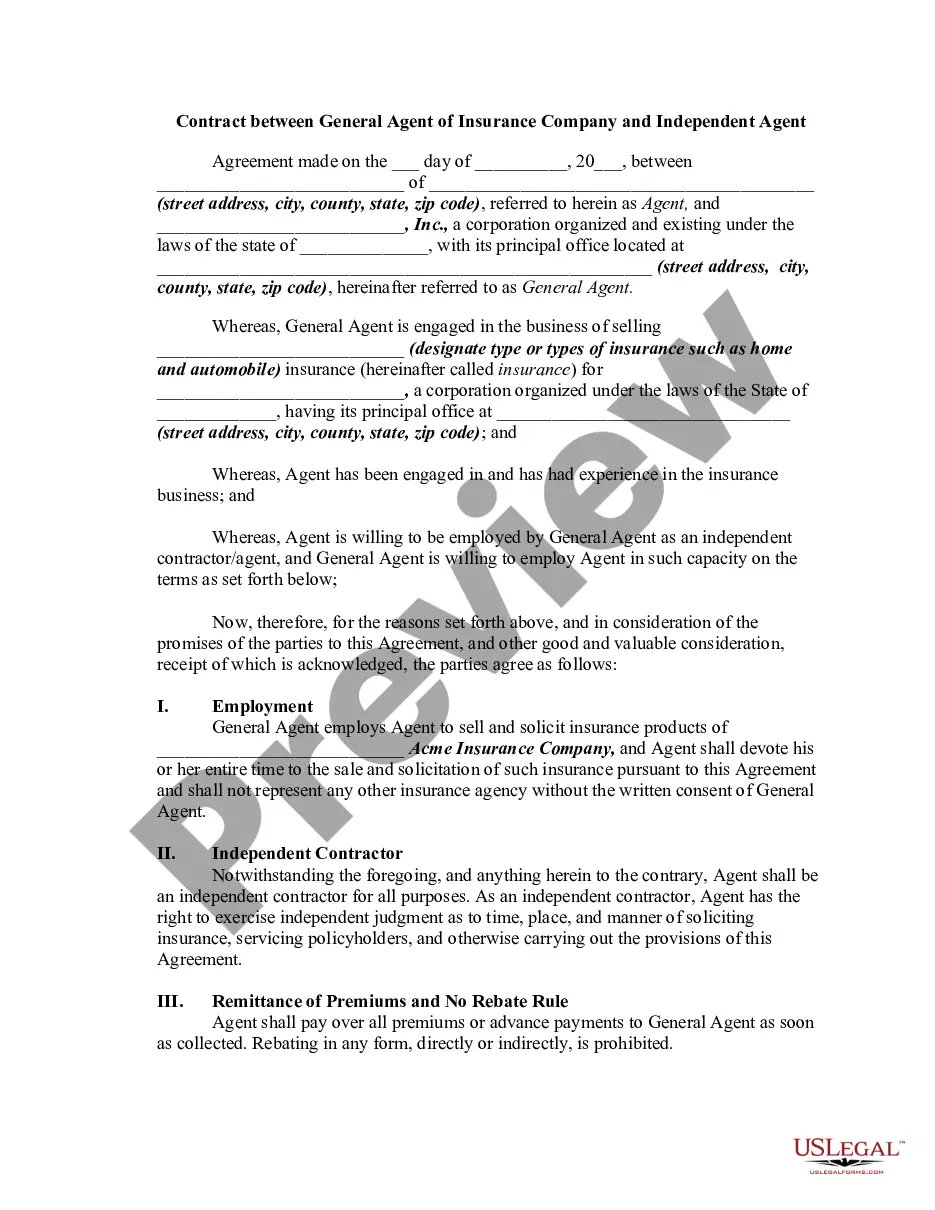
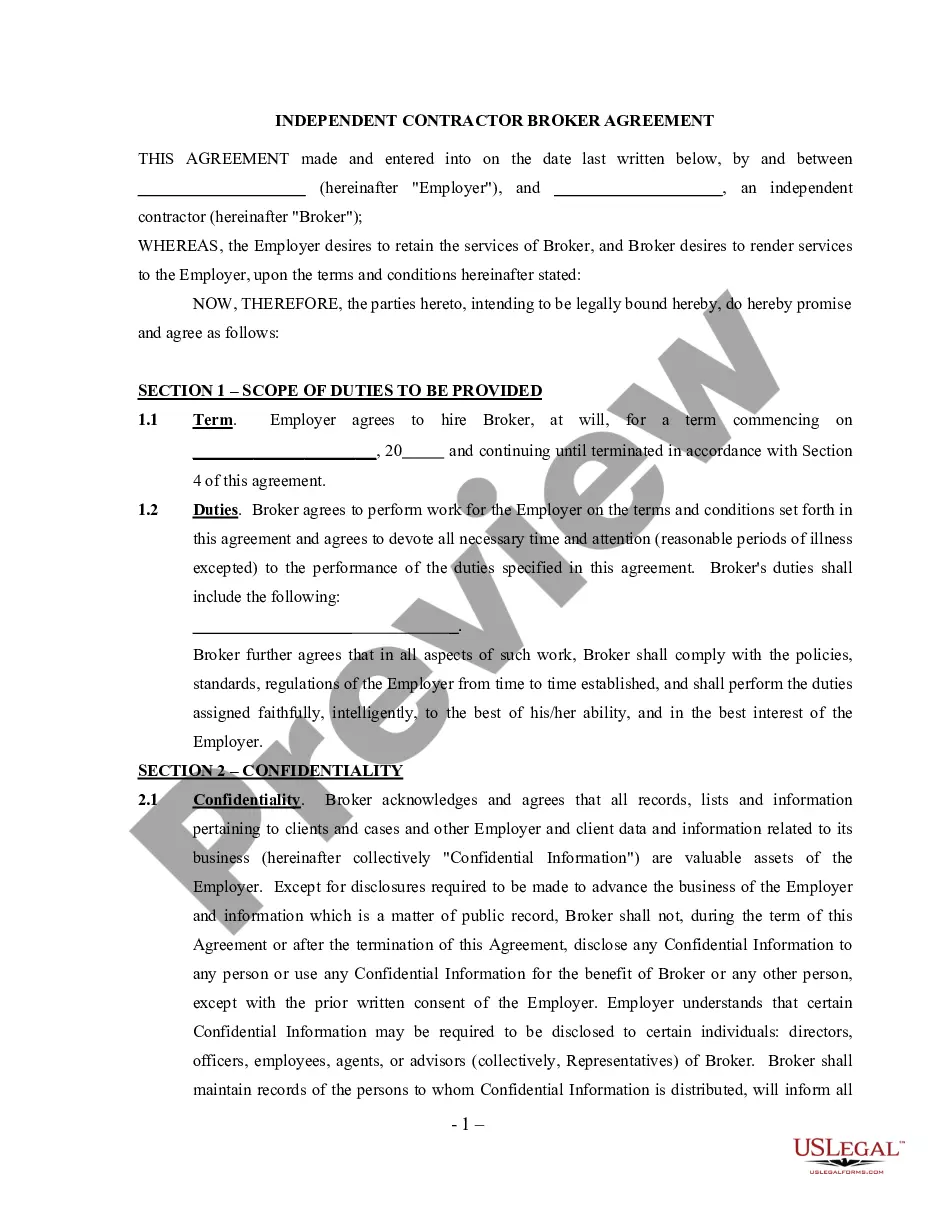
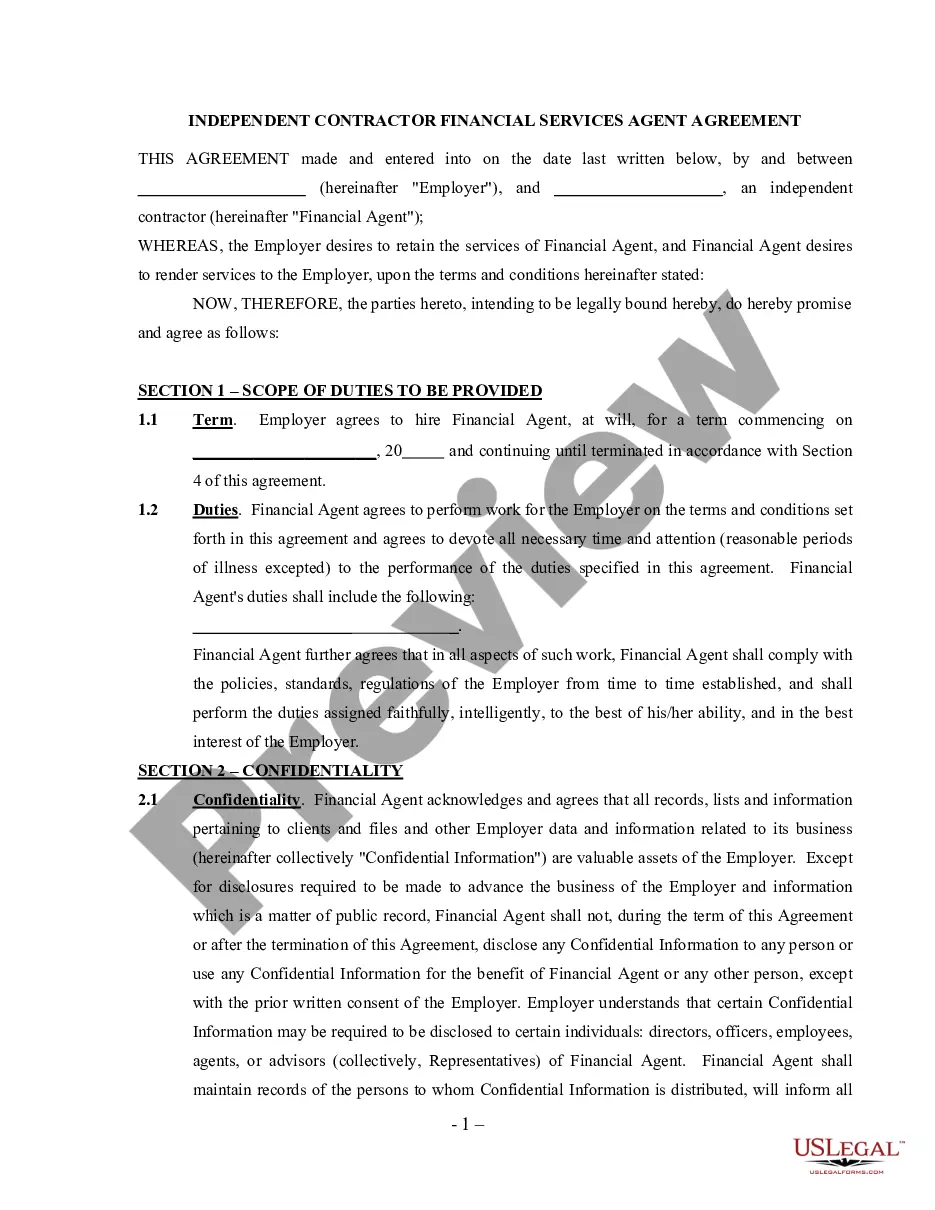
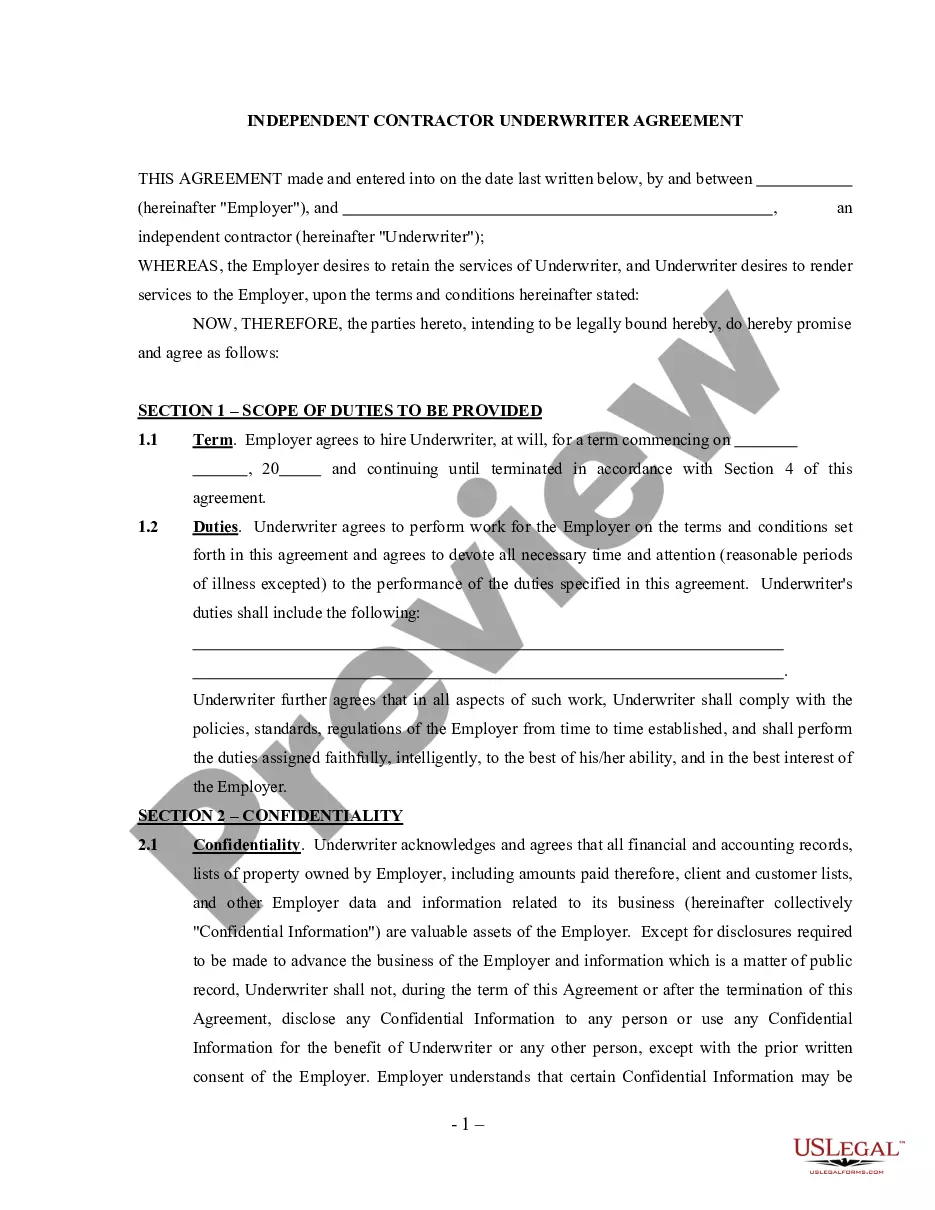







How to fill out Insurance Agent Agreement - Self-Employed Independent Contractor?
Are you currently in a situation where you need documentation for either business or personal purposes frequently.
There are numerous legal document templates accessible online, but finding reliable ones is challenging.
US Legal Forms offers a vast array of form templates, such as the Virgin Islands Insurance Agent Agreement - Self-Employed Independent Contractor, designed to comply with state and federal regulations.
Once you find the correct form, click Get now.
Select the pricing plan you want, fill in the necessary details to create your account, and pay for the order using your PayPal or credit card.
- If you are already familiar with the US Legal Forms website and possess an account, simply Log In.
- Then, you can download the Virgin Islands Insurance Agent Agreement - Self-Employed Independent Contractor template.
- If you do not have an account and wish to start using US Legal Forms, follow these steps.
- Obtain the form you need and ensure it is for the correct city/state.
- Use the Review button to verify the form.
- Read the overview to confirm that you have selected the correct form.
- If the form is not what you are looking for, use the Search field to find the form that fits your needs and requirements.
Form popularity
FAQ
Yes, independent contractors file as self-employed individuals. Those operating under a Virgin Islands Insurance Agent Agreement - Self-Employed Independent Contractor status must complete IRS Form 1040 and include Schedule C to report their business income. This allows you to detail your profits and expenses while fulfilling your tax obligations. It's crucial to keep accurate records to support your filings and identify any potential deductions available to you.
Reporting foreign self-employment income in the US can seem complicated, but it's manageable with the right guidance. If you are a self-employed independent contractor under the Virgin Islands Insurance Agent Agreement, you need to report your foreign earnings using Schedule C on your tax return. Make sure to include all necessary documentation to accurately present your income. Additionally, consider consulting with a tax professional to ensure compliance with all reporting requirements.
To fill out an independent contractor agreement, begin by entering your name and the client’s information accurately. Next, describe the services you will provide, referencing the Virgin Islands Insurance Agent Agreement - Self-Employed Independent Contractor for specific details. Be sure to add payment terms and deadlines. After completing the agreement, both parties should sign to validate the document.
Writing an independent contractor agreement requires clarity and detail. Start by defining the scope of work you intend to perform, as outlined in the Virgin Islands Insurance Agent Agreement - Self-Employed Independent Contractor. Include terms of payment, timelines, and confidentiality clauses to protect both parties. Utilize templates available on platforms like USLegalForms to simplify the process and ensure compliance.
Filling out an independent contractor form involves several key steps. First, gather essential information, including your name, address, and tax identification number. Next, clearly state the services you will provide under the Virgin Islands Insurance Agent Agreement - Self-Employed Independent Contractor. Finally, ensure that both parties review and sign the document to formalize your agreement.
As a self-employed contractor, securing liability insurance is crucial to protect against potential claims. Depending on your services, you may also want to consider professional liability insurance and health insurance. Understanding the specifics of the Virgin Islands Insurance Agent Agreement - Self-Employed Independent Contractor will help you pinpoint the necessary coverage for your needs.
Classifying yourself as an independent contractor involves evaluating your work structure and relationship with clients. You should ensure that you operate independently, control your work processes, and have a clear contract. Utilizing resources like the Virgin Islands Insurance Agent Agreement - Self-Employed Independent Contractor can assist you in this classification to avoid misrepresentation.
An agent is someone authorized to act on behalf of another person or entity. This includes real estate agents, business brokers, and insurance agents. It’s important to know that independent contractors may also be called agents under certain agreements. Therefore, exploring the Virgin Islands Insurance Agent Agreement - Self-Employed Independent Contractor can clarify your role significantly.
Independent contractors can be regarded as agents if their contract allows for it. The determination largely hinges on the nature of the services they provide. Thus, when engaging in agreements, it’s beneficial to reference the Virgin Islands Insurance Agent Agreement - Self-Employed Independent Contractor to understand your classification.
Yes, an independent contractor can serve as an agent, depending on the agreement with the principal. Agents act on behalf of another party, which can include independent contractors in certain arrangements. Thus, understanding the nuances of the Virgin Islands Insurance Agent Agreement - Self-Employed Independent Contractor helps clarify your status as an agent in various contexts.