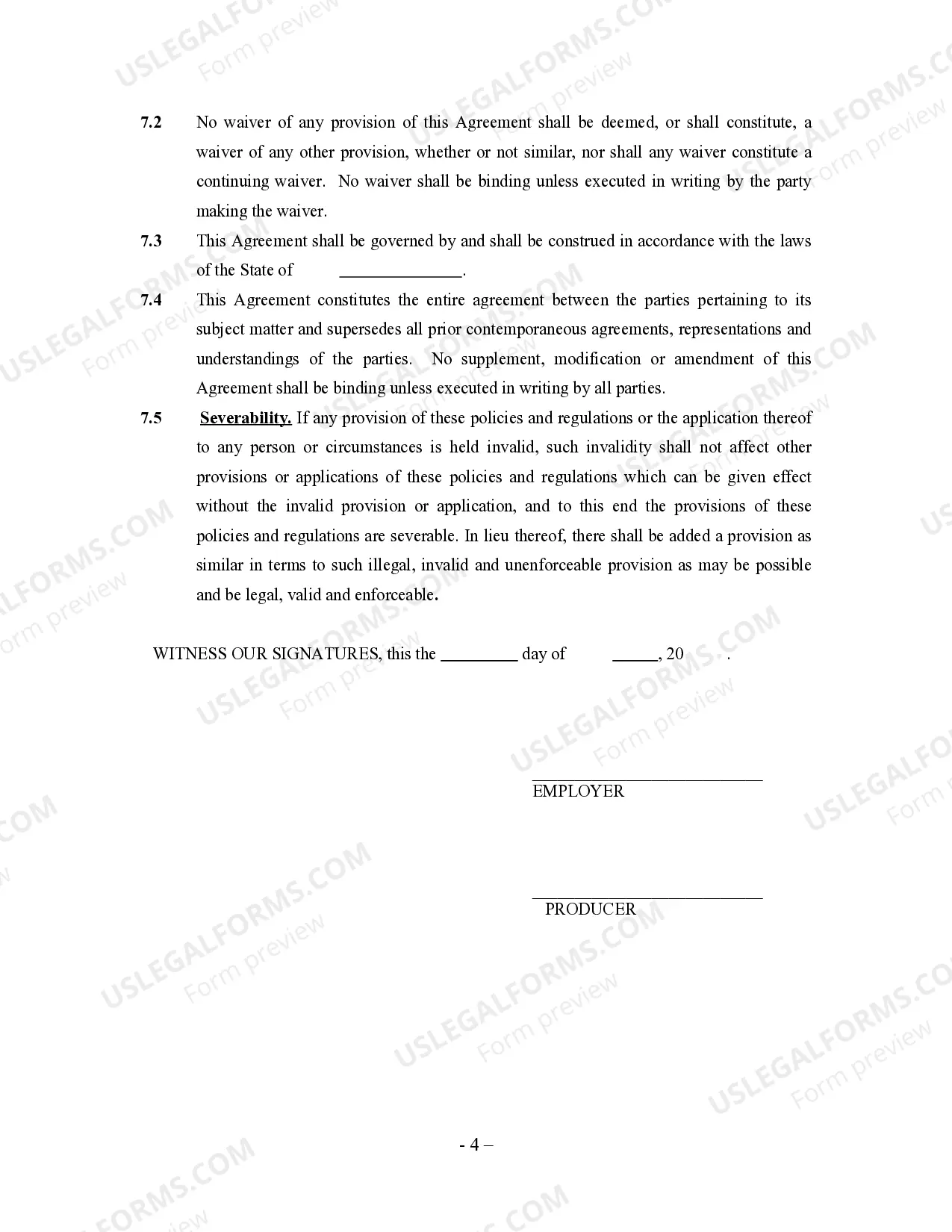
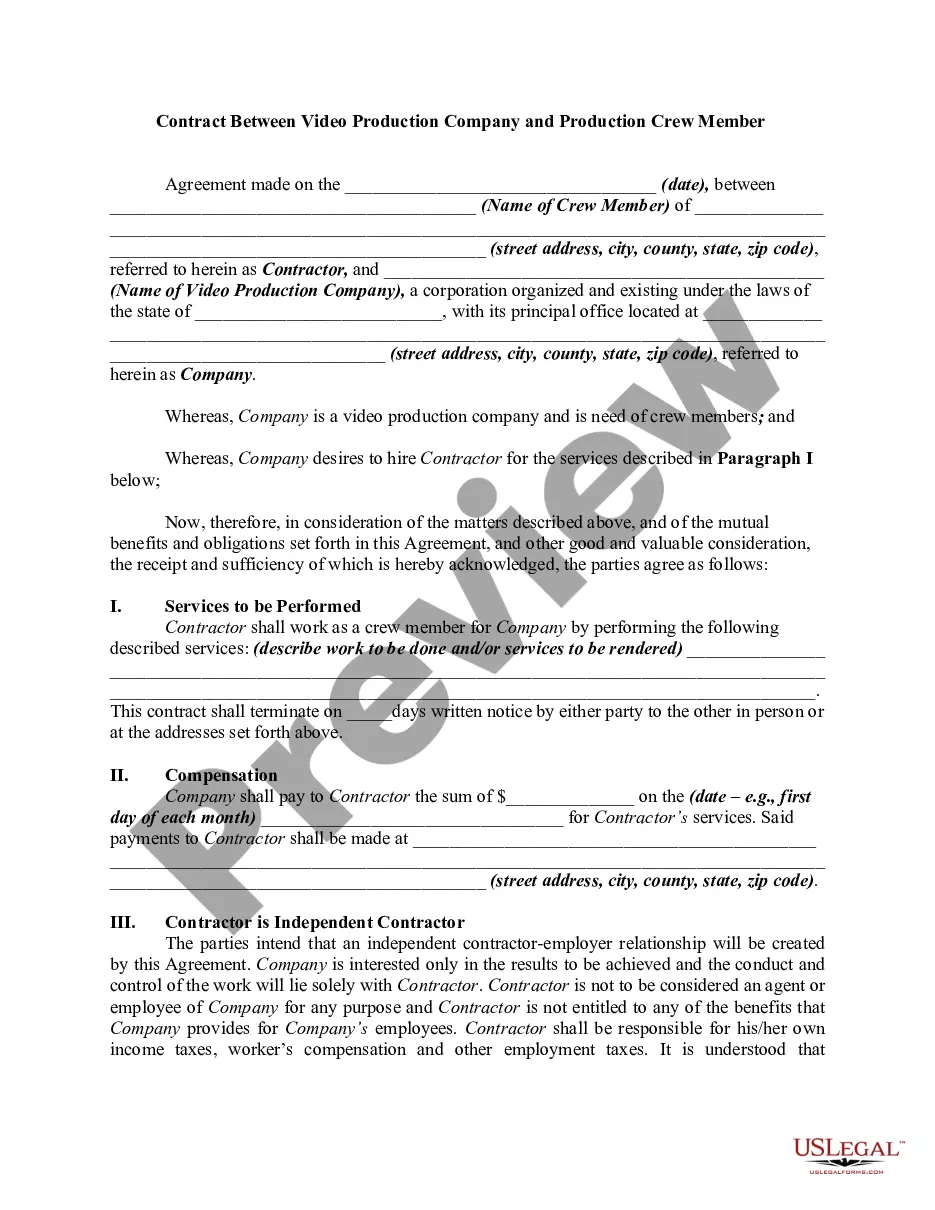
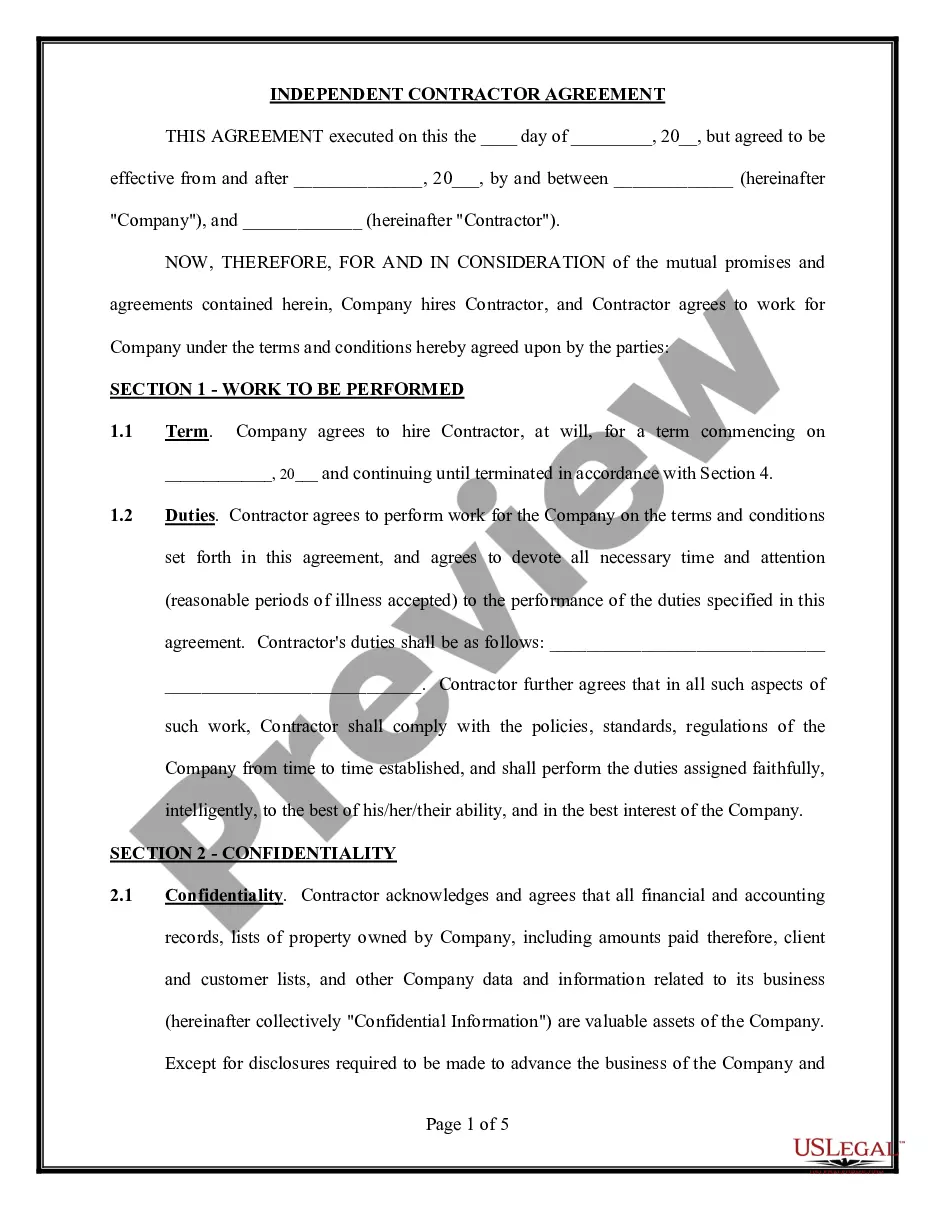
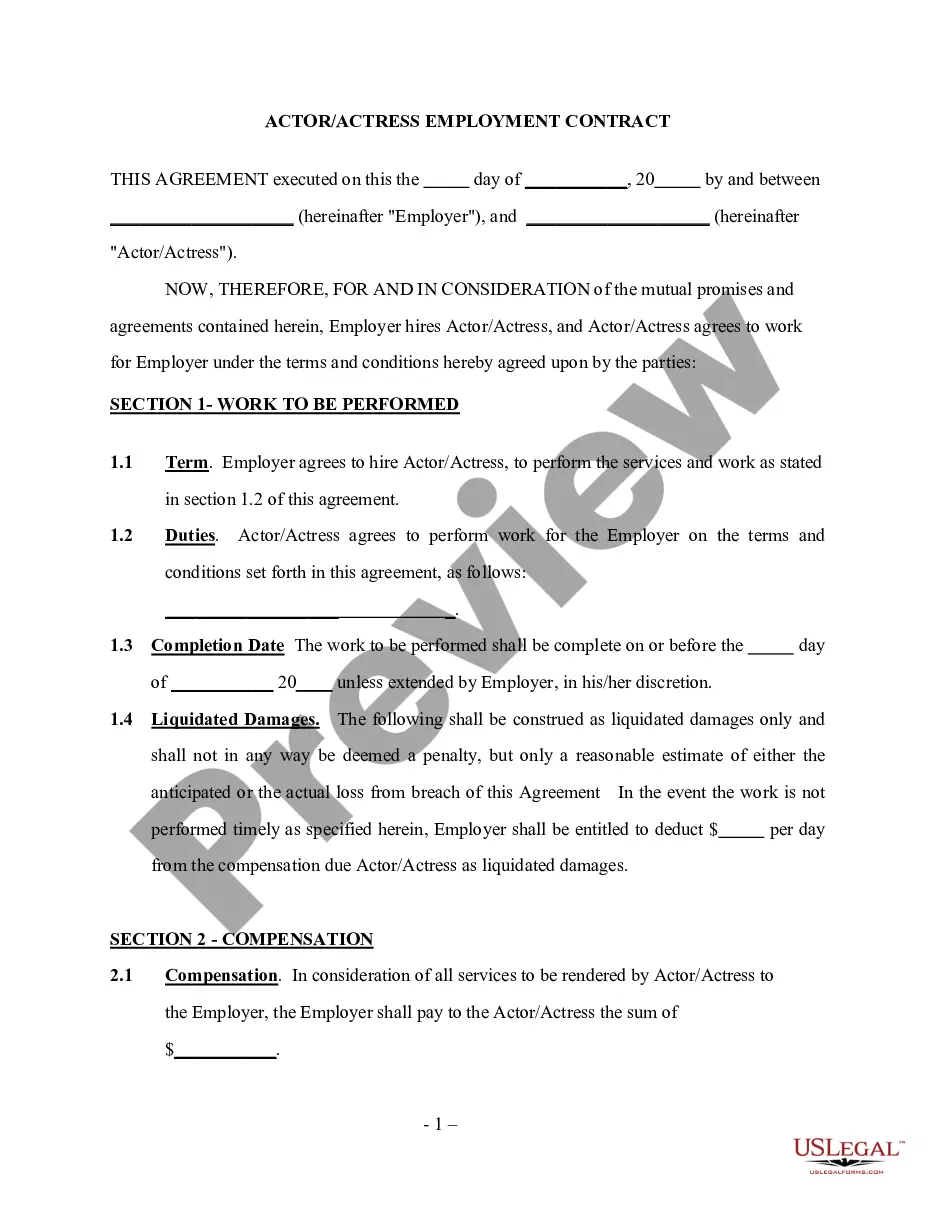
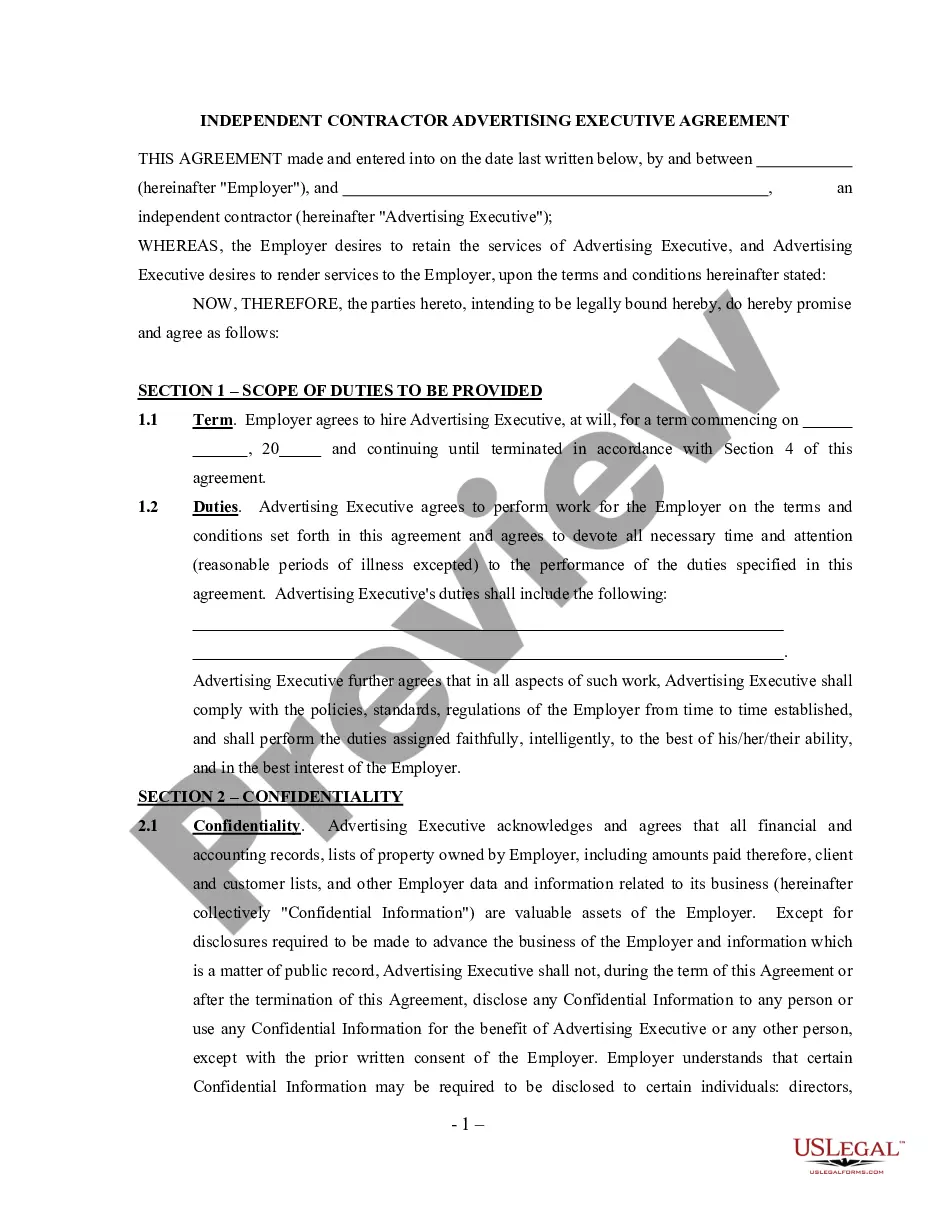
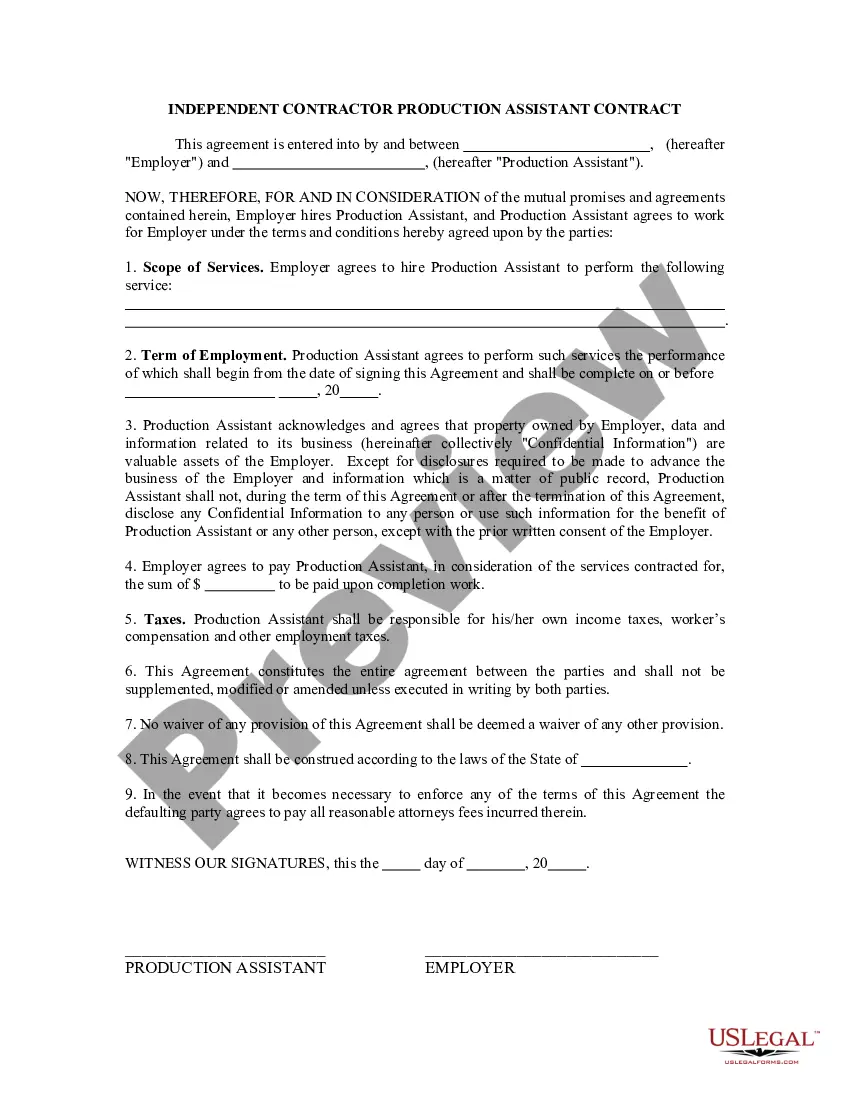
Employer hires a producer on an independent contractor basis to provide production services for employer as specified in the contract.
Virginia Producer Agreement - Self-Employed Independent Contractor
State:
Multi-State
Control #:
US-INDC-240
Format:
Word;
Rich Text
Instant download
Description
Free preview
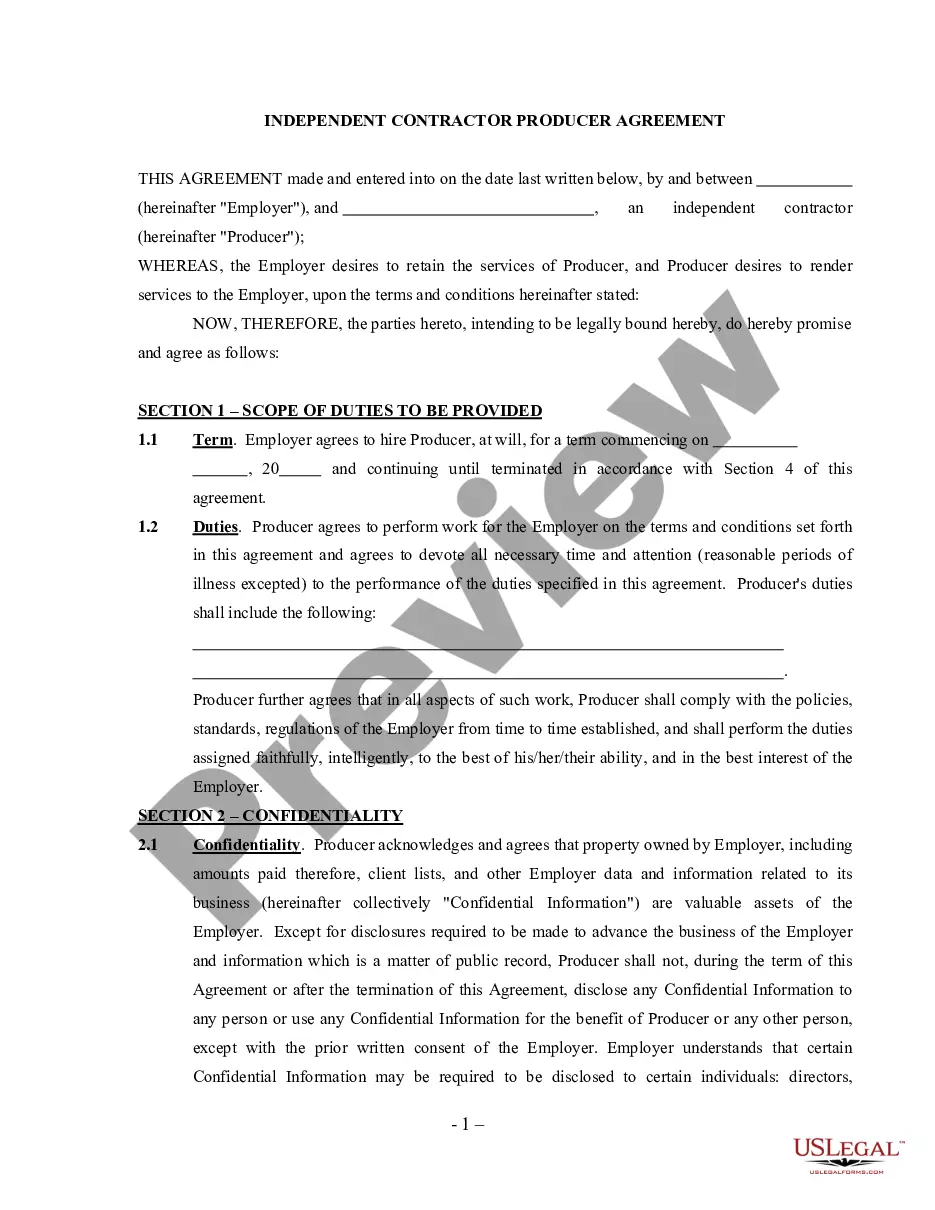
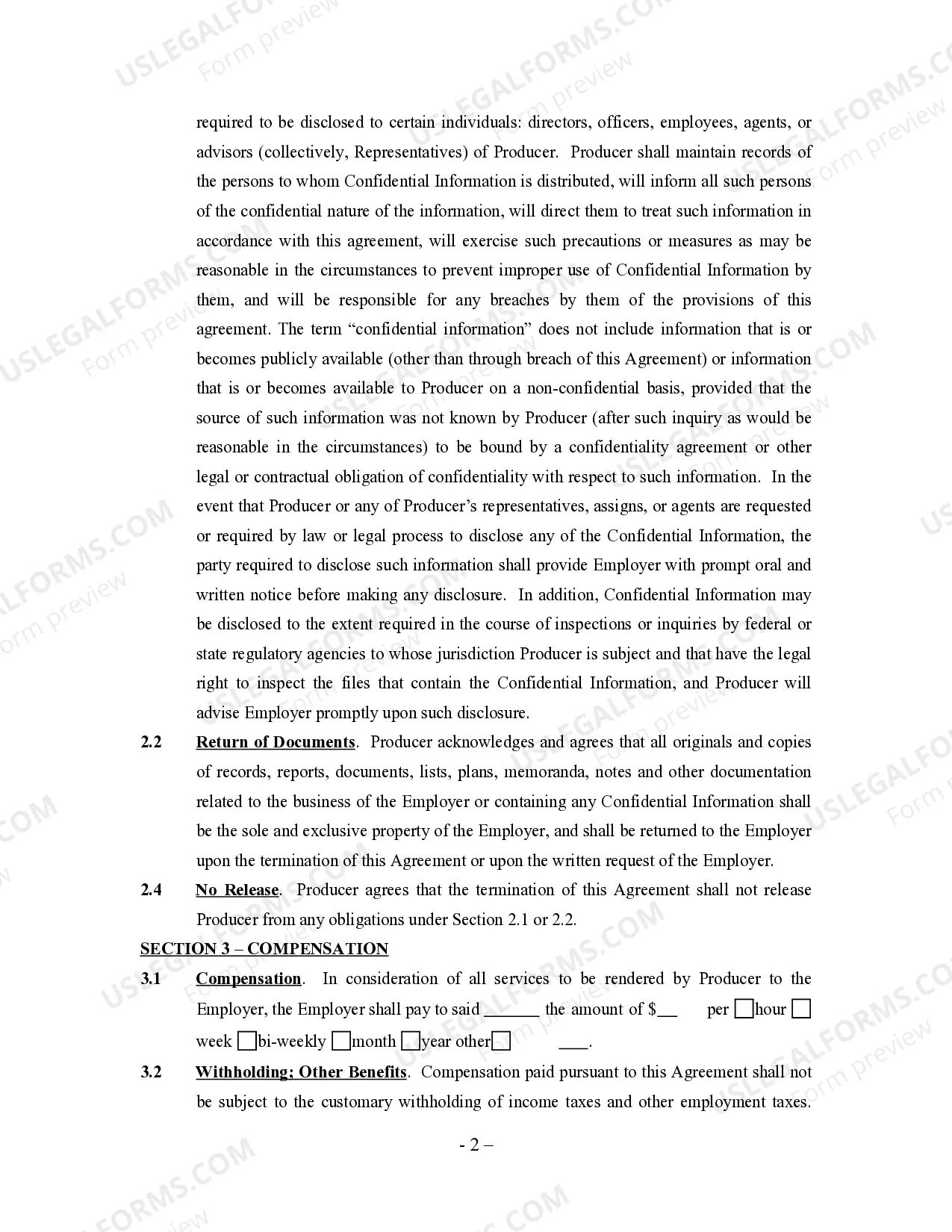
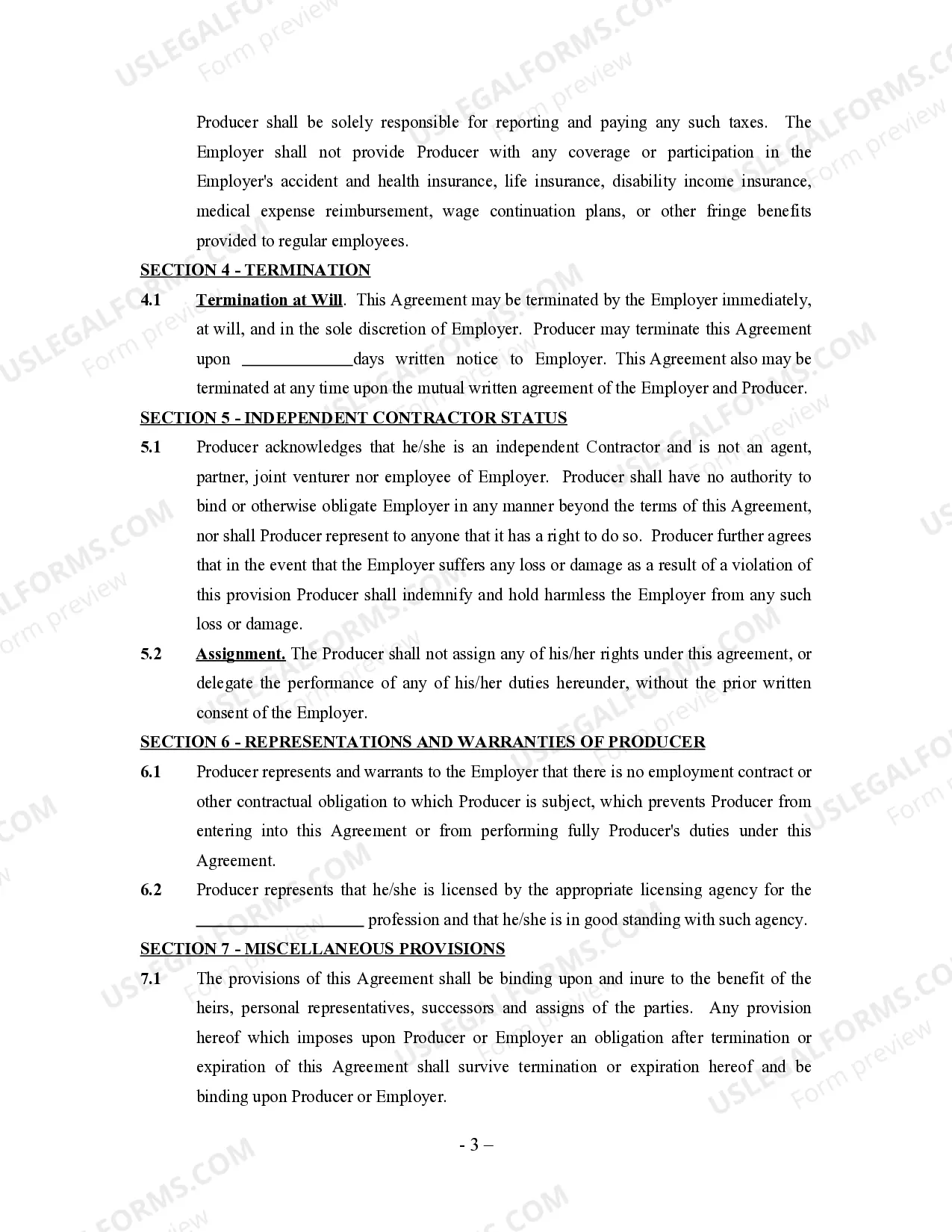
How to fill out Producer Agreement - Self-Employed Independent Contractor?
Selecting the appropriate legal document template can be quite challenging. Naturally, there are numerous designs available online, but how can you find the legal form you need? Utilize the US Legal Forms website. The platform offers a vast array of templates, such as the Virginia Producer Agreement - Self-Employed Independent Contractor, which can be utilized for both business and personal purposes. All of the documents are reviewed by experts and comply with state and federal regulations.
If you are already registered, Log In to your account and click on the Download button to obtain the Virginia Producer Agreement - Self-Employed Independent Contractor. Use your account to browse through the legal documents you have previously acquired. Navigate to the My documents section of your account and retrieve another copy of the document you need.
If you are a new user of US Legal Forms, here are simple steps you can follow: First, ensure you have selected the correct form for your city/county. You can view the document using the Preview button and read the form description to confirm this is the right one for you. If the form does not meet your requirements, use the Search field to find the correct form. Once you are certain that the document is appropriate, click the Buy now button to acquire the form. Choose the pricing plan you want and enter the necessary information. Create your account and complete the transaction using your PayPal account or credit card. Select the file format and download the legal document template to your device. Finally, complete, review, print, and sign the received Virginia Producer Agreement - Self-Employed Independent Contractor.
US Legal Forms is the largest collection of legal documents where you can find a variety of file templates. Utilize the service to obtain properly-crafted papers that adhere to state requirements.
- Selecting the appropriate legal document template can be quite challenging.
- Naturally, there are numerous designs available online, but how can you find the legal form you need.
- Utilize the US Legal Forms website.
- The platform offers a vast array of templates.
- All of the documents are reviewed by experts and comply with state and federal regulations.
- If you are already registered, Log In to your account.
Form popularity
FAQ
Creating an independent contractor agreement involves outlining the terms of the working relationship. You should include details such as project scope, payment terms, and the duration of the agreement. To simplify this process, consider using a platform like uslegalforms, which provides templates specifically for a Virginia Producer Agreement - Self-Employed Independent Contractor. This ensures you cover all necessary aspects, making the agreement both comprehensive and compliant.
Yes, an independent contractor may need a business license in Virginia depending on the type of work they do. If your business activities require it, securing a local or state business license is essential. This not only legitimizes your operations but also ensures compliance with local regulations. For those entering into a Virginia Producer Agreement - Self-Employed Independent Contractor, having the appropriate licenses emphasizes your professionalism.
Yes, an independent contractor is considered self-employed. This means they operate their own business and are not classified as an employee of another company. The Virginia Producer Agreement - Self-Employed Independent Contractor further emphasizes this distinction, offering a framework for how independent contractors can work effectively. When you understand this classification, you can better manage your business endeavors and ensure compliance with Virginia's laws.
The new independent contractor law in Virginia provides clarity on the classification of workers as independent contractors. Under this law, the Virginia Producer Agreement - Self-Employed Independent Contractor outlines the rights and responsibilities of both parties. This legislation aims to enhance protections for independent contractors, ensuring they maintain the flexibility of self-employment while having clear guidelines. By understanding this law, you can better navigate your rights and obligations as a self-employed independent contractor.
Simply put, being an independent contractor is one way to be self-employed. Being self-employed means that you earn money but don't work as an employee for someone else.
As an independent he still has to sign non-compete and non-disclosure agreements. But Cress strongly recommends that producers treat their crew as employees. A payroll service can take care of the taxes, insurance, and legality.
Becoming an independent contractor is one of the many ways to be classified as self-employed. By definition, an independent contractor provides work or services on a contractual basis, whereas, self-employment is simply the act of earning money without operating within an employee-employer relationship.
However, for the most part, under the Federal regulations (and most states including California), a crew member on a film or other similar type production should never be categorized as an independent contractor they are really employees and are subject to federal and state withholding (from their paychecks) as
Remember that an independent contractor is considered to be self-employed, so in effect, you are running your own one-person business. Any income that you earn as an independent contractor must be reported on Schedule C. You'll then pay income taxes on the total profit.
A 1099 employee is a US self-employed worker that reports their income to the IRS on a 1099 tax form. Freelancers, gig workers, and independent contractors are all considered 1099 employees.