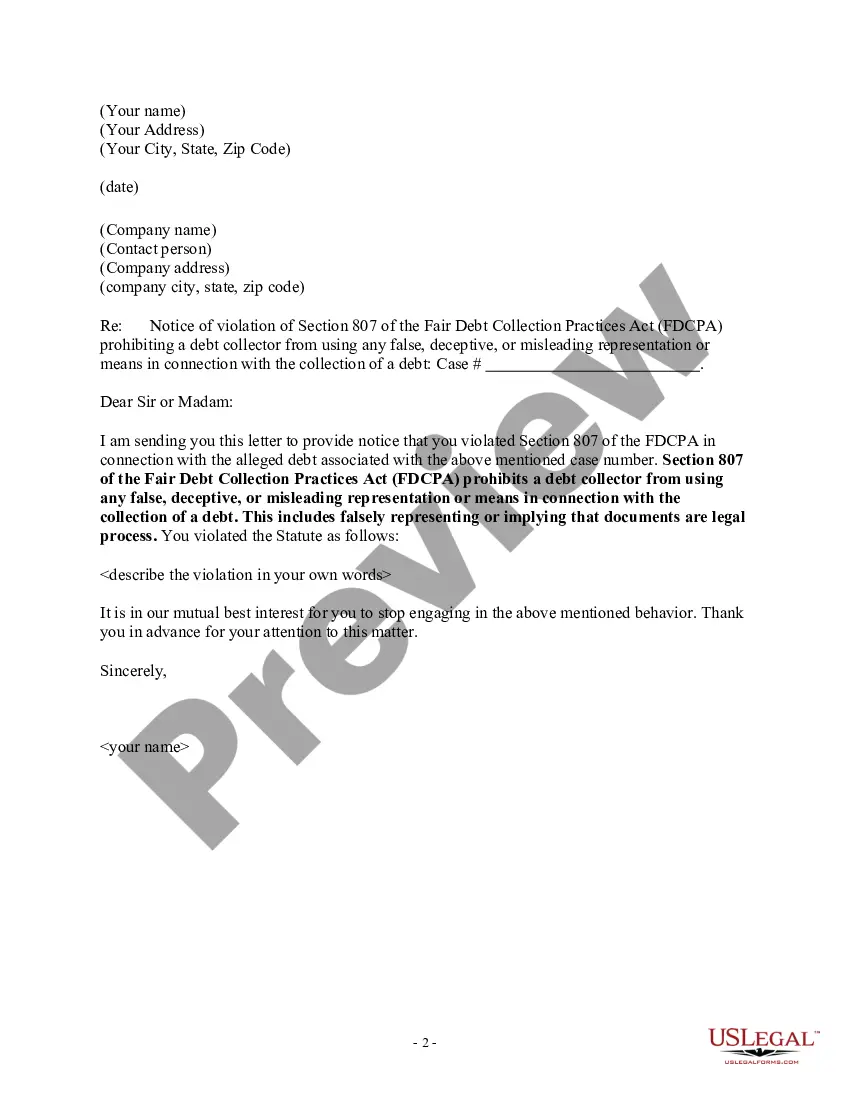
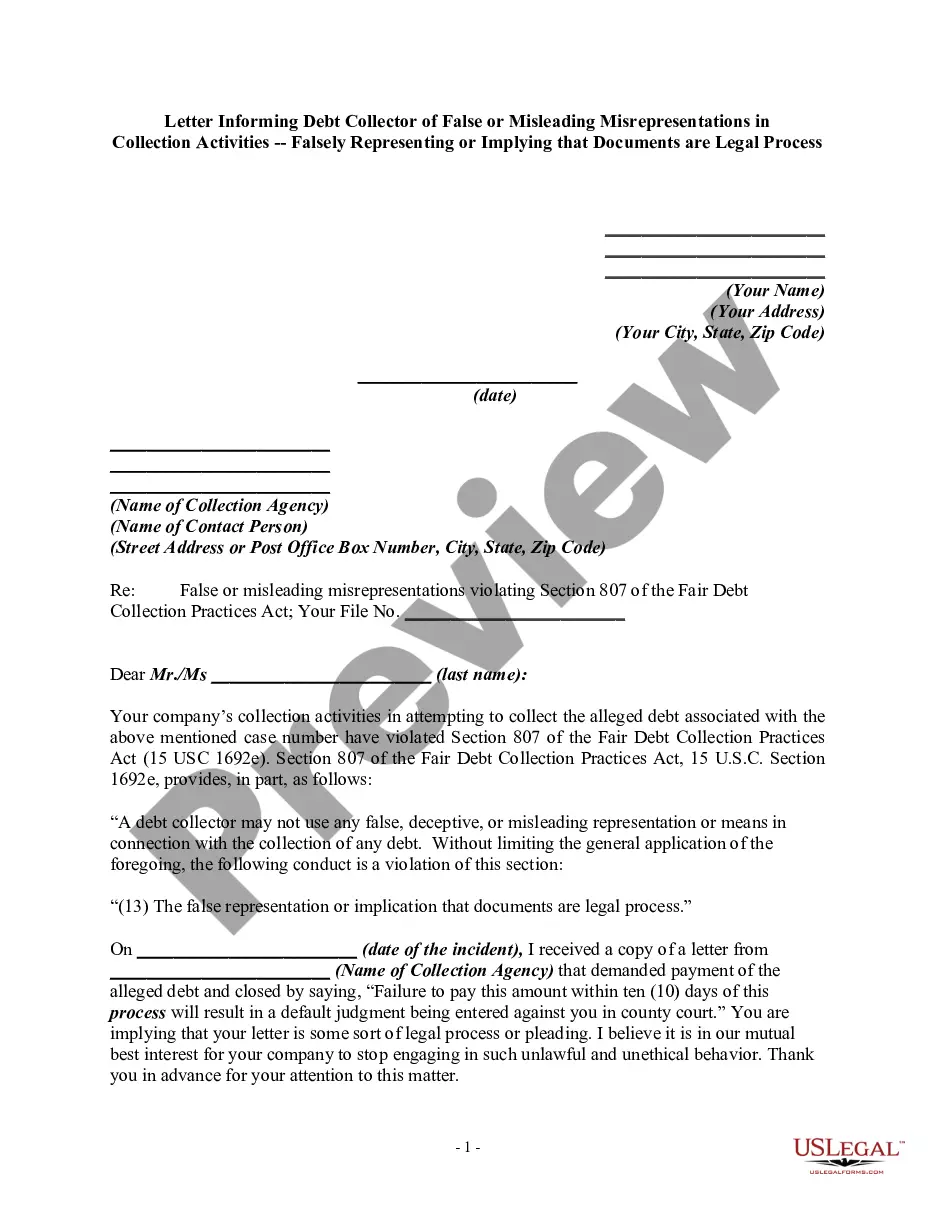
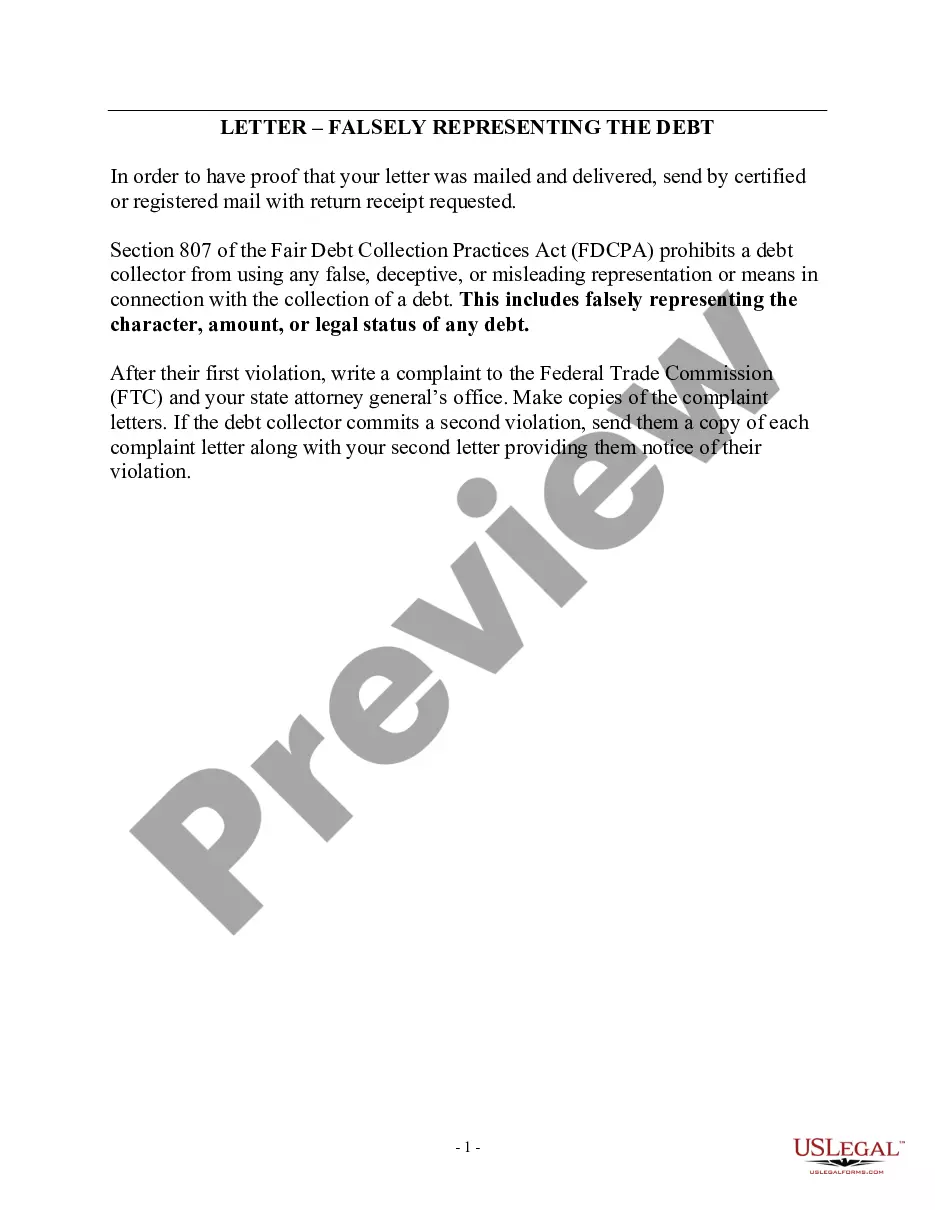
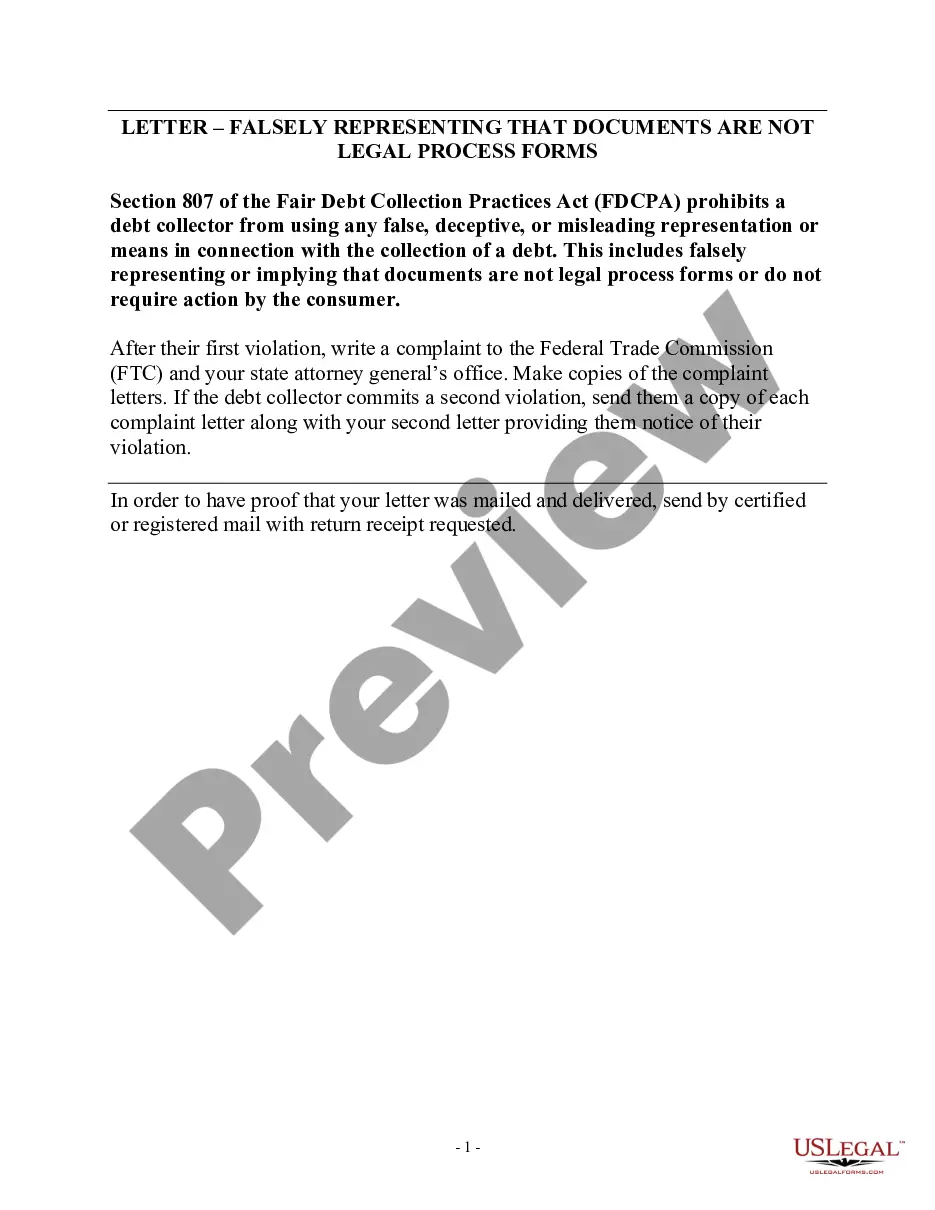
A debt collector may not use any false, deceptive, or misleading representation or means in connection with the collection of a debt. This includes falsely representing or implying that documents are legal process.
Virginia Notice to Debt Collector - Falsely Representing a Document is Legal Process
Category:
State:
Multi-State
Control #:
US-DCPA-40
Format:
Word;
Rich Text
Instant download
Description
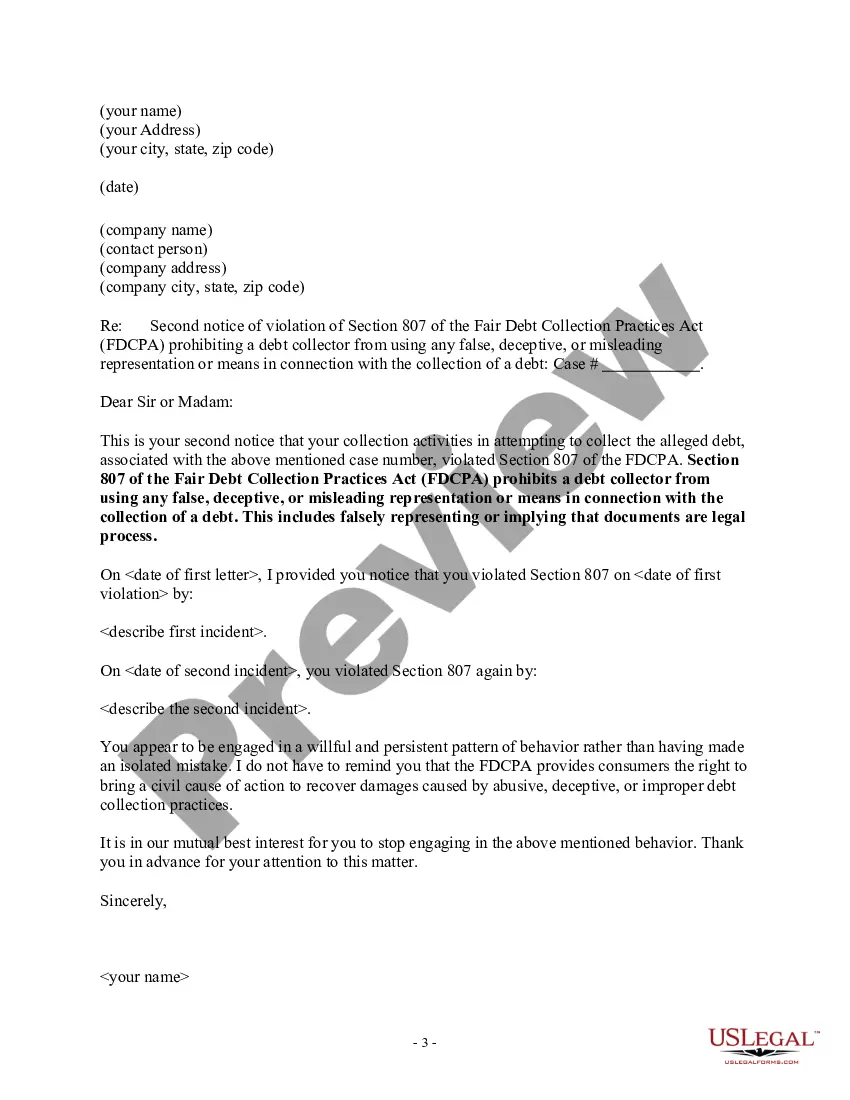
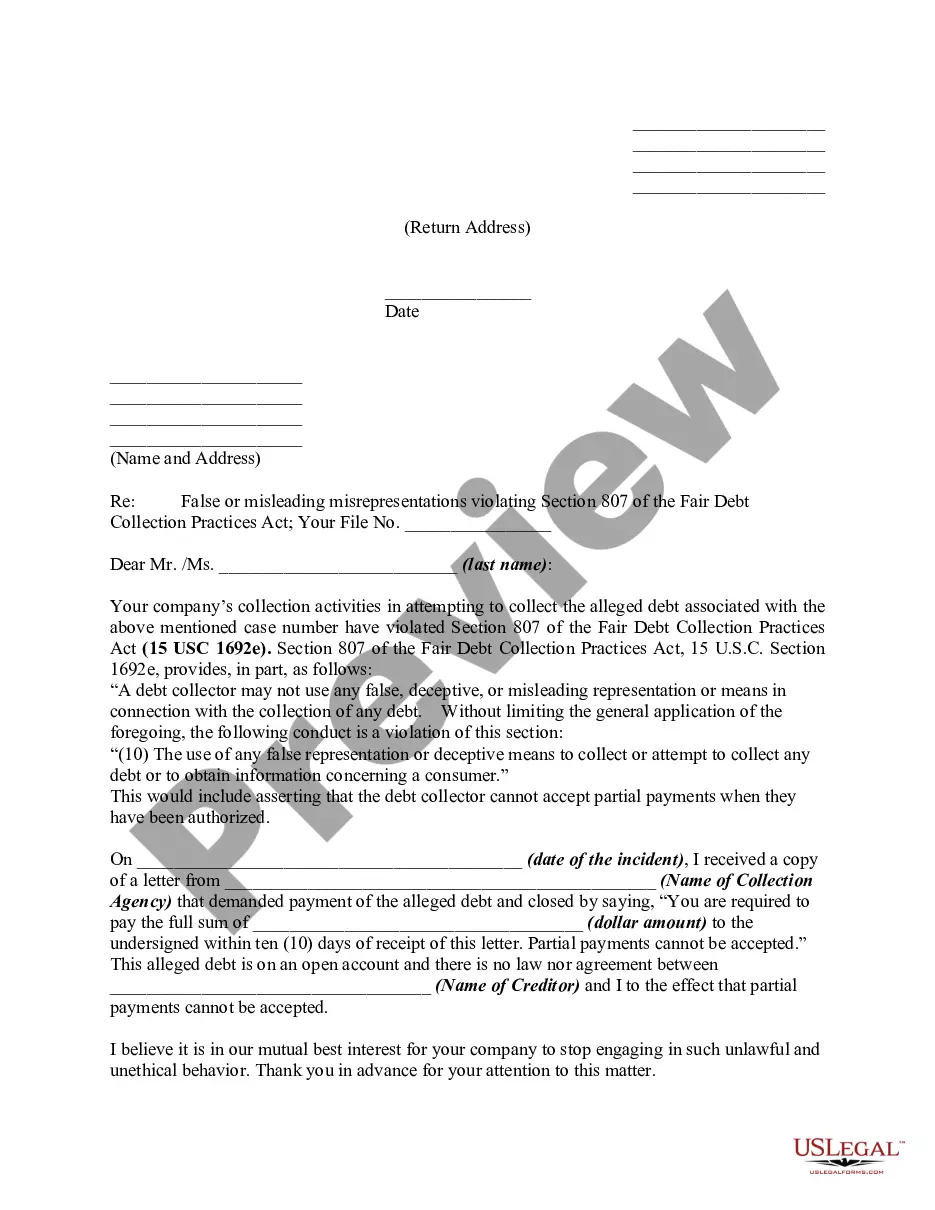
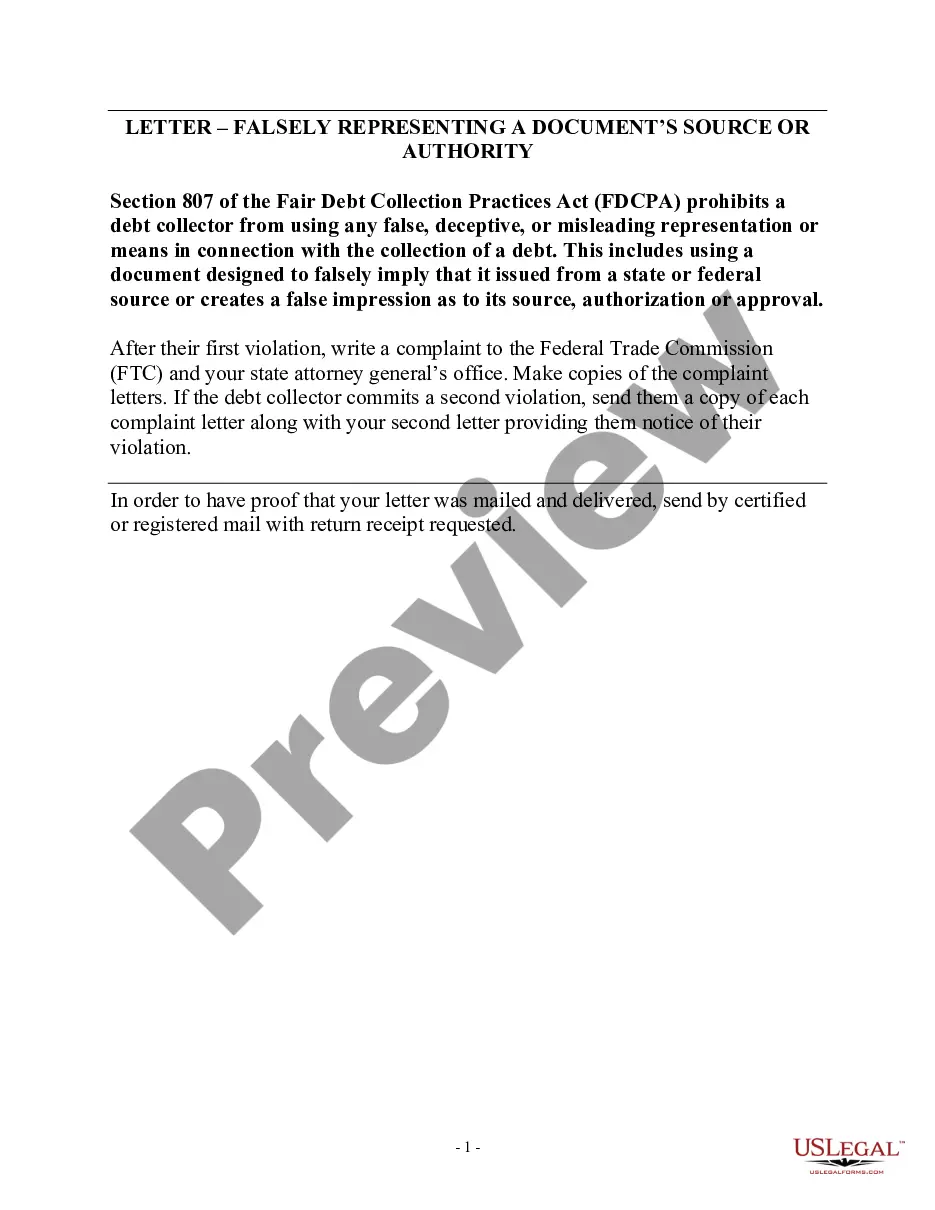
Use this form to notify a debt collector they violated the Fair Debt Collection Practices Act (FDCPA). Receiving notice from a consumer makes it more likely a debt collector will comply with the FDCPA. If they don't comply after receiving notice, your notice letter may help prove that their actions were intentional.
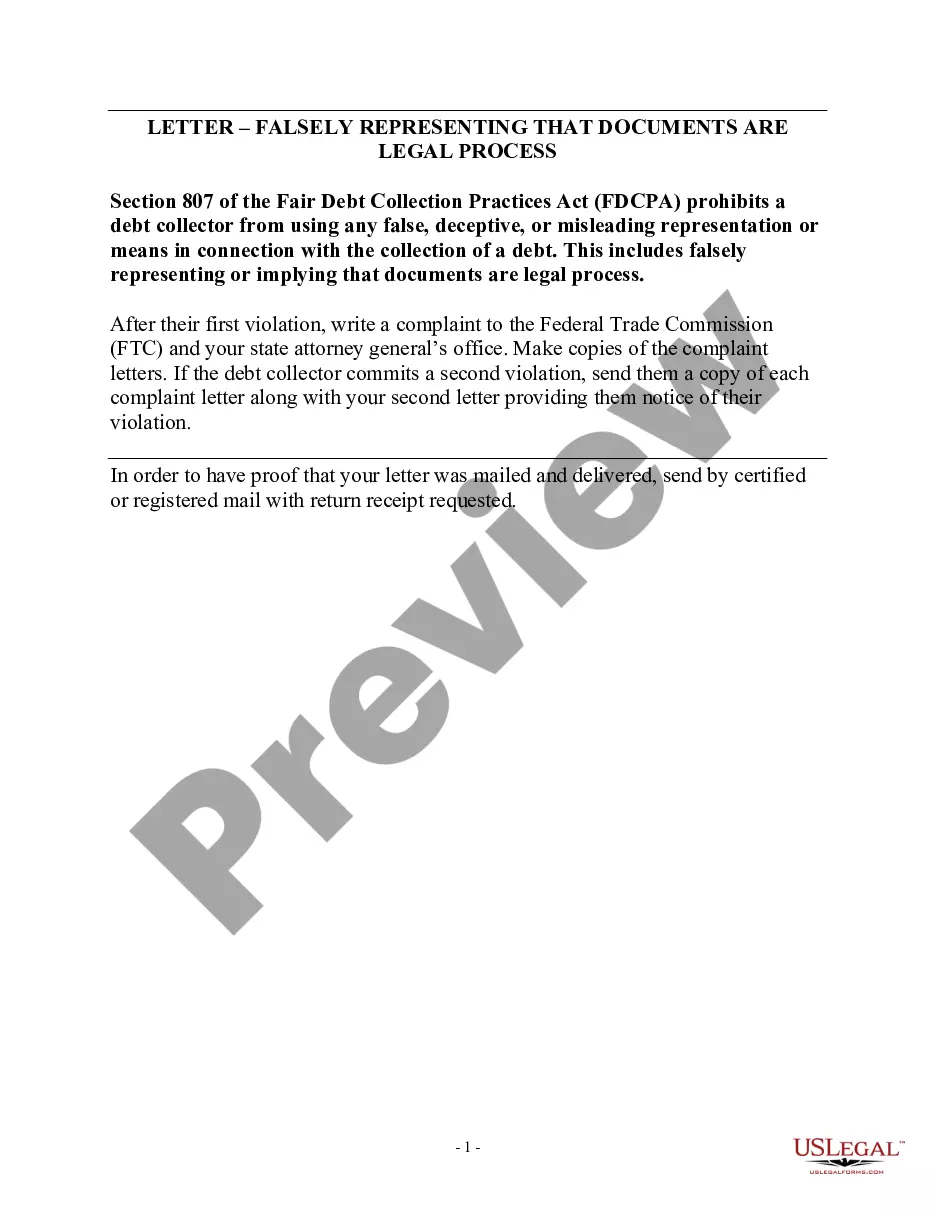
Free preview
How to fill out Notice To Debt Collector - Falsely Representing A Document Is Legal Process?
If you need to finalize, obtain, or print sanctioned document templates, utilize US Legal Forms, the premier selection of legal documents available online.
Make use of the site's straightforward and user-friendly search feature to find the documents you need.
Numerous templates for business and personal use are organized by type and state, or by keywords.
Step 4. Once you have identified the document you need, click the Get Now option. Select your preferred payment plan and enter your details to register for an account.
Step 5. Complete the transaction. You can use your credit card or PayPal account to finalize your purchase.
- Use US Legal Forms to access the Virginia Notice to Debt Collector - Falsely Representing a Document as Legal Process with just a few clicks.
- If you are already a US Legal Forms user, Log In to your account and click on the Download option to retrieve the Virginia Notice to Debt Collector - Falsely Representing a Document as Legal Process.
- You can also access documents you have previously downloaded from the My documents tab in your account.
- If you are new to US Legal Forms, follow the steps outlined below.
- Step 1. Ensure you have selected the document for the correct city/state.
- Step 2. Utilize the Preview option to examine the document's details. Be sure to read the information carefully.
- Step 3. If you are not satisfied with the document, employ the Search box at the top of the screen to find alternative versions of the legal document template.
Form popularity
FAQ
7 Most Common FDCPA ViolationsContinued attempts to collect debt not owed.Illegal or unethical communication tactics.Disclosure verification of debt.Taking or threatening illegal action.False statements or false representation.Improper contact or sharing of info.Excessive phone calls.16 Sept 2020
Yes, you may be able to sue a debt collector or a debt collection agency if it engages in abusive, deceptive, or unfair behavior. A debt collector is generally someone who buys a debt from a creditor who, for whatever reason, has been unable to collect from a consumer.
Among the insider tips, Ulzheimer shared with the audience was this: if you are being pursued by debt collectors, you can stop them from calling you ever again by telling them '11-word phrase'. This simple idea was later advertised as an '11-word phrase to stop debt collectors'.
Debt collectors are generally prohibited under federal law from using any false, deceptive, or misleading misrepresentation in collecting a debt. The federal law that prohibits this is called the Fair Debt Collection Practices Act (FDCPA).
A debt collector may state that certain action is possible, if it is true that such action is legal and is frequently taken by the collector or creditor with respect to similar debts; however, if the debt collector has reason to know there are facts that make the action unlikely in the particular case, a statement that
Under the Fair Credit Reporting Act (FCRA) (15 U.S.C. § 1681 and following), you may sue a credit reporting agency for negligent or willful noncompliance with the law within two years after you discover the harmful behavior or within five years after the harmful behavior occurs, whichever is sooner.
Your credit card debt, auto loans, medical bills, student loans, mortgage, and other household debts are covered under the FDCPA.
You can sue a company for sending you to collections for a debt that you don't owe. If a debt collector starts calling you out of the blue, but you know perfectly well that you made the payment in question, the law gives you the right to file an action in court against the company.
Write a dispute letter and send it to each credit bureau. Include information about each of the disputed itemsaccount numbers, listed amounts and creditor names. Write a similar letter to each collection agency, asking them to remove the error from your credit reports.
Debt collectors cannot harass or abuse you. They cannot swear, threaten to illegally harm you or your property, threaten you with illegal actions, or falsely threaten you with actions they do not intend to take. They also cannot make repeated calls over a short period to annoy or harass you.