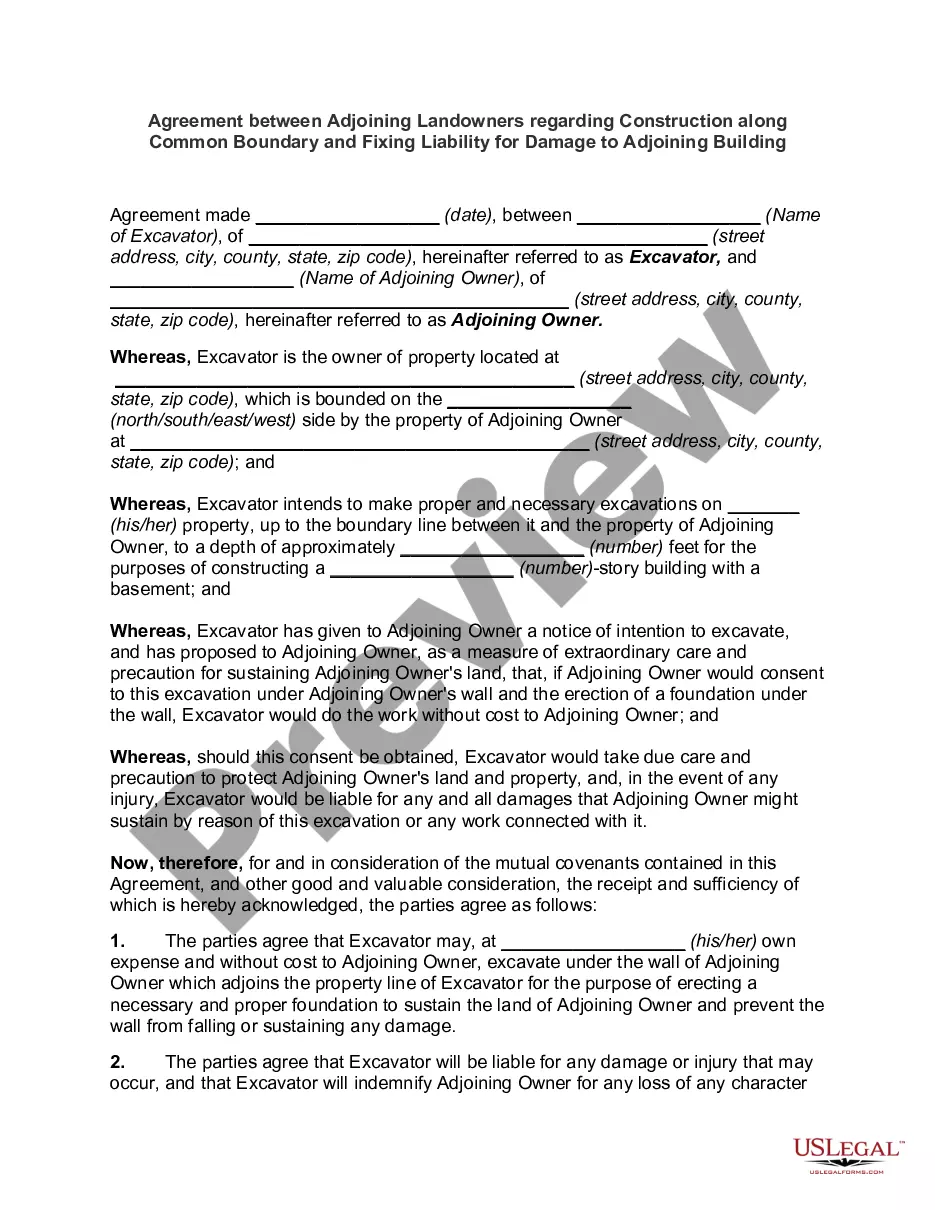
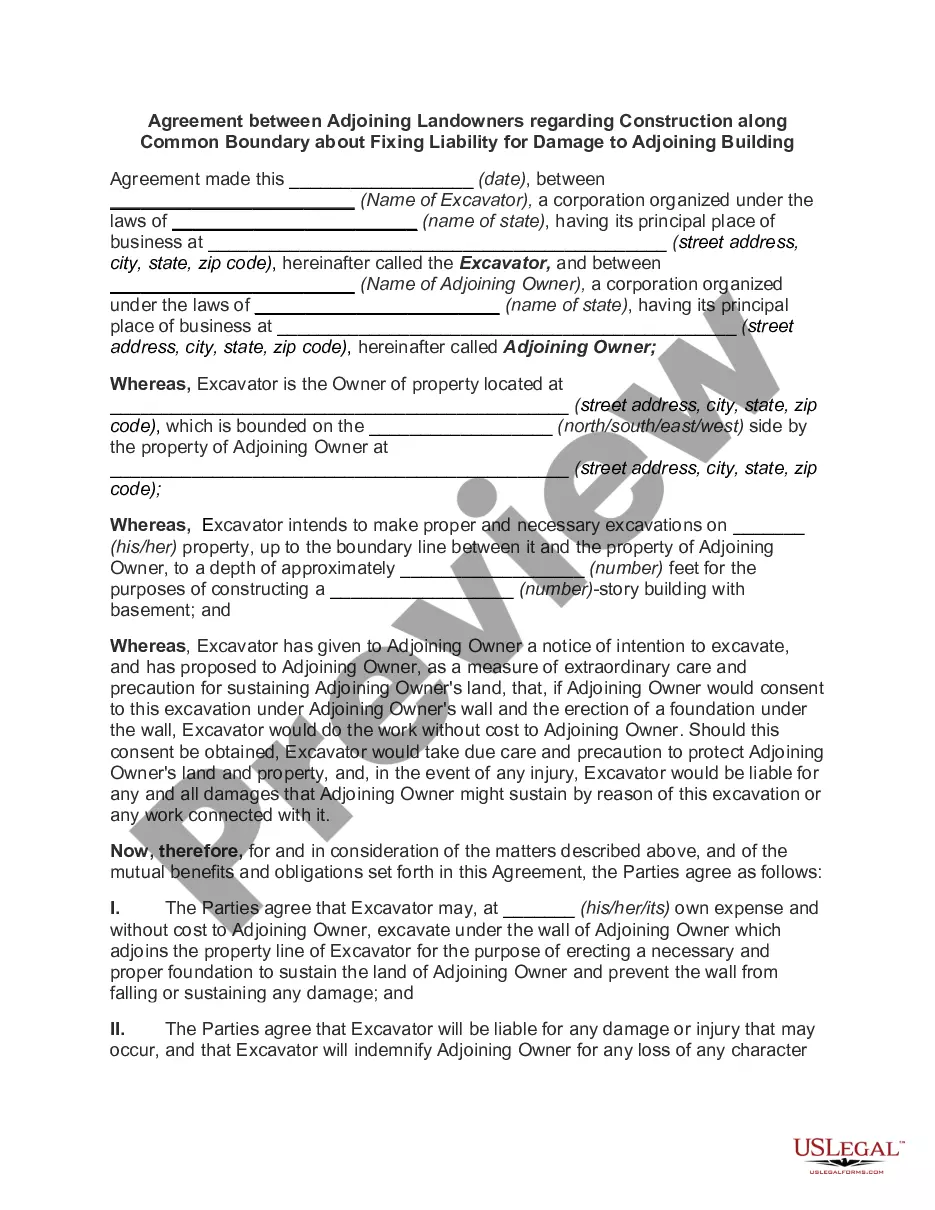
Virginia Agreement between Adjoining Landowners Regarding Construction along Common Boundary and Fixing Liability for Damage
Description
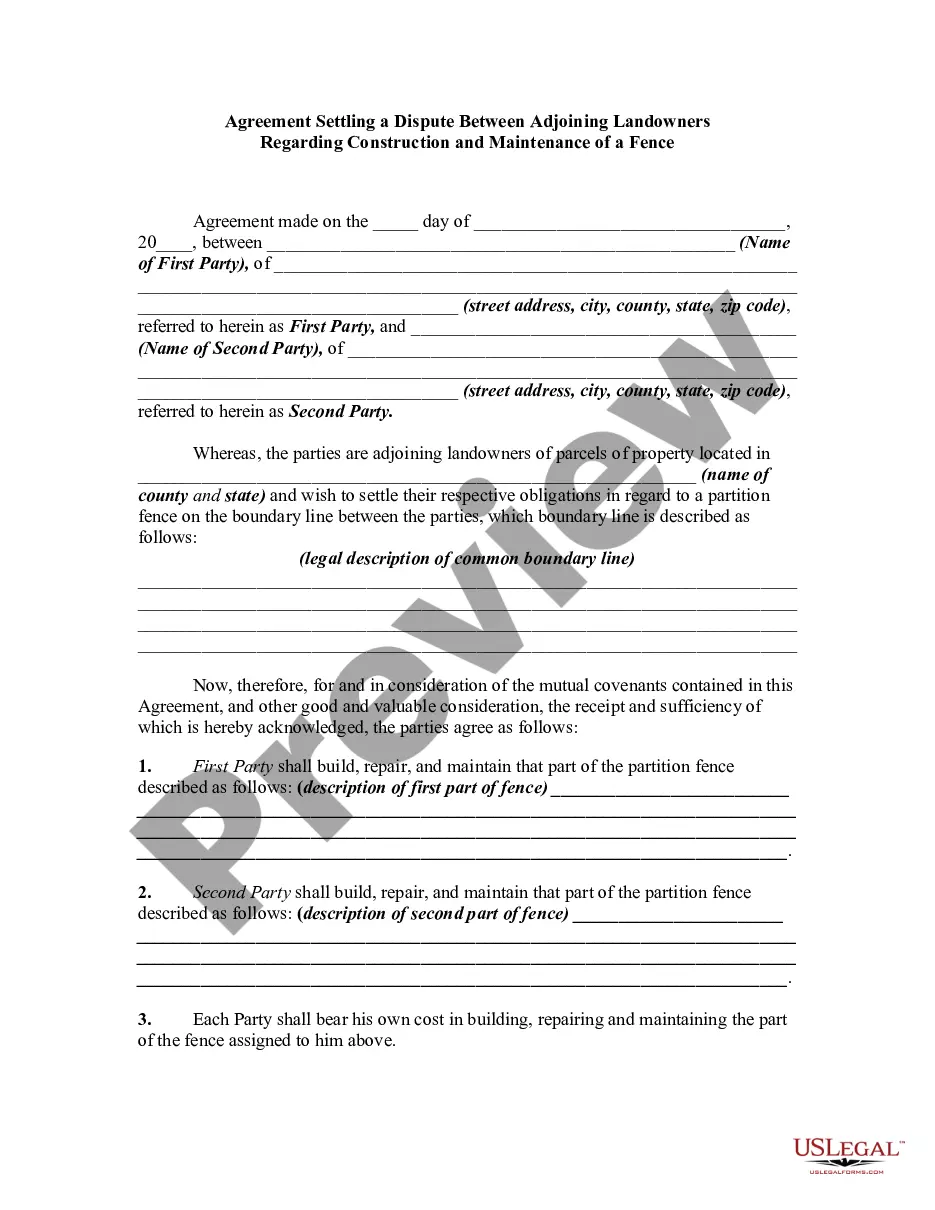
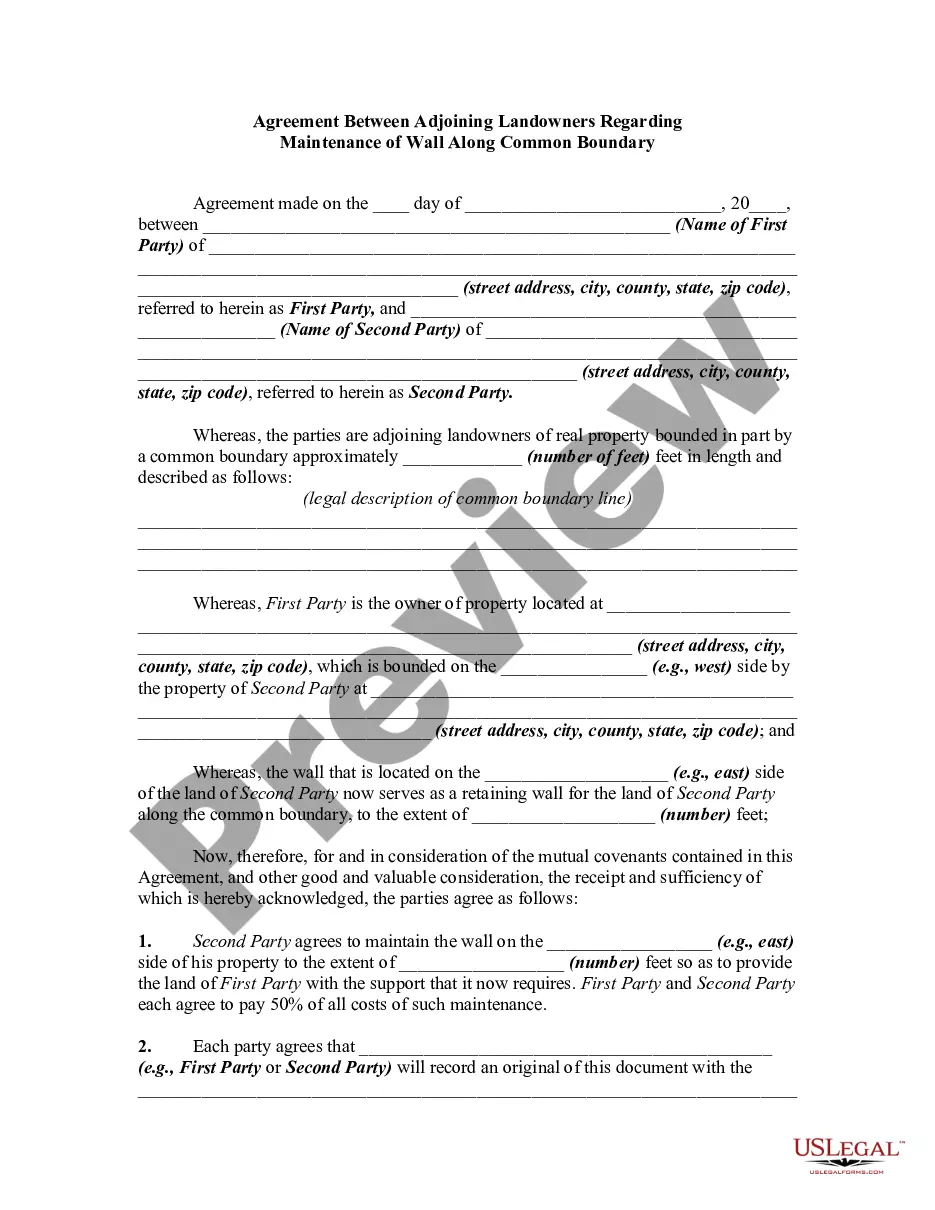
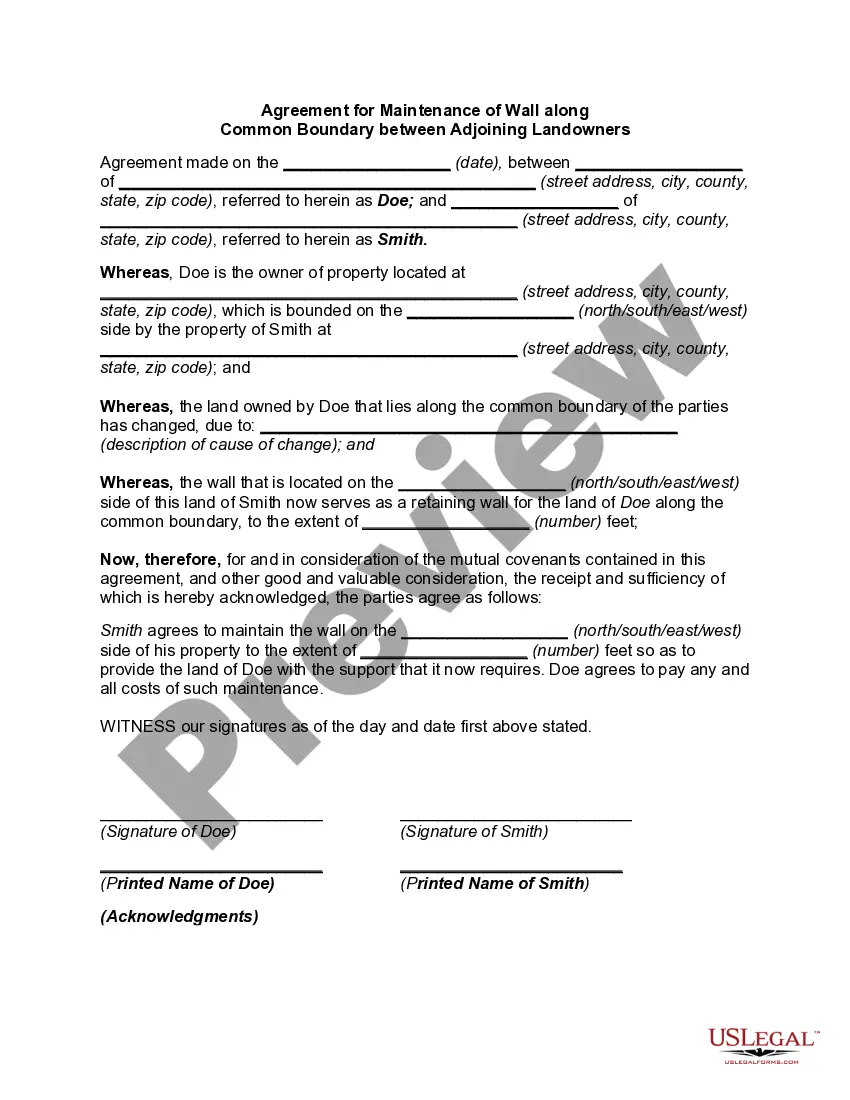
Get your form ready online
Our built-in tools help you complete, sign, share, and store your documents in one place.
Make edits, fill in missing information, and update formatting in US Legal Forms—just like you would in MS Word.
Download a copy, print it, send it by email, or mail it via USPS—whatever works best for your next step.
Sign and collect signatures with our SignNow integration. Send to multiple recipients, set reminders, and more. Go Premium to unlock E-Sign.
If this form requires notarization, complete it online through a secure video call—no need to meet a notary in person or wait for an appointment.
We protect your documents and personal data by following strict security and privacy standards.

Make edits, fill in missing information, and update formatting in US Legal Forms—just like you would in MS Word.

Download a copy, print it, send it by email, or mail it via USPS—whatever works best for your next step.

Sign and collect signatures with our SignNow integration. Send to multiple recipients, set reminders, and more. Go Premium to unlock E-Sign.

If this form requires notarization, complete it online through a secure video call—no need to meet a notary in person or wait for an appointment.

We protect your documents and personal data by following strict security and privacy standards.
Looking for another form?
How to fill out Agreement Between Adjoining Landowners Regarding Construction Along Common Boundary And Fixing Liability For Damage?
Are you in a position where you require documentation for both corporate or personal purposes almost every day.
There are numerous legal document templates accessible online, but finding reliable ones can be challenging.
US Legal Forms offers a vast collection of form templates, such as the Virginia Agreement between Adjoining Landowners Regarding Construction along Common Boundary and Fixing Liability for Damage, which are designed to comply with federal and state regulations.
Access all the document templates you have purchased in the My documents section.
You can obtain another copy of the Virginia Agreement between Adjoining Landowners Regarding Construction along Common Boundary and Fixing Liability for Damage any time if needed. Click on the required form to download or print the document template.
- If you are already familiar with the US Legal Forms website and possess an account, simply Log In.
- Then, you can download the Virginia Agreement between Adjoining Landowners Regarding Construction along Common Boundary and Fixing Liability for Damage template.
- If you do not have an account and wish to start using US Legal Forms, follow these steps.
- Obtain the form you need and ensure it is for the correct city/region.
- Use the Review button to check the form.
- Read the description to confirm you have selected the correct form.
- If the form is not what you seek, use the Search field to locate the form that suits your needs and requirements.
- Once you find the correct form, simply click Purchase now.
- Choose the pricing plan you desire, enter the necessary information to create your account, and finalize your purchase using PayPal or a credit card.
- Select a convenient document format and download your copy.
Form popularity
FAQ
Lateral support exists when the adjoining lands are side-by-side. It is the right of the land to be naturally upheld by its neighboring land(s) and supported against subsidence, i.e. slippage, cave-in or landslide. Subjacent support exists when the adjoining lands are above and below.
Adjoining Properties means any real property or properties the border of which is (are) shared in part or in whole with that of the Property, or that would be shared in part or in whole with that of the Property but for a street, road, or other public thoroughfare separating the properties. Sample 2.
The right of lateral support is a common-law doctrine embodying the principle that the owner of land has a right in having their soil in its natural condition remain in its natural position without being caused to fall away by excavations or improvements made on adjoining land.
Lateral and subjacent support, in the law of property, describes the right a landowner has to have that land physically supported in its natural state by both adjoining land and underground structures.
'Adjoining dwelling-houses, adjoining flats, adjoining rooms for residential purposes and adjoining buildings are those in direct physical contact with another dwelling-house, flat, room for residential purposes or building. '
The right of a landowner to have his buildings supported by his neighbour's house or other structure.
Building construction can occur during the hours of AM to PM, seven days a week, including holidays. Any work done before or after these hours must not exceed the noise level of five decibels at the nearest lot line unless a special permit has been granted to allow this.
Answers (3) First of all you should have issued him with a legal notice instructing him to restrain from raising any structure in the common area as he has no rights to utilise the common area meant in common for all and such an action is illegal by law as well as against natural justice.
Most state and city laws specify that residents have a right to quiet enjoyment of their home, which includes limits on excessive noise from nearby properties under construction.
Adjoining Land means land which is not separated by intervening property owned by someone else. Land which is separated by roads, rivers, streams, etc., is considered to be adjoining.