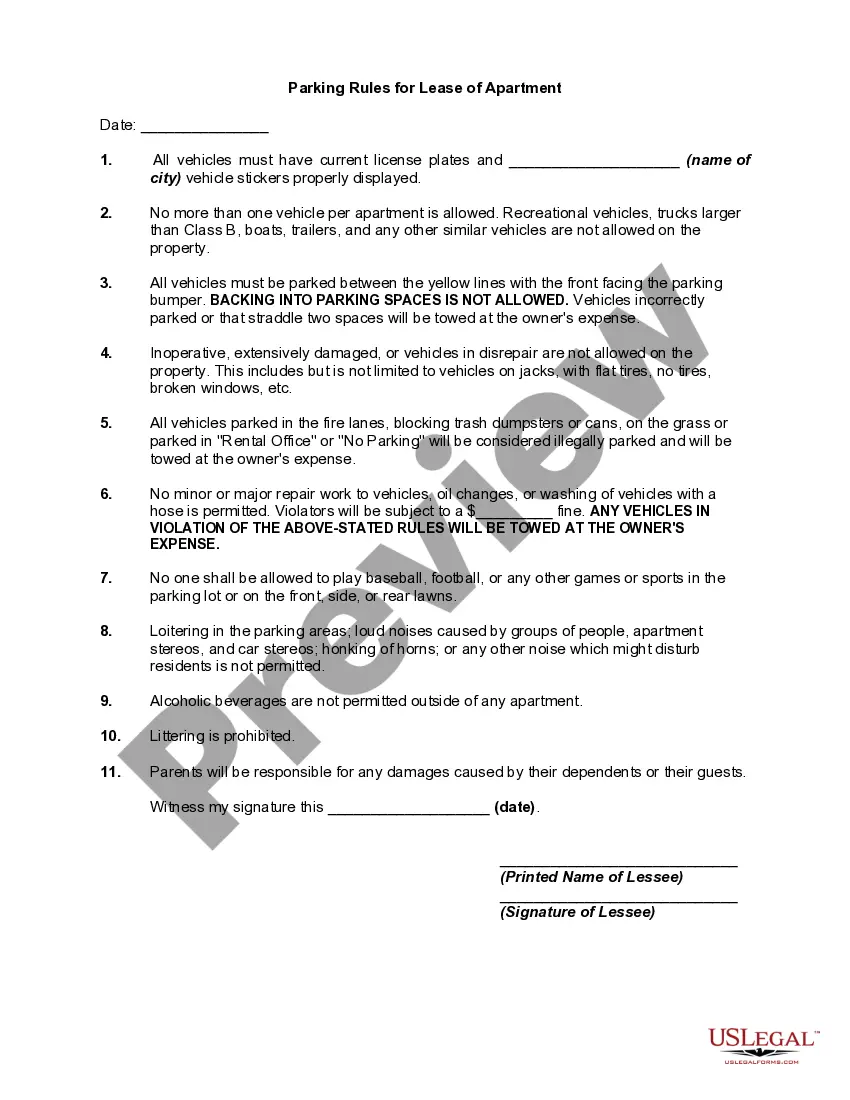
Virginia Parking Rules for Lease of Apartment
Description
Get your form ready online
Our built-in tools help you complete, sign, share, and store your documents in one place.
Make edits, fill in missing information, and update formatting in US Legal Forms—just like you would in MS Word.
Download a copy, print it, send it by email, or mail it via USPS—whatever works best for your next step.
Sign and collect signatures with our SignNow integration. Send to multiple recipients, set reminders, and more. Go Premium to unlock E-Sign.
If this form requires notarization, complete it online through a secure video call—no need to meet a notary in person or wait for an appointment.
We protect your documents and personal data by following strict security and privacy standards.

Make edits, fill in missing information, and update formatting in US Legal Forms—just like you would in MS Word.

Download a copy, print it, send it by email, or mail it via USPS—whatever works best for your next step.

Sign and collect signatures with our SignNow integration. Send to multiple recipients, set reminders, and more. Go Premium to unlock E-Sign.

If this form requires notarization, complete it online through a secure video call—no need to meet a notary in person or wait for an appointment.

We protect your documents and personal data by following strict security and privacy standards.
Looking for another form?
How to fill out Parking Rules For Lease Of Apartment?
Are you presently in a situation where you need documents for potential business or specific purposes almost every day.
There are numerous valid document templates available online, but finding reliable ones is not simple.
US Legal Forms offers thousands of form templates, such as the Virginia Parking Regulations for Apartment Lease, which are designed to meet state and federal requirements.
- If you are already familiar with the US Legal Forms website and possess an account, simply Log In.
- Next, you can download the Virginia Parking Regulations for Apartment Lease template.
- If you do not have an account and wish to start using US Legal Forms, follow these steps.
- Find the form you need and ensure it is for the correct city/area.
- Utilize the Review button to examine the form.
- Check the details to confirm you have selected the correct form.
- If the form is not what you’re looking for, use the Search box to find the form that meets your requirements.
- Once you find the appropriate form, click Get now.
- Select the pricing plan you want, fill in the necessary information to create your account, and pay for the order using your PayPal or Visa or Mastercard.
Form popularity
FAQ
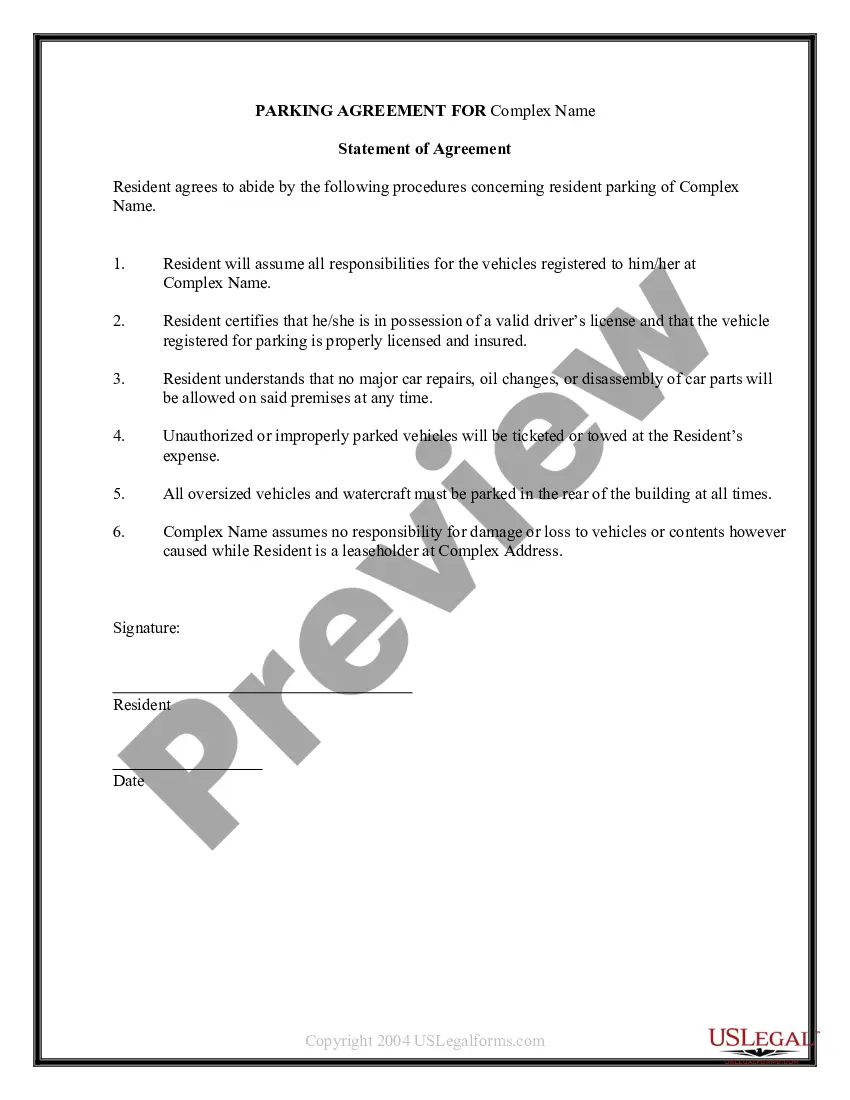
Yes, apartment parking lots are typically considered private property, owned by the landlord or property management. This classification allows the management to enforce parking rules and regulate access to ensure safety for residents. Familiarizing yourself with the Virginia Parking Rules for Lease of Apartment can provide you with insights into how these properties are governed and your rights as a tenant.
Yes, your landlord can set parking rules, including restrictions on parking in the driveway. This can be outlined in your lease agreement, ensuring that the driveway remains clear for emergency access or other tenants. To navigate such regulations, refer to the Virginia Parking Rules for Lease of Apartment for clarity on your rights and obligations.
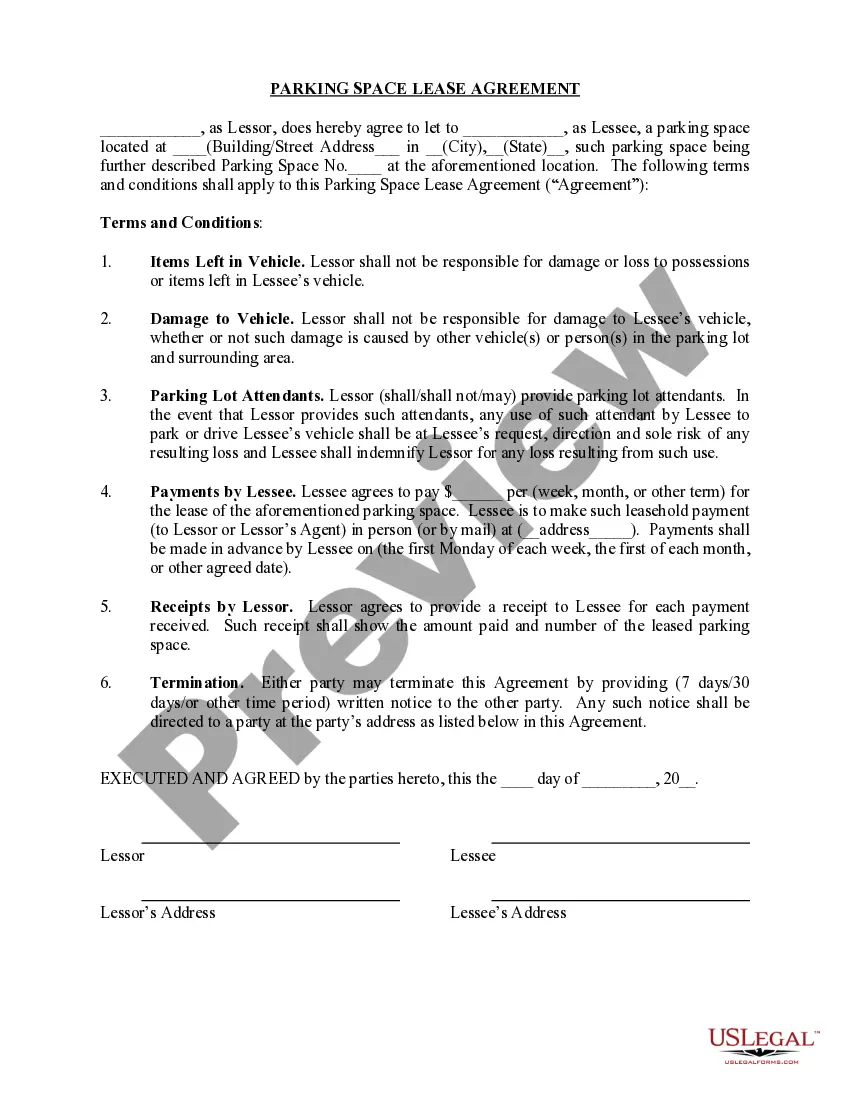
The parking clause in a commercial lease outlines the terms regarding parking availability for businesses and their clients. This clause may specify designated parking areas, maintenance of those areas, and limitations on vehicle types. Knowing the Virginia Parking Rules for Lease of Apartment assists landlords and tenants in navigating these clauses effectively to avoid misunderstandings.
Tenant parking only indicates that specific parking spaces in an apartment complex are reserved solely for the use of residents. This rule prevents unauthorized vehicles, like visitors or non-residents, from occupying tenant spots, thus ensuring that residents have guaranteed access to parking. Familiarizing yourself with the Virginia Parking Rules for Lease of Apartment can help you understand your rights and responsibilities concerning tenant-only parking.
The no parking clause in a lease agreement specifies the areas where tenants are not allowed to park their vehicles. This clause helps landlords maintain organization and safety within the property by preventing unauthorized parking in designated spaces. Understanding the Virginia Parking Rules for Lease of Apartment can clarify these restrictions, ensuring compliance and avoiding potential fines or disputes.
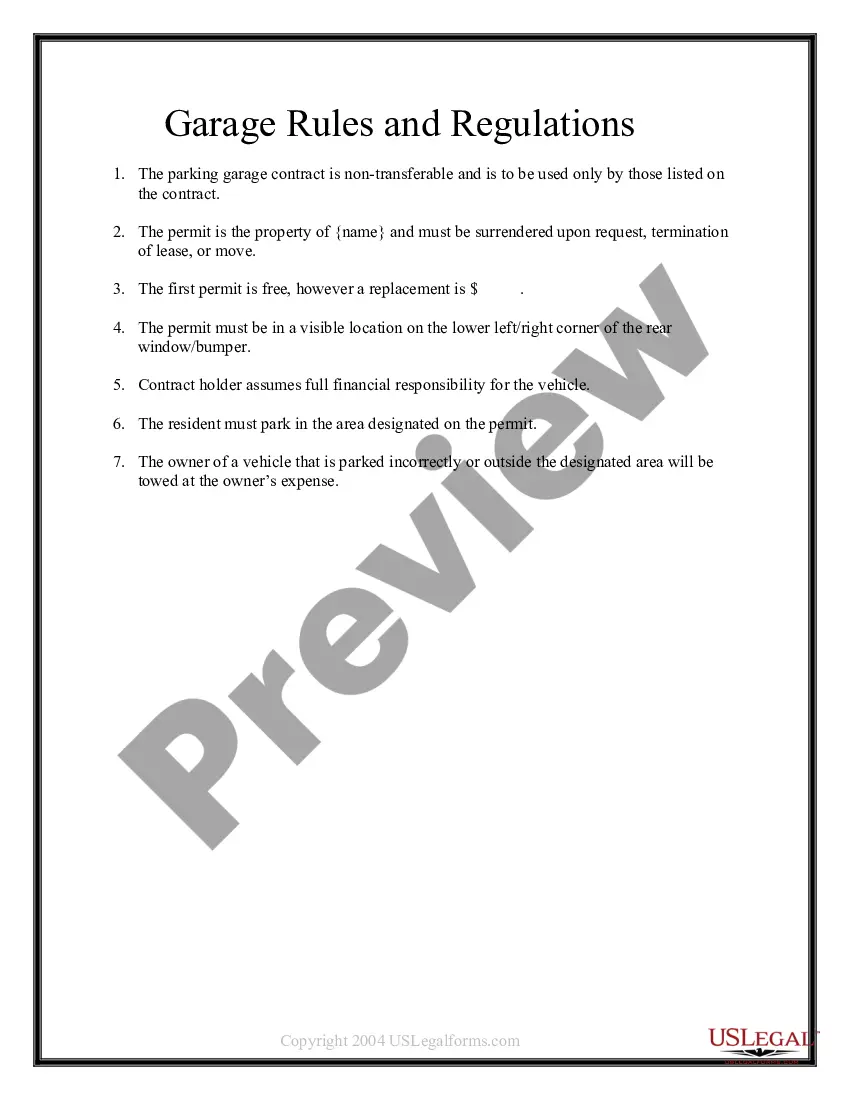
Leased parking refers to a designated parking space that is rented out to a tenant, often included in the apartment rental agreement. This arrangement provides you a reserved place to park, protecting your access. Understanding the Virginia Parking Rules for Lease of Apartment is vital, as it outlines your rights and responsibilities regarding these leased spaces.
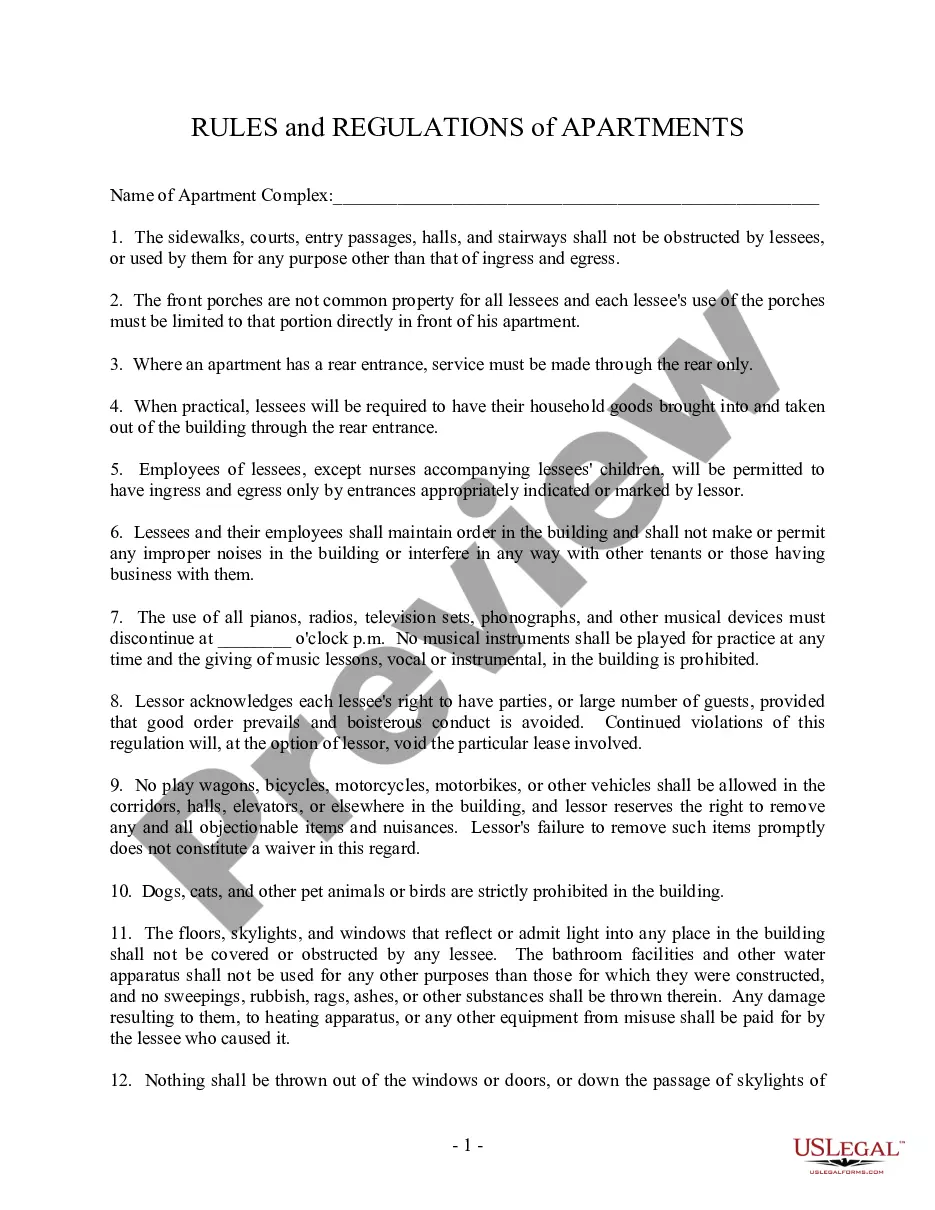
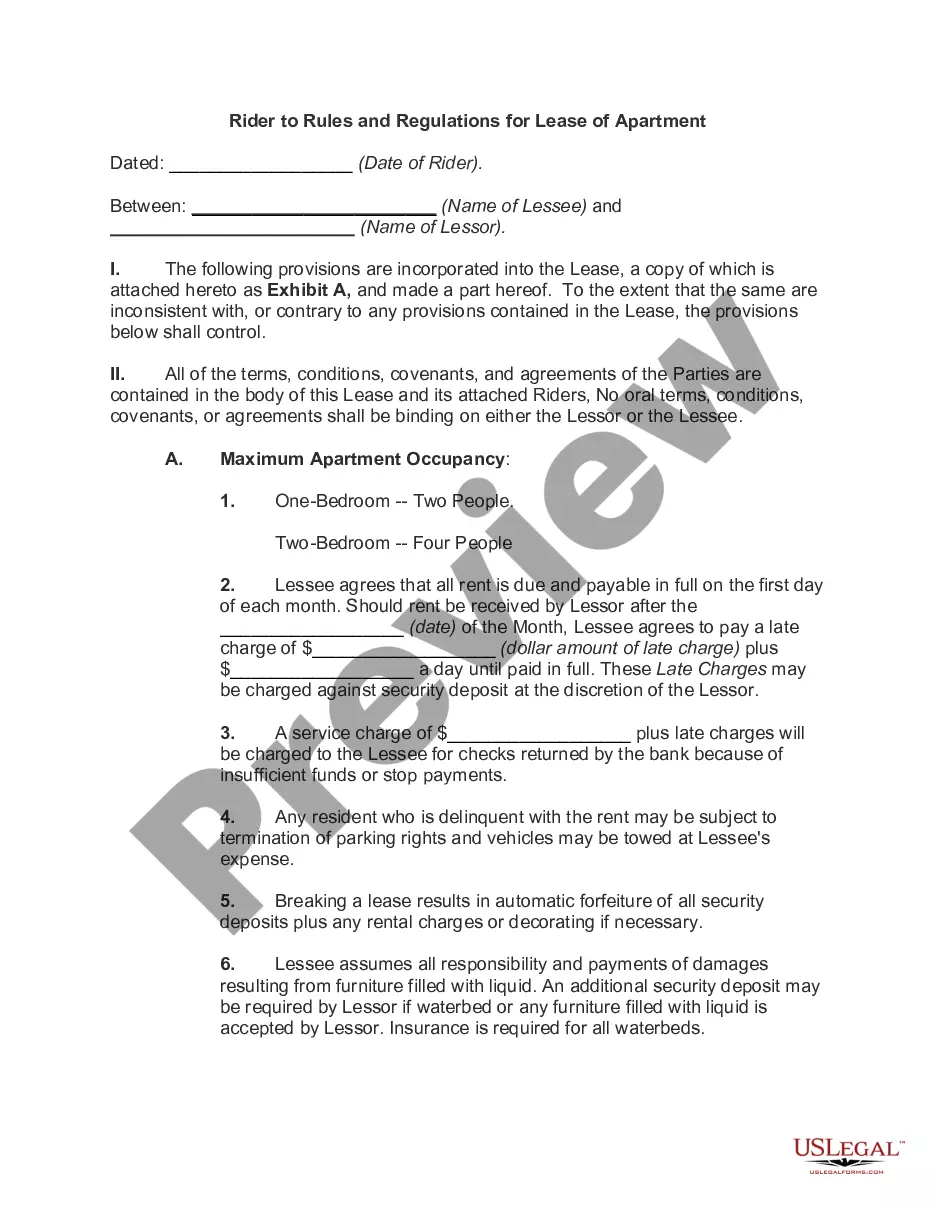
Landlords in Virginia cannot engage in harassing behaviors, such as entering your apartment without notice or denying you access to designated parking areas. They are also prohibited from discriminating against tenants based on race, gender, or disability. Familiarizing yourself with these rights will empower you as a tenant and ensure compliance with Virginia Parking Rules for Lease of Apartment.
In Virginia, you must follow legal eviction procedures, even if there is no written contract. Simply asking someone to leave may not suffice, as you could face legal challenges if they refuse. It’s essential to consult the Virginia Parking Rules for Lease of Apartment to understand how these rules might apply to common areas you share with others.
Apartment parking in Virginia typically involves designated spaces outlined in the lease or rules set by the landlord. Residents may be assigned a specific spot, or parking may be on a first-come, first-served basis. Understanding the Virginia Parking Rules for Lease of Apartment will help clarify your rights regarding available parking options and any guest restrictions.
Even without a lease agreement, you retain certain rights under Virginia law. Tenants still have basic rights to privacy, quiet enjoyment, and safety in their rented space. It’s important to understand that the absence of a formal lease does not eliminate your legal rights, especially relating to parking spaces that may be allocated for your apartment.