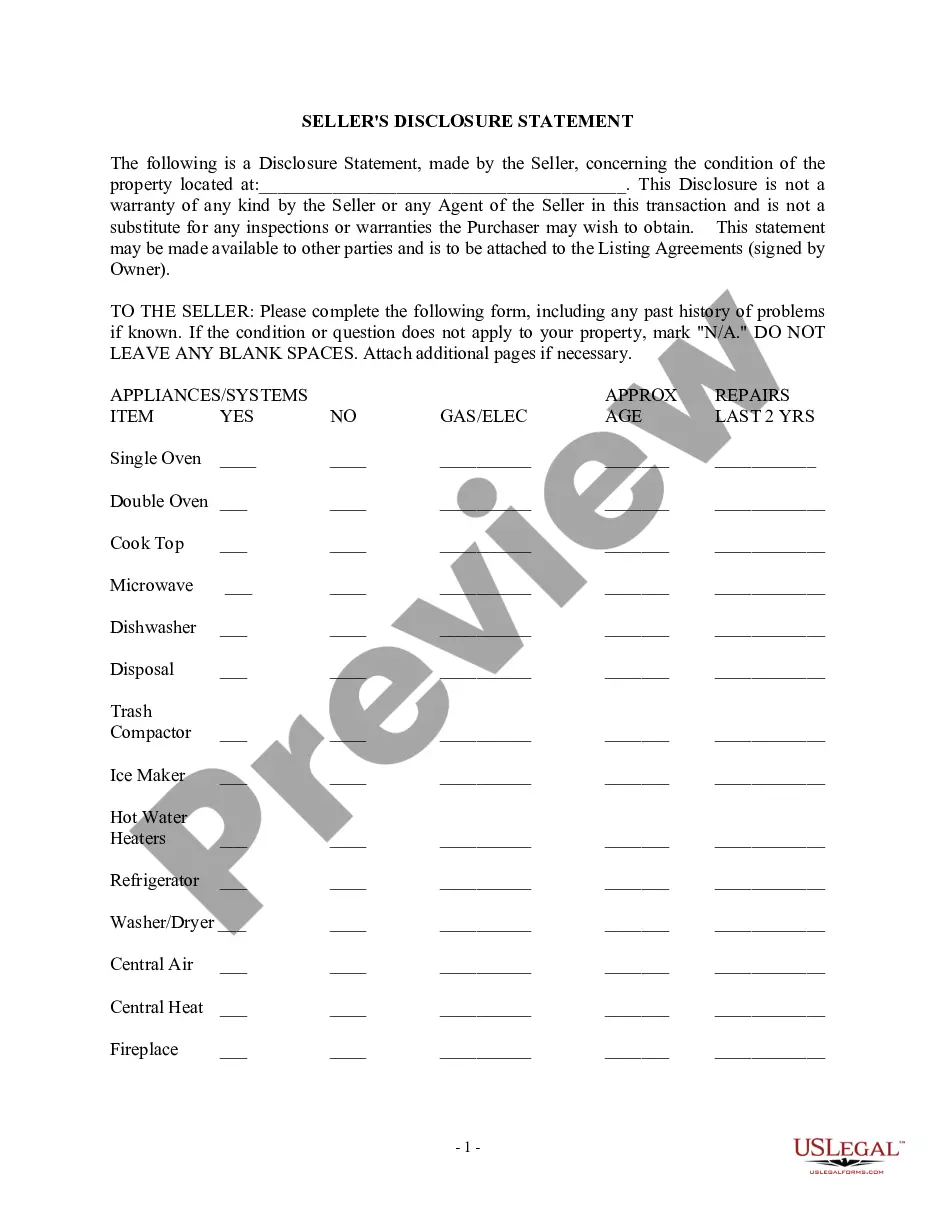
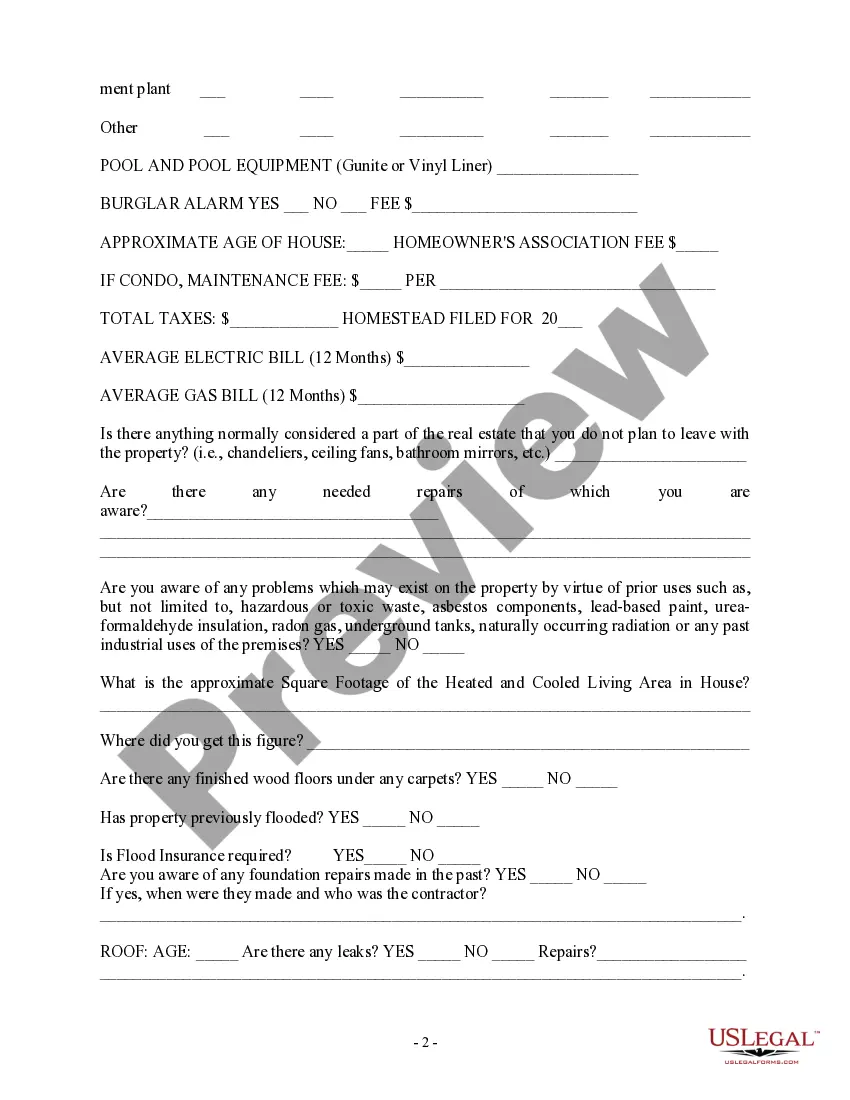
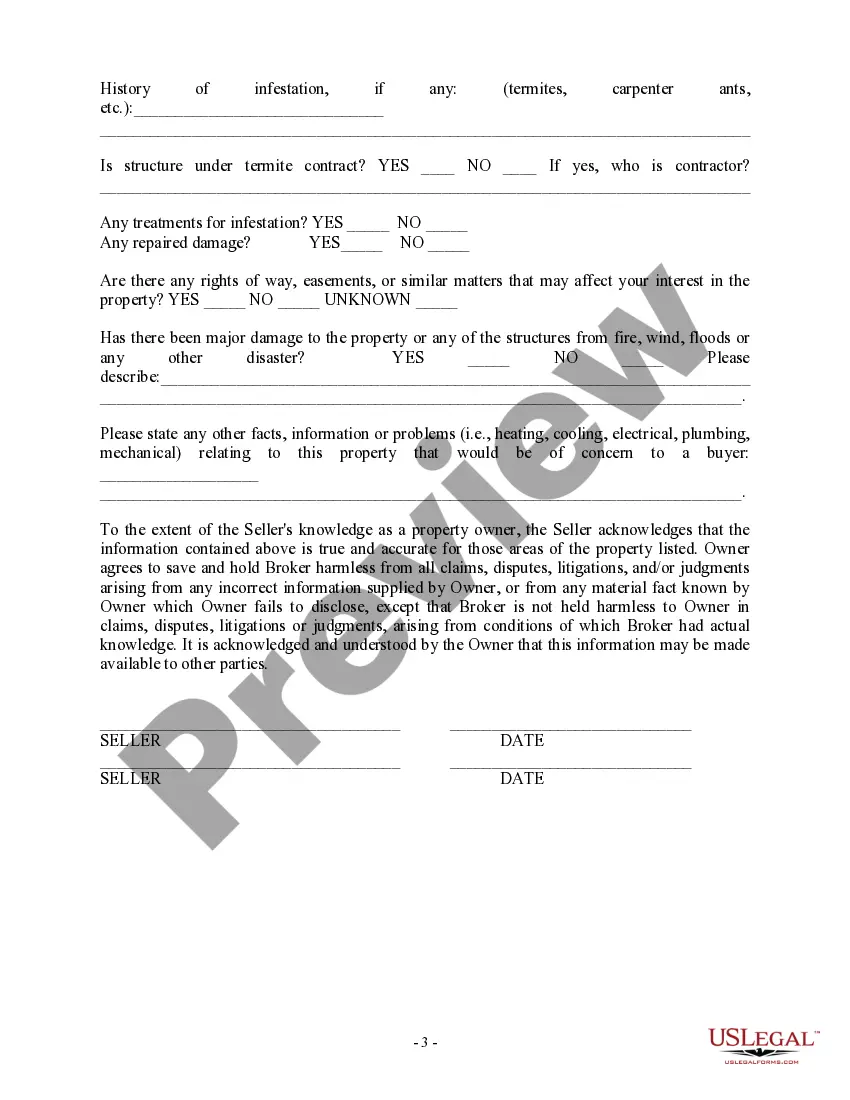
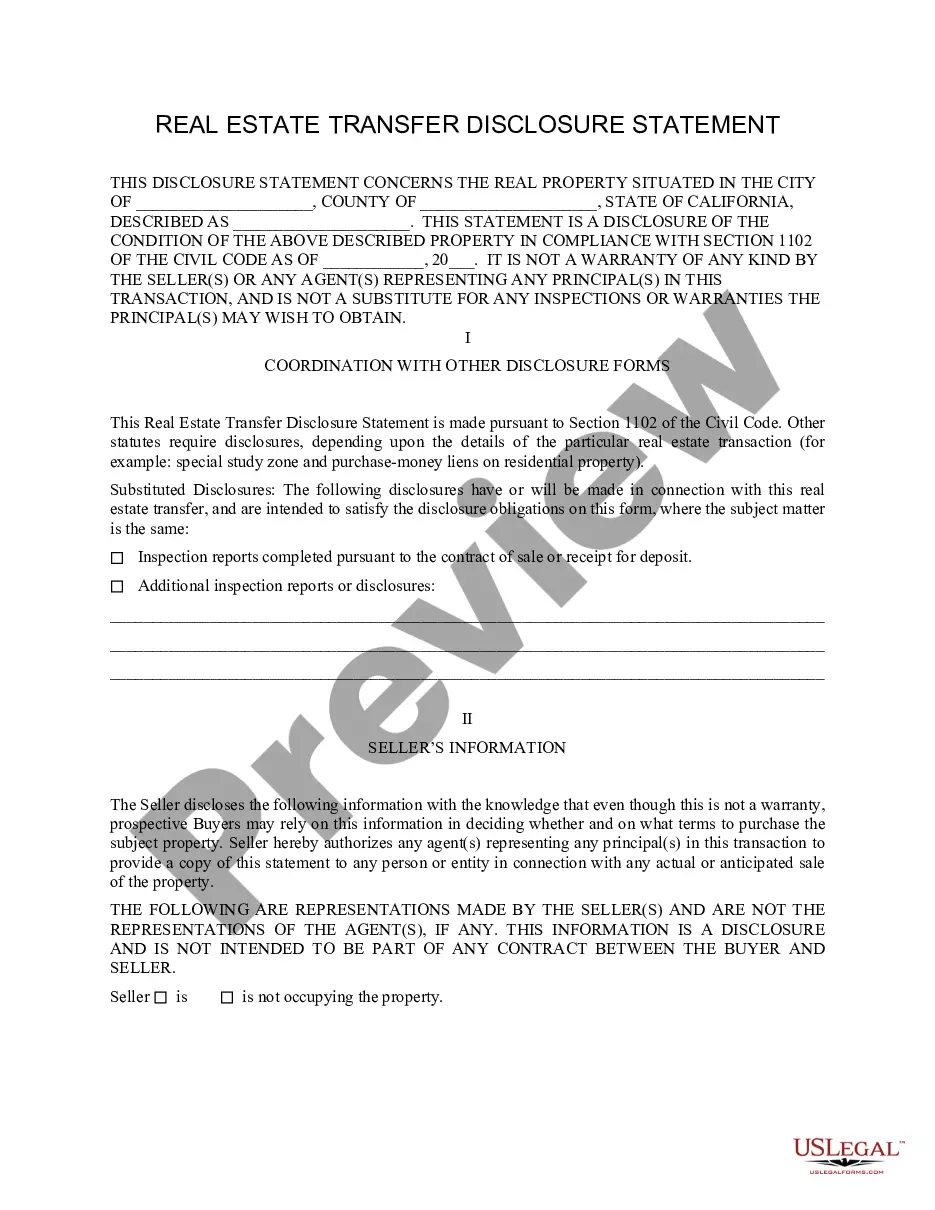
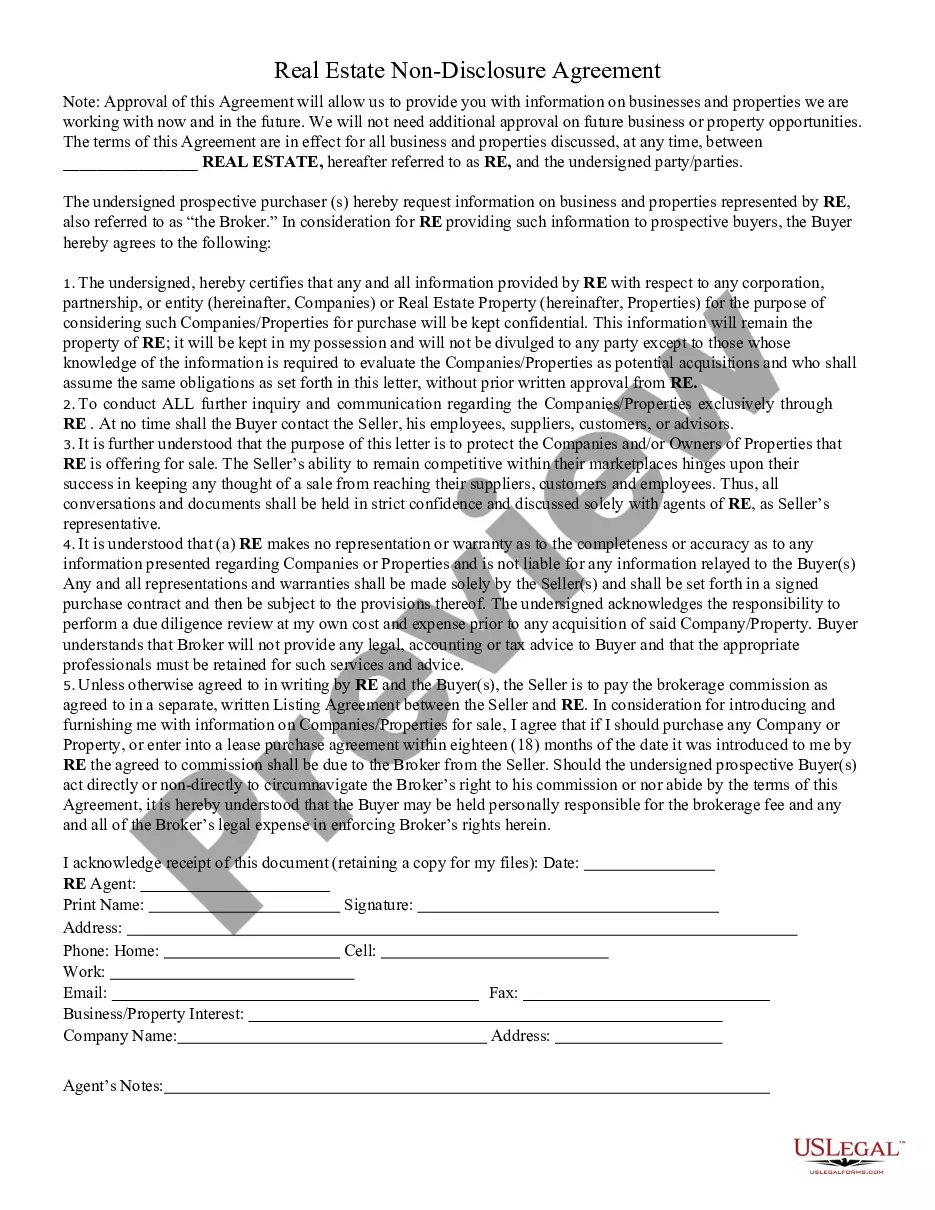
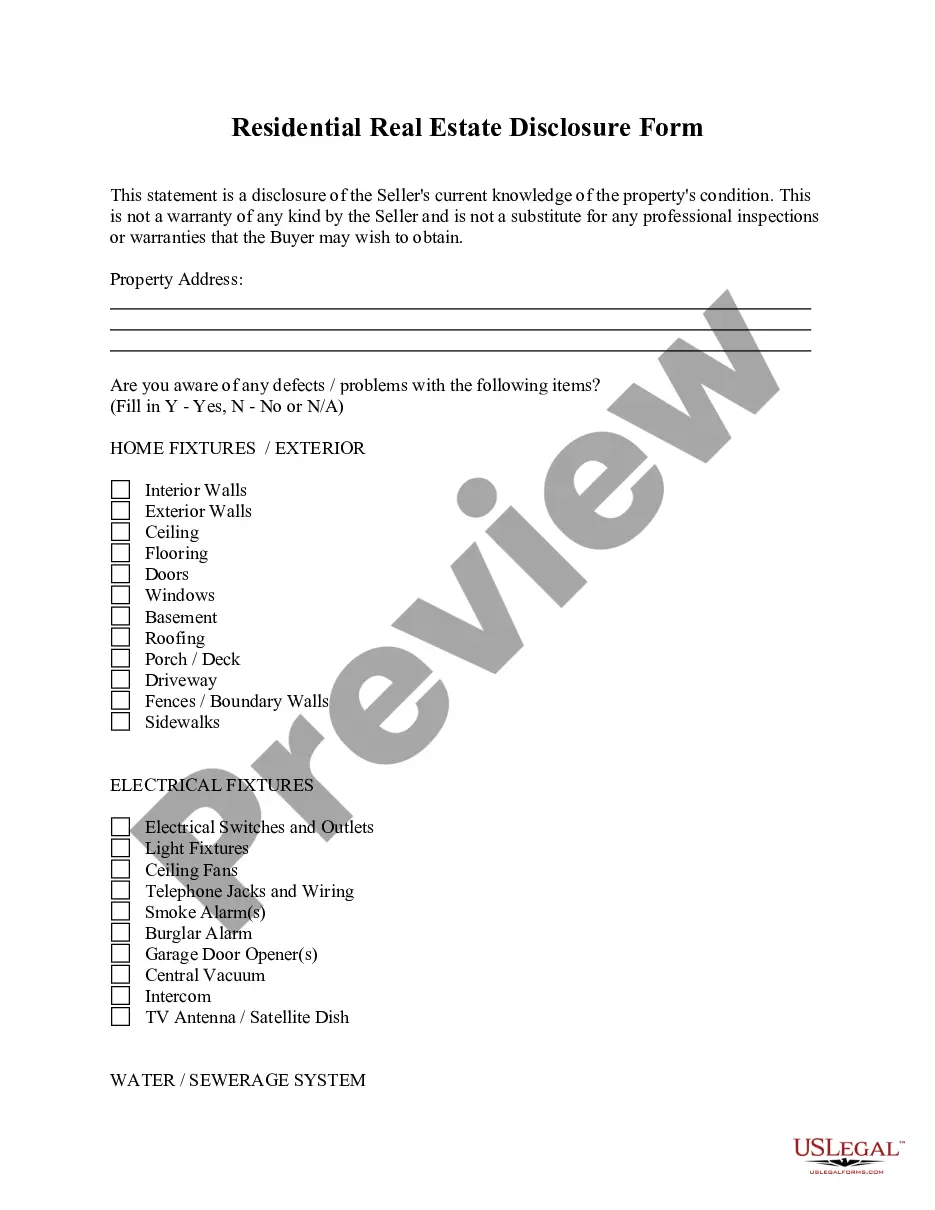
This form is a Seller's Disclosure Statement. This disclosure statement concerns the condition of property described in the document. The seller acknowledges that the information contained in the form is true and accurate.
Virginia Seller's Real Estate Disclosure Statement
487 downloads
Description
Free preview
Get your form ready online
Our built-in tools help you complete, sign, share, and store your documents in one place.
Built-in online Word editor
Make edits, fill in missing information, and update formatting in US Legal Forms—just like you would in MS Word.
Export easily
Download a copy, print it, send it by email, or mail it via USPS—whatever works best for your next step.
E-sign your document
Sign and collect signatures with our SignNow integration. Send to multiple recipients, set reminders, and more. Go Premium to unlock E-Sign.
Notarize online 24/7
If this form requires notarization, complete it online through a secure video call—no need to meet a notary in person or wait for an appointment.
Store your document securely
We protect your documents and personal data by following strict security and privacy standards.

Make edits, fill in missing information, and update formatting in US Legal Forms—just like you would in MS Word.

Download a copy, print it, send it by email, or mail it via USPS—whatever works best for your next step.

Sign and collect signatures with our SignNow integration. Send to multiple recipients, set reminders, and more. Go Premium to unlock E-Sign.

If this form requires notarization, complete it online through a secure video call—no need to meet a notary in person or wait for an appointment.

We protect your documents and personal data by following strict security and privacy standards.
Looking for another form?
How to fill out Seller's Real Estate Disclosure Statement?
If you need to total, download, or print sanctioned document templates, utilize US Legal Forms, the largest selection of legal forms accessible online.
Employ the site's simple and convenient search function to locate the documents you require.
Various templates for commercial and personal purposes are categorized by groups and states, or keywords.
Step 3. If you are not satisfied with the form, use the Search field at the top of the screen to find other variations of the legal form template.
Step 4. Once you have identified the form you need, click the Buy now button. Choose your preferred pricing plan and enter your information to register for an account.
- Utilize US Legal Forms to find the Virginia Seller's Real Estate Disclosure Statement in just a few clicks.
- If you are already a US Legal Forms user, sign in to your account and click the Download button to retrieve the Virginia Seller's Real Estate Disclosure Statement.
- You can also access forms you've previously saved from the My documents tab of your account.
- If it is your first time using US Legal Forms, follow the instructions below.
- Step 1. Make sure you have selected the form for the correct city/state.
- Step 2. Use the Review option to examine the form’s content. Remember to read the summary.
Form popularity
FAQ
Yes, a disclosure must be provided so the deed can be updated. No, transfers to a person who has a direct line relationship with one or more of the transferors are exempt. No, transfers to a person who has a direct line relationship with one or more of the transferors are exempt.
Virginia Seller Disclosure Requirements In Virginia, however, the seller is obligated only to provide the buyer with a "Residential Property Disclosure Statement," (Code of Virginia § 55.1), which contains little information beyond statements by the seller about what is NOT being disclosed.
Although federal law requires some basic disclosures across the U.S., Virginia law does not require sellers to disclose much information about their property at all.
The Virginia Residential Property Disclosure Act (§ 55.1-700 et seq. of the Code of Virginia) governs the information owners must disclose to prospective purchasers of residential real property. Certain residential property transfers are excluded from the requirements (see A§ 55.1-702).
The Virginia Residential Property Disclosure act is a statutory scheme enacted by the General Assembly of Virginia that requires a seller of real estate in Virginia to furnish to a purchaser a residential property disclosure statement for the buyer to beware of certain matters that may affect the buyer's decision to
Virginia Seller Disclosure Requirements In Virginia, however, the seller is obligated only to provide the buyer with a "Residential Property Disclosure Statement," (Code of Virginia § 55.1), which contains little information beyond statements by the seller about what is NOT being disclosed.
The Act also states that sellers of residential property located partially or wholly within a designated tourism activity zone established pursuant to § 15.2-982 may disclose in writing to prospective buyers or lessees that the property is located within a tourism activity zone.
Virginia is a caveat emptor (buyer beware) state. This essentially means that the responsibility for conducting a thorough inspection of the property that is contemplated to be purchased is on the Buyer.
Virginia Seller Disclosure Requirements In Virginia, however, the seller is obligated only to provide the buyer with a "Residential Property Disclosure Statement," (Code of Virginia § 55.1), which contains little information beyond statements by the seller about what is NOT being disclosed.
The Virginia Residential Property Disclosure act is a statutory scheme enacted by the General Assembly of Virginia that requires a seller of real estate in Virginia to furnish to a purchaser a residential property disclosure statement for the buyer to beware of certain matters that may affect the buyer's decision to