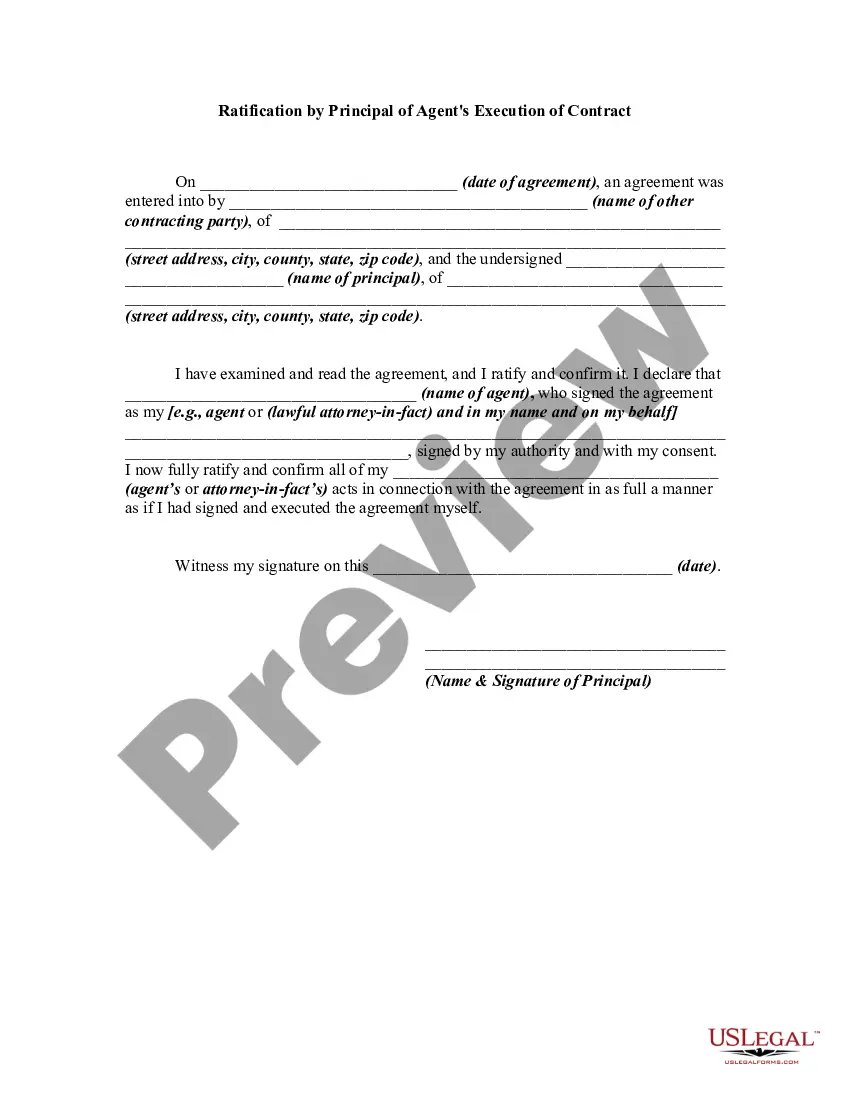
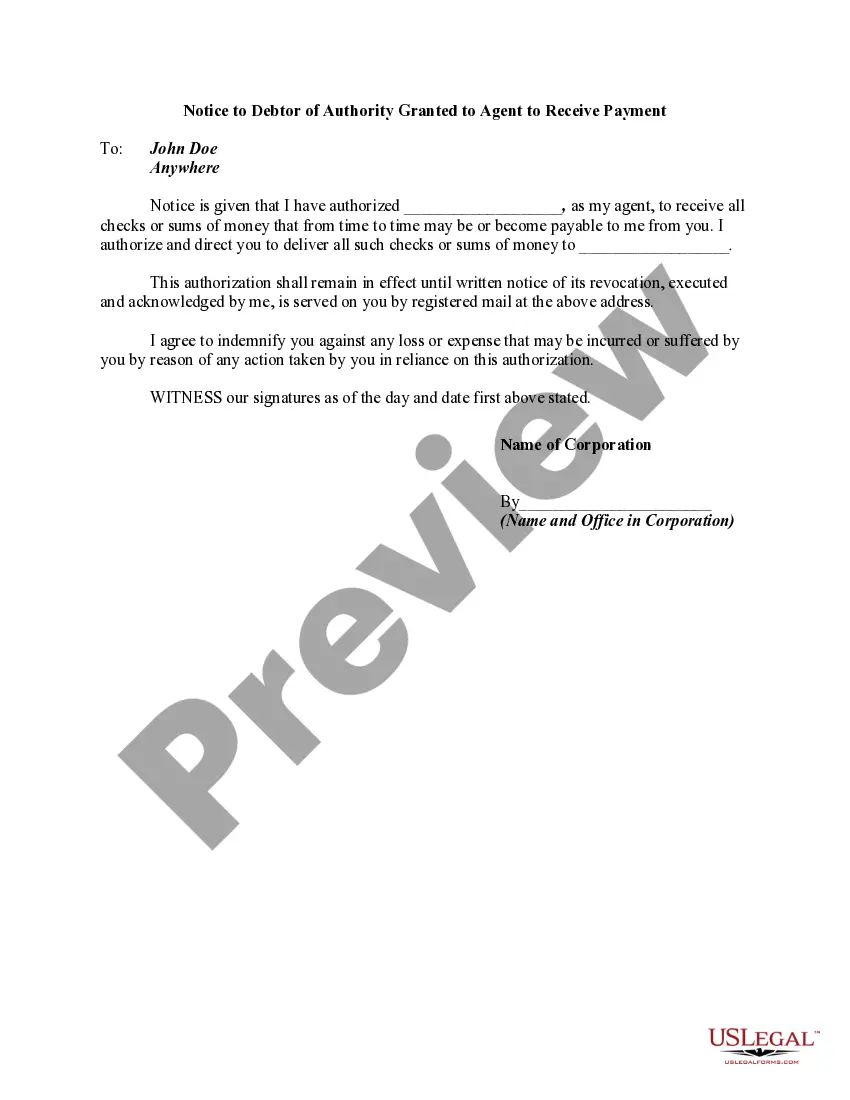
Virginia Notice to Debtor of Authority Granted to Agent to Receive Payment
Description
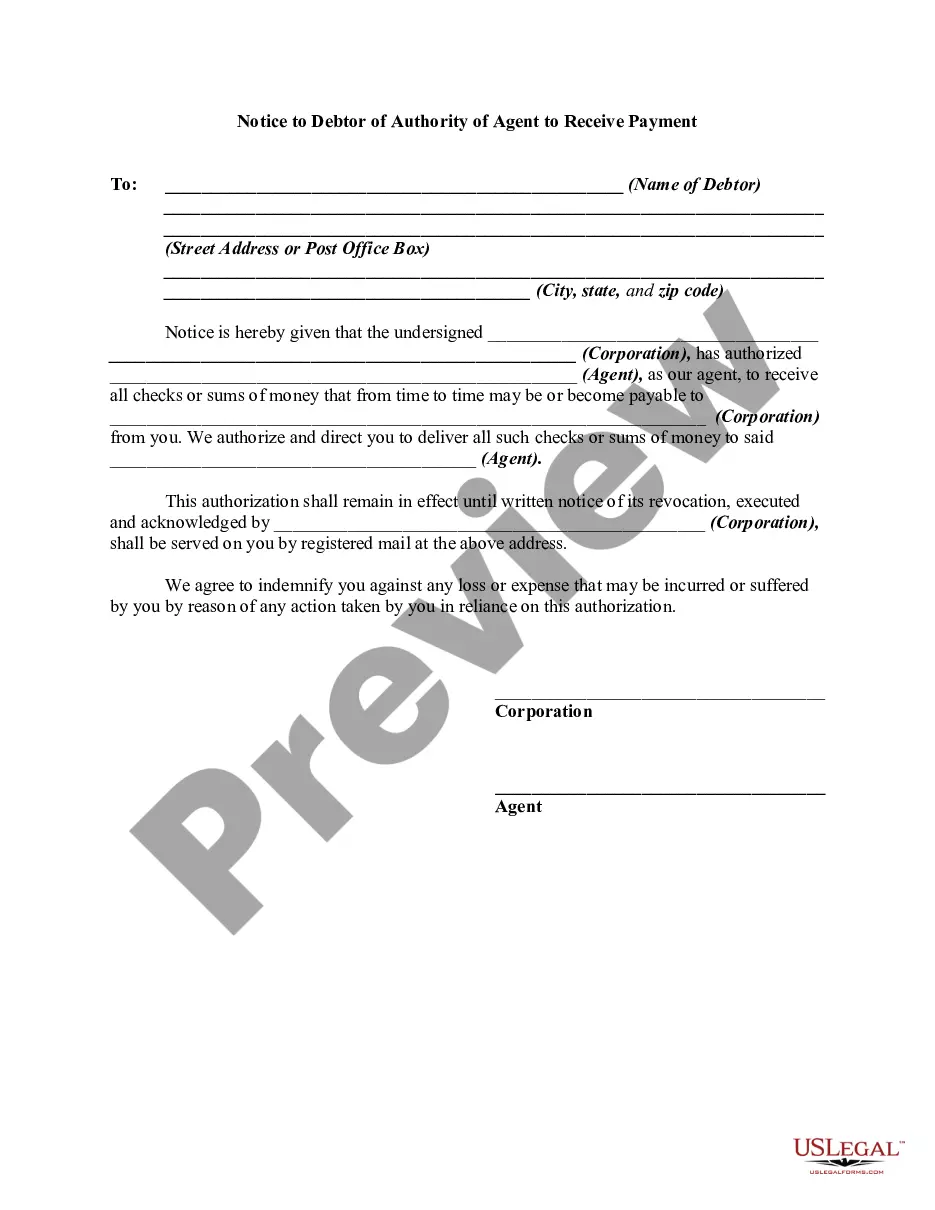
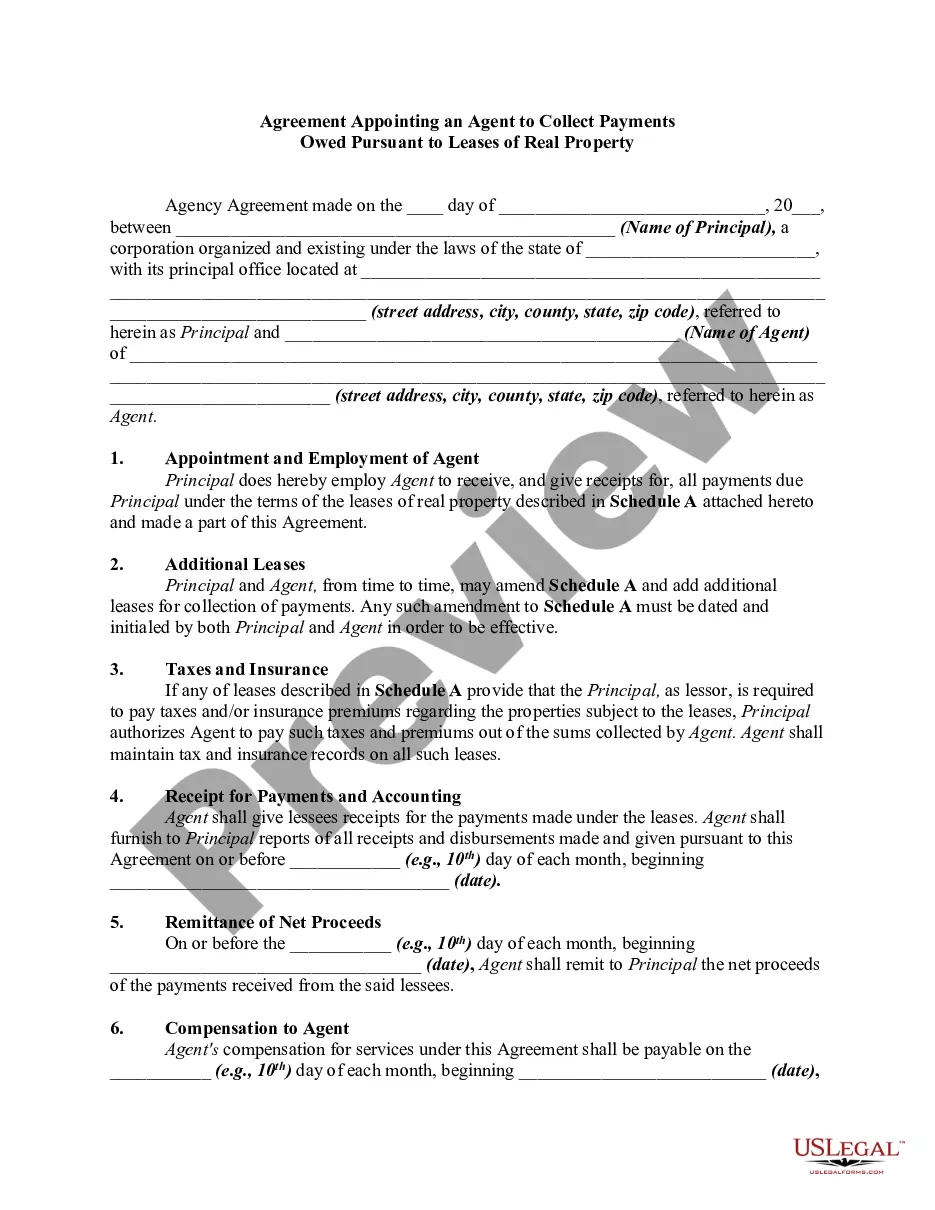
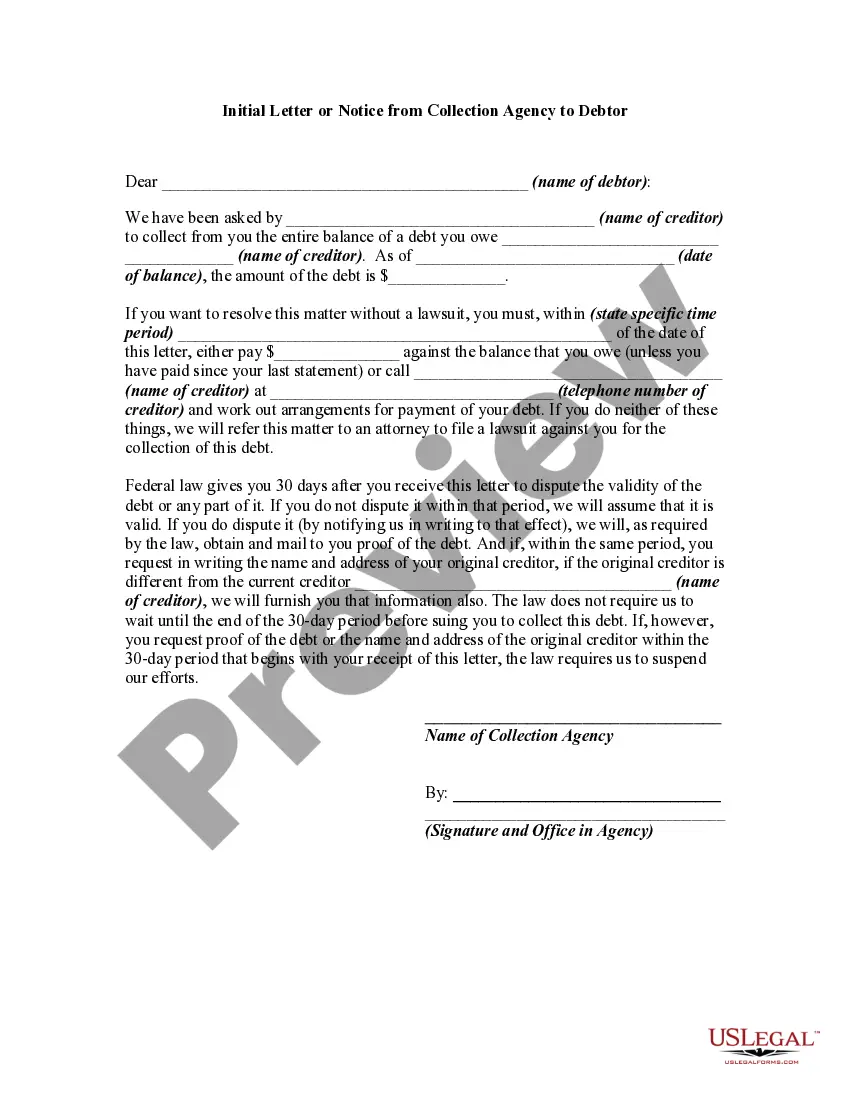
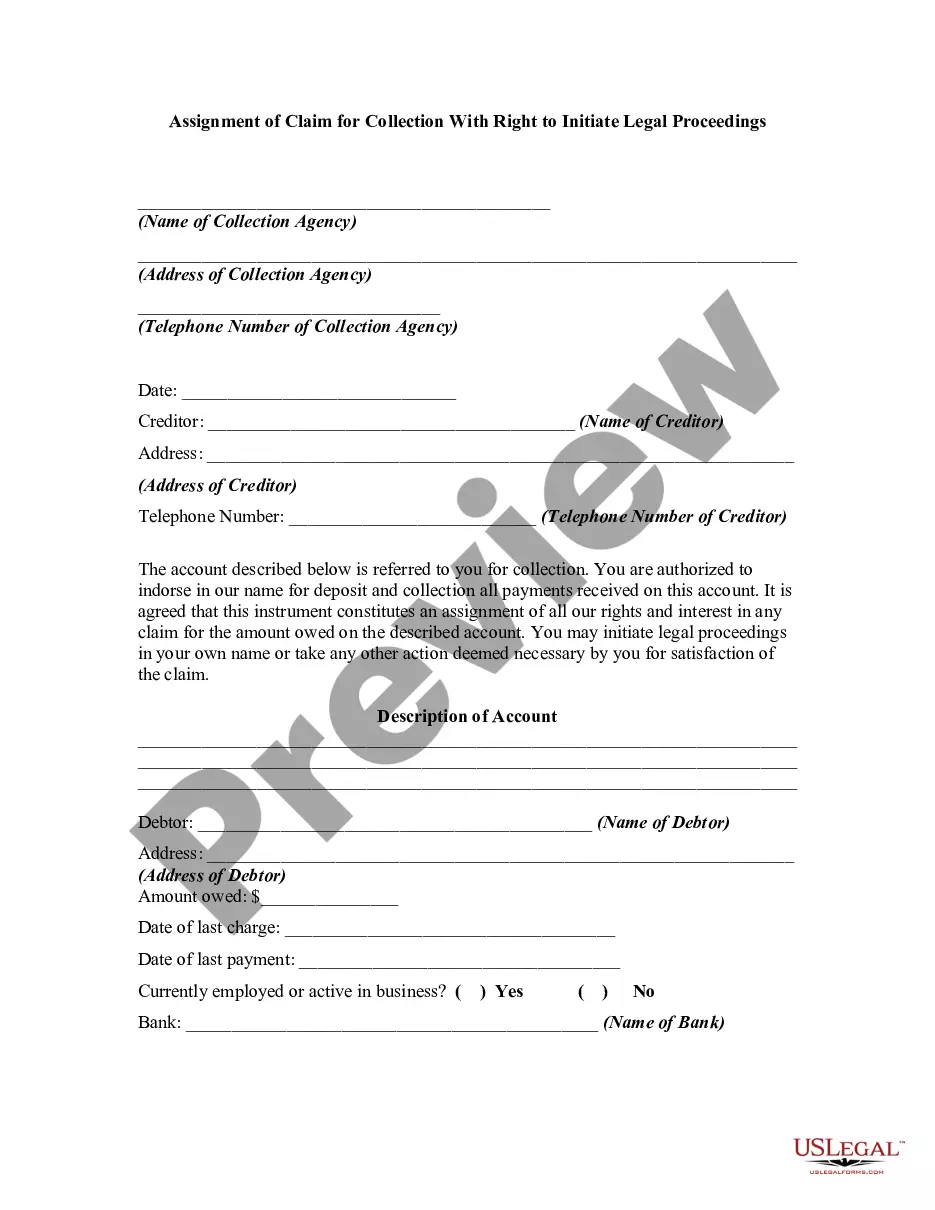
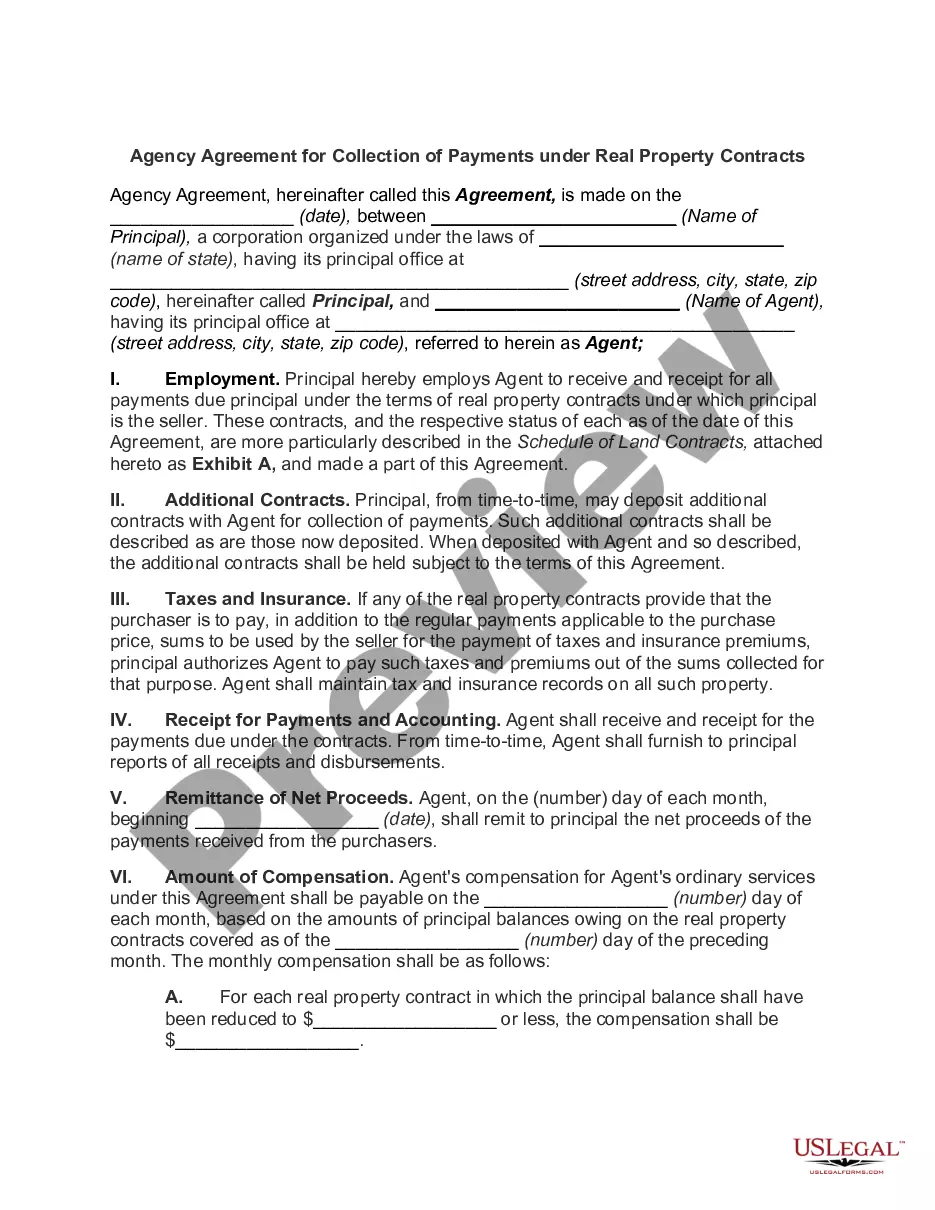
How to fill out Notice To Debtor Of Authority Granted To Agent To Receive Payment?
You might spend hours online trying to locate the legal document template that satisfies your state and federal stipulations.
US Legal Forms offers a vast array of legal documents that have been assessed by professionals.
You can easily obtain or create the Virginia Notice to Debtor of Authority Granted to Agent to Receive Payment from my assistance.
First, ensure you have selected the correct document template for your region or area of your choice.
- If you already have a US Legal Forms account, you can Log In and click the Download button.
- After that, you can complete, edit, print, or sign the Virginia Notice to Debtor of Authority Granted to Agent to Receive Payment.
- Each legal document template you receive is yours permanently.
- To obtain an additional copy of a purchased form, visit the My documents tab and click the corresponding button.
- If you are using the US Legal Forms site for the first time, follow the simple instructions below.
Form popularity
FAQ
You can request a court order instructing the debtor's employer to withhold some of the debtor's earnings to pay for a court judgment, child support, or other debt. To garnish someone's wages, you must file the appropriate forms with the court and potentially attending a hearing.
How Do I Collect on a Judgment: The Debt Collection Process in...Locate the debtor's assets (as many as possible)Attach the judgment to the assets by placing a lien on the assets (called a judgment lien)Obtain the assets to satisfy the judgment (the process of liquidation or foreclosure).
If you are served with a garnishment summons, do not ignore these documents because they do not directly involve a debt that you owe. Instead, you should immediately freeze any payments to the debtor, retain the necessary property, and provide the required written disclosure.
The Administrator of an intestate estate does not have power to sell real estate under Virginia law, only the power to sell and dispose of personal property. The Administrator can petition the Court for power to sell the real estate, if necessary for the administration of the estate.
That time period is being shortened from ten years to five years from the date the deed from the debtor to the grantee was recorded. The new law becomes effective January 1, 2022, except that the procedure for extending a judgment becomes effective July 1, 2021.
A garnishment is good for 30, 60, 90 or 180 days, at the choice of the judgment-creditor. The garnished money is under the control of the court until the garnishment period is over.
In the commonwealth of Virginia, judgements will automatically be filed in the land records of a county. In Virginia, a judgment lien can be attached to real estate, and not to personal property as stated by Virginia Code §8.01-251(c), A§8.01-458 and A§8.01-446.
If a judgment has been entered against you, there are a few options available to you. These include paying the judgment, appealing the case, or filing a motion to rehear. If you fail to act, a number of other actions initiated by the Judgment Creditor may occur.
The Debtor & Garnishee may be served by different methods.By a sheriff. Service address(es) must be in Virginia.By Private Process Server.By Secretary of the Commonwealth (out-of-state service)By Certified Mailing (service is mailed out-of-state to Debtor or Garnishee)
A creditor starts the garnishment process by serving a legal documentcalled a garnishment summonson the third party (called the garnishee) who the creditor believes to have money or property belonging to the debtor.