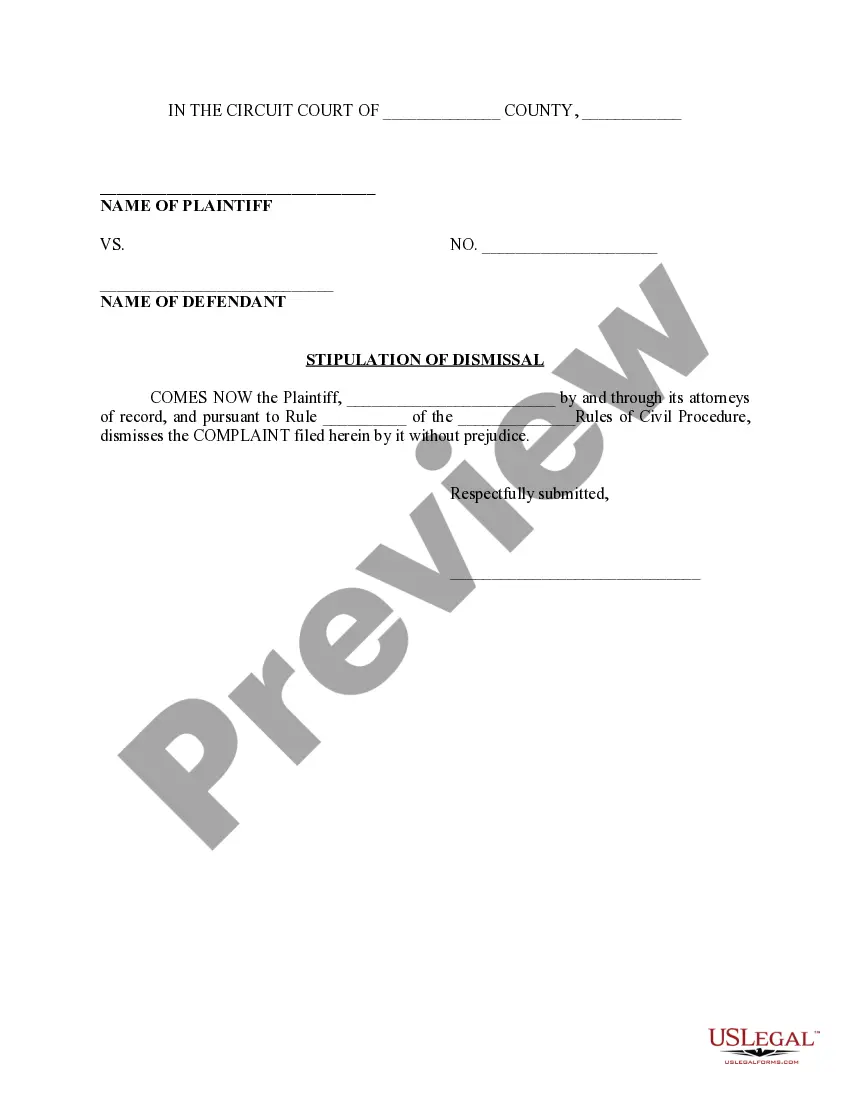
Utah Stipulation for Dismissal
Description
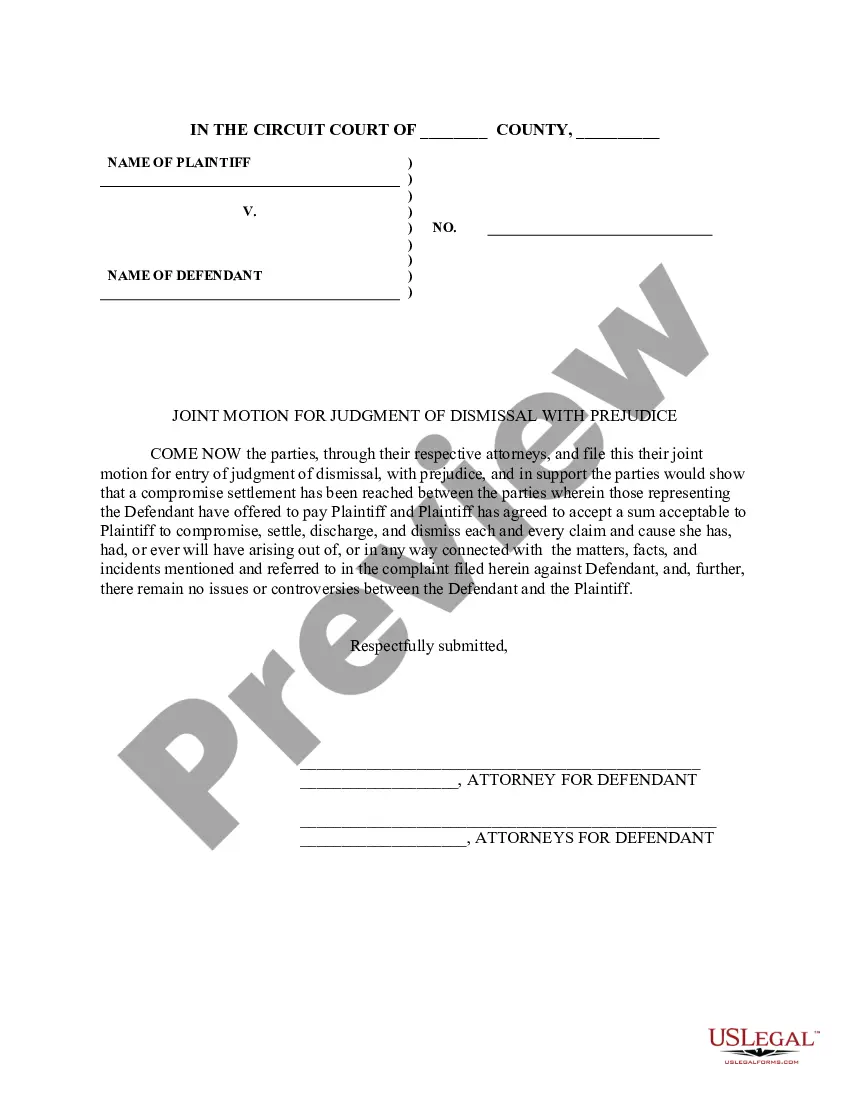
Get your form ready online
Our built-in tools help you complete, sign, share, and store your documents in one place.
Make edits, fill in missing information, and update formatting in US Legal Forms—just like you would in MS Word.
Download a copy, print it, send it by email, or mail it via USPS—whatever works best for your next step.
Sign and collect signatures with our SignNow integration. Send to multiple recipients, set reminders, and more. Go Premium to unlock E-Sign.
If this form requires notarization, complete it online through a secure video call—no need to meet a notary in person or wait for an appointment.
We protect your documents and personal data by following strict security and privacy standards.

Make edits, fill in missing information, and update formatting in US Legal Forms—just like you would in MS Word.

Download a copy, print it, send it by email, or mail it via USPS—whatever works best for your next step.

Sign and collect signatures with our SignNow integration. Send to multiple recipients, set reminders, and more. Go Premium to unlock E-Sign.

If this form requires notarization, complete it online through a secure video call—no need to meet a notary in person or wait for an appointment.

We protect your documents and personal data by following strict security and privacy standards.
Looking for another form?
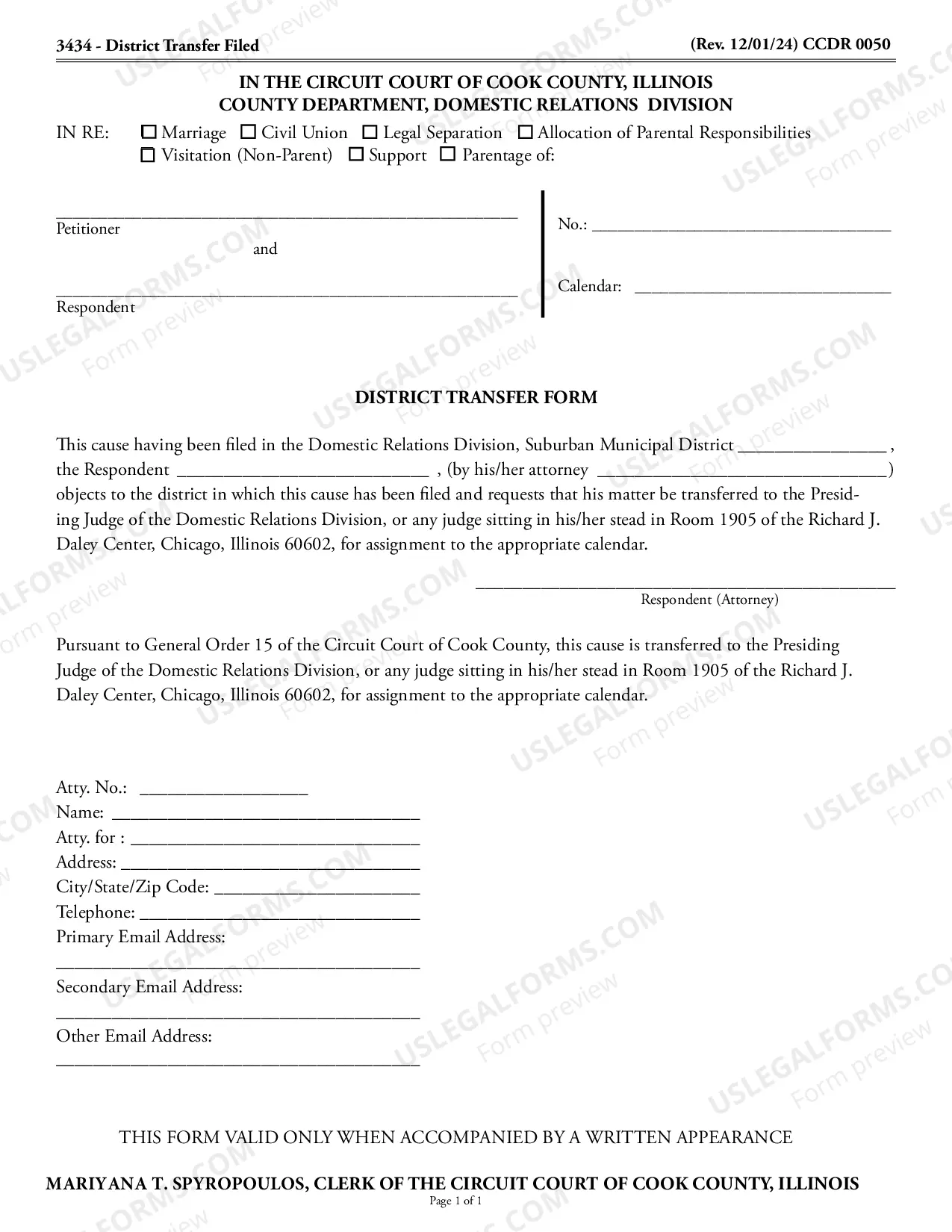
How to fill out Stipulation For Dismissal?
Are you currently in a scenario that you need documents for either company or personal reasons almost all the time.
There are numerous legal document formats accessible online, but locating ones you can trust is not simple.
US Legal Forms offers a vast array of form templates, including the Utah Stipulation for Dismissal, that are designed to meet state and federal regulations.
If you find the correct form, click on Get now.
Select the pricing plan you want, fill in the required information to create your account, and complete the order using your PayPal or credit card.
- If you are currently familiar with the US Legal Forms website and have an account, just Log In.
- Then, you can download the Utah Stipulation for Dismissal template.
- If you do not have an account and wish to start using US Legal Forms, follow these steps.
- Locate the form you need and ensure it is for the correct state/region.
- Utilize the Preview option to review the document.
- Read the description to confirm that you have selected the appropriate form.
- If the form is not what you are looking for, use the Lookup field to find the form that matches your needs and specifications.
Form popularity
FAQ
A: A judge can dismiss a case without prejudice if they detect legal errors that prevent the case from going forward. However, dismissing the case without prejudice allows the two sides to correct those errors and re-file the case.
Under Rule 41 of the Federal Rules of Civil Procedure, a plaintiff may voluntarily dismiss its claim ?without prejudice? prior to service by the defendant of an answer or motion for summary judgment, whichever occurs ?rst.
Notice of Dismissal means a written notification provided to a violator by the assessment officer or the Secretary dismissing and vacating the civil administrative penalty.
Utah law provides a two-year statute of limitations for most misdemeanors and a four-year statute of limitations for most felonies. If a case is dismissed without prejudice, it may be re-filed within the statute of limitations period.
Because the prosecutor filed the charge, they also have the discretion to dismiss it if they believe the facts and circumstances warrant it. Likewise, a judge can dismiss the case if they find no legal basis for the charge, if the defendant's rights have been violated, or if the state has failed to prove its case.
This rule applies to the dismissal of any counterclaim, crossclaim, or third-party claim. A claimant's voluntary dismissal under paragraph (a)(1) must be made before a responsive pleading is served or, if there is no responsive pleading, before evidence is introduced at a trial or hearing.
This rule applies to the dismissal of any counterclaim, crossclaim, or third-party claim. A claimant's voluntary dismissal under paragraph (a)(1) must be made before a responsive pleading is served or, if there is no responsive pleading, before evidence is introduced at a trial or hearing.
Motion to Dismiss the other party's case A party can ask to dismiss a case filed by another party for a number of reasons, including: Lack of jurisdiction ? the court does not have the authority to hear this kind of case. Insufficiency of process ? there is a problem with the summons.