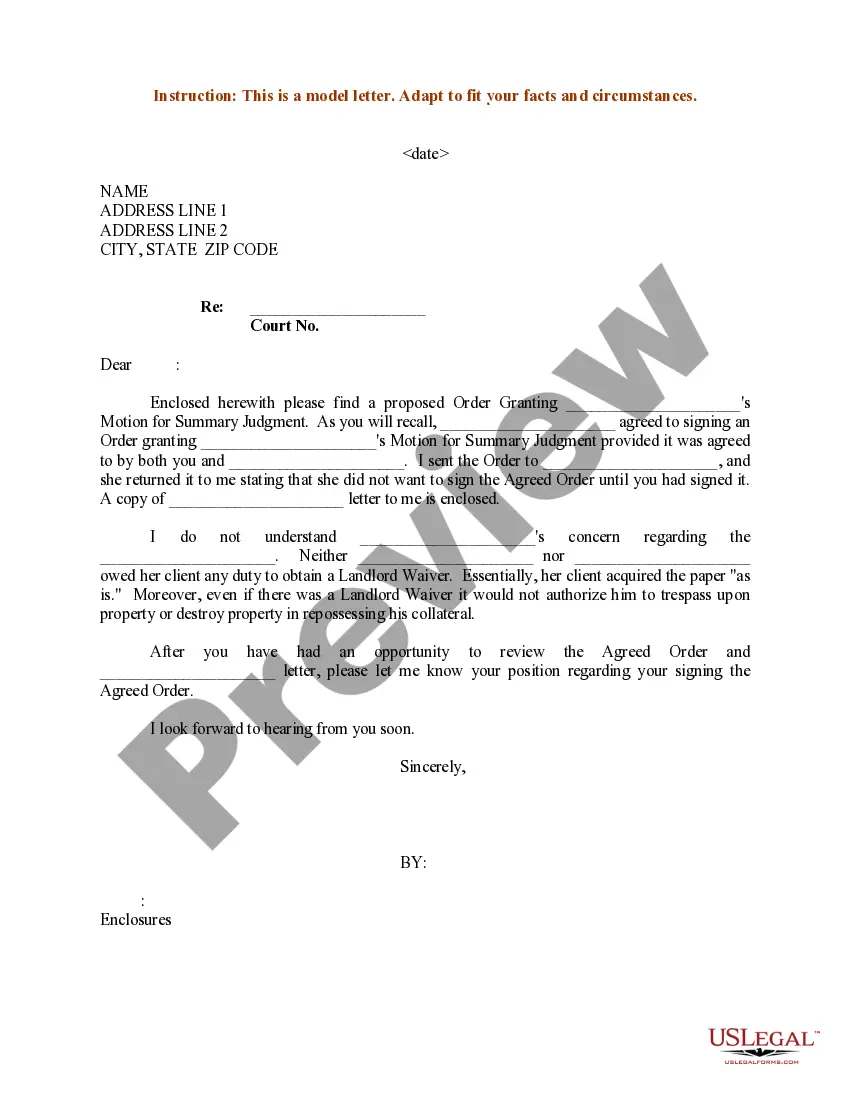
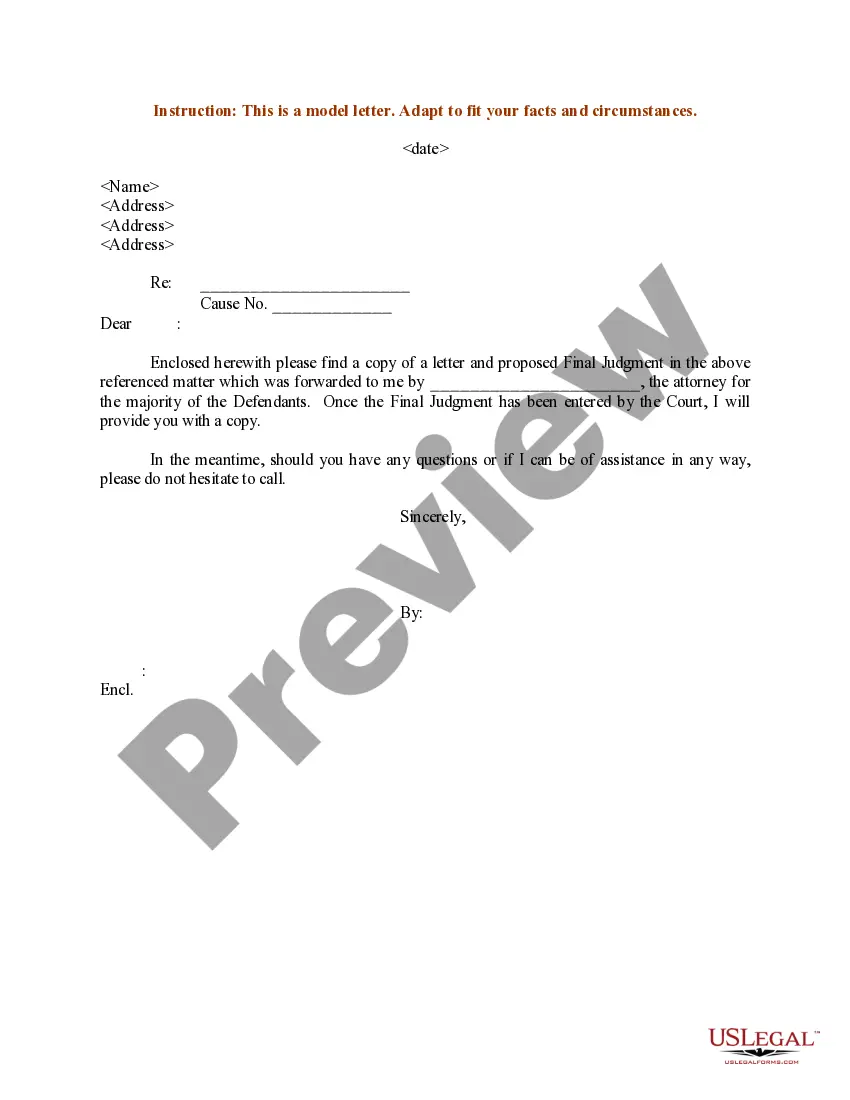
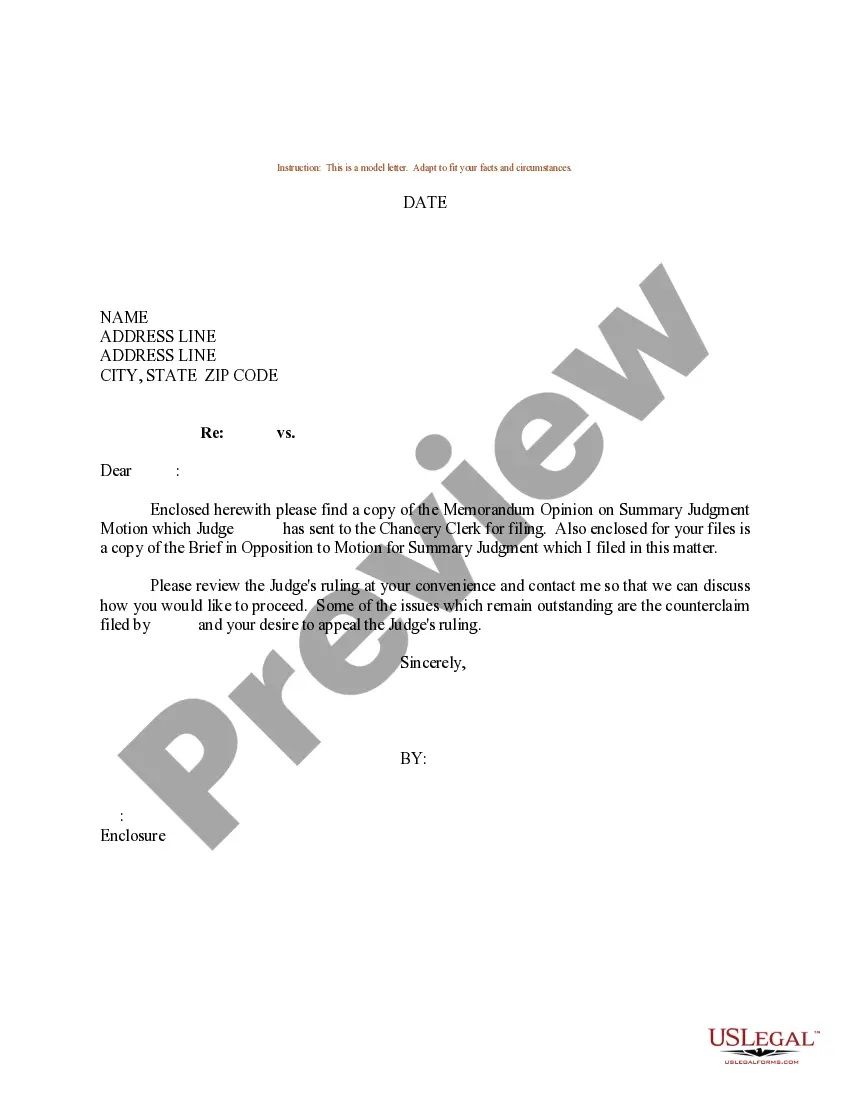
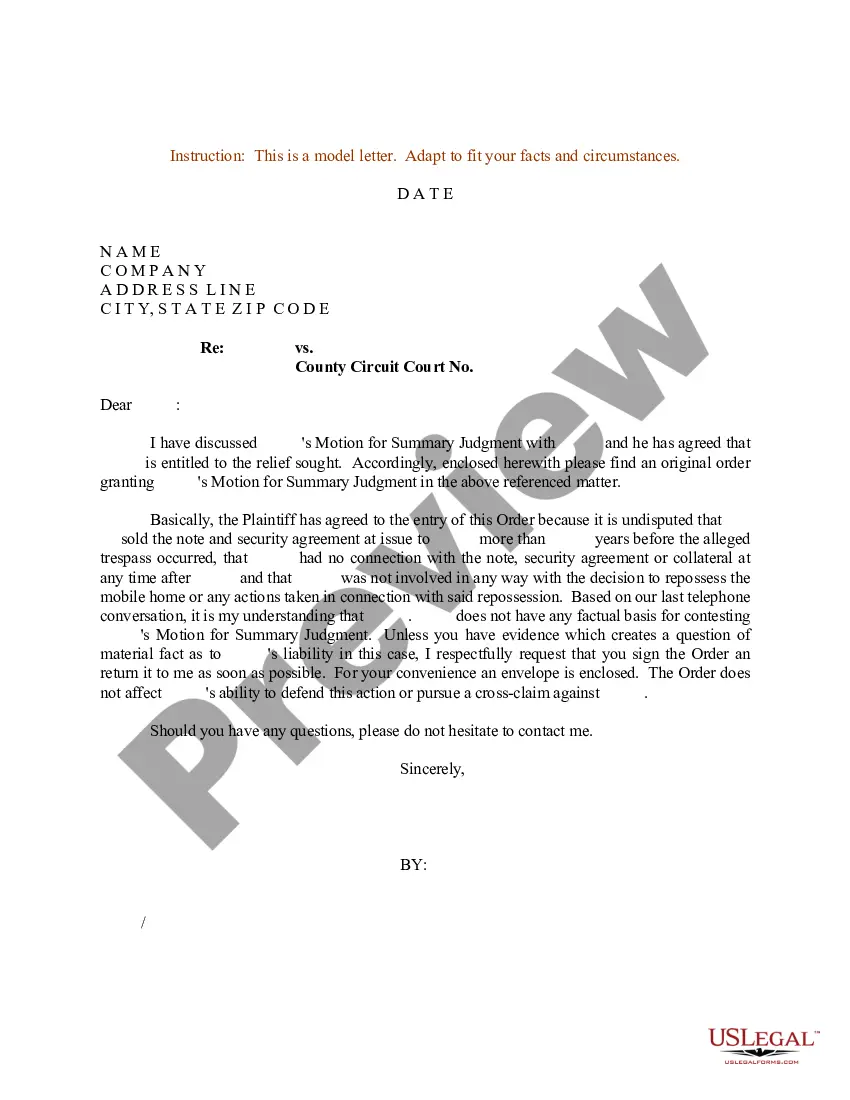
Utah Sample Letter for Proposed Order Granting Summary Judgment
Description
Get your form ready online
Our built-in tools help you complete, sign, share, and store your documents in one place.
Make edits, fill in missing information, and update formatting in US Legal Forms—just like you would in MS Word.
Download a copy, print it, send it by email, or mail it via USPS—whatever works best for your next step.
Sign and collect signatures with our SignNow integration. Send to multiple recipients, set reminders, and more. Go Premium to unlock E-Sign.
If this form requires notarization, complete it online through a secure video call—no need to meet a notary in person or wait for an appointment.
We protect your documents and personal data by following strict security and privacy standards.

Make edits, fill in missing information, and update formatting in US Legal Forms—just like you would in MS Word.

Download a copy, print it, send it by email, or mail it via USPS—whatever works best for your next step.

Sign and collect signatures with our SignNow integration. Send to multiple recipients, set reminders, and more. Go Premium to unlock E-Sign.

If this form requires notarization, complete it online through a secure video call—no need to meet a notary in person or wait for an appointment.

We protect your documents and personal data by following strict security and privacy standards.
Looking for another form?


How to fill out Sample Letter For Proposed Order Granting Summary Judgment?
You might spend numerous hours online attempting to locate the sanctioned document template that meets the state and federal requirements you need.
US Legal Forms offers countless legal forms that are reviewed by experts.
You can download or print the Utah Sample Letter for Proposed Order Granting Summary Judgment from our service.
Review the form description to confirm you have chosen the right form. If available, use the Preview button to view the document template as well. If you wish to obtain an additional version of the form, use the Search area to find the template that fits your needs and specifications. Once you have found the template you want, click Get now to proceed. Choose the pricing plan you prefer, enter your details, and register for an account on US Legal Forms. Complete the transaction. You can use your credit card or PayPal account to pay for the legal form. Choose the format of the document and download it to your device. Make modifications to your document if possible. You can complete, edit, sign, and print the Utah Sample Letter for Proposed Order Granting Summary Judgment. Download and print thousands of document templates using the US Legal Forms website, which offers the largest collection of legal forms. Utilize professional and state-specific templates to address your business or personal needs.
- If you already possess a US Legal Forms account, you can sign in and click on the Download button.
- Then, you can complete, modify, print, or sign the Utah Sample Letter for Proposed Order Granting Summary Judgment.
- Each legal document template you purchase is yours permanently.
- To obtain an additional copy of any purchased form, navigate to the My documents tab and click on the corresponding button.
- If you are using the US Legal Forms website for the first time, follow the simple instructions below.
- First, ensure that you have selected the correct document template for the county/area of your choice.
Form popularity
FAQ
A summary judgment is a decision made based on statements and evidence without going to trial. It's a final decision by a judge and is designed to resolve a lawsuit before going to court.
Utah Rule Civil Procedure 56 - Summary Judgment In order to support a motion for summary judgment under Utah law, the party making the motion must demonstrate that there are sufficient undisputed facts to establish that a judgment as a matter of law is appropriate.
Summary judgment is a pre-trial motion, JMOL is an in-trial or post trial motion. JMOL in some state courts is called a motion for a directed verdict.
Stated differently, to successfully defend against summary judgment the non-moving party (you) should seek to demonstrate that indeed there are material facts in dispute. Alternatively, the non-moving party (you) can argue that the undisputed facts support a judgment as a matter of law in your favor.
The chance of success in these cases is less than 10% [1]. Another study found that summary judgment is mostly granted in Title VII cases, for example, cases involving equal pay or employment discrimination [2]. When it comes to federal cases, summary judgments are filed in 17% of total cases.
Examples of summary judgement motions John says that Linda ran a red light and caused the crash. John happens to have a video of Linda running the red light and crashing into him. John's attorney files a motion for summary judgment claiming that: There are no material facts that can be reasonably disputed.