Separate Leases on Multiple Tracts of Lands Described in one Oil and Gas Lease
Understanding this form
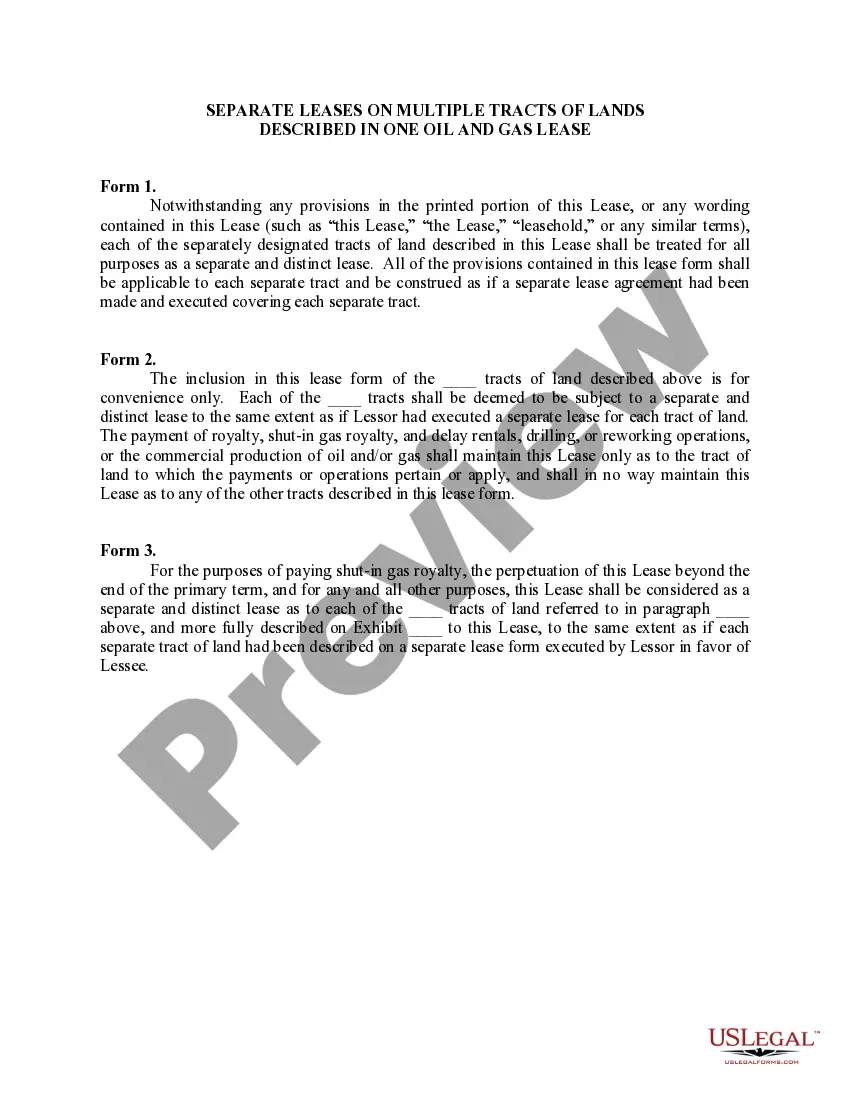
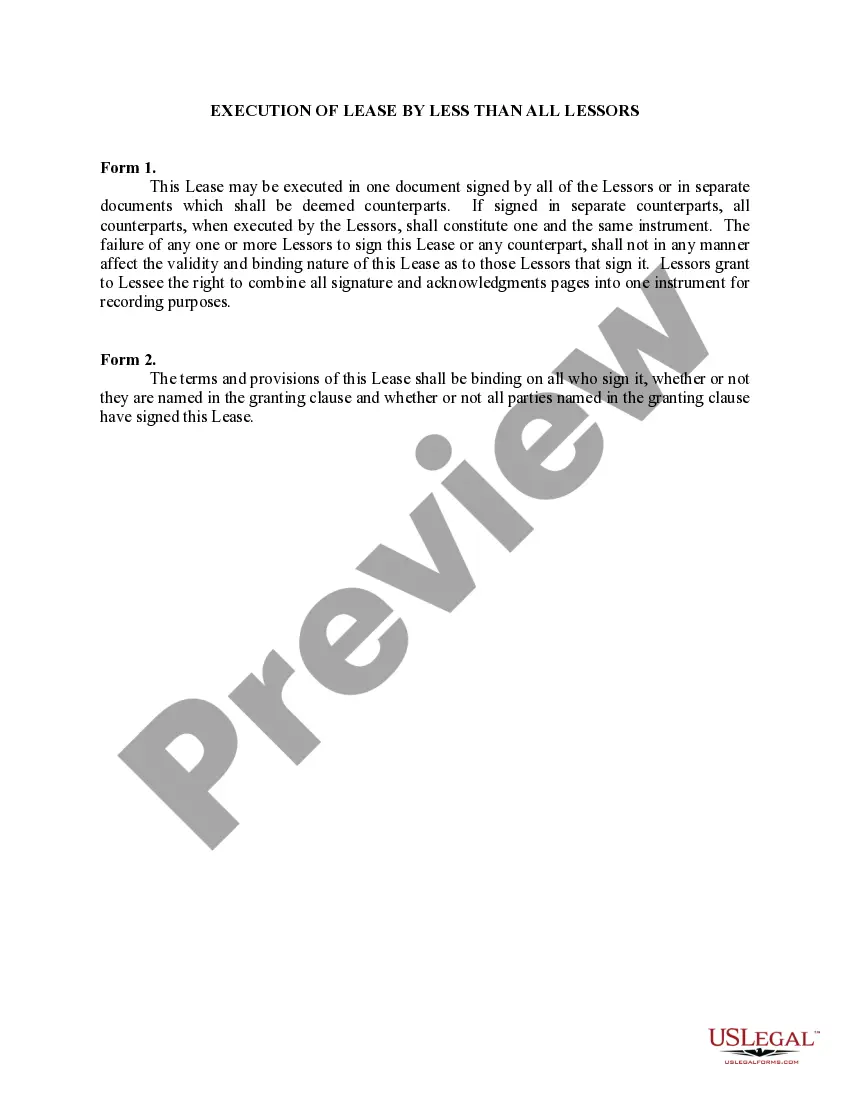
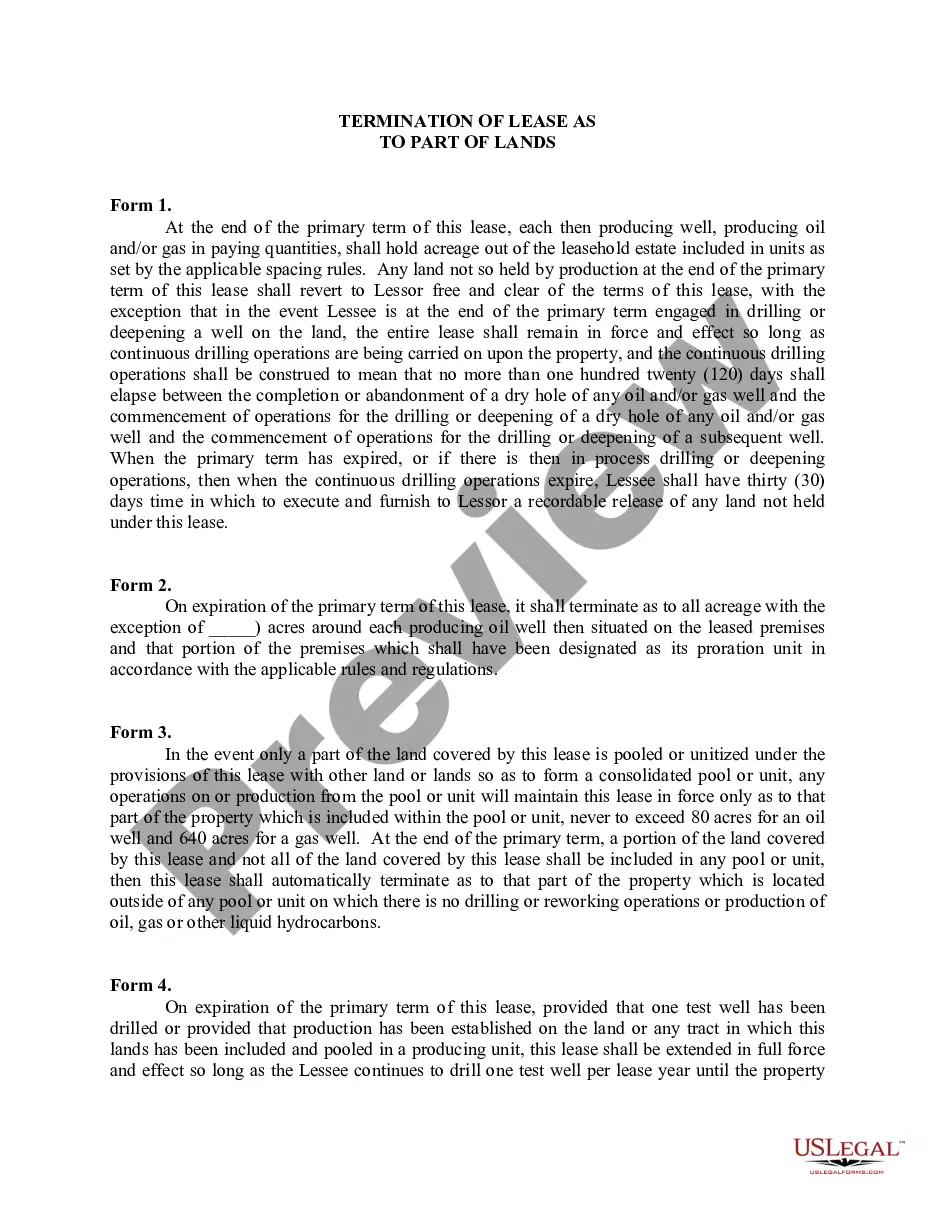
This form, known as a Separate Leases on Multiple Tracts of Lands Described in one Oil and Gas Lease, is a legal document that enables landlords and lessees to treat multiple tracts of land under an oil and gas lease as individual leases. This allows for specific provisions and limitations tailored to each tract, enhancing clarity and protecting the interests of the lessor while maintaining the integrity of the overall lease agreement.
Form components explained
- Statement clarifying that each tract is treated as a separate lease
- Convenience clause ensuring that the inclusion of multiple tracts does not imply joint use
- Detail on maintaining lease terms based on specific tracts for payments and operations
- Exhibit reference for describing each tract in detail
When to use this document
This form should be used when a landlord enters into an oil and gas lease covering multiple tracts of land and wants to ensure each tract is treated independently. It is also useful when specific provisions need to be established to address unique concerns or limitations related to each tract of land.
Who can use this document
- Landowners who are leasing multiple tracts of land for oil and gas exploration
- Lessee entities who need to define their rights and obligations on a tract-by-tract basis
- Legal professionals who are facilitating lease agreements involving multiple tracts
Instructions for completing this form
- Identify the parties involved in the lease agreement.
- List each tract of land to be included as a separate lease.
- Specify any unique provisions or limitations applicable to individual tracts.
- Include reference to any exhibits detailing the tracts.
- Ensure all parties sign the document to indicate agreement.
Does this form need to be notarized?
Notarization is generally not required for this form. However, certain states or situations might demand it. You can complete notarization online through US Legal Forms, powered by Notarize, using a verified video call available anytime.
Get your form ready online
Our built-in tools help you complete, sign, share, and store your documents in one place.
Make edits, fill in missing information, and update formatting in US Legal Forms—just like you would in MS Word.
Download a copy, print it, send it by email, or mail it via USPS—whatever works best for your next step.
Sign and collect signatures with our SignNow integration. Send to multiple recipients, set reminders, and more. Go Premium to unlock E-Sign.
If this form requires notarization, complete it online through a secure video call—no need to meet a notary in person or wait for an appointment.
We protect your documents and personal data by following strict security and privacy standards.

Make edits, fill in missing information, and update formatting in US Legal Forms—just like you would in MS Word.

Download a copy, print it, send it by email, or mail it via USPS—whatever works best for your next step.

Sign and collect signatures with our SignNow integration. Send to multiple recipients, set reminders, and more. Go Premium to unlock E-Sign.

If this form requires notarization, complete it online through a secure video call—no need to meet a notary in person or wait for an appointment.

We protect your documents and personal data by following strict security and privacy standards.
Mistakes to watch out for
- Failing to accurately list all tracts of land included in the lease.
- Not clarifying the specific provisions for each tract.
- Overlooking the requirement for all parties to sign the lease.
- Using generic terms that do not reflect the specifics of the tracts.
Why use this form online
- Immediate access to professionally drafted documents.
- Convenience of editing the form to meet specific needs.
- Secure and reliable document management.
- Accessible guidance provided during the form completion process.
Looking for another form?

Form popularity
FAQ
Mineral Leases and Royalties A lease is an agreement that gives the mining company the right to enter the property, conduct tests and determine if suitable minerals exist there. To acquire this right the mining company will pay the property owner an amount of money when the lease is signed.
An Assignment of an Oil, Gas and Mineral Lease is a document in which the original Lessee, and or their successors, assign either all or part of their working interest and/or net revenue interest that they own in that lease. This is leasehold interest. You can also assign or reserve interest in wellbores.
A mineral lease is a property conveyance because the mineral owner grants a transfer of possession, easements or other property rights through the document.
Oil and gas lease is an agreement between a mineral owner (lessor) and a company (lessee) in which the owner grants the company the right to explore, drill and produce oil, gas, and other minerals below the surface of the earth.
An oil lease is essentially an agreement between parties to allow a Lessee (the oil and gas company and their production crew) to have access to the property and minerals (oil and gas) on the property of the Lessor. The lease agreement is a legal contract of terms.It establishes the primary term of the lease.
¹ The term of an oil and gas lease is divided into two parts, a primary term and a secondary term. The primary term is usually for a set amount of years, 1, 3, 5, 7 or 10 years.
Further, annual rental fees for onshore oil and gas leases $1.50 per acre during the first five years and $2 per acre each year thereafter allow drilling companies to hold and explore mineral leases for the price of a cup of coffee.
A mineral lease is a contractual agreement between the owner of a mineral estate (known as the lessor), and another party such as an oil and gas company (the lessee). The lease gives an oil or gas company the right to explore for and develop the oil and gas deposits in the area described in the lease.