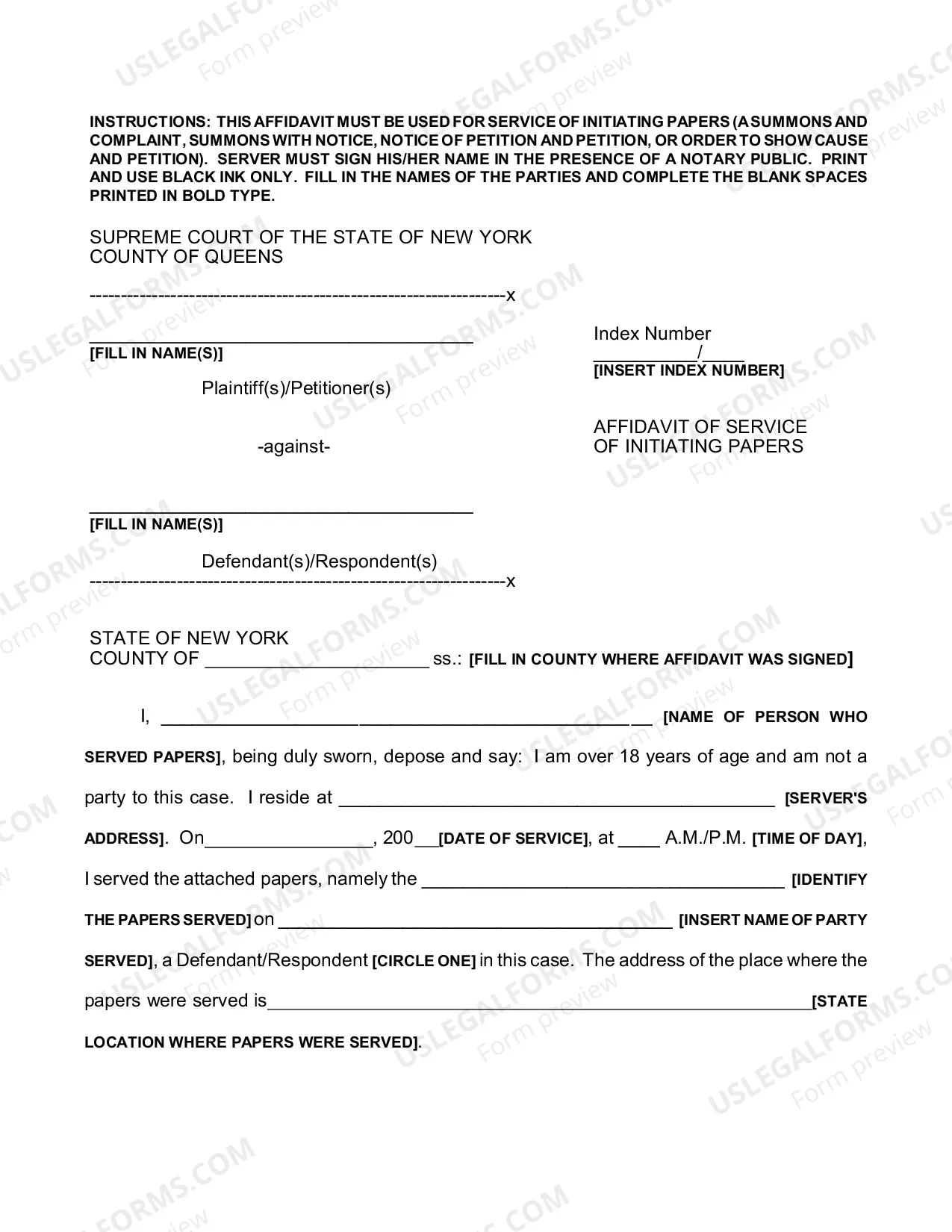
8.142A Hobbs Act-Extortion or Attempted Extortion by Nonviolent Threat
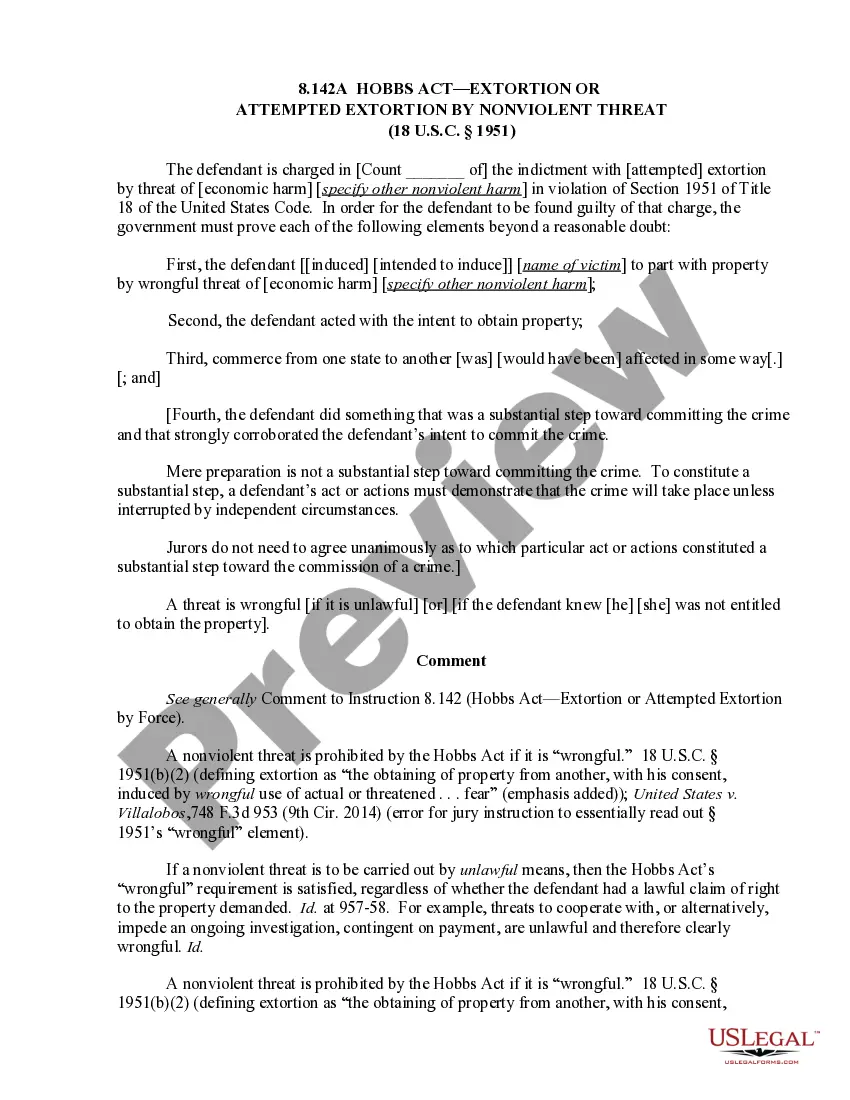
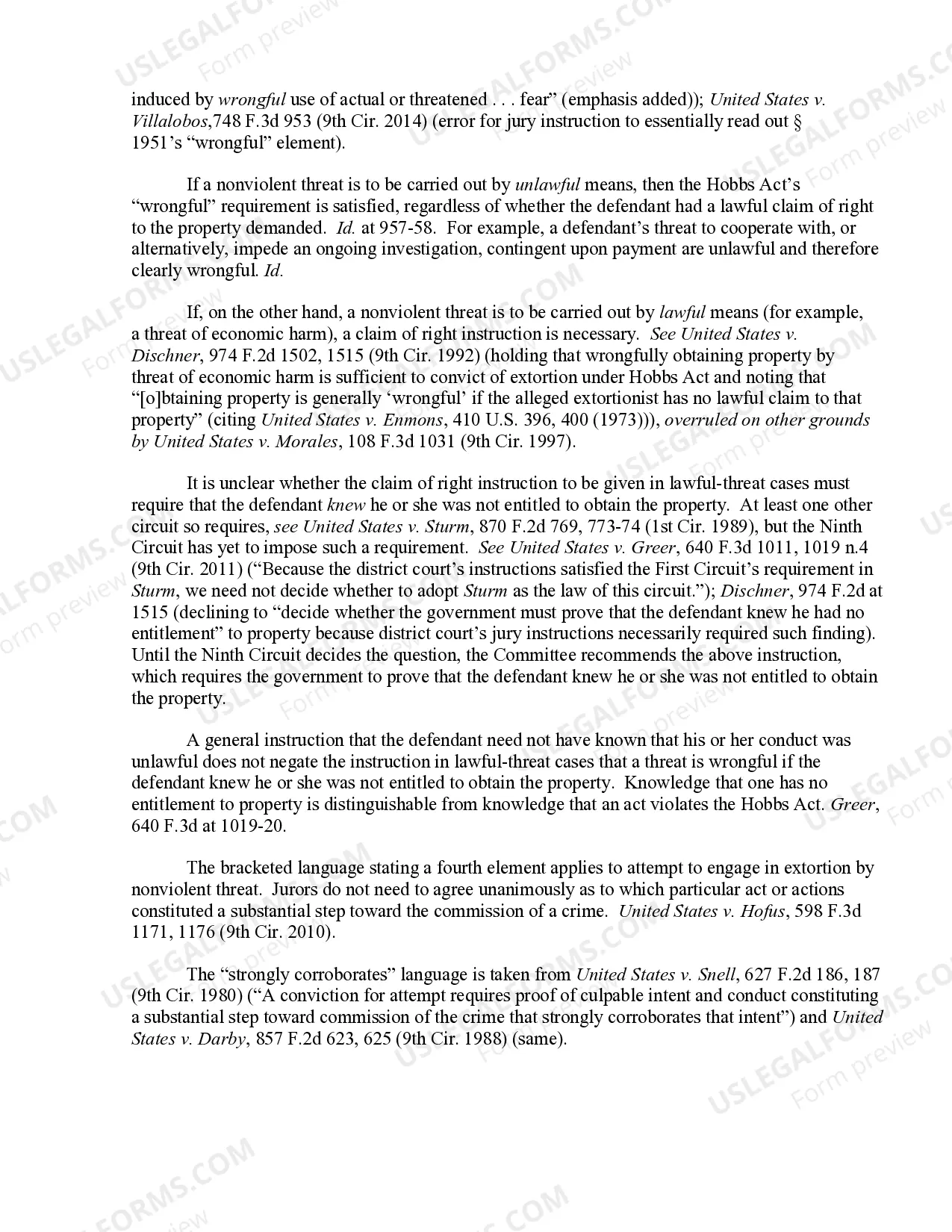

Is notarization required?
Notarization is not commonly needed for this form. However, certain documents or local rules may make it necessary. Our notarization service, powered by Notarize, allows you to finalize it securely online anytime, day or night.
Get your form ready online
Our built-in tools help you complete, sign, share, and store your documents in one place.
Make edits, fill in missing information, and update formatting in US Legal Forms—just like you would in MS Word.
Download a copy, print it, send it by email, or mail it via USPS—whatever works best for your next step.
Sign and collect signatures with our SignNow integration. Send to multiple recipients, set reminders, and more. Go Premium to unlock E-Sign.
If this form requires notarization, complete it online through a secure video call—no need to meet a notary in person or wait for an appointment.
We protect your documents and personal data by following strict security and privacy standards.

Make edits, fill in missing information, and update formatting in US Legal Forms—just like you would in MS Word.

Download a copy, print it, send it by email, or mail it via USPS—whatever works best for your next step.

Sign and collect signatures with our SignNow integration. Send to multiple recipients, set reminders, and more. Go Premium to unlock E-Sign.

If this form requires notarization, complete it online through a secure video call—no need to meet a notary in person or wait for an appointment.

We protect your documents and personal data by following strict security and privacy standards.
Looking for another form?
Form popularity
FAQ
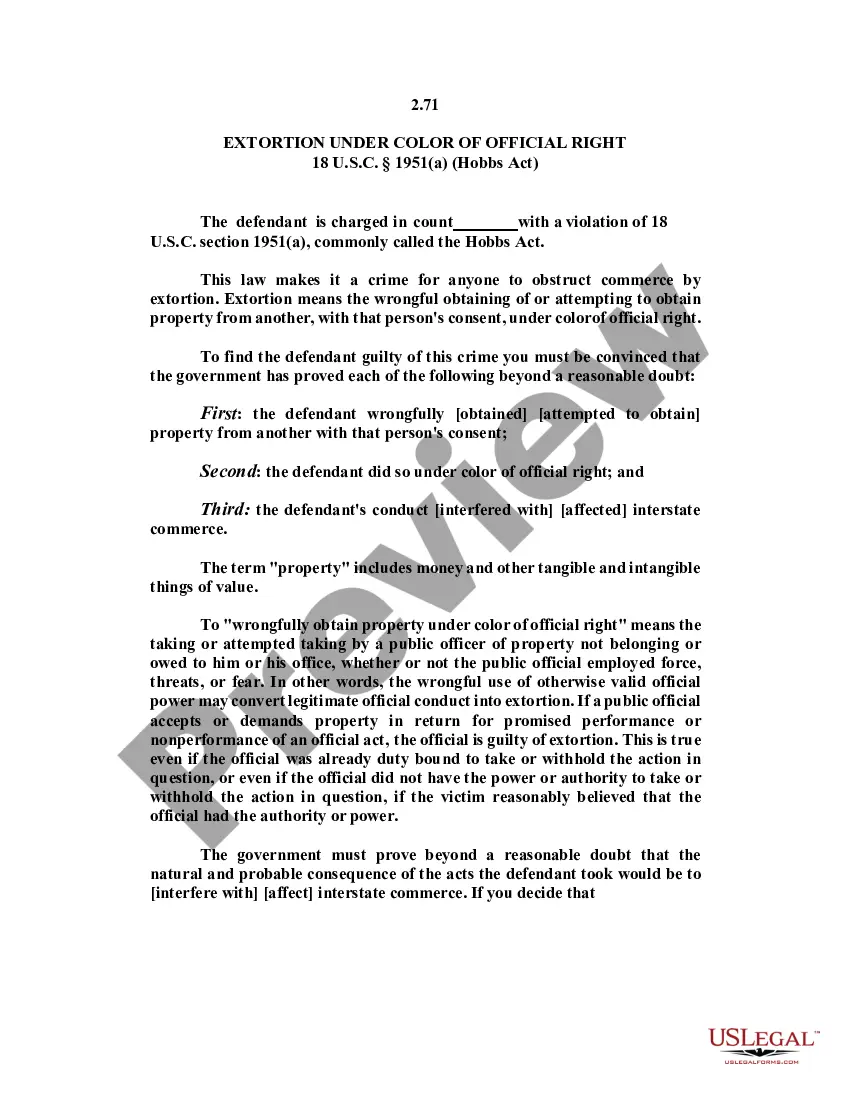
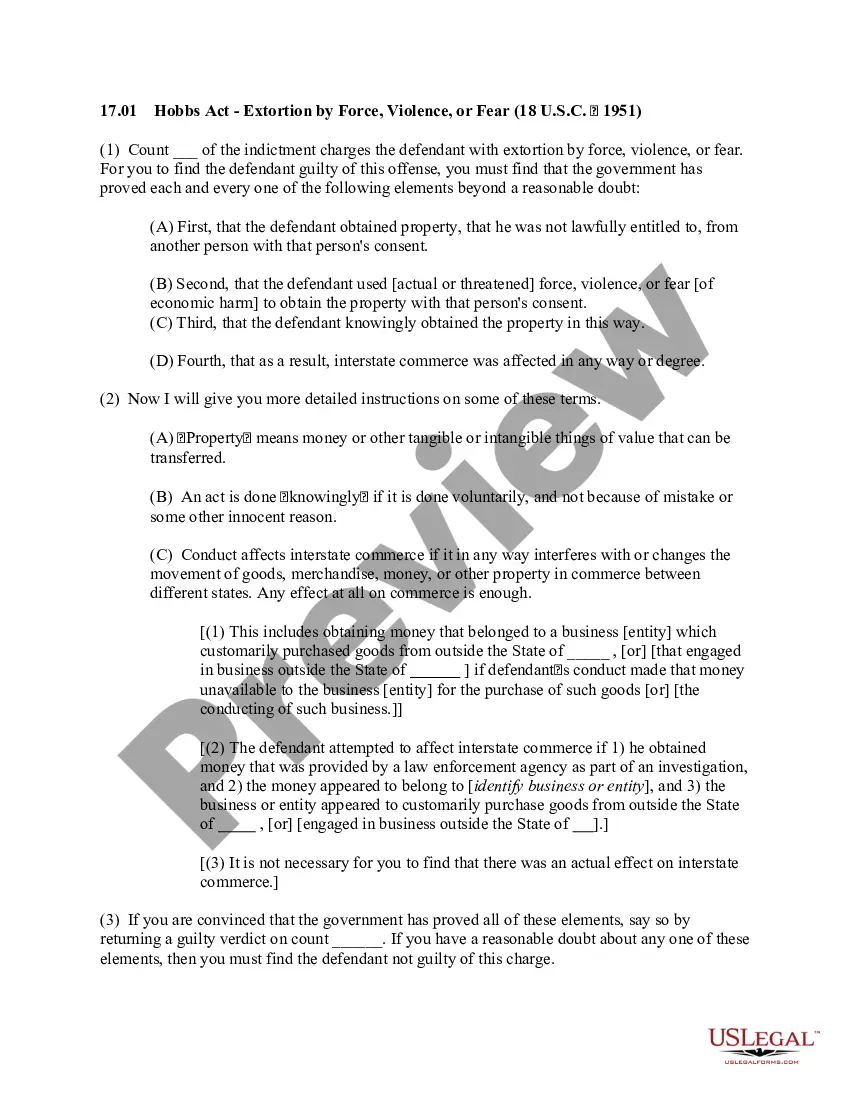
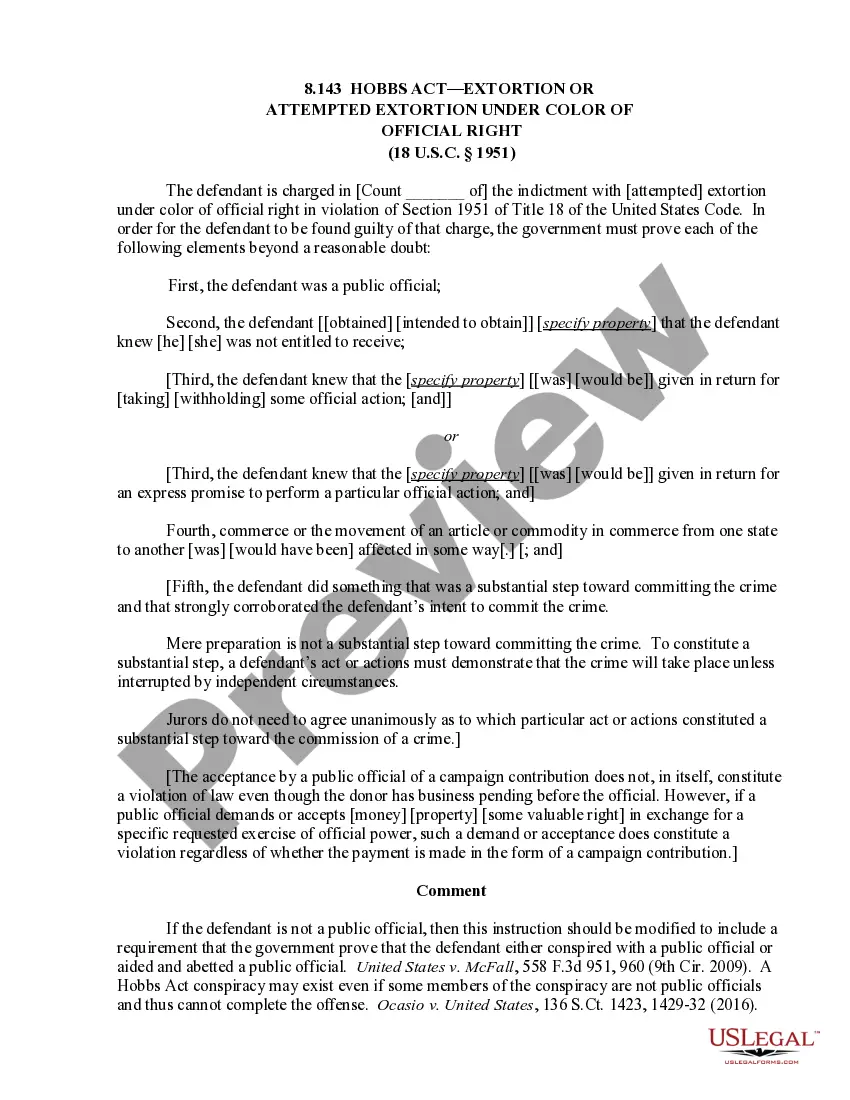
Extortion under color of official right means that a public official induced, obtained, accepted, or agreed to accept a payment to which he or she was not entitled, knowing that the payment was made in return for taking, withholding, or influencing official acts.
Acts under "color of any law" include acts not only done by federal, state, or local officials within the bounds or limits of their lawful authority, but also acts done without and beyond the bounds of their lawful authority; provided that, in order for unlawful acts of any official to be done under "color of any law,"
The various types of extortion include protection schemes, blackmail, and ransomware. All three are intimidation tactics used to scare a person into giving up money or valuables.
Most states define extortion as the gaining of property or money by almost any kind of force or threat of violence, property damage, harm to reputation, or unfavorable government action. Extortion is often charged as a felony in most states.
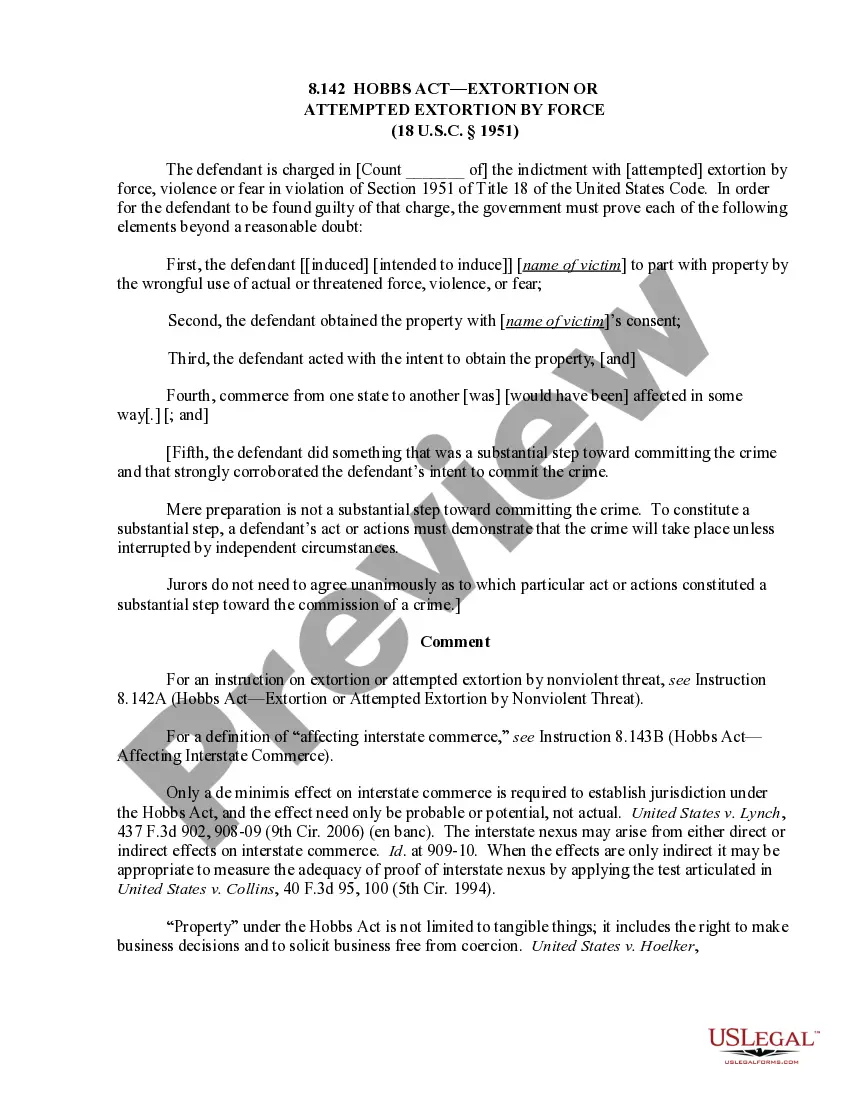
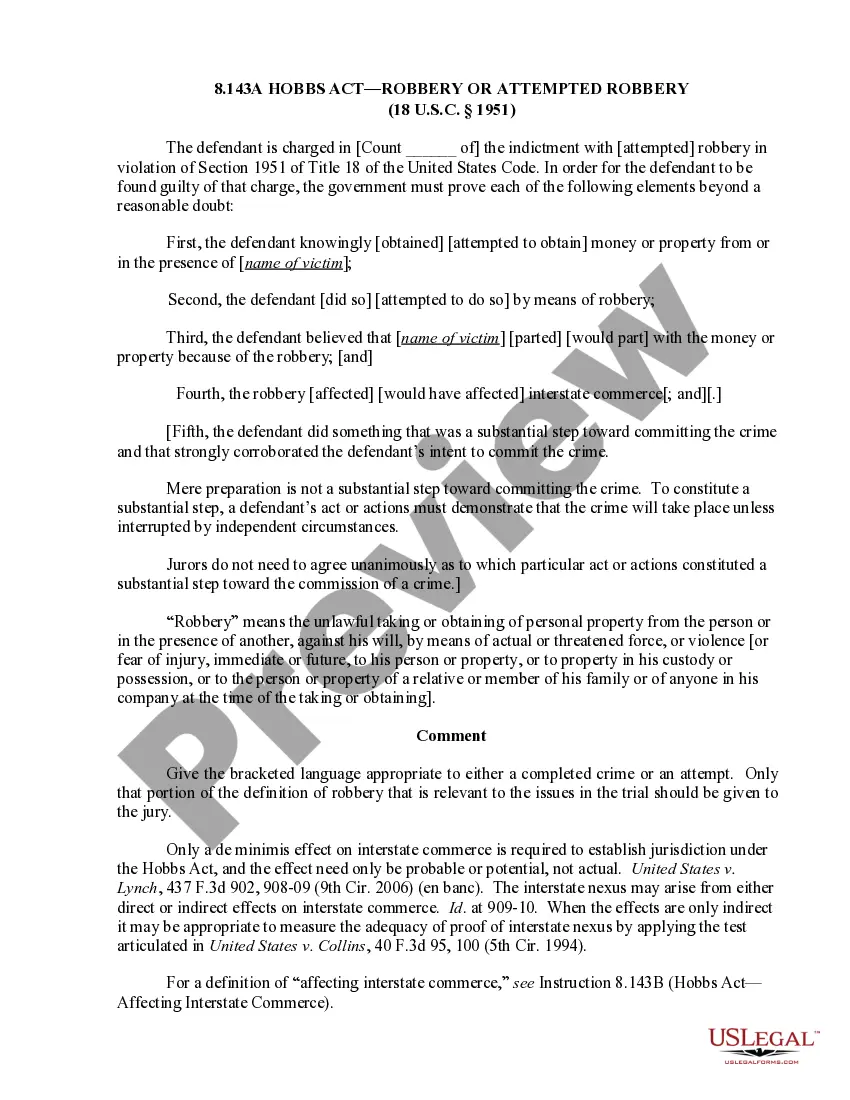
A conviction under the Hobbs Act requires proof beyond a reasonable doubt that (1) the defendant knowingly or willfully committed, or attempted or conspired to commit, robbery or extortion, and (2) the defendant's conduct affected interstate commerce. See United States v. Powell, 693 F. 3d 398 (3d Cir. 2012).
The Hobbs Act prohibits actual or attempted robbery or extortion affecting interstate or foreign commerce "in any way or degree." Section 1951 also proscribes conspiracy to commit robbery or extortion without reference to the conspiracy statute at 18 U.S.C. § 371.
THE HOBBS ACT, ENACTED IN 1946 AS AN AMENDMENT TO THE ANTI-RACKETEERING ACT, PUNISHES ANY PERSON WHO IN ANY WAY OR DEGREE OBSTRUCTS, DELAYS, OR AFFECTS COMMERCE, OR ATTEMPTS OR CONSPIRES TO DO SO BY ROBBERY OR EXTORTION.