Confidentiality Agreement for Board Members
Overview of this form
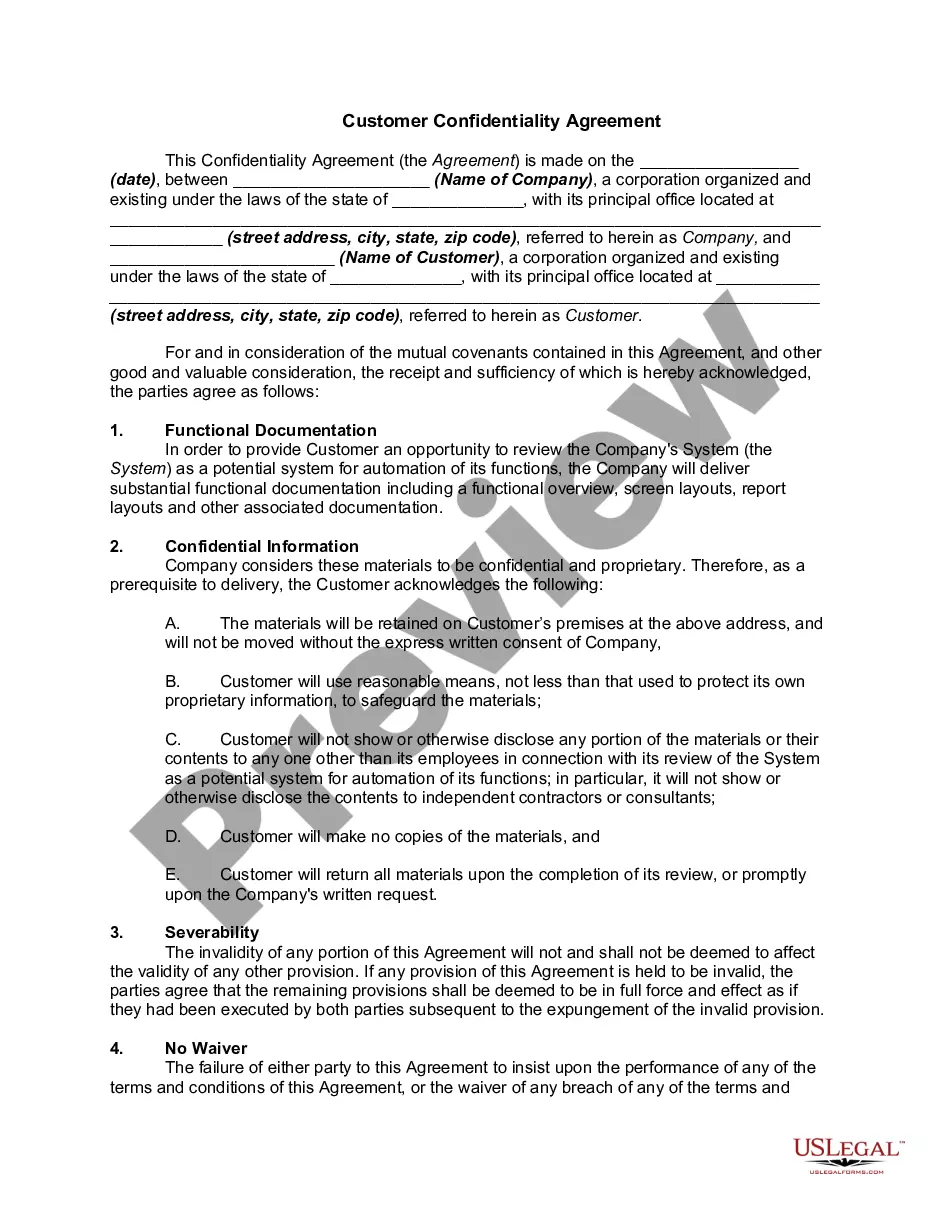
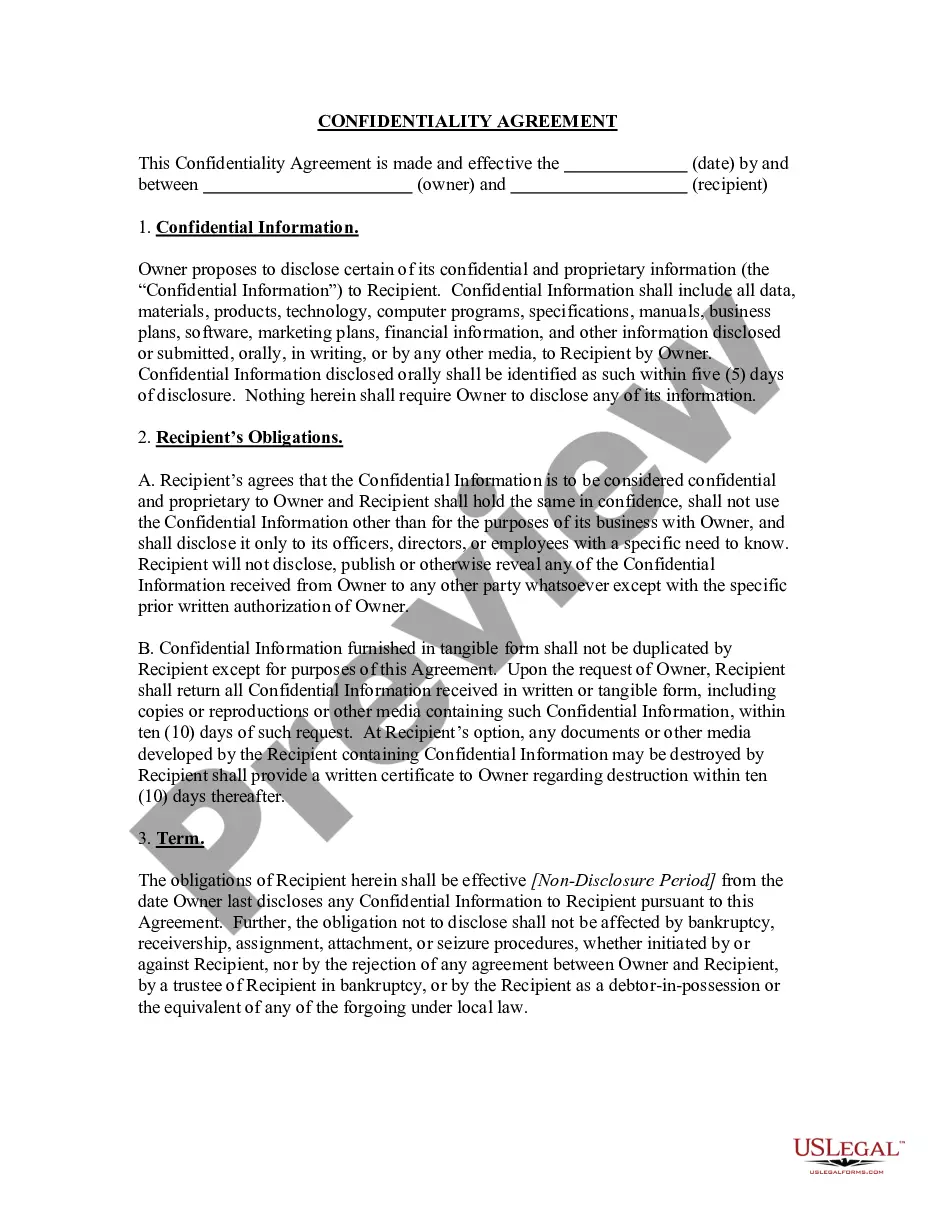
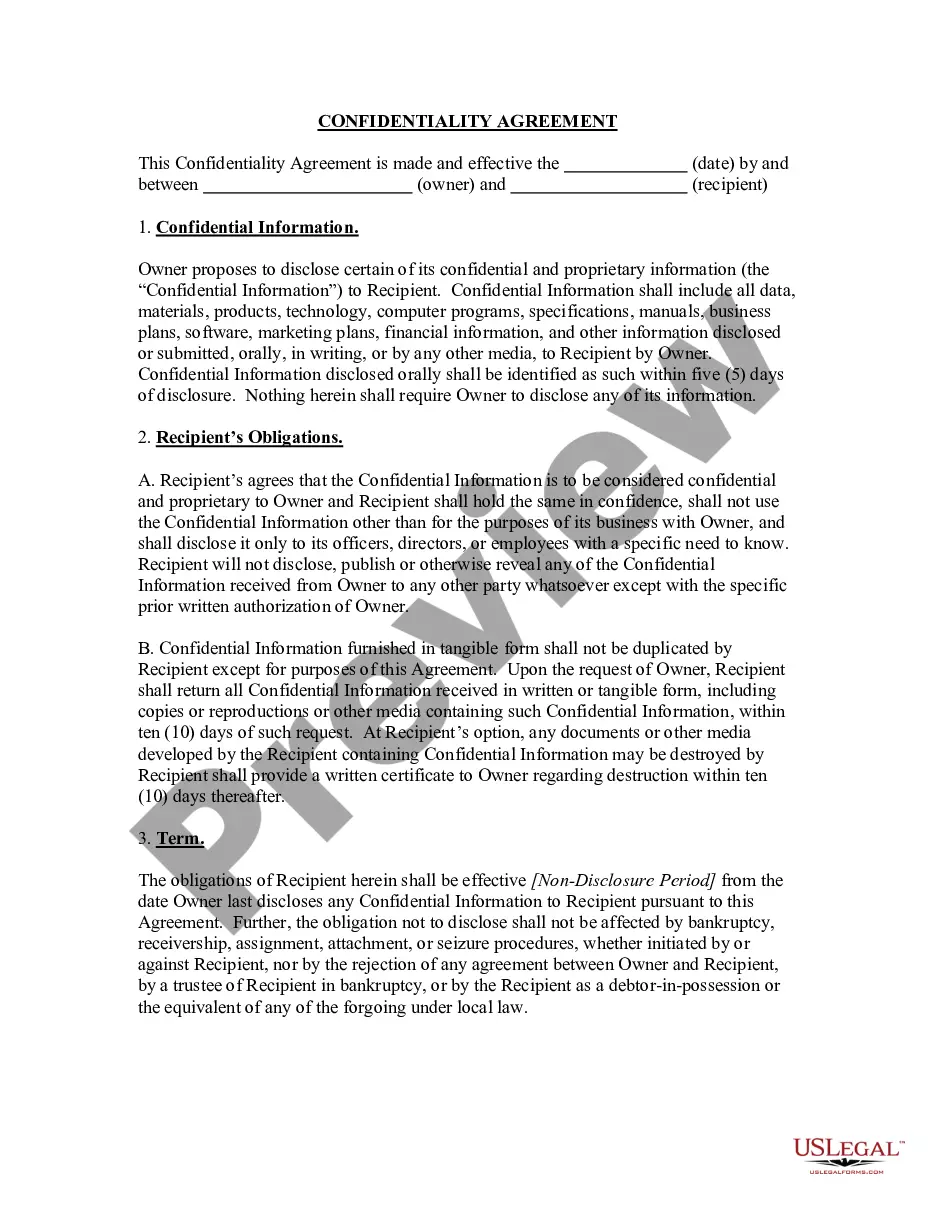
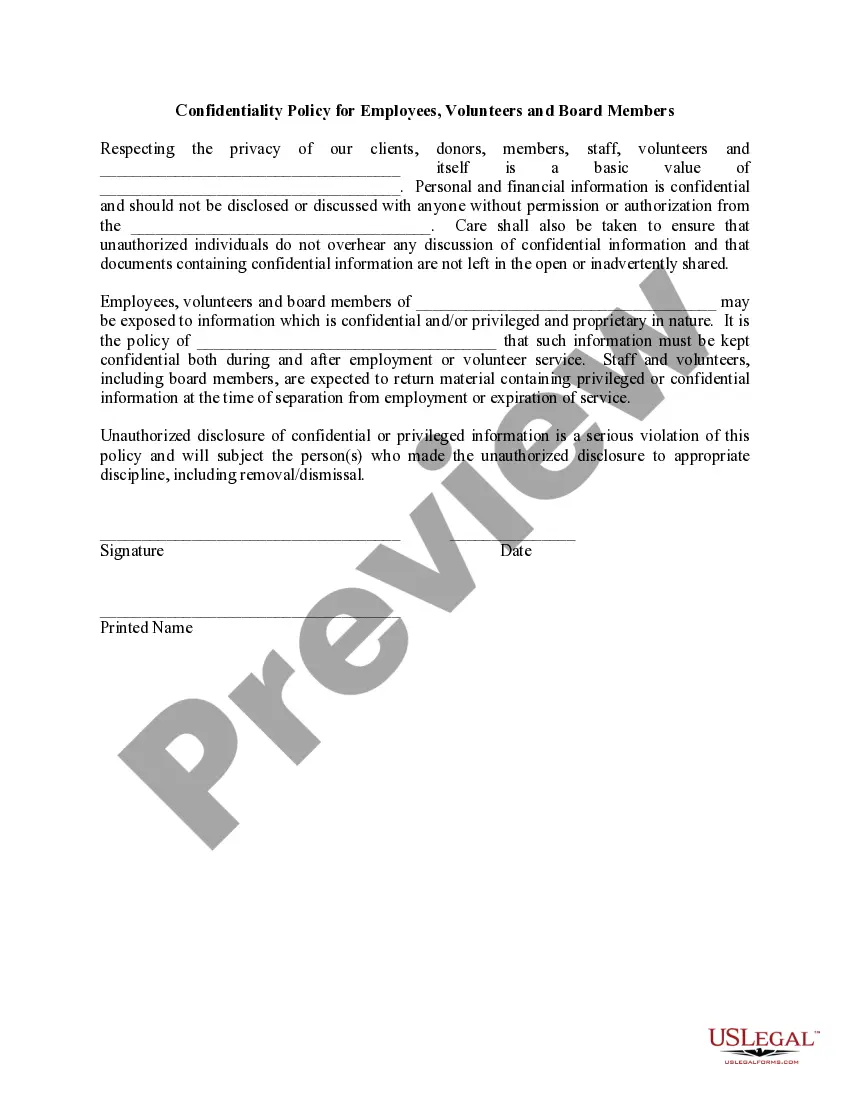
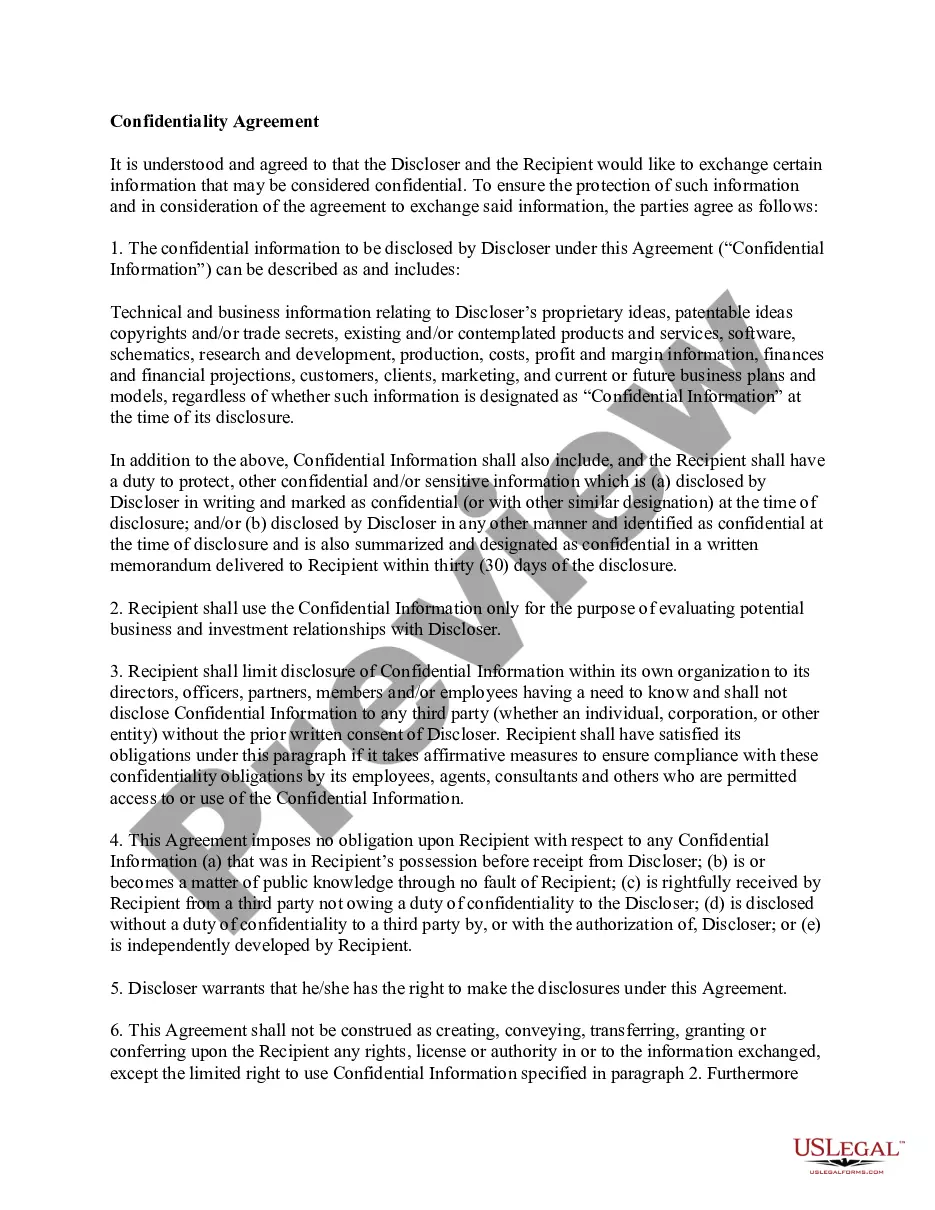
The Confidentiality Agreement for Board Members is a legal document that ensures confidentiality between board members and the organization they serve. This form establishes the recipient's obligations to keep sensitive information private and limits the use of that information to specific business purposes. It differs from other non-disclosure agreements by catering specifically to board members, who often have access to critical organizational data. This agreement helps protect proprietary business information and fosters trust among board members.
Main sections of this form
- Recipient's obligations to keep confidential information secret and limited in use.
- Conditions under which confidential information can be disclosed.
- Provisions for the return or destruction of confidential information upon request.
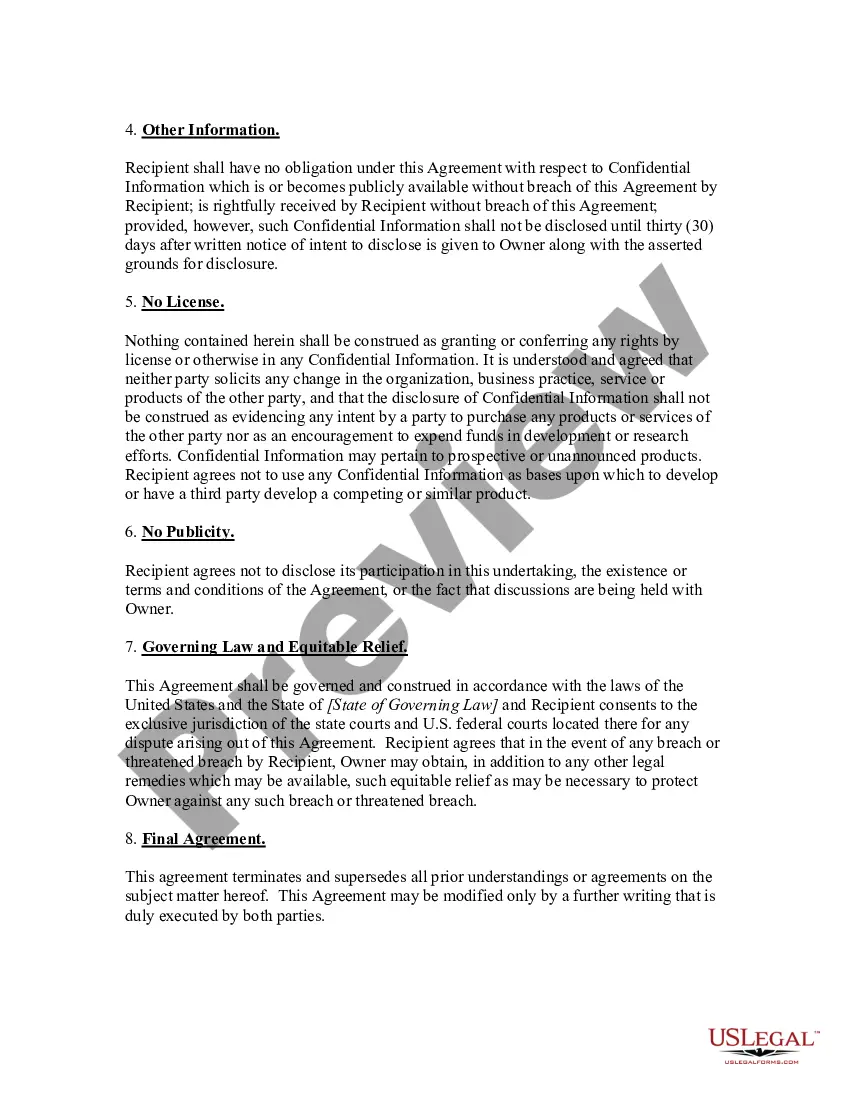
- Governing law and jurisdiction for any disputes related to the agreement.
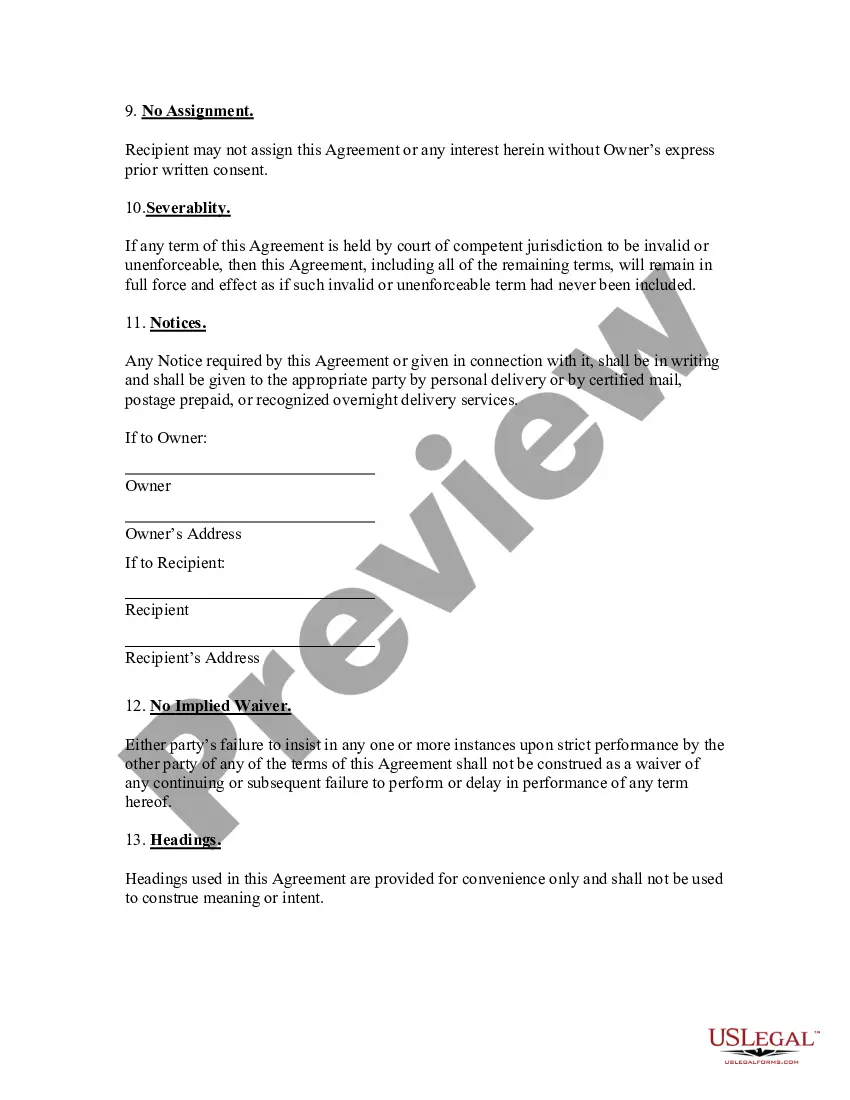
- Clauses addressing modifications and assignments of the agreement.

Common use cases
This form should be used whenever a board member is granted access to confidential information regarding the organization, such as business strategies, financial data, or proprietary technologies. It is essential for organizations that wish to protect their sensitive information from unauthorized disclosure and ensure that all board members understand their obligations concerning confidentiality.
Who should use this form
- Board members of non-profit organizations who may have access to sensitive information.
- Corporate board members of publicly traded or private companies handling confidential business matters.
- Organizations seeking to create a formal agreement on confidentiality with their board members.
- Legal professionals advising clients on the need for confidentiality agreements.
How to complete this form
- Identify the parties involved (Owner and Recipient) and provide their names and contact information.
- Clearly define what constitutes "Confidential Information" as applicable to the agreement.
- Specify the duration of the confidentiality obligations, or "Non-Disclosure Period."
- Include any specific terms related to the destruction or return of confidential information upon request.
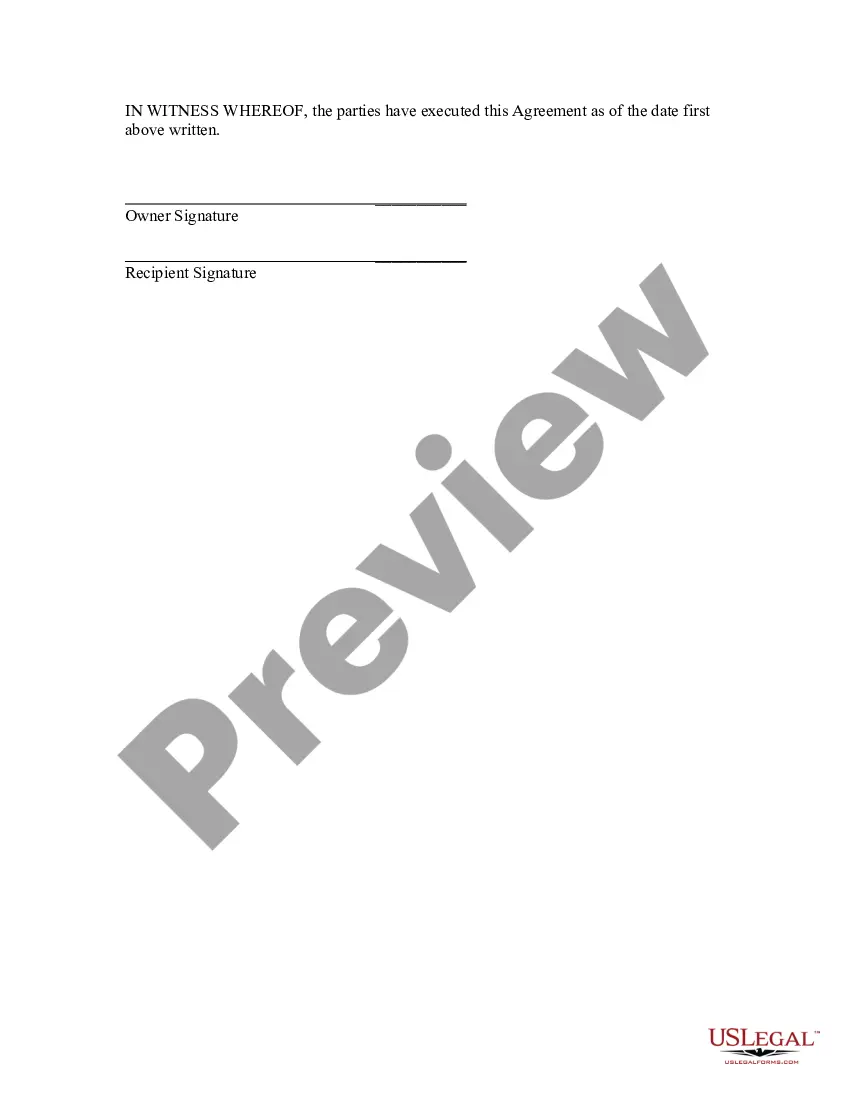
- Ensure that both parties sign and date the agreement to make it legally binding.
Notarization requirements for this form
This form does not typically require notarization unless specified by local law. It is important to check regional regulations to determine if additional validation is necessary.
Get your form ready online
Our built-in tools help you complete, sign, share, and store your documents in one place.
Make edits, fill in missing information, and update formatting in US Legal Forms—just like you would in MS Word.
Download a copy, print it, send it by email, or mail it via USPS—whatever works best for your next step.
Sign and collect signatures with our SignNow integration. Send to multiple recipients, set reminders, and more. Go Premium to unlock E-Sign.
If this form requires notarization, complete it online through a secure video call—no need to meet a notary in person or wait for an appointment.
We protect your documents and personal data by following strict security and privacy standards.

Make edits, fill in missing information, and update formatting in US Legal Forms—just like you would in MS Word.

Download a copy, print it, send it by email, or mail it via USPS—whatever works best for your next step.

Sign and collect signatures with our SignNow integration. Send to multiple recipients, set reminders, and more. Go Premium to unlock E-Sign.

If this form requires notarization, complete it online through a secure video call—no need to meet a notary in person or wait for an appointment.

We protect your documents and personal data by following strict security and privacy standards.
Common mistakes
- Failing to clearly define what constitutes confidential information.
- Not specifying the duration of confidentiality obligations.
- Overlooking the need for both parties to sign the agreement.
- Ignoring state-specific laws and requirements where applicable.
Benefits of using this form online
- Immediate access to a professionally drafted document tailored for board members.
- Convenience of filling out and customizing the agreement as needed.
- Save time and resources by avoiding the costs of hiring an attorney for basic agreements.
- Secure format that can be easily stored and shared electronically.
Looking for another form?
Form popularity
FAQ
It is a contract through which the parties agree not to disclose information covered by the agreement. An NDA creates a confidential relationship between the parties, typically to protect any type of confidential and proprietary information or trade secrets. As such, an NDA protects non-public business information.
Confidentiality agreements usually allow the recipient to disclose confidential information if required to do so by court order or other legal process.
Board Papers will be created, maintained and distributed in a manner which is consistent with their confidential status. They will be kept separately from other (non-confidential) documents and stored in a manner which limits access to them by unauthorised persons (including employees).
A confidentiality agreement (also called a nondisclosure agreement or NDA) is a legally binding contract in which a person or business promises to treat specific information as a trade secret and promises not to disclose the secret to others without proper authorization.
Information should only be disclosed to others when authorised by senior management. Confidential information should not be used for personal profit or benefit. Confidential information must not be replicated and stored on insecure devices.
A definition of confidential information. Who is involved. Why the recipient knows the information. Exclusions or limits on confidential information. Receiving party's obligations. Time frame or term. Discloser to the recipient.
Set the date of the agreement. Describe the two parties, sometimes called the Disclosing Party and the Receiving Party.7feff Include names and identification, so there can be no misunderstanding about who signed the agreement.
The cold hard truth is that most NDAs do not hold up in court. Non-Disclosure Agreements are most effective in establishing a paper trail of confidential information as it relates to partnerships, and discouraging partners from misappropriating proprietary information.
Depending on the complexity of what you need protected and the number of parties involved, the cost of having an NDA drafted can vary significantly. When you hire a lawyer in the Priori network, drafting an NDA typically costs anywhere from $175-$1,500.