Texas Carbon Dioxide Storage Lease
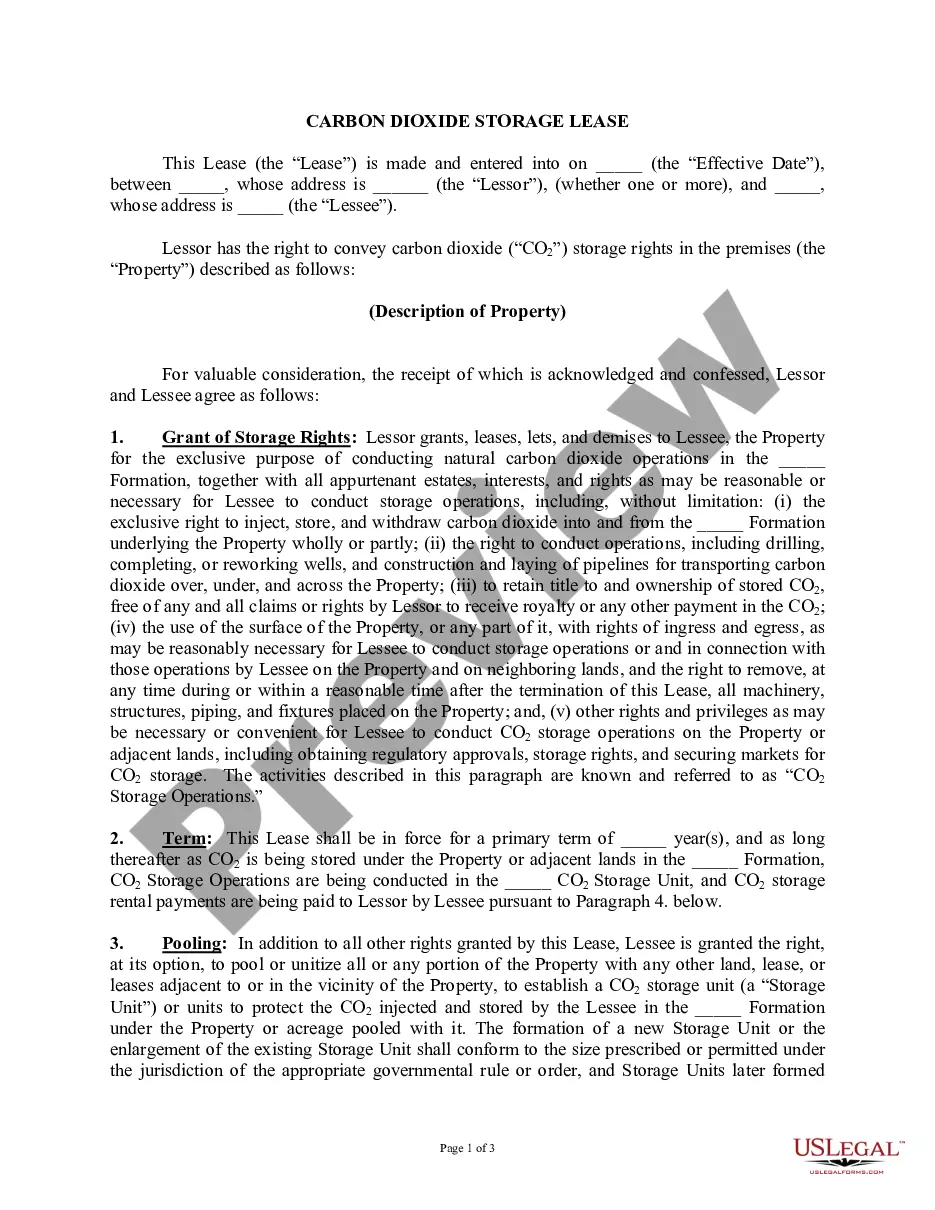
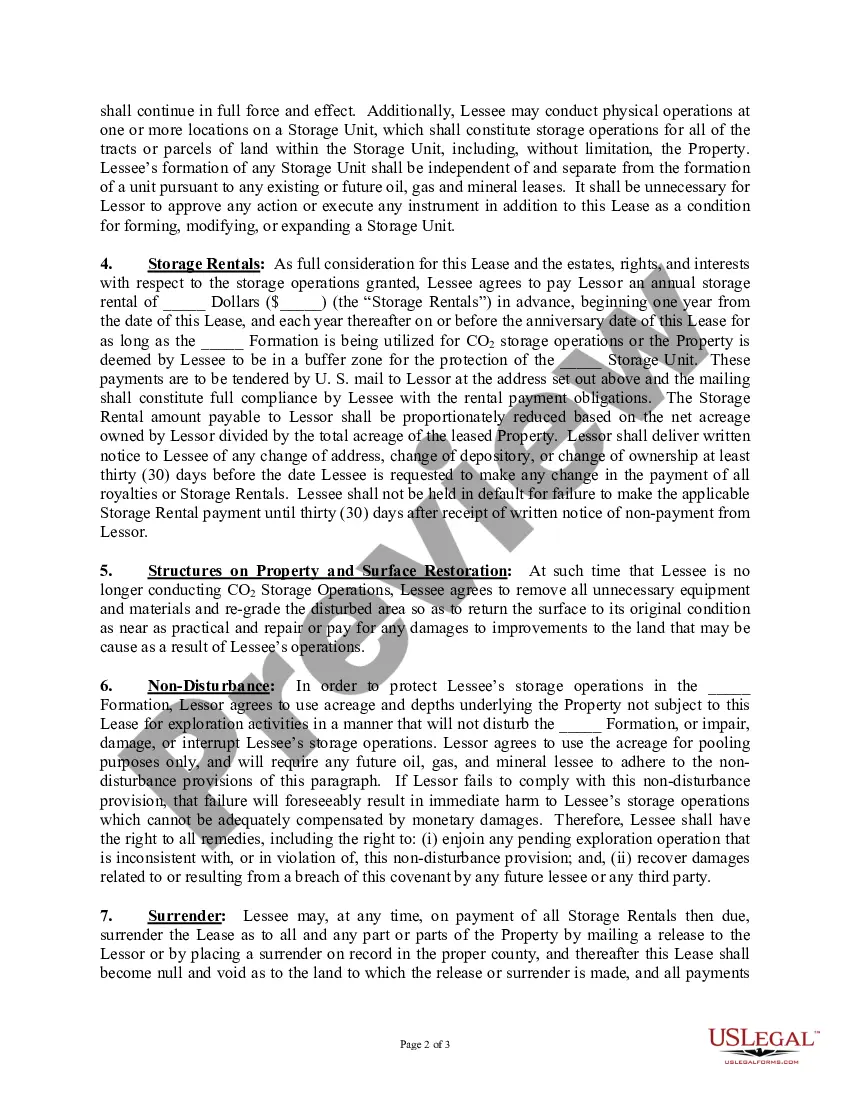
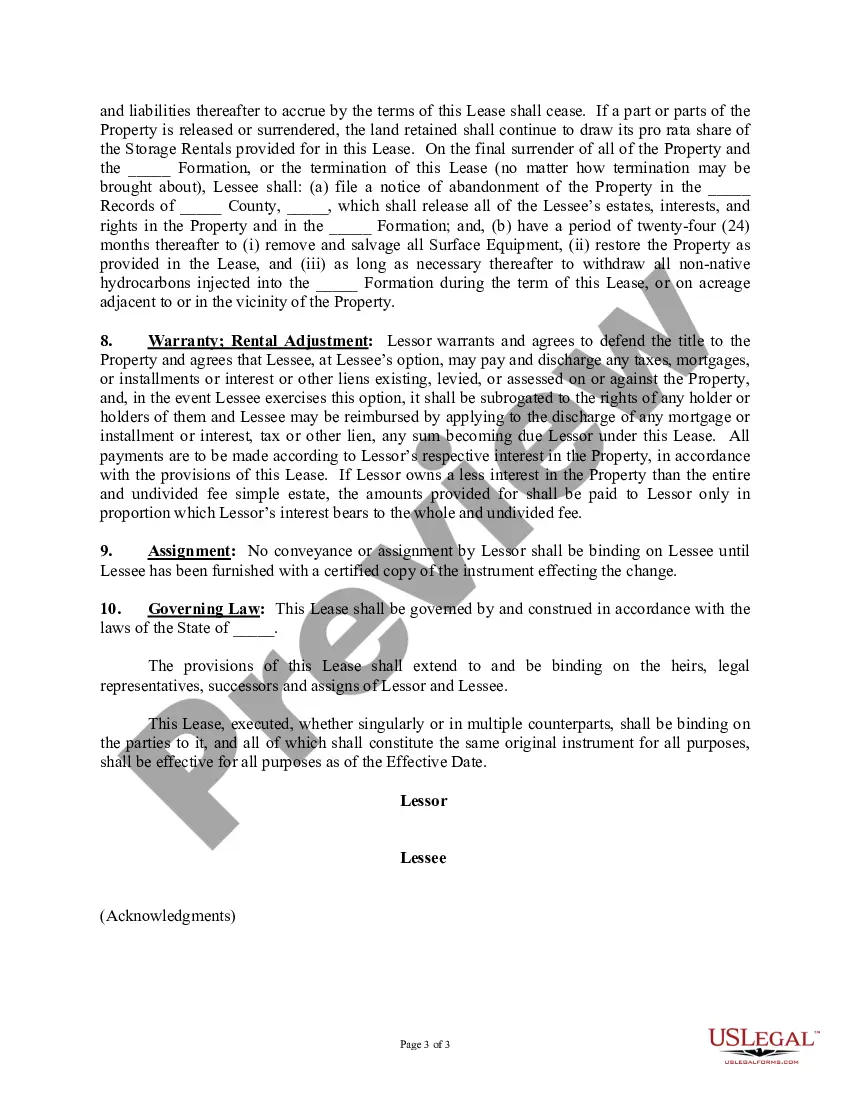
Description
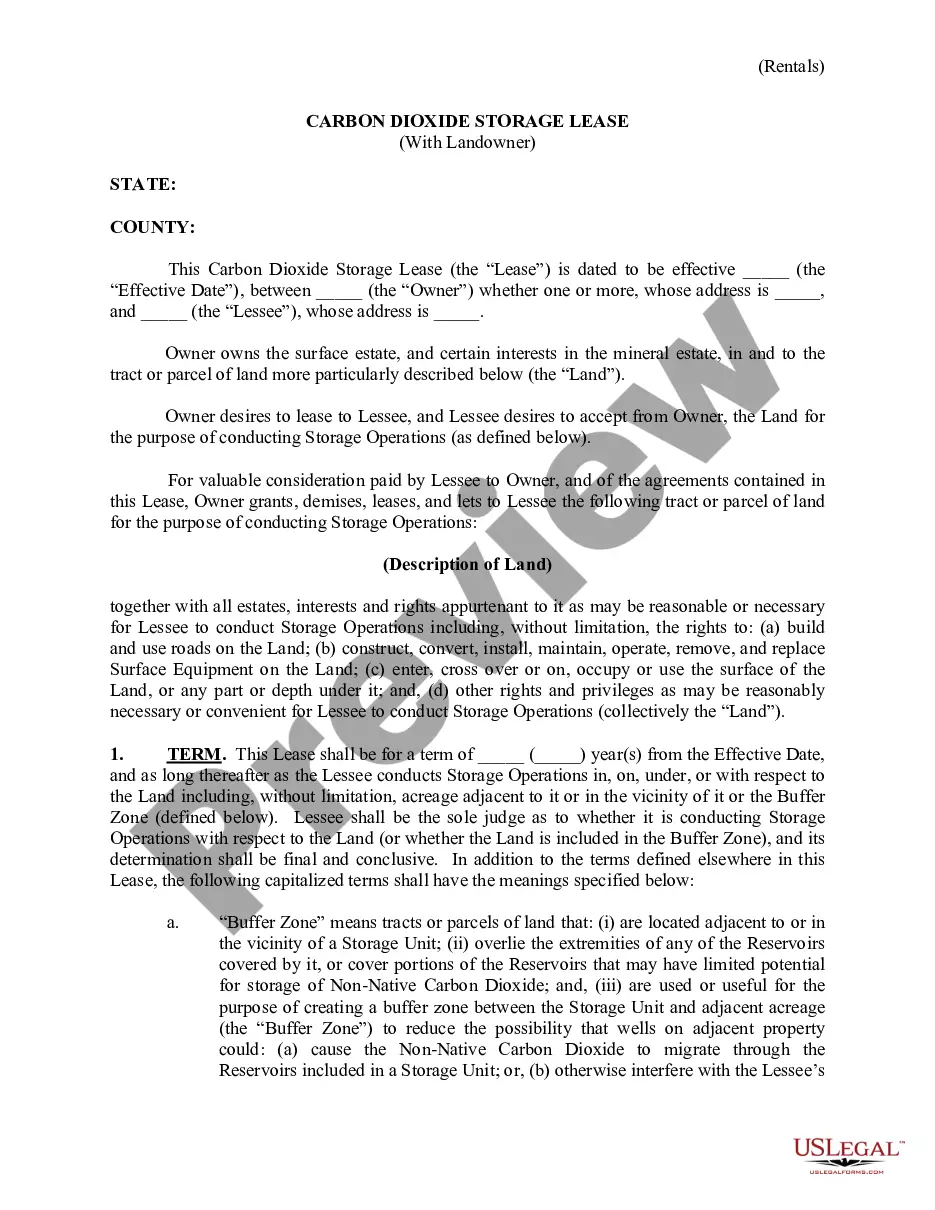
Get your form ready online
Our built-in tools help you complete, sign, share, and store your documents in one place.
Make edits, fill in missing information, and update formatting in US Legal Forms—just like you would in MS Word.
Download a copy, print it, send it by email, or mail it via USPS—whatever works best for your next step.
Sign and collect signatures with our SignNow integration. Send to multiple recipients, set reminders, and more. Go Premium to unlock E-Sign.
If this form requires notarization, complete it online through a secure video call—no need to meet a notary in person or wait for an appointment.
We protect your documents and personal data by following strict security and privacy standards.

Make edits, fill in missing information, and update formatting in US Legal Forms—just like you would in MS Word.

Download a copy, print it, send it by email, or mail it via USPS—whatever works best for your next step.

Sign and collect signatures with our SignNow integration. Send to multiple recipients, set reminders, and more. Go Premium to unlock E-Sign.

If this form requires notarization, complete it online through a secure video call—no need to meet a notary in person or wait for an appointment.

We protect your documents and personal data by following strict security and privacy standards.
Looking for another form?
How to fill out Carbon Dioxide Storage Lease?
US Legal Forms - one of the biggest libraries of legitimate varieties in America - offers a wide range of legitimate file web templates you can download or print out. While using internet site, you will get a large number of varieties for business and personal reasons, categorized by classes, states, or keywords.You will find the most up-to-date models of varieties such as the Texas Carbon Dioxide Storage Lease within minutes.
If you already have a monthly subscription, log in and download Texas Carbon Dioxide Storage Lease through the US Legal Forms library. The Download switch will show up on each and every develop you perspective. You have accessibility to all earlier saved varieties in the My Forms tab of your account.
If you would like use US Legal Forms initially, listed here are simple guidelines to help you started out:
- Ensure you have chosen the correct develop for your area/state. Click on the Review switch to analyze the form`s articles. See the develop outline to ensure that you have selected the right develop.
- In case the develop does not suit your specifications, make use of the Research industry on top of the display to discover the one that does.
- In case you are content with the form, validate your option by visiting the Get now switch. Then, pick the costs prepare you favor and offer your credentials to sign up for an account.
- Procedure the deal. Use your credit card or PayPal account to accomplish the deal.
- Pick the format and download the form in your device.
- Make alterations. Load, edit and print out and signal the saved Texas Carbon Dioxide Storage Lease.
Each and every template you added to your bank account does not have an expiry time and is yours forever. So, in order to download or print out yet another duplicate, just go to the My Forms segment and click around the develop you will need.
Obtain access to the Texas Carbon Dioxide Storage Lease with US Legal Forms, one of the most considerable library of legitimate file web templates. Use a large number of specialist and express-specific web templates that meet up with your small business or personal requires and specifications.
Form popularity
FAQ
Class VI wells are wells used for injection of carbon dioxide (CO2) into underground subsurface rock formations for long-term storage, or geologic sequestration.
Class II wells are used to inject fluids related to oil and gas production, including injection of CO2 for EOR. Class VI wells are used to inject CO2 for GS.
Class IV wells are shallow wells used to dispose hazardous or radioactive wastes into or above a geologic formation that contains an underground source of drinking water (USDW). In 1984, EPA banned the use of Class IV injection wells.
Carbon Capture and Storage Market size exceeded USD 6 billion in 2022 and is projected to expand at more than 20% CAGR from 2023 to 2032. A steady rollout of strict government regulations to reduce GHG emissions worldwide is set to positively shape the industry scenario.
Class II wells are used only to inject fluids associated with oil and natural gas production. Class II fluids are primarily brines (salt water) that are brought to the surface while producing oil and gas. It is estimated that over 2 billion gallons of fluids are injected in the United States every day.
CO2 can be used to produce fuels and chemical intermediates through several conversion routes but require significant energy input.
Carbon capture and storage (CCS) costs depend on the process type, capture technology, carbon dioxide (CO2) transport, and storage location. CO2 capture costs are projected to range from CAD 27?48/tCO2 for processes with concentrated CO2 streams to CAD 50?150/tCO2 for diluted gas streams.
EPA aims to review complete Class VI applications and issue permits when appropriate within approximately 24 months. This timeframe is dependent on several factors, including the complexity of the project and the quality and completeness of the submitted application.