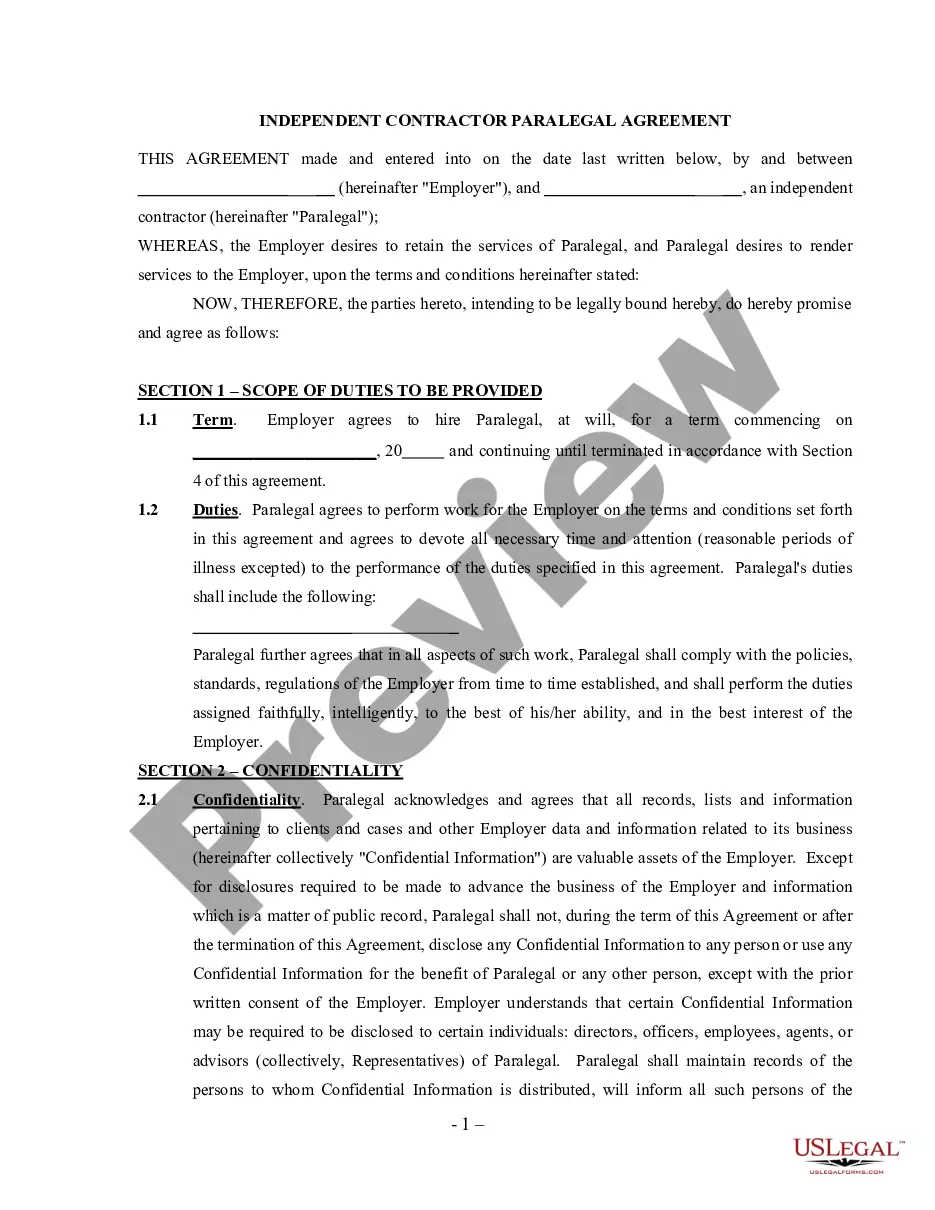
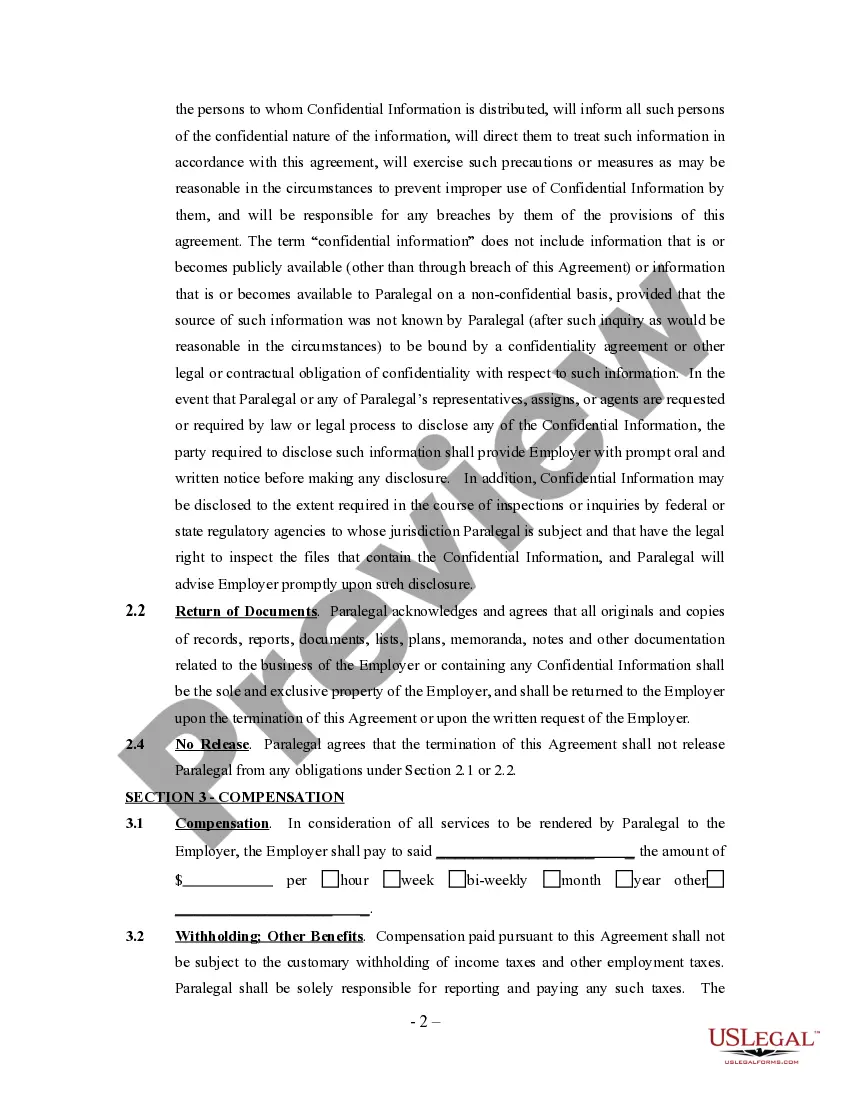
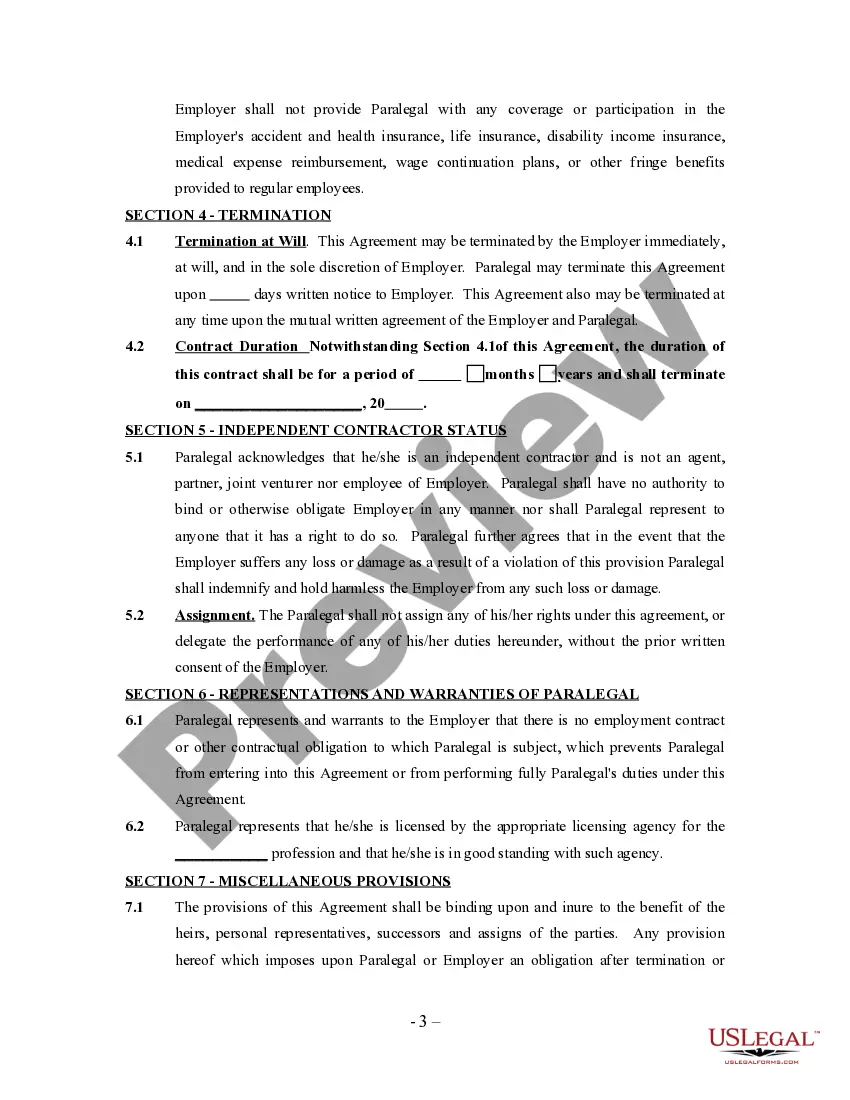
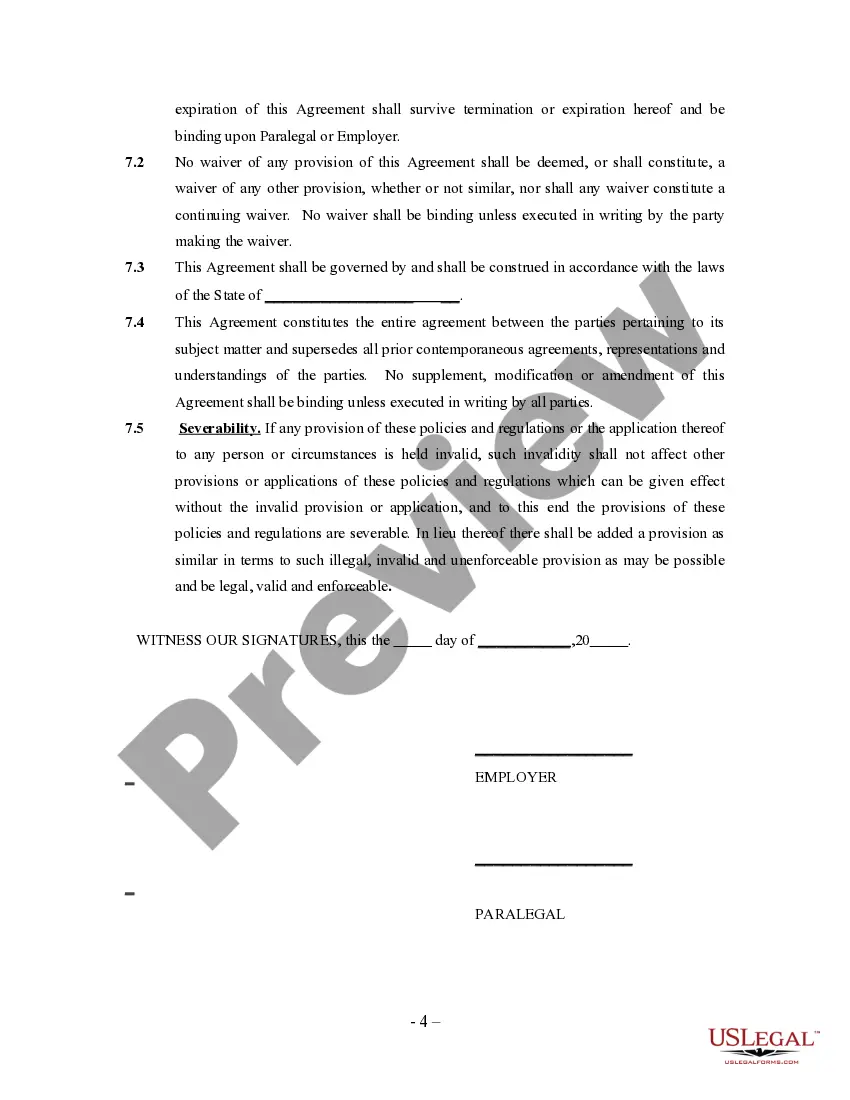
Employer contracts with a paralegal as independent contractor to provide paralegal services for employer as specified and agreed upon in the contract. Contract includes confidentiality clause.
Texas Paralegal Agreement - Self-Employed Independent Contractor
State:
Multi-State
Control #:
US-INDC-131
Format:
Word;
Rich Text
274 downloads
Description
Free preview
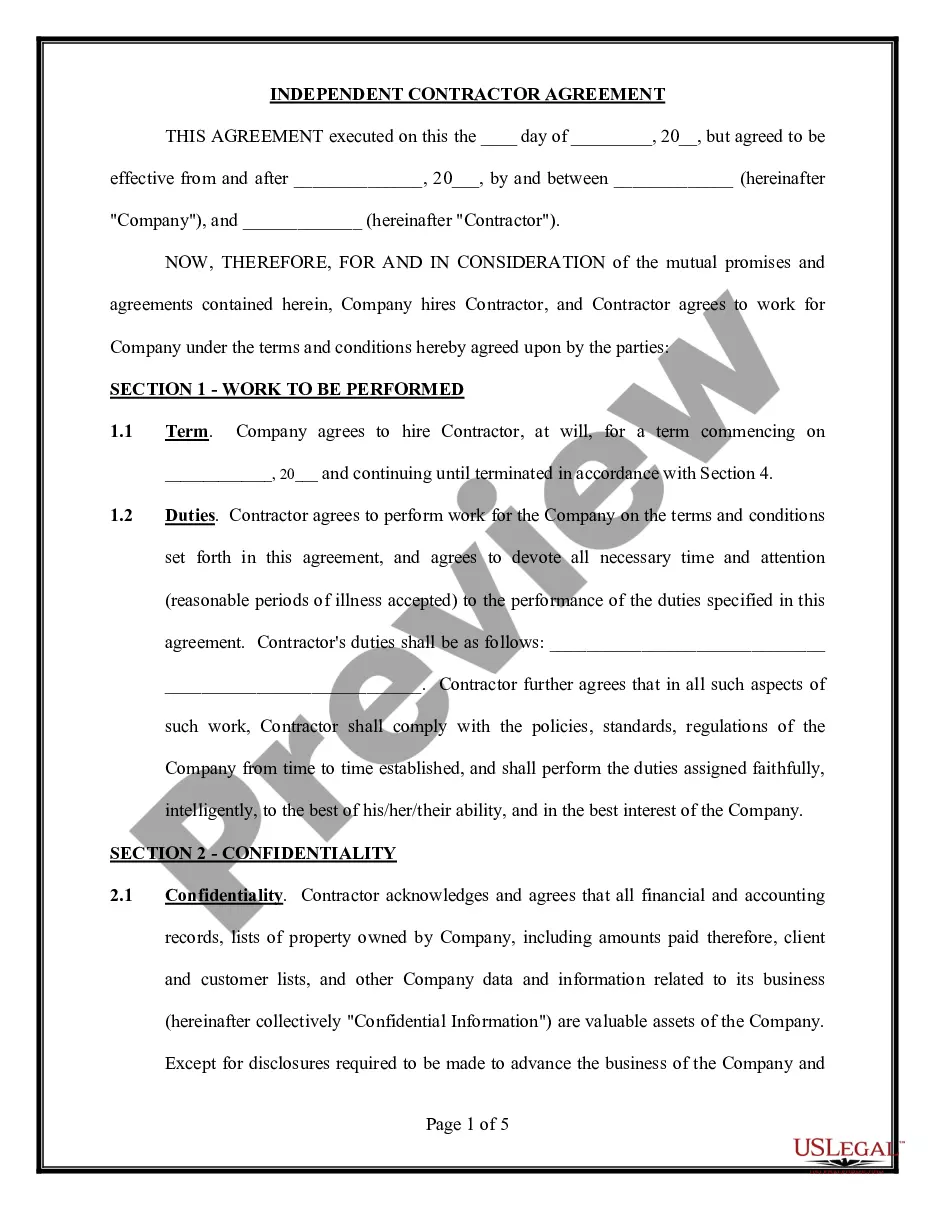
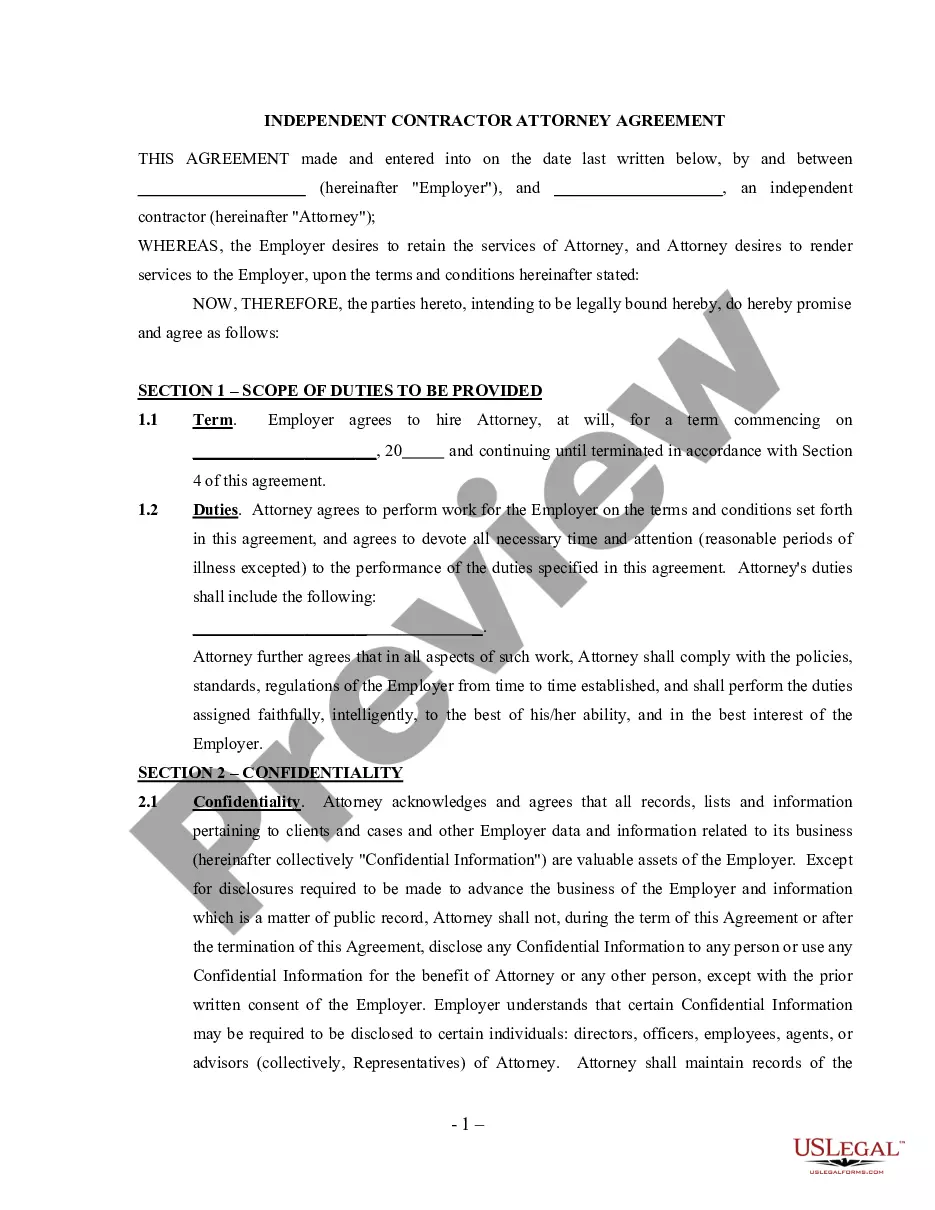
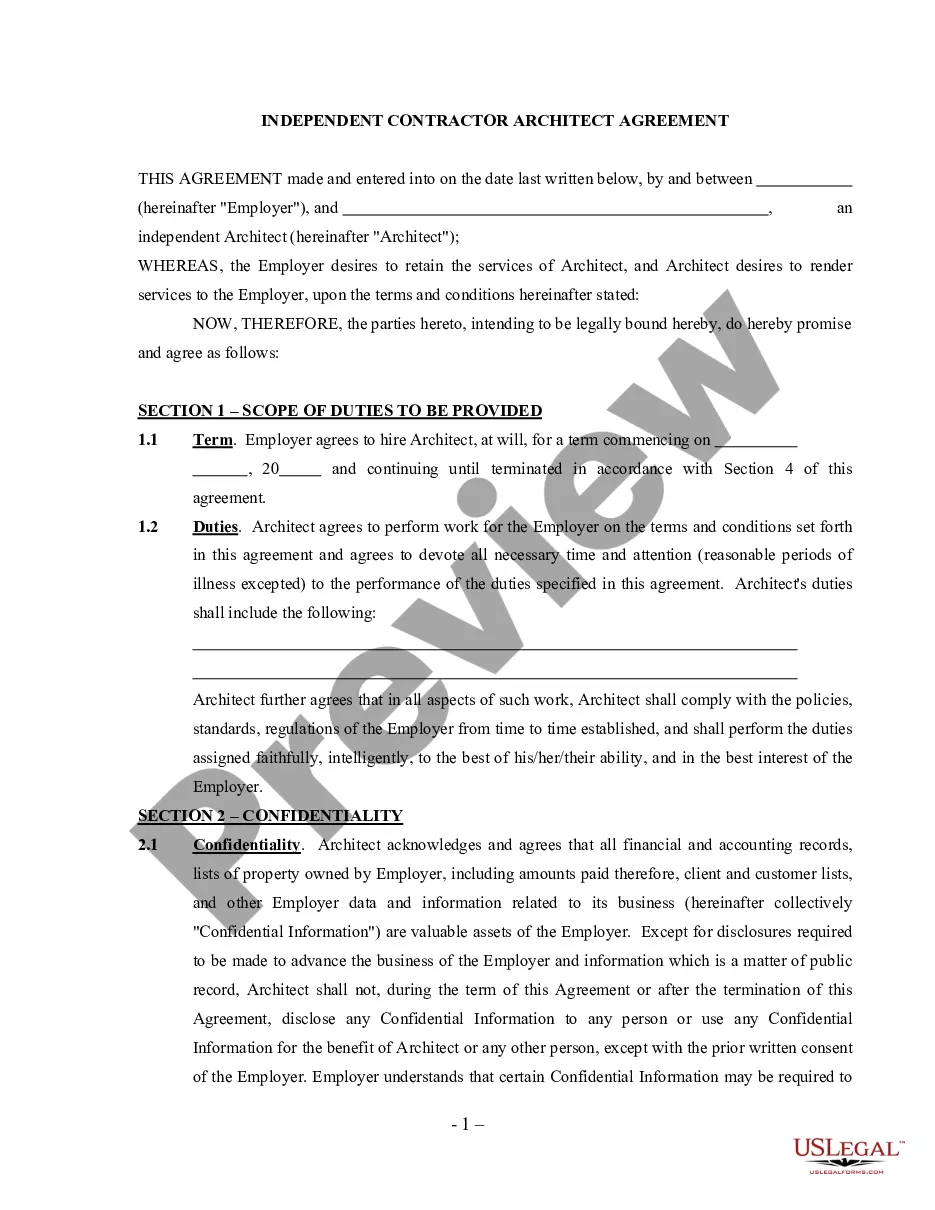
Get your form ready online
Our built-in tools help you complete, sign, share, and store your documents in one place.
Built-in online Word editor
Make edits, fill in missing information, and update formatting in US Legal Forms—just like you would in MS Word.
Export easily
Download a copy, print it, send it by email, or mail it via USPS—whatever works best for your next step.
E-sign your document
Sign and collect signatures with our SignNow integration. Send to multiple recipients, set reminders, and more. Go Premium to unlock E-Sign.
Notarize online 24/7
If this form requires notarization, complete it online through a secure video call—no need to meet a notary in person or wait for an appointment.
Store your document securely
We protect your documents and personal data by following strict security and privacy standards.

Make edits, fill in missing information, and update formatting in US Legal Forms—just like you would in MS Word.

Download a copy, print it, send it by email, or mail it via USPS—whatever works best for your next step.

Sign and collect signatures with our SignNow integration. Send to multiple recipients, set reminders, and more. Go Premium to unlock E-Sign.

If this form requires notarization, complete it online through a secure video call—no need to meet a notary in person or wait for an appointment.

We protect your documents and personal data by following strict security and privacy standards.
Looking for another form?
How to fill out Paralegal Agreement - Self-Employed Independent Contractor?
Finding the correct legal document template may be a challenge.
Of course, there are many formats accessible online, but how will you find the legal form you require.
Utilize the US Legal Forms website.
First, ensure you have selected the correct form for your city/county. You can review the form using the Review button and read the form details to confirm it is suitable for your needs. If the form does not meet your requirements, use the Search section to find the appropriate form. Once you are confident that the form is correct, click the Buy now button to acquire the form. Choose the pricing plan you desire and input the necessary information. Create your account and pay for the order using your PayPal account or credit card. Select the file format and download the legal document template to your device. Complete, modify, print, and sign the received Texas Paralegal Agreement - Self-Employed Independent Contractor. US Legal Forms is the premier repository of legal documents where you can discover various paper templates. Utilize the service to obtain well-crafted documents that meet state requirements.
- This service offers thousands of templates, including the Texas Paralegal Agreement - Self-Employed Independent Contractor, suitable for business and personal needs.
- All forms are reviewed by professionals and comply with federal and state regulations.
- If you are already registered, Log In to your account and click on the Download button to get the Texas Paralegal Agreement - Self-Employed Independent Contractor.
- Use your account to browse the legal documents you may have purchased previously.
- Visit the My documents section of your account to obtain another copy of the document you need.
- If you are a new user of US Legal Forms, here are simple instructions you can follow.
Form popularity
FAQ
In order to receive a 1099 form, an independent contractor must earn at least $600 from a client during a year. This threshold applies to various service providers, including paralegals in Texas. Understanding this requirement is crucial for paralegals using the Texas Paralegal Agreement - Self-Employed Independent Contractor to manage their expected income and tax obligations.
The independent contractor agreement in Texas is a legal document that formalizes the working relationship between a contractor and a client. It specifies duties, payment details, and the rights of both parties. The Texas Paralegal Agreement - Self-Employed Independent Contractor serves as a vital tool for paralegals, ensuring clarity and legal protection in their freelance work.
The new federal rule on independent contractors aims to clarify the criteria for classification to ensure fair treatment in the workforce. This rule impacts how businesses hire independent contractors, including paralegals. By utilizing the Texas Paralegal Agreement - Self-Employed Independent Contractor, paralegals can ensure they meet the necessary requirements while maintaining their independent status.
Yes, a paralegal can operate as a 1099 independent contractor in Texas. This classification allows paralegals to work on a freelance basis, offering services to multiple clients. The Texas Paralegal Agreement - Self-Employed Independent Contractor facilitates this arrangement by clearly defining payment and responsibilities for both parties, ensuring compliance with tax regulations.
The independent contractor agreement defines the working relationship between the contractor and the client. It outlines responsibilities, payment terms, and other important details to prevent misunderstandings. Specifically, the Texas Paralegal Agreement - Self-Employed Independent Contractor emphasizes the independence of the paralegal while providing legal services, establishing clear expectations from the outset.
In Texas, an independent contractor is someone who provides services under a contractual agreement, operating independently without direct control from an employer. The Texas Paralegal Agreement - Self-Employed Independent Contractor sets clear terms regarding the relationship between the paralegal and the client. Independent contractors typically have flexibility in their work schedule and methods, essential for paralegals managing multiple clients.
A 1099 employee is typically someone who operates as an independent contractor rather than a traditional employee. This includes freelancers and part-time workers who provide services but maintain control over how and when they work. Understanding how to draft a Texas Paralegal Agreement - Self-Employed Independent Contractor can help determine the nature of this relationship, ensuring clarity for both parties.
If you get hurt as an independent contractor, your options for compensation may be limited compared to traditional employees. Independent contractors typically do not qualify for workers' compensation benefits. Therefore, it’s essential to understand the terms of your Texas Paralegal Agreement - Self-Employed Independent Contractor and consider obtaining personal insurance to protect yourself in such situations.
Yes, a paralegal can be classified as a 1099 independent contractor. This classification allows paralegals to work for multiple clients without being considered employees. When drafting a Texas Paralegal Agreement - Self-Employed Independent Contractor, ensure that the terms support this classification, laying out the relationship clearly to comply with tax regulations.
A paralegal cannot provide legal advice, represent clients in court, sign legal documents on behalf of clients, or set legal fees. These restrictions exist to protect the legal profession and ensure that clients receive proper legal representation. Understanding these limitations is crucial for anyone entering the legal field as a paralegal, especially within the framework of a Texas Paralegal Agreement - Self-Employed Independent Contractor.