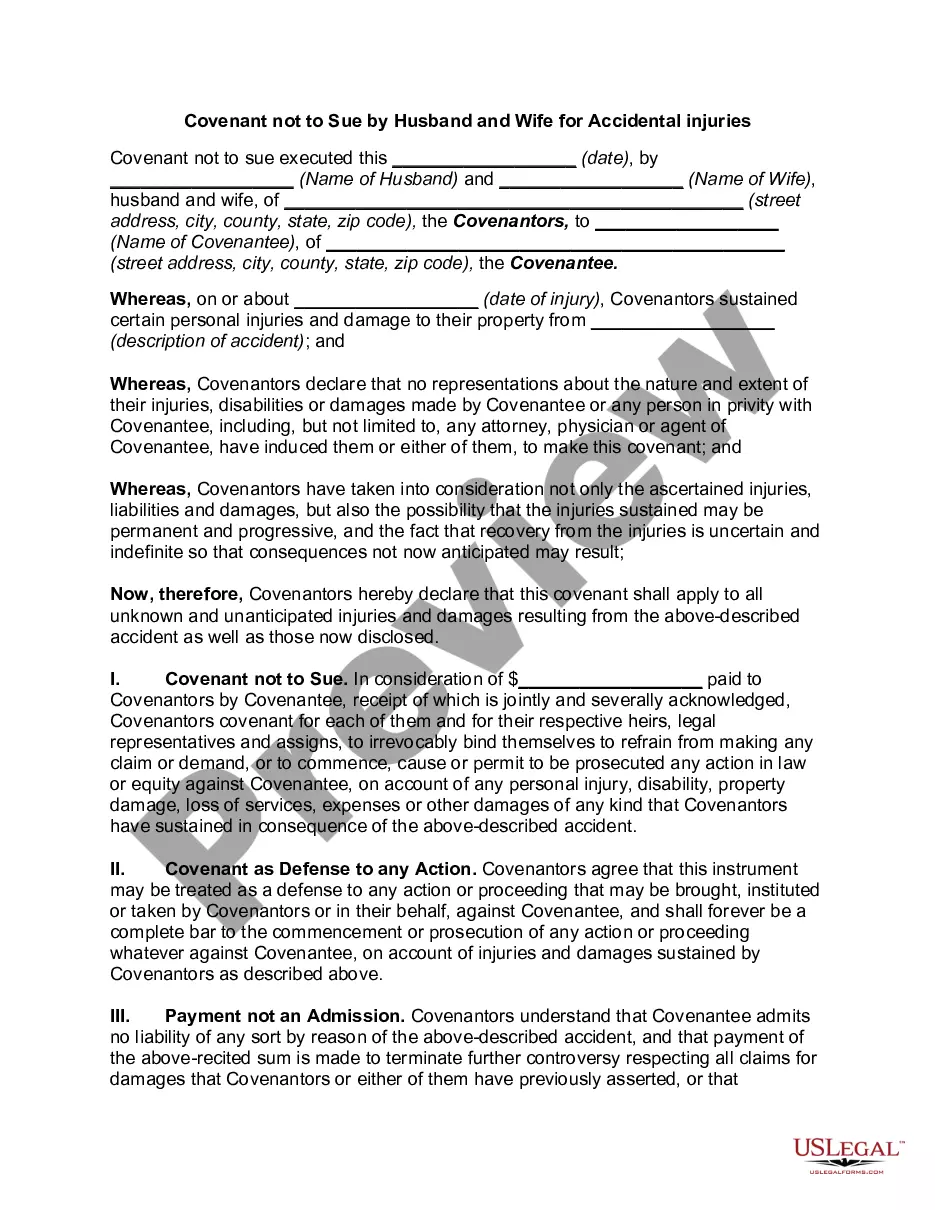
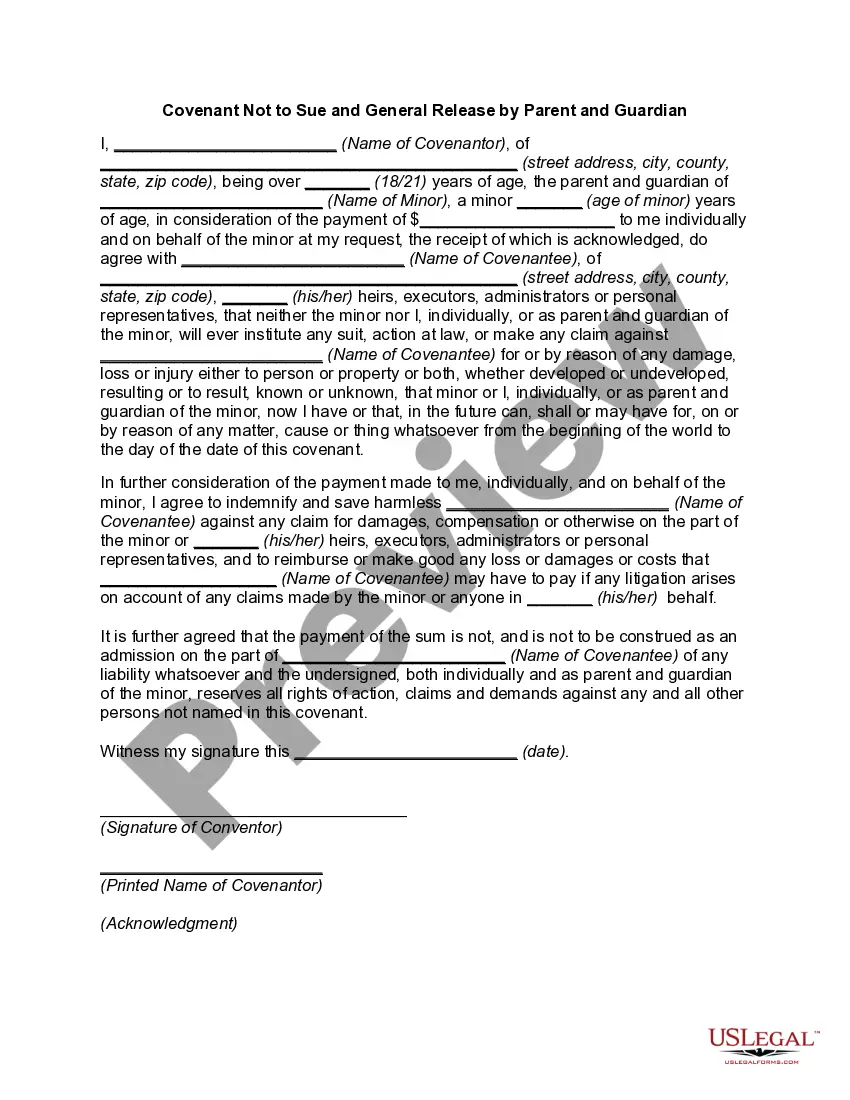
Texas General Covenant Not to Sue
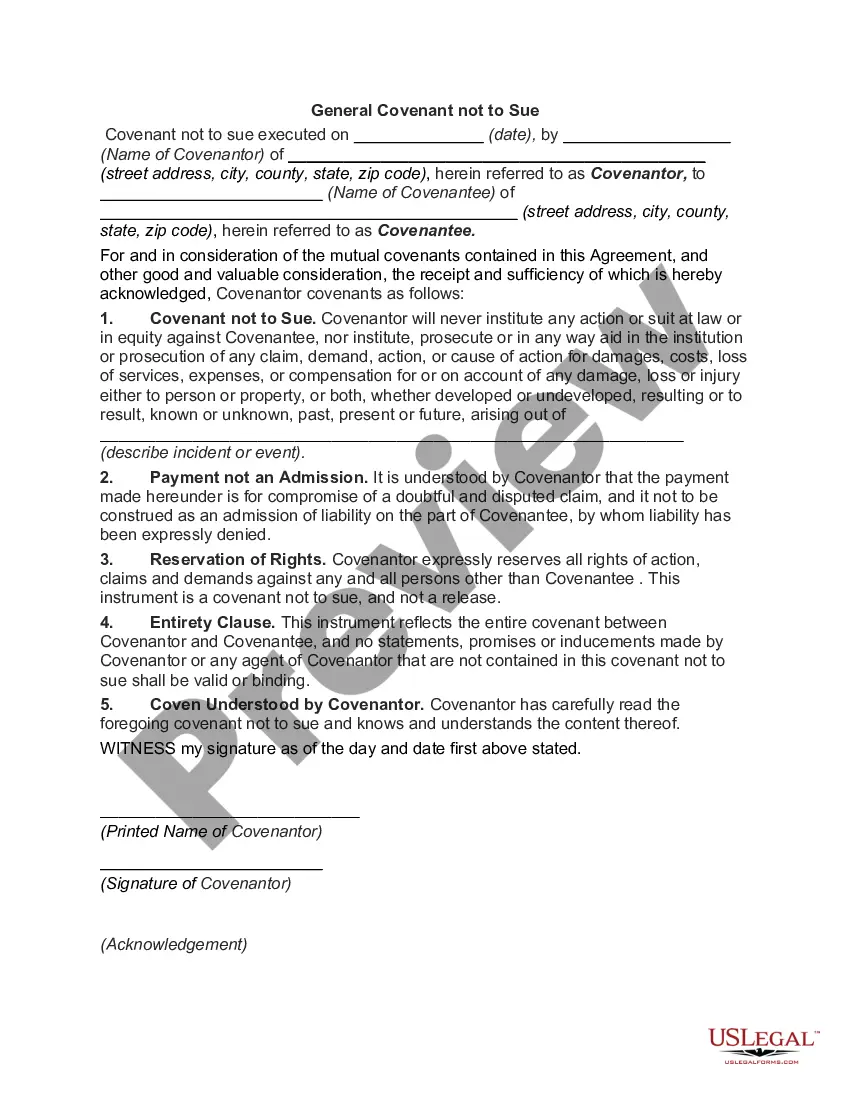
Description
Get your form ready online
Our built-in tools help you complete, sign, share, and store your documents in one place.
Make edits, fill in missing information, and update formatting in US Legal Forms—just like you would in MS Word.
Download a copy, print it, send it by email, or mail it via USPS—whatever works best for your next step.
Sign and collect signatures with our SignNow integration. Send to multiple recipients, set reminders, and more. Go Premium to unlock E-Sign.
If this form requires notarization, complete it online through a secure video call—no need to meet a notary in person or wait for an appointment.
We protect your documents and personal data by following strict security and privacy standards.

Make edits, fill in missing information, and update formatting in US Legal Forms—just like you would in MS Word.

Download a copy, print it, send it by email, or mail it via USPS—whatever works best for your next step.

Sign and collect signatures with our SignNow integration. Send to multiple recipients, set reminders, and more. Go Premium to unlock E-Sign.

If this form requires notarization, complete it online through a secure video call—no need to meet a notary in person or wait for an appointment.

We protect your documents and personal data by following strict security and privacy standards.
Looking for another form?


How to fill out General Covenant Not To Sue?
Are you presently in the location where you frequently require documents for either professional or personal purposes nearly every day.
There are many legitimate document templates available online, but finding reliable ones can be challenging.
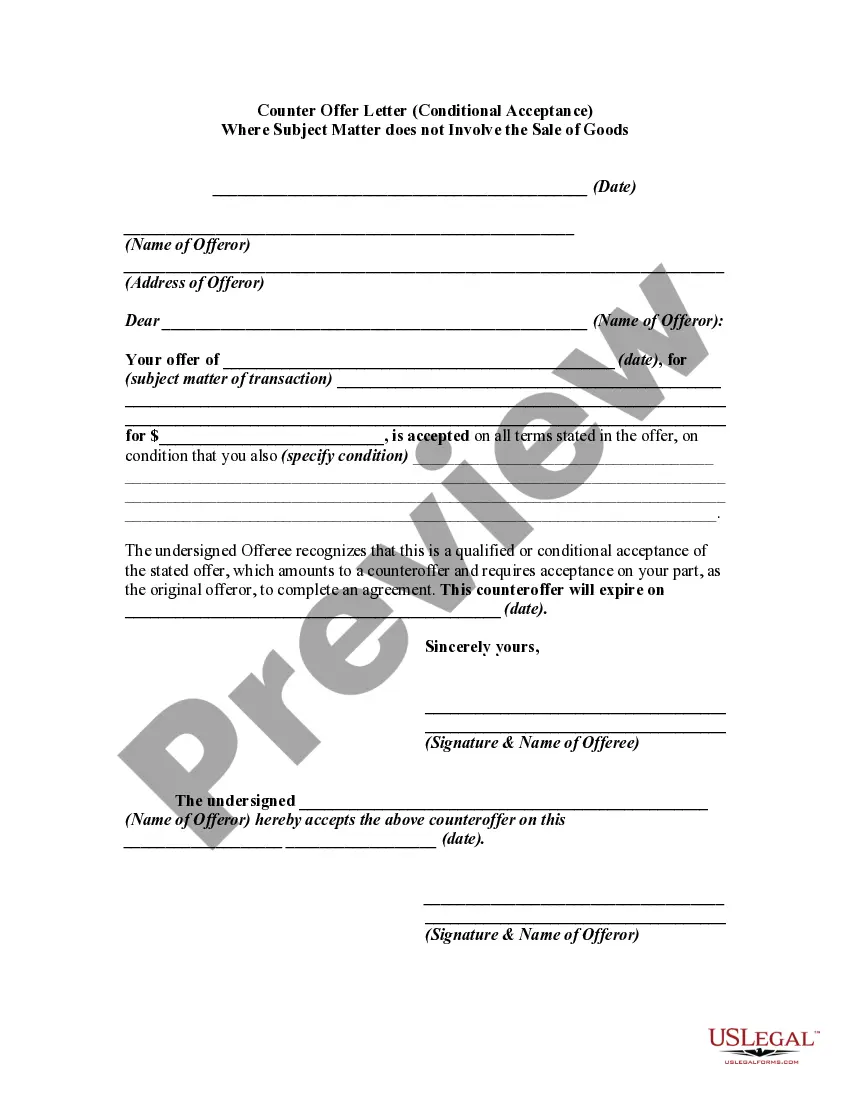
US Legal Forms offers a vast array of document templates, such as the Texas General Covenant Not to Sue, which are designed to comply with federal and state regulations.
When you find the right document, click on Buy now.
Select the payment plan you prefer, enter the required information to create your account, and complete the transaction using your PayPal or credit card.
- If you are already familiar with the US Legal Forms website and possess an account, simply sign in.
- Then, you can download the Texas General Covenant Not to Sue template.
- If you do not have an account and wish to start using US Legal Forms, follow these steps.
- Select the document you need and ensure it is appropriate for your specific state/region.
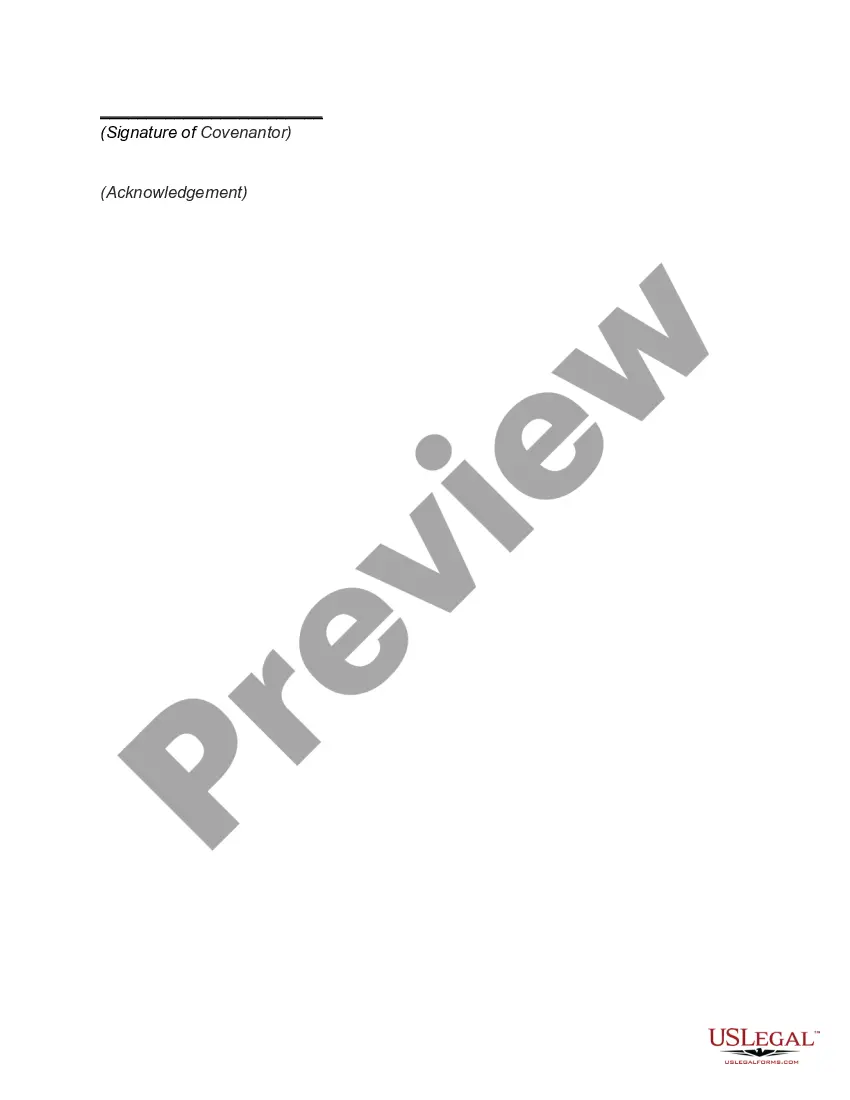
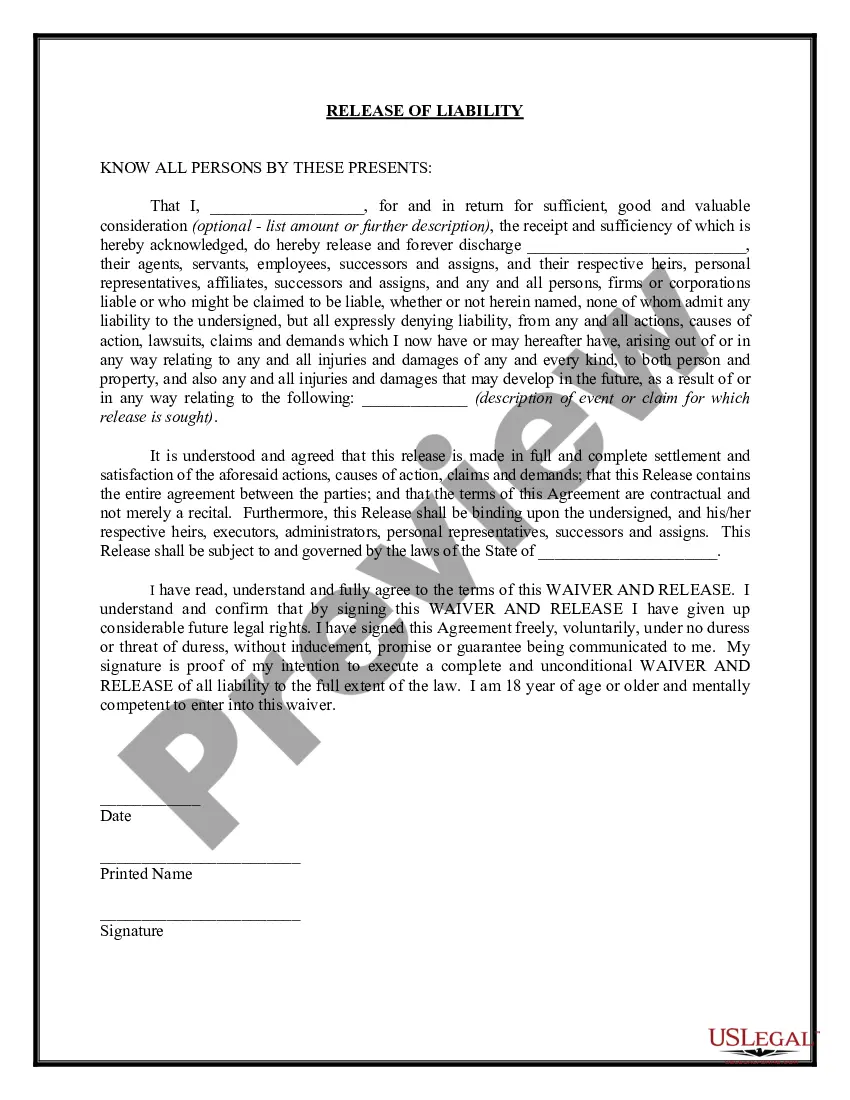
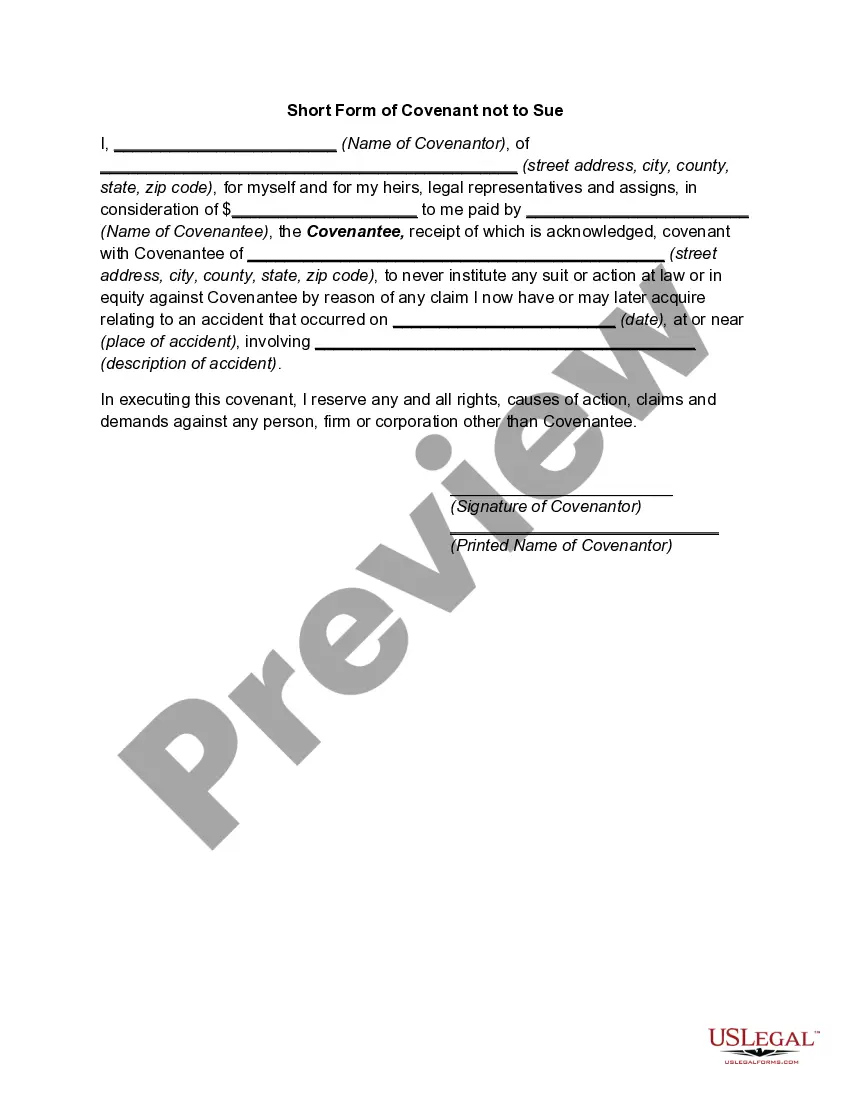
- Utilize the Preview button to review the form.
- Check the details to confirm that you have selected the correct document.
- If the document isn’t what you are seeking, use the Search feature to locate the form that fulfills your needs.
Form popularity
FAQ
Covenants are legally binding and enforceable by the court. What might a covenant restrict? A covenant can restrict the appearance of a development, for example its height, size or quantity, or it can restrict the activity that takes place on a plot, such as allowing only agricultural or residential use.
A formal agreement or promise, usually included in a contract or deed, to do or not do a particular act; a compact or stipulation made in writing or by parol.
A covenant is a rule which states what can and cannot be done on the land. They are usually created in a deed between two parties, with one party agreeing to restrict the use of its land in a certain way for the benefit of another's land.
6.Covenant Not to Sue. A covenant not to sue is a legal term that means Executive promises not to file a lawsuit in court. It is different from the General Release of claims contained in Section 4 above.
A covenant not to execute is a contract where a defendant admits to liability and a set amount of damages, and the plaintiff agrees not to seek a judgment against the defendant based on that admission.
While a contract is legally binding, a covenant is a spiritual agreement. A contract is an agreement between parties while a covenant is a pledge. A covenant is an agreement you can break while a covenant is a perpetual promise. You seal a covenant while you sign a contract.
Covenants are legally binding and enforceable by the court. What might a covenant restrict? A covenant can restrict the appearance of a development, for example its height, size or quantity, or it can restrict the activity that takes place on a plot, such as allowing only agricultural or residential use.
A formal agreement or promise, usually included in a contract or deed, to do or not do a particular act; a compact or stipulation made in writing or by parol.
Here are some fundamental differences: While a contract is legally binding, a covenant is a spiritual agreement. A contract is an agreement between parties while a covenant is a pledge. A covenant is an agreement you can break while a covenant is a perpetual promise.
Breaching a restrictive covenant leaves you open to potential legal action from the other party, if they wish to enforce the covenant. If you are taken to court and the other party is successful, you might have to undo any work carried out and may face a fine or have to pay damages, as well as legal fees.