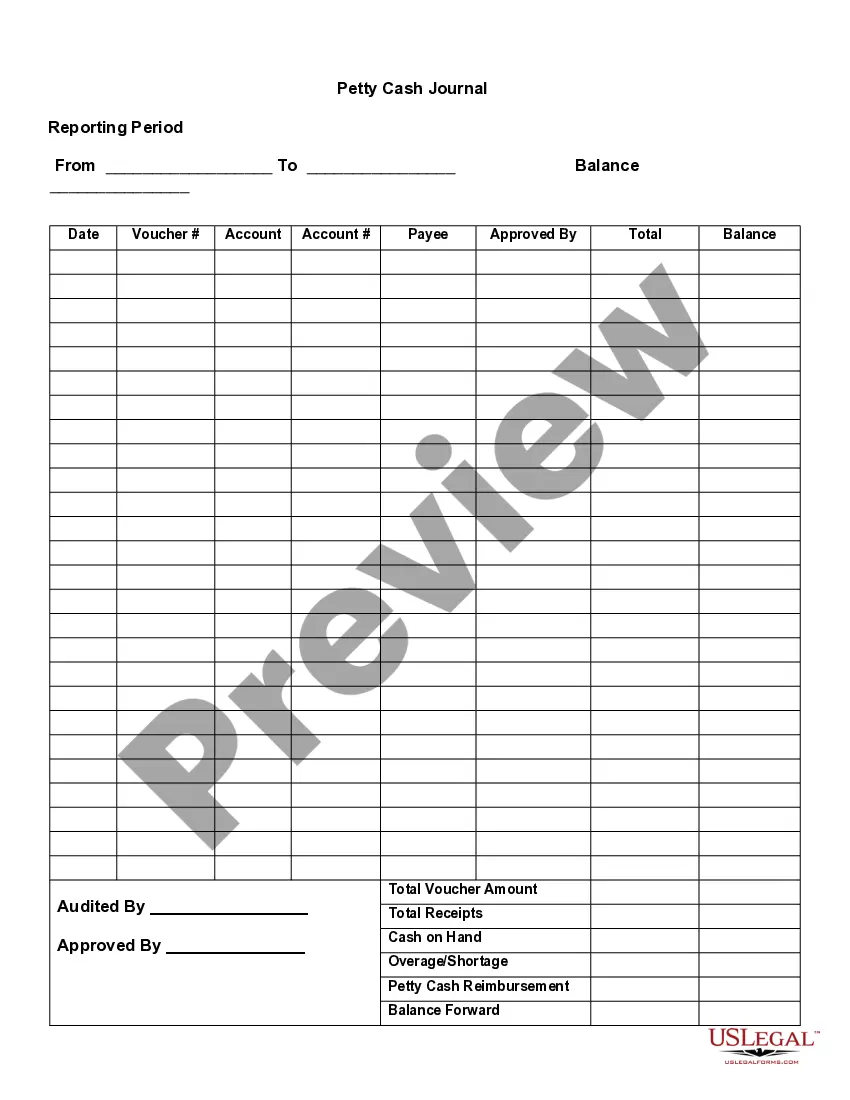
Texas Petty Cash Journal
Description
Get your form ready online
Our built-in tools help you complete, sign, share, and store your documents in one place.
Make edits, fill in missing information, and update formatting in US Legal Forms—just like you would in MS Word.
Download a copy, print it, send it by email, or mail it via USPS—whatever works best for your next step.
Sign and collect signatures with our SignNow integration. Send to multiple recipients, set reminders, and more. Go Premium to unlock E-Sign.
If this form requires notarization, complete it online through a secure video call—no need to meet a notary in person or wait for an appointment.
We protect your documents and personal data by following strict security and privacy standards.

Make edits, fill in missing information, and update formatting in US Legal Forms—just like you would in MS Word.

Download a copy, print it, send it by email, or mail it via USPS—whatever works best for your next step.

Sign and collect signatures with our SignNow integration. Send to multiple recipients, set reminders, and more. Go Premium to unlock E-Sign.

If this form requires notarization, complete it online through a secure video call—no need to meet a notary in person or wait for an appointment.

We protect your documents and personal data by following strict security and privacy standards.
Looking for another form?





How to fill out Petty Cash Journal?
It is feasible to spend hours online striving to locate the legal document template that meets the state and federal criteria you require.
US Legal Forms provides a vast array of legal forms that have been reviewed by experts.
You can easily download or print the Texas Petty Cash Journal from the service.
If available, make use of the Preview option to review the document template as well.
- If you already have a US Legal Forms account, you can Log In and select the Acquire option.
- Subsequently, you can complete, modify, print, or sign the Texas Petty Cash Journal.
- Every legal document template you purchase is yours permanently.
- To obtain another copy of any purchased form, navigate to the My documents tab and select the corresponding option.
- If you are using the US Legal Forms site for the first time, follow the straightforward instructions provided below.
- First, ensure that you have chosen the correct document template for the area/town of your selection.
- Review the form description to confirm you have selected the appropriate type.
Form popularity
FAQ
Petty cash is a current asset and should be listed as a debit on the company balance sheet. To initially fund a petty cash account, the accountant should write a check made out to "Petty Cash" for the desired amount of cash to keep on hand and then cash the check at the company's bank.
A petty cash account is an imprest account, so it is only debited when the fund is initially established or increased in amount. Transactions to replenish the account involve a debit to the expenses and a credit to the cash account (e.g., bank account).
Petty cash is simply any physical cash your business keeps on hand to pay for small, unplanned expenses. Most businesses won't keep more than a few hundred dollars in petty cash around.
Is petty cash fund asset or liabilities? Petty cash is not a liability. In fact, it is the current assets that have the same classification of cash on hand and cash in the bank.
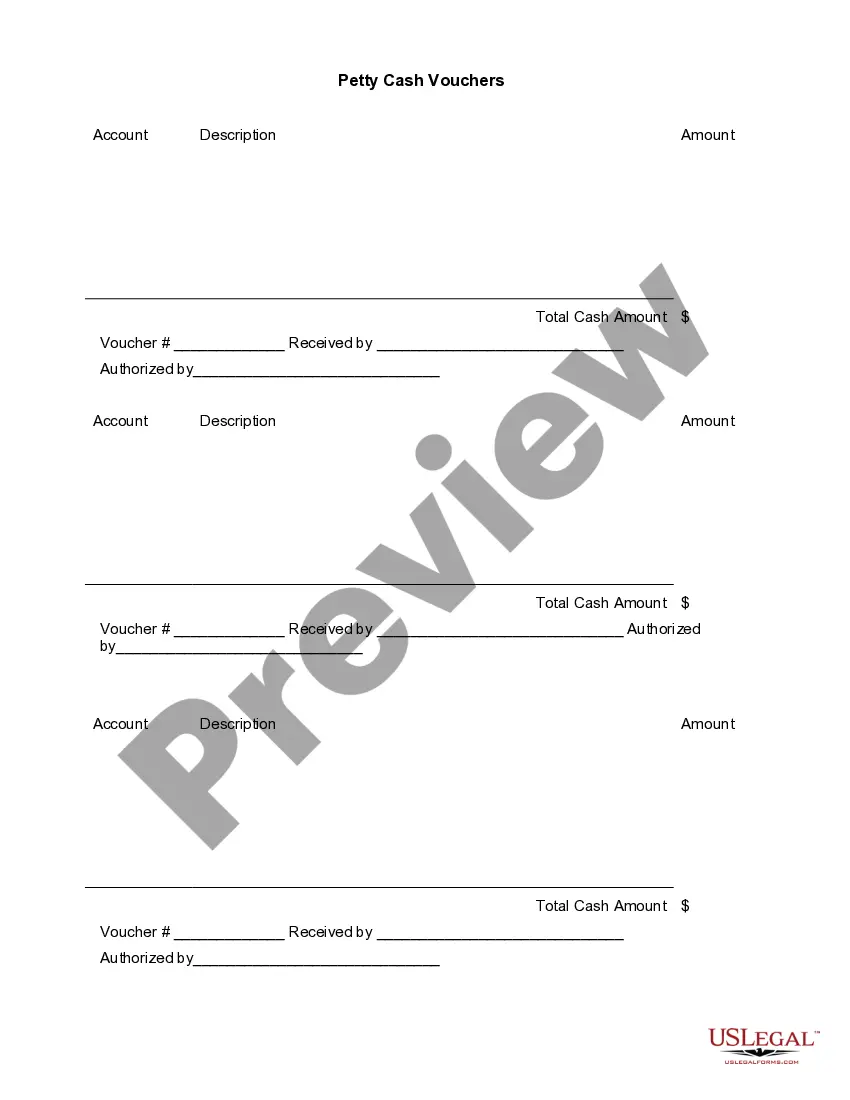
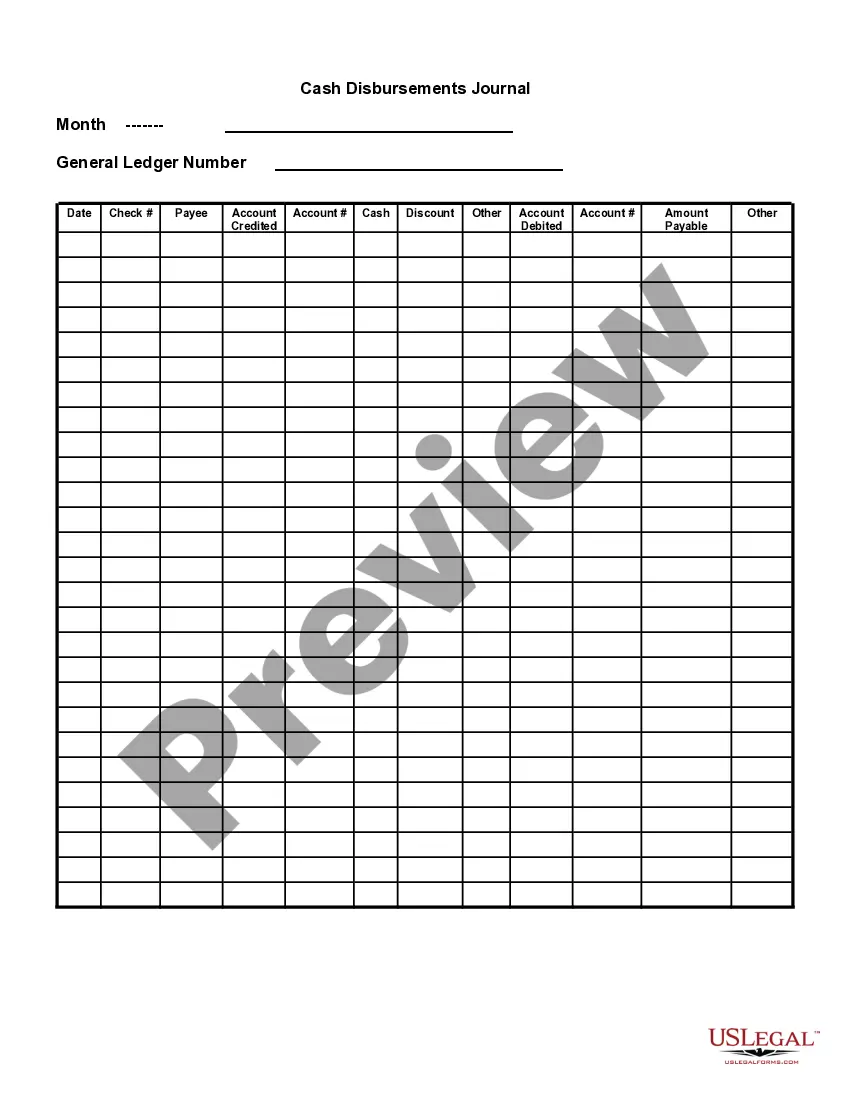
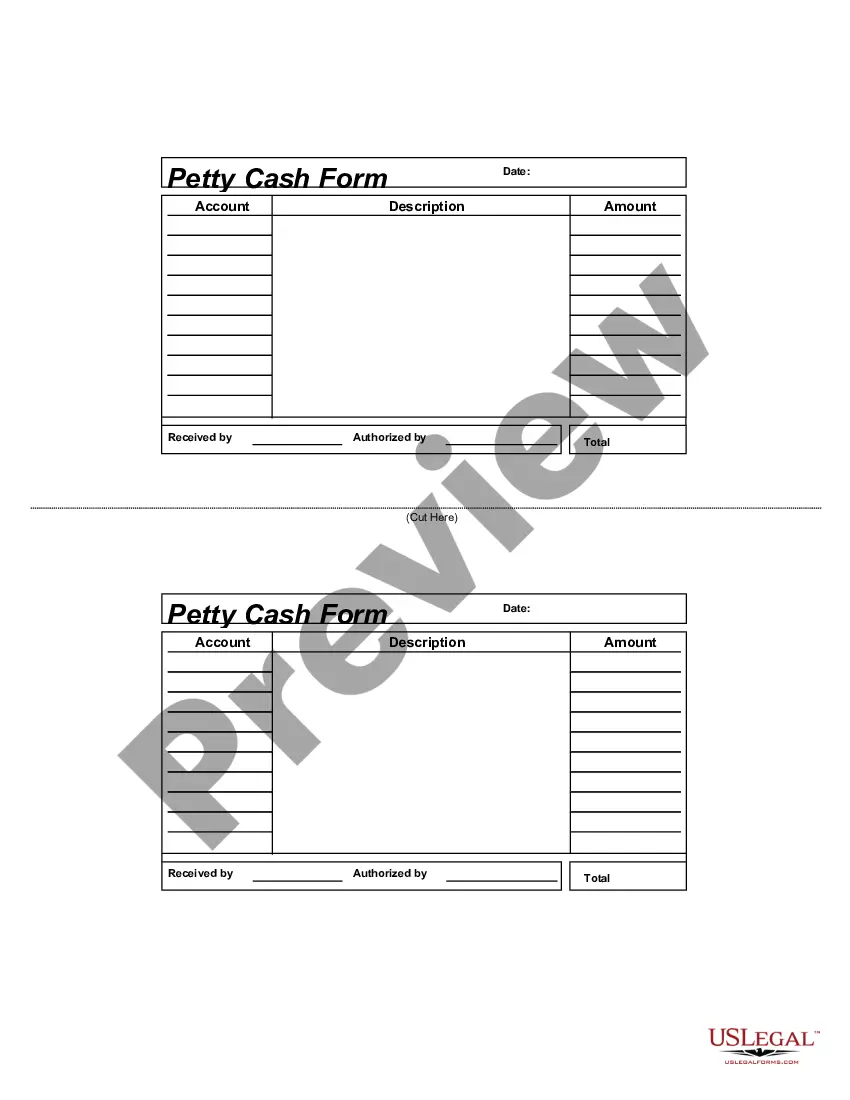
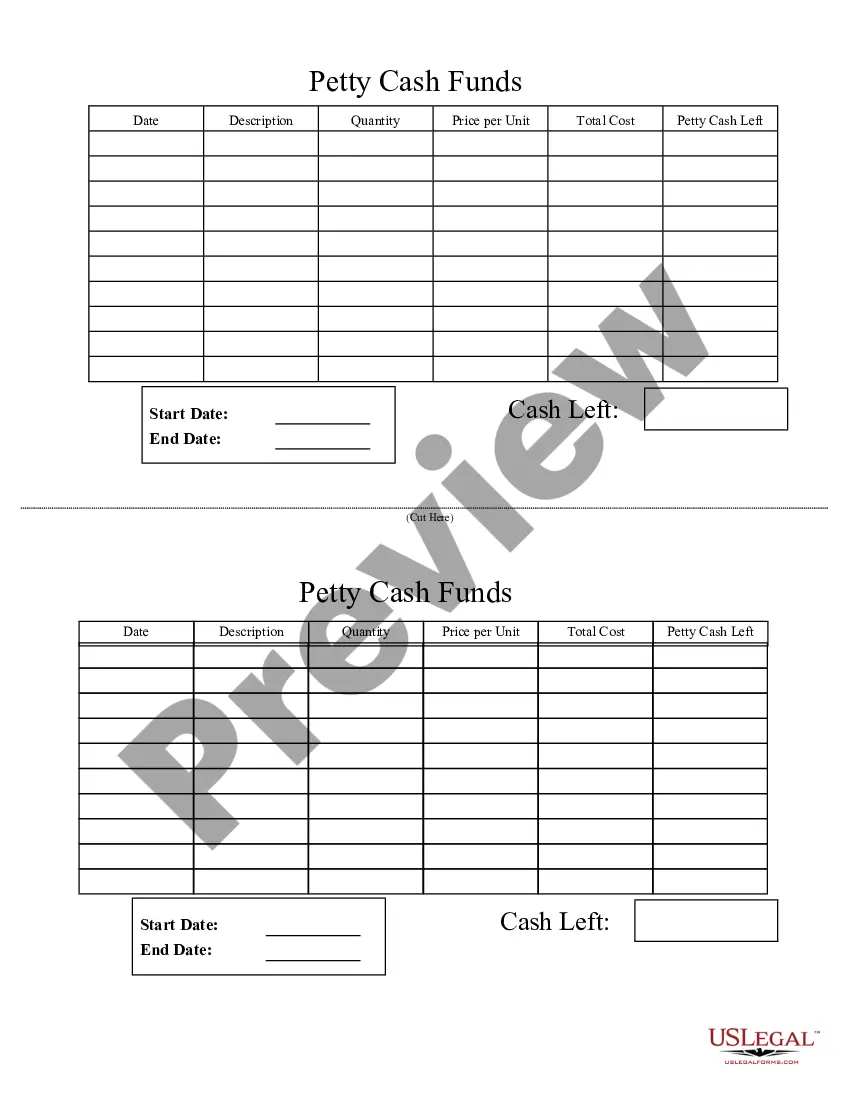
The petty cash journal contains a summarization of the payments from a petty cash fund. The totals in the journal are then used as the basis for a journal entry into a company's general ledger. This journal entry lists petty cash expenditures by expense type.
When a petty cash fund is in use, petty cash transactions are still recorded on financial statements. No accounting journal entries are made when purchases are made using petty cash, it's only when the custodian needs more cashand in exchange for the receipts, receives new fundsthat the journal entries are recorded.
A petty cash fund is a small amount of company cash, often kept on hand (e.g., in a locked drawer or box), to pay for minor or incidental expenses, such as office supplies or employee reimbursements. A petty cash fund will undergo periodic reconciliations, with transactions also recorded on the financial statements.
Petty cash appears within the current assets section of the balance sheet. This is because line items in the balance sheet are sorted in their order of liquidity. Since petty cash is highly liquid, it appears near the top of the balance sheet.
The journal entry that needs to be recorded is a debit (increase) to the petty cash fund and a credit (decrease) to the business checking account. Withdrawals made to the petty cash fund will be recorded as expenses.
The petty cash journal entry is a debit to the petty cash account and a credit to the cash account. The petty cash custodian refills the petty cash drawer or box, which should now contain the original amount of cash that was designated for the fund. The cashier creates a journal entry to record the petty cash receipts.