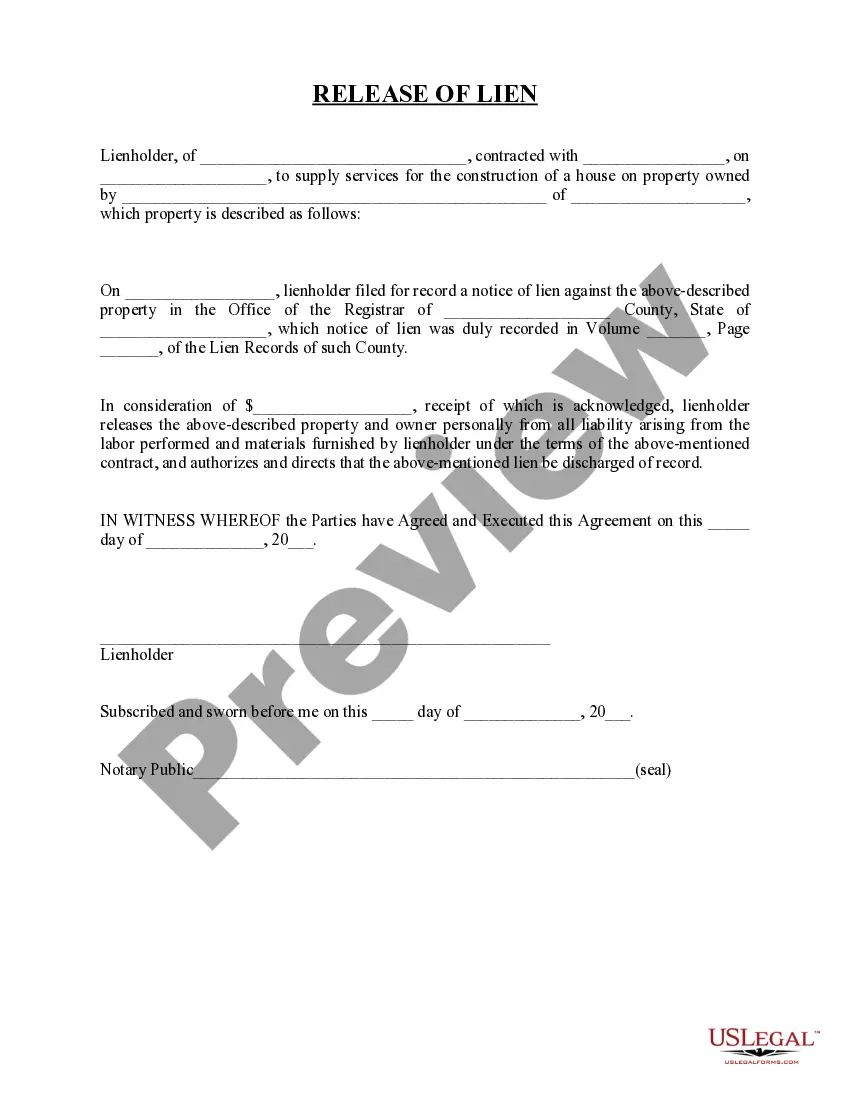
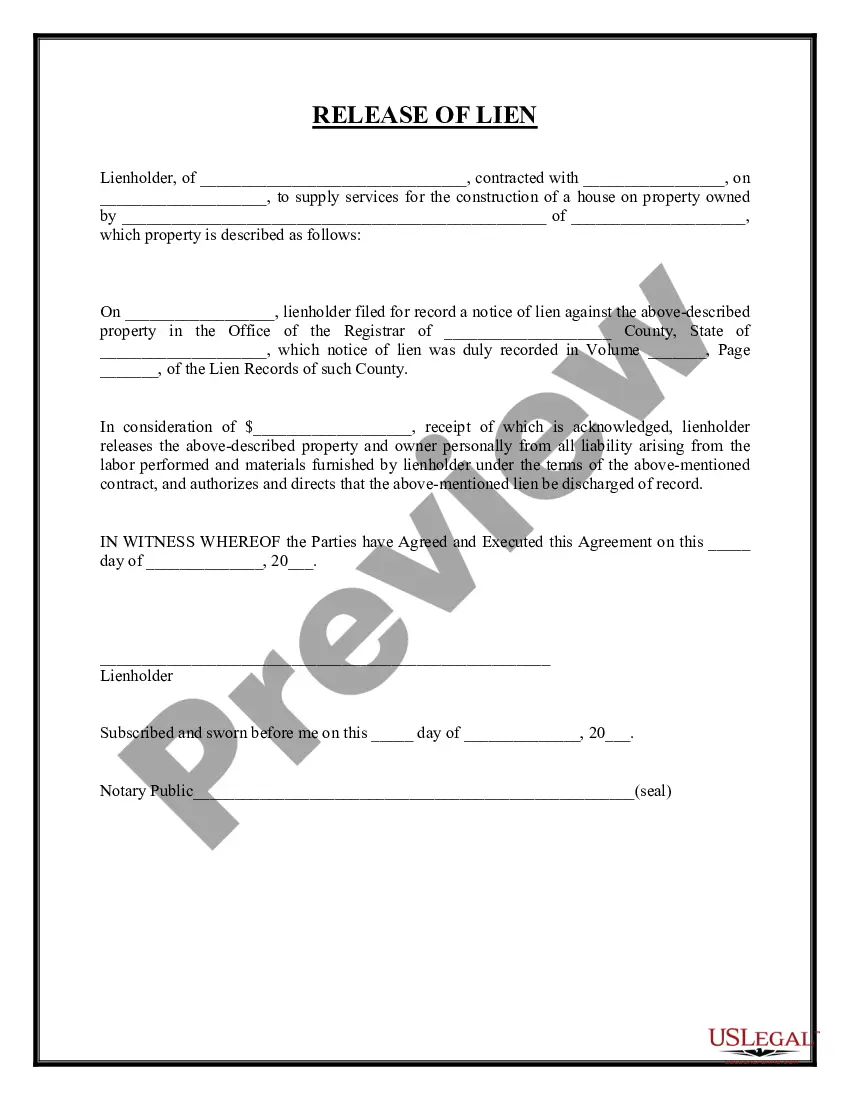
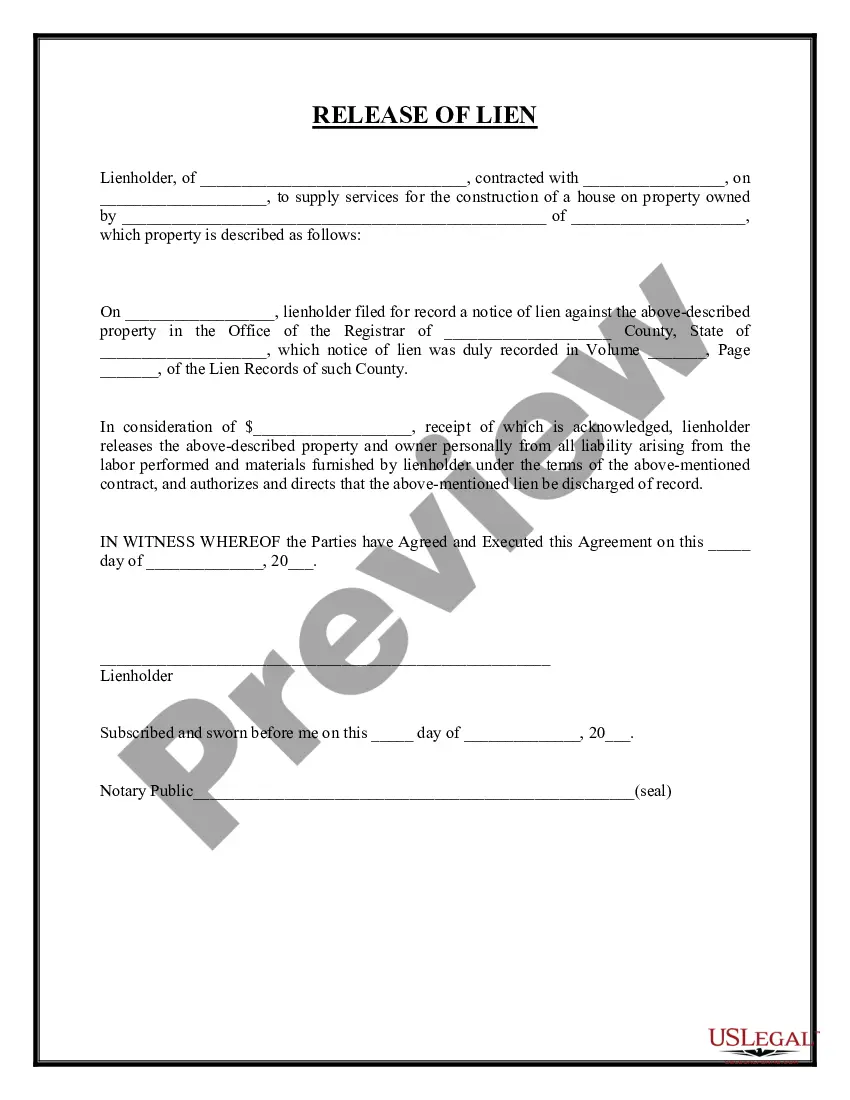
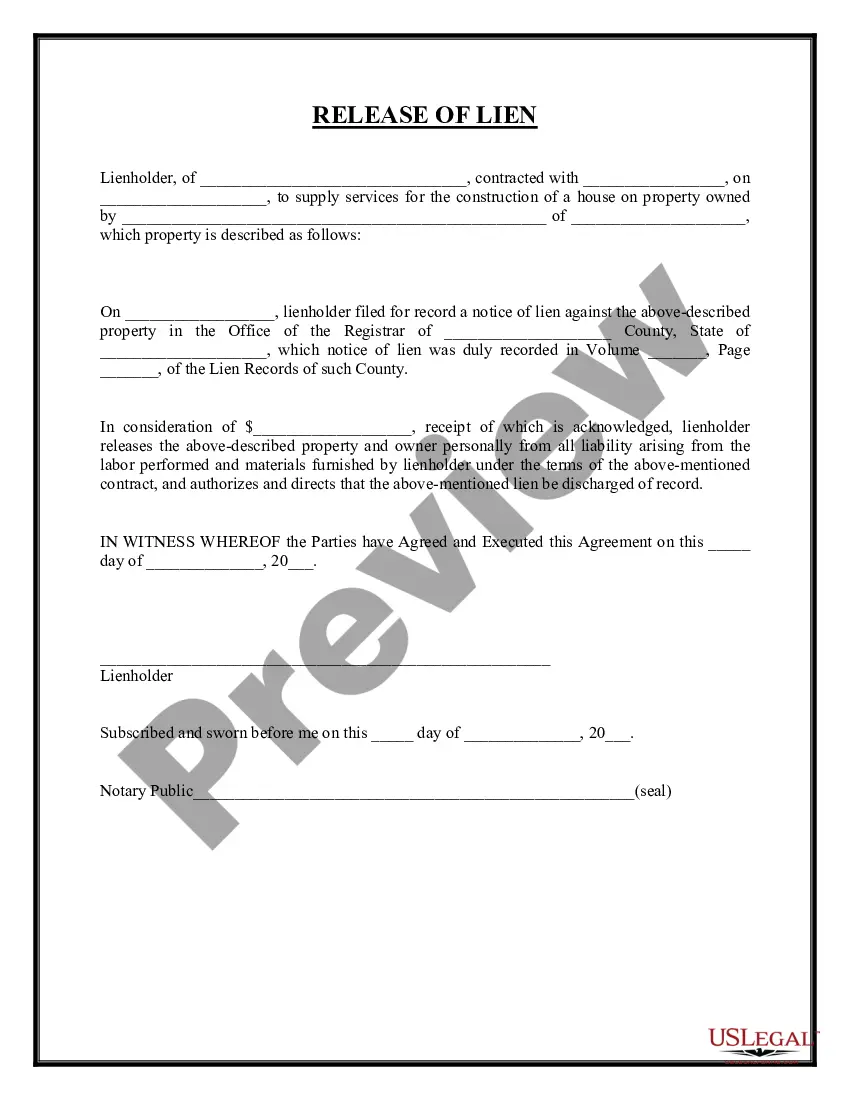
This form is a release of a lien. The form provides that the lienholder chooses to release a certain parcel of property and the owner from all liability arising from the labor performed and materials furnished by the lienholder under the terms of a contract mentioned in the document.
Texas Release of Lien
Category:
State:
Multi-State
Control #:
US-01775-AZ
Format:
Word;
Rich Text
Instant download
Description
Get your form ready online
Our built-in tools help you complete, sign, share, and store your documents in one place.
Built-in online Word editor
Make edits, fill in missing information, and update formatting in US Legal Forms—just like you would in MS Word.
Export easily
Download a copy, print it, send it by email, or mail it via USPS—whatever works best for your next step.
E-sign your document
Sign and collect signatures with our SignNow integration. Send to multiple recipients, set reminders, and more. Go Premium to unlock E-Sign.
Notarize online 24/7
If this form requires notarization, complete it online through a secure video call—no need to meet a notary in person or wait for an appointment.
Store your document securely
We protect your documents and personal data by following strict security and privacy standards.

Make edits, fill in missing information, and update formatting in US Legal Forms—just like you would in MS Word.

Download a copy, print it, send it by email, or mail it via USPS—whatever works best for your next step.

Sign and collect signatures with our SignNow integration. Send to multiple recipients, set reminders, and more. Go Premium to unlock E-Sign.

If this form requires notarization, complete it online through a secure video call—no need to meet a notary in person or wait for an appointment.

We protect your documents and personal data by following strict security and privacy standards.
Looking for another form?


How to fill out Release Of Lien?
US Legal Forms - one of the largest collections of legal documents in the United States - offers a wide array of legal document formats that you can download or print. By utilizing the site, you can access thousands of forms for business and personal use, organized by categories, states, or keywords. You can find the most recent versions of forms like the Texas Release of Lien within moments.
If you already have a subscription, Log In and retrieve the Texas Release of Lien from the US Legal Forms library. The Download button will be visible on every form you view. You can access all previously downloaded forms within the My documents section of your account.
If you are using US Legal Forms for the first time, here are some basic tips to help you get started: Ensure you have selected the correct form for your city/region. Click the Preview button to review the form's content. Check the form details to confirm that you have chosen the correct form. If the form does not meet your requirements, use the Search field at the top of the screen to find one that does.
Access the Texas Release of Lien with US Legal Forms, the most comprehensive library of legal document formats. Utilize thousands of professional and state-specific templates that meet your business or personal needs.
- If you are satisfied with the form, confirm your choice by clicking the Buy now button.
- Then, select the pricing plan you prefer and provide your details to register for an account.
- Complete the transaction. Use your credit card or PayPal account to finalize the purchase.
- Choose the format and download the form to your device.
- Make modifications. Fill out, edit, print, and sign the downloaded Texas Release of Lien.
- Every template you added to your account does not have an expiration date and is yours indefinitely. So, if you need to download or print another copy, simply go to the My documents section and click on the form you need.
Form popularity
FAQ
Lenders in Texas customarily use a release of lien when the loan secured by a deed of trust has been paid in full or otherwise satisfied. The release of lien is recorded in the county where the real property collateral is located.
To remove a lien recorded on a paper title, you will need: the vehicle title. a release of lien letter and/or other notifications from the lienholder(s) currently named on the vehicle title. a completed Application for Texas Title and/or Registration (Form 130-U)
Ing to this law, a debtor must file an affidavit with the county to secure the release of a judgment lien against a primary residence. The debtor must first provide a 30-day notice letter to the creator of the judgment, containing a copy of the affidavit the debtor intends to file.
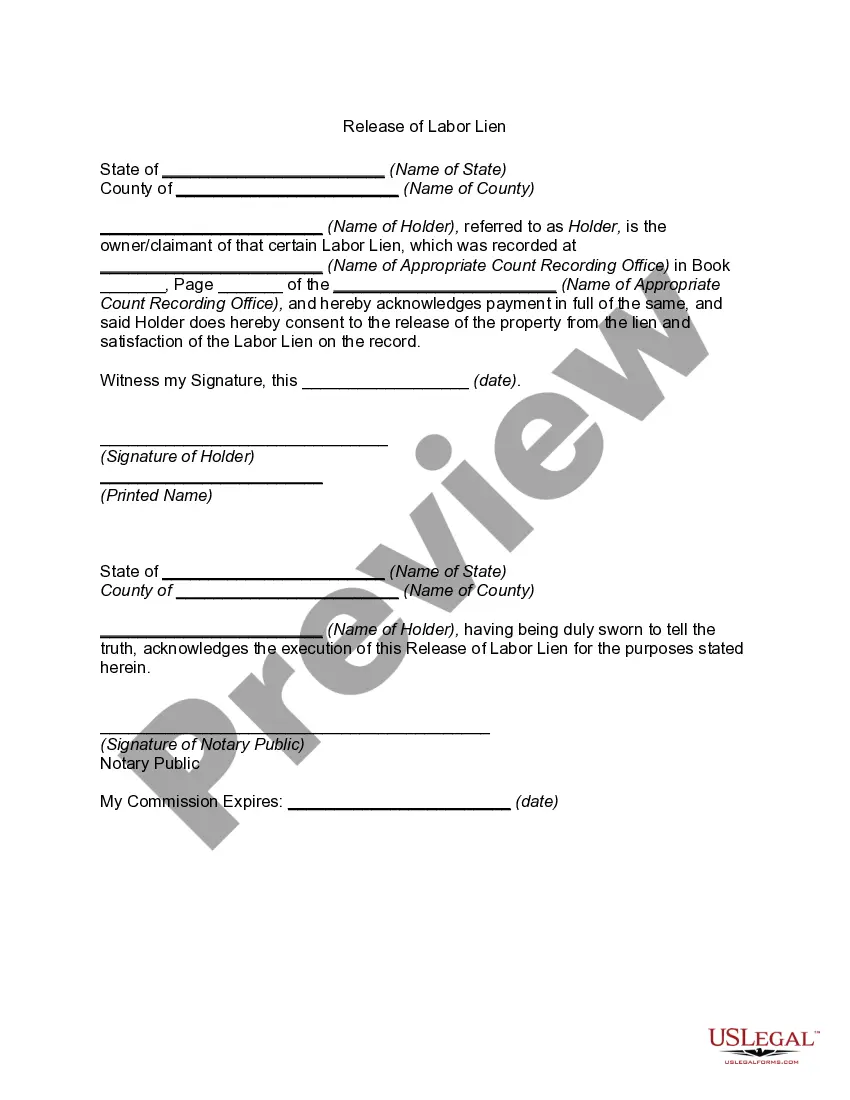
This Texas Lien Release form is used to cancel a lien that has already been filed. It's most often used to release a lien claim after a lien claimant receives payment. However, they may also be released based on settlements, legal controversies, because they expired, or more.
Typically, it's the responsibility of the seller to pay off the lien on his or her property on or before the day of closing. Most liens are paid off from the proceeds of the sale at the time of closing.
You will need to: Schedule an appointment at a TxDMV Regional Service Center. Complete the Application for Certified Copy of Title (VTR-34) Provide your original release of lien letter or document and a valid photo ID. Pay the $5.45 fee.
Summary lien removal is governed by Texas Property Code Section 53.160 (?Summary Motion to Remove Invalid Lien or Unenforceable Lien?). This sets forth a process by which a lien can be removed in as fast as 21 days after the contractor (lien claimant) appears in the action.
To remove a lien recorded on a paper title, you will need: the vehicle title. a release of lien letter and/or other notifications from the lienholder(s) currently named on the vehicle title. a completed Application for Texas Title and/or Registration (Form 130-U)
The lien release should be signed and notarized by the same person (contractor) who filed the mechanic's lien. Preparing and filing the document itself can be done by the interested party (i.e. the project owner) or any other individual.
Texas Property Code, Section 53.284, prescribes statutory language for Waiver and Release of Lien or Payment Bond Claims. Waivers for claims under a PRIME CONTRACT signed AFTER January 1, 2021, DO NOT need to be notarized. Waivers for claims under a PRIME CONTRACT signed BEFORE January 1, 2021, MUST be notarized.