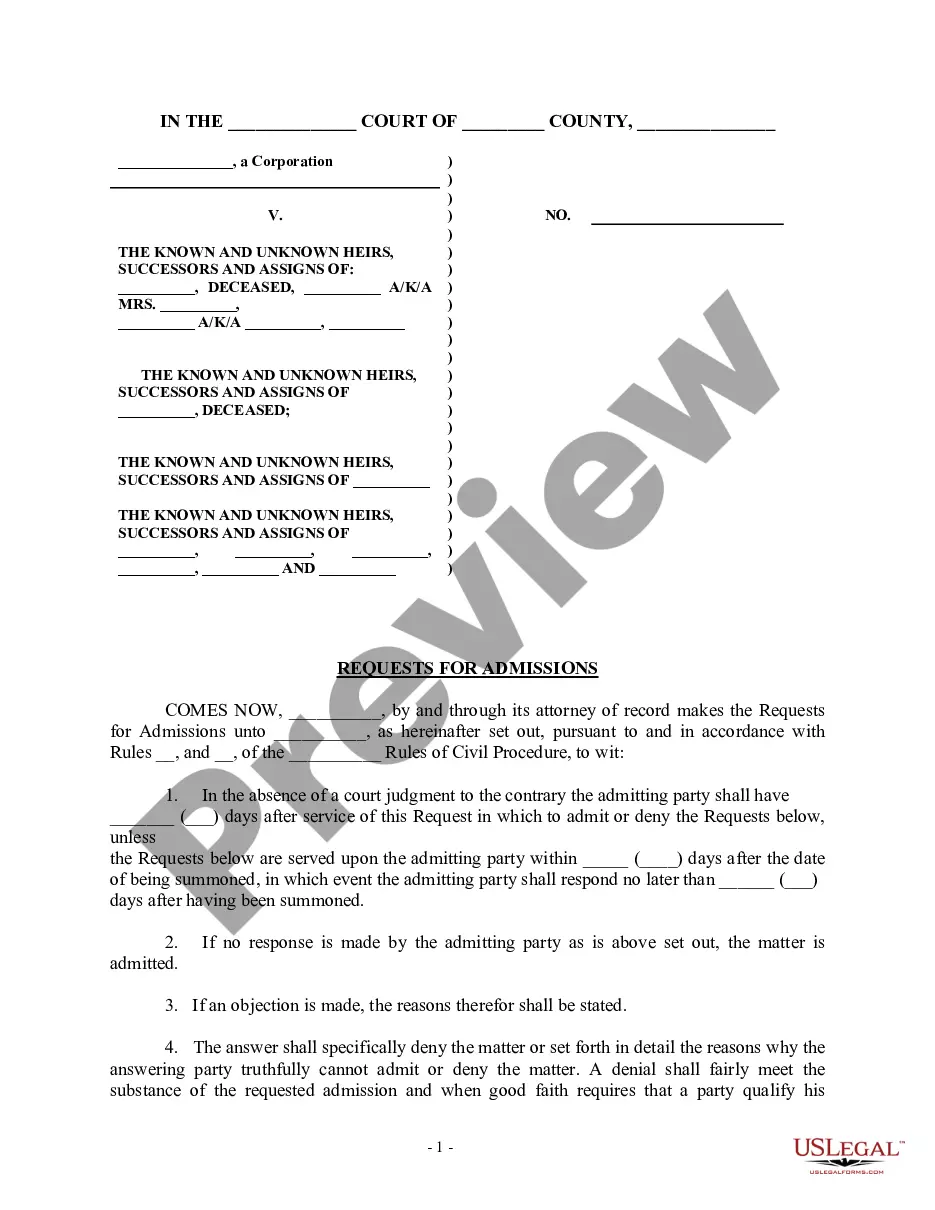
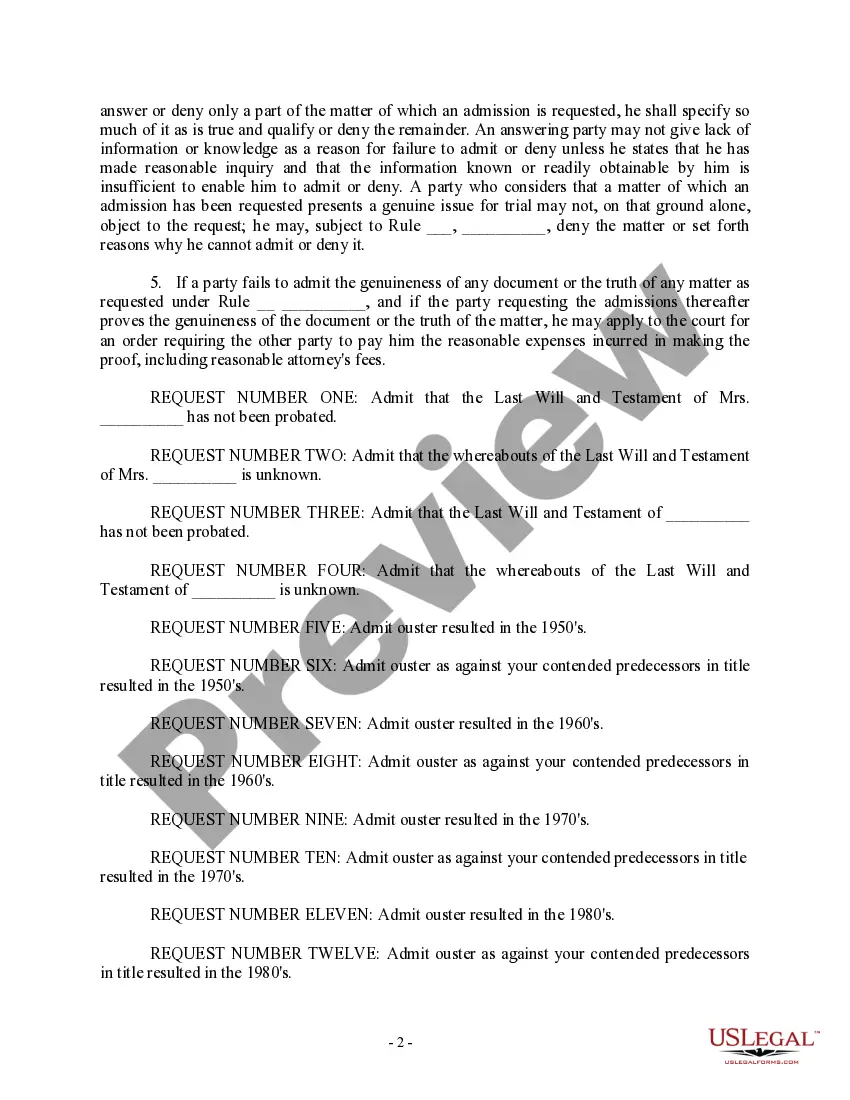
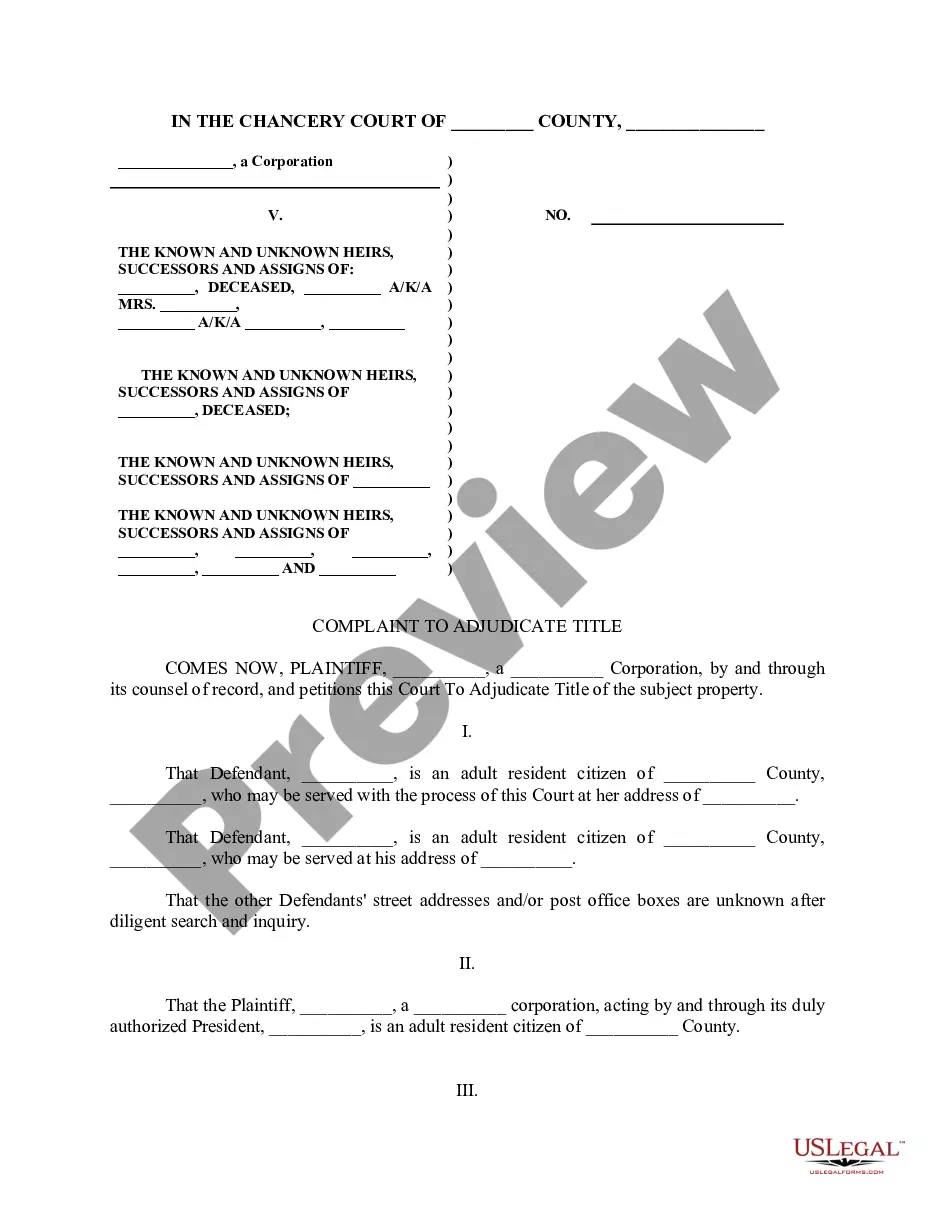
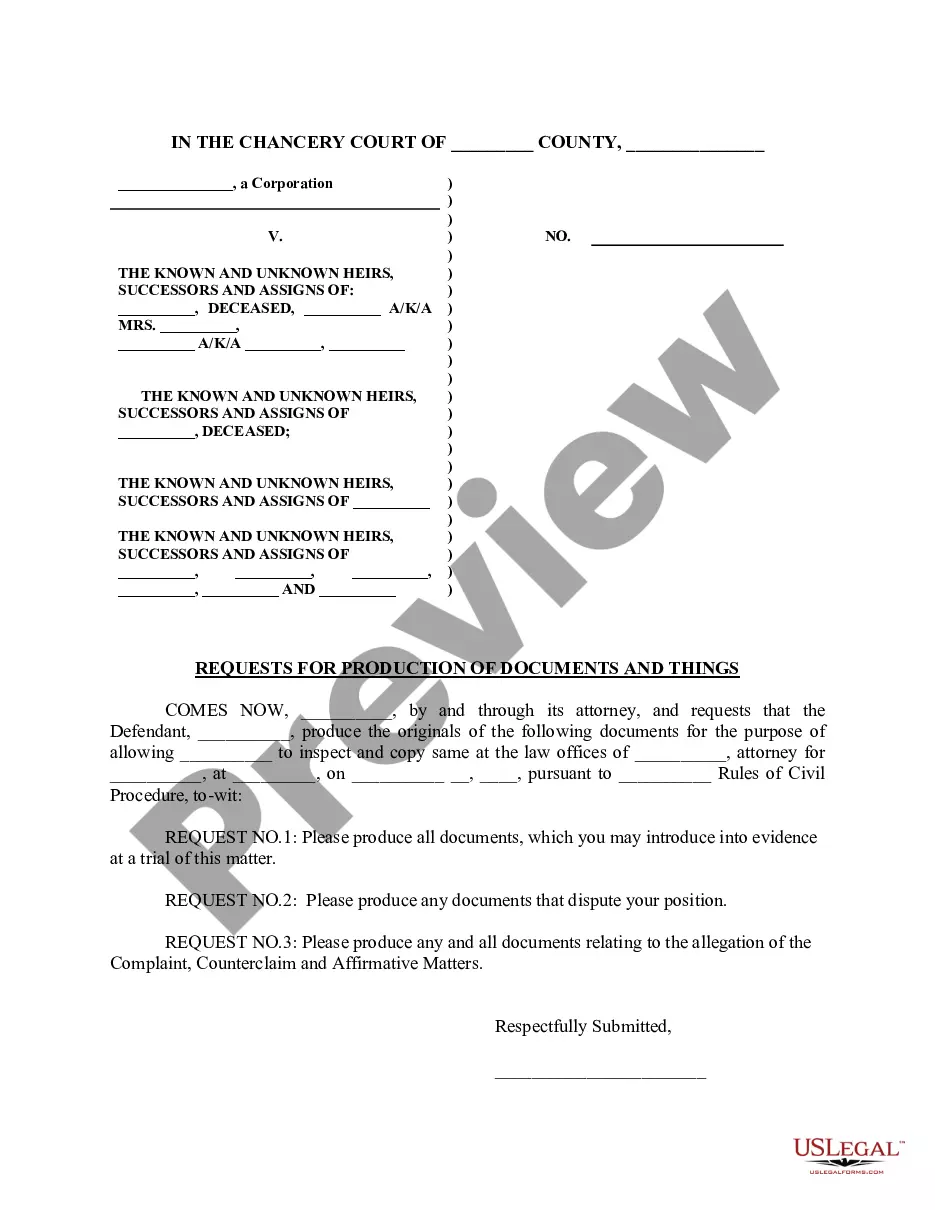
Texas Requests for Admissions
Description

Get your form ready online
Our built-in tools help you complete, sign, share, and store your documents in one place.
Make edits, fill in missing information, and update formatting in US Legal Forms—just like you would in MS Word.
Download a copy, print it, send it by email, or mail it via USPS—whatever works best for your next step.
Sign and collect signatures with our SignNow integration. Send to multiple recipients, set reminders, and more. Go Premium to unlock E-Sign.
If this form requires notarization, complete it online through a secure video call—no need to meet a notary in person or wait for an appointment.
We protect your documents and personal data by following strict security and privacy standards.

Make edits, fill in missing information, and update formatting in US Legal Forms—just like you would in MS Word.

Download a copy, print it, send it by email, or mail it via USPS—whatever works best for your next step.

Sign and collect signatures with our SignNow integration. Send to multiple recipients, set reminders, and more. Go Premium to unlock E-Sign.

If this form requires notarization, complete it online through a secure video call—no need to meet a notary in person or wait for an appointment.

We protect your documents and personal data by following strict security and privacy standards.
Looking for another form?

How to fill out Requests For Admissions?
If you need to compile, acquire, or print authorized document templates, utilize US Legal Forms, the largest collection of legal forms available online. Leverage the site's straightforward and user-friendly search to find the documents you require. Various templates for business and personal purposes are organized by categories and states, or keywords. Use US Legal Forms to obtain the Texas Requests for Admissions with just a few clicks.
If you are already a US Legal Forms customer, Log In to your account and click on the Obtain button to access the Texas Requests for Admissions. You can also reach forms you previously obtained in the My documents section of your account.
If you are using US Legal Forms for the first time, follow the instructions below: Step 1. Ensure you have selected the form for your correct state/country. Step 2. Use the Review feature to examine the form’s content. Don’t forget to check the summary. Step 3. If you are dissatisfied with the form, utilize the Search area at the top of the screen to find other versions of the legal form template. Step 4. Once you have located the form you desire, click the Acquire now button. Choose the pricing plan you prefer and provide your details to register for an account. Step 5. Complete the payment process. You may use your credit card or PayPal account to finalize the transaction. Step 6. Select the format of your legal form and download it to your device. Step 7. Fill out, edit, and print or sign the Texas Requests for Admissions.
Avoid altering or removing any HTML tags. Only synonymize plain text outside of the HTML tags.
- Every legal document template you acquire is yours indefinitely.
- You have access to every form you obtained within your account.
- Click on the My documents section and select a form to print or download again.
- Compete and acquire, and print the Texas Requests for Admissions with US Legal Forms.
- There are thousands of professional and state-specific templates available for your business or personal requirements.
Form popularity
FAQ
Proper Objections A responding party has four options: (1) admit; (2) deny; (3) admit in part and deny in part; or (4) explain why the party is unable to answer. It is possible to object to all or part of a request as well, but courts do not like parties who play ?word games? to avoid responding. Further, Civ.
Each discrete subpart of an interrogatory is considered a separate interrogatory. (3) Requests for admissions. Each party may serve no more than 25 requests for admissions. Requests for admissions may be used only to address jurisdictional facts or the genuineness of any documents served with the request.
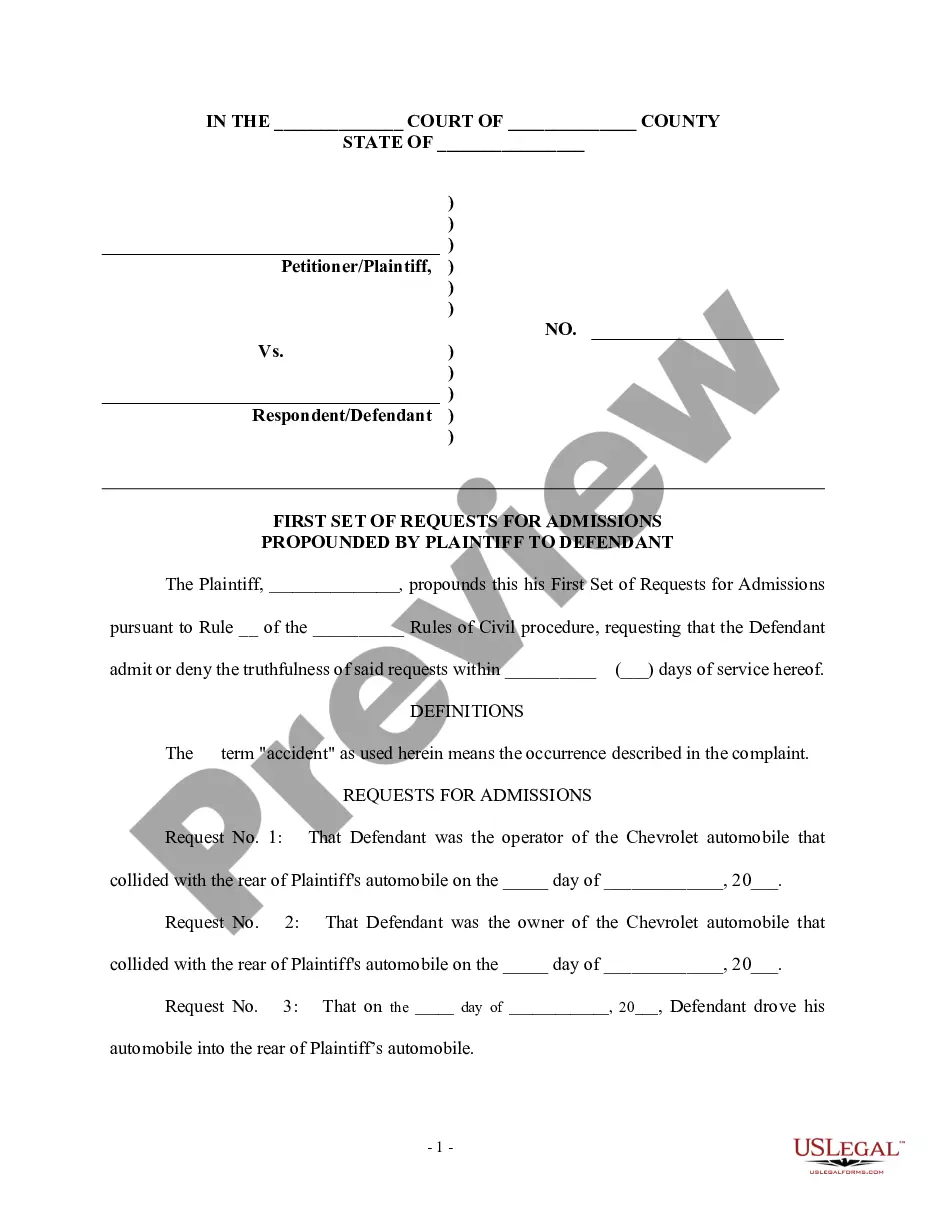
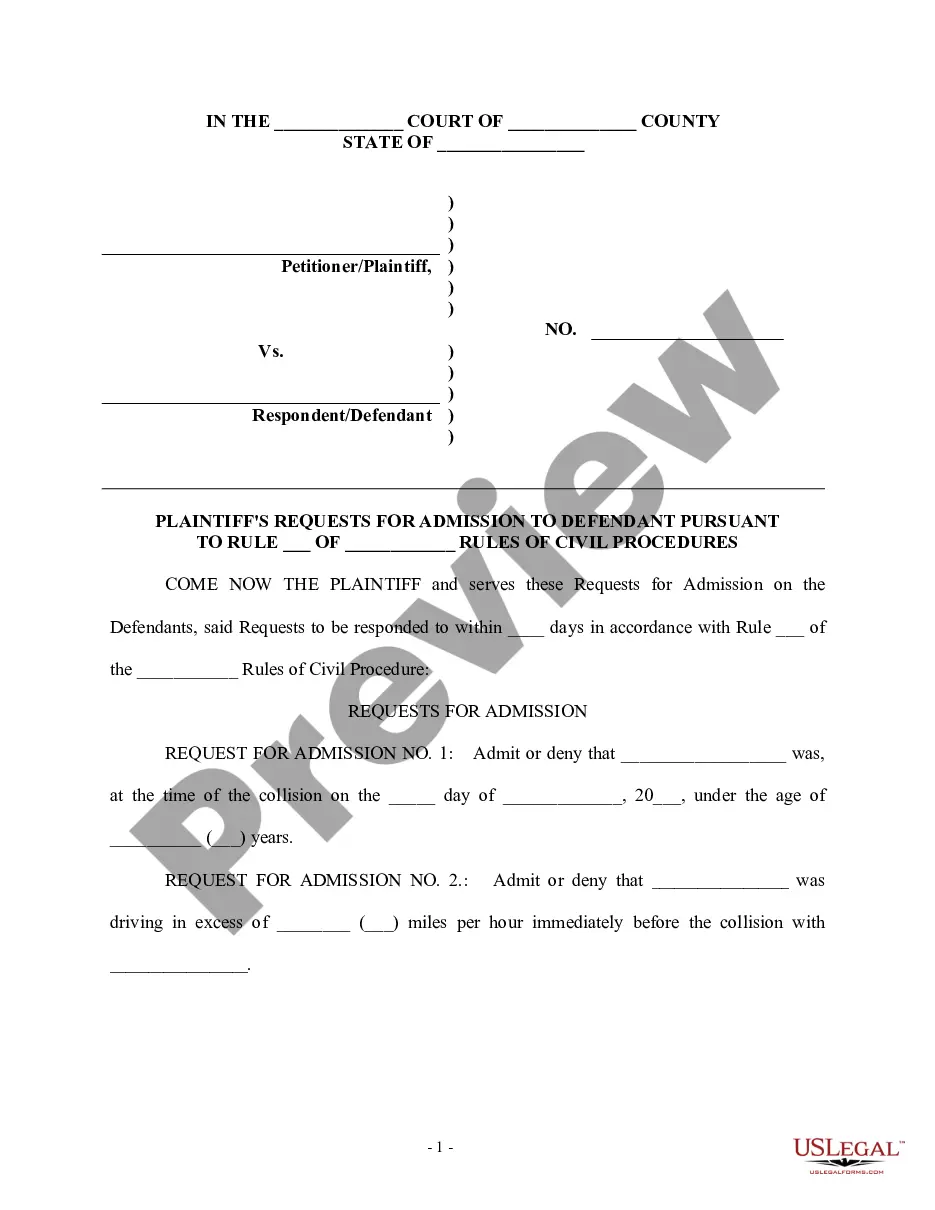
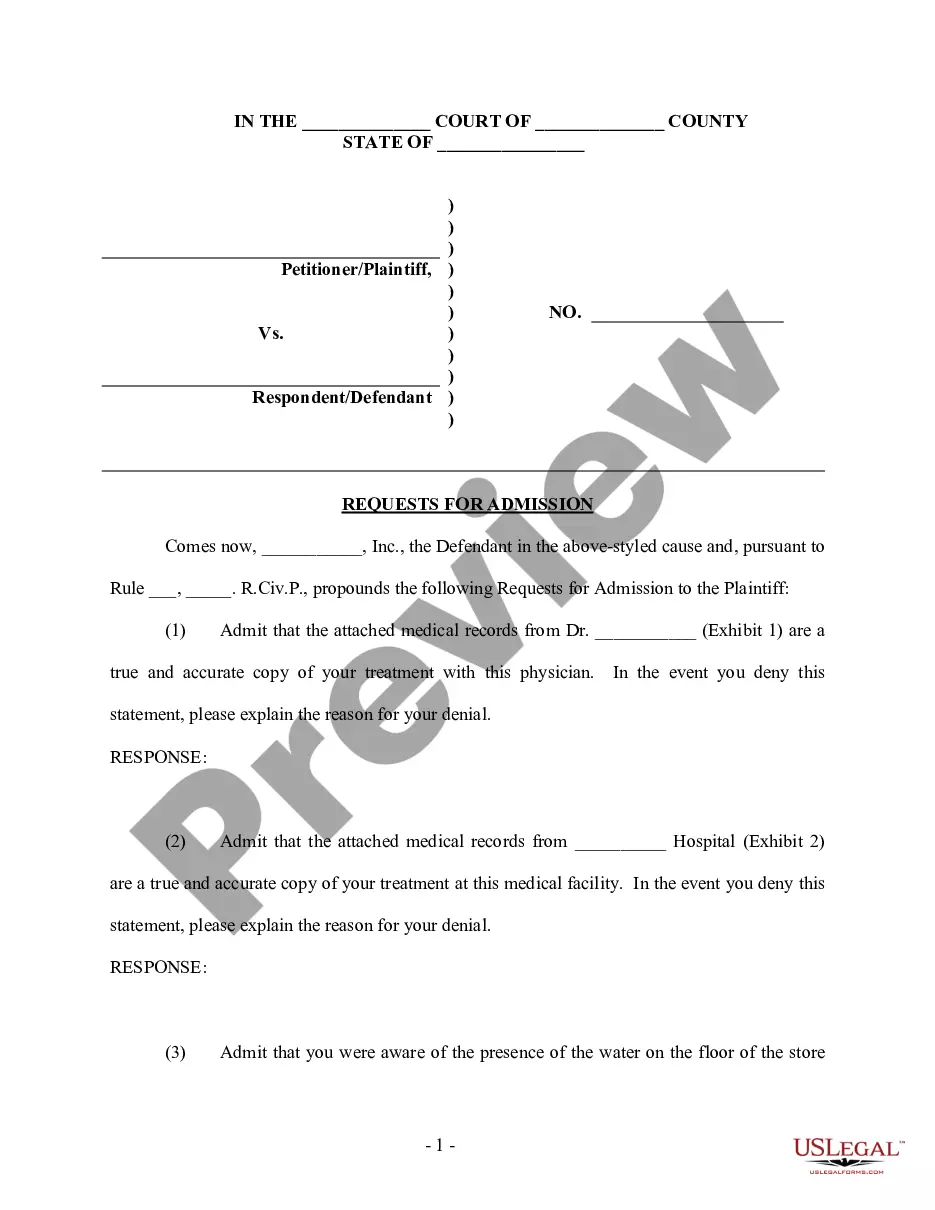
A request for admission (sometimes also called a request to admit) is a set of statements sent from one litigant to an adversary, for the purpose of having the adversary admit or deny the statements or allegations therein. Requests for admission are part of the discovery process in a civil case.
If the fact that is stated is true, write or check the word ?Admit.? If the fact that is stated is not true, write or check the word ?Deny.?
(3) Requests for admissions. Each party may serve no more than 25 requests for admissions. Requests for admissions may be used only to address jurisdictional facts or the genuineness of any documents served with the request. (4) Requests for disclosure.
Unless the responding party states an objection or asserts a privilege, the responding party must specifically admit or deny the request or explain in detail the reasons that the responding party cannot admit or deny the request. A response must fairly meet the substance of the request.
Common objections to requests for admission include: The request is impermissibly compound. The propounding party may ask you to admit only one fact per statement. You may object to any request that asks you to admit two or more different facts in a single request.
(e) If a party then fails to obey an order compelling further response to requests for admission, the court may order that the matters involved in the requests be deemed admitted. In lieu of or in addition to this order, the court may impose a monetary sanction under Chapter 7 (commencing with Section 2023.010).