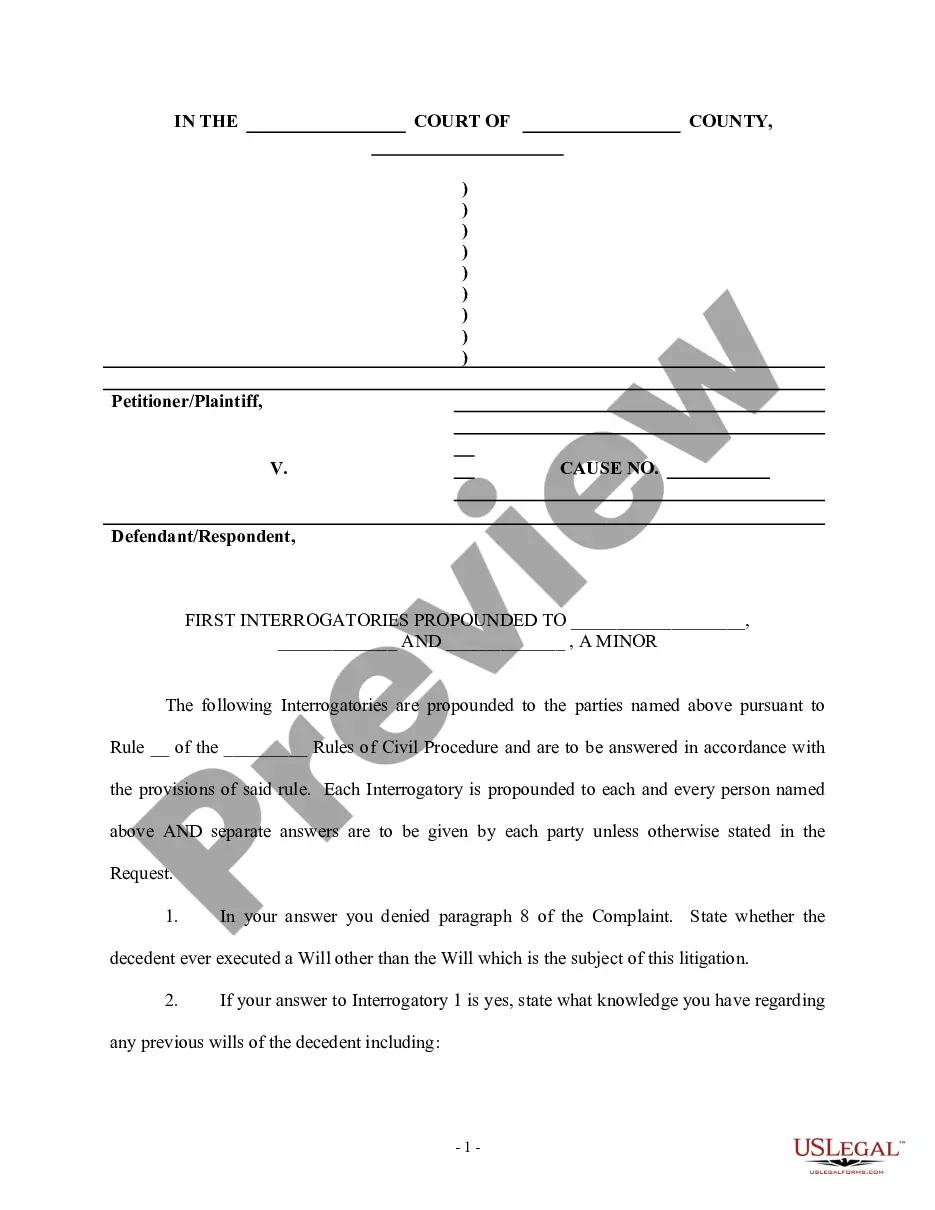
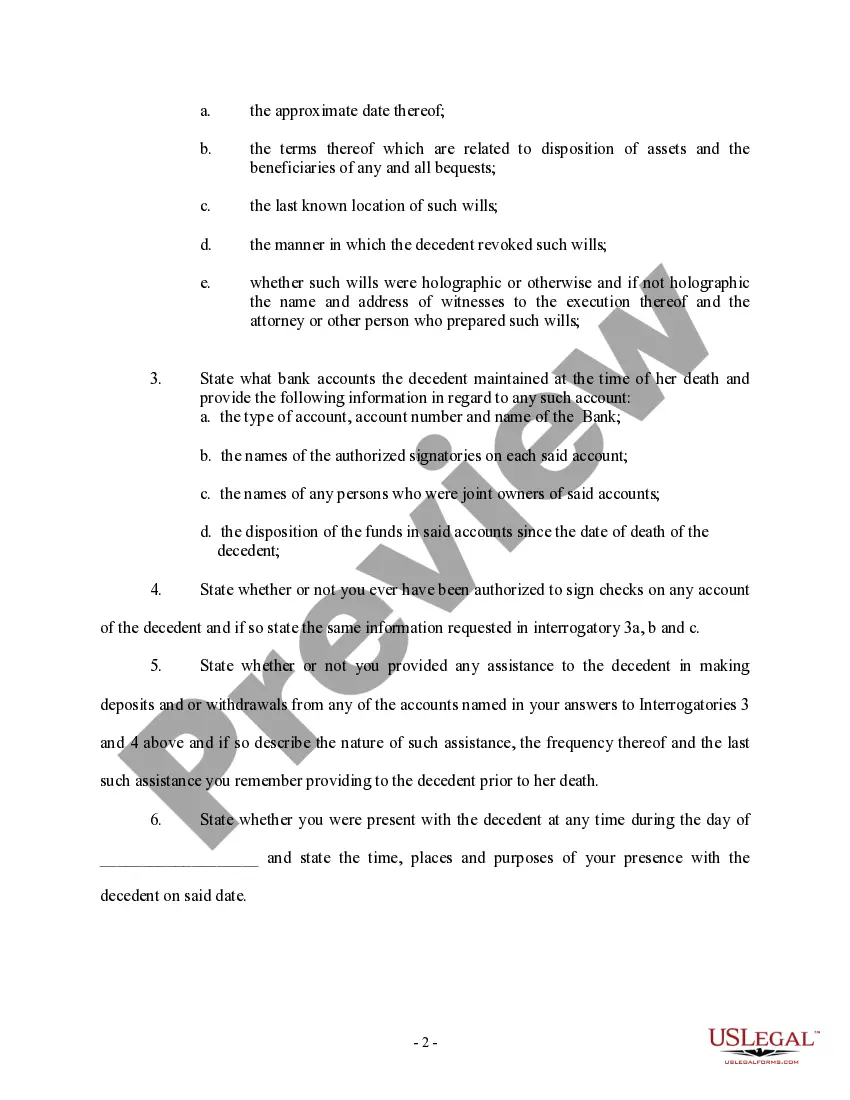
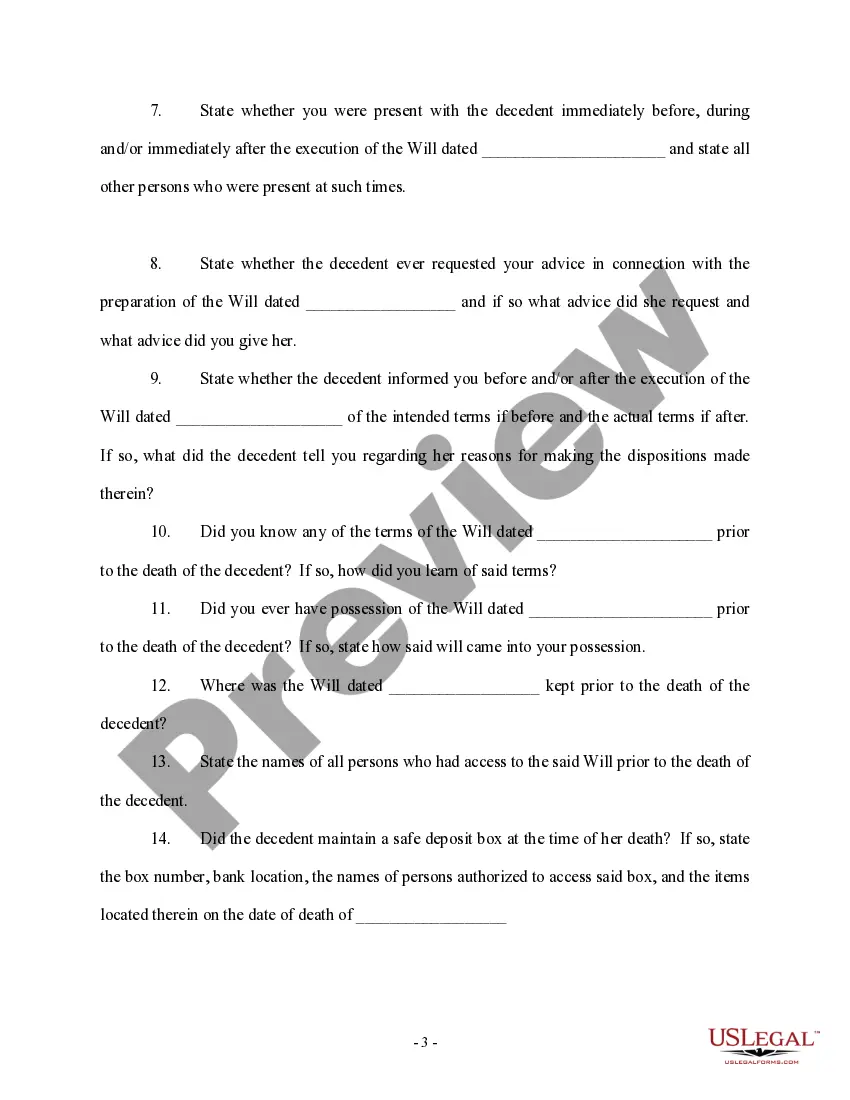
Texas Interrogatories
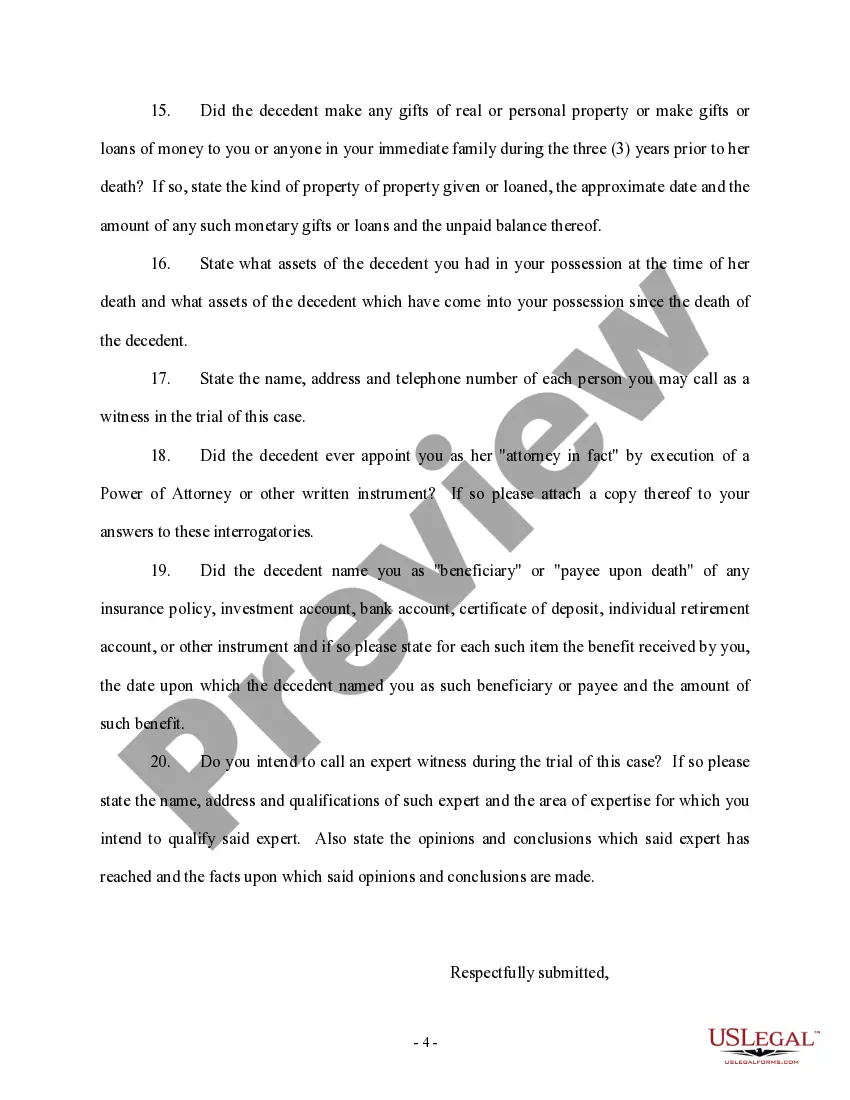
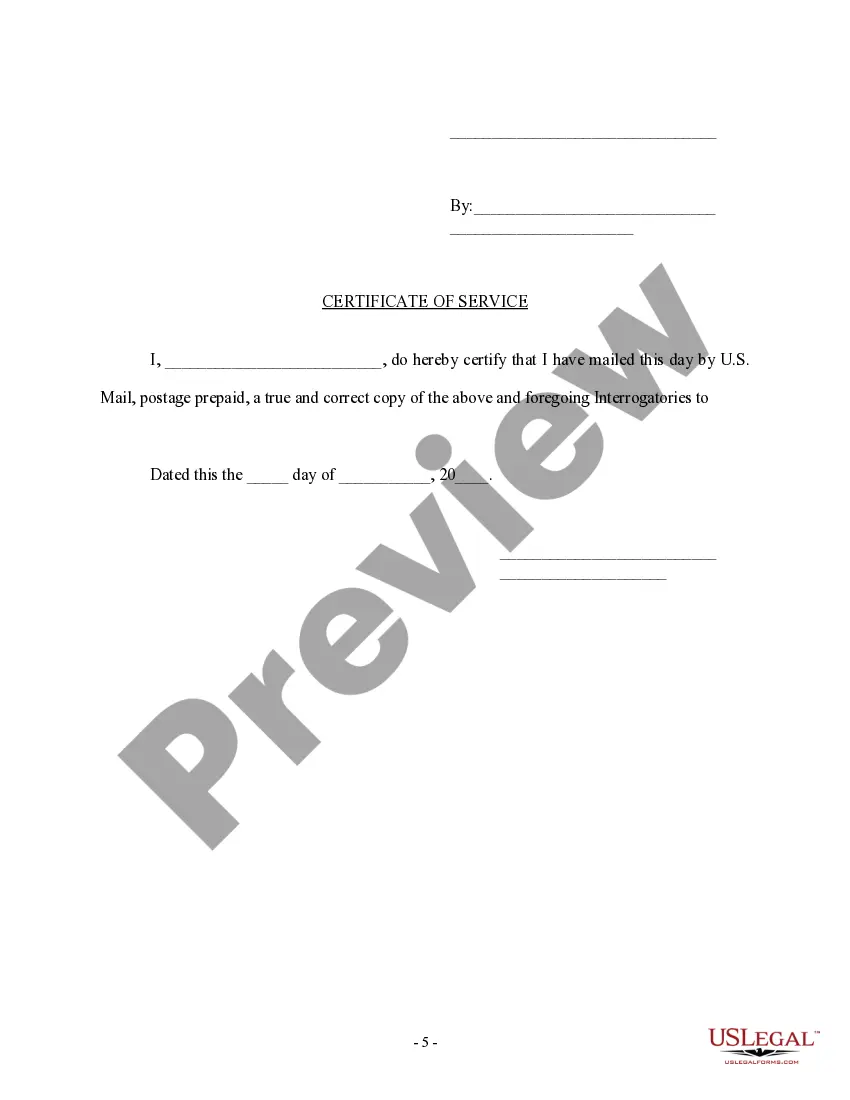
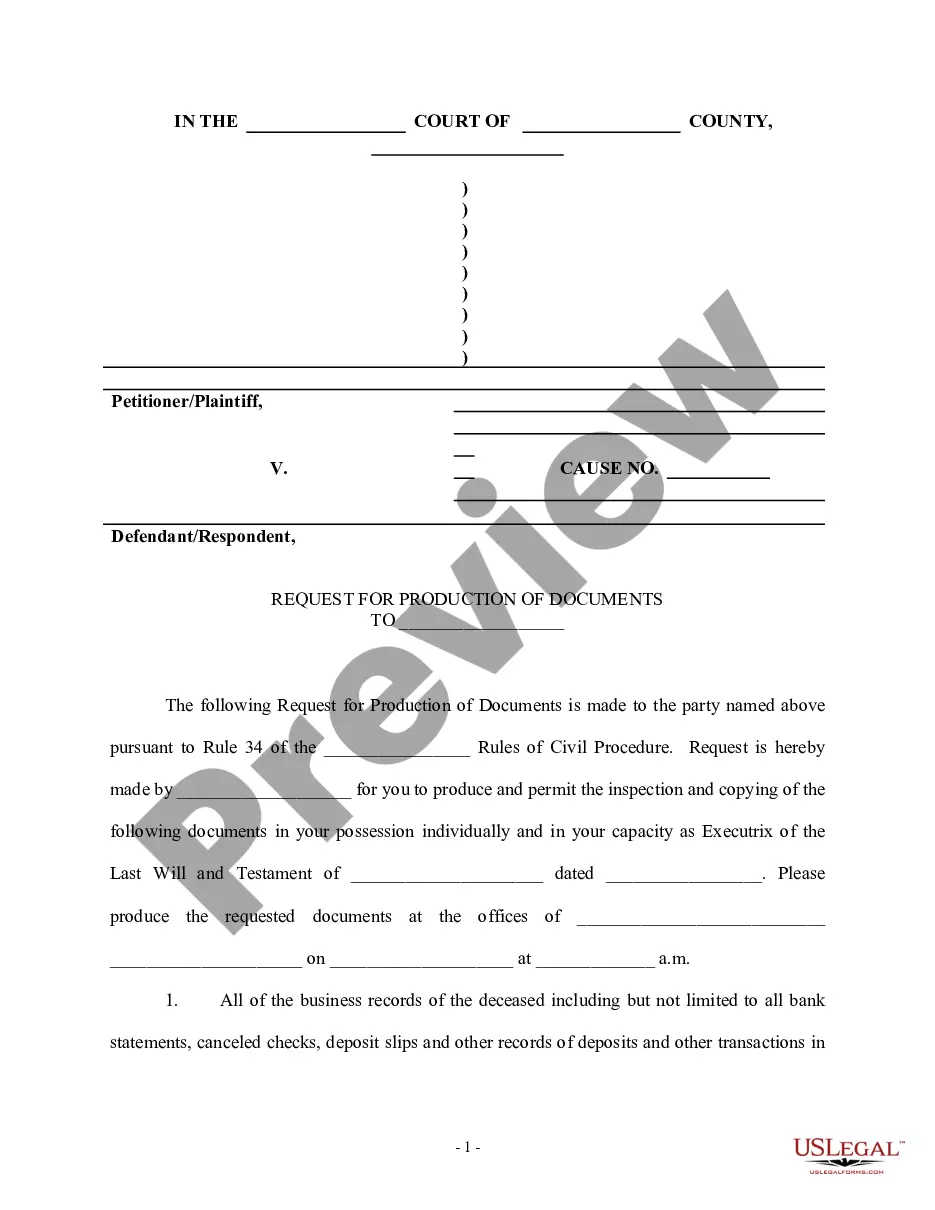
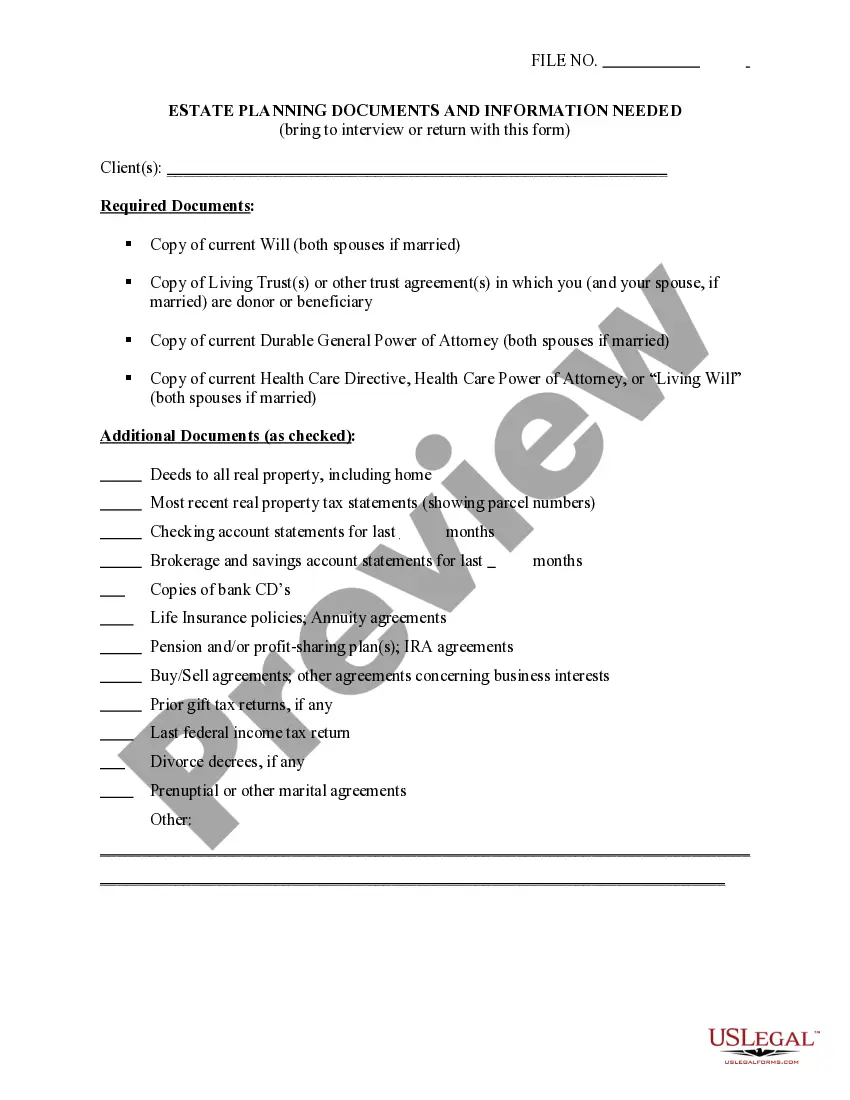
Description
Get your form ready online
Our built-in tools help you complete, sign, share, and store your documents in one place.
Make edits, fill in missing information, and update formatting in US Legal Forms—just like you would in MS Word.
Download a copy, print it, send it by email, or mail it via USPS—whatever works best for your next step.
Sign and collect signatures with our SignNow integration. Send to multiple recipients, set reminders, and more. Go Premium to unlock E-Sign.
If this form requires notarization, complete it online through a secure video call—no need to meet a notary in person or wait for an appointment.
We protect your documents and personal data by following strict security and privacy standards.

Make edits, fill in missing information, and update formatting in US Legal Forms—just like you would in MS Word.

Download a copy, print it, send it by email, or mail it via USPS—whatever works best for your next step.

Sign and collect signatures with our SignNow integration. Send to multiple recipients, set reminders, and more. Go Premium to unlock E-Sign.

If this form requires notarization, complete it online through a secure video call—no need to meet a notary in person or wait for an appointment.

We protect your documents and personal data by following strict security and privacy standards.
Looking for another form?
How to fill out Interrogatories?
Locating the appropriate legal document template can be challenging. Obviously, there are numerous templates available online, but how do you find the legal form you need? Visit the US Legal Forms website. This service provides a vast array of templates, including the Texas Interrogatories, suitable for business and personal needs. All forms are reviewed by experts and comply with federal and state regulations.
If you are already registered, Log In to your account and click the Acquire button to obtain the Texas Interrogatories. Use your account to browse through the legal forms you may have previously purchased. Visit the My documents section of your account to download another copy of the document you need.
If you are a new user of US Legal Forms, here are straightforward guidelines that you can follow: First, ensure you have selected the correct form for your specific city/region. You can review the form using the Review button and examine the form outline to ensure it is suitable for you. If the form does not meet your requirements, use the Search field to find the appropriate form. Once you are confident that the form is suitable, click the Buy now button to obtain the form. Choose the pricing plan you prefer and enter the necessary information. Create your account and complete your purchase using your PayPal account or credit card.
Take advantage of this service to simplify your legal documentation process.
- Select the file format and download the legal document template for your needs.
- Complete, modify, print, and sign the acquired Texas Interrogatories.
- US Legal Forms is the largest collection of legal forms where you can find various document templates.
- Use the service to obtain professionally-crafted documents that meet state requirements.
- Access a wide range of legal templates easily and efficiently.
- Ensure compliance with legal standards by utilizing reliable resources.
Form popularity
FAQ
If you are unable to answer an interrogatory because it is too vague, ambiguous, or somehow objectionable, you can state an objection and the reason for your objection. You must then answer to the extent the interrogatory is not objectionable.
Generally, interrogatories are objectionable if they seek information that is not within the scope of discovery as defined in Maryland Rule 402 or Federal Rule 26(b). These are typically requests that are not relevant, unduly burdensome, broad, vague, privileged. or protected by the work product doctrine.
Make a List of Questions Brainstorm questions to include in your interrogatories. Identify questions that are relevant to the issues in the case. Consider if the questions are legally permissible. Make sure the questions are direct, specific, and clear. Decide if the questions will help you gain any necessary information.
Interrogatories are written questions sent by one party in a lawsuit to another party in that same suit, which the responding party must answer under penalty of perjury. Interrogatories allow the parties to ask who, what, when, where and why questions, making them a good method for obtaining new information.
You can use interrogatories to find out facts about a case but they cannot be used for questions that draw a legal conclusion.
What types of questions can I ask in interrogatories? Questions about the other party's position or arguments in the case. Questions about the facts of the case. Questions about the other party's knowledge or understanding of relevant events or circumstances. Questions about the other party's witnesses or experts.
Rule 197 - Interrogatories to Parties 197.1 Interrogatories. A party may serve on another party - no later than 30 days before the end of the discovery period -written interrogatories to inquire about any matter within the scope of discovery except matters covered by Rule 195.
An example of an interrogatory that requests privileged information in a divorce would be, ?List all prescriptions you take including prescriber information and dosages.?