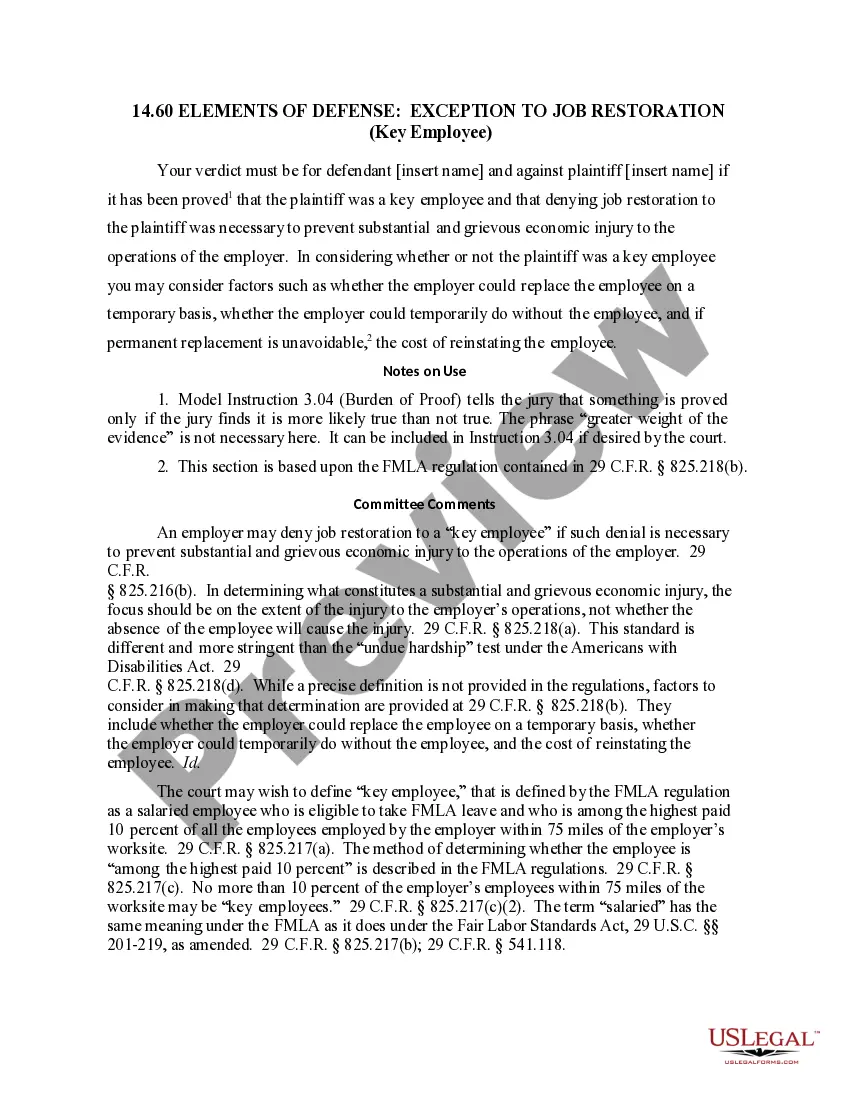
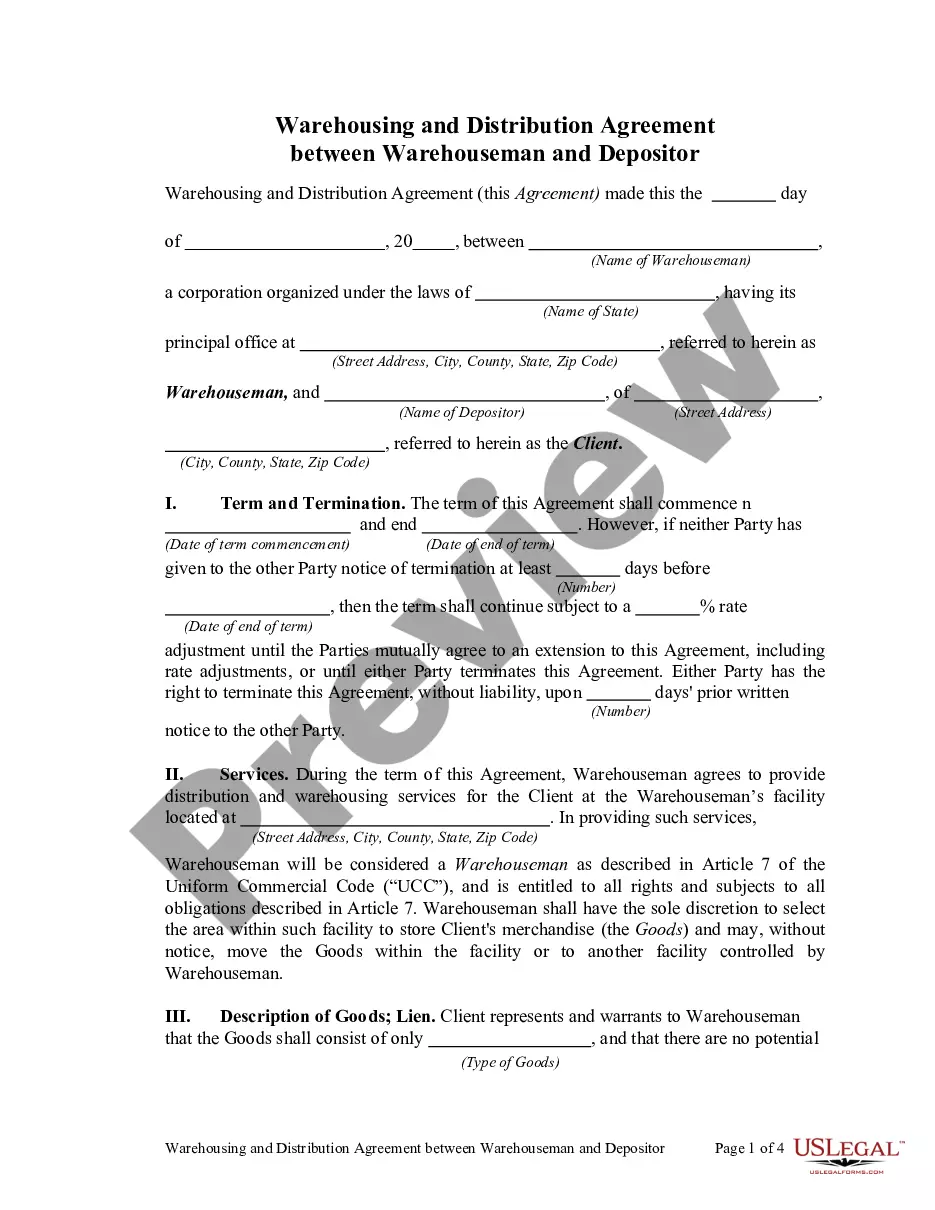
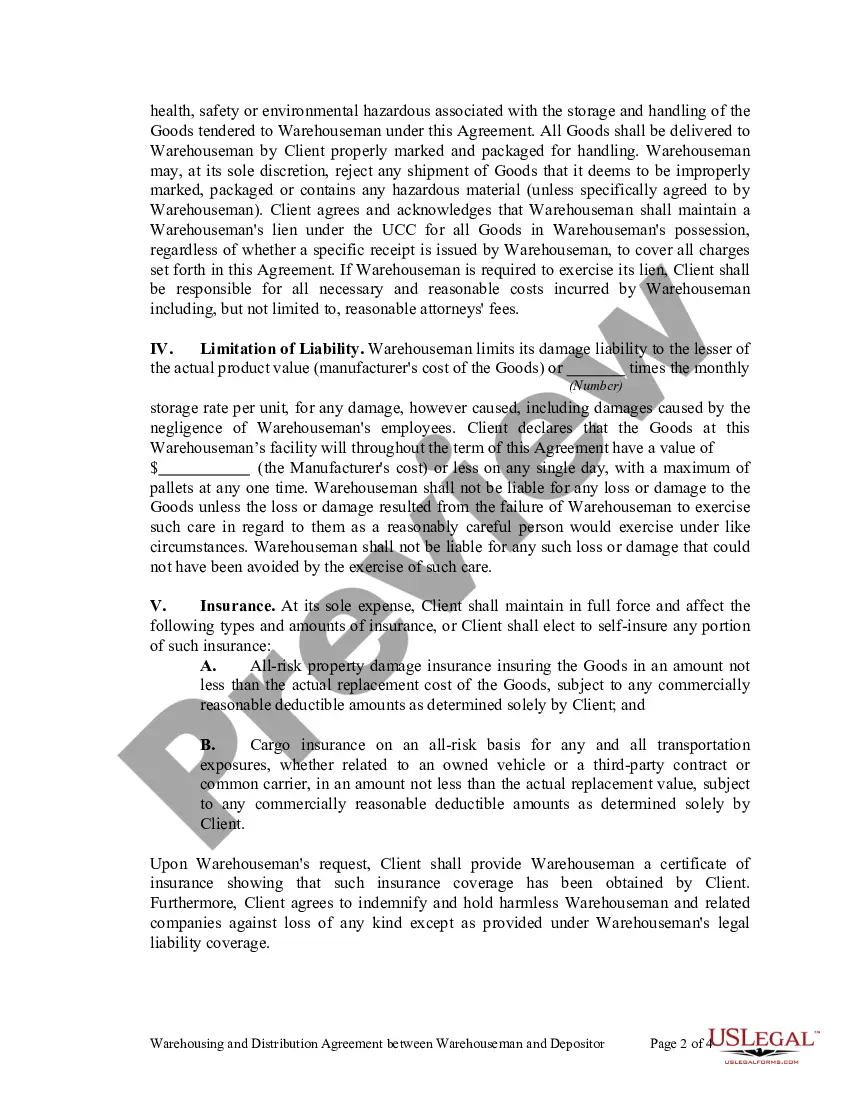
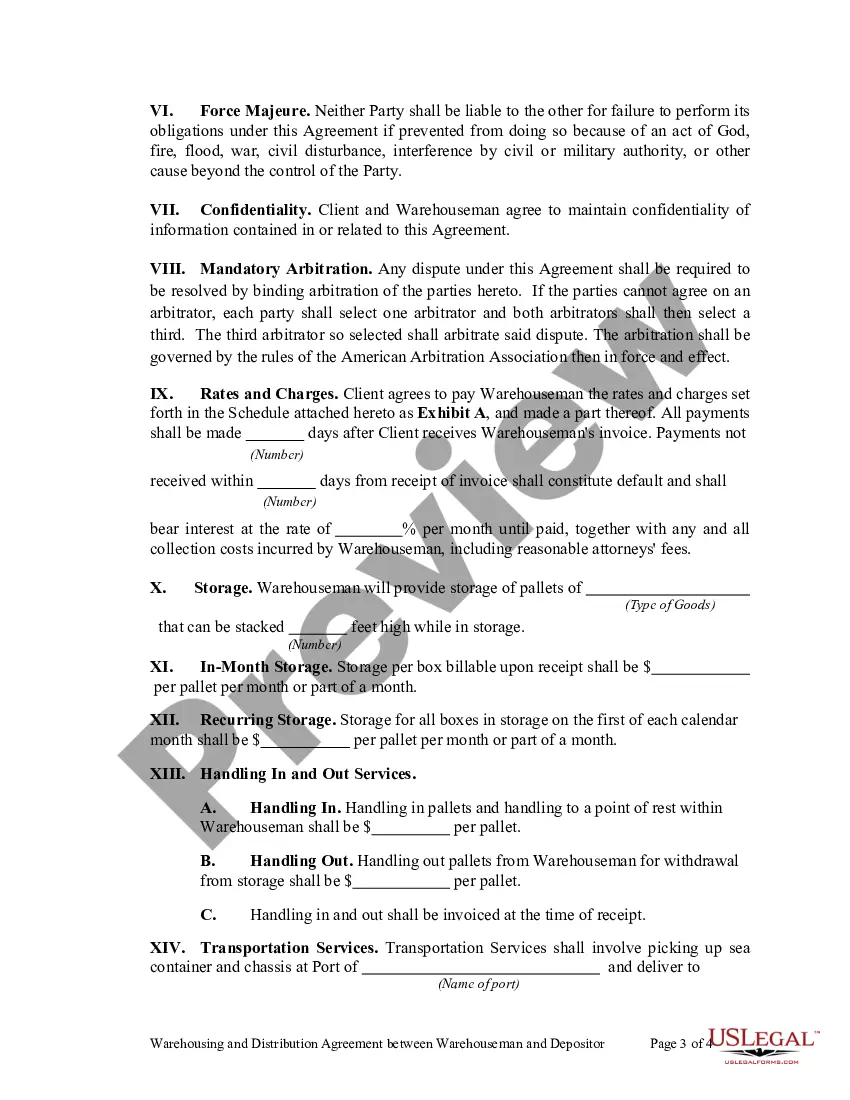
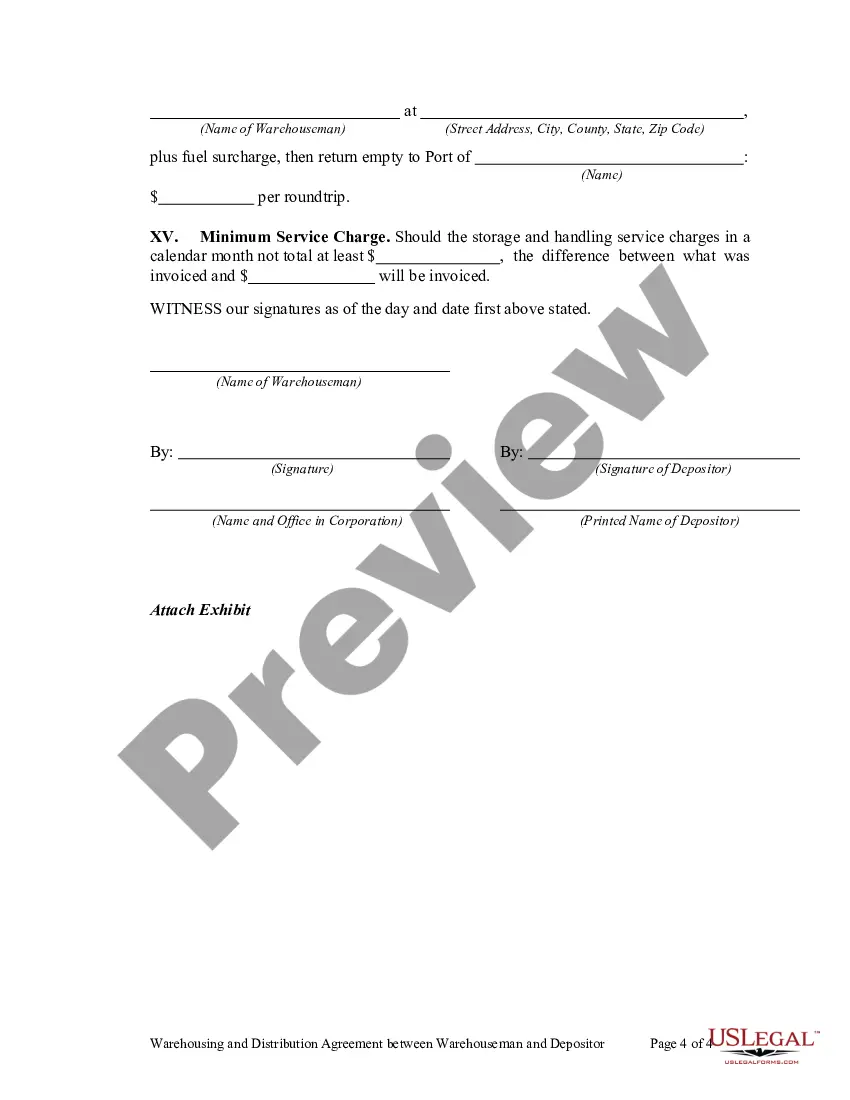
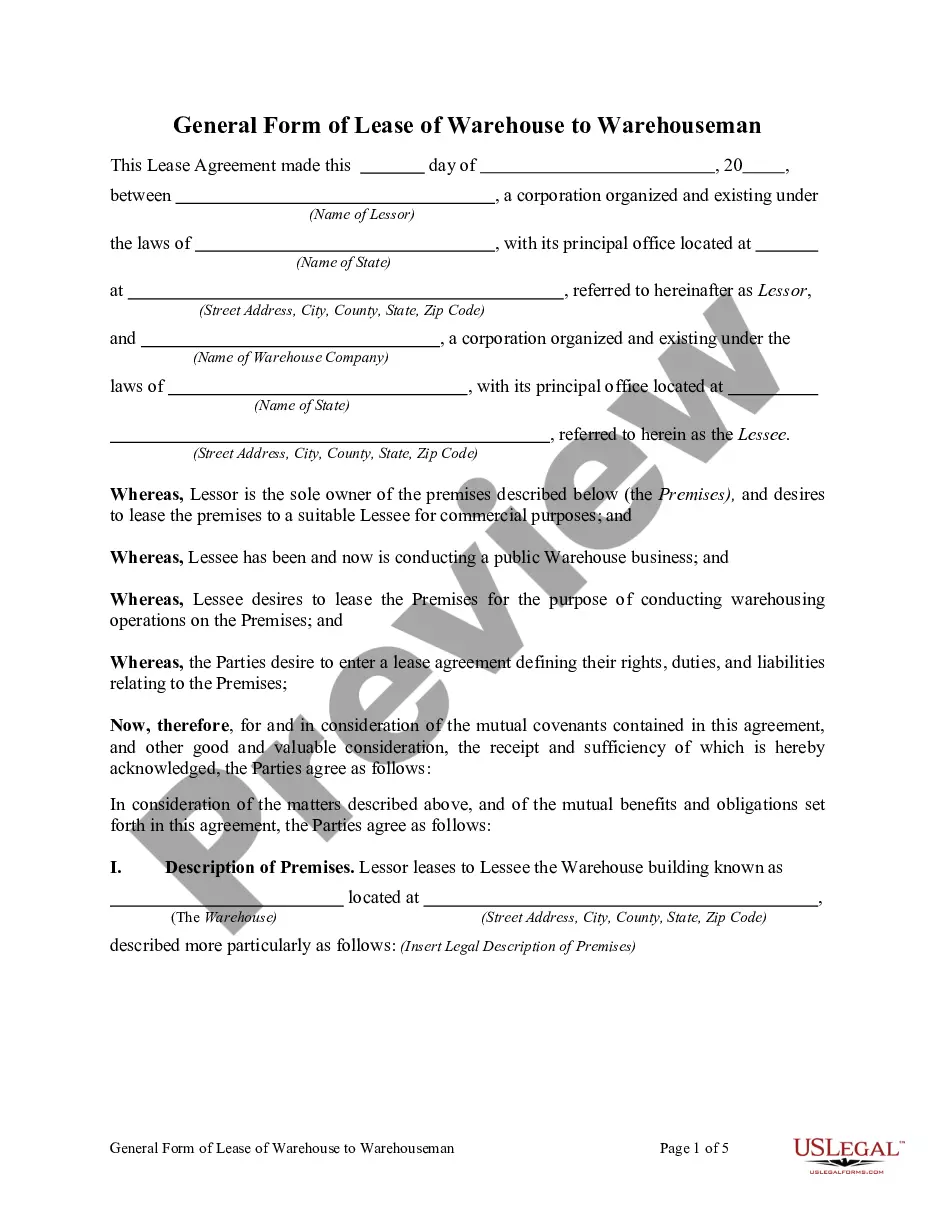
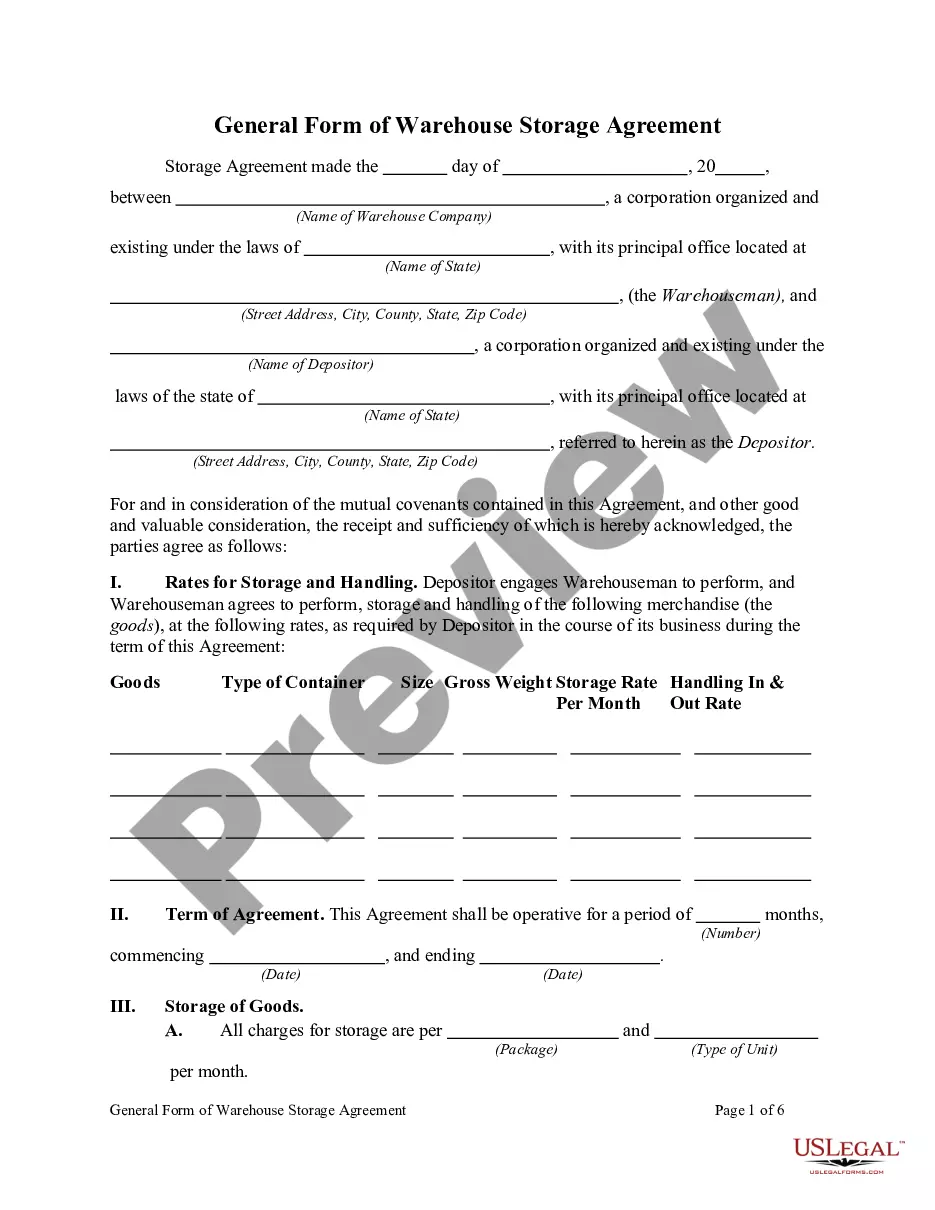
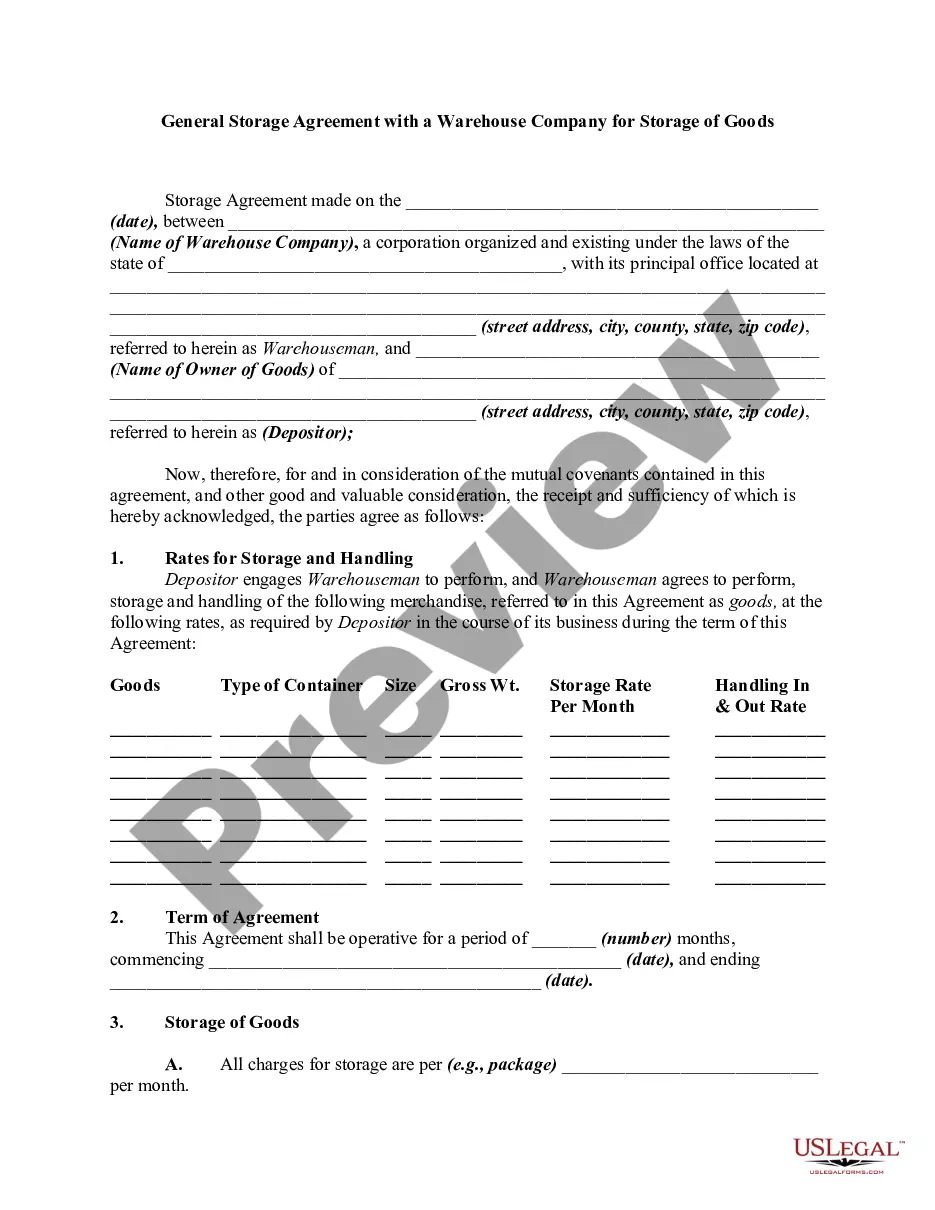
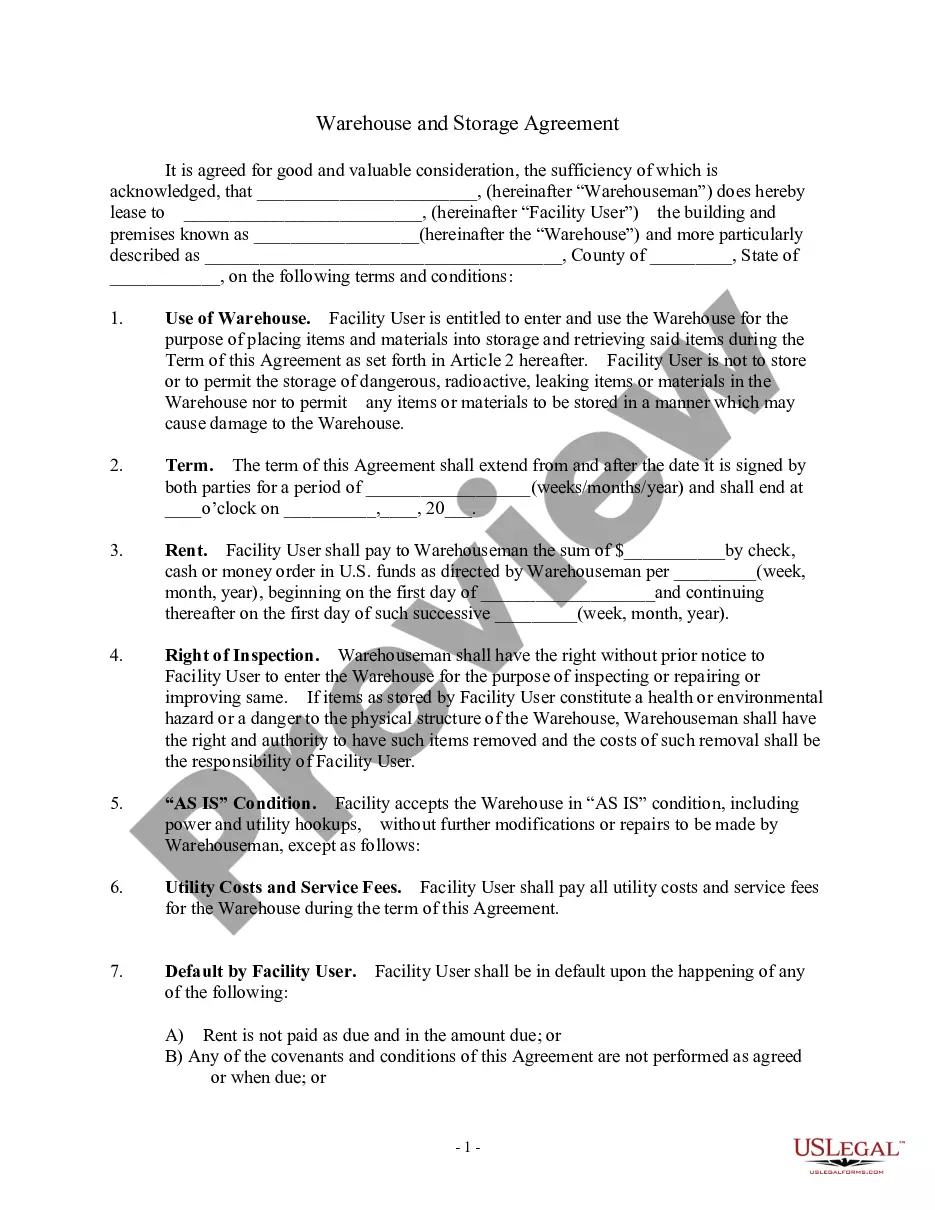
Texas Warehousing and Distribution Agreement between Warehouseman and Depositor
Description
Get your form ready online
Our built-in tools help you complete, sign, share, and store your documents in one place.
Make edits, fill in missing information, and update formatting in US Legal Forms—just like you would in MS Word.
Download a copy, print it, send it by email, or mail it via USPS—whatever works best for your next step.
Sign and collect signatures with our SignNow integration. Send to multiple recipients, set reminders, and more. Go Premium to unlock E-Sign.
If this form requires notarization, complete it online through a secure video call—no need to meet a notary in person or wait for an appointment.
We protect your documents and personal data by following strict security and privacy standards.

Make edits, fill in missing information, and update formatting in US Legal Forms—just like you would in MS Word.

Download a copy, print it, send it by email, or mail it via USPS—whatever works best for your next step.

Sign and collect signatures with our SignNow integration. Send to multiple recipients, set reminders, and more. Go Premium to unlock E-Sign.

If this form requires notarization, complete it online through a secure video call—no need to meet a notary in person or wait for an appointment.

We protect your documents and personal data by following strict security and privacy standards.
Looking for another form?





How to fill out Warehousing And Distribution Agreement Between Warehouseman And Depositor?
US Legal Forms - one of the largest collections of legal documents in the USA - provides a vast selection of legal form templates that you can download or print.
By using the website, you can access thousands of forms for business and personal purposes, organized by categories, states, or keywords. You can obtain the latest versions of forms like the Texas Warehousing and Distribution Agreement between Warehouseman and Depositor in just a few seconds.
If you have a subscription, Log In and download the Texas Warehousing and Distribution Agreement between Warehouseman and Depositor from the US Legal Forms library. The Download button will appear on every form you view. You can access all previously acquired forms in the My documents section of your account.
Make modifications. Fill out, adjust, and print and sign the downloaded Texas Warehousing and Distribution Agreement between Warehouseman and Depositor.
Every template you add to your account has no expiration date and is yours indefinitely. Therefore, if you wish to download or print another copy, simply navigate to the My documents section and click on the form you need. Access the Texas Warehousing and Distribution Agreement between Warehouseman and Depositor with US Legal Forms, the most extensive library of legal document templates. Utilize thousands of professional and state-specific templates that meet your business or personal needs.
- If you are using US Legal Forms for the first time, here are simple instructions to get started.
- Ensure you have selected the correct form for your region/state. Click the Review button to evaluate the form's content. Check the form details to ensure you have chosen the correct form.
- If the form does not meet your needs, utilize the Search field at the top of the screen to find one that does.
- If you are satisfied with the form, confirm your selection by clicking the Get now button. Then, select your preferred payment plan and provide your information to register for an account.
- Process the transaction. Use your credit card or PayPal account to complete the transaction.
- Select the format and download the form to your device.
Form popularity
FAQ
A contract warehouse is a third-party logistics (3PL) storage facility that stores goods on behalf of a client. The client and the warehouse enter into a contract, which can range from months to years. The agreement may have a fixed fee structure or operate on a cost-plus model.
The main benefit of Contract warehousing is its lower costs. Often the two parties come to a fixed agreement regarding the payment and stick to it until the end of the agreement. Depending on a contract warehouse reduces the expenses when compared to managing your warehouse.
Operating Costs: Contract warehouses provide similar characteristics to private warehouses but at lower costs. Private warehouses require significant capital inputs for development and maintenance, whereas contract warehouses maintained by third parties offer more cost-effective solutions.
A contract warehouse handles the shipping, receiving, and storage of goods on a contract basis. This type of warehouse usually requires a client to commit to services for a particular period of time. The length of time varies, often stated in years rather than months.
Advantages of Contract Warehousing Lower Costs and Capital Investments. ... Locked-in Service Period. ... Reliability. ... Extra Flexibility. ... Scalability. ... Strategic Locations. ... A Warehouse Management System.
Warehousing services offered by third-party logistics (3PL) companies tend to fall into one of two categories: general warehousing or contract warehousing. Broadly speaking, general warehousing offers the most flexibility and scalability, while contract warehousing provides more control and stable costs.
A warehousing agreement for the storage of goods for a business customer. A professional warehousing provider agrees to store the customer's goods on a long-term or regular basis. The agreement is drafted to be broadly neutral between the parties.
A centralized warehouse facility reduces both the cost of transporting goods after order processing and the delivery time-frame. Contract warehousing is a preferred alternative for many organizations because it lowers overall costs and capital investment.