Texas Electronic Publishing Agreement
Description

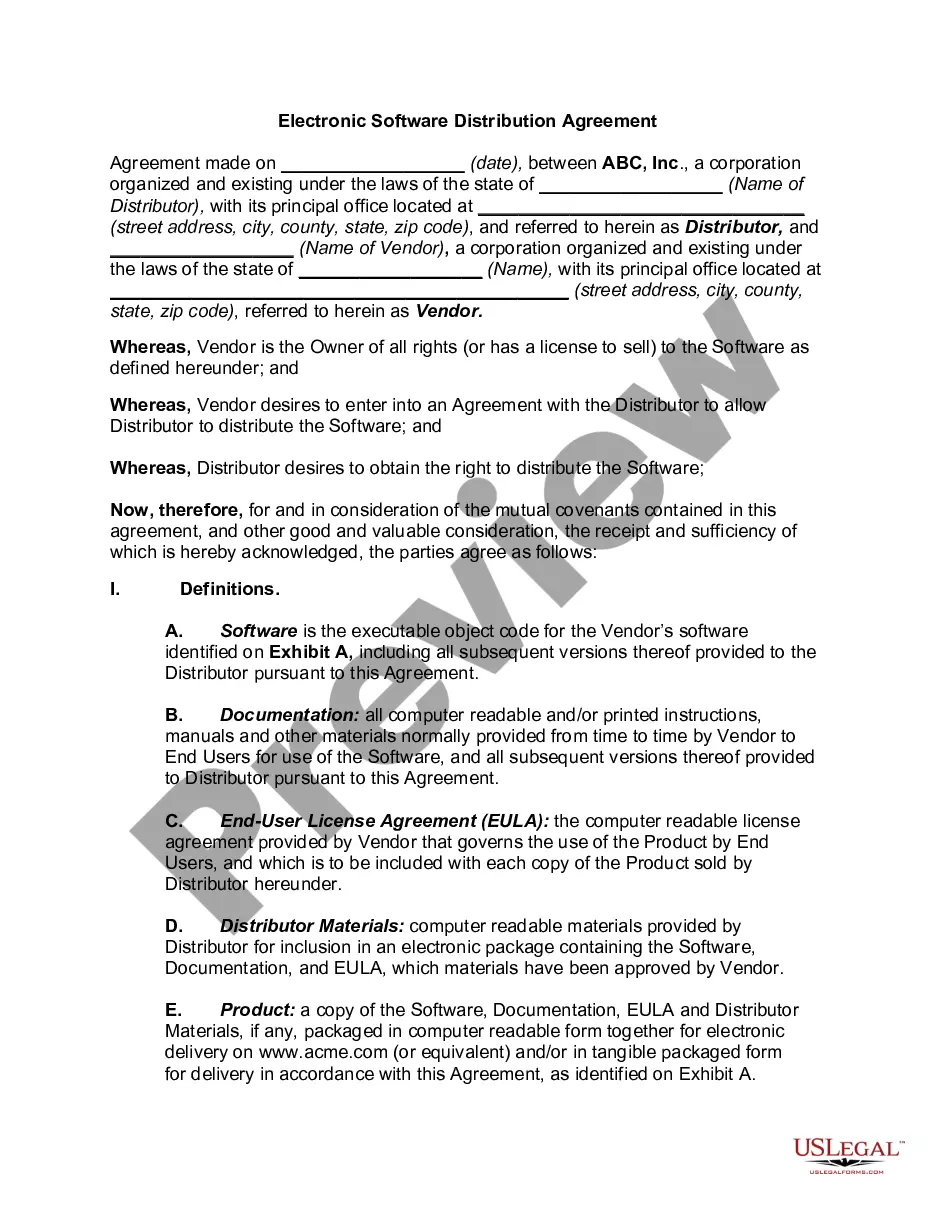
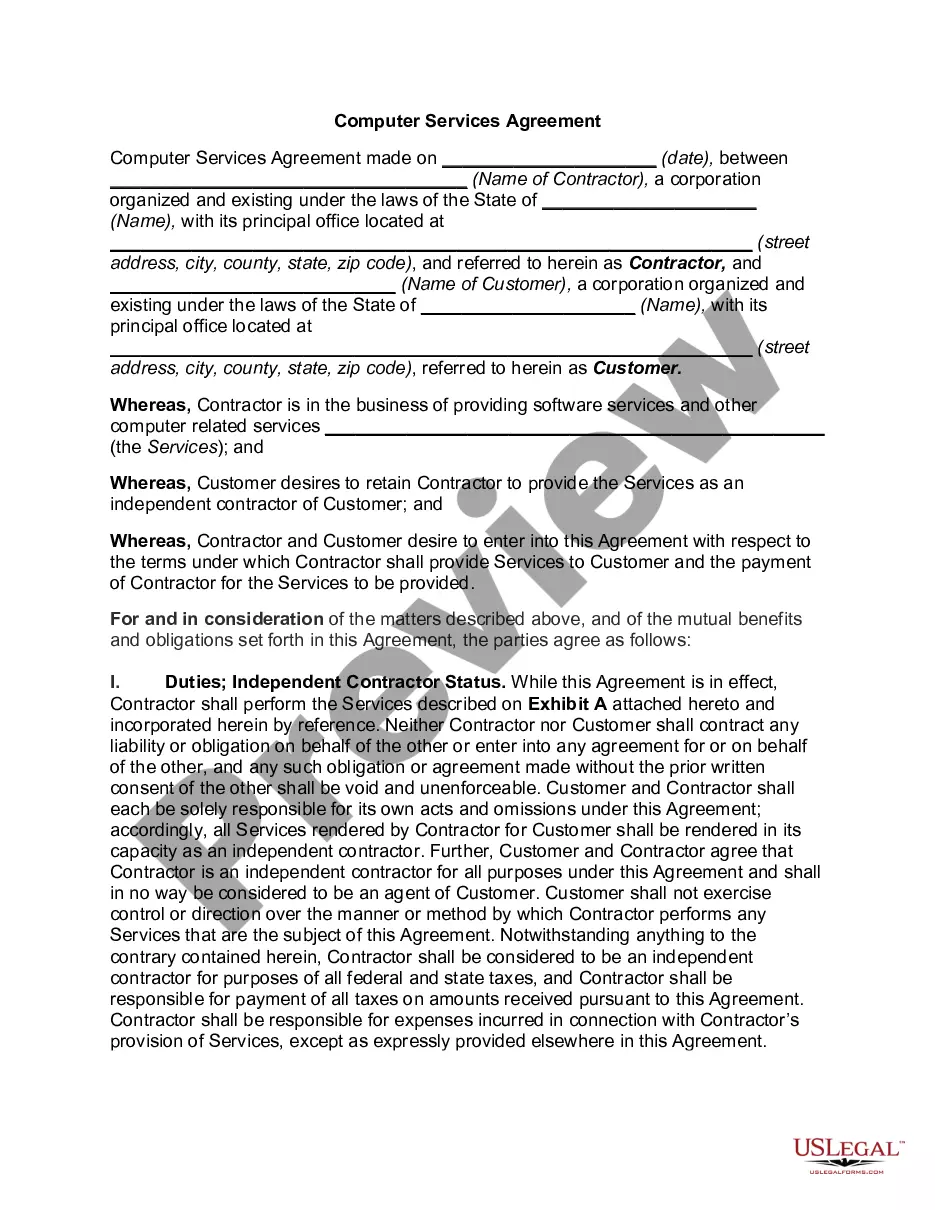
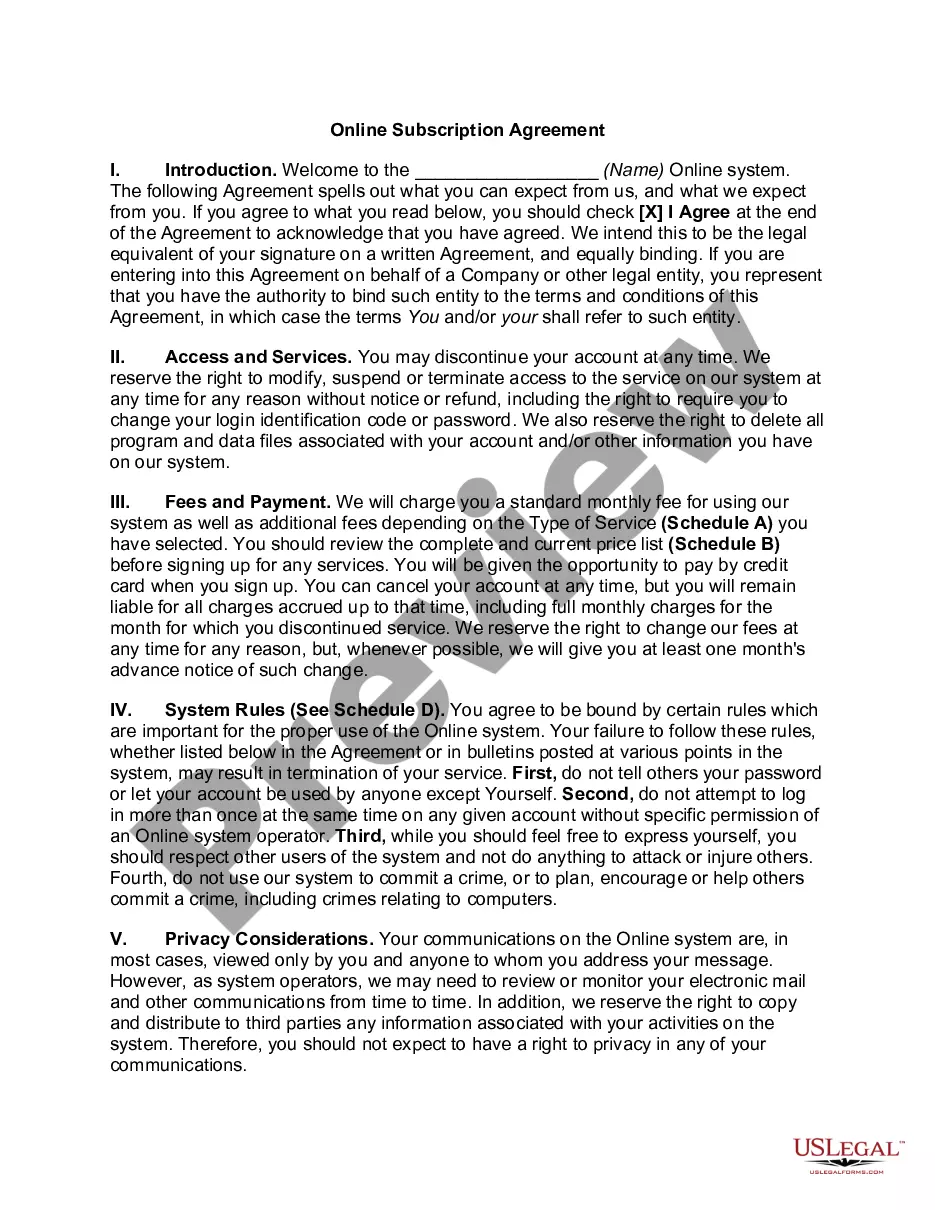
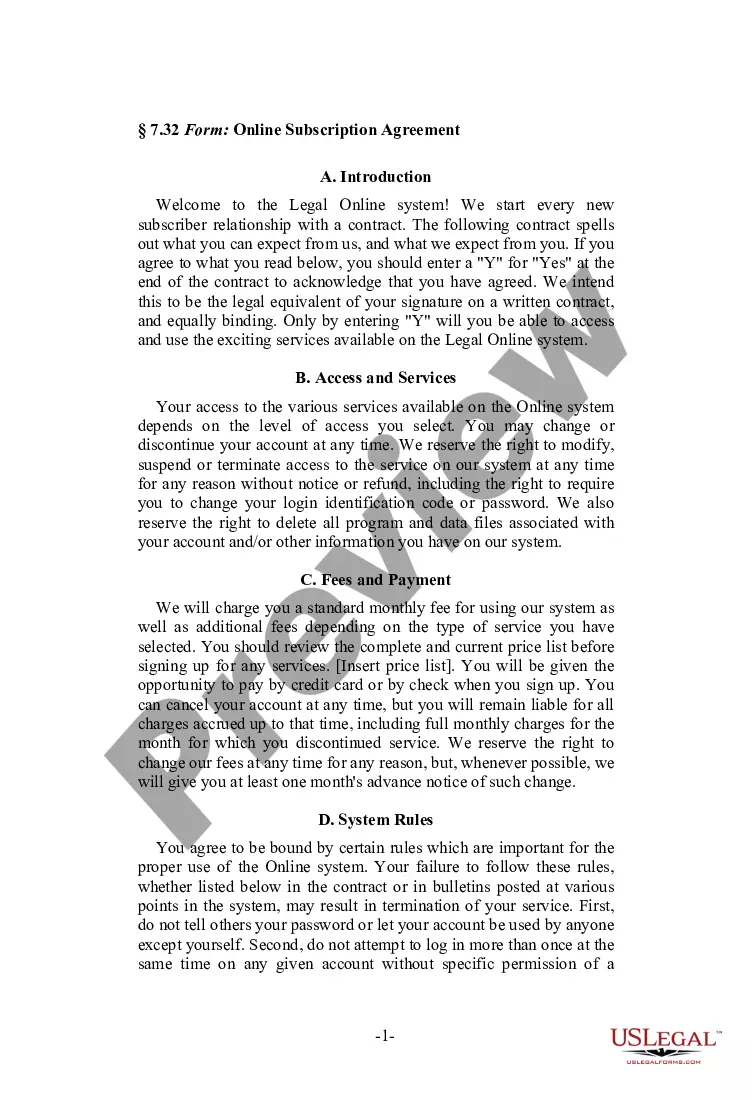
Get your form ready online
Our built-in tools help you complete, sign, share, and store your documents in one place.
Make edits, fill in missing information, and update formatting in US Legal Forms—just like you would in MS Word.
Download a copy, print it, send it by email, or mail it via USPS—whatever works best for your next step.
Sign and collect signatures with our SignNow integration. Send to multiple recipients, set reminders, and more. Go Premium to unlock E-Sign.
If this form requires notarization, complete it online through a secure video call—no need to meet a notary in person or wait for an appointment.
We protect your documents and personal data by following strict security and privacy standards.

Make edits, fill in missing information, and update formatting in US Legal Forms—just like you would in MS Word.

Download a copy, print it, send it by email, or mail it via USPS—whatever works best for your next step.

Sign and collect signatures with our SignNow integration. Send to multiple recipients, set reminders, and more. Go Premium to unlock E-Sign.

If this form requires notarization, complete it online through a secure video call—no need to meet a notary in person or wait for an appointment.

We protect your documents and personal data by following strict security and privacy standards.
Looking for another form?
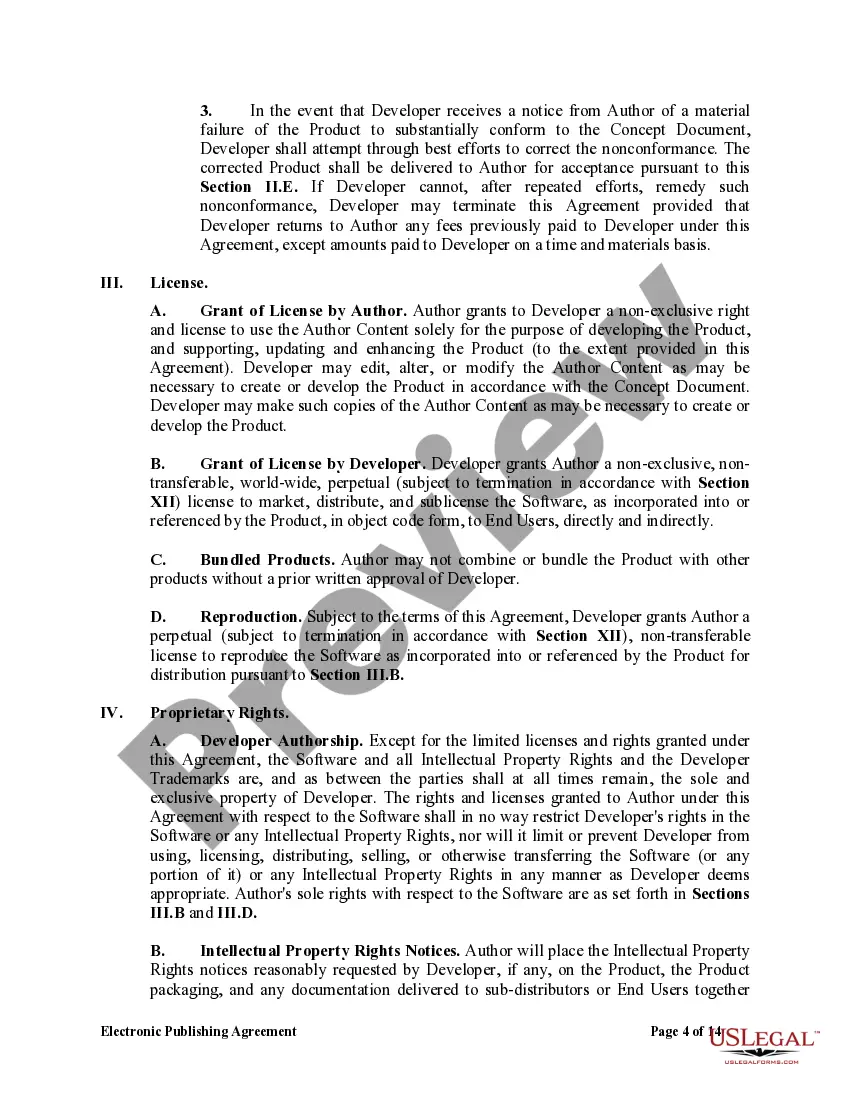
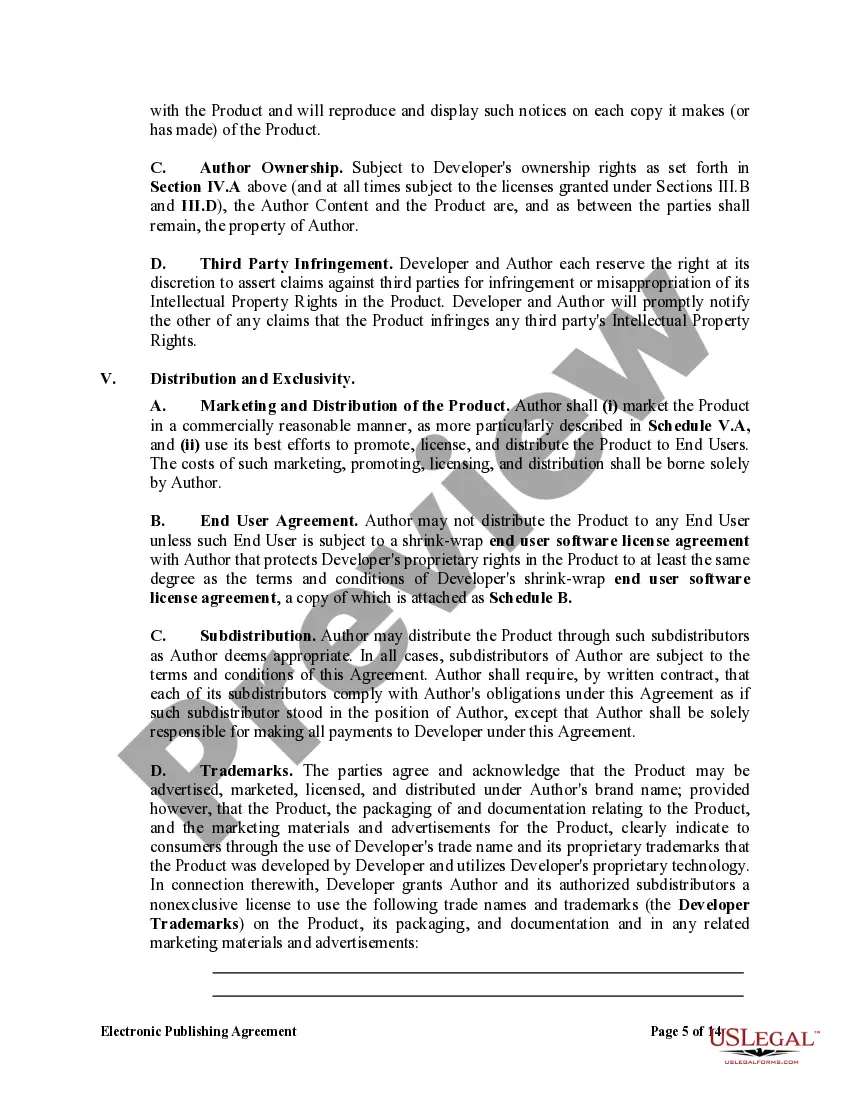
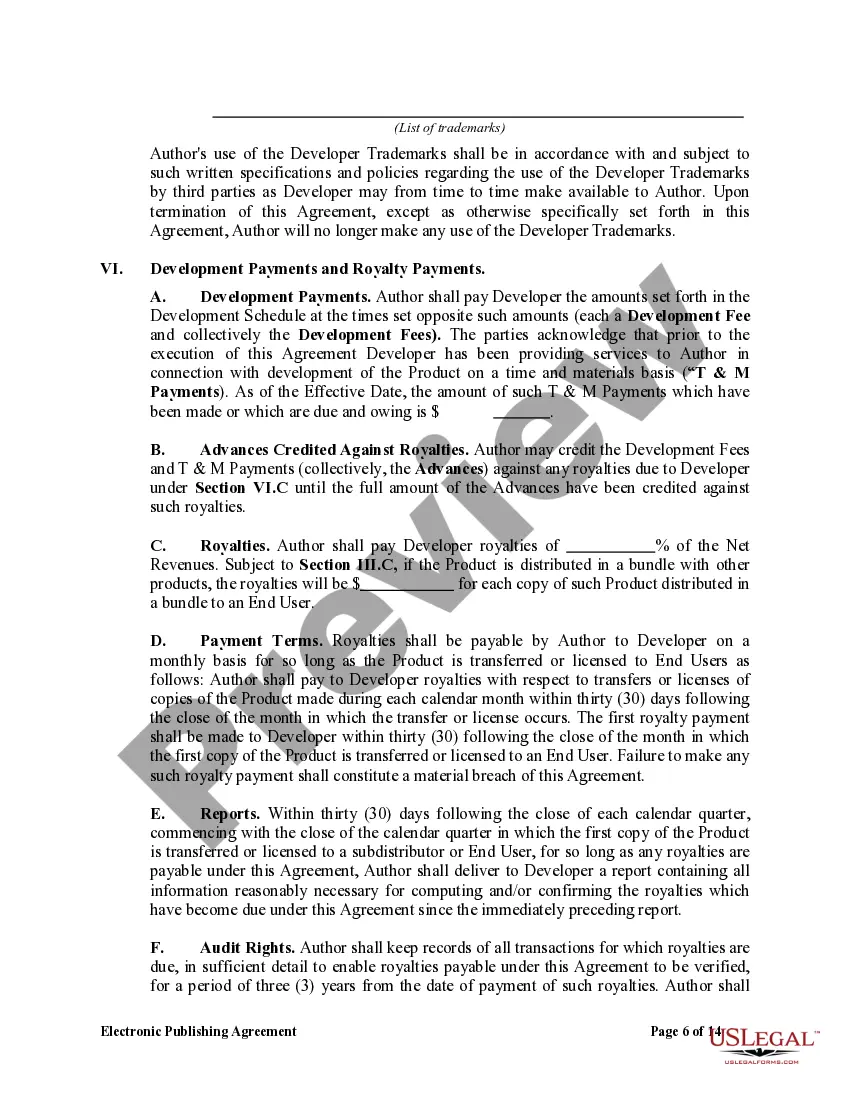
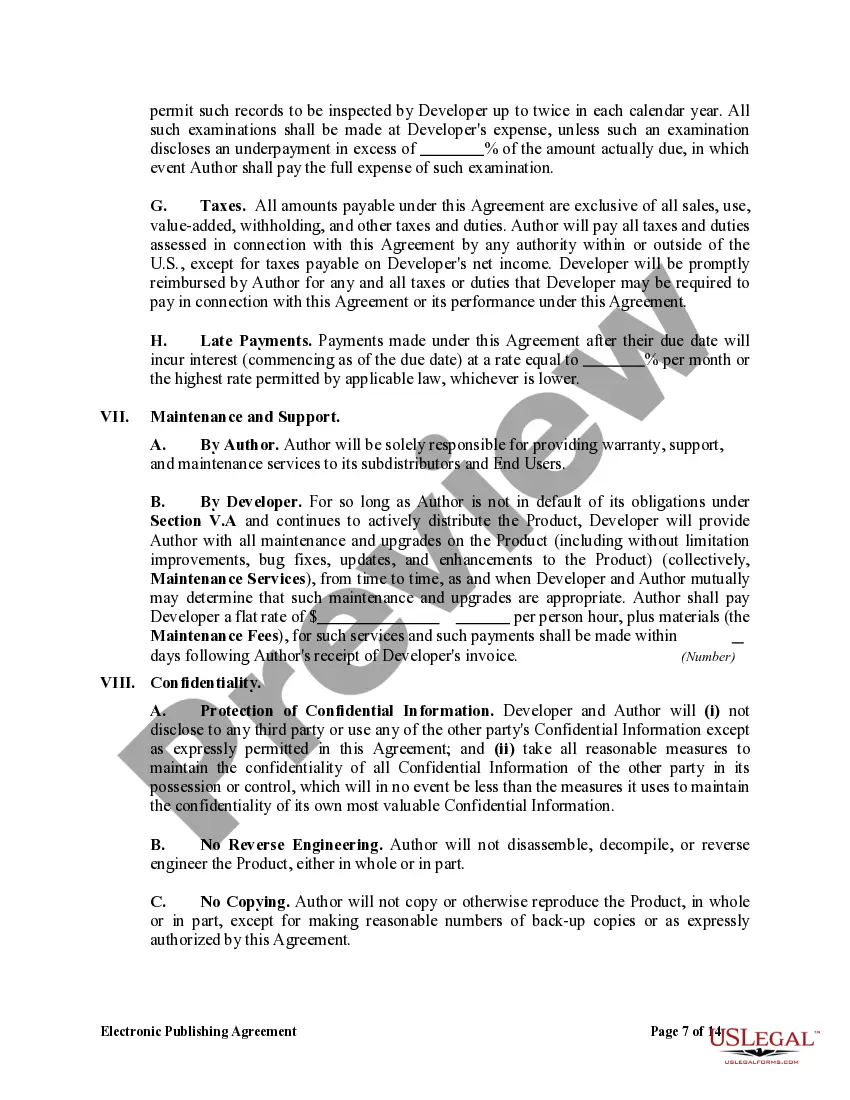
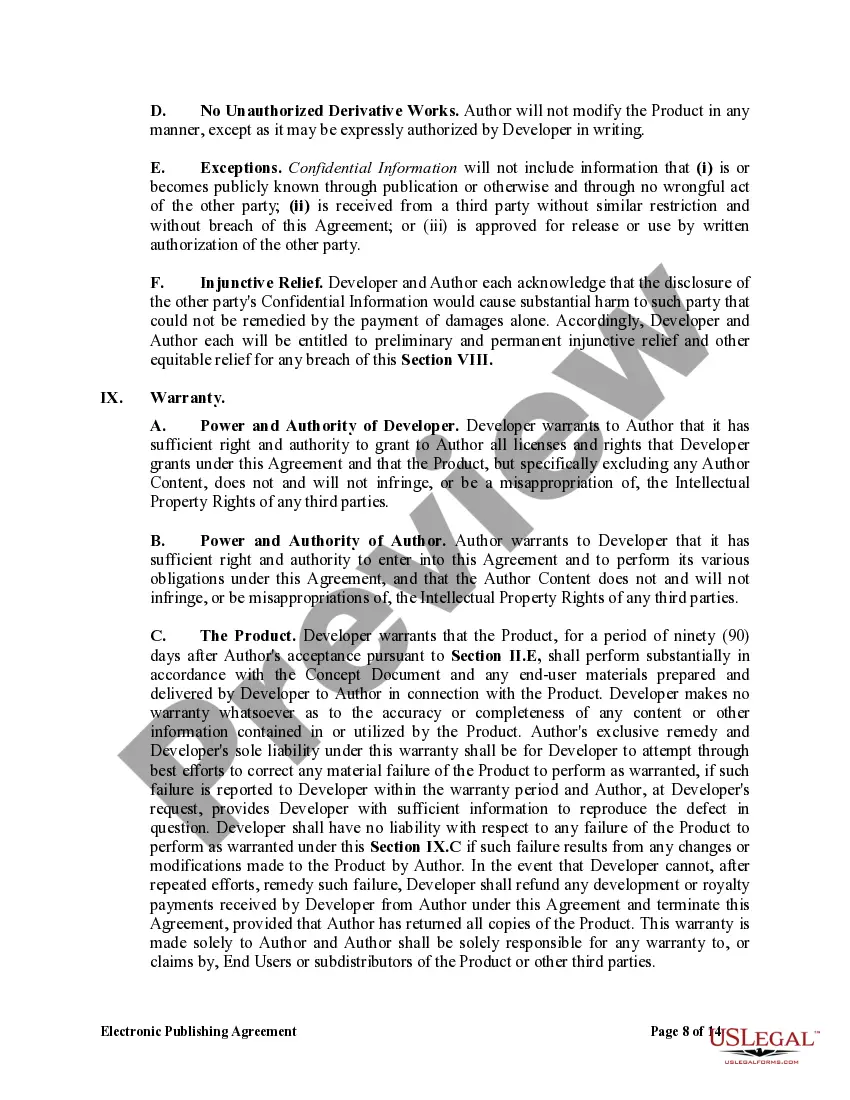
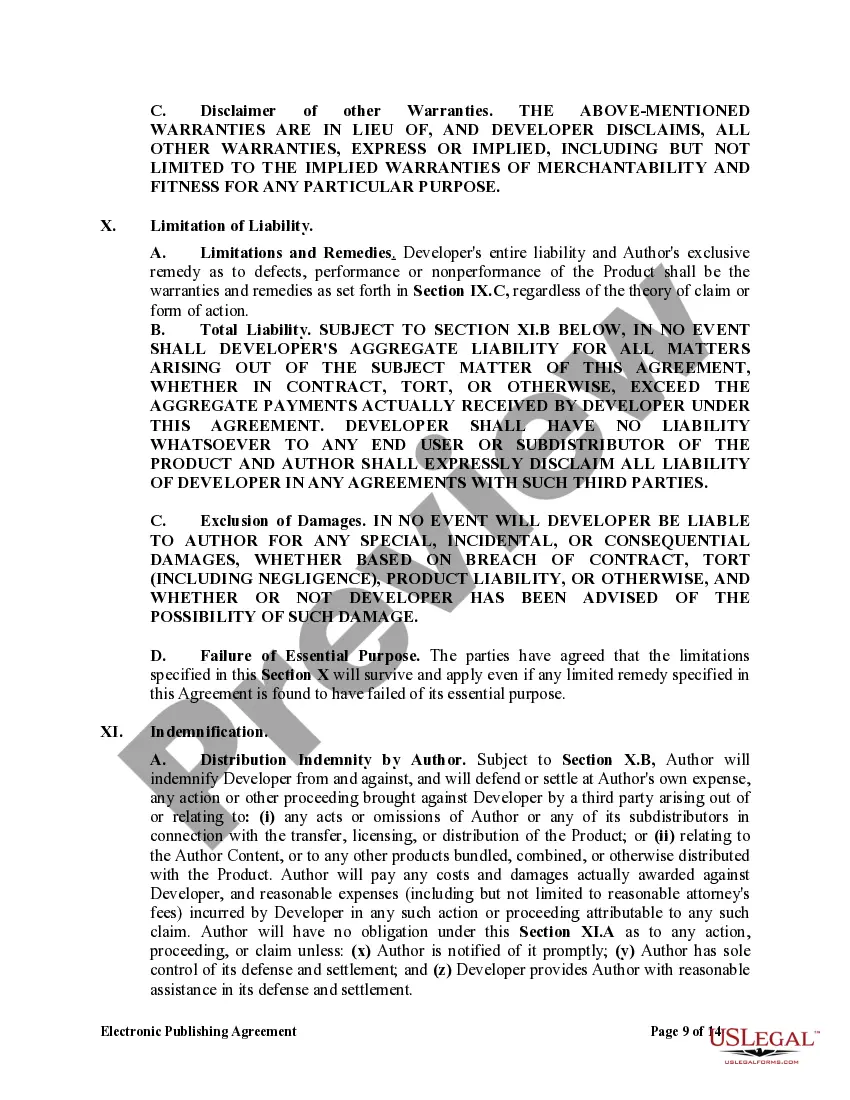
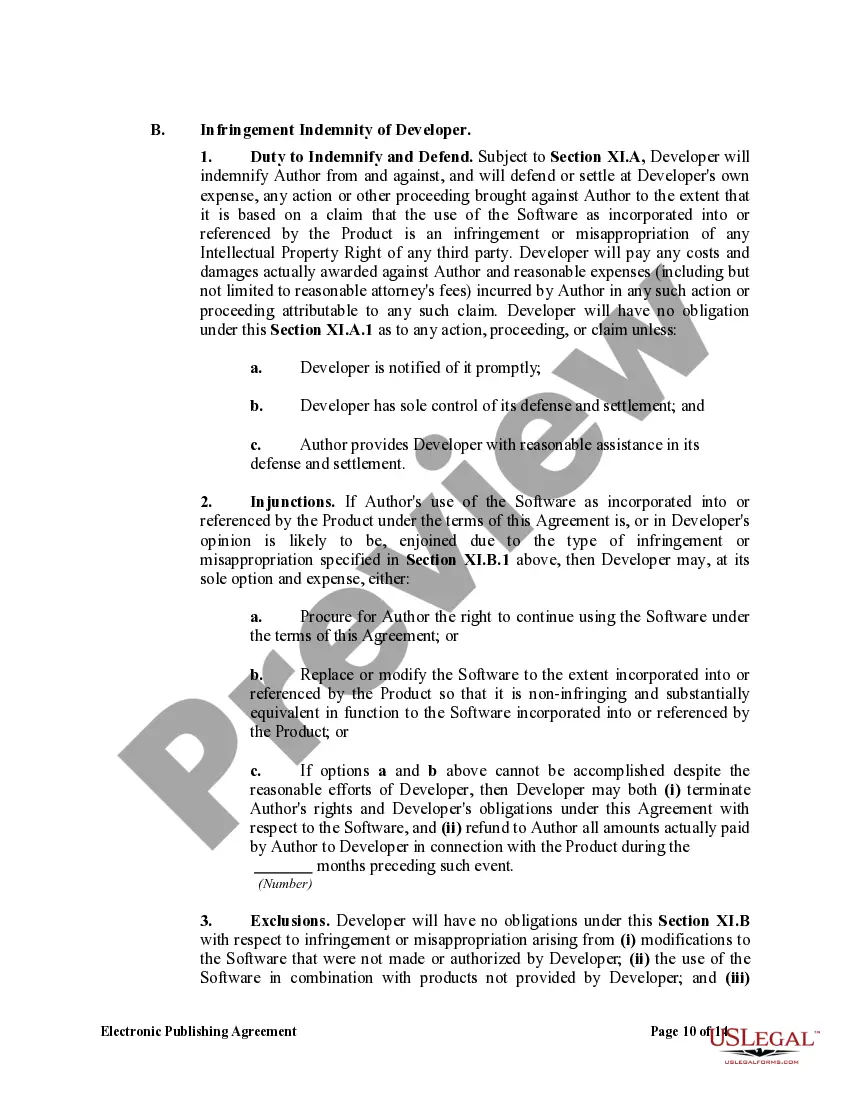
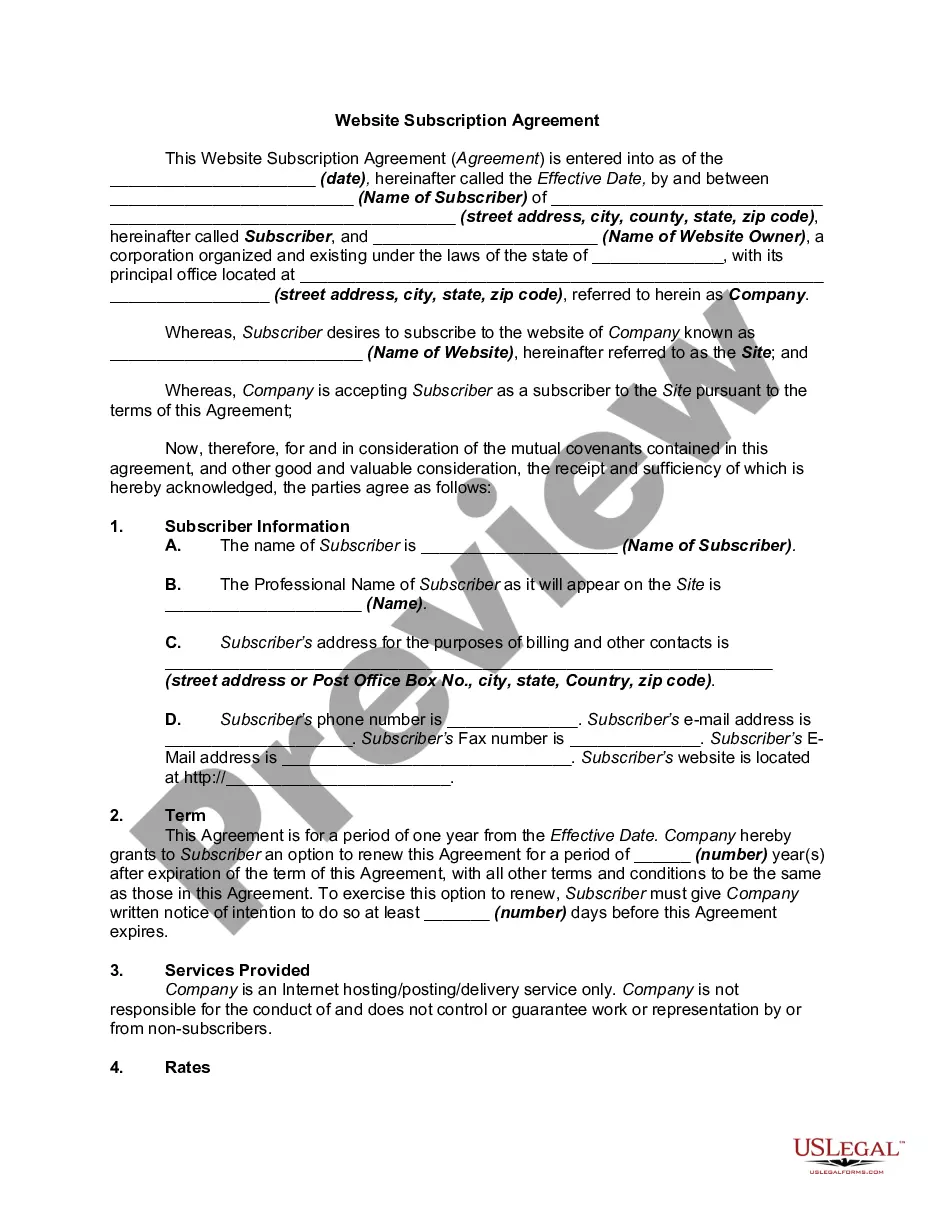
How to fill out Electronic Publishing Agreement?
If you want to be thorough, obtain, or print legal document templates, utilize US Legal Forms, the largest collection of legal forms available online.
Take advantage of the site's straightforward and user-friendly search to find the documents you require.
Various templates for business and personal needs are organized by categories and states, or keywords.
Step 4. Once you have located the desired form, click the Buy now button. Choose the payment plan you prefer and enter your information to create an account.
Step 5. Complete the transaction. You can use your credit card or PayPal account to finalize the purchase.
- Use US Legal Forms to acquire the Texas Electronic Publishing Agreement within just a few clicks.
- If you are an existing US Legal Forms user, Log In to your account and press the Download button to get the Texas Electronic Publishing Agreement.
- You can also retrieve forms you previously downloaded in the My documents section of your account.
- If you are using US Legal Forms for the first time, follow the steps outlined below.
- Step 1. Confirm you have selected the form for the correct city/state.
- Step 2. Utilize the Review feature to examine the form's content. Be sure to read the description.
- Step 3. If you are not satisfied with the form, use the Search box at the top of the screen to find alternative versions of the legal form template.
Form popularity
FAQ
The basic publishing contract serves as the foundation for most publishing agreements, encompassing essential elements like rights, royalties, and responsibilities of each party. It is designed for simplicity while covering the necessary legal and financial aspects. When dealing with a Texas Electronic Publishing Agreement, the basic contract may include specifics about electronic formats and online distribution channels.
A traditional publishing contract grants the publisher full control over the distribution and marketing of an author’s work. This contract often includes an advance payment and delineates the author's royalties from sales. In a Texas Electronic Publishing Agreement, this setup is modified to address the digital landscape, highlighting e-books and online content dissemination.
A typical publishing deal can vary widely, but it usually involves the publisher obtaining exclusive rights to distribute the author's work. The details include compensation, royalties, and advance payments. With a Texas Electronic Publishing Agreement, such deals often adapt to digital formats, addressing the unique elements of electronic publishing.
A 50/50 publishing deal typically refers to a revenue split between the author and the publisher. This means both parties share profits equally from the sales of the published work. In a Texas Electronic Publishing Agreement, such a deal ensures transparency and fairness, aligning the interests of both the author and publisher.
Publishing agreements usually cover conditions such as copyright ownership, payment structure, and timeline for publication. Additionally, they may address how revisions are handled and possible terminations. A Texas Electronic Publishing Agreement will particularly emphasize digital rights and usage to ensure both parties are on the same page regarding distribution.
In a Texas Electronic Publishing Agreement, the rights granted typically include the ownership of the content, distribution rights, and the ability to modify the work. These agreements also clarify the payment terms and royalties for authors. Understanding these rights ensures that both parties maintain a clear negotiation framework and can protect their interests.
The author's agreement refers to the contract that an author signs with a publisher, commonly known as the Texas Electronic Publishing Agreement. It specifies the terms of publication, including rights, royalties, and obligations of both parties. Understanding this agreement is crucial for authors to ensure their work is protected and that they receive appropriate compensation.
The split between a publisher and an author varies based on the terms of the Texas Electronic Publishing Agreement. Typically, authors may receive a percentage of royalties from book sales, which can range from 10% to 25%. This split can be negotiated, and authors should ensure that they receive a fair share for their creative work.
A publishing administration agreement is a contract that outlines how a publisher manages the rights and royalties of an author's work. It is often used in conjunction with a Texas Electronic Publishing Agreement, detailing how the publisher will administer these rights, including marketing and sales responsibilities. This agreement helps authors retain control over their intellectual property while benefiting from the publisher’s resources.
The relationship between an author and a publisher is collaborative and often centered on the production and promotion of a book. The Texas Electronic Publishing Agreement formalizes this relationship, defining rights, responsibilities, and profit-sharing. Effective communication and mutual understanding enhance this partnership and lead to successful book launches.