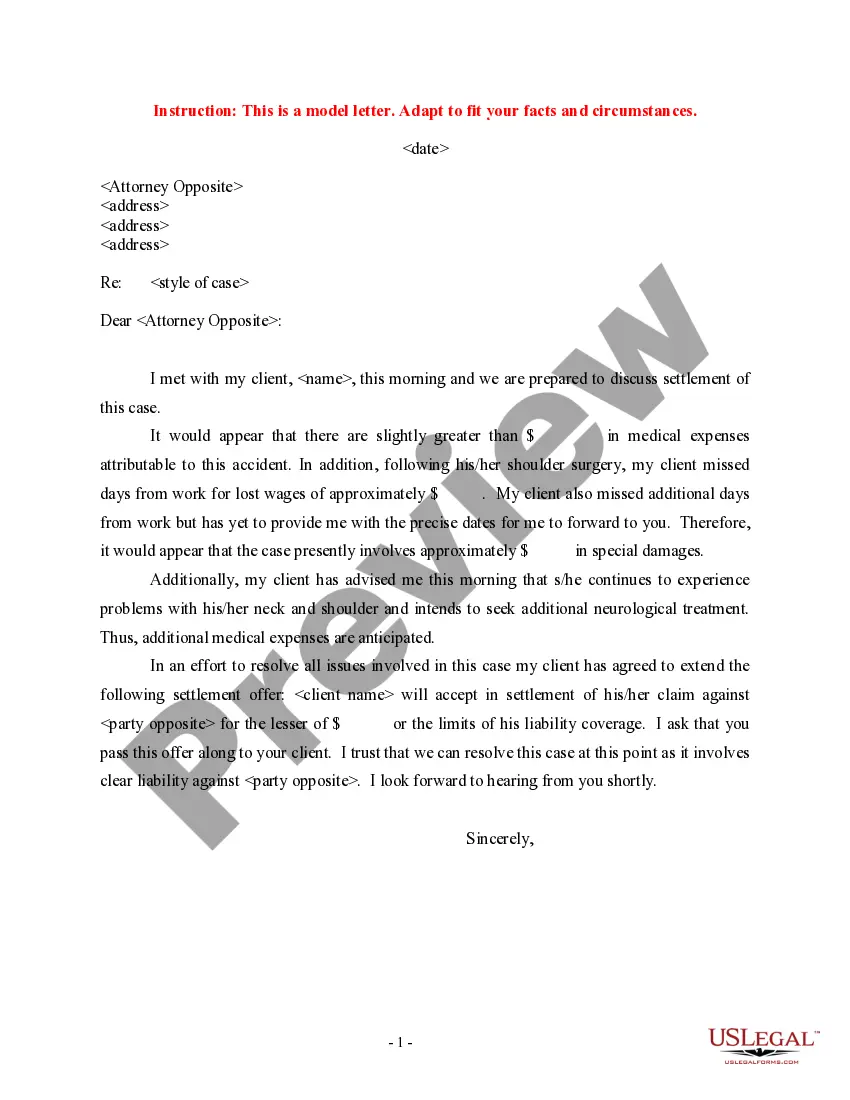
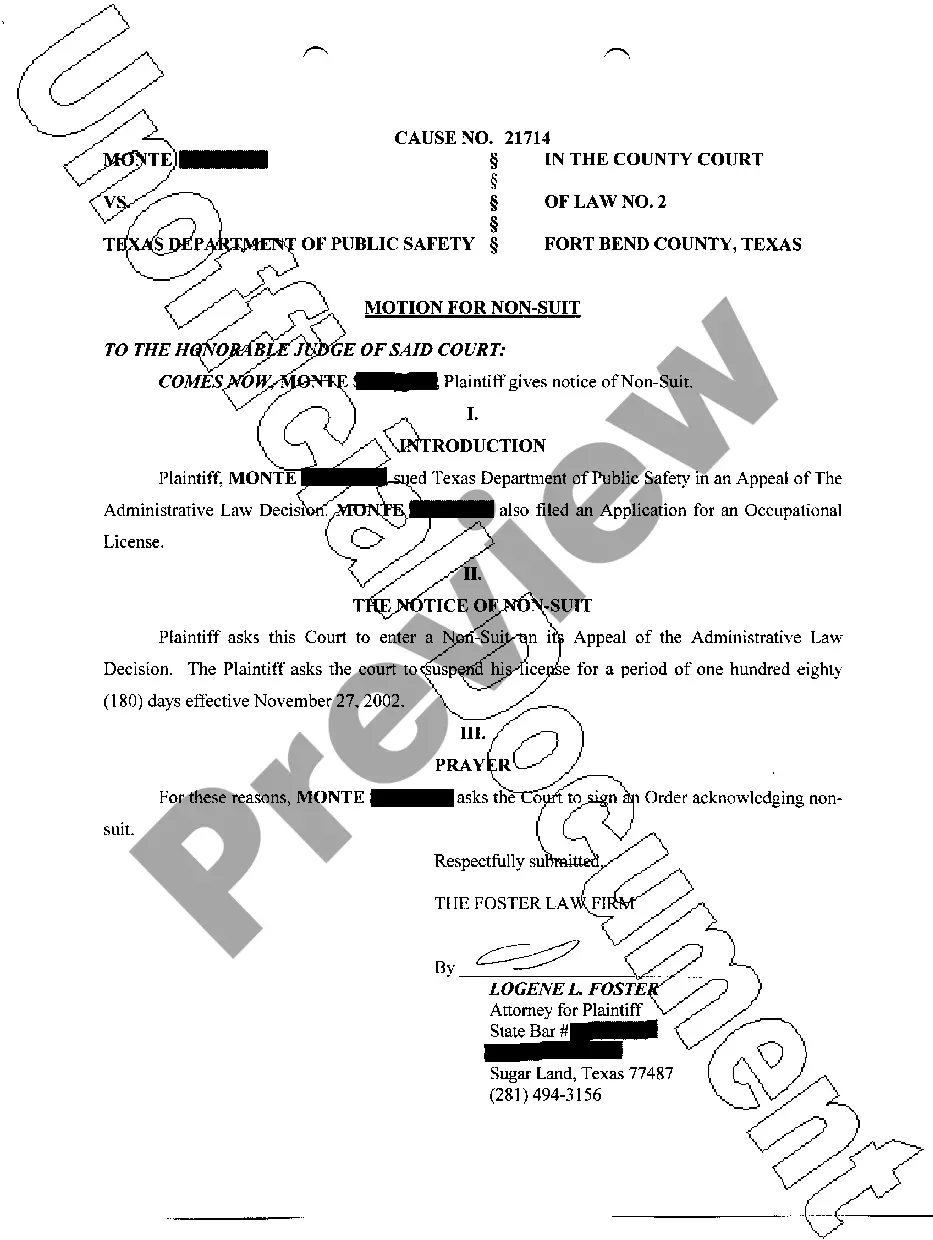
Texas Motion For Non Suit
Description
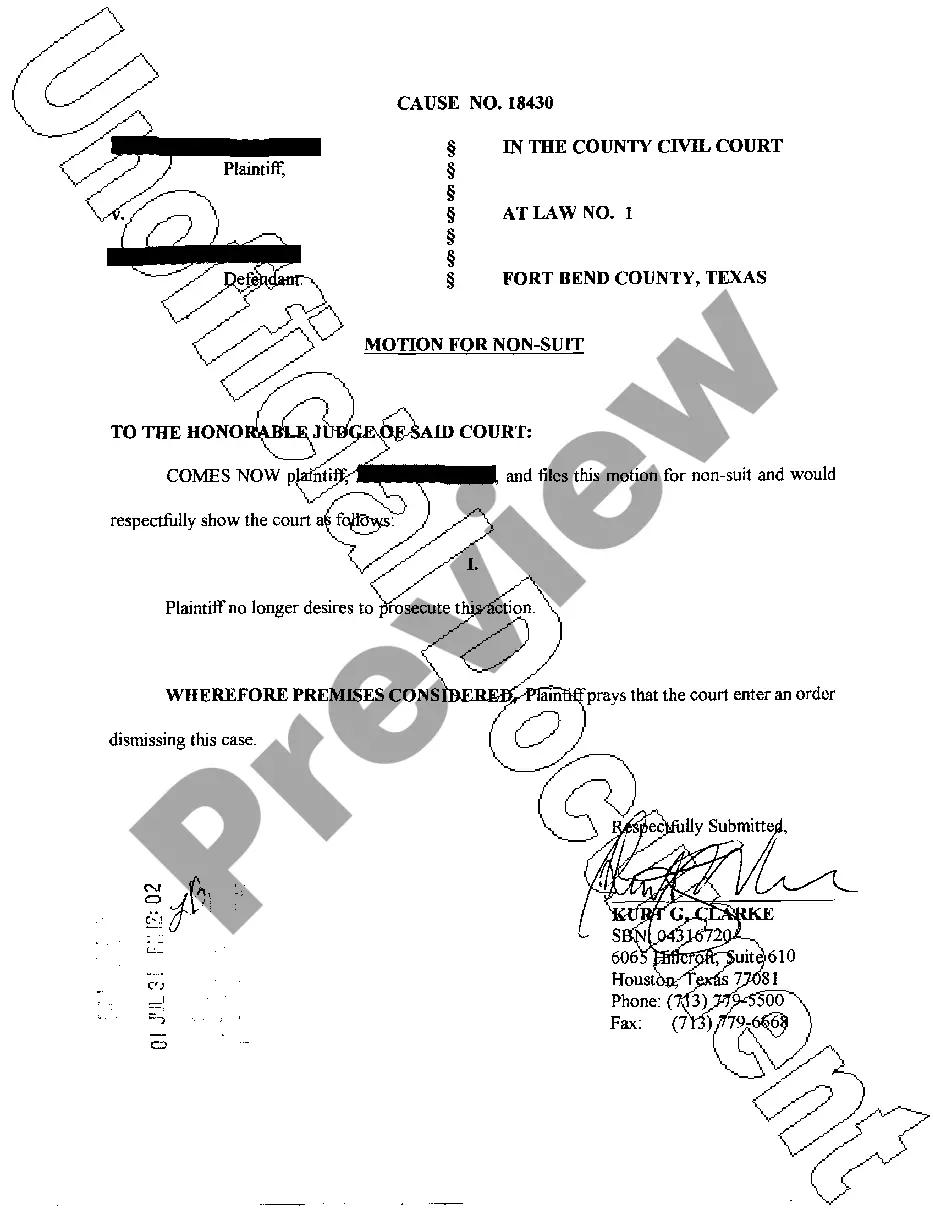
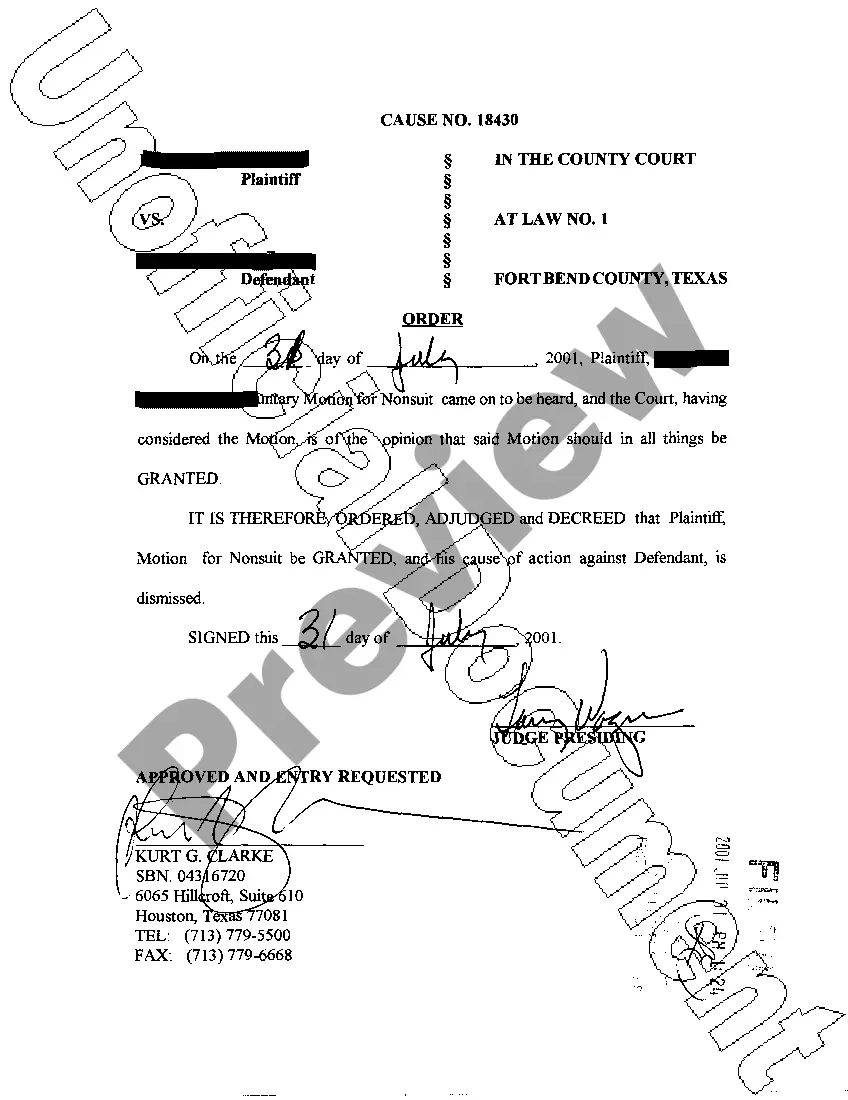
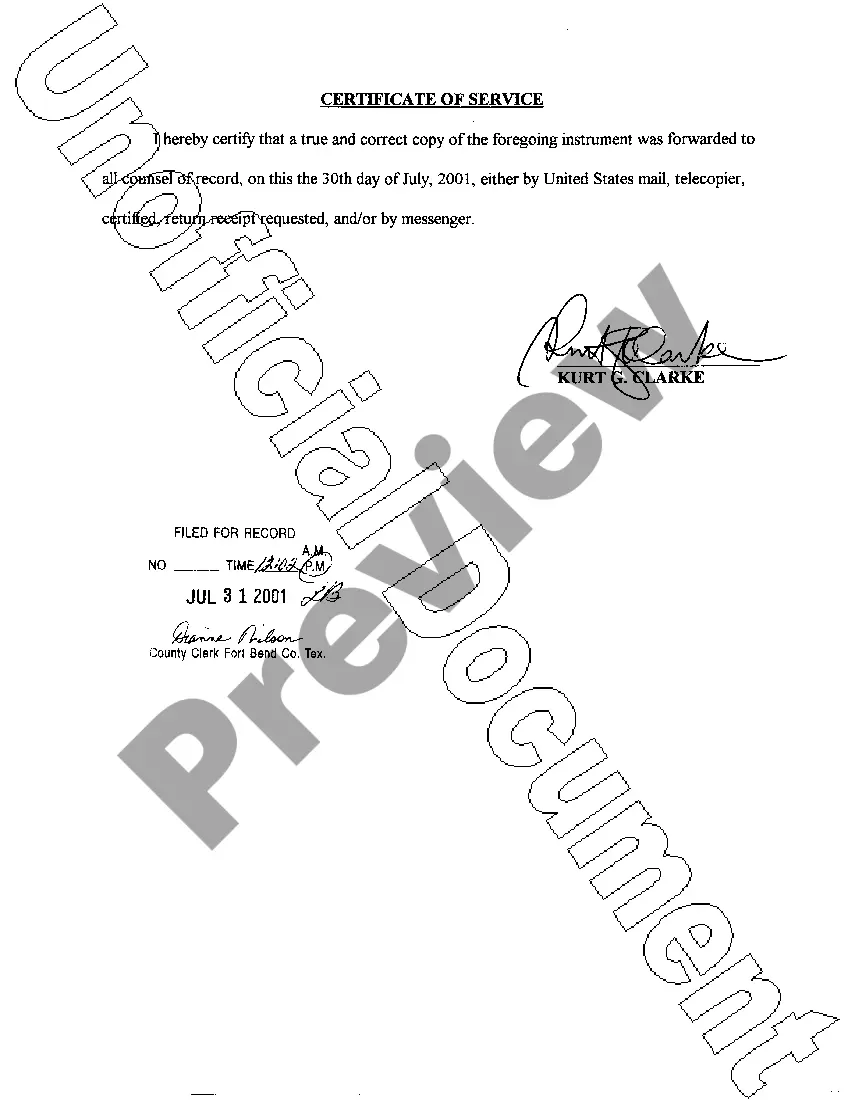
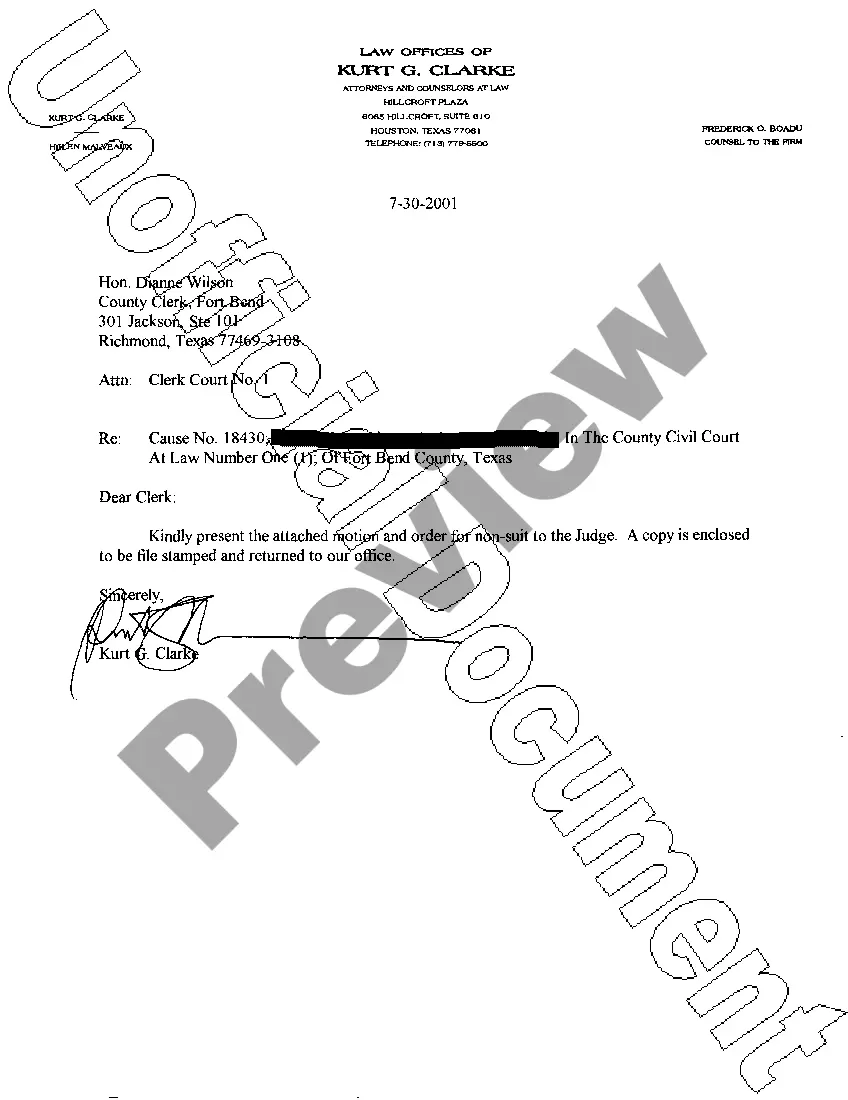
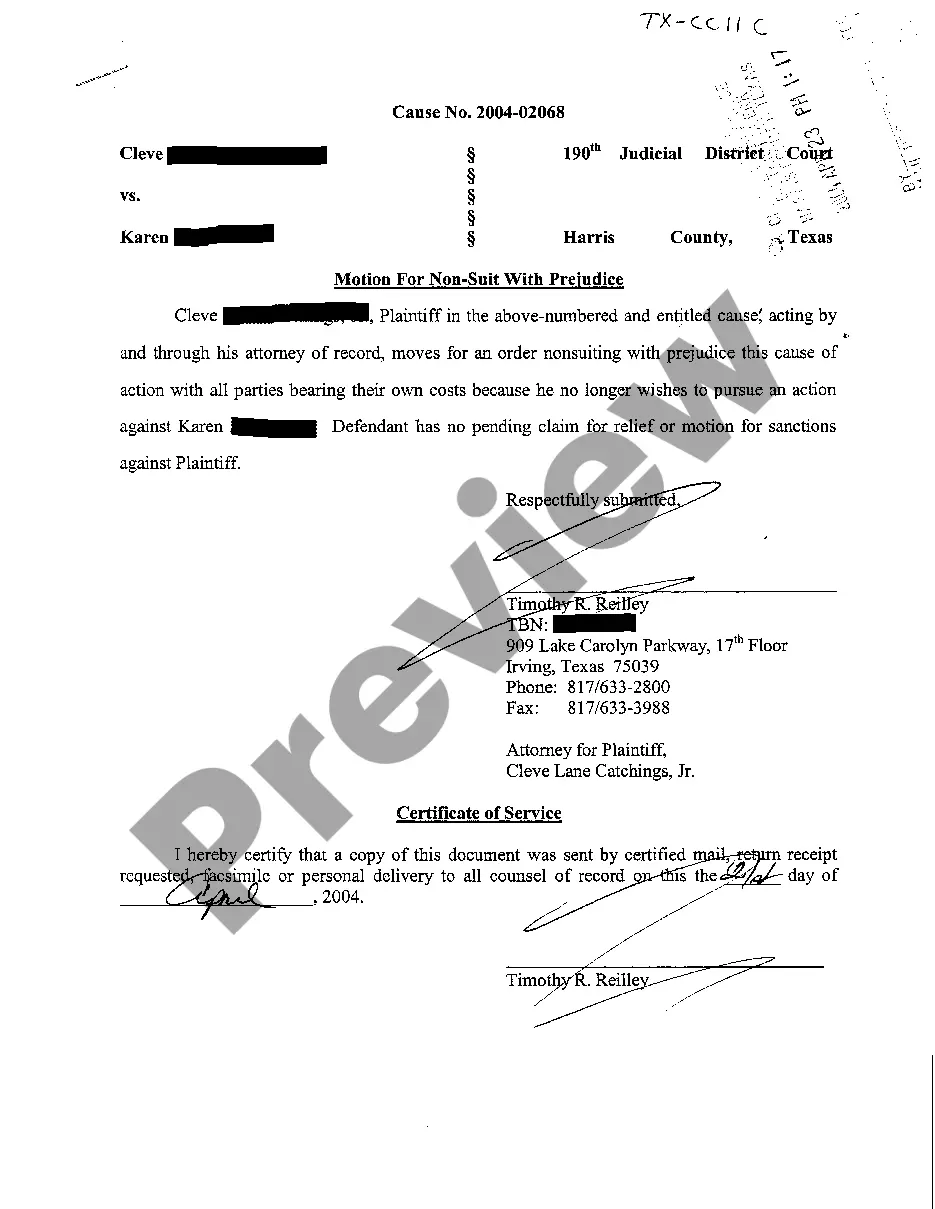
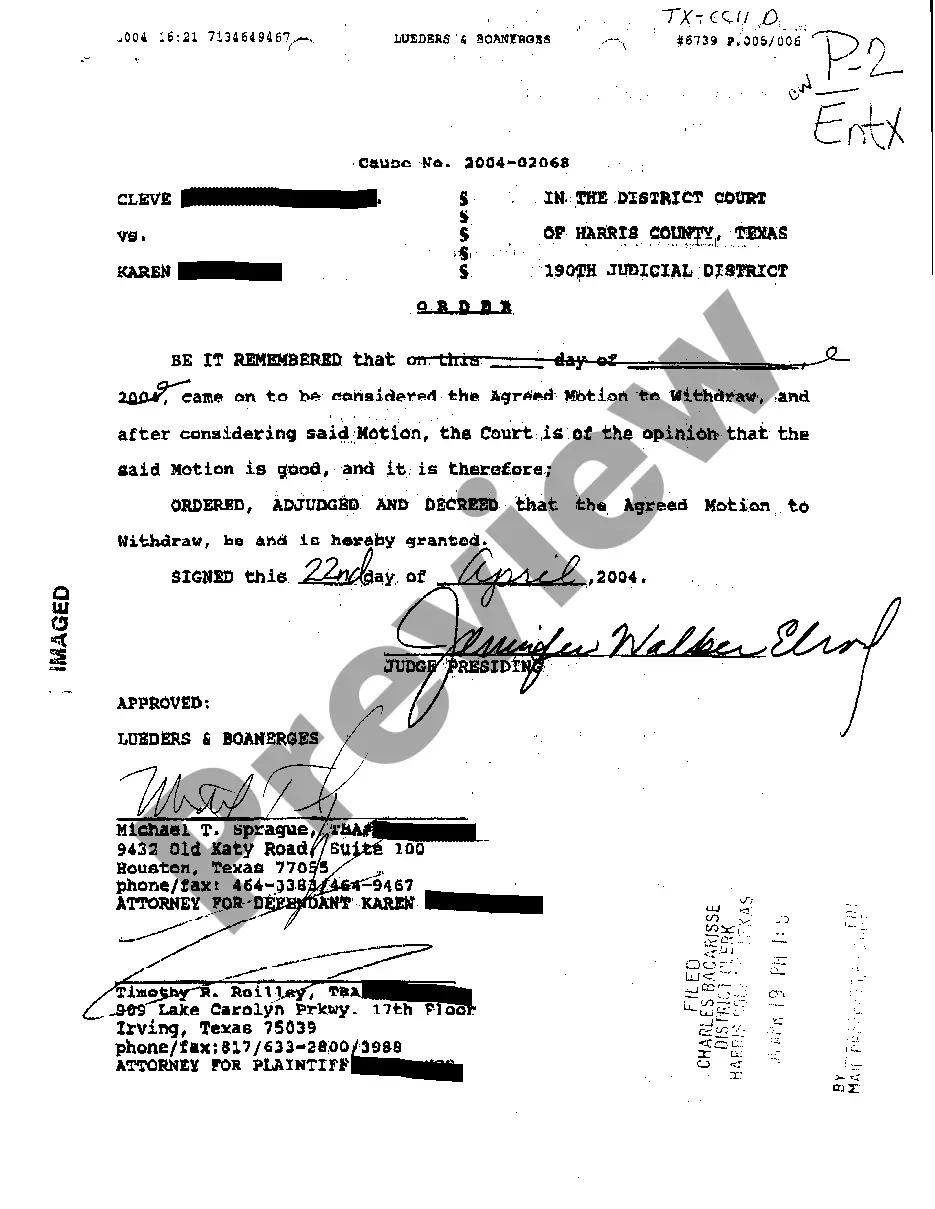
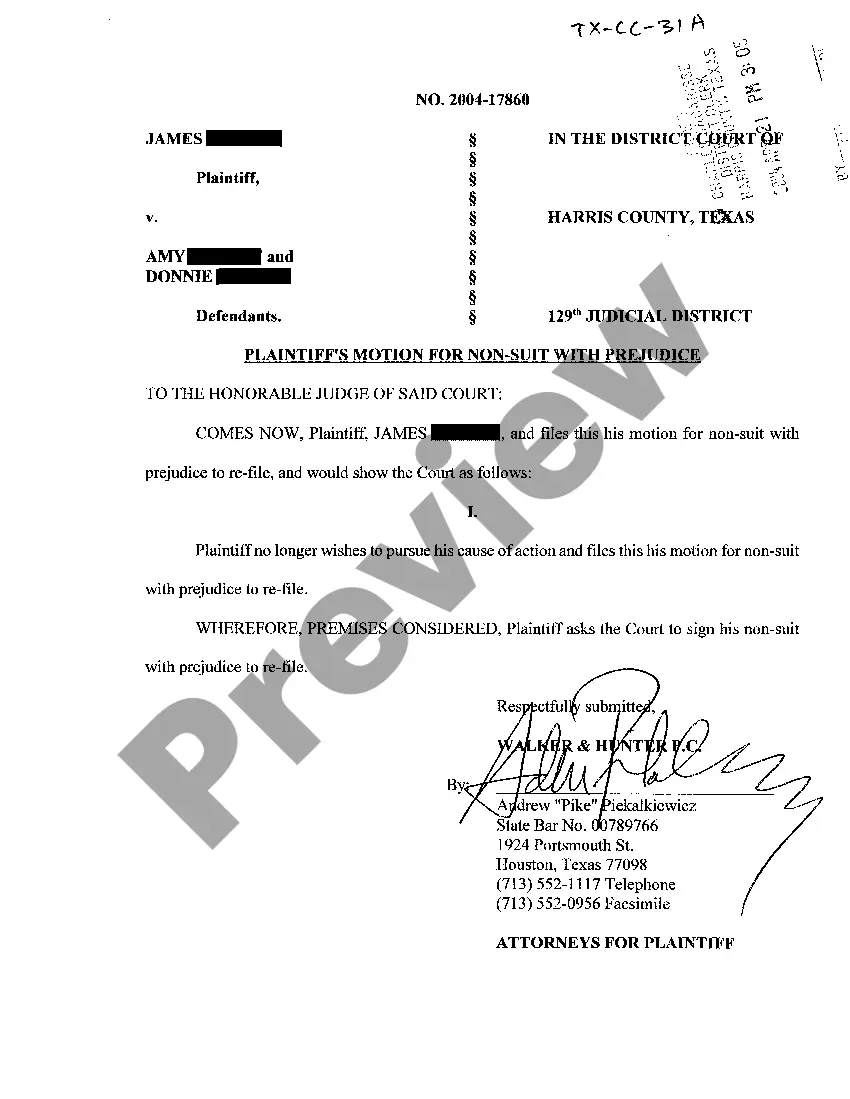
How to fill out Texas Motion For Non Suit?
Access to quality Texas Motion For Non Suit forms online with US Legal Forms. Avoid days of wasted time looking the internet and dropped money on documents that aren’t up-to-date. US Legal Forms provides you with a solution to exactly that. Find over 85,000 state-specific legal and tax forms you can download and submit in clicks within the Forms library.
To find the sample, log in to your account and click Download. The document will be stored in two places: on the device and in the My Forms folder.
For individuals who don’t have a subscription yet, take a look at our how-guide listed below to make getting started easier:
- Find out if the Texas Motion For Non Suit you’re looking at is suitable for your state.
- See the form using the Preview option and read its description.
- Check out the subscription page by clicking on Buy Now button.
- Select the subscription plan to keep on to sign up.
- Pay out by card or PayPal to finish making an account.
- Choose a preferred file format to download the document (.pdf or .docx).
Now you can open the Texas Motion For Non Suit sample and fill it out online or print it out and do it by hand. Consider sending the document to your legal counsel to make sure everything is filled out appropriately. If you make a error, print out and fill application again (once you’ve registered an account every document you download is reusable). Create your US Legal Forms account now and get a lot more forms.
Form popularity
FAQ
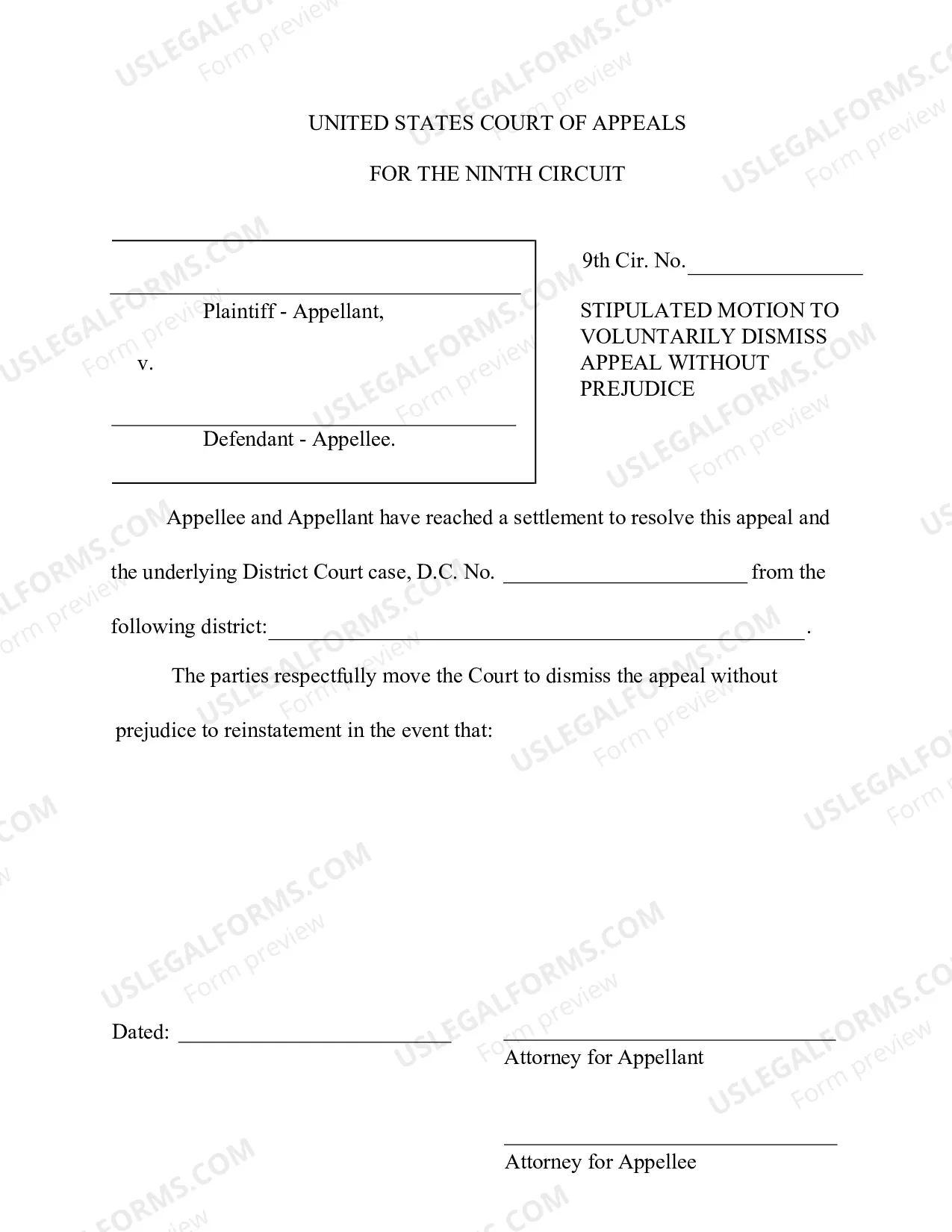
A judge may dismiss a case without prejudice in order to allow for errors in the case presented to be addressed before it is brought back to court. A judge will dismiss a case with prejudice if he or she finds reason why the case should not move forward and should be permanently closed.
A non-suit is a dismissal without prejudice to re-filing the case. A dismissal with prejudice means that the case cannot be re-filed. Usually, a non-suit is taken when parties do not execute a release. Take care.
: a judgment against a plaintiff for failure to prosecute a case or inability to establish a prima facie case. Other Words from nonsuit Example Sentences Learn More about nonsuit.
Nonsuit. an order of a judge dismissing a suit when the plaintiff fails to show he has a good cause of action or fails to produce any evidence.
A motion for nonsuit is a way for a party to challenge the sufficiency of an opponent's case on the merits before deliberation by the trier of fact. This can be established at the close of plaintiff's opening statement or after the evidence has been presented in the case in chief.
A case dismissed with prejudice is over and done with, once and for all, and can't be brought back to court. A case dismissed without prejudice means the opposite. It's not dismissed forever. The person whose case it is can try again.
A case dismissed with prejudice is over and done with, once and for all, and can't be brought back to court. A case dismissed without prejudice means the opposite. It's not dismissed forever. The person whose case it is can try again.
A motion for nonsuit is a way for a party to challenge the sufficiency of an opponent's case on the merits before deliberation by the trier of fact. This can be established at the close of plaintiff's opening statement or after the evidence has been presented in the case in chief.