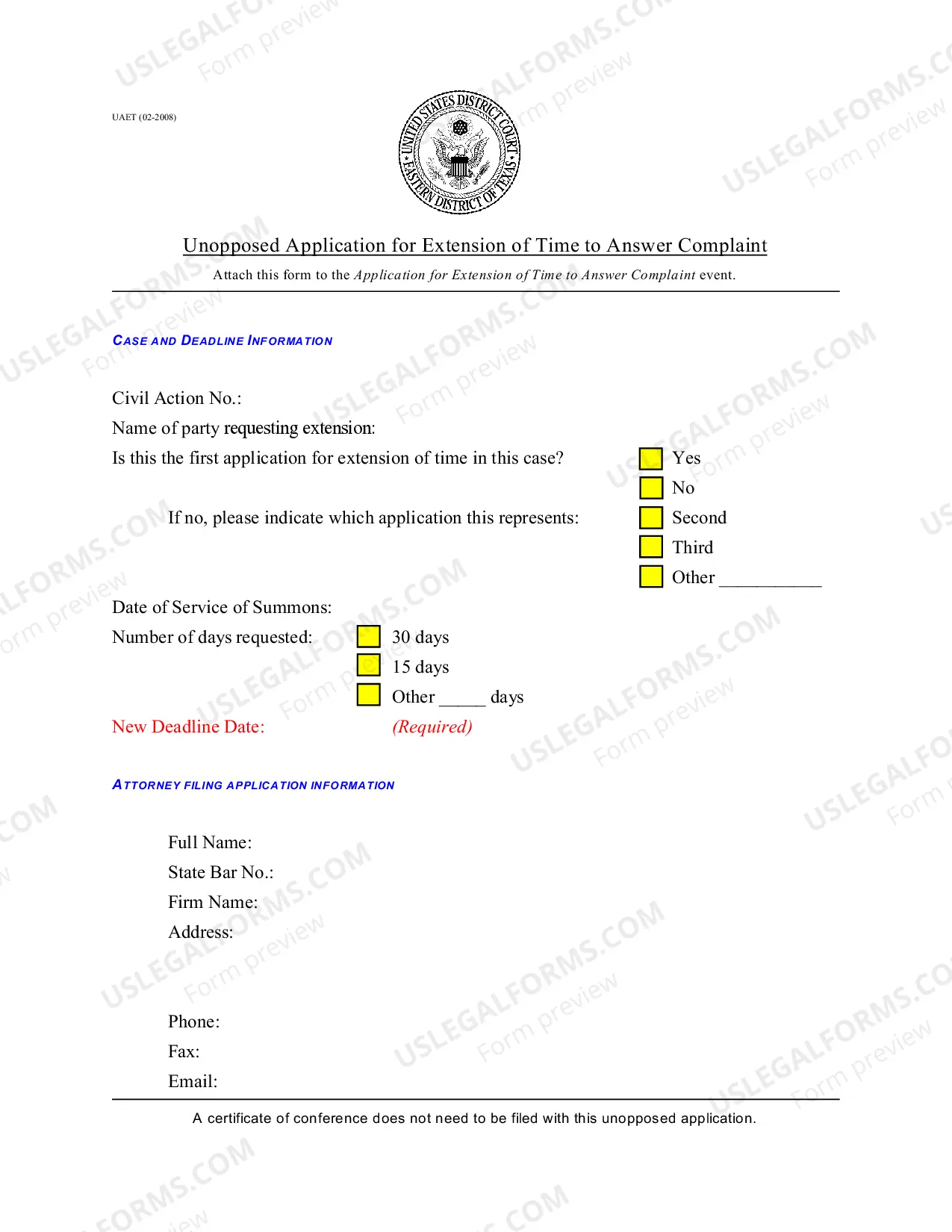
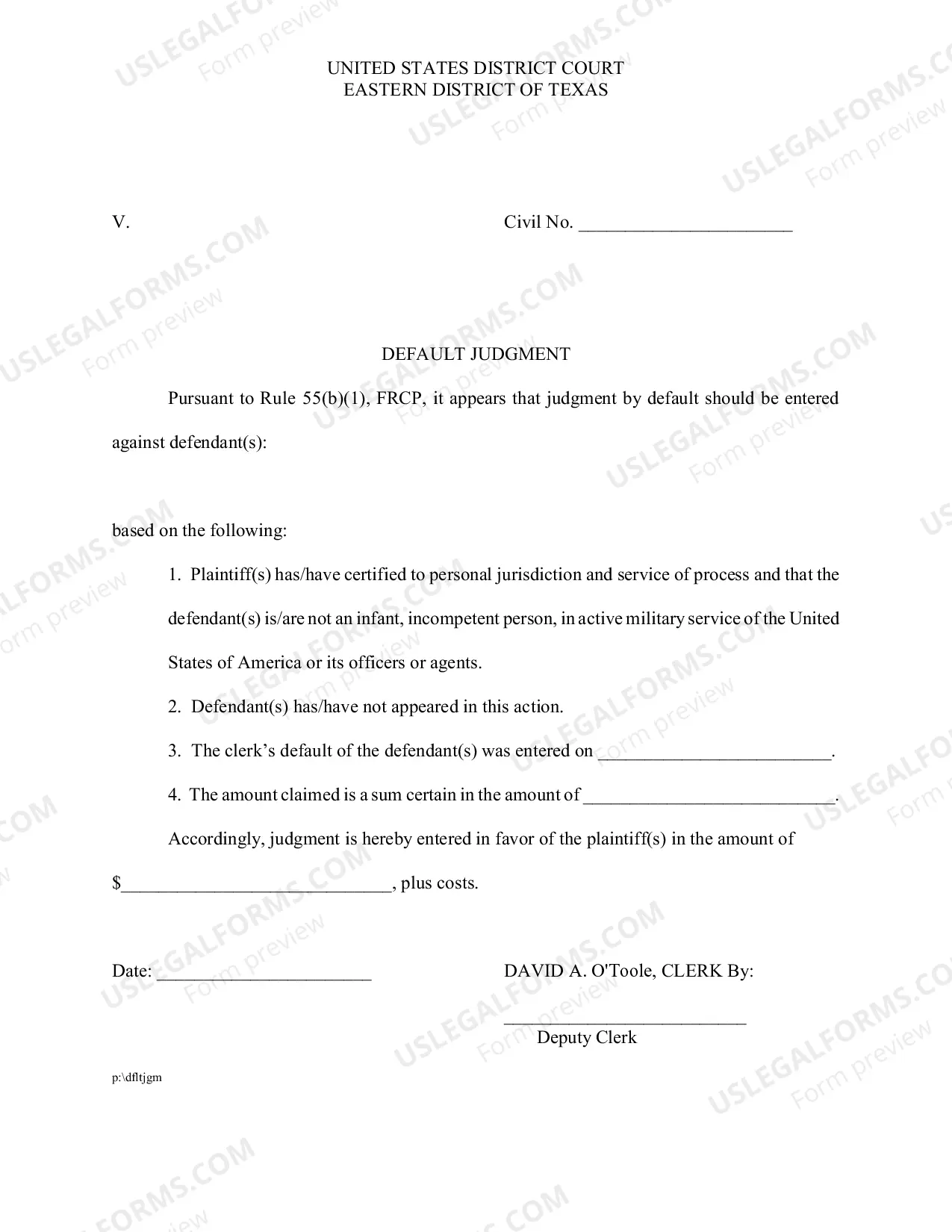
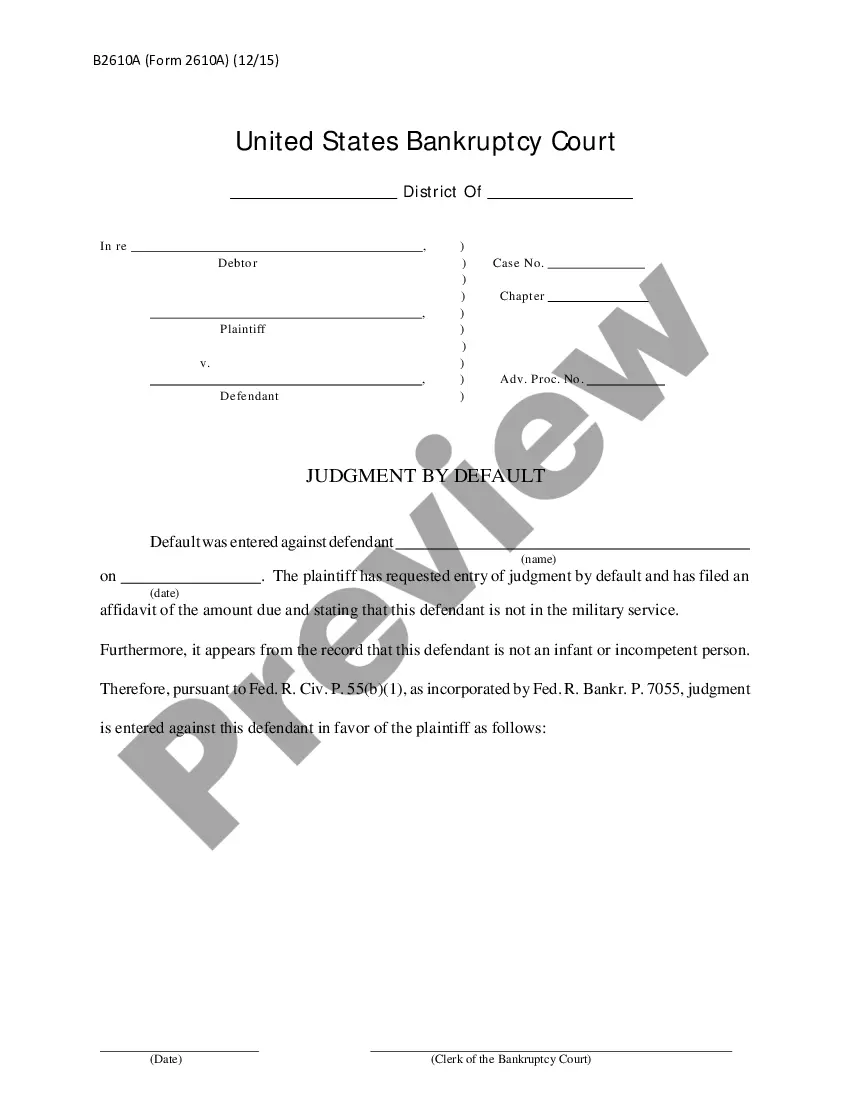
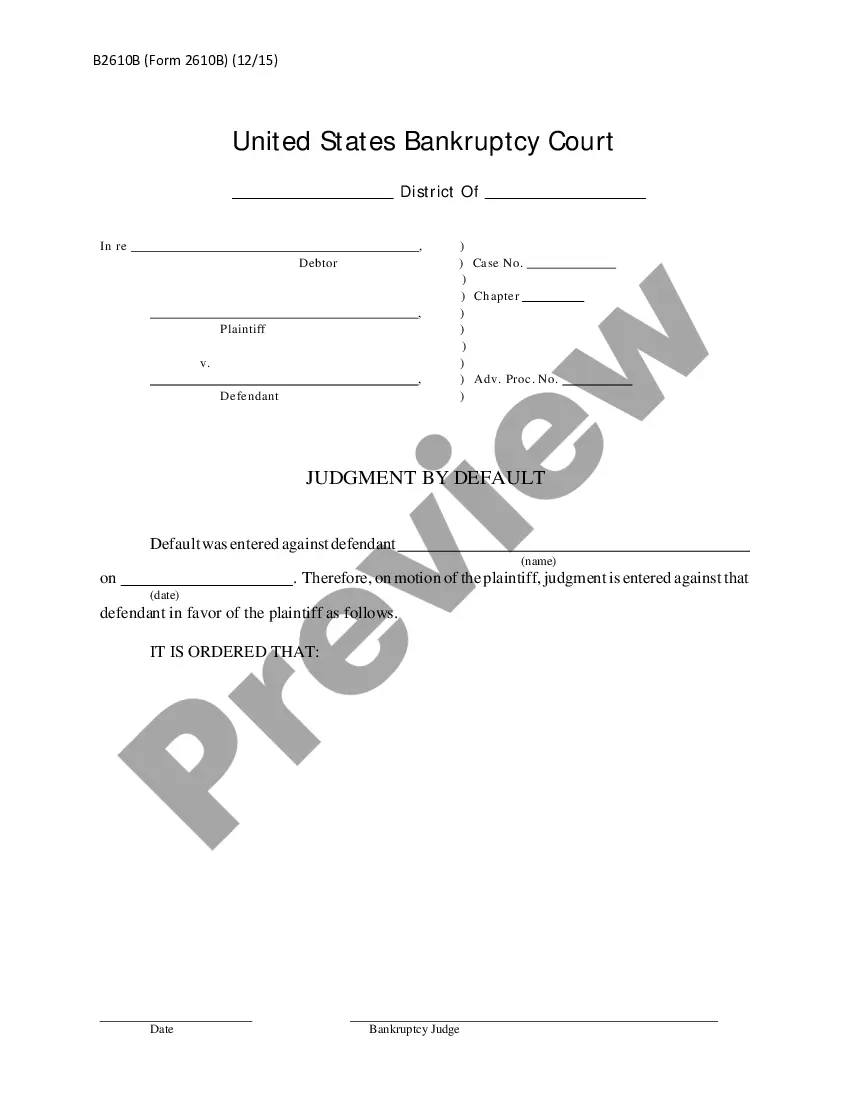
Texas Default Judgment is a legal process in which a court can enter a judgment in favor of a plaintiff without a trial if the defendant has failed to appear or respond to the lawsuit. It is a form of summary judgment, which allows a court to decide a case without a full trial if there are no genuine issues of material fact in dispute. Texas Default Judgment can be divided into two types: Default Judgment by Clerk and Default Judgment by Court. Default Judgment by Clerk is a judgment given by the clerk of court based on the claim of the plaintiff and the defendant's failure to respond. Default Judgment by Court is a judgment given by a judge or justice of the peace after hearing the plaintiff's claim and the defendant's failure to appear or respond.
Texas Default Judgment
Description
Get your form ready online
Our built-in tools help you complete, sign, share, and store your documents in one place.
Make edits, fill in missing information, and update formatting in US Legal Forms—just like you would in MS Word.
Download a copy, print it, send it by email, or mail it via USPS—whatever works best for your next step.
Sign and collect signatures with our SignNow integration. Send to multiple recipients, set reminders, and more. Go Premium to unlock E-Sign.
If this form requires notarization, complete it online through a secure video call—no need to meet a notary in person or wait for an appointment.
We protect your documents and personal data by following strict security and privacy standards.

Make edits, fill in missing information, and update formatting in US Legal Forms—just like you would in MS Word.

Download a copy, print it, send it by email, or mail it via USPS—whatever works best for your next step.

Sign and collect signatures with our SignNow integration. Send to multiple recipients, set reminders, and more. Go Premium to unlock E-Sign.

If this form requires notarization, complete it online through a secure video call—no need to meet a notary in person or wait for an appointment.

We protect your documents and personal data by following strict security and privacy standards.
Looking for another form?
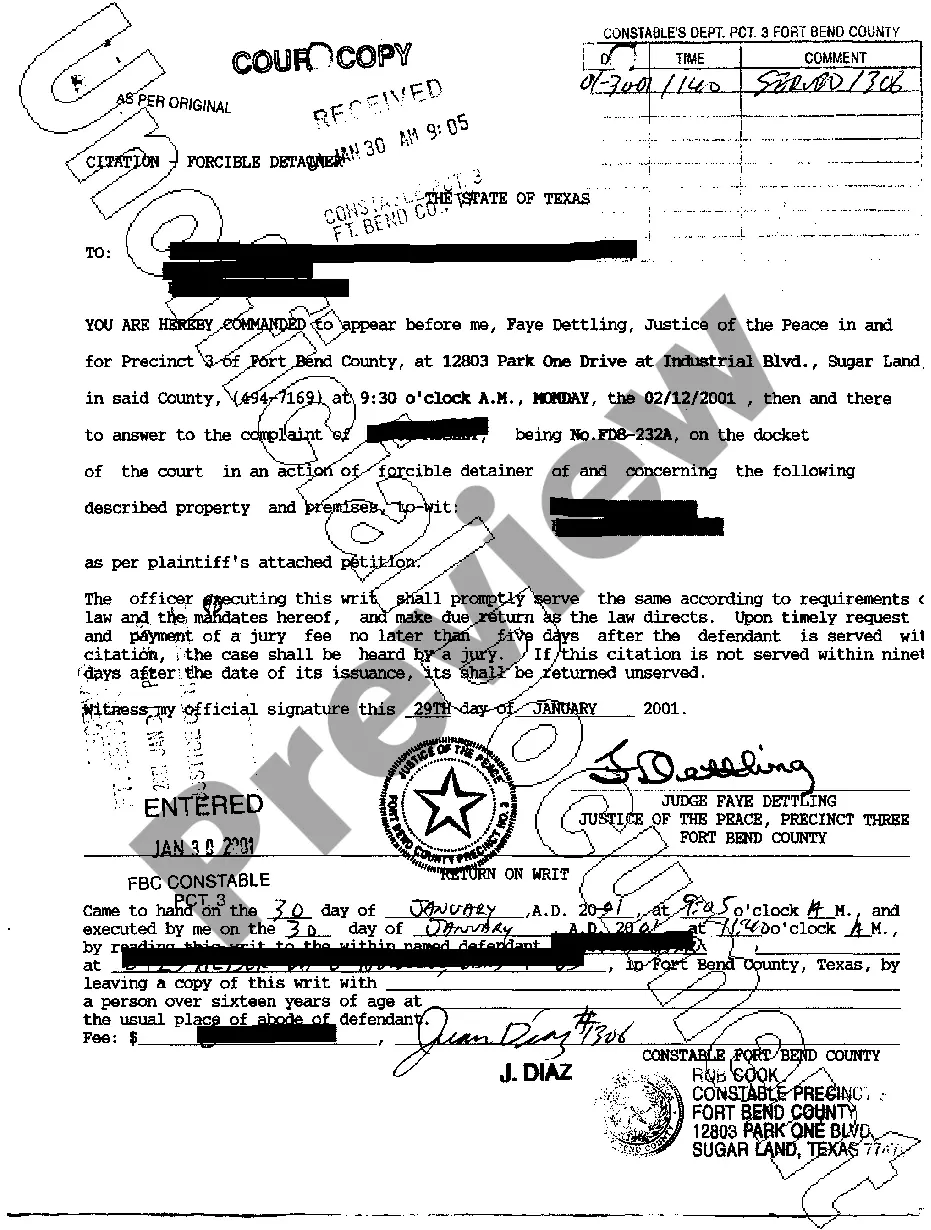
How to fill out Texas Default Judgment?
If you’re searching for a way to properly prepare the Texas Default Judgment without hiring a lawyer, then you’re just in the right spot. US Legal Forms has proven itself as the most extensive and reputable library of official templates for every personal and business situation. Every piece of paperwork you find on our online service is drafted in accordance with nationwide and state laws, so you can be certain that your documents are in order.
Follow these straightforward instructions on how to obtain the ready-to-use Texas Default Judgment:
- Ensure the document you see on the page meets your legal situation and state laws by checking its text description or looking through the Preview mode.
- Enter the document title in the Search tab on the top of the page and select your state from the dropdown to find another template if there are any inconsistencies.
- Repeat with the content verification and click Buy now when you are confident with the paperwork compliance with all the demands.
- Log in to your account and click Download. Sign up for the service and choose the subscription plan if you still don’t have one.
- Use your credit card or the PayPal option to pay for your US Legal Forms subscription. The document will be available to download right after.
- Decide in what format you want to get your Texas Default Judgment and download it by clicking the appropriate button.
- Add your template to an online editor to fill out and sign it quickly or print it out to prepare your hard copy manually.
Another great thing about US Legal Forms is that you never lose the paperwork you purchased - you can find any of your downloaded blanks in the My Forms tab of your profile any time you need it.
Form popularity
FAQ
A default judgment is a judgment entered in the trial court when a defendant hasn't filed a response in a timely manner. For a response to be timely, it must be made by 10 a.m. on the Monday following the expiration of 20 days after the date the defendant was served with the citation and petition.
If you do not own anything that can be taken to pay a judgment against you, you are judgment-proof. But, even if property is exempt, if the property is collateral for a secured debt, then the creditor can take the property back if you do not make the payments on time.
Except as provided in (1), a plaintiff who seeks a default judgment against a defendant must request a hearing, orally or in writing. The plaintiff must appear at the hearing and provide evidence of its damages. If the plaintiff proves its damages, the judge must render judgment for the plaintiff in the amount proven.
It is very difficult to collect a money judgment in Texas. Our law provides that only non-exempt property of the judgment debtor may be seized to satisfy the judgment. Most judgment debtors do not have non-exempt property; in other words, most people have only exempt property.
Request a Writ of Garnishment A writ of garnishment orders a third party (like a bank) to turn over property to settle a judgment. Courts grant writs of garnishment for bank accounts (this is called a bank levy) and even paychecks. Our judgment collection attorneys can assist you with garnishment procedures.
Request a Writ of Garnishment A writ of garnishment orders a third party (like a bank) to turn over property to settle a judgment. Courts grant writs of garnishment for bank accounts (this is called a bank levy) and even paychecks. Our judgment collection attorneys can assist you with garnishment procedures.
Do Judgments Expire in Texas? Judgments awarded in Texas to a non-government creditor are generally valid for ten years but they can be renewed for longer. If a judgment is not renewed, it will become dormant. You can attempt to revive a dormant judgment in order to continue to try and collect the debt.
If a defendant does not pay a judgment, the plaintiff can try to enforce the judgment by filing another lawsuit. For example, if the defendant owns several cars, the plaintiff can sue to have the car transferred to the plaintiff.