Texas Paternity Law and Procedure Handbook
What this document covers
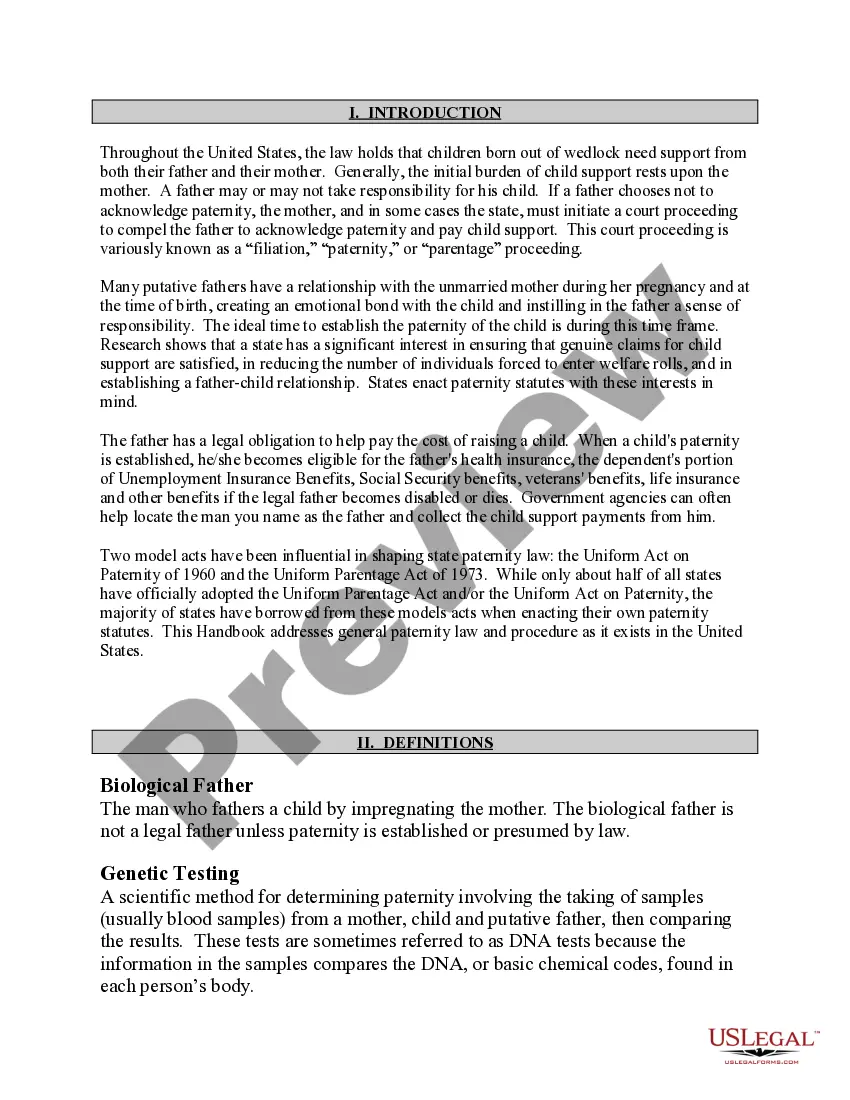
The Paternity Law and Procedure Handbook is a comprehensive guide that outlines the laws and procedures for establishing paternity across the U.S. It is particularly useful for unmarried parents who need to navigate the process of recognizing paternity, ensuring legal rights and responsibilities for both the mother and father. Unlike other legal forms that may focus only on a specific state's laws, this handbook offers a broad overview while providing specific resources for each state, making it a valuable tool for those seeking a clear understanding of paternity law.
Key parts of this document
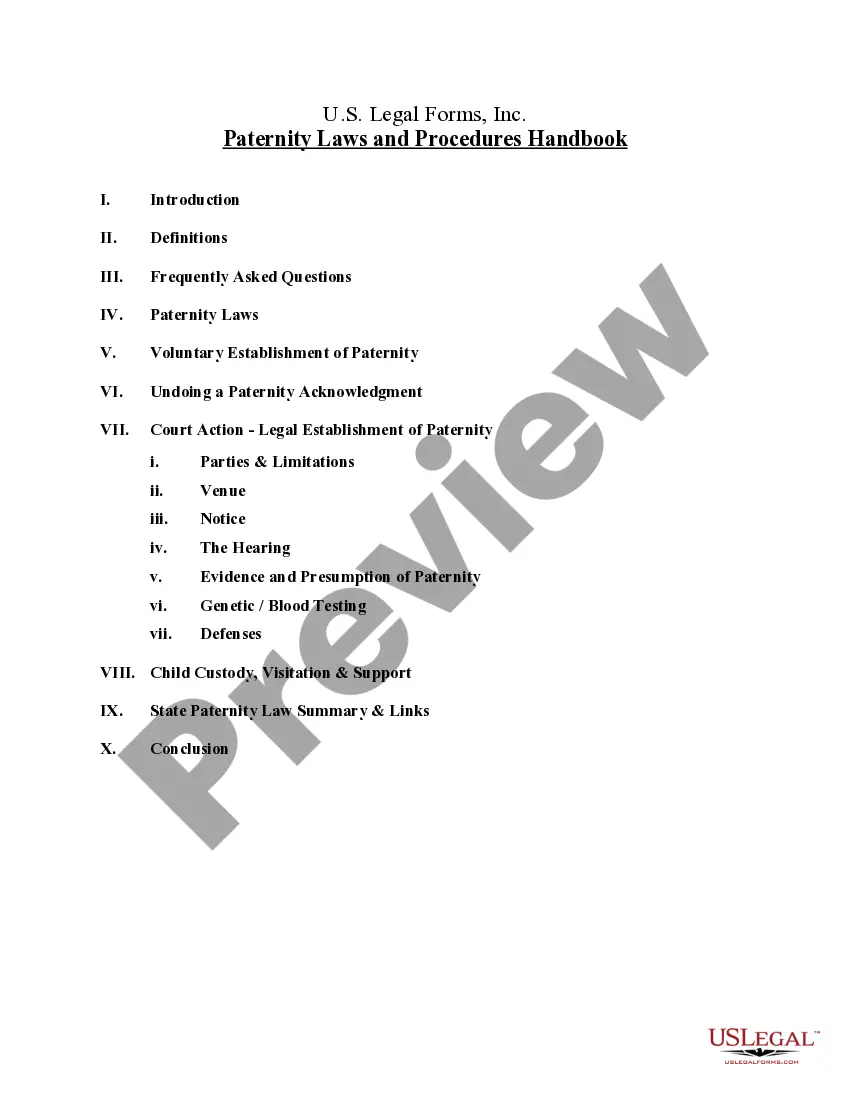
- Introduction to paternity law and its importance
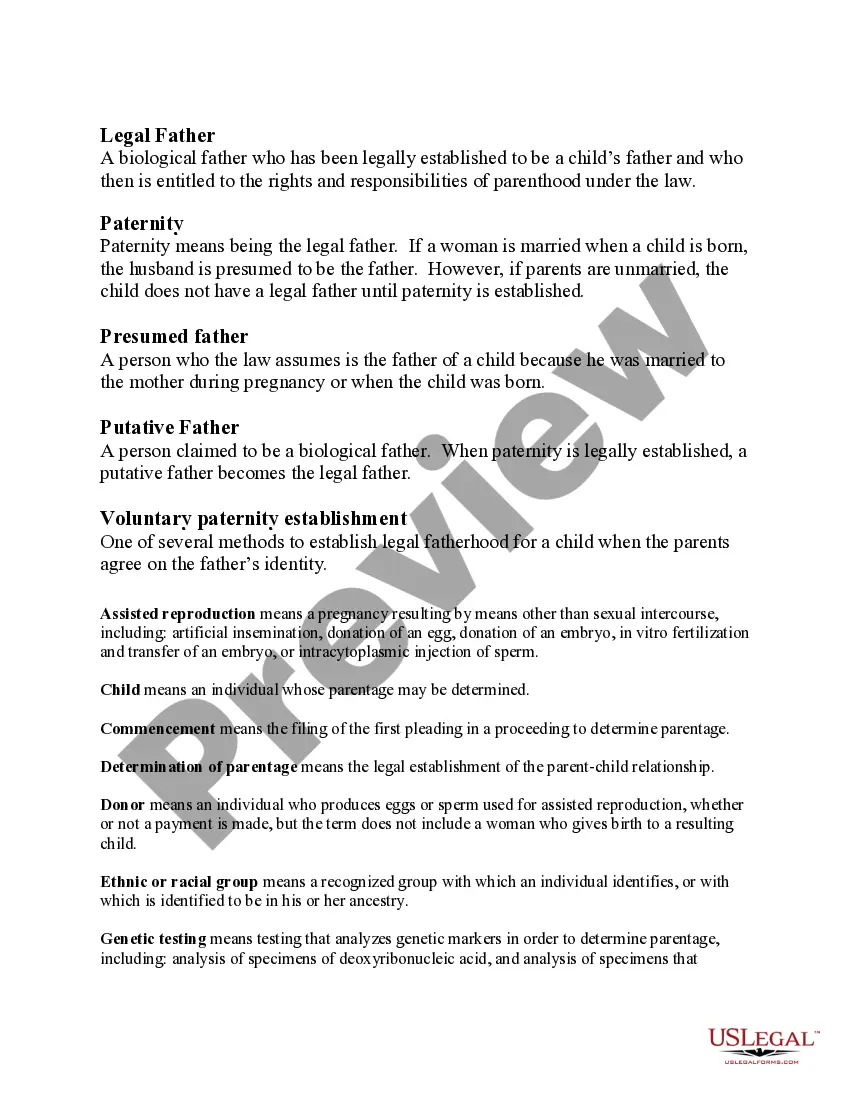
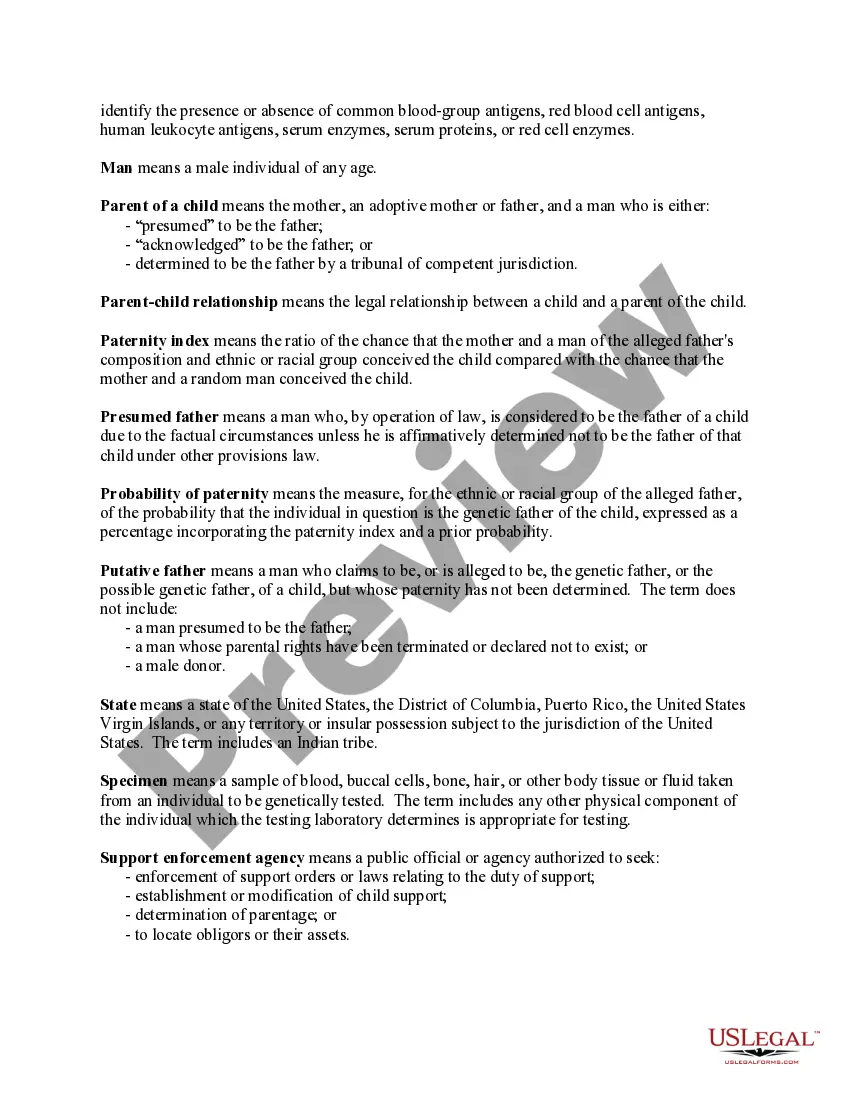
- Definitions of key terms related to paternity
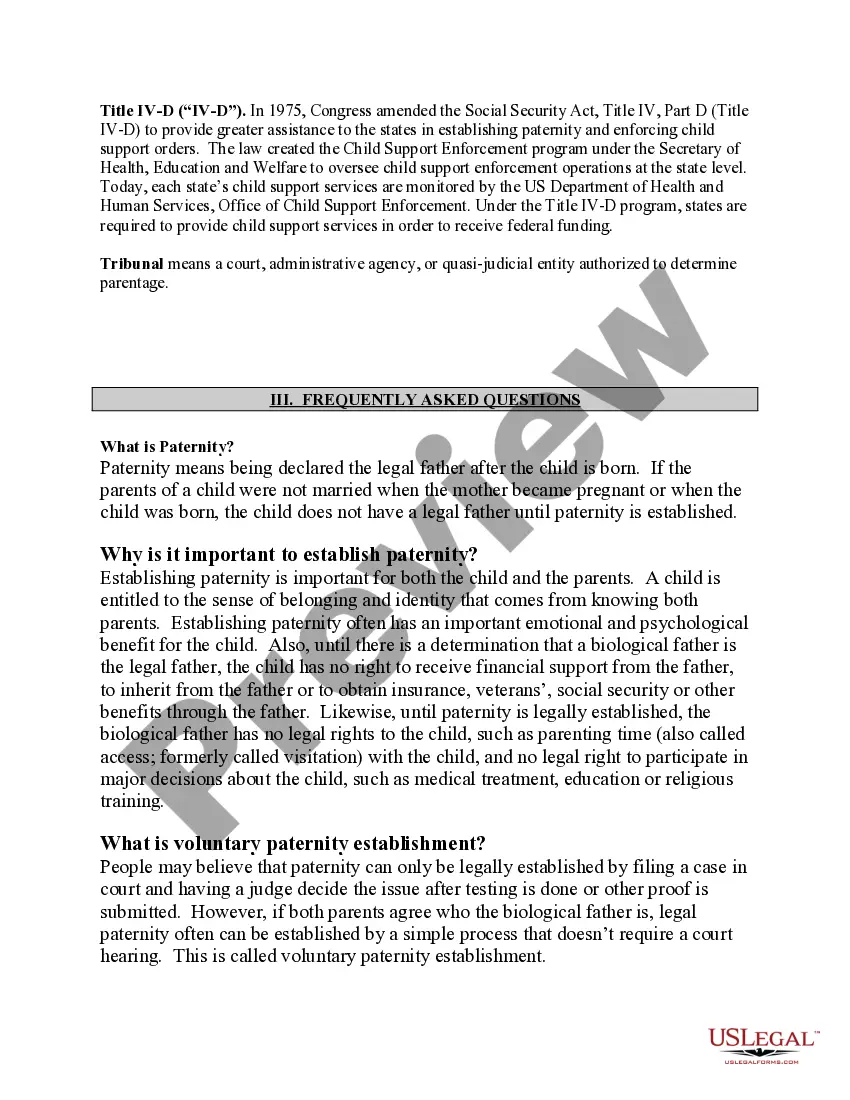
- Frequently asked questions about establishing paternity
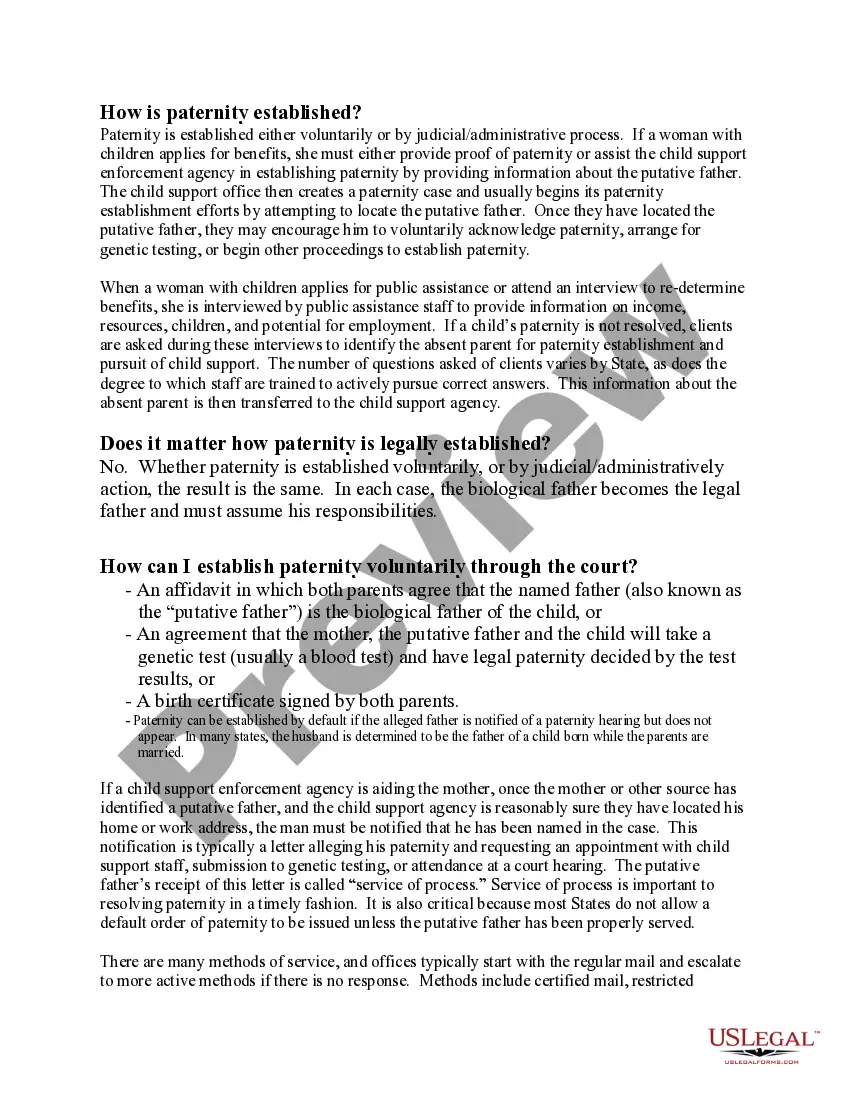
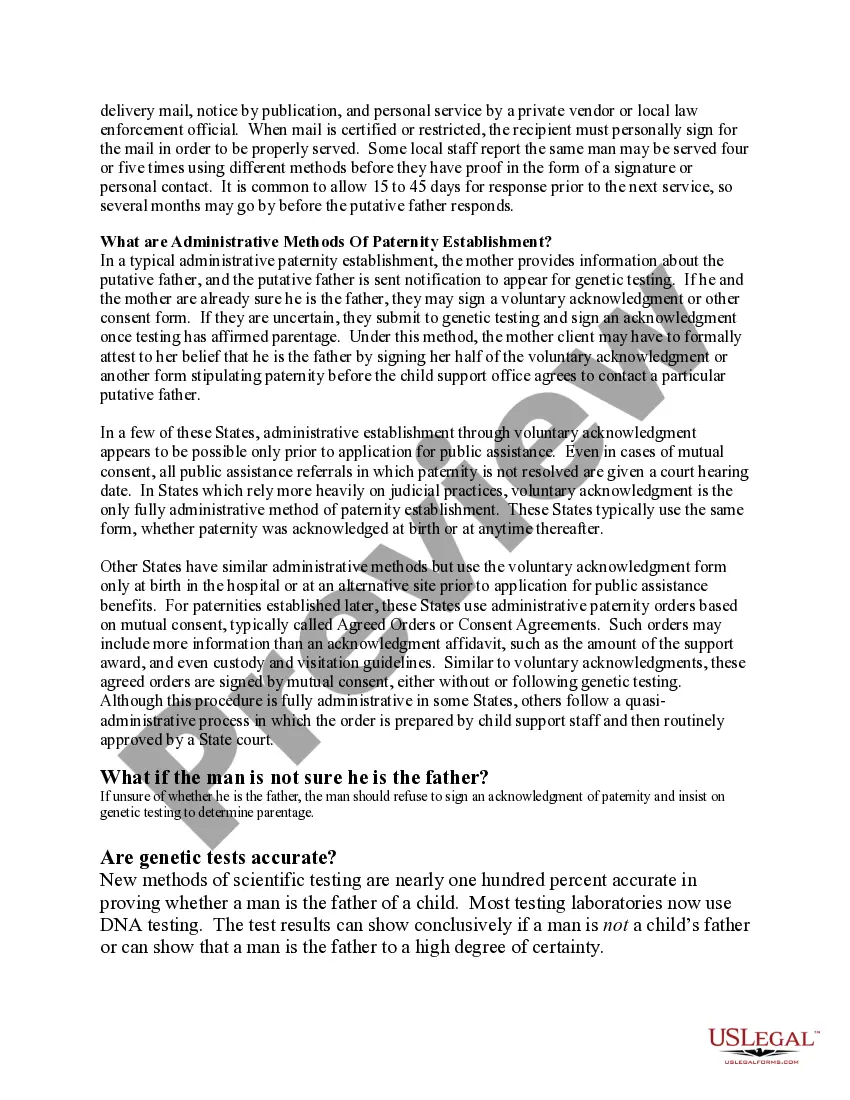
- Methods of voluntary paternity establishment
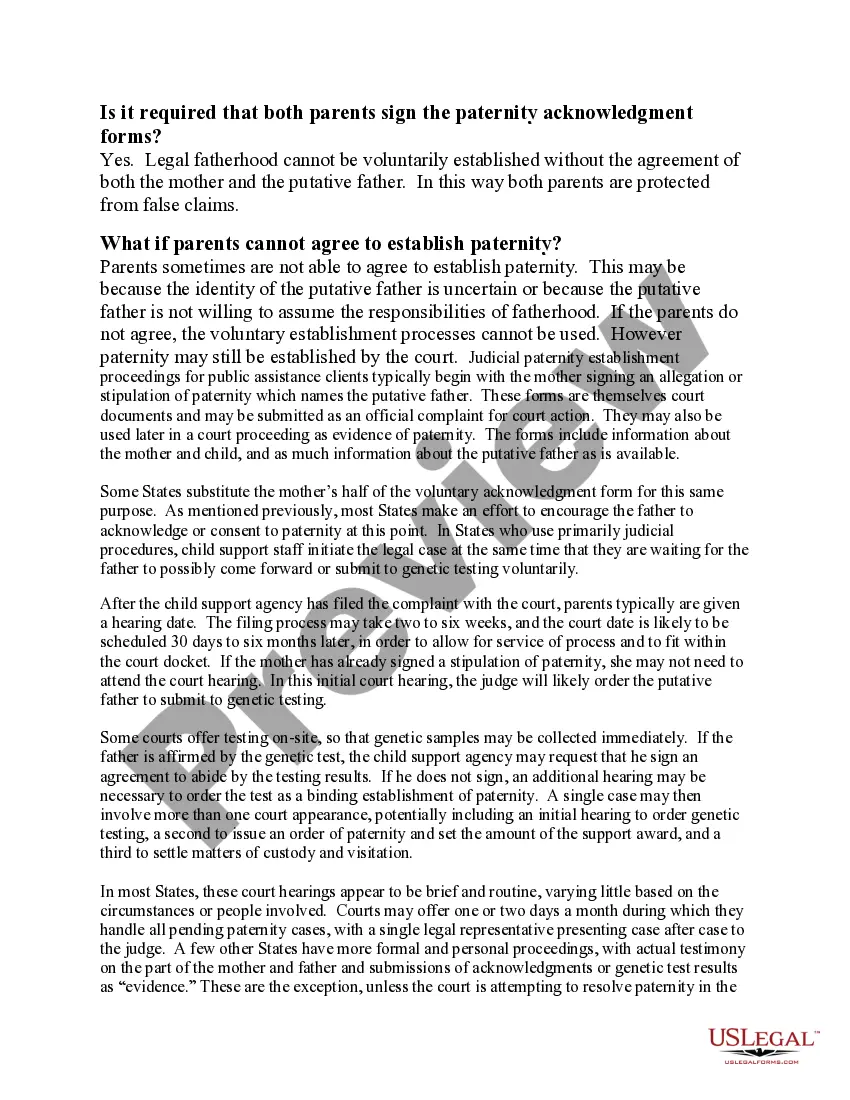
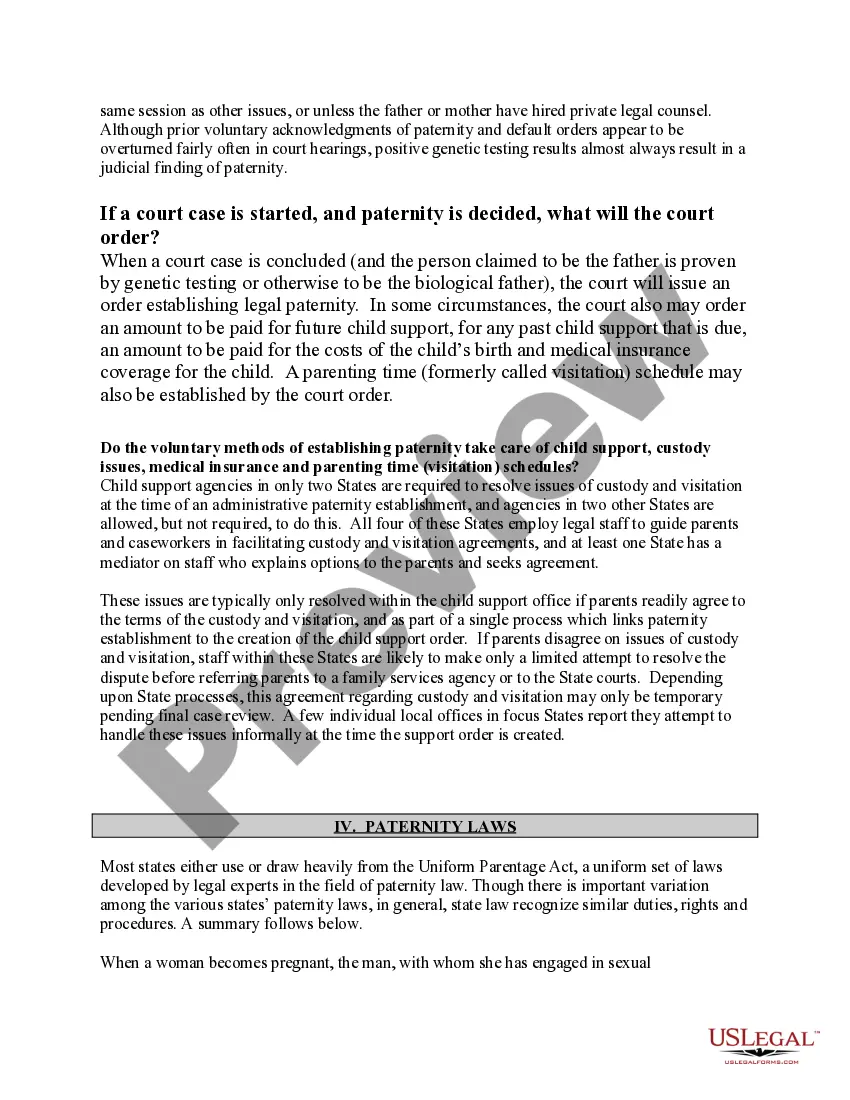
- Process for legal establishment of paternity through court action
- State-specific paternity law summaries with resources

When to use this form
This handbook is essential when unmarried parents are unsure of how to establish legal paternity for their child. It helps users understand their rights and obligations regarding child custody, support, and visitation when a child is born out of wedlock. The handbook can be used in scenarios where parents are considering voluntary acknowledgment of paternity or are seeking to navigate court proceedings to establish paternity formally.
Who can use this document
- Unmarried parents looking to establish paternity
- Legal professionals requiring a reference for paternity law
- Individuals involved in paternity disputes
- Anyone needing information on rights and responsibilities related to paternity
- Government agencies assisting with child support enforcement
Completing this form step by step
- Begin by reading the introduction to understand the importance of paternity and its implications.
- Familiarize yourself with definitions of paternity-related terms to ensure clarity.
- Follow the guidelines for voluntary paternity establishment if both parents can agree on the father's identity.
- If court action is needed, prepare necessary documents as outlined in the legal establishment section.
- Access the state summary to obtain specific resources or contacts for assistance in your state.
Notarization guidance
This form does not typically require notarization to be legally valid. However, some jurisdictions or document types may still require it. US Legal Forms provides secure online notarization powered by Notarize, available 24/7 for added convenience.
Get your form ready online
Our built-in tools help you complete, sign, share, and store your documents in one place.
Make edits, fill in missing information, and update formatting in US Legal Forms—just like you would in MS Word.
Download a copy, print it, send it by email, or mail it via USPS—whatever works best for your next step.
Sign and collect signatures with our SignNow integration. Send to multiple recipients, set reminders, and more. Go Premium to unlock E-Sign.
If this form requires notarization, complete it online through a secure video call—no need to meet a notary in person or wait for an appointment.
We protect your documents and personal data by following strict security and privacy standards.

Make edits, fill in missing information, and update formatting in US Legal Forms—just like you would in MS Word.

Download a copy, print it, send it by email, or mail it via USPS—whatever works best for your next step.

Sign and collect signatures with our SignNow integration. Send to multiple recipients, set reminders, and more. Go Premium to unlock E-Sign.

If this form requires notarization, complete it online through a secure video call—no need to meet a notary in person or wait for an appointment.

We protect your documents and personal data by following strict security and privacy standards.
Mistakes to watch out for
- Assuming that paternity is automatically established by childbirth without formal acknowledgment.
- Failing to complete the voluntary acknowledgment form correctly or within the necessary timeframe.
- Not understanding the legal implications of signing a paternity acknowledgment.
- Neglecting to seek genetic testing when there are doubts about paternity.
- Overlooking state-specific requirements that may affect the paternity establishment process.
Why use this form online
- Convenient access to comprehensive paternity law information from anywhere, at any time.
- Edit and personalize the handbook for your specific situation and state requirements.
- Receive reliable guidance drafted by licensed professionals to ensure accuracy.
- Gain immediate insights into your rights and responsibilities without needing a lawyer initially.
- Streamline the paternity establishment process with clear steps and resources.
Glossary of terms used in this form
- Biological Father: The man who fathers a child through conception.
- Putative Father: A man whose paternity of a child is alleged but not confirmed.
- Voluntary Acknowledgment of Paternity: A legal agreement signed by both parents acknowledging the fatherhood of the child.
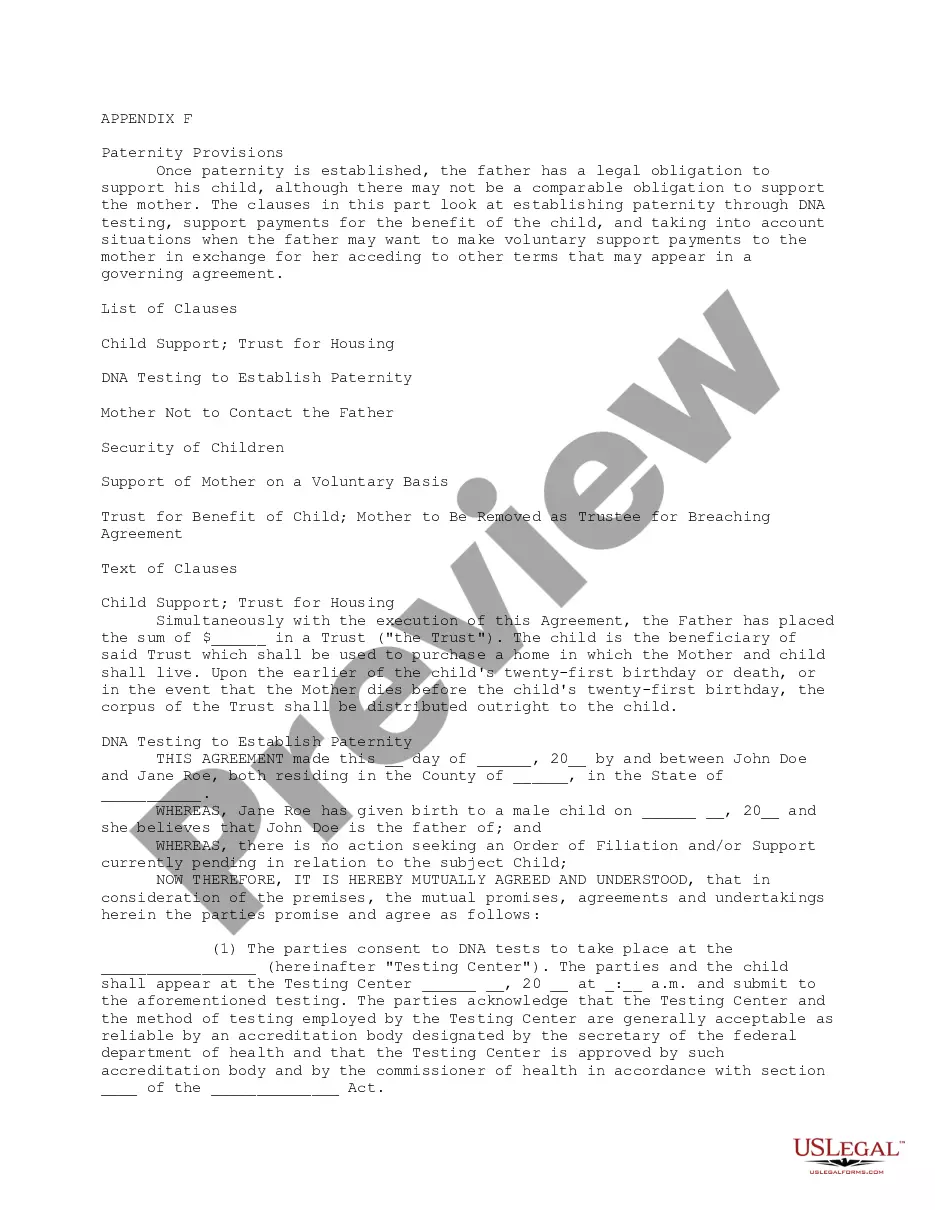
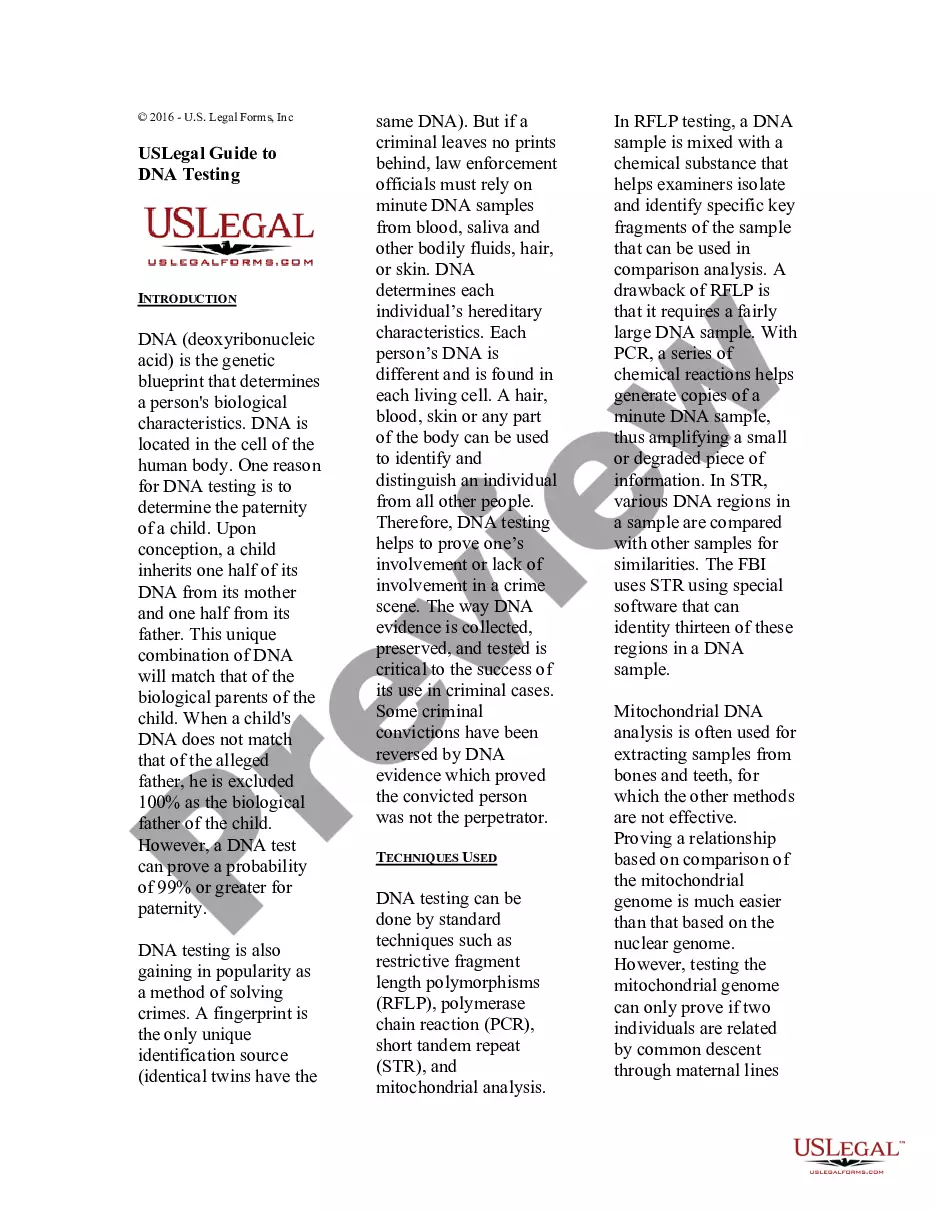
- Genetic Testing: A scientific method used to determine paternity based on DNA analysis.
Looking for another form?



Form popularity
FAQ
There are two ways to get a court order establishing paternity: file an application for services with the OAG and go through a child support review process with child support staff. A court order can result in an agreed order or a paternity petition.
The persons that are able to file a paternity lawsuit in Texas include: The child him or herself. The mother of the child. The potential father whose paternity is to be determined in the lawsuit.
If the child has a presumed father, however, the paternity suit must be brought within four years of the child's birth, unless: the presumed biological father and mother did not live together or engage in sexual relations during the likely time of conception; or.
In Texas, signing a birth certificate will not establish paternity. In fact, a purported legal father of a child who is not married to the mother will not be able to even sign the birth certificate until he signs a voluntary acknowledgment of paternity (AOP).
How do you establish paternity in Texas? In Texas, paternity can be established either voluntarily by signing an Acknowledgment of Paternity form or involuntarily through a court order. When the mother and father agree that the father is in fact the biological father, paternity can be established voluntarily.
Most paternity test results are available with-in 4-6 weeks after a swab.