Texas Gift Deed from an Individual to Three Individuals.
About this form
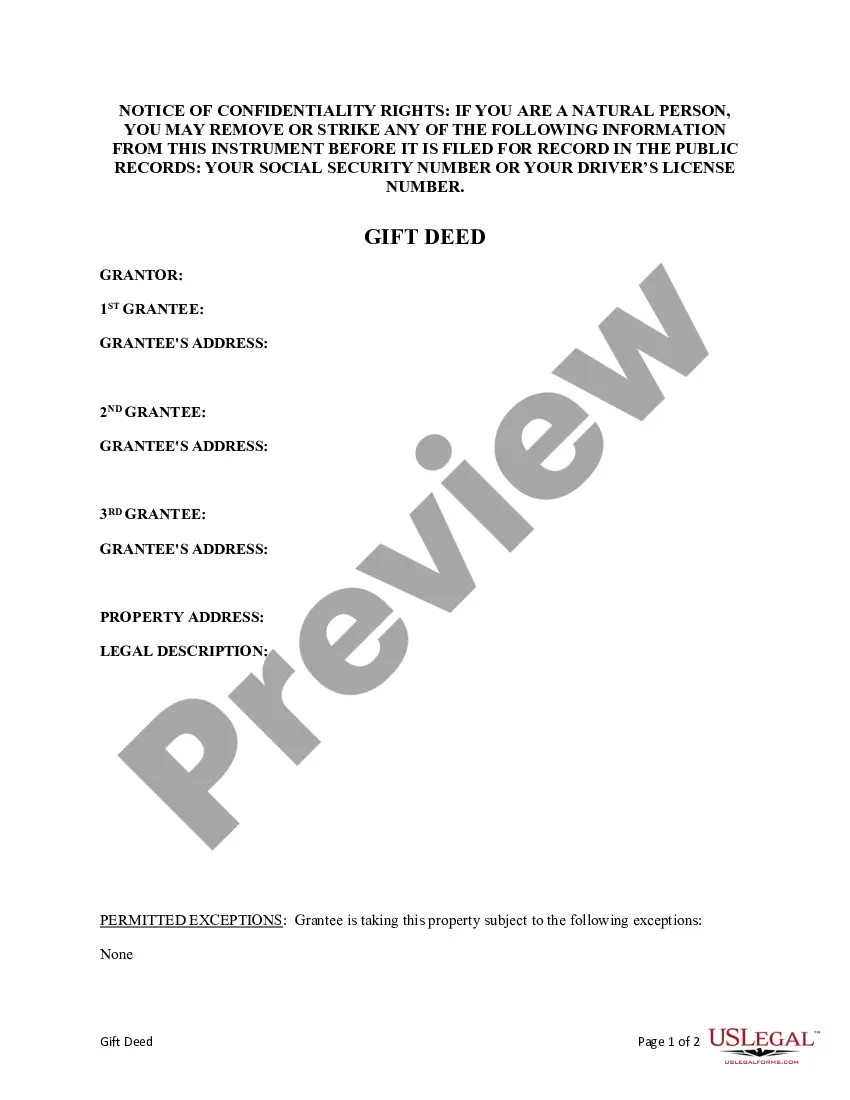
The Gift Deed from an Individual to Three Individuals is a legal document that allows one individual (the Grantor) to give their interest in a property to three other individuals (the Grantees) without requiring a sale. Unlike other deeds, this is specifically a quitclaim deed, meaning the Grantor relinquishes any claims they may have on the property. This form is essential for individuals intending to transfer ownership of real estate to multiple parties in a clear and legally compliant manner.
Key components of this form
- Identification of the Grantor and Grantees
- Description of the property being transferred
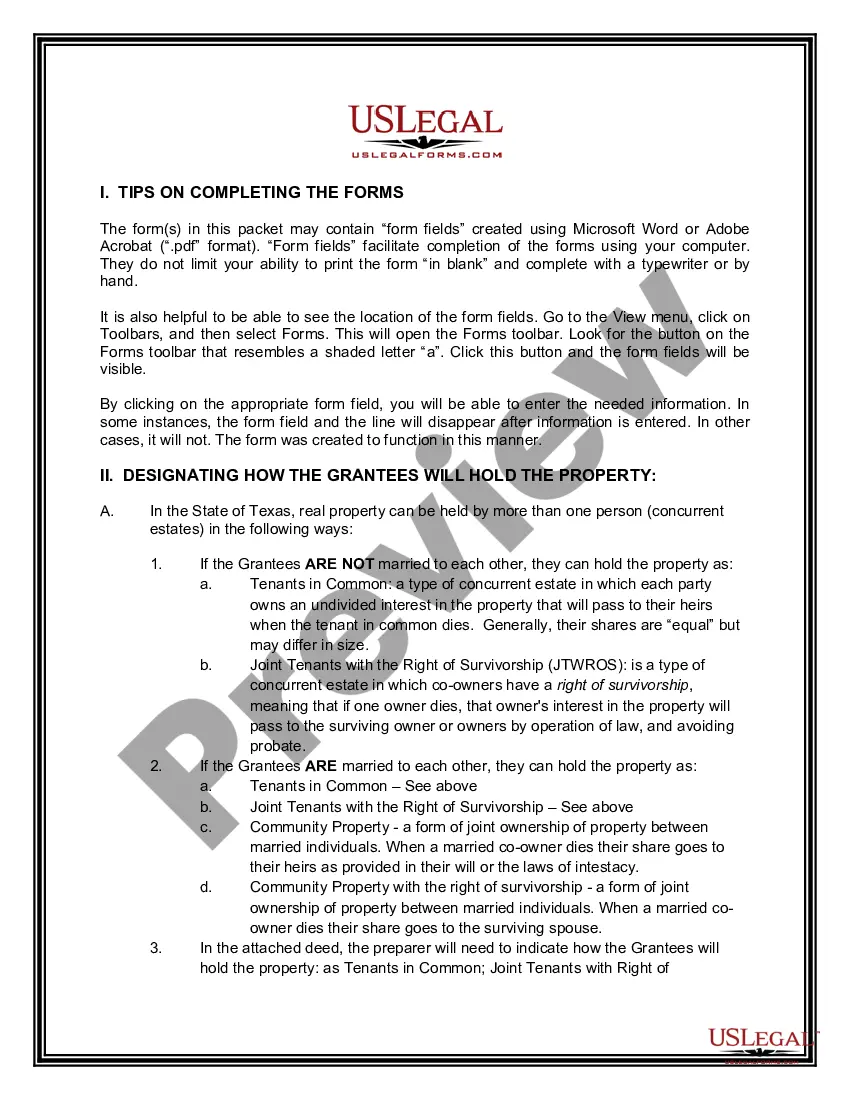
- Specification of how the Grantees will hold the property (e.g., tenants in common or joint tenants)
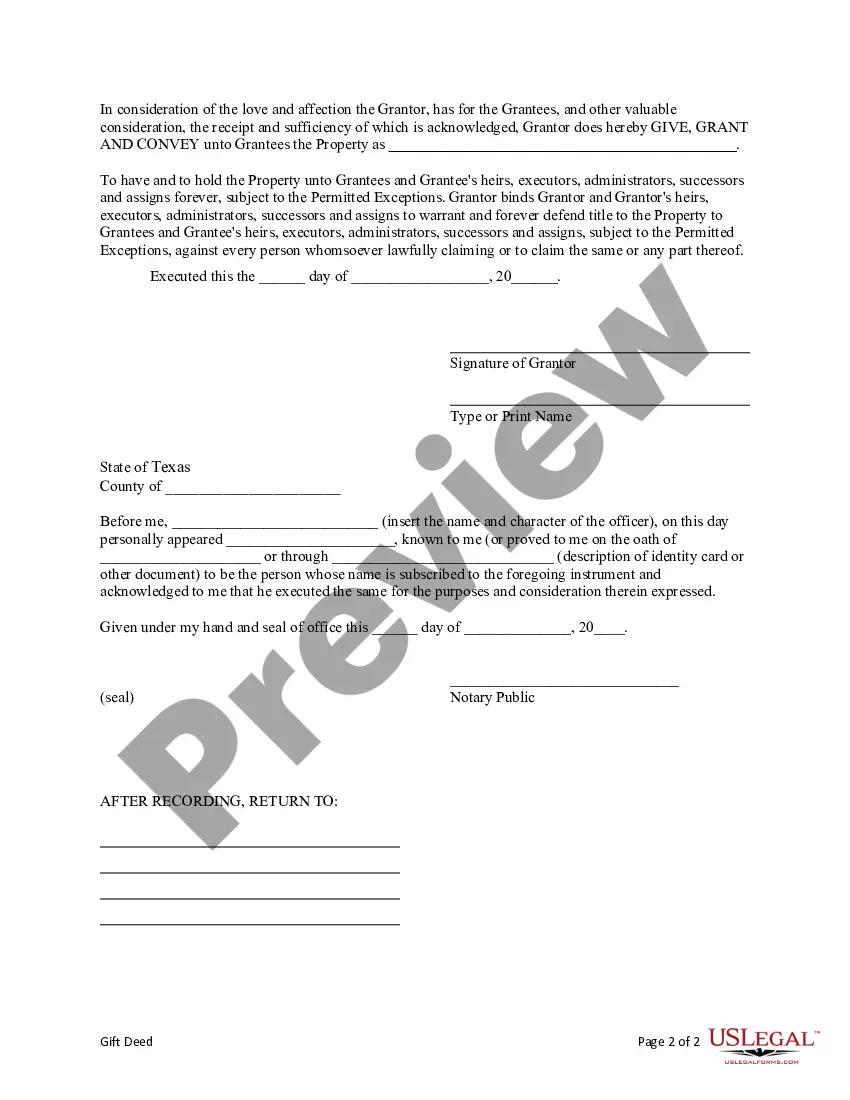
- Signature of the Grantor to validate the deed
- Date of execution


Common use cases
This form is used when an individual wishes to gift their property to three individuals, either as a family gift or as part of an estate plan. It is particularly useful when the Grantor no longer wishes to hold the property or intends to simplify the transfer of assets upon their passing.
Who can use this document
- Individuals wishing to gift property to multiple recipients
- Those seeking a simple method to transfer ownership without a sale
- Individuals involved in estate planning or asset management
How to prepare this document
- Identify the parties involved: the Grantor and the Grantees.
- Clearly describe the property being conveyed in the provided section.
- Decide on the property ownership arrangement among the Grantees and indicate this in the form.
- Have the Grantor sign and date the deed.
- Ensure all required fields are completed before submitting or filing the deed.
Does this form need to be notarized?
This form does not typically require notarization unless specified by local law. However, having the signature notarized can add an extra layer of authenticity and may be required in certain situations.
Get your form ready online
Our built-in tools help you complete, sign, share, and store your documents in one place.
Make edits, fill in missing information, and update formatting in US Legal Forms—just like you would in MS Word.
Download a copy, print it, send it by email, or mail it via USPS—whatever works best for your next step.
Sign and collect signatures with our SignNow integration. Send to multiple recipients, set reminders, and more. Go Premium to unlock E-Sign.
If this form requires notarization, complete it online through a secure video call—no need to meet a notary in person or wait for an appointment.
We protect your documents and personal data by following strict security and privacy standards.

Make edits, fill in missing information, and update formatting in US Legal Forms—just like you would in MS Word.

Download a copy, print it, send it by email, or mail it via USPS—whatever works best for your next step.

Sign and collect signatures with our SignNow integration. Send to multiple recipients, set reminders, and more. Go Premium to unlock E-Sign.

If this form requires notarization, complete it online through a secure video call—no need to meet a notary in person or wait for an appointment.

We protect your documents and personal data by following strict security and privacy standards.
Common mistakes to avoid
- Failing to properly identify all parties involved.
- Not including a complete and accurate property description.
- Inadequately specifying how Grantees will hold the property.
- Missing the Grantor's signature or date of execution.
Advantages of online completion
- Convenient and easy-to-fill template available for download.
- Editable fields allow for quick entries without handwritten errors.
- Access to legal forms drafted by licensed attorneys ensures compliance with state laws.
What to keep in mind
- The Gift Deed is a simplified method to transfer property ownership to multiple individuals.
- Correctly identifying all parties and providing accurate property details is crucial.
- This form aligns with Texas state laws governing property transfer.
Looking for another form?

Form popularity
FAQ
Gift. You can give ownership of your property to a family member as a gift. This simply requires filling out the necessary paperwork with your state revenue office and title office, including a Transfer of Land.
In Texas, you can't add your spouse's name to an existing deed, but you can create a new deed by transferring the property from yourself to you and your spouse jointly. You can do this by using either a deed without warranty or a quit claim deed.
Find the most recent deed to the property. It is best to begin with a copy of the most recent deed to the property (the deed that transferred the property to the current grantor). Create a new deed. Sign and notarize the deed. File the documents in the county land records.
Place and date on which the deed is to be executed. Relevant information regarding the donor and the donee, such as their names, address, relationship, date of birth and signatures. Complete details about the property. Two witnesses to bear testimony and their signatures.
To be valid, gift deeds in Texas further require the document set forth (1) the intent of the grantor, (2) the delivery of the property to the grantee, and (3) the gift to be accepted by the grantee. The one claiming the gift bears the burden to establish each of the elements.
Find the most recent deed to the property. It is best to begin with a copy of the most recent deed to the property (the deed that transferred the property to the current grantor). Create a new deed. Sign and notarize the deed. File the documents in the county land records.
Think about IHT implications potentially exempt transfer Be aware of the rules on gifts with reservation of benefit You will no longer be the legal owner of the property. Risk from outside parties. Don't forget capital gains tax.
You can arrange to legally transfer the deed to your house to your children before you die. To do so, you sign a deed transfer and record it with the county recorder's office.