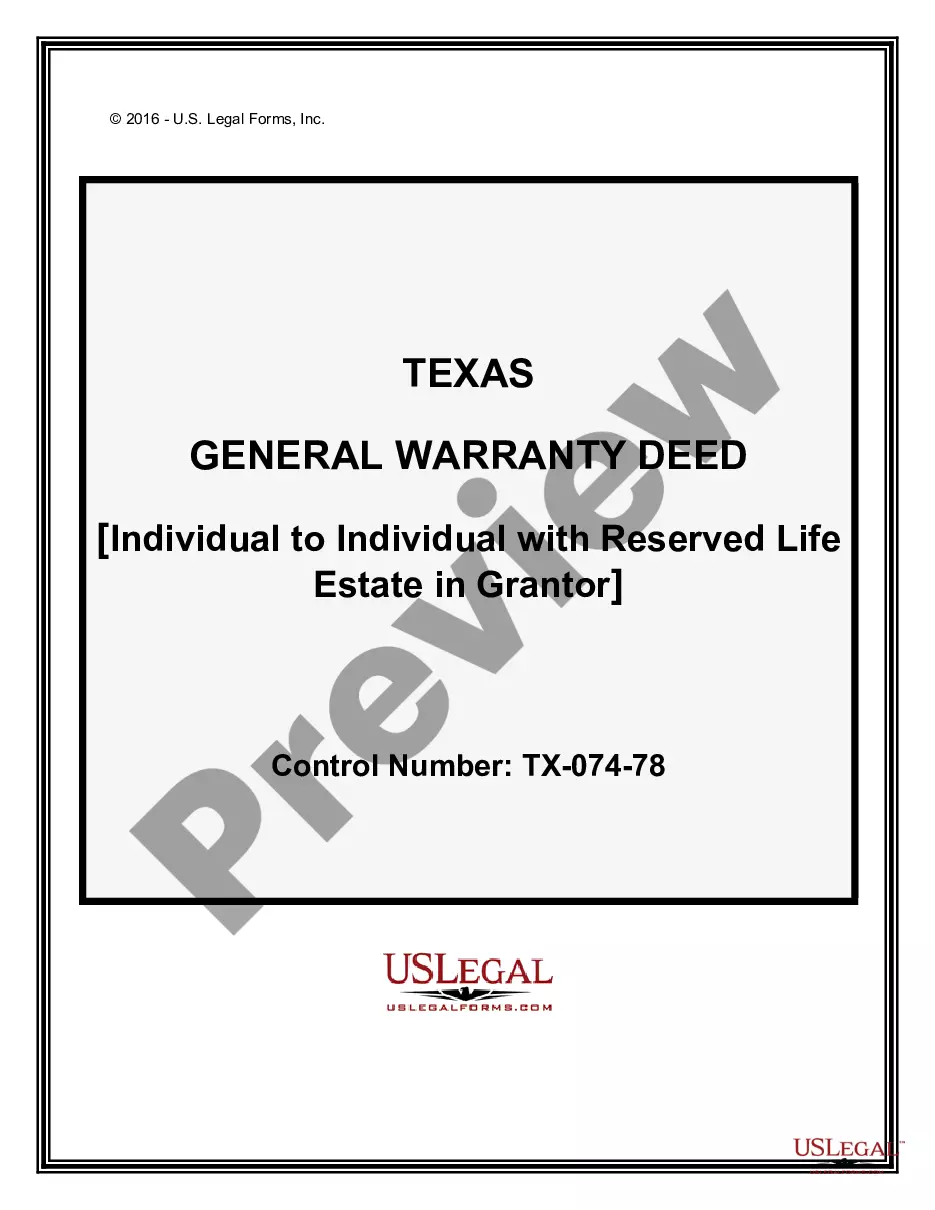
Texas General Warranty Deed - Individual to Individual with Reserved Life Estate in Grantor
About this form
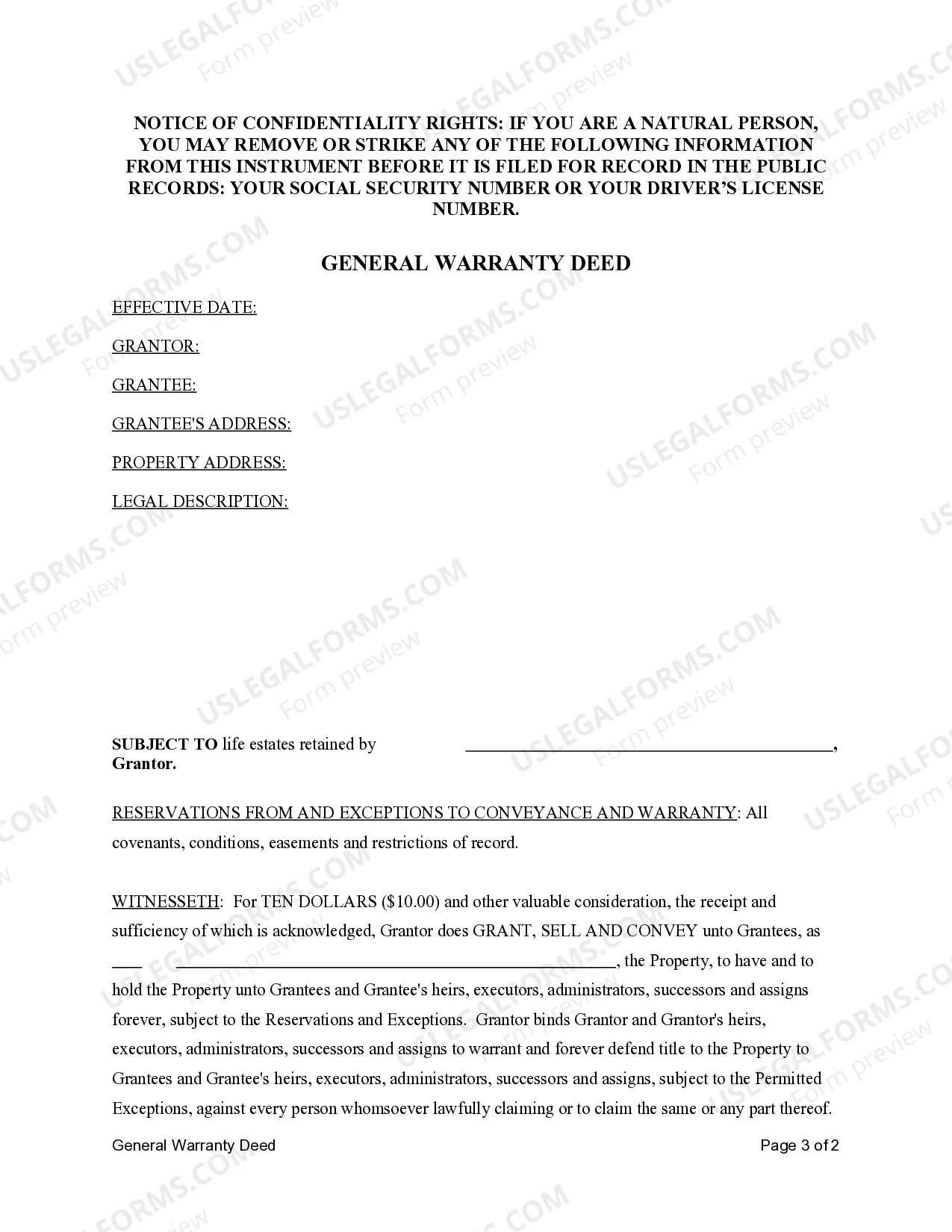
The General Warranty Deed is a legal document used to transfer property ownership from one individual (the Grantor) to another individual (the Grantee). This specific form includes a reserved life estate for the Grantor, which means that the Grantor retains the right to live on or use the property for the rest of their life. This deed differs from other types of property transfers as it offers the most extensive assurances of warranty and protection against claims on the title. The General Warranty Deed is compliant with statutory laws and essential for ensuring a smooth property transfer process.
Main sections of this form
- Identification of the Grantor and Grantee: Clearly states who is transferring and receiving ownership.
- Property description: Contains a detailed description of the property being transferred.
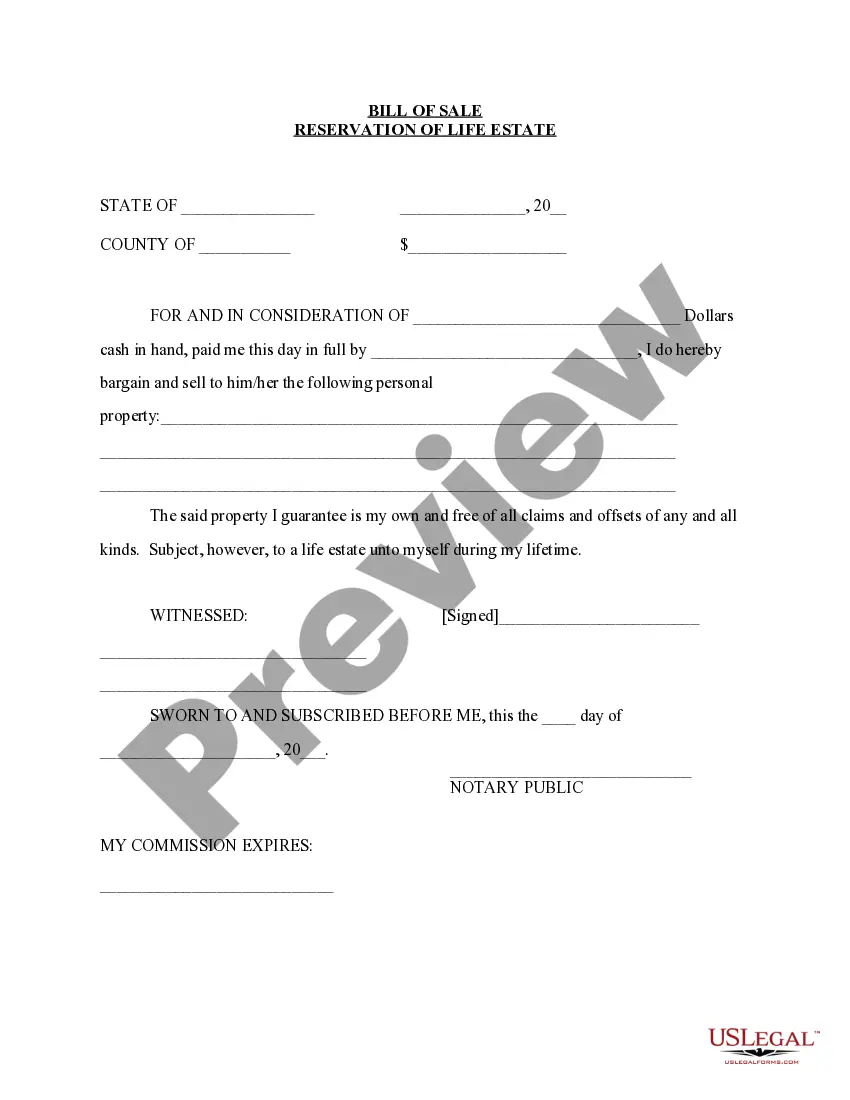
- Reserved life estate: Specifies the remaining rights of the Grantor to use and occupy the property for their lifetime.
- Warranties and covenants: Includes the assurances provided by the Grantor regarding the title of the property.
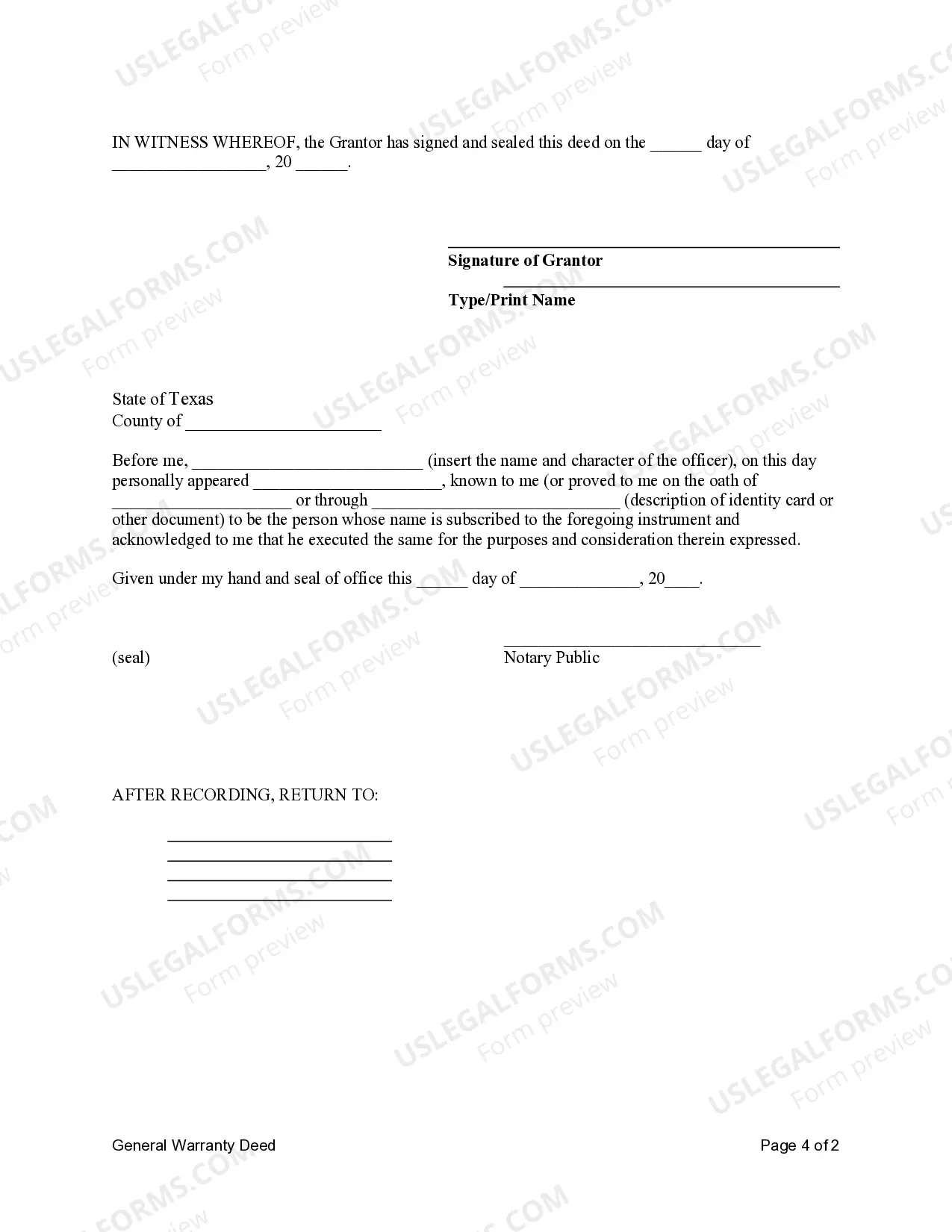
- Signature and notarization: Spaces for the Grantor's signature, along with notary acknowledgment for validity.



Situations where this form applies
This form should be used when an individual wishes to transfer property ownership to another individual while retaining the right to live on the property for their lifetime. It is appropriate in scenarios such as estate planning, where the Grantor wishes to pass on property to heirs while still maintaining occupancy rights.
Who this form is for
- Individuals looking to transfer ownership of real property to another individual.
- Property owners interested in retaining their rights to live in or utilize the property during their lifetime.
- Heirs or family members planning to secure property transfers within the family.
- Anyone requiring a legally binding document to ensure proper property transfer with warranties.
Completing this form step by step
- Identify the parties: Enter the names and addresses of the Grantor and Grantee.
- Specify the property: Provide a complete legal description of the property being transferred.
- Indicate the reserved life estate: Clearly state that the Grantor reserves their right to use the property for their lifetime.
- Include warranties: Affirm that the Grantor guarantees the property title is clear of claims.
- Sign and notarize: Both parties should sign the document in the presence of a notary public.
Notarization requirements for this form
Yes, this form must be notarized to be legally valid. For your convenience, U.S. Legal Forms offers integrated online notarization, providing 24/7 availability through secure video calls, ensuring that the process is efficient and legally equivalent to in-person notarization, all from the comfort of your home.
Get your form ready online
Our built-in tools help you complete, sign, share, and store your documents in one place.
Make edits, fill in missing information, and update formatting in US Legal Forms—just like you would in MS Word.
Download a copy, print it, send it by email, or mail it via USPS—whatever works best for your next step.
Sign and collect signatures with our SignNow integration. Send to multiple recipients, set reminders, and more. Go Premium to unlock E-Sign.
If this form requires notarization, complete it online through a secure video call—no need to meet a notary in person or wait for an appointment.
We protect your documents and personal data by following strict security and privacy standards.

Make edits, fill in missing information, and update formatting in US Legal Forms—just like you would in MS Word.

Download a copy, print it, send it by email, or mail it via USPS—whatever works best for your next step.

Sign and collect signatures with our SignNow integration. Send to multiple recipients, set reminders, and more. Go Premium to unlock E-Sign.

If this form requires notarization, complete it online through a secure video call—no need to meet a notary in person or wait for an appointment.

We protect your documents and personal data by following strict security and privacy standards.
Avoid these common issues
- Failing to ensure the legal description of the property is accurate, which can affect the deed's enforceability.
- Not having the form notarized, which is often an essential step for legal validity.
- Omitting the specific statement about reserving the life estate, leading to confusion on property rights.
- Not verifying the identities of the parties involved, which can result in fraudulent transfers.
Why use this form online
- Convenience of completing the form from anywhere, at any time.
- Editability allows users to refine details before finalizing.
- Access to professionally drafted forms ensures compliance with legal standards.
- Quick downloads enable faster property transfer processes.
What to keep in mind
- A General Warranty Deed with a reserved life estate allows property transfer while securing the Grantor's lifetime usage rights.
- Completion requires clear identification of parties, property details, signatures, and notarization.
- This form is particularly useful for individuals managing estate transfers or family property transactions.
Looking for another form?


Form popularity
FAQ
The creation of a life estate is accomplished by the language to Recipient for life or, if it is to be a life estate pur autre vie, to recipient for the life of (another person). The holder of the life estate is called the life tenant. If the property is to return to the original owner after the death of the life
A person owns property in a life estate only throughout their lifetime. Beneficiaries cannot sell property in a life estate before the beneficiary's death. One benefit of a life estate is that property can pass when the life tenant dies without being part of the tenant's estate.
Almost all deeds creating a life estate will also name a remaindermanthe person or persons who get the property when the life tenant dies.The life tenant is the owner of the property until they die. However, the remainderman also has an ownership interest in the property while the life tenant is alive.
It's important to note that a warranty deed does not actually prove the grantor has ownership (a title search is the best way to prove that), but it is a promise by the grantor that they are transferring ownership and if it turns out they don't actually own the property, the grantor will be responsible for compensating
What happens to a life estate after someone dies? Upon the life tenant's death, the property passes to the remainder owner outside of probate.They can sell the property or move into and claim it as their primary residence (homestead). Property taxes will not be reassessed.
This life estate deed is a document that transfers ownership of real property, while reserving access and use of the property for the duration of the grantor's life. It allows the original owner (grantor) to remain on the premises with full access to and benefits from the property.
Now, people can convey clear title to their property by completing a transfer on death deed form, signing it in front of a notary, and filing it in the deed records office in the county where the property is located before they die at a cost of less than fifty dollars.
Texas state law allows real property owners to record a Transfer on Death Deed naming a beneficiary to own that real property after they die. With a properly recorded Transfer on Death Deed, you do not need to go through probate court to transfer real property.
A life estate is a form of joint ownership that allows one person to remain in a house until his or her death, when it passes to the other owner.