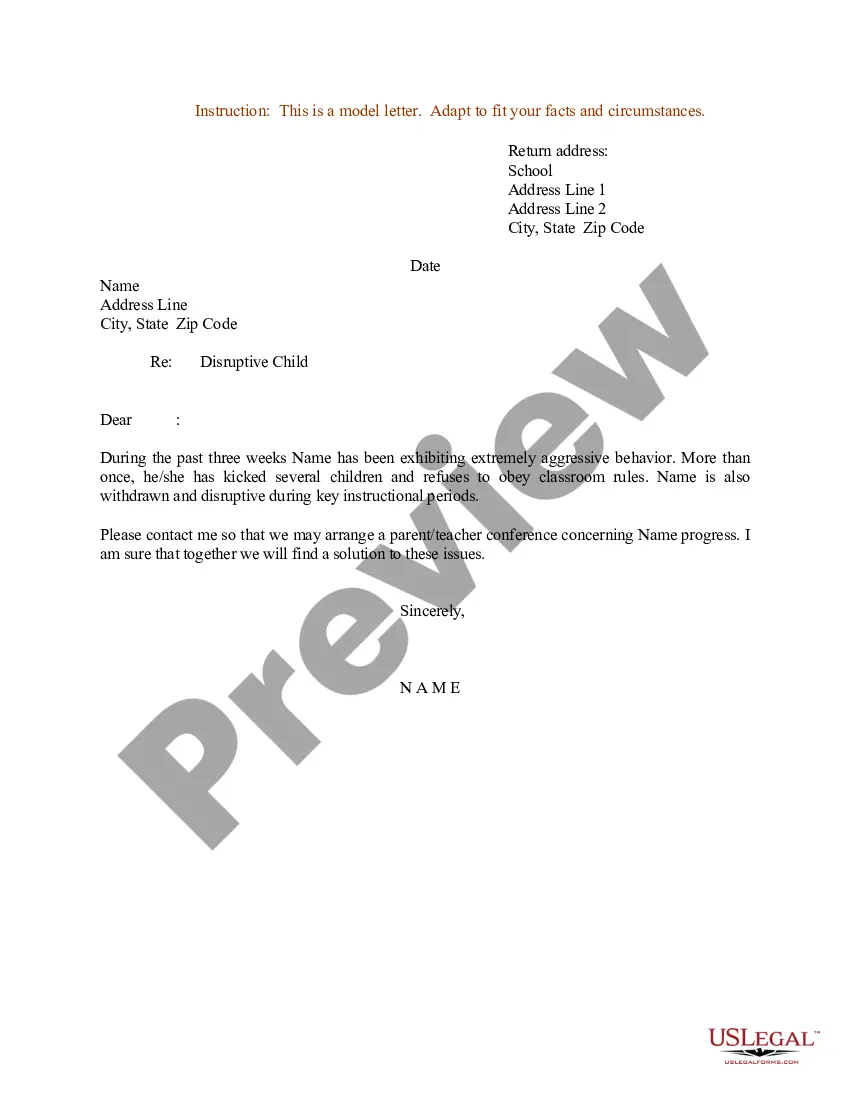
Tennessee Sample Letter for Parent Teacher Conference - Disruptive Child
Description
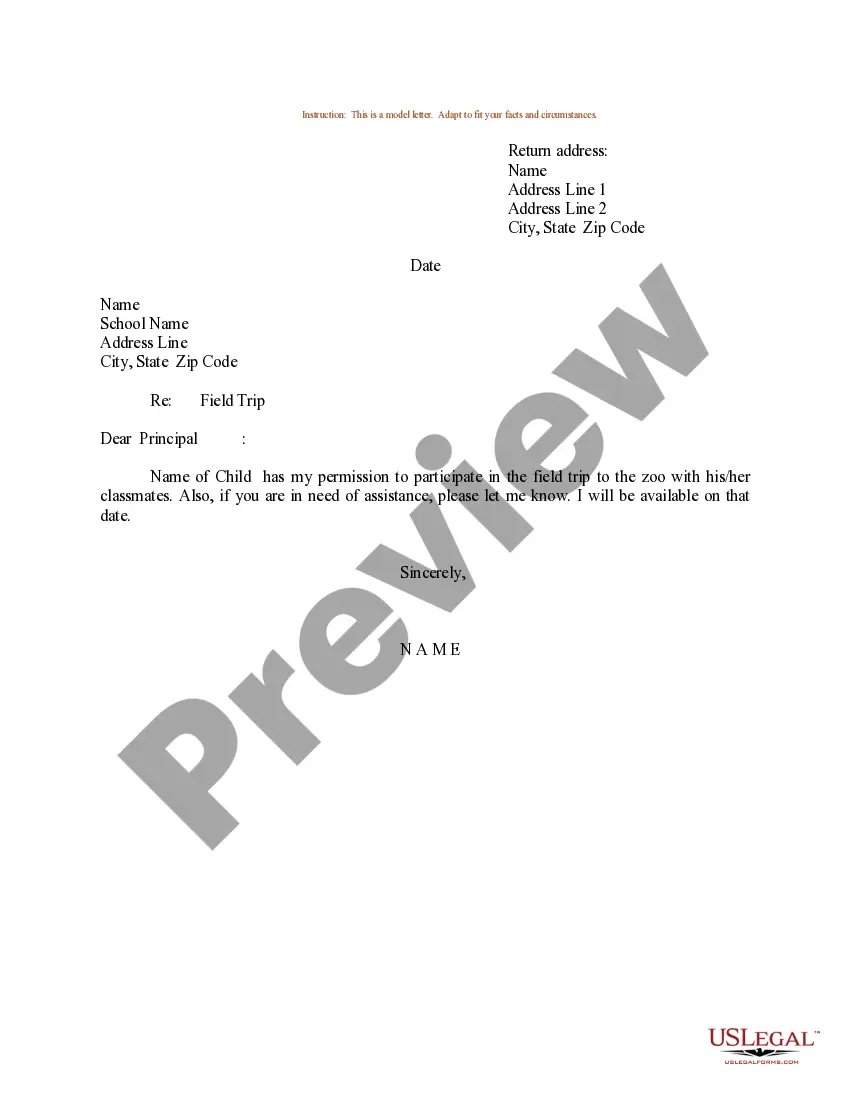
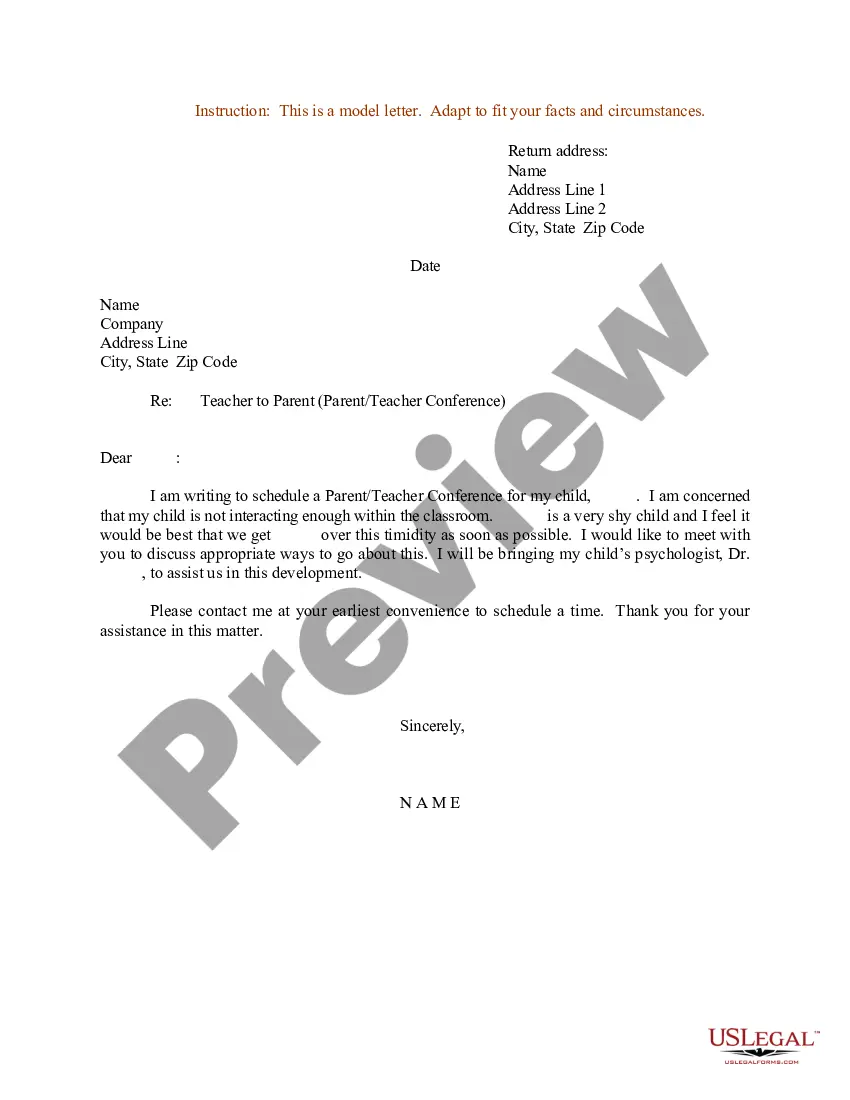

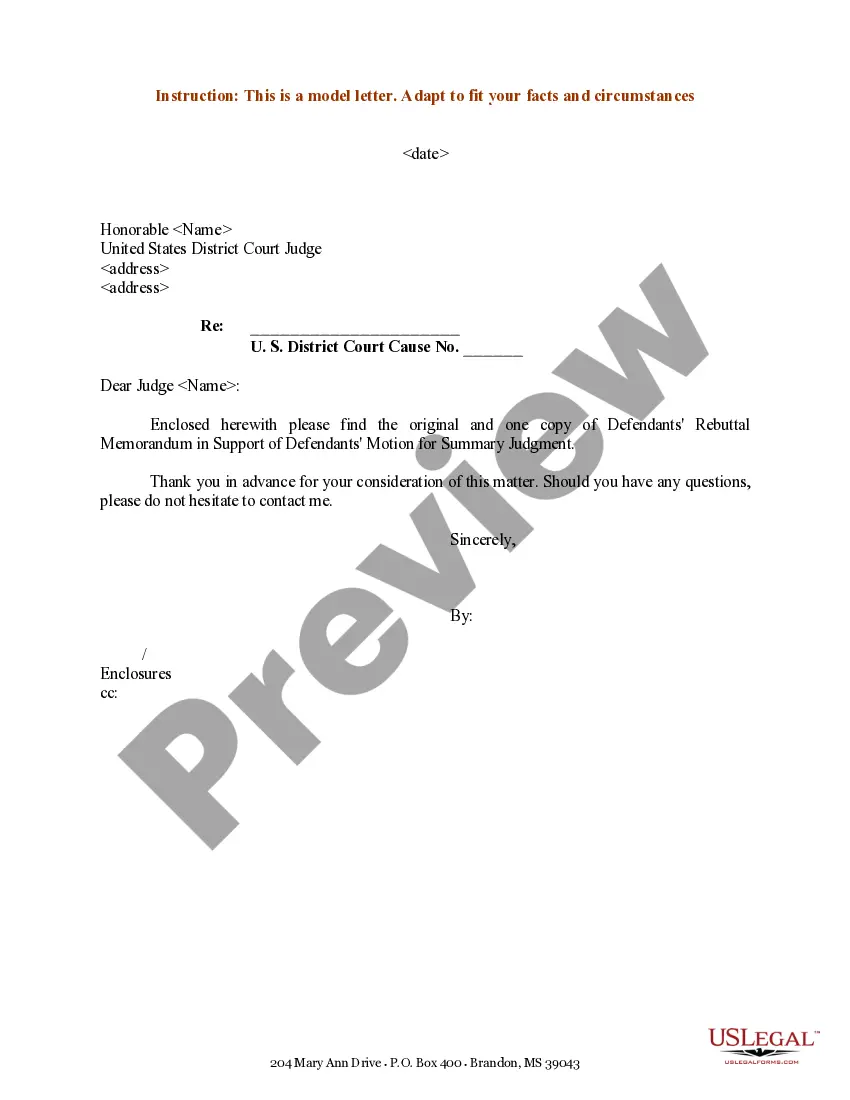
How to fill out Sample Letter For Parent Teacher Conference - Disruptive Child?
US Legal Forms - one of the largest repositories of legal forms in the United States - offers a vast selection of legal document templates that you can download or print.
By using the site, you can access thousands of forms for business and personal purposes, categorized by type, region, or keywords. You can find the most recent forms such as the Tennessee Sample Letter for Parent Teacher Conference - Disruptive Child in no time.
If you have an account, Log In and download the Tennessee Sample Letter for Parent Teacher Conference - Disruptive Child from the US Legal Forms library. The Download button will appear on every form you review. You can access all previously obtained forms in the My documents section of your account.
Complete the transaction. Use your credit card or PayPal account to finalize the payment.
Select the format and download the form on your device. Edit the downloaded Tennessee Sample Letter for Parent Teacher Conference - Disruptive Child.
Every template you save in your account has no expiration date and is yours indefinitely. Therefore, if you need to download or print another copy, simply return to the My documents section and select the form you need.
Access the Tennessee Sample Letter for Parent Teacher Conference - Disruptive Child with US Legal Forms, one of the most extensive libraries of legal document templates. Utilize thousands of professional and state-specific templates that meet your business or personal requirements.
- Make sure to select the appropriate form for your location/region.
- Click the Preview button to examine the content of the form.
- Review the form description to ensure you have the correct form.
- If the form does not meet your criteria, use the Search box at the top of the page to find one that does.
- When satisfied with the form, confirm your choice by clicking the Download now button.
- Then choose your preferred pricing plan and provide your information to create an account.
Form popularity
FAQ
21 Things Teachers Want to Say to Parents But Can'tI am a teacher, not a parent.I want our relationship to be a partnership.I cannot force your child to learn.You need to make sure they go to sleep on time.You have no secrets.I am exhausted but for the sake of your child, I try not to show it.More items...?
Make a list of topics that you want to discuss with the teacher and that you think the teacher should know, such as your concerns about the school, the child's home life, any major changes in your family, habits, hobbies, part-time jobs, religious holidays, or anything that is worrying your child.
10 Things Not to Say at a Parent Teacher ConferenceWe don't read at home.I have to help him with everything.He doesn't like school.He doesn't do well with a teacher.All you have to do is just call me.He never acts this way at home.I always believe my child.There's nothing else I can do.More items...?
Be sure to explain any terms, curriculum titles, or even words on progress reports that aren't commonly used outside the school setting. Ask questions and listen. Ask parents or guardians for their input about students' strengths, needs, and learning styles, as well as their hopes and dreams for their children.
Don't:Sit behind your desk.Tell parents what they should or shouldn't do.Do all of the talking.Speak using educational jargon.Provide too many suggestions for student improvement.Forget to invite all parents/guardians to the conference.Forget the data!Make assumptions.
The Do's and Don'ts of Parent-Teacher ConferencesDo start with a positive about their child.Don't forget that it's a team effort.Do share an example of a student's reflection during the conference.Don't arrive unprepared.Do give examples of what language you use at school and your expectations.More items...?
Parent-Teacher Conference ChecklistsAsk your child how she feels about school.Ask your child if there is anything that he wants you to talk about with his teacher.Tell your child that you and the teacher are meeting to help her.Make a list of topics that you want to talk about with the teacher.More items...
Your child needs to learn to2026Your child causes disruptions in the classroom.I'm a parent myself.Your son talks about video games/TV/a youtube channel a lot.He has lots of potential but2026Your child is one, two, three or more grade levels below in their reading, writing or math.More items...?
Be sure to explain any terms, curriculum titles, or even words on progress reports that aren't commonly used outside the school setting. Ask questions and listen. Ask parents or guardians for their input about students' strengths, needs, and learning styles, as well as their hopes and dreams for their children.