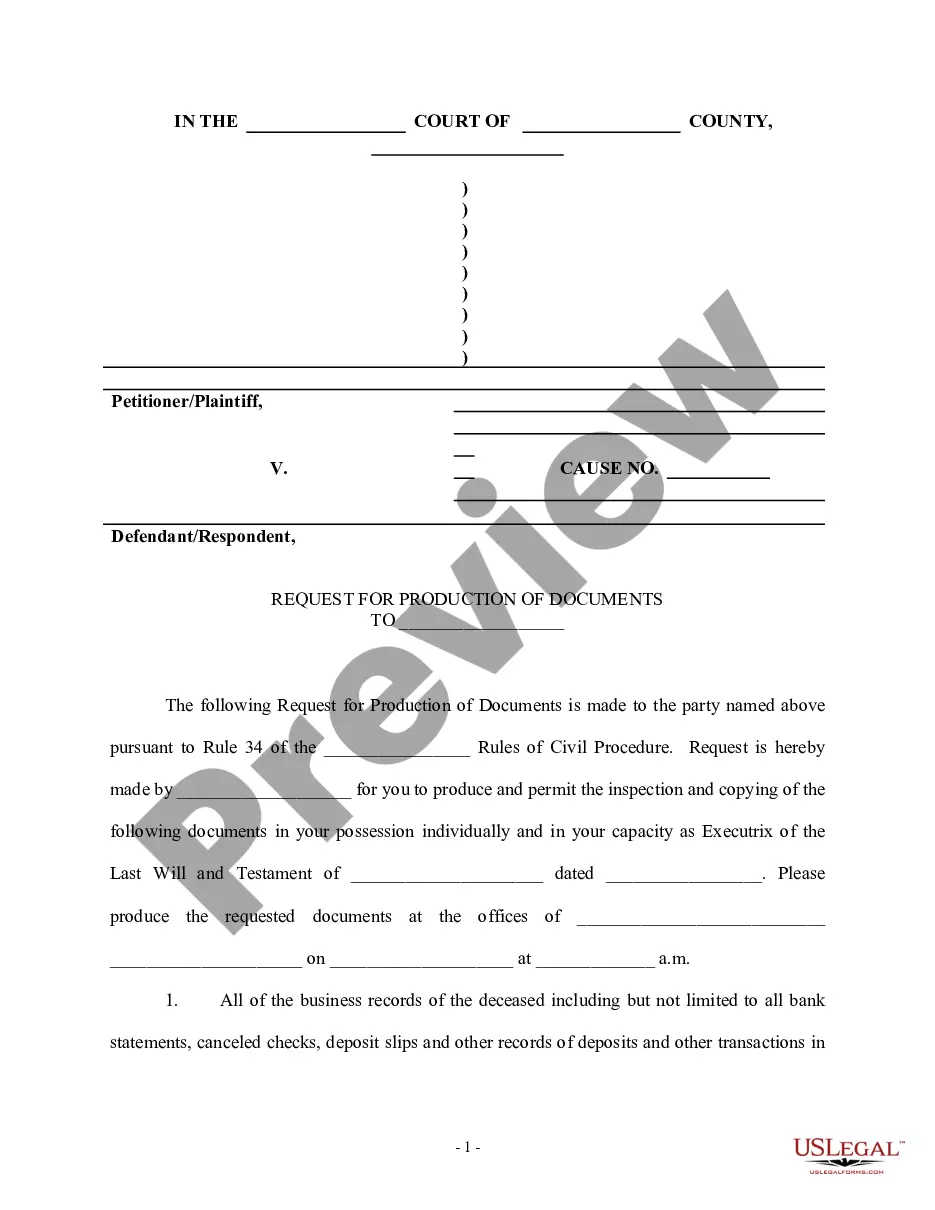
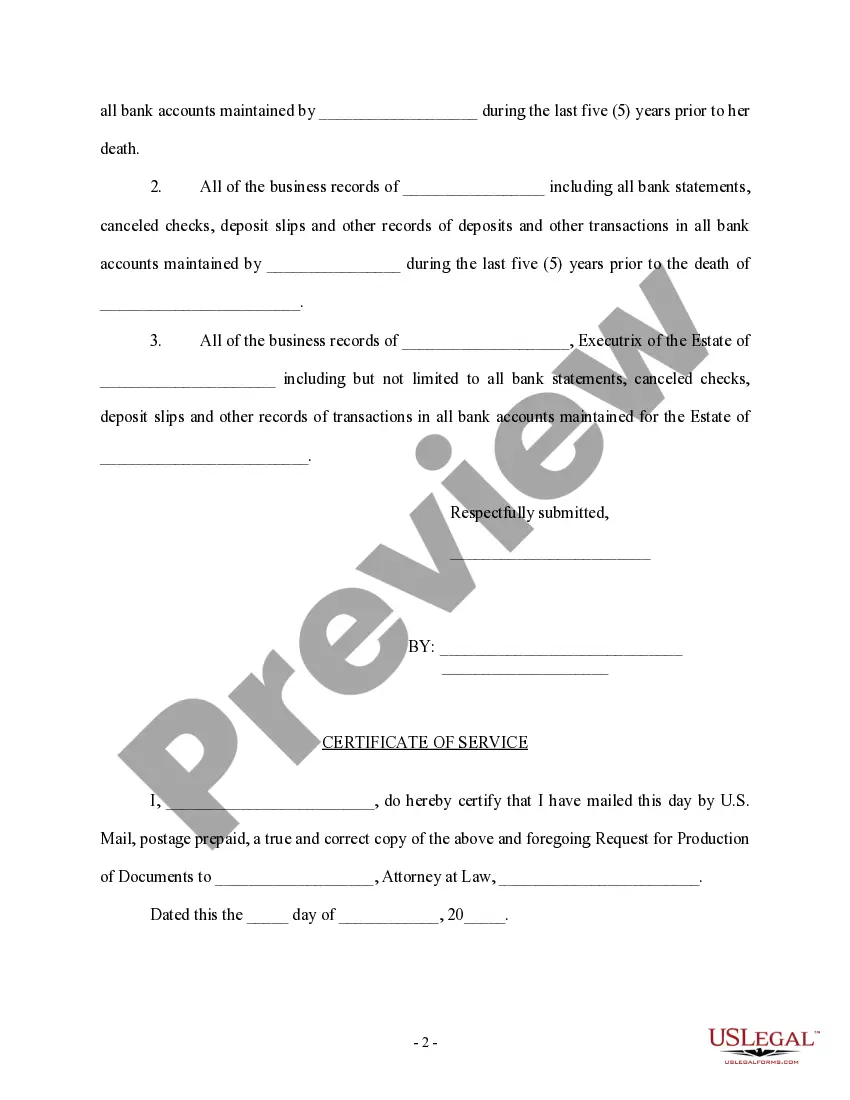
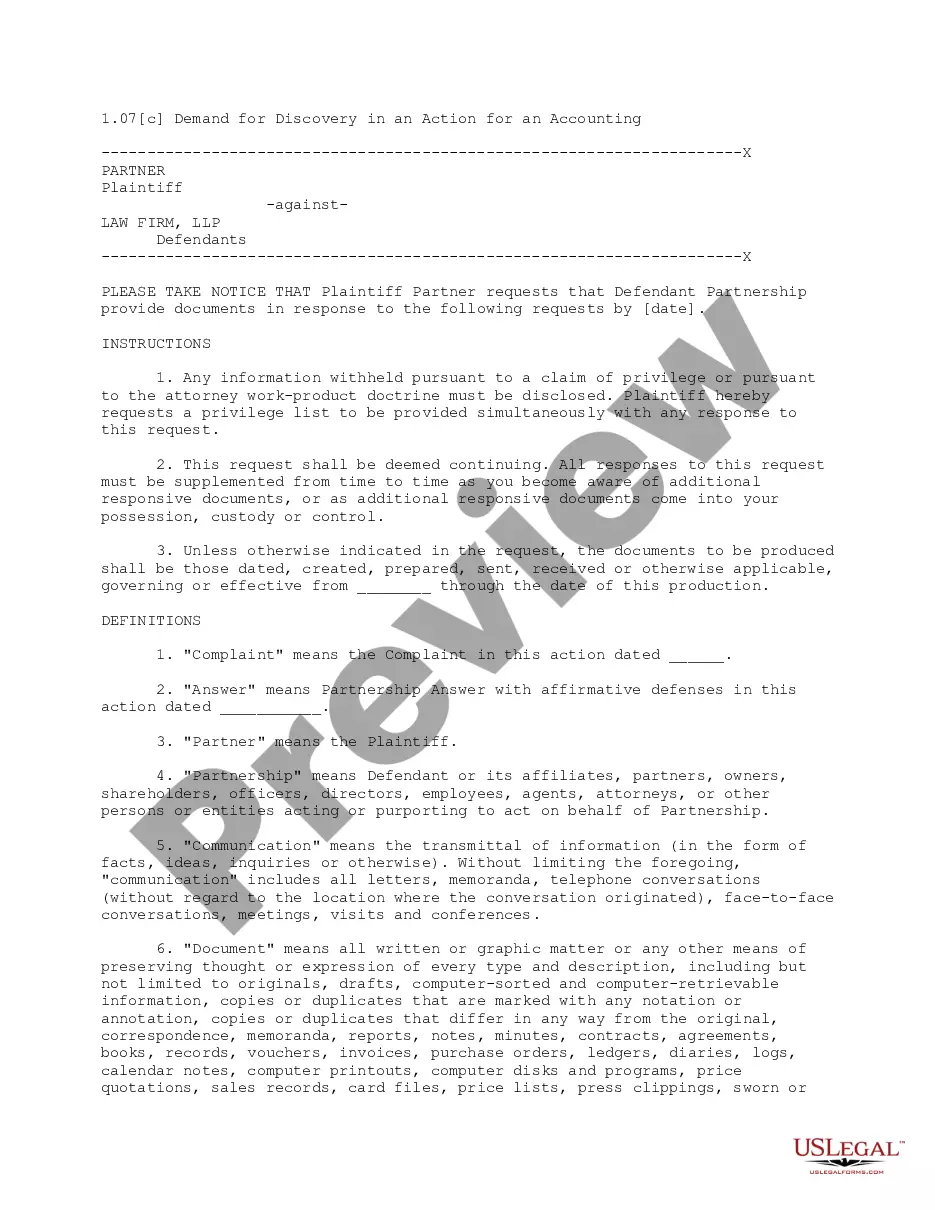
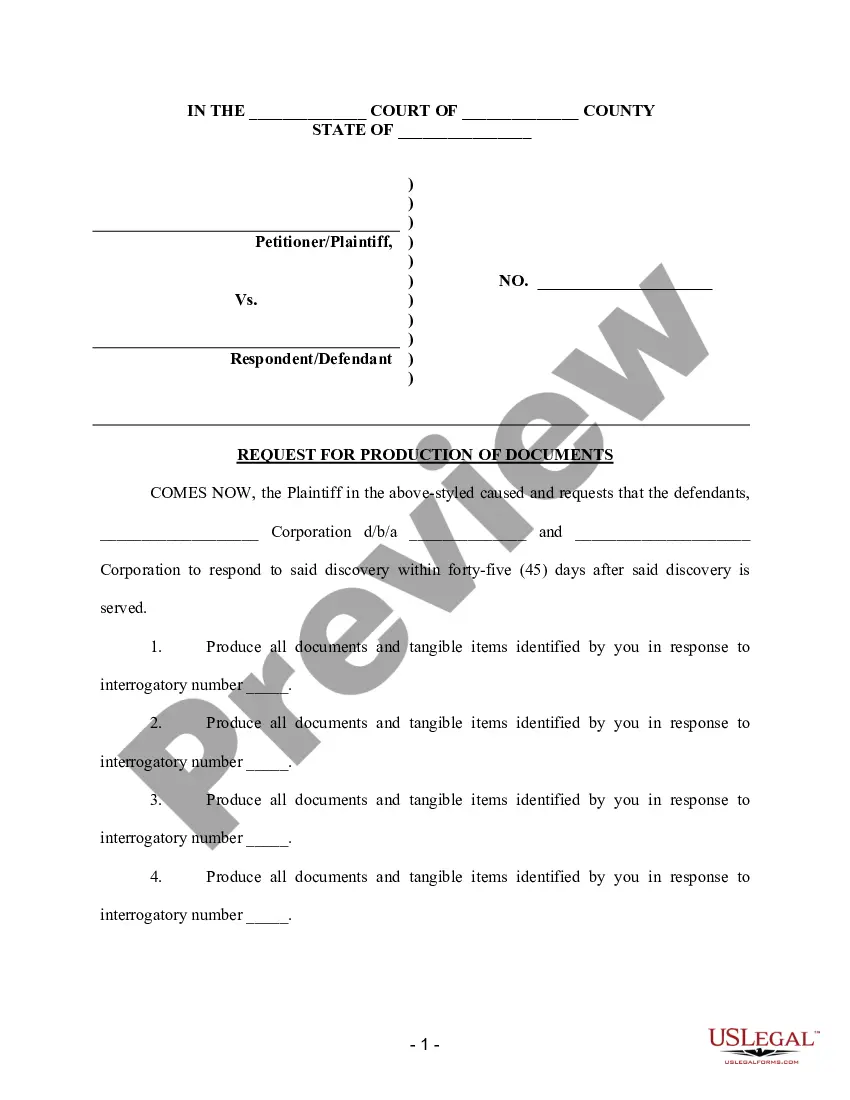
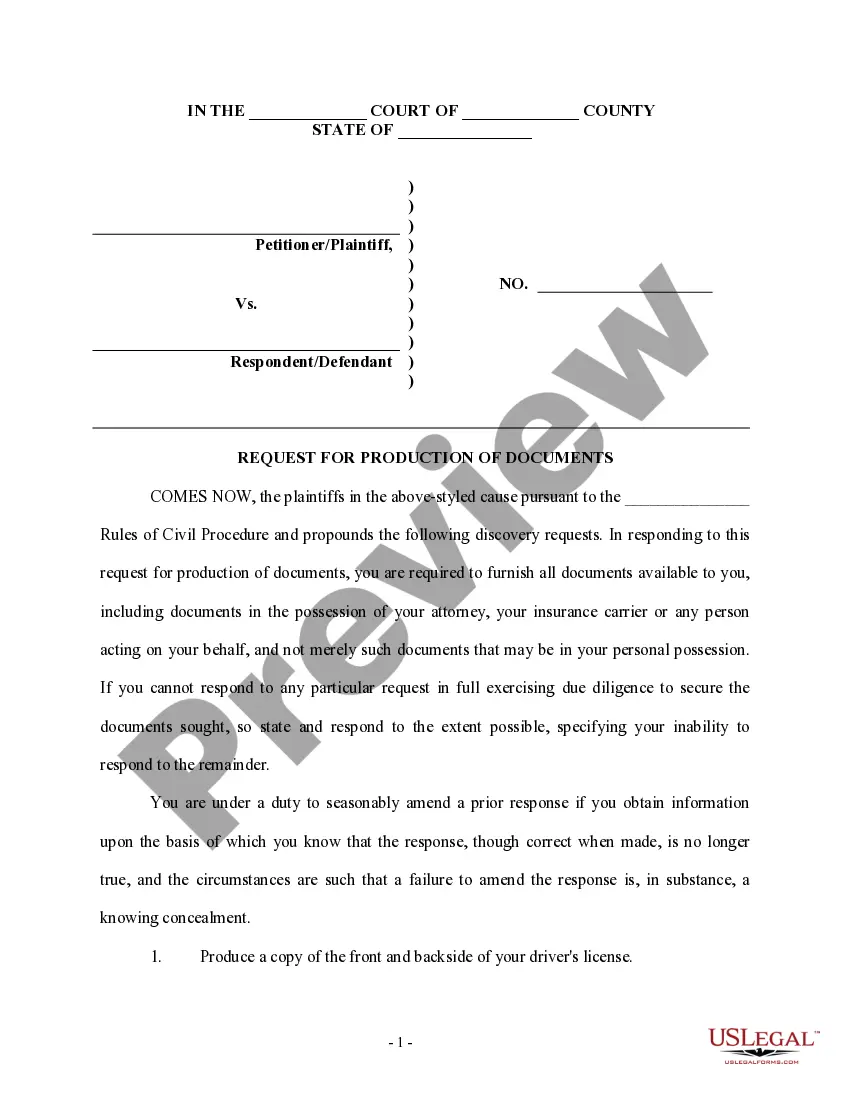
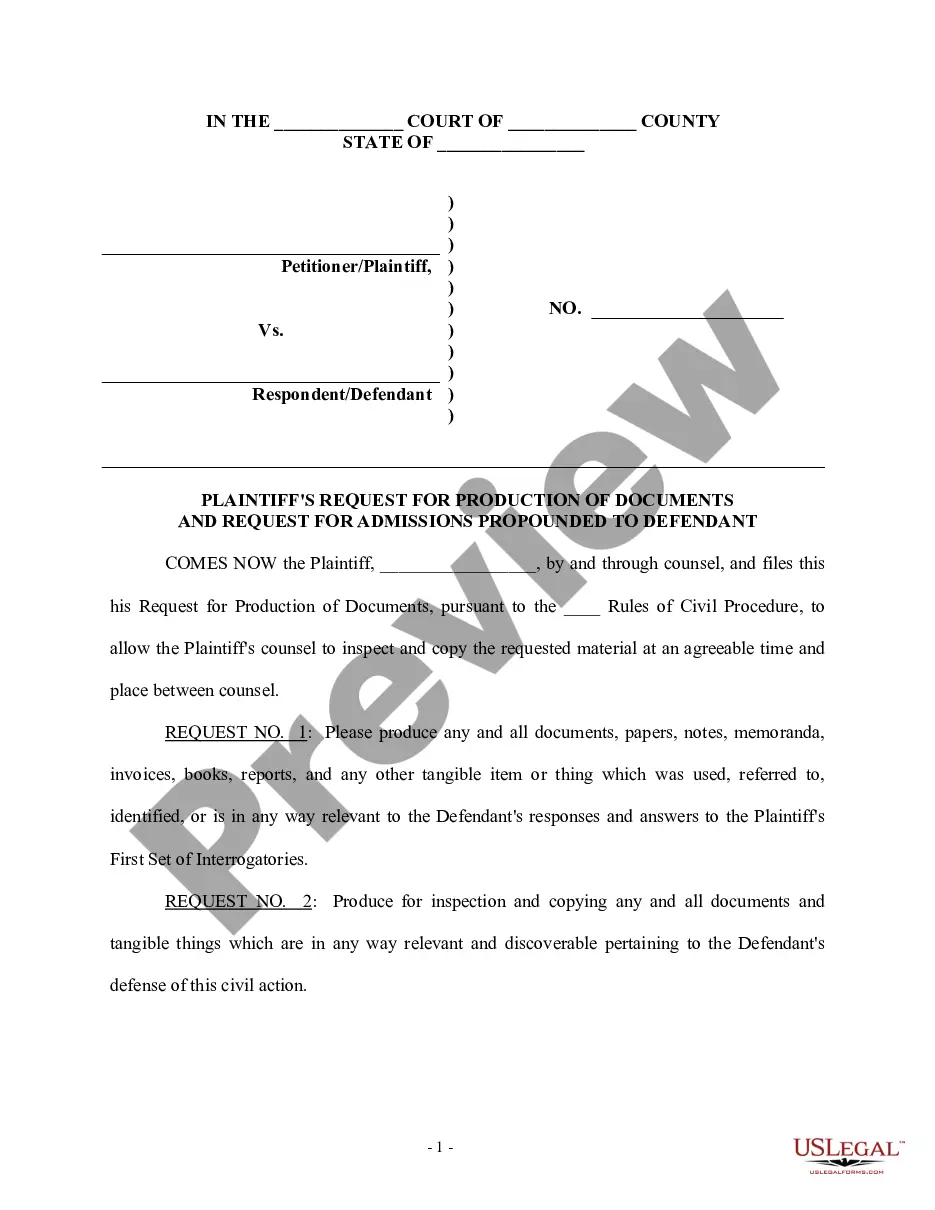
Tennessee Request for Production of Documents
Description

Get your form ready online
Our built-in tools help you complete, sign, share, and store your documents in one place.
Make edits, fill in missing information, and update formatting in US Legal Forms—just like you would in MS Word.
Download a copy, print it, send it by email, or mail it via USPS—whatever works best for your next step.
Sign and collect signatures with our SignNow integration. Send to multiple recipients, set reminders, and more. Go Premium to unlock E-Sign.
If this form requires notarization, complete it online through a secure video call—no need to meet a notary in person or wait for an appointment.
We protect your documents and personal data by following strict security and privacy standards.
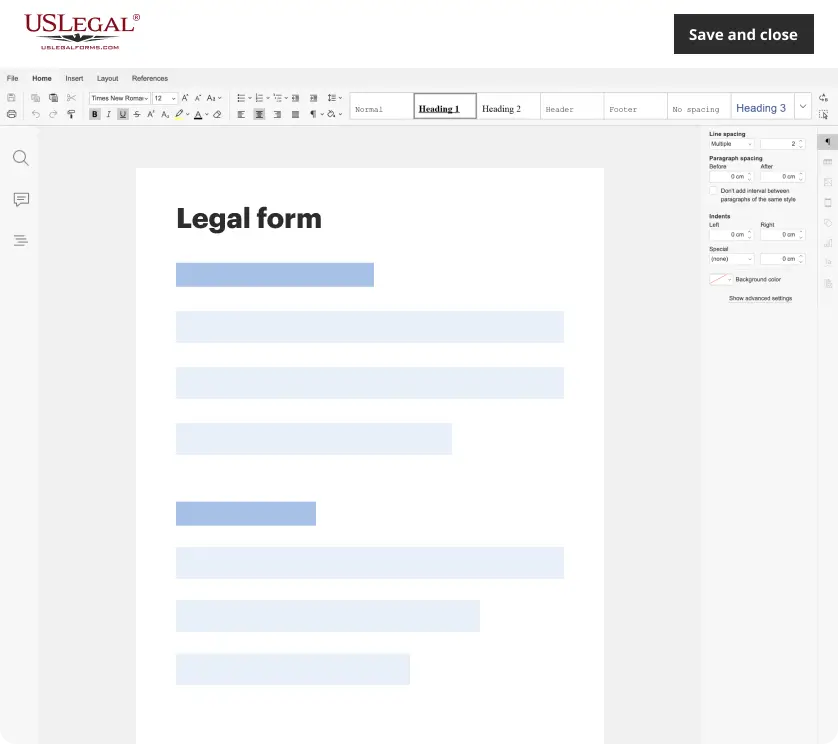
Make edits, fill in missing information, and update formatting in US Legal Forms—just like you would in MS Word.
Download a copy, print it, send it by email, or mail it via USPS—whatever works best for your next step.
Sign and collect signatures with our SignNow integration. Send to multiple recipients, set reminders, and more. Go Premium to unlock E-Sign.

If this form requires notarization, complete it online through a secure video call—no need to meet a notary in person or wait for an appointment.
We protect your documents and personal data by following strict security and privacy standards.
Looking for another form?

How to fill out Request For Production Of Documents?
Selecting the optimal legal document template can be quite a challenge. Clearly, there are numerous templates available online, but how do you find the legal form you need? Utilize the US Legal Forms website. The service offers a vast array of templates, including the Tennessee Request for Production of Documents, which you can use for business and personal purposes. All of the forms are reviewed by specialists and comply with federal and state regulations.
If you are already registered, Log In to your account and click the Download button to obtain the Tennessee Request for Production of Documents. Use your account to search through the legal forms you have acquired previously. Navigate to the My documents section of your account and download another copy of the document you need.
If you are a new user of US Legal Forms, here are simple steps you can follow: First, ensure you have selected the correct form for your city/state. You can review the form using the Review button and read the form details to ensure it is appropriate for you. If the form does not meet your needs, use the Search field to find the correct form. Once you are confident the form is suitable, click the Purchase now button to acquire the form. Choose the pricing plan you desire and enter the required information. Create your account and pay for the order using your PayPal account or credit card. Select the file format and download the legal document template for your use. Complete, modify, and print out and sign the obtained Tennessee Request for Production of Documents.
US Legal Forms is the largest repository of legal forms where you can find numerous document templates. Utilize the service to download professionally crafted papers that adhere to state regulations.
- Selecting the optimal legal document template can be quite a challenge.
- Clearly, there are numerous templates available online, but how do you find the legal form you need.
- Utilize the US Legal Forms website.
- The service offers a vast array of templates, including the Tennessee Request for Production of Documents.
- All of the forms are reviewed by specialists and comply with federal and state regulations.
- If you are already registered, Log In to your account.
Form popularity
FAQ
Rule 36 of the Tennessee Rules of Civil Procedure states that a party ?may serve upon any other party a written request for the admission ? of the truth of any matters ? that relate to facts, the application of law to facts, or opinions about either.? The statements in the requests for admissions will be admitted ? ...
What Is a Request for Production of Documents? A request for production is a discovery device used to gain access to documents, electronic data, and physical items held by an opposing party in a legal matter. The aim is to gain insight into any relevant evidence that the opposing party holds.
(b) includes a claim for declaratory judgment or injunctive relief. Comment: This rule applies to amended complaints, counter-claims, and third-party complaints as well as complaints.
On motion to quash or dismiss a writ of certiorari granted in lieu of an appeal, issue may be taken and proof heard upon the facts alleged in the petition as ground for not appealing, which issue shall thereupon be determined by the court.
Rule 34(a) enables a party to produce and permit the requesting party or its representative to inspect, copy, sample, or test any designated documents or ESI?including drawings, writings, graphs, charts, sound recordings, photographs, images, and other data or data compilations.
RULE 45. Every subpoena shall be issued by the clerk, shall state the name of the court and the title of the action, and [shall] command each person to whom it is directed to attend and give testimony at the time and place and for the party therein specified.
Any party may serve on any other party a request (1) to produce and permit the party making the request, or someone acting on the requesting party's behalf, to inspect, copy, test or sample any designated documents or electronically stored information (including writings, drawings, graphs, charts, photographs, sound ...
Further, Tennessee Rule of Civil Procedure 30.02(1) states that ?[a] party desiring to take the deposition of any person upon oral examination shall give notice in writing to every other party to the action.? It requires that the notice shall be served on the other parties at least five days beforehand when the ...
Rule 34(b) provides that a party must produce documents as they are kept in the usual course of business or must organize and label them to correspond with the categories in the discovery request.
Any party may serve on any other party a request (1) to produce and permit the party making the request, or someone acting on the requestor's behalf, to inspect and copy, any designated documents (including writings, drawings, graphs, charts, photographs, phonorecords, and other data compilations from which information ...