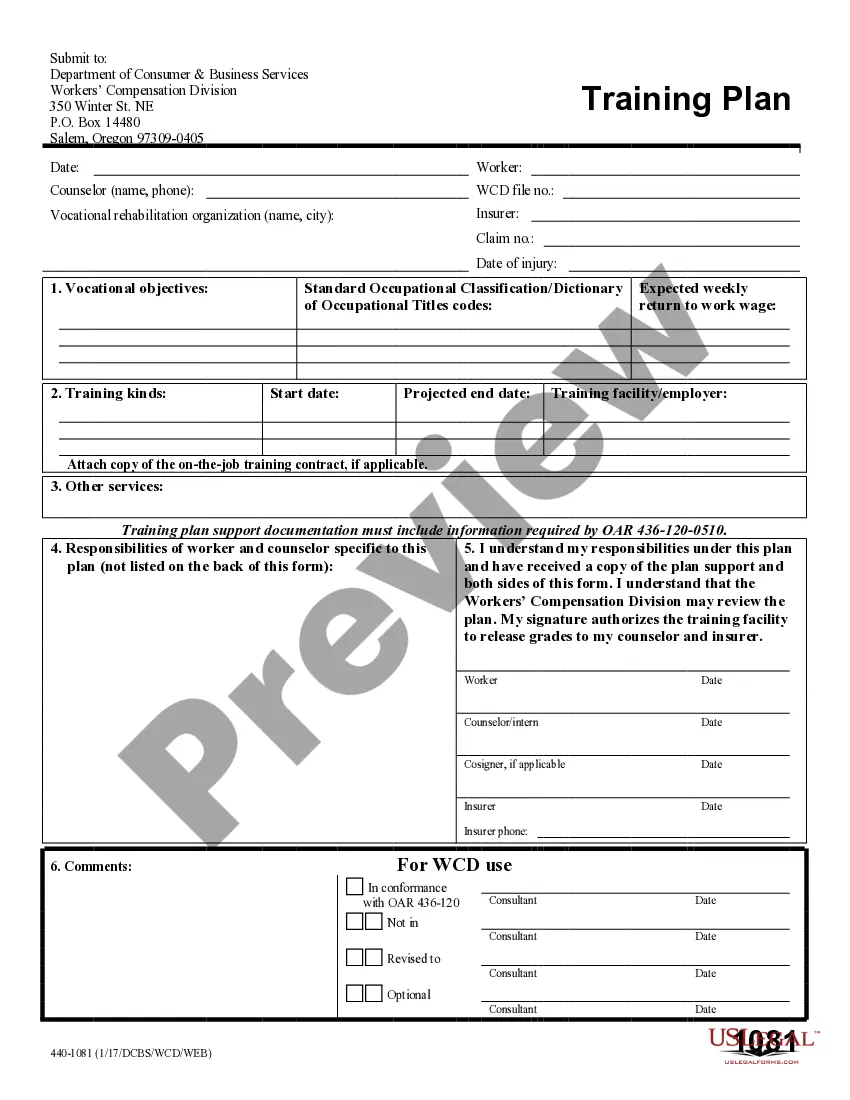
Tennessee Performance Horse Lease Agreement
What is this form?
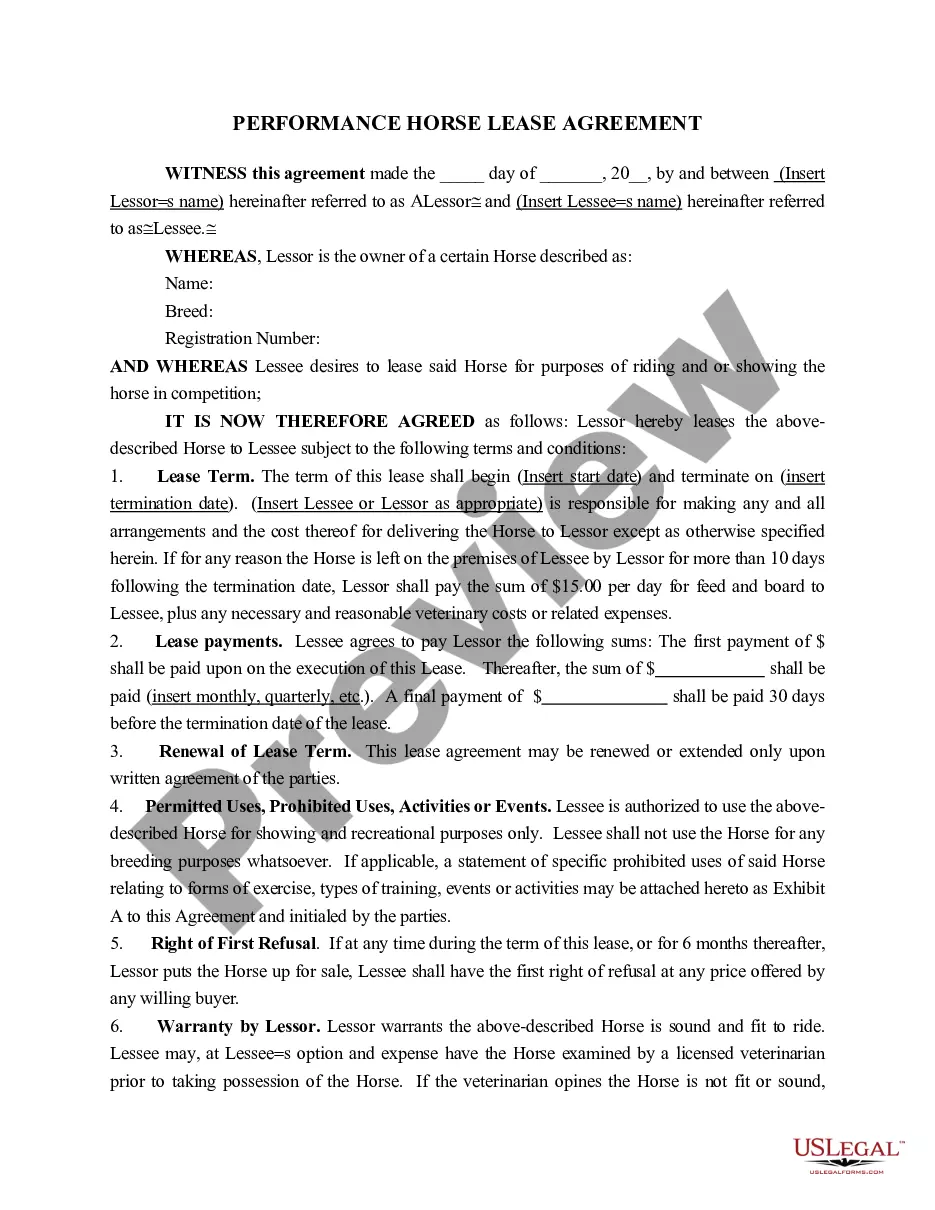
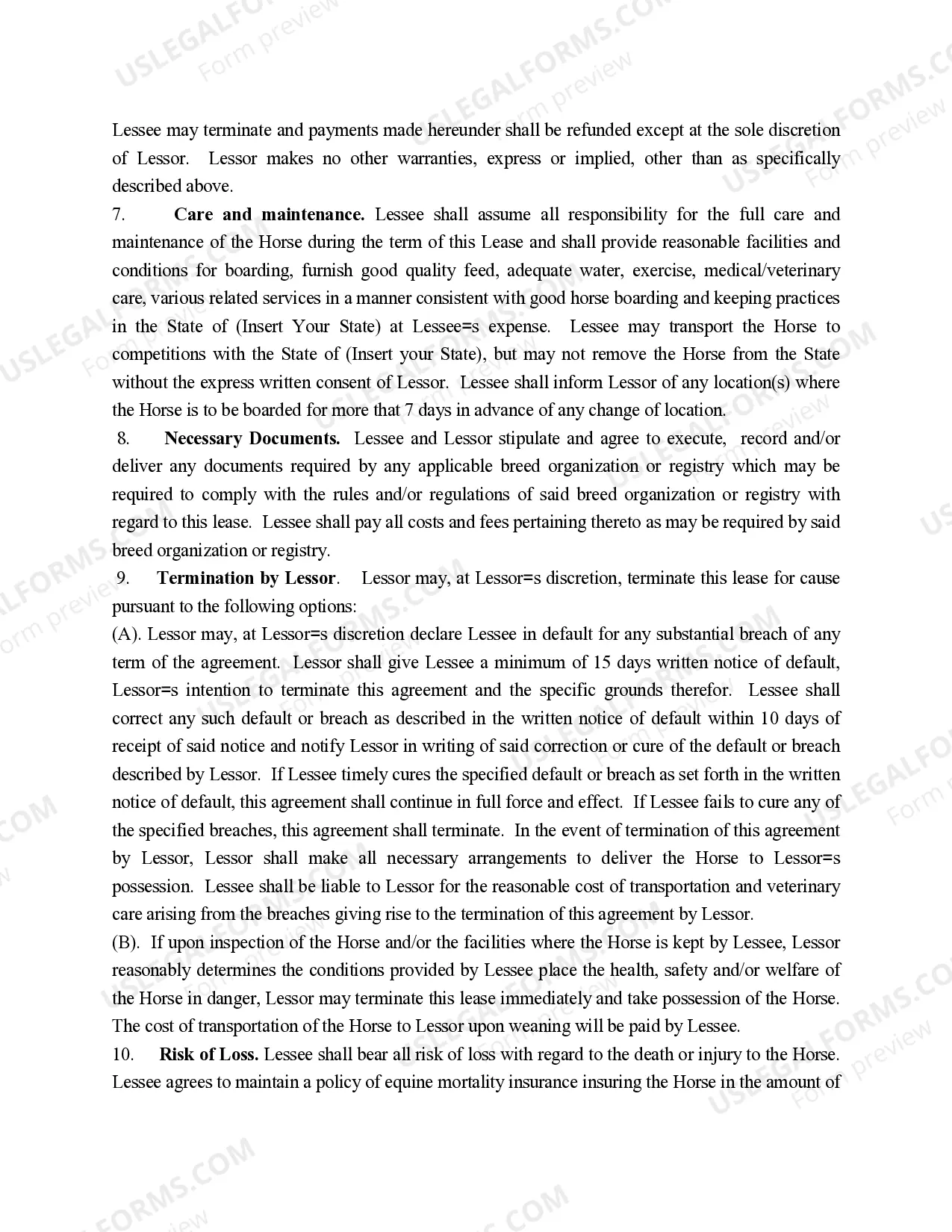
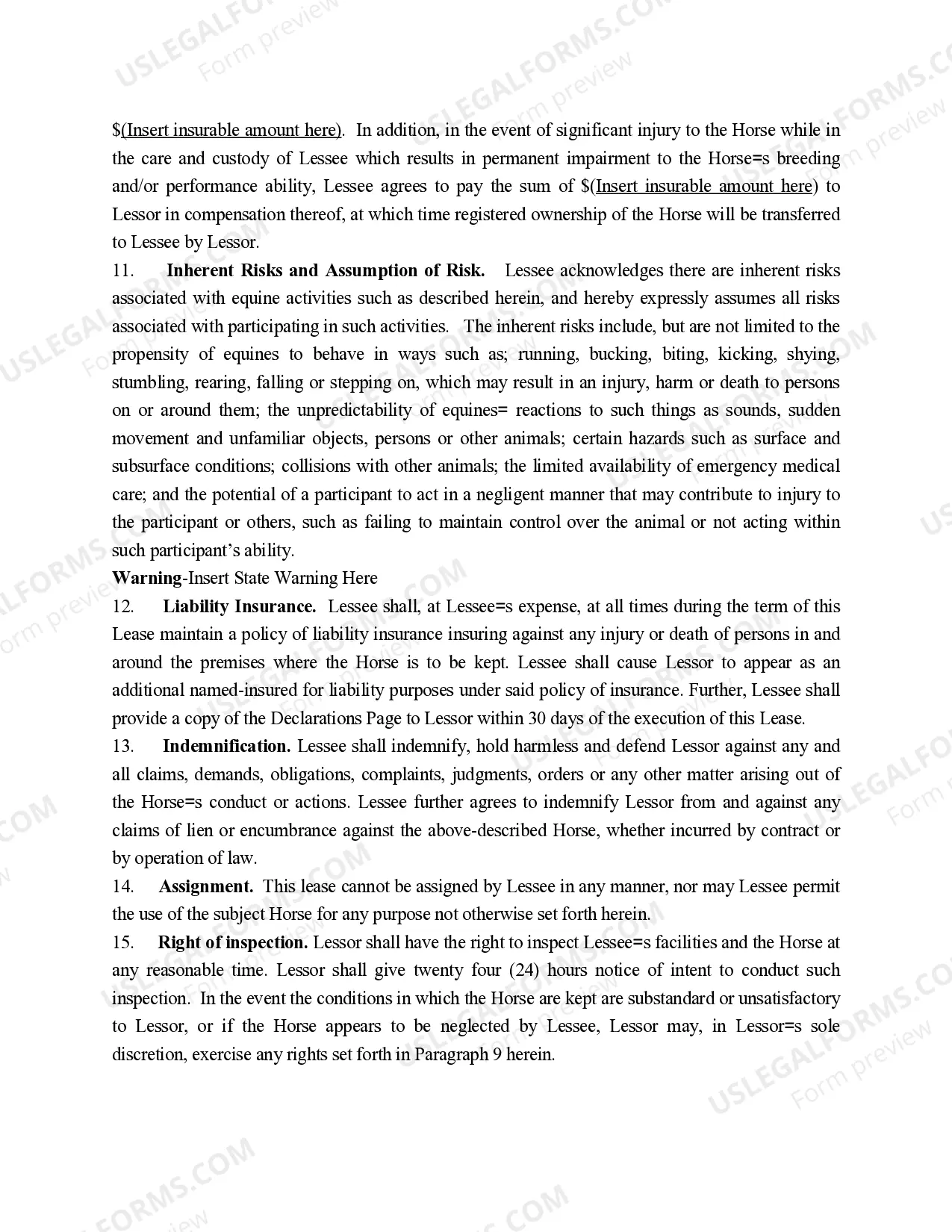
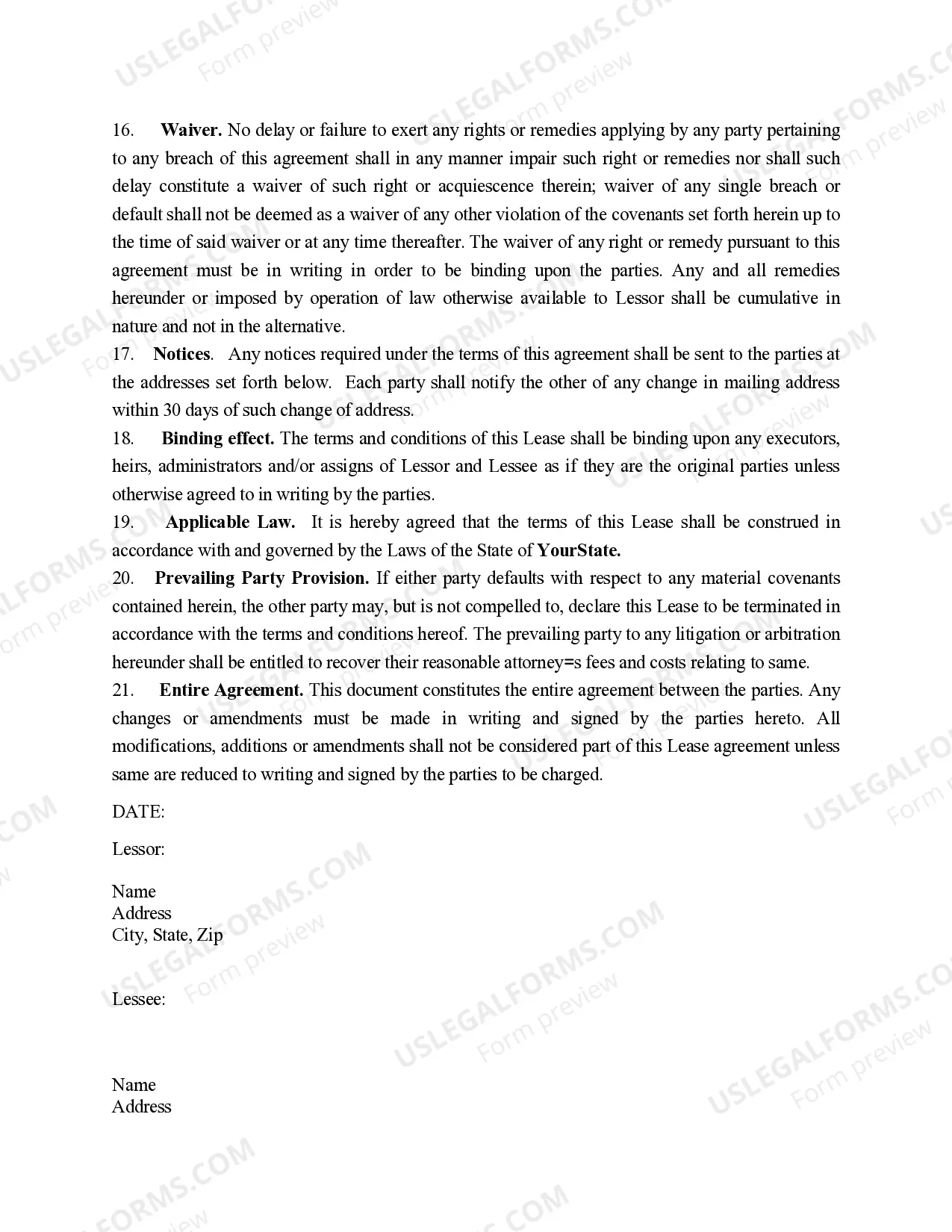
The Performance Horse Lease Agreement is a legal document used to outline the leasing terms of a horse between a lessor and a lessee. This form specifies the conditions under which a horse can be leased, differing from other agreements by focusing on performance activities such as riding and showing in competitions. It includes essential details about lease payments, permitted uses, care, and maintenance of the horse.
Form components explained
- Lease term: Duration of the lease, including start and termination dates.
- Lease payments: Details on the payment structure, including initial and final payments.
- Permitted uses: Activities the lessee is authorized to engage in with the horse.
- Right of first refusal: Clause allowing the lessee the opportunity to buy the horse if it is put up for sale.
- Risk and maintenance: Obligations regarding the care and insurance of the horse.

When to use this form
This form is necessary when a horse owner wishes to lease their horse for performance activities, such as riding or competitions. It provides protection and clarity for both parties about their rights and obligations during the lease period. Use it when entering into a formal leasing arrangement to ensure that all legal aspects are covered.
Who this form is for
This agreement is suitable for:
- Horse owners (lessors) looking to lease their horse for performance purposes.
- Individuals or entities (lessees) seeking to temporarily use a horse for riding or competition.
- Trainers or organizations that wish to lease performance horses as part of their services.
Steps to complete this form
- Identify the parties: Fill in the names and addresses of both the lessor and lessee.
- Specify the horse: Provide details including the horse's name, breed, and registration number.
- Define the lease term: Insert the start and termination dates for the lease agreement.
- Outline the payment terms: Enter the amounts and schedule for lease payments.
- Include permitted uses: Clarify what activities the lessee is allowed to undertake with the horse.
Does this form need to be notarized?
This form usually doesn’t need to be notarized. However, local laws or specific transactions may require it. Our online notarization service, powered by Notarize, lets you complete it remotely through a secure video session, available 24/7.
Get your form ready online
Our built-in tools help you complete, sign, share, and store your documents in one place.
Make edits, fill in missing information, and update formatting in US Legal Forms—just like you would in MS Word.
Download a copy, print it, send it by email, or mail it via USPS—whatever works best for your next step.
Sign and collect signatures with our SignNow integration. Send to multiple recipients, set reminders, and more. Go Premium to unlock E-Sign.
If this form requires notarization, complete it online through a secure video call—no need to meet a notary in person or wait for an appointment.
We protect your documents and personal data by following strict security and privacy standards.

Make edits, fill in missing information, and update formatting in US Legal Forms—just like you would in MS Word.

Download a copy, print it, send it by email, or mail it via USPS—whatever works best for your next step.

Sign and collect signatures with our SignNow integration. Send to multiple recipients, set reminders, and more. Go Premium to unlock E-Sign.

If this form requires notarization, complete it online through a secure video call—no need to meet a notary in person or wait for an appointment.

We protect your documents and personal data by following strict security and privacy standards.
Common mistakes
- Failing to specify clear payment terms, leading to potential disputes.
- Not detailing the permitted and prohibited uses of the horse.
- Omitting the lease term or not keeping it consistent throughout the agreement.
Benefits of completing this form online
- Convenience: Download and fill out your lease agreement in a matter of minutes.
- Editability: Customize the document to suit your specific leasing needs.
- Reliability: Forms are drafted by licensed attorneys to ensure legal compliance and protection.
Legal use & context
- This lease agreement establishes legal rights and responsibilities between the parties.
- Compliance with local animal leasing laws is crucial for enforceability.
- Any disputes arising from the lease should refer to the terms outlined in the agreement.
Quick recap
- The Performance Horse Lease Agreement is essential for formalizing horse leasing arrangements.
- Both lessees and lessors must understand their rights and obligations as stipulated in the agreement.
- When completed correctly, this form provides both parties with legal protection.
Looking for another form?
Form popularity
FAQ
A full lease means there are no restrictions on when the lessee can ride or otherwise use the horse. In a full lease, the owner typically does not use the horse. A partial lease, sometimes called a half lease, means the lessee can use the horse only part of the time.
Option #1: The person leasing the horse is responsible for all of the horse's expenses (board, feed, veterinary, farrier, etc). The person leasing the horse may ride or use the horse any time they'd like. Full leases rarely restrict riding days, times, or horse-related events, like attending a horse show.
The Half-Lease Contract.In this type of agreement, the owner of the horse or lessor splits the horse's care expenses and riding time with a lessee. It can be a beneficial way to save money on board, feed, vet bills, etc., and it can be great for your horse if your own saddle time is limited.
A partial lease is a lease which gives the lessee a term of use for a period that is shorter than the standard or full lease term. Terms of a partial lease vary according the the individual contract.
Leasing a horse is nearly always less expensive than buying one.Leasing often allows riders of all levels to get a better quality horse than they might buy. Horse owners don't usually sell their best or most promising horses, but do lease them out when they don't have time for them or need some extra income.
Generally, the cost of a full lease for a year will range from 25 to 30 percent of the horse's value?in other words, about $2,500 for a horse worth $10,000. Although that still may seem a sizeable investment for a budget-minded rider, it's a practical way to have access to a worthwhile horse.
A free lease means that the horse is leased to someone without any payment to the owner. When you have a free lease you retain ownership and control of your horse but your horse, in best case scenarios, is still cared for and loved. Everyone wins. The owner has good care for the horse they love.
When you full lease a horse you pay an agreed upon fee for exclusive access to the horse. This means you are the only one riding the horse.Oftentimes a full-lease also comes with the additional costs of board, veterinary expenses and shoeing expenses. It is pretty much exactly like owning the horse yourself.
Leases vary - at my barn the cost of a half lease is $475 per month (for privately owned or barn owned horses), which includes one lesson and two "practice rides" (riding without a coach).