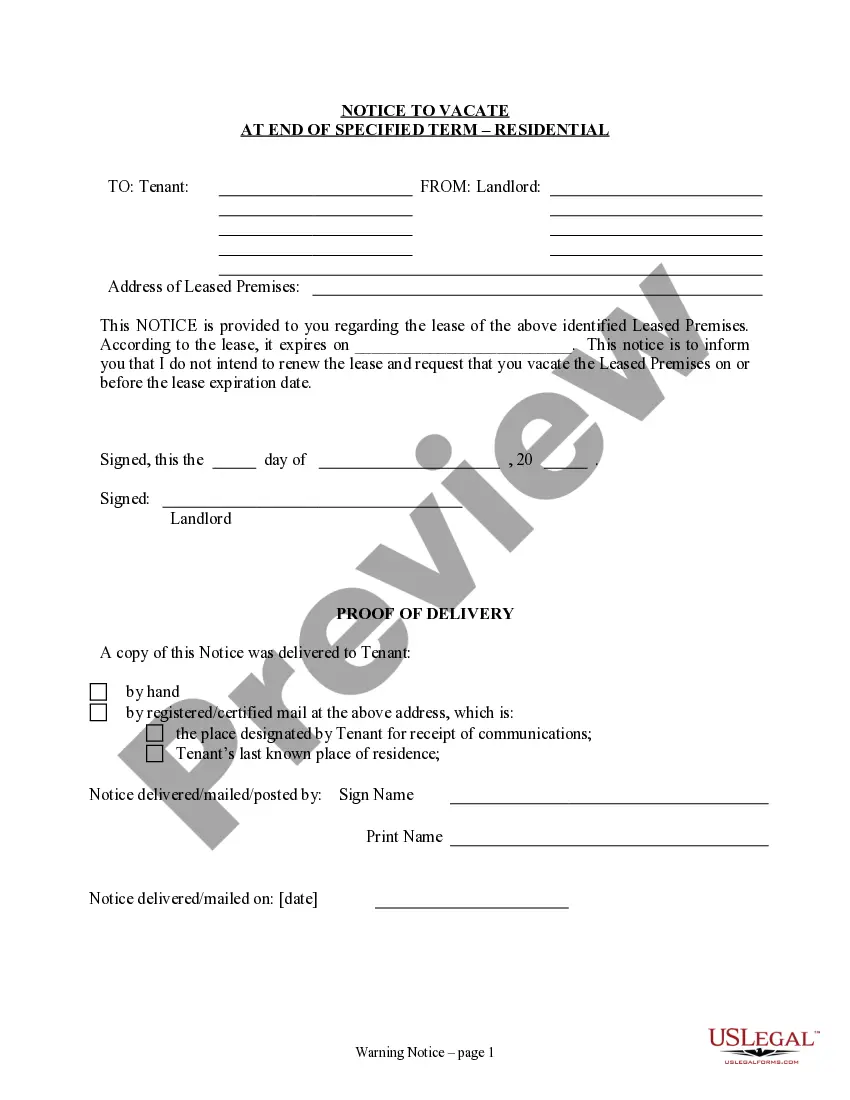
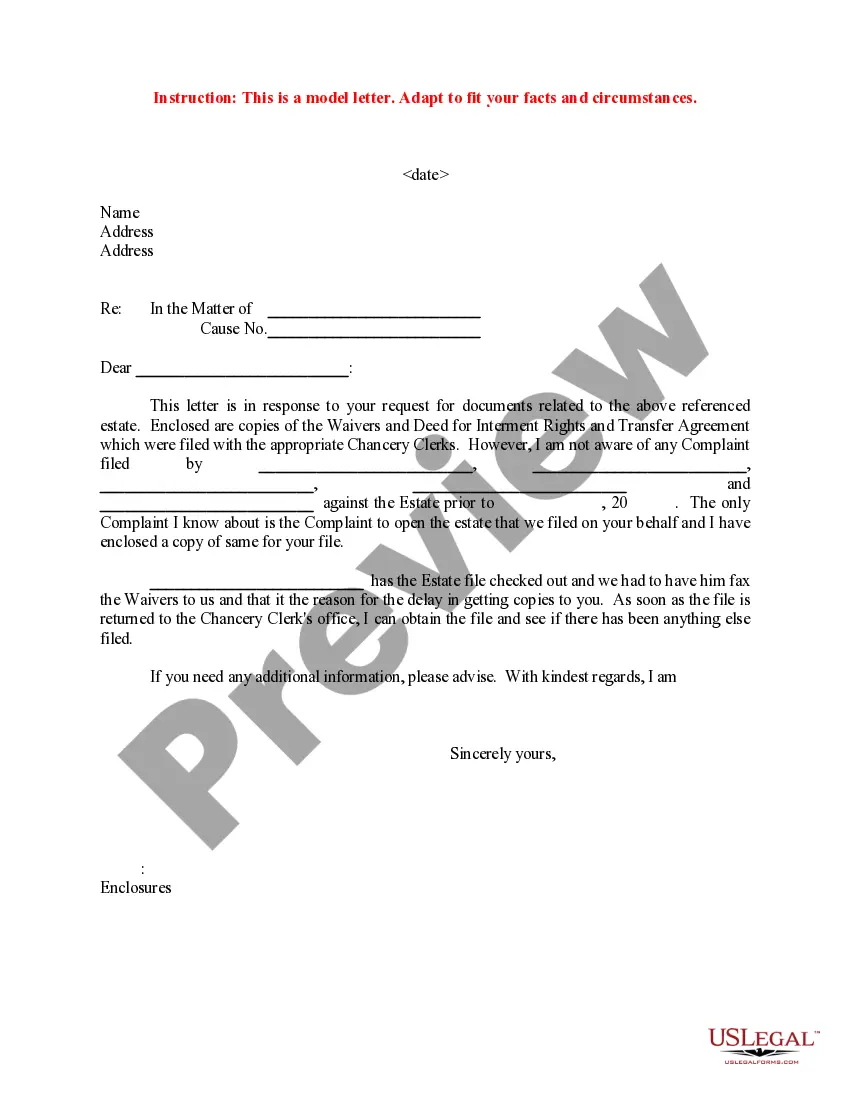
This Notice of Intent Not to Renew at End of Specified Term from Landlord to Tenant for Residential Property means that no notice is required to terminate a lease which ends at a specific date. Example: "This lease begins on January 1, 2005 and ends on January 1, 2006". However, Landlords and Tenants routinely renew such leases. This form is for use by a Landlord to inform the Tenant that the lease will not be renewed at the end of the specific term and to be prepared to vacate at the end of the lease term.
Tennessee Notice of Intent Not to Renew at End of Specified Term from Landlord to Tenant for Residential Property
State:
Tennessee
Control #:
TN-1304LT
Format:
Word;
Rich Text
Instant download
Description

How to fill out Tennessee Notice Of Intent Not To Renew At End Of Specified Term From Landlord To Tenant For Residential Property?
Access to high quality Tennessee Notice of Intent Not to Renew at End of Specified Term from Landlord to Tenant for Residential Property templates online with US Legal Forms. Avoid days of misused time seeking the internet and lost money on forms that aren’t up-to-date. US Legal Forms gives you a solution to exactly that. Find more than 85,000 state-specific legal and tax samples that you can download and complete in clicks in the Forms library.
To receive the example, log in to your account and click Download. The file will be stored in two places: on your device and in the My Forms folder.
For people who don’t have a subscription yet, have a look at our how-guide below to make getting started simpler:
- Find out if the Tennessee Notice of Intent Not to Renew at End of Specified Term from Landlord to Tenant for Residential Property you’re considering is appropriate for your state.
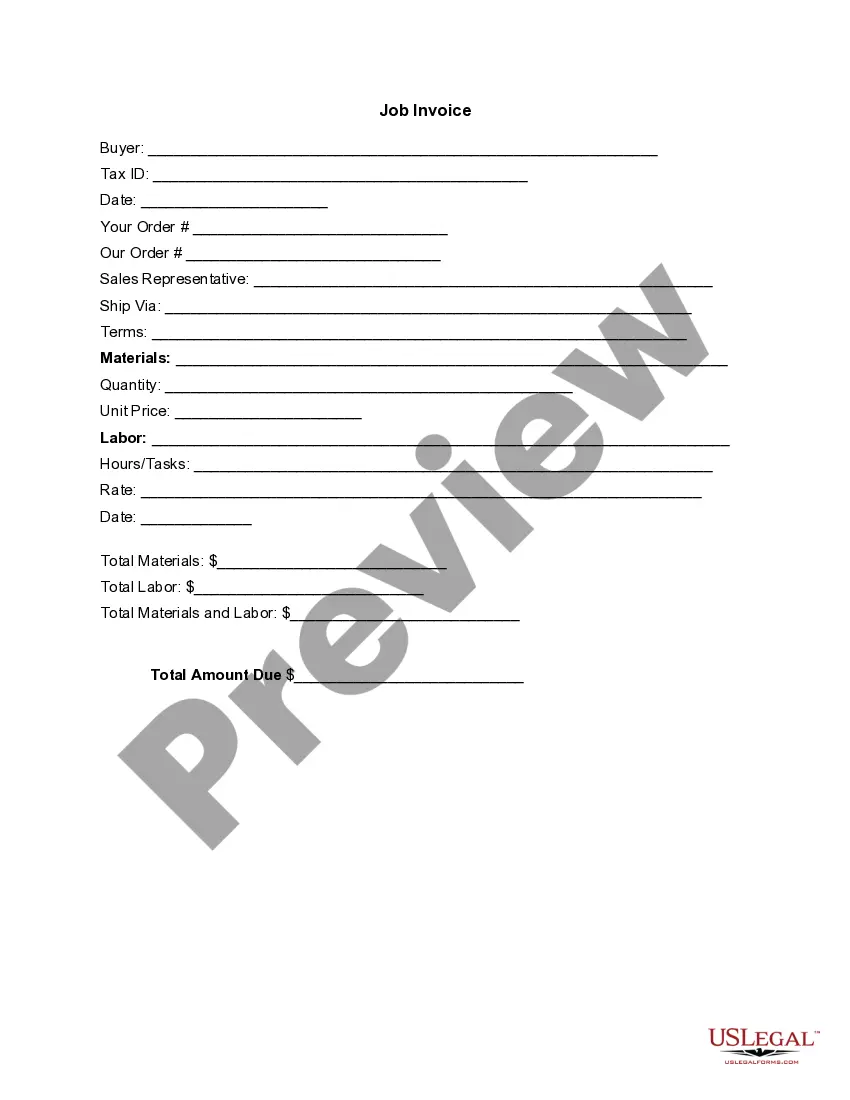
- Look at the form using the Preview option and browse its description.
- Go to the subscription page by clicking Buy Now.
- Choose the subscription plan to keep on to register.
- Pay by card or PayPal to finish making an account.
- Select a favored format to save the file (.pdf or .docx).
Now you can open up the Tennessee Notice of Intent Not to Renew at End of Specified Term from Landlord to Tenant for Residential Property example and fill it out online or print it out and get it done by hand. Consider mailing the file to your legal counsel to ensure things are filled in correctly. If you make a error, print out and fill sample again (once you’ve made an account every document you download is reusable). Make your US Legal Forms account now and get access to more templates.
Form popularity
FAQ
You are responsible for: paying your rent on time, paying any late fees, keeping the place clean and safe, not letting anyone else damage it, not breaking the law, disposing of your garbage, and following your landlord's rules. If you break your lease, then it may become a legal issue.
Title 66 - Property. Chapter 28 - Uniform Residential Landlord and Tenant Act. (b) The landlord may enter the premises without consent of the tenant in case of emergency.
While some jurisdictions may have provisions that allow consumers to change their minds with no consequences, generally there is no cooling-off period for leasing real property. Once the landlord and tenant sign a lease and a copy is delivered to the both parties, it becomes a valid contract.
Can An Apartment Refuse To Renew A Lease? In most states, it is up to the property owner and manager to determine whether or not they want to extend their lease agreement with a tenant. If they do not want to continue to rent to that tenant for some reason, it is within their rights to do so.
If the landlord fails to maintain the rental unit in a habitable condition, the tenant can write a complaint to the appropriate city or county building inspector. The building inspector will inspect and give the landlord thirty days to make any required corrections to the building's condition.
The Tenant Consistently Fails To Pay Rent or Pays Late. A tenant that cannot fulfill their obligation to pay rent on time may face non-renewal. Property Damage or Violations of Policy. Selling or Renovating the Property. Discrimination or Retaliation Are Unlawful.
Depending on your state's laws, you may be entitled to remain in your apartment or rental home on a month-to-month basis after your lease expires, even if your landlord wants you out. If the landlord doesn't accept your decision, he'll have to go to court to evict you.
The first thing a landlord must do is provide the tenant with a written notice that an eviction will occur in 30 days if the tenant does not comply with the terms of the lease within 14 days. This notice is required by T.C.A. Section 66-28-505.
Notice Requirements for Tennessee Landlords A landlord can simply give you a written notice to move, allowing you 30 days as required by Tennessee law and specifying the date on which your tenancy will end.