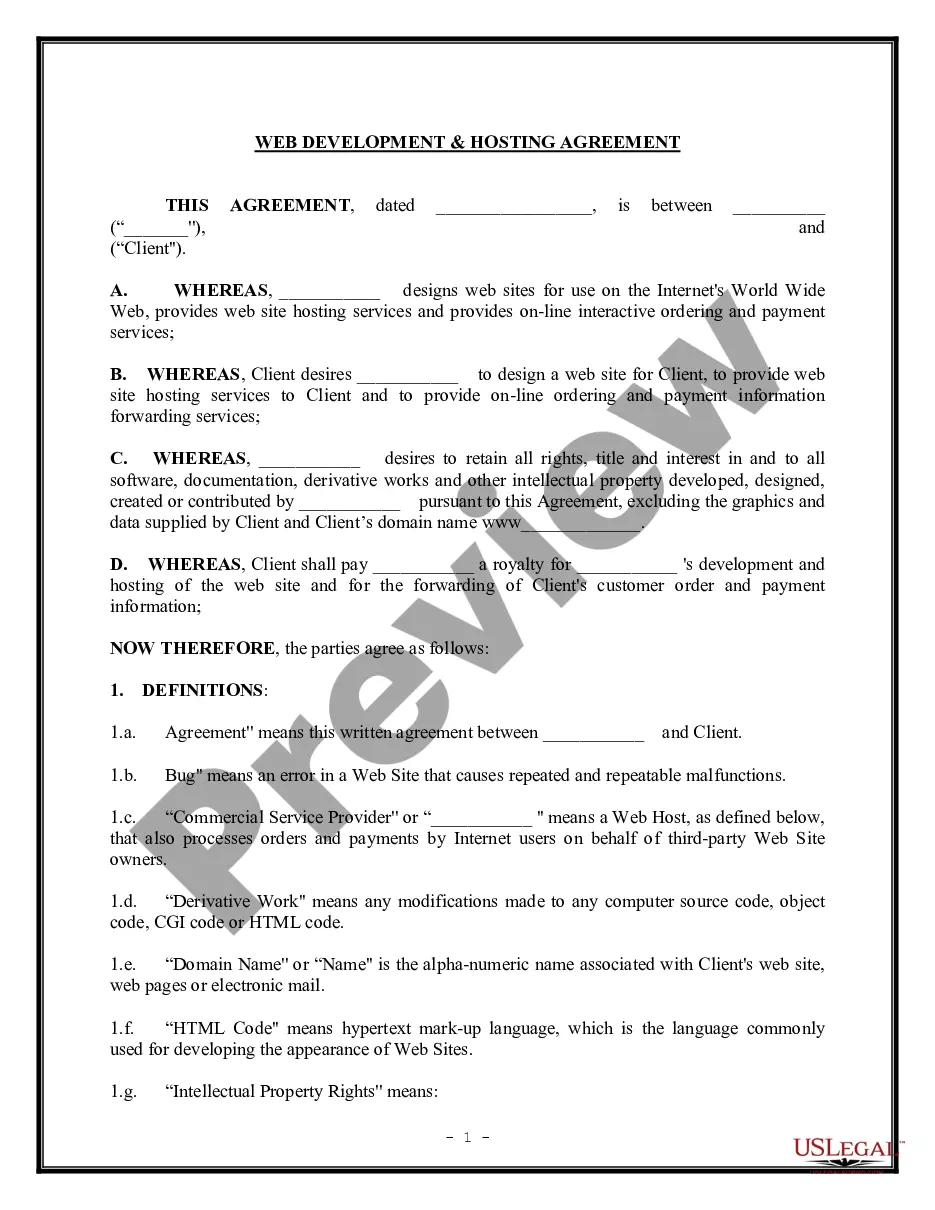
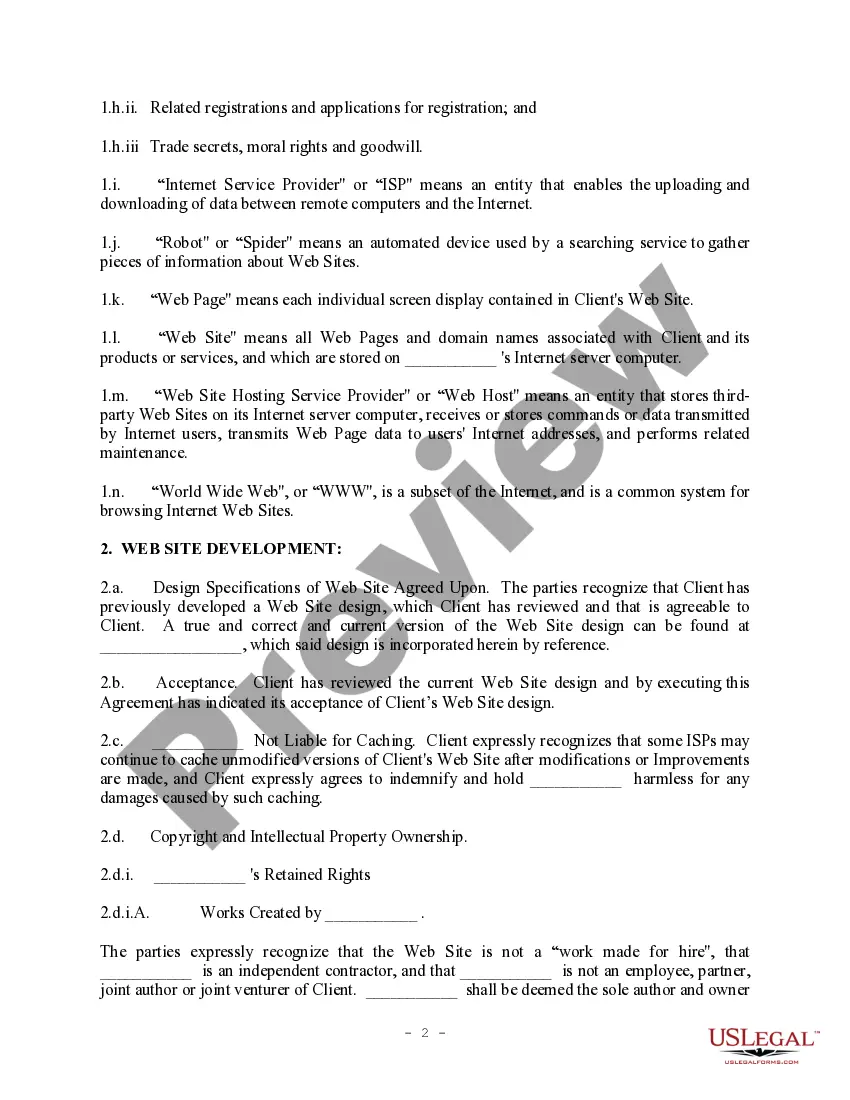
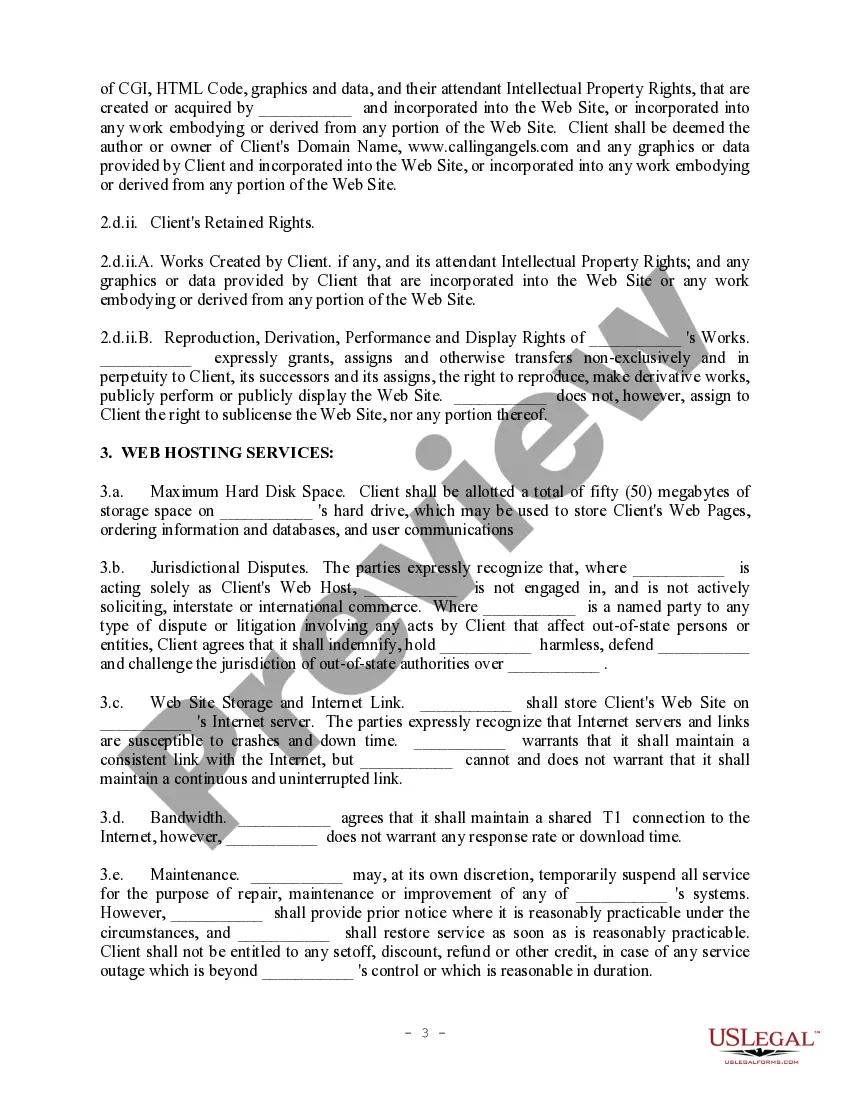
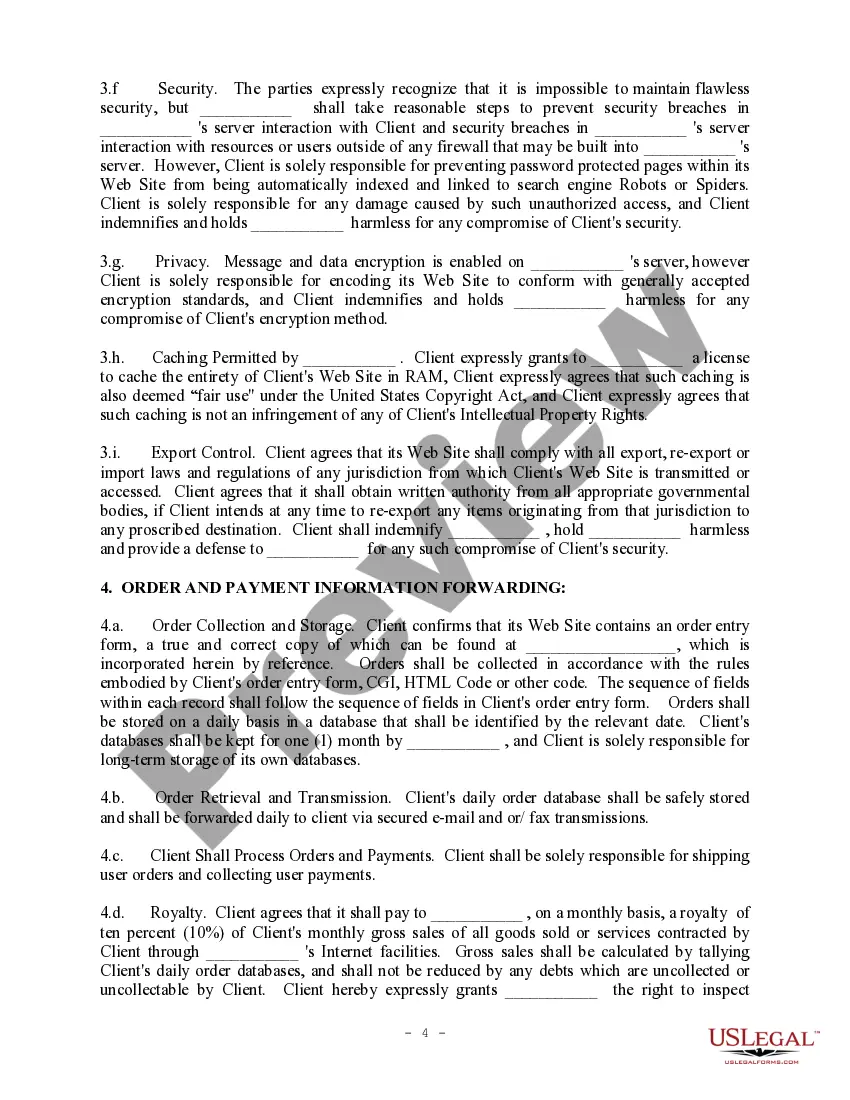
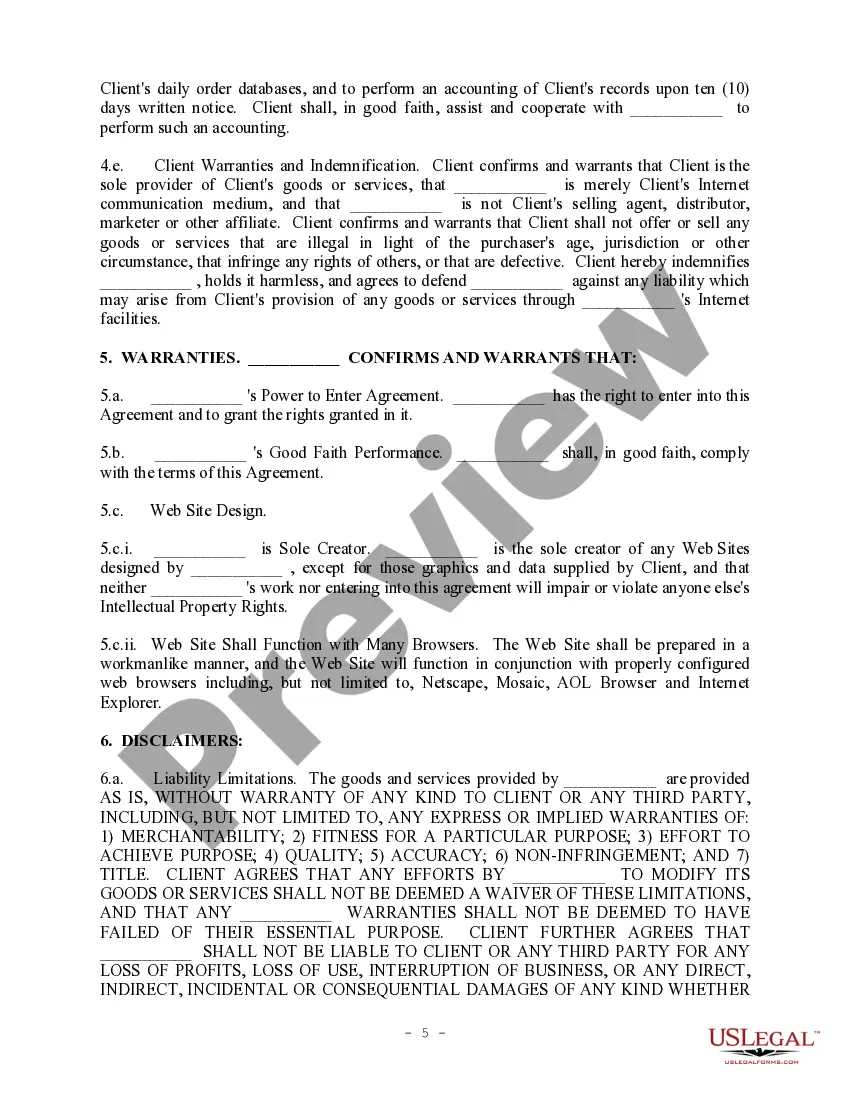
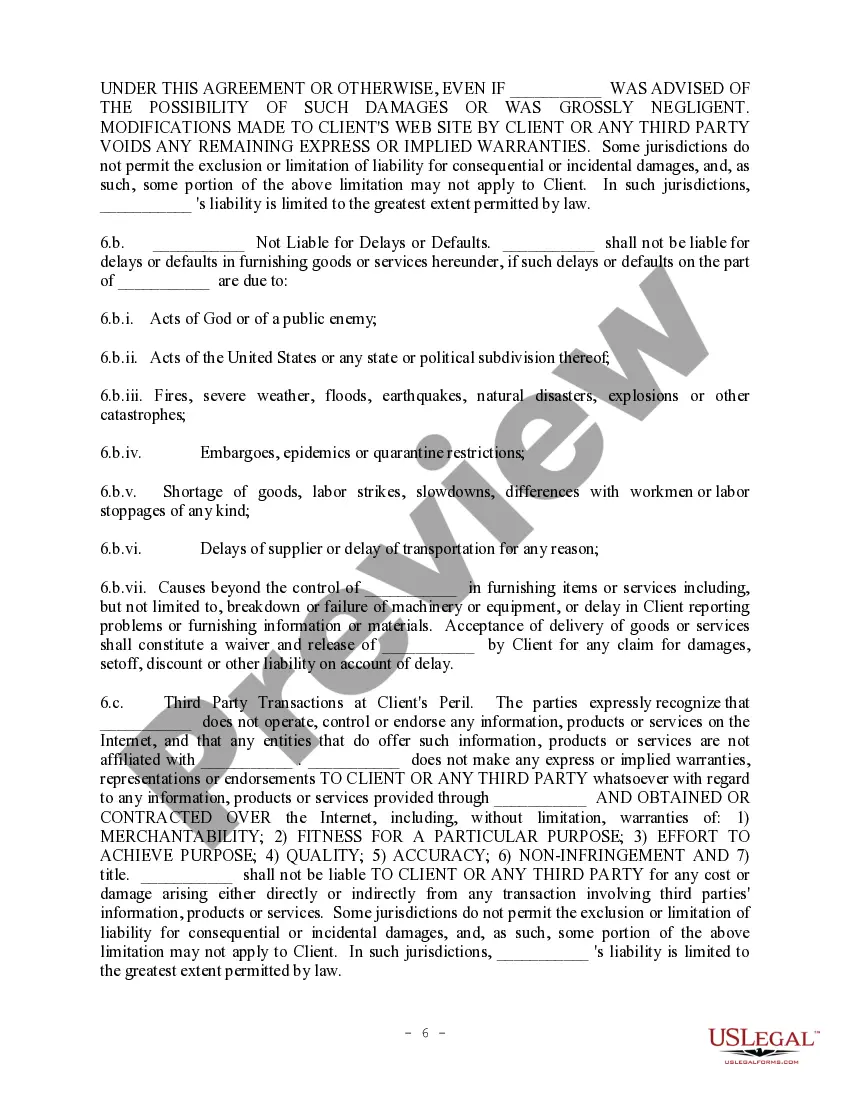
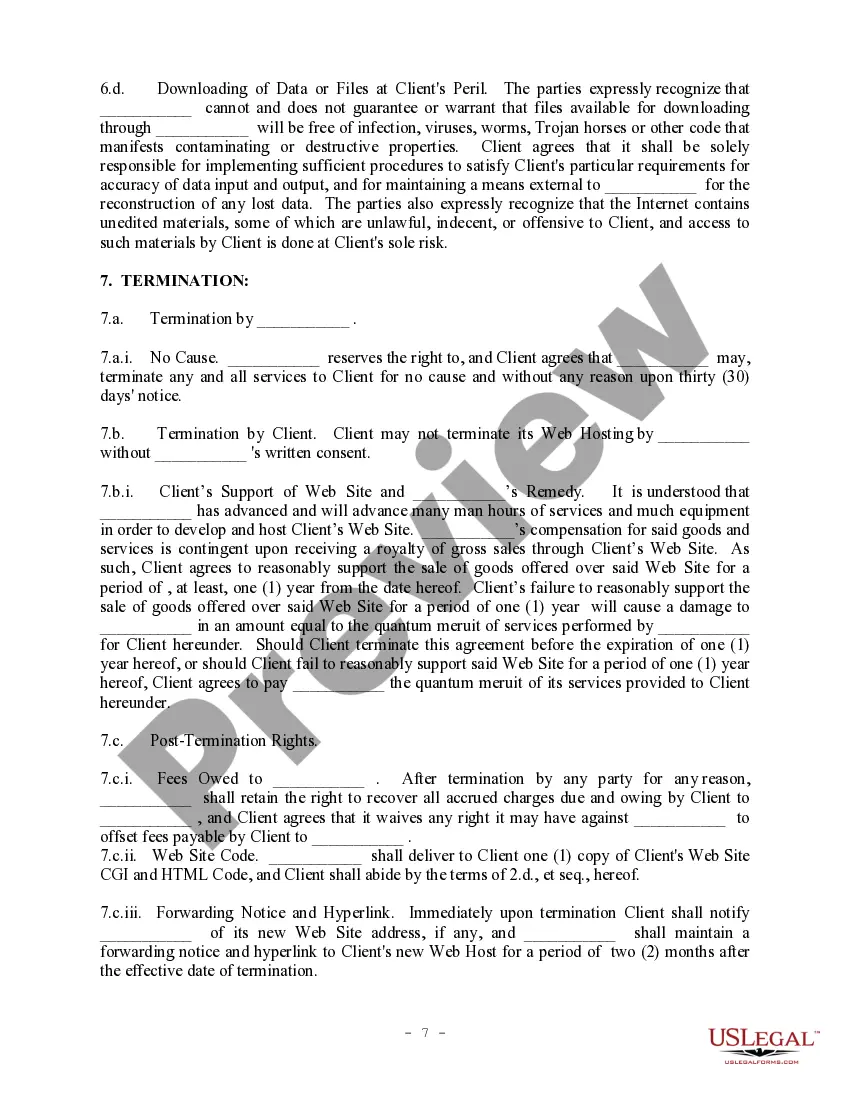
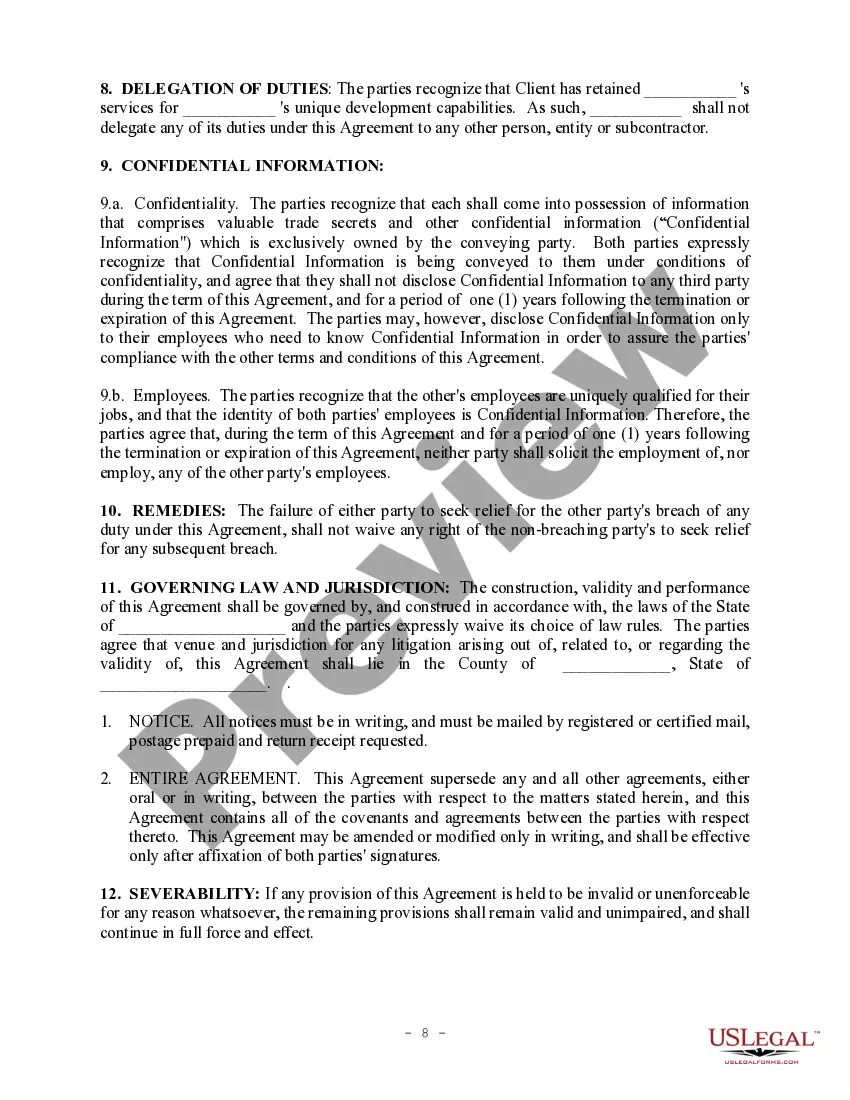
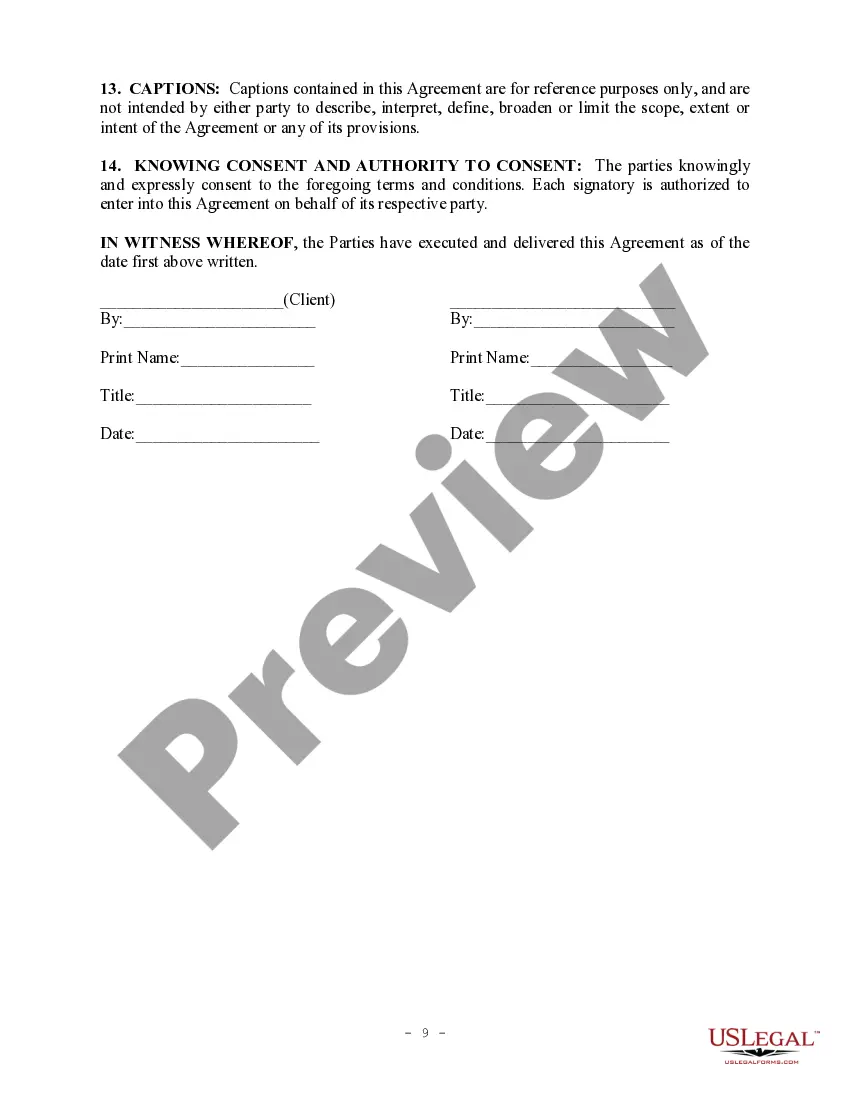
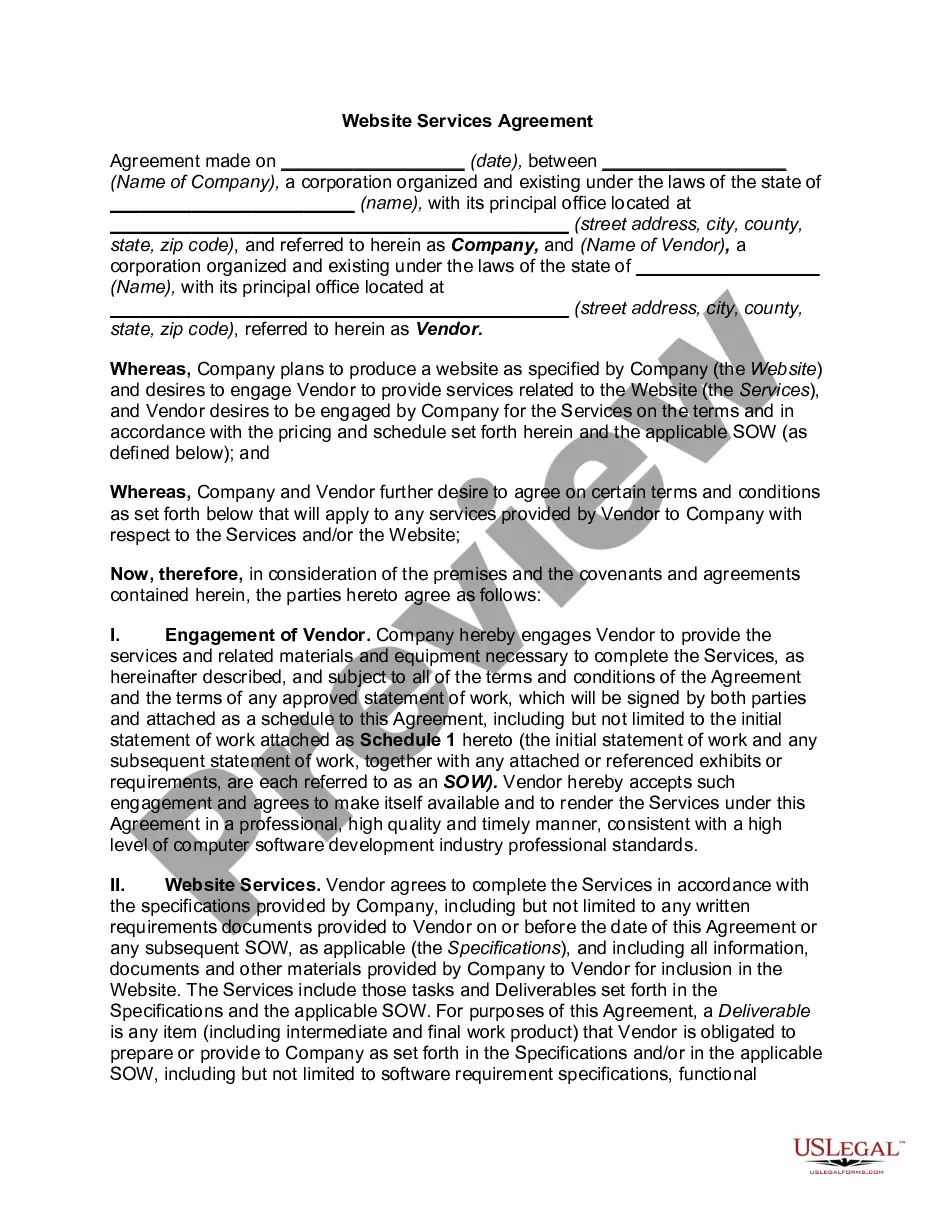
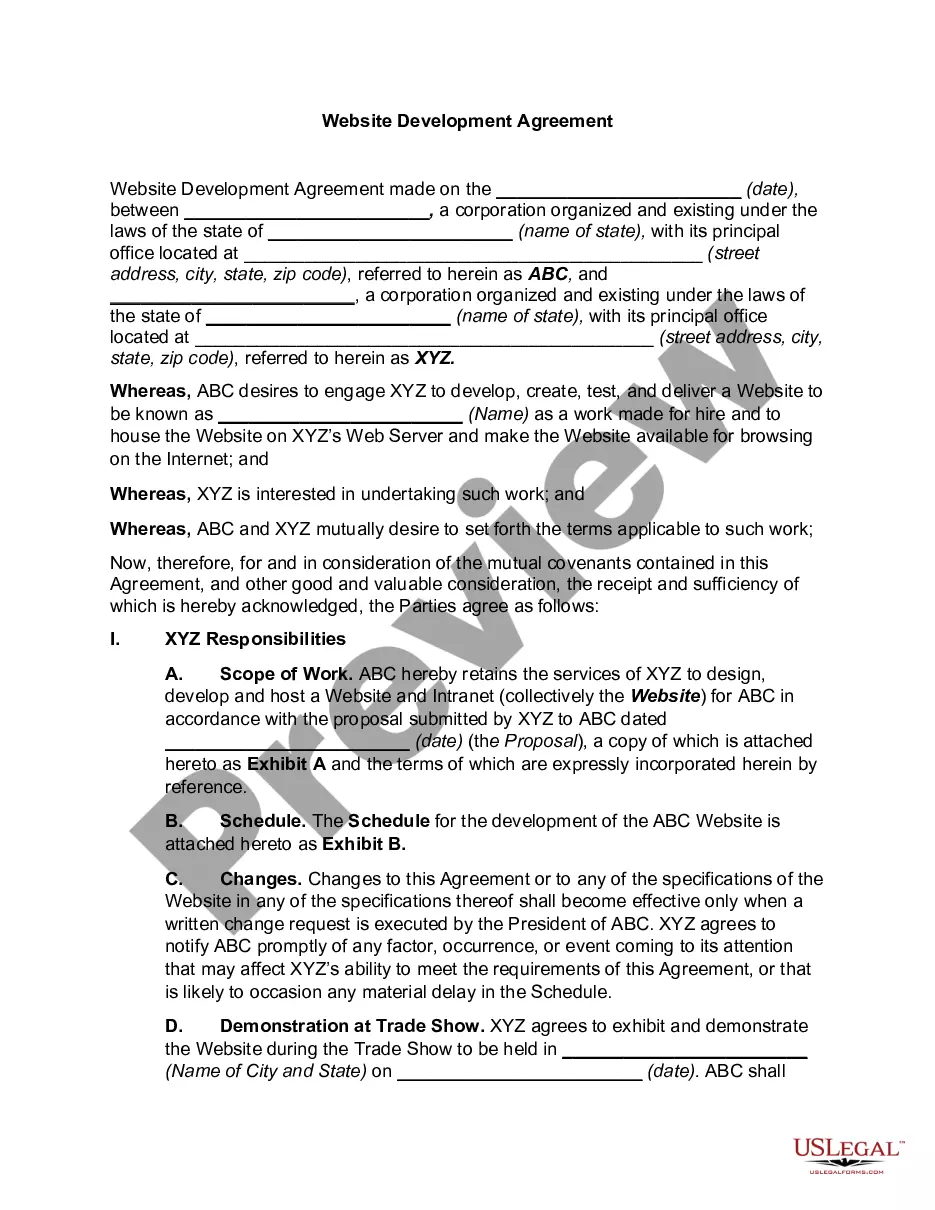
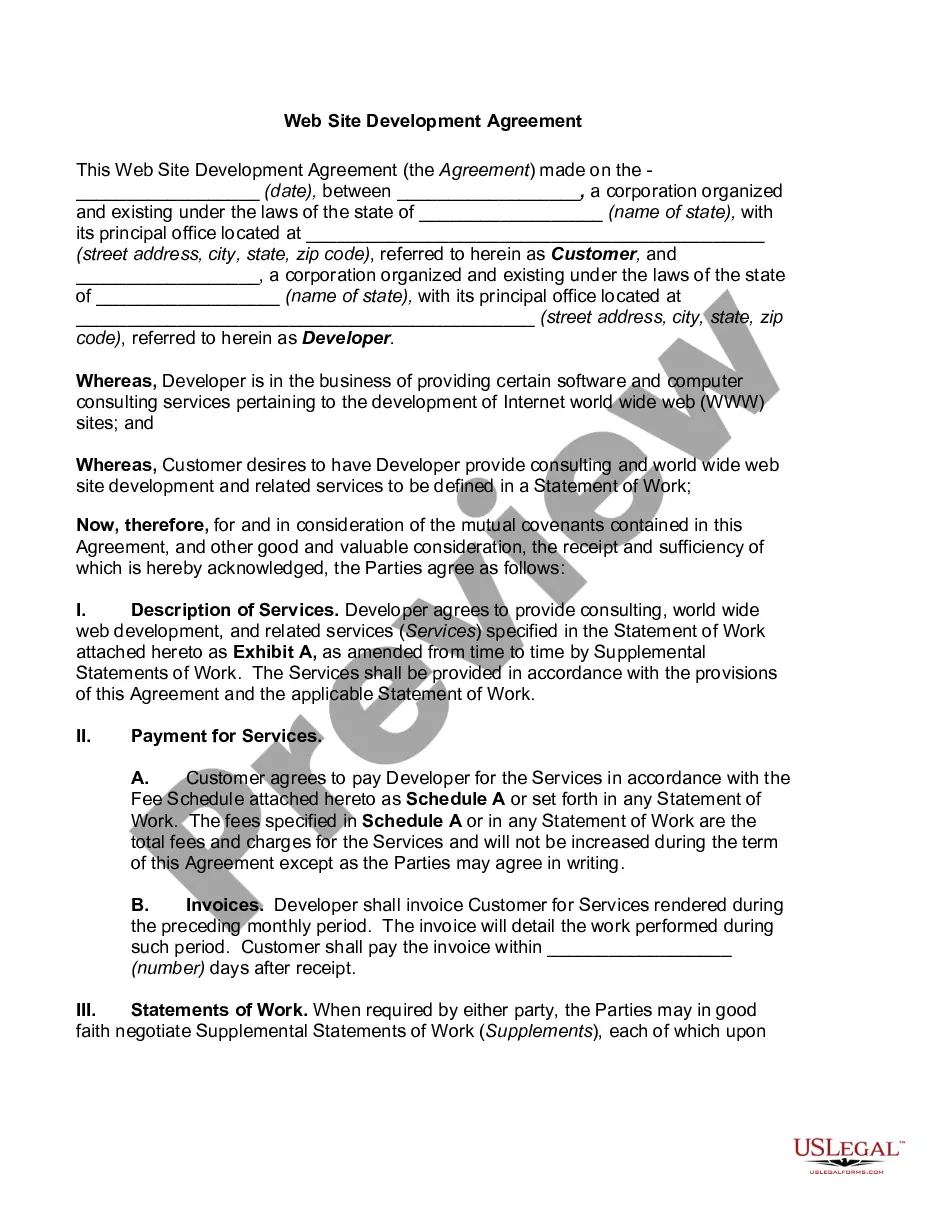
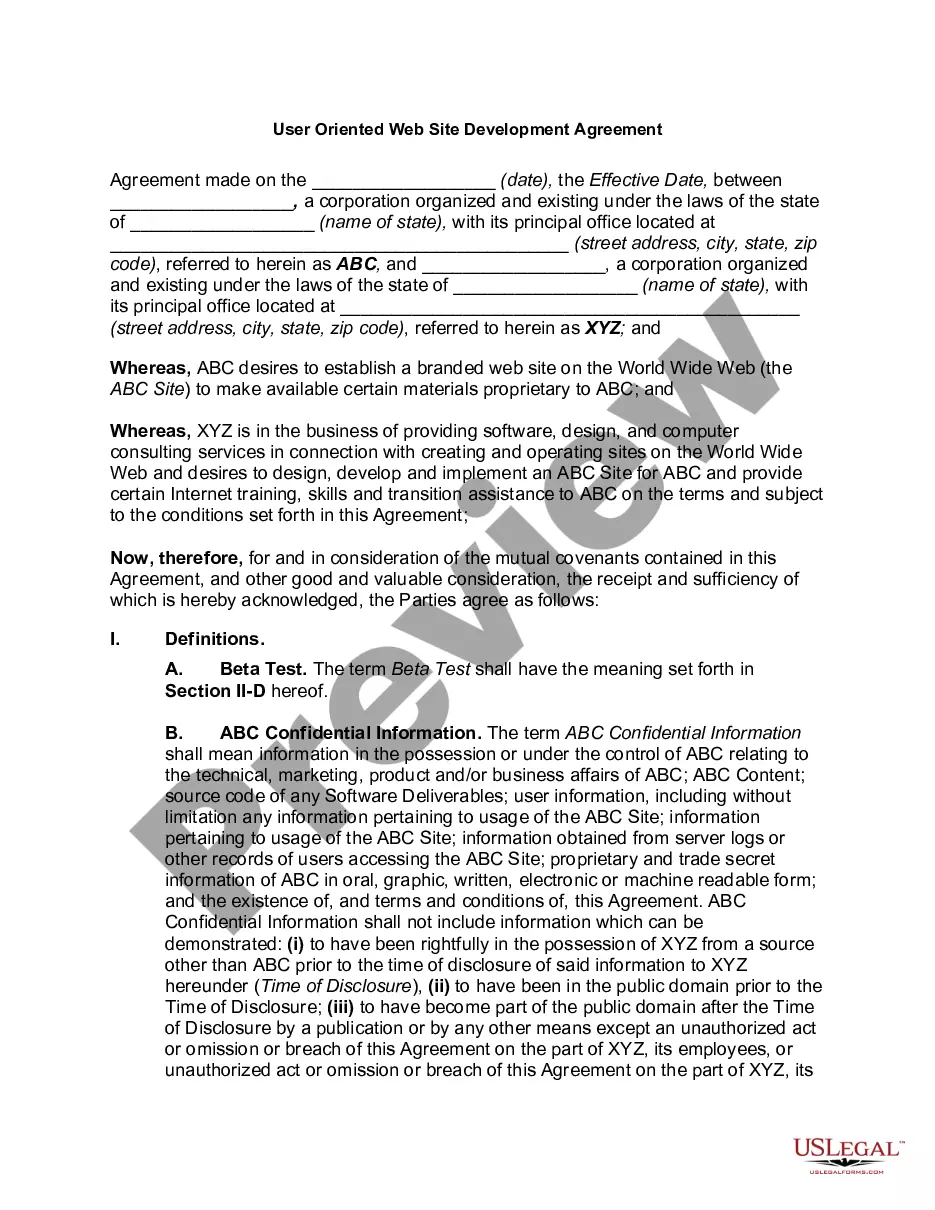
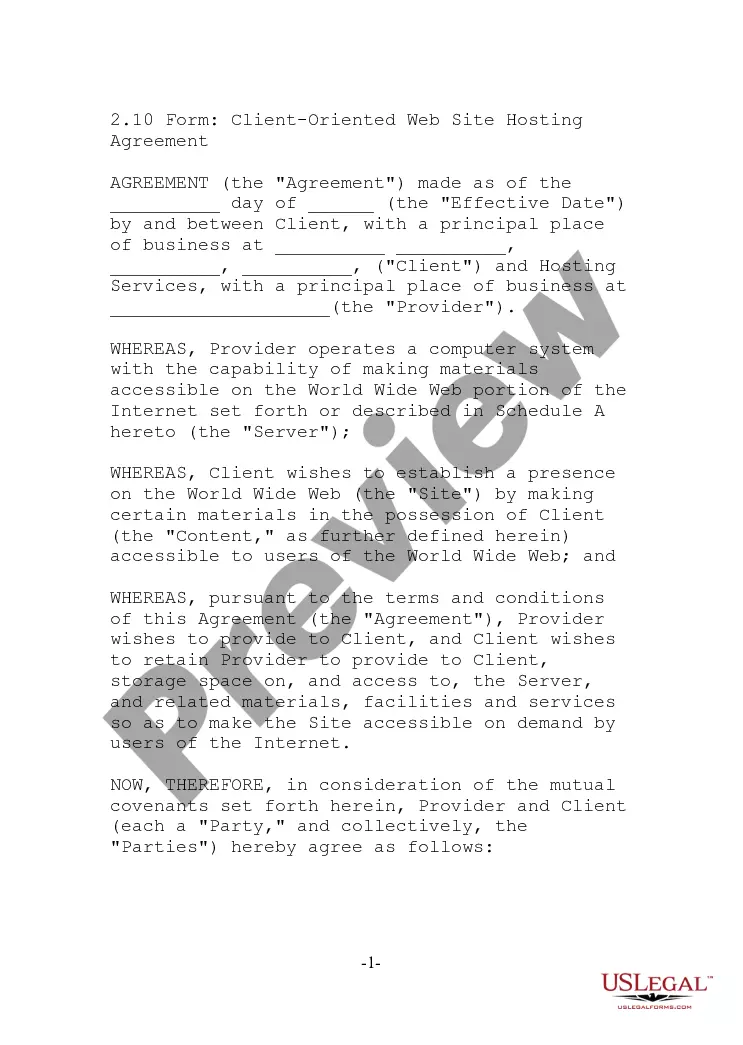
This form is a Web Development and Hosting Agreement. The client desires that the consultant design a web site, provide on-line ordering and payment information forwarding services. The client has agreed to pay consultant a royalty for consultant's development and hosting of the web site and for the forwarding of the client's customer orders.
South Dakota Web Site Development and Hosting Agreement
Category:
State:
Multi-State
Control #:
US-KWP-0022
Format:
Word;
Rich Text
Instant download
Description
Free preview
Get your form ready online
Our built-in tools help you complete, sign, share, and store your documents in one place.
Built-in online Word editor
Make edits, fill in missing information, and update formatting in US Legal Forms—just like you would in MS Word.
Export easily
Download a copy, print it, send it by email, or mail it via USPS—whatever works best for your next step.
E-sign your document
Sign and collect signatures with our SignNow integration. Send to multiple recipients, set reminders, and more. Go Premium to unlock E-Sign.
Notarize online 24/7
If this form requires notarization, complete it online through a secure video call—no need to meet a notary in person or wait for an appointment.
Store your document securely
We protect your documents and personal data by following strict security and privacy standards.

Make edits, fill in missing information, and update formatting in US Legal Forms—just like you would in MS Word.

Download a copy, print it, send it by email, or mail it via USPS—whatever works best for your next step.

Sign and collect signatures with our SignNow integration. Send to multiple recipients, set reminders, and more. Go Premium to unlock E-Sign.

If this form requires notarization, complete it online through a secure video call—no need to meet a notary in person or wait for an appointment.

We protect your documents and personal data by following strict security and privacy standards.
Looking for another form?





How to fill out Web Site Development And Hosting Agreement?
US Legal Forms - one of the largest repositories of legal documents in the country - provides a selection of legal form templates that you can download or print. Through the website, you can access thousands of forms for business and personal purposes, categorized by types, states, or keywords. You can find the latest versions of forms such as the South Dakota Web Site Development and Hosting Agreement in moments.
If you already maintain a subscription, sign in and retrieve the South Dakota Web Site Development and Hosting Agreement from the US Legal Forms archive. The Download option will be available on every form you review. You can access all previously downloaded forms within the My documents section of your account.
If you are using US Legal Forms for the first time, here are some simple steps to get started: Ensure you have selected the correct form for your area/county. Click the Preview button to review the form's content. Check the form details to confirm you have chosen the right form. If the form does not meet your needs, utilize the Search field at the top of the page to find one that does. Once you are satisfied with the form, confirm your selection by clicking the Purchase now button. Then, select the payment plan you desire and provide your information to create an account. Complete the transaction. Use your credit card or PayPal account to finalize the purchase. Choose the format and download the form to your device. Make modifications. Fill out, edit, and print and sign the downloaded South Dakota Web Site Development and Hosting Agreement. Every template you add to your account has no expiration date and is yours indefinitely. Therefore, to download or print another copy, simply go to the My documents section and click on the form you require.
- Access the South Dakota Web Site Development and Hosting Agreement with US Legal Forms, the most extensive library of legal document templates.
- Utilize thousands of professional and state-specific templates that satisfy your business or personal needs and requirements.
Form popularity
FAQ
Yes, you can create your own online contracts. Using platforms like USLegalForms, you can easily customize a South Dakota Web Site Development and Hosting Agreement to fit your needs. This option provides you with flexibility while ensuring that you include all necessary legal elements. By crafting your own contracts, you empower yourself to establish clear terms that protect your interests.
To display terms and conditions on your website, you can create a dedicated page that outlines your South Dakota Web Site Development and Hosting Agreement. Ensure this page is easily accessible from the footer of your site or via a prominent link on your homepage. Additionally, consider using a pop-up or modal window that appears when users first visit your site. This approach not only informs users but also helps protect your business by ensuring that visitors acknowledge the terms.
A contract can be legally binding without a lawyer, including a South Dakota Web Site Development and Hosting Agreement, provided it meets the required legal criteria. Both parties must agree to the terms, and there should be a clear intention to create a legal obligation. While you can draft your own contract, consulting legal resources or experts can help you avoid common pitfalls. US Legal Forms offers accessible templates that can guide you through the process effectively.
You can write your own legally binding contract, such as a South Dakota Web Site Development and Hosting Agreement, as long as you follow the necessary legal guidelines. Make sure to include clear terms and conditions that both parties understand and agree to. Crafting your agreement gives you control over the content, but be cautious about legal jargon or vague language that could lead to disputes. If you feel uncertain, using US Legal Forms can provide you with reliable templates.
Yes, you can write a legally binding contract yourself, including a South Dakota Web Site Development and Hosting Agreement. However, it is crucial to ensure that all essential elements, such as offer, acceptance, consideration, and mutual consent, are present. Taking the time to research and understand these components can help you create a valid agreement. If you prefer guidance, you might consider using platforms like US Legal Forms, which offer templates and resources.
When drafting a website development contract, it is essential to include specific elements to ensure clarity and mutual understanding. First, outline the scope of work, detailing the services you will provide under the South Dakota Web Site Development and Hosting Agreement. Additionally, include payment terms, timelines, and any maintenance or support services post-launch. This clarity will help both parties manage expectations and foster a successful partnership.
A web agreement is a broad term that can refer to any contract related to web services, including development, hosting, and maintenance. This type of agreement ensures that all parties understand their obligations and the services provided. A South Dakota Web Site Development and Hosting Agreement is a specific form of a web agreement that offers clarity and legal protection for both developers and clients, fostering a productive working relationship.
A web development agreement is a contract that details the creation and maintenance of a website. It covers aspects such as design, functionality, timelines, and costs. By utilizing a South Dakota Web Site Development and Hosting Agreement, clients can secure the services they need while ensuring that developers have a clear framework to work within, promoting accountability and satisfaction.
The purpose of a development agreement is to define the parameters of a project and outline each party's responsibilities. This agreement helps to prevent disputes by making expectations clear from the outset. In a South Dakota Web Site Development and Hosting Agreement, it ensures that both the developer and the client are on the same page, leading to a more efficient and successful project.
A website development agreement is a formal document outlining the terms under which a web developer creates a website for a client. It specifies project requirements, timelines, and payment structures. By having a comprehensive South Dakota Web Site Development and Hosting Agreement in place, both parties can minimize misunderstandings and ensure that the final product meets the client's needs.