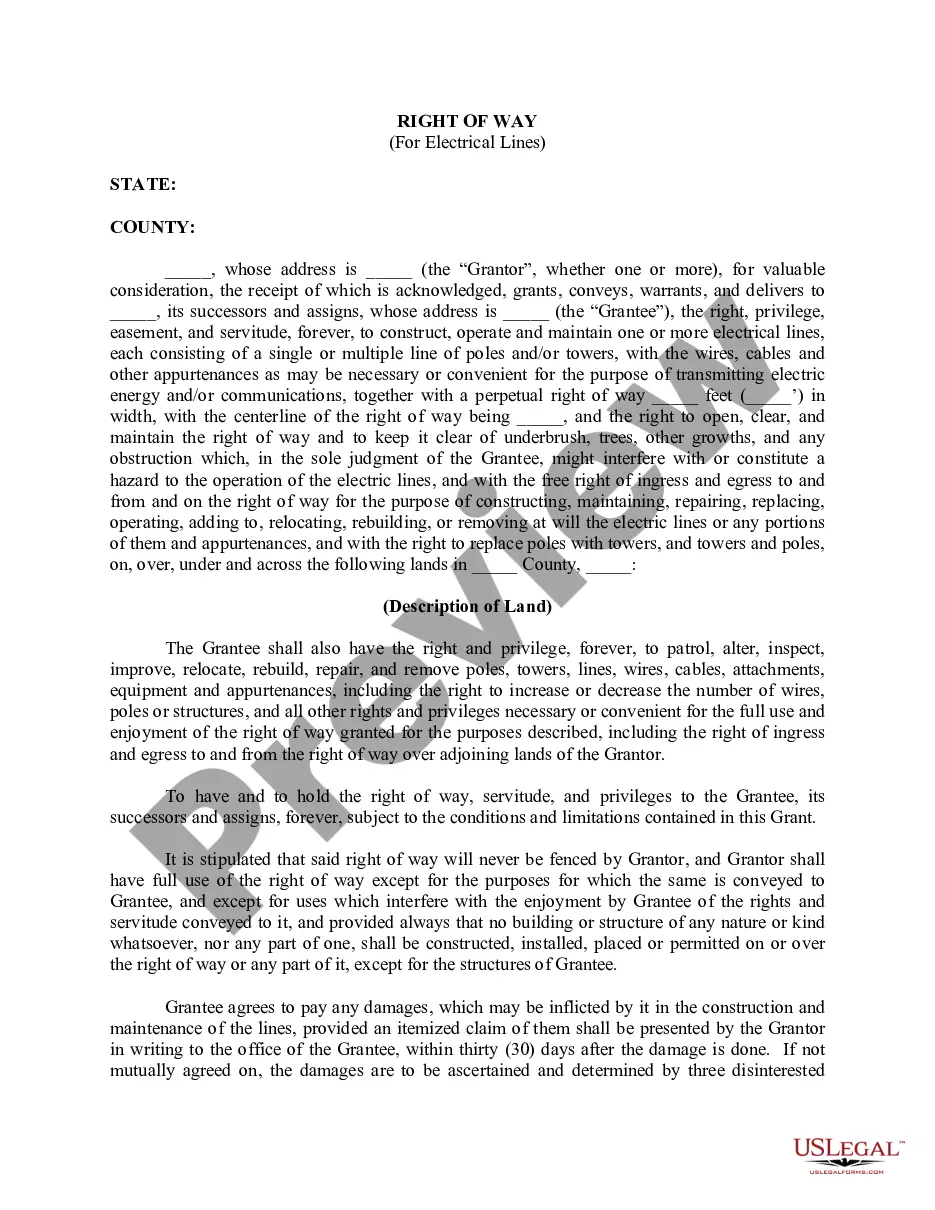
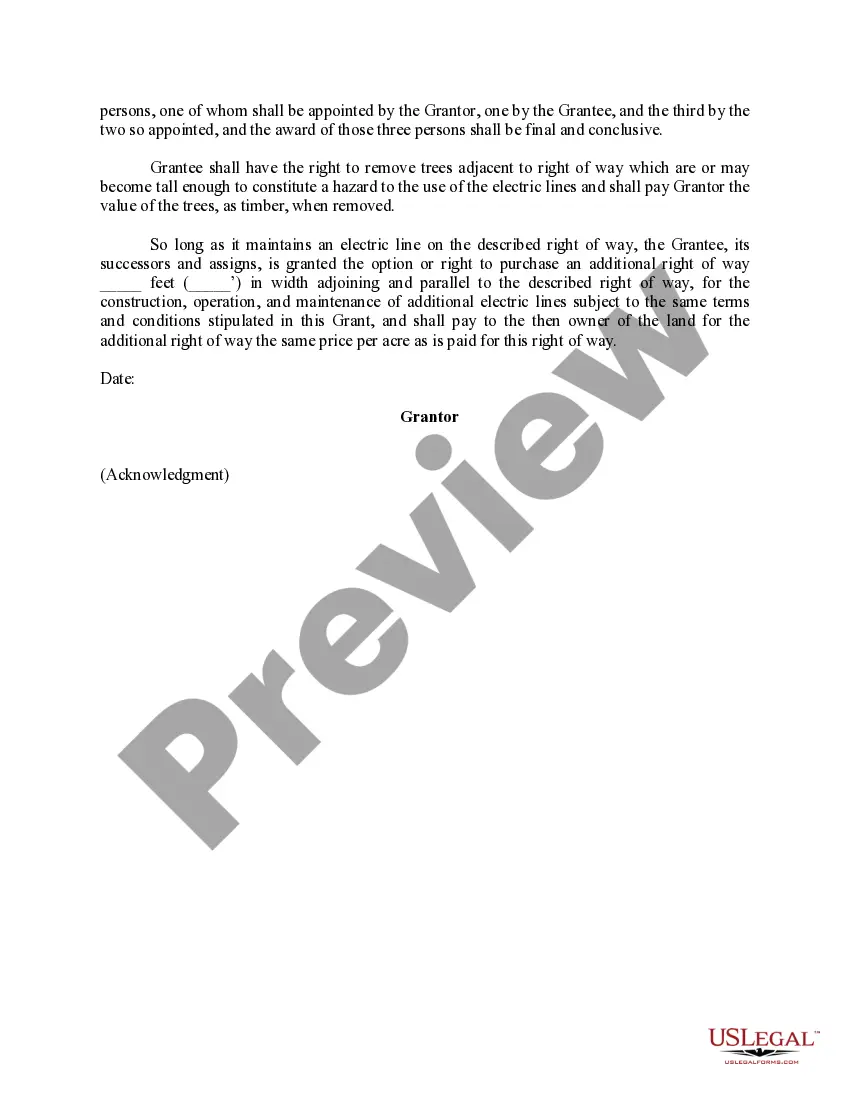
South Dakota Right of Way (For Electrical Lines)
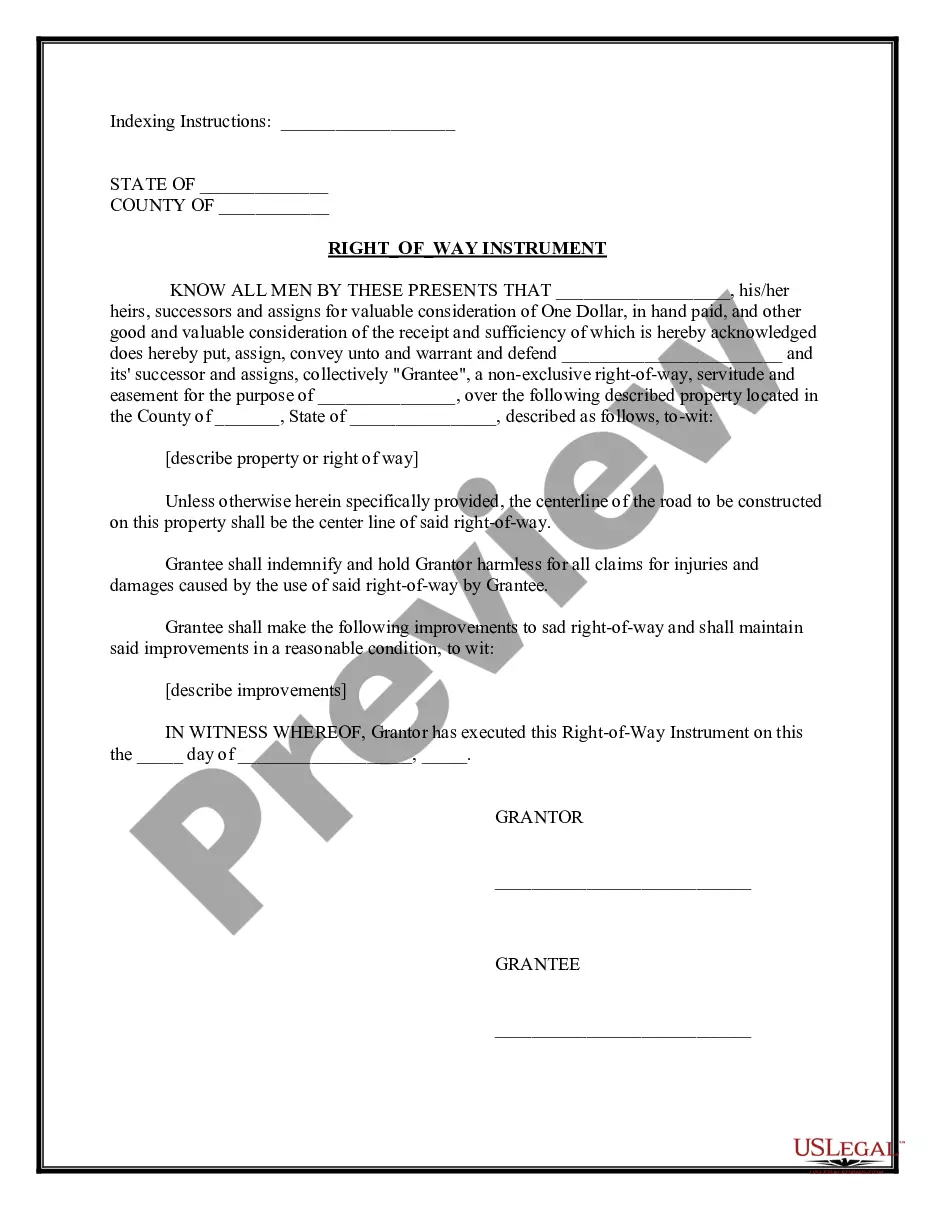
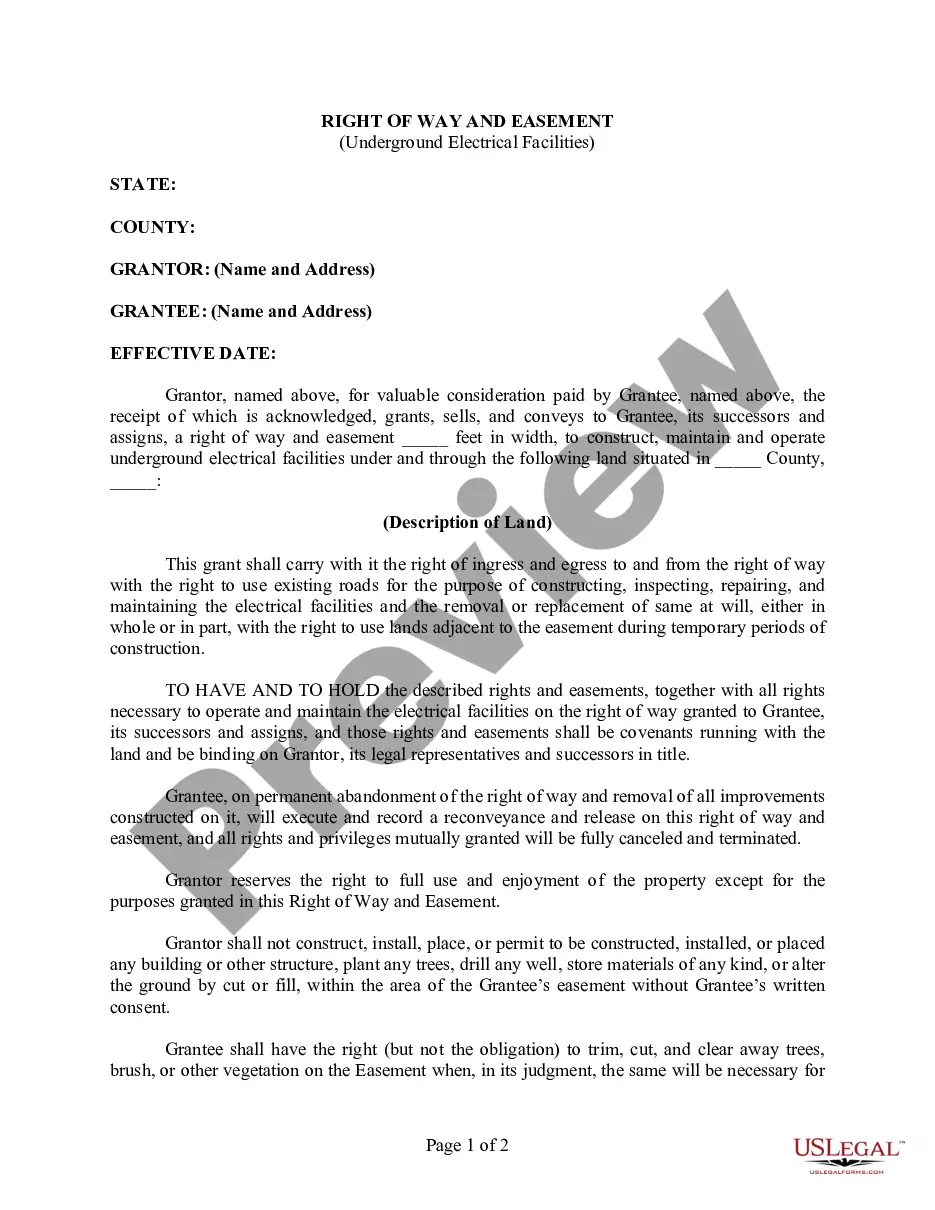
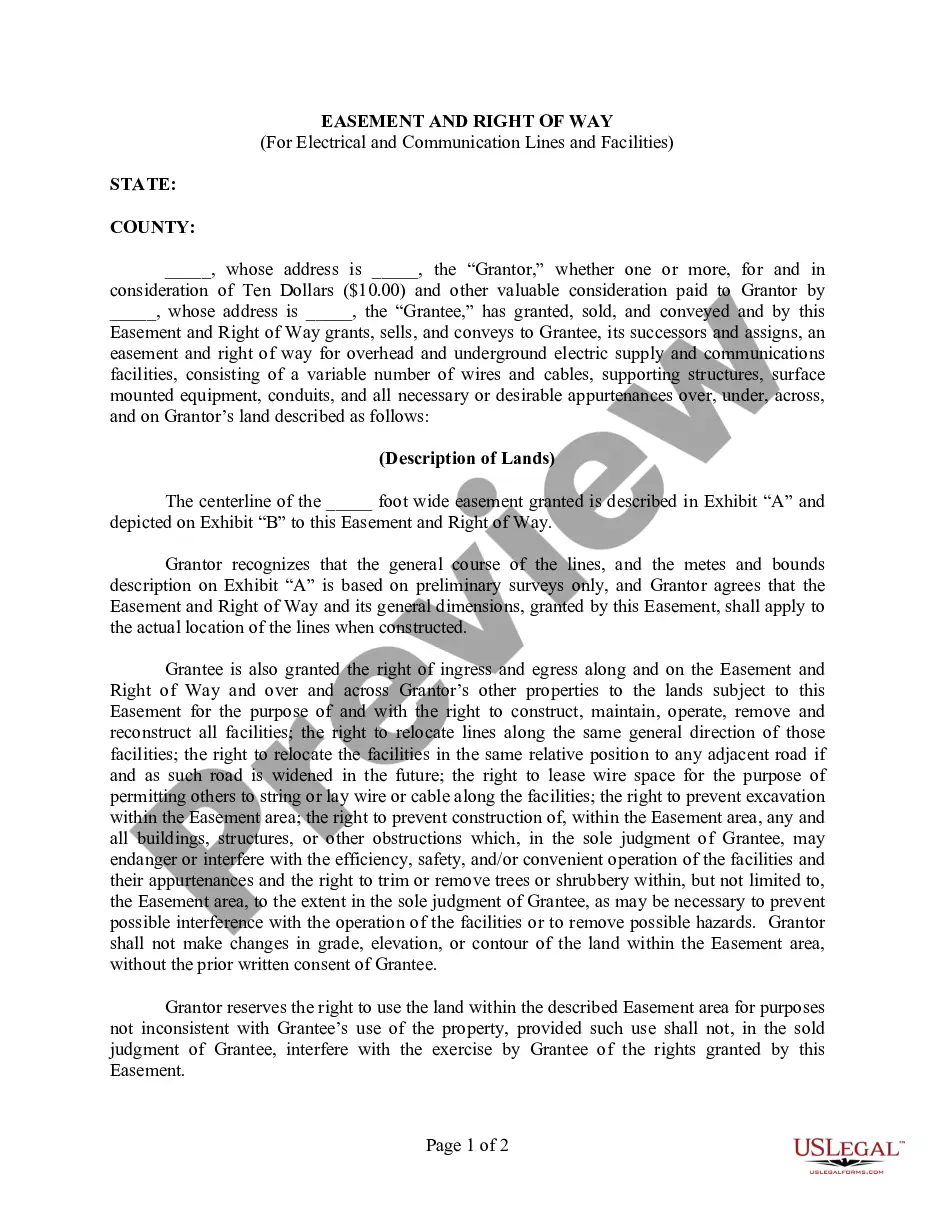
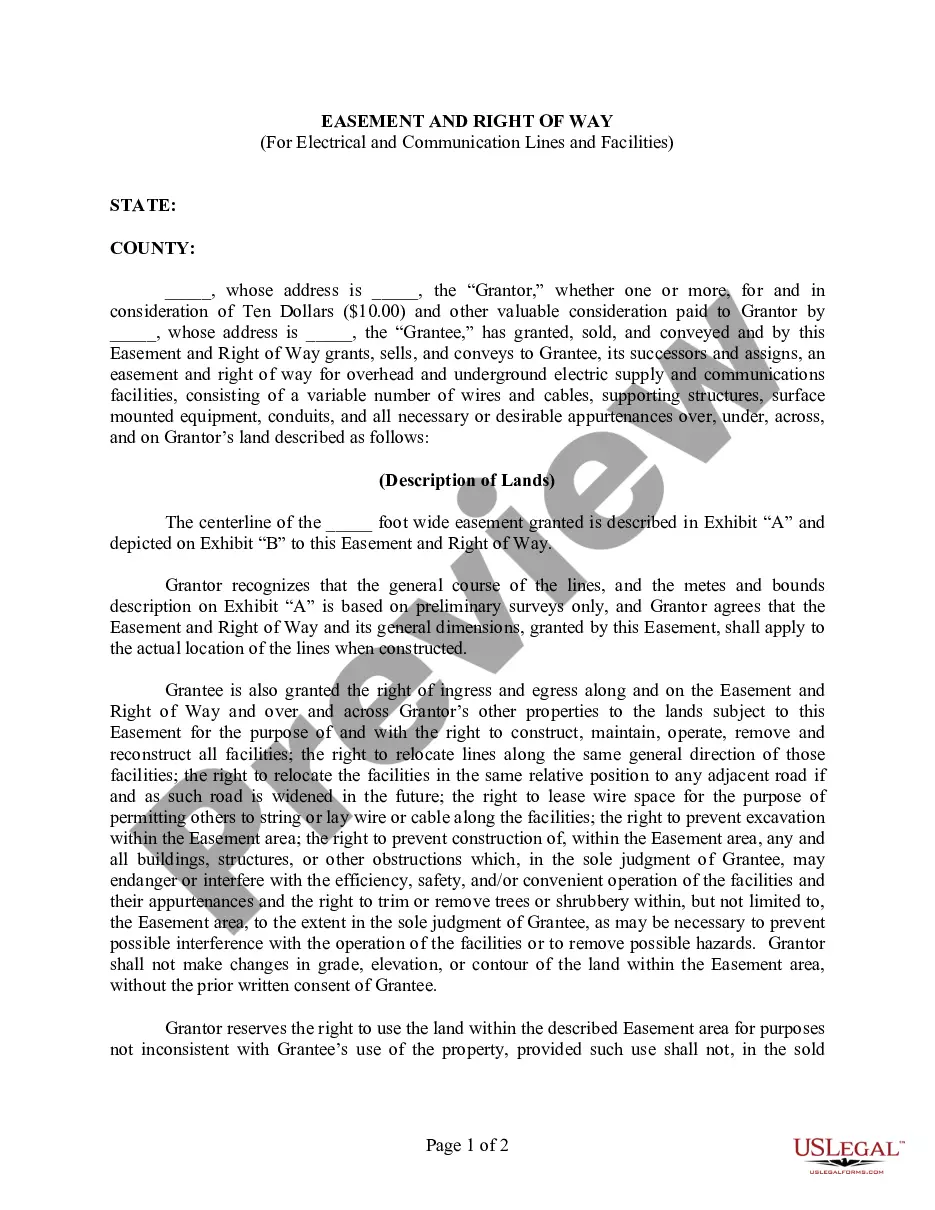
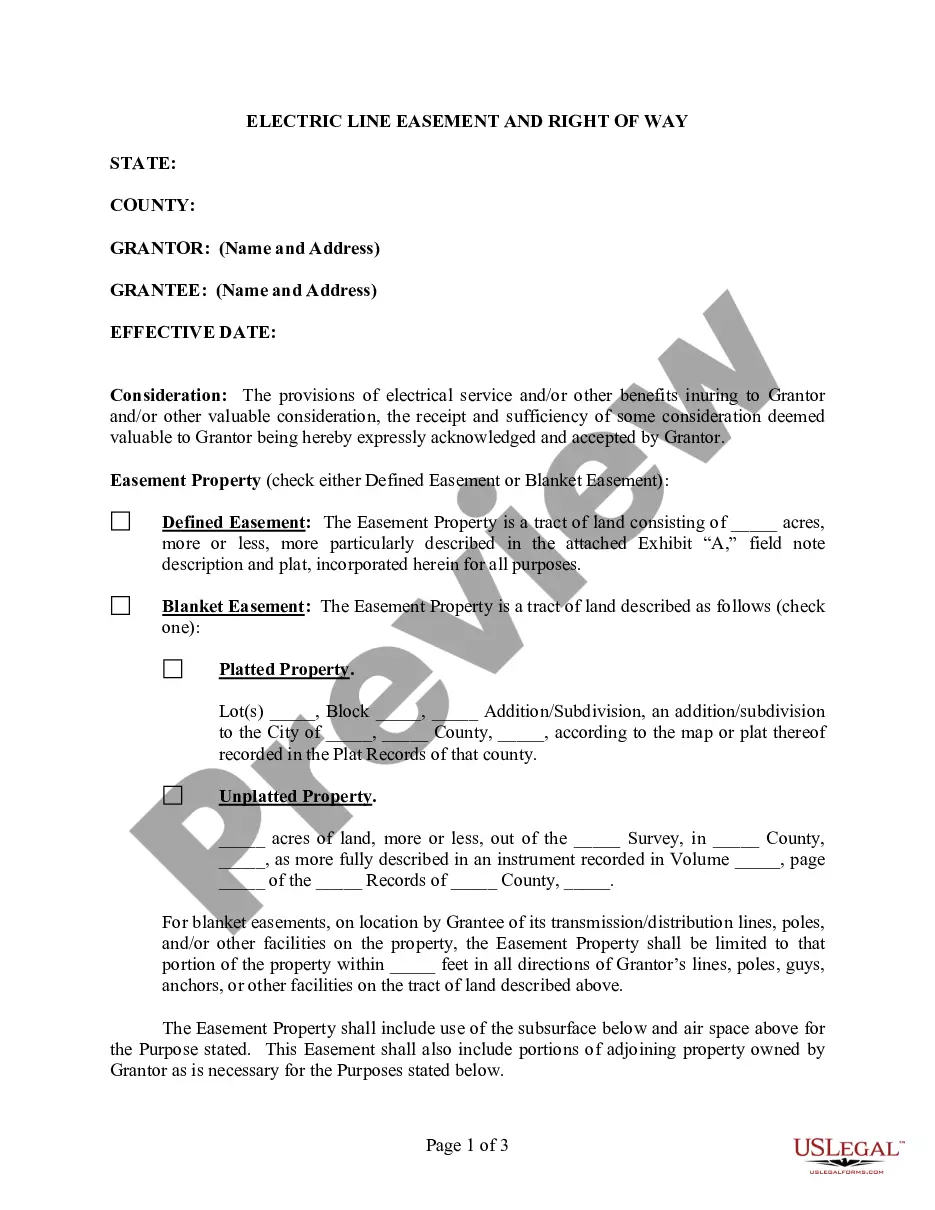
Description
Get your form ready online
Our built-in tools help you complete, sign, share, and store your documents in one place.
Make edits, fill in missing information, and update formatting in US Legal Forms—just like you would in MS Word.
Download a copy, print it, send it by email, or mail it via USPS—whatever works best for your next step.
Sign and collect signatures with our SignNow integration. Send to multiple recipients, set reminders, and more. Go Premium to unlock E-Sign.
If this form requires notarization, complete it online through a secure video call—no need to meet a notary in person or wait for an appointment.
We protect your documents and personal data by following strict security and privacy standards.
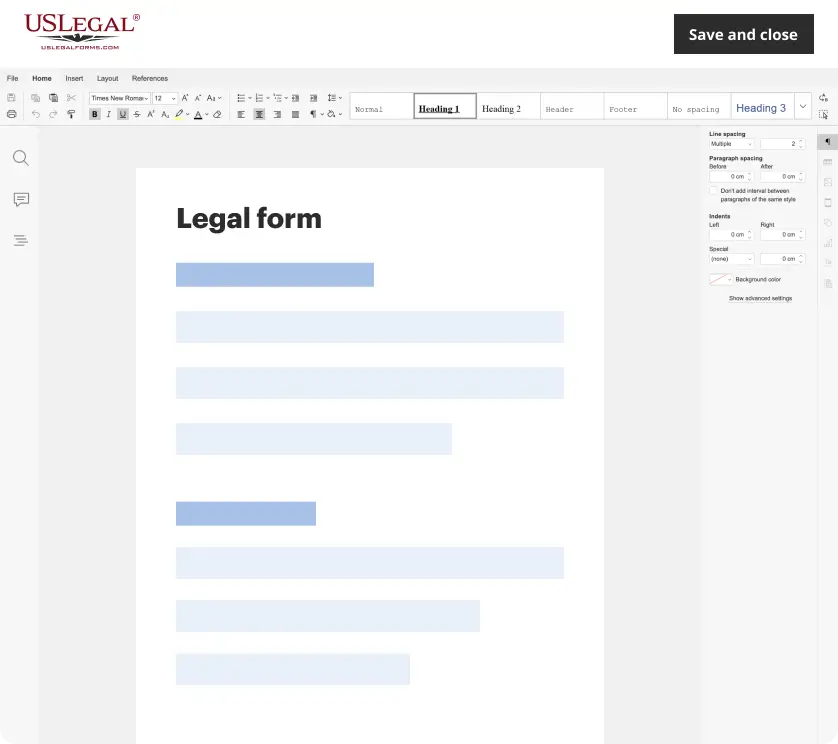
Make edits, fill in missing information, and update formatting in US Legal Forms—just like you would in MS Word.
Download a copy, print it, send it by email, or mail it via USPS—whatever works best for your next step.
Sign and collect signatures with our SignNow integration. Send to multiple recipients, set reminders, and more. Go Premium to unlock E-Sign.

If this form requires notarization, complete it online through a secure video call—no need to meet a notary in person or wait for an appointment.
We protect your documents and personal data by following strict security and privacy standards.
Looking for another form?
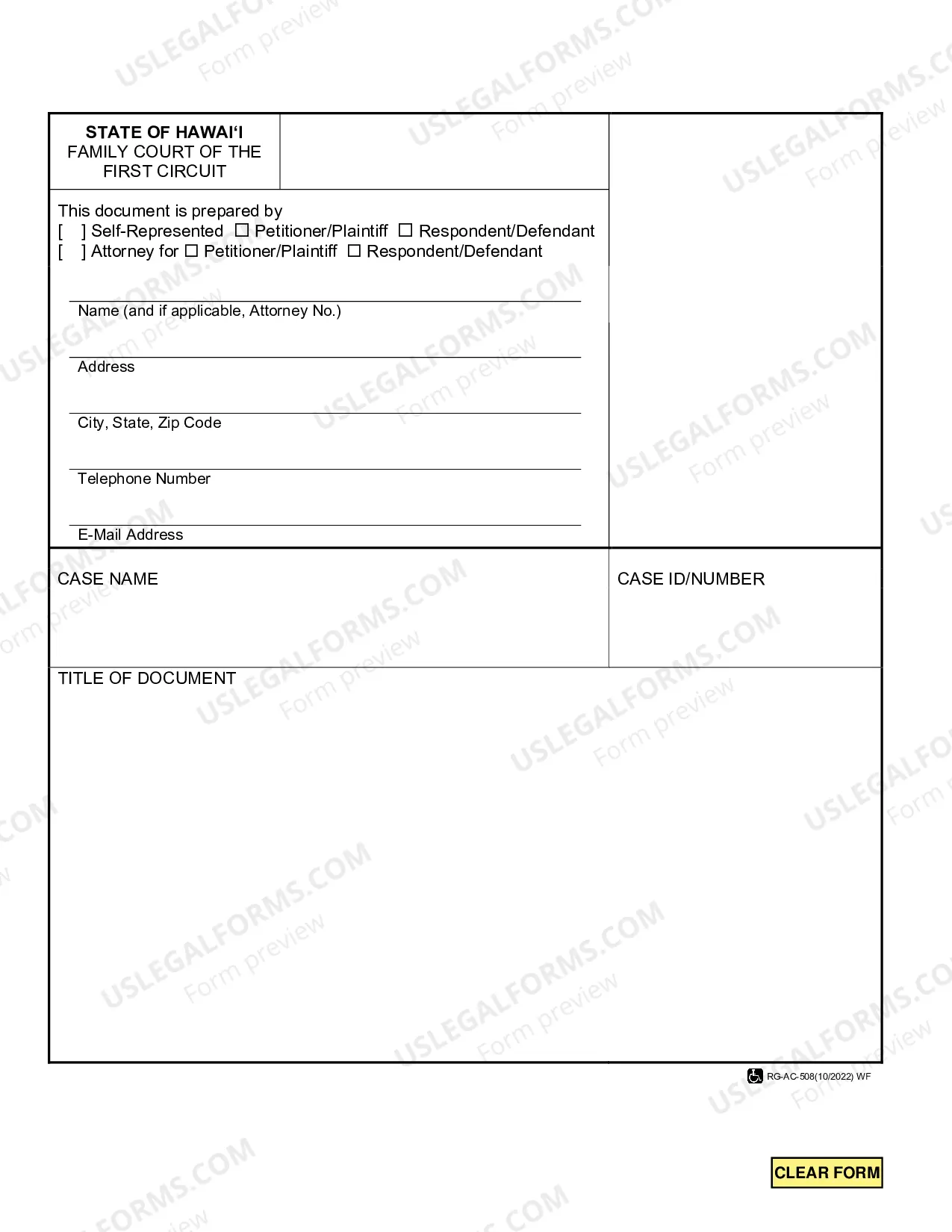

How to fill out Right Of Way (For Electrical Lines)?
If you have to total, down load, or print out lawful document themes, use US Legal Forms, the greatest selection of lawful forms, which can be found on the Internet. Utilize the site`s simple and easy practical research to get the papers you will need. Numerous themes for business and person reasons are sorted by categories and claims, or key phrases. Use US Legal Forms to get the South Dakota Right of Way (For Electrical Lines) in just a handful of click throughs.
In case you are currently a US Legal Forms client, log in for your accounts and then click the Download option to have the South Dakota Right of Way (For Electrical Lines). You can even entry forms you earlier delivered electronically from the My Forms tab of your own accounts.
If you work with US Legal Forms the first time, follow the instructions under:
- Step 1. Be sure you have selected the shape to the right town/land.
- Step 2. Make use of the Review option to examine the form`s information. Don`t overlook to read the description.
- Step 3. In case you are not satisfied using the kind, take advantage of the Lookup field on top of the display to get other variations of the lawful kind format.
- Step 4. When you have located the shape you will need, click the Acquire now option. Pick the pricing program you favor and put your qualifications to register on an accounts.
- Step 5. Process the transaction. You can use your Мisa or Ьastercard or PayPal accounts to accomplish the transaction.
- Step 6. Choose the file format of the lawful kind and down load it on the gadget.
- Step 7. Total, edit and print out or indicator the South Dakota Right of Way (For Electrical Lines).
Every lawful document format you purchase is your own forever. You have acces to every kind you delivered electronically within your acccount. Select the My Forms segment and decide on a kind to print out or down load again.
Compete and down load, and print out the South Dakota Right of Way (For Electrical Lines) with US Legal Forms. There are thousands of skilled and condition-certain forms you can utilize for the business or person demands.
Form popularity
FAQ
An easement is a permanent right authorizin-g a person or party to use the land or property of another for a particular purpose. In this case, a utility acquires certain rights to build and maintain a transmission line.
Even though property owners aren't allowed to block any easements, they might try to do it anyway. These situations can be quite frustrating, especially if the easement allows access to your residential property.
Statutory section line highways in South Dakota are sixty-six feet wide, thirty-three feet on each side of the section line. S.D.C.L. § 31-18-2 (1984). Thus the overall width of the highway is equal to one "chain," defined as a lineal land measure of sixty-six feet.
South Dakota's Move Over law requires travelers to move over and/or slow down when a stopped vehicle is in use of amber, yellow, or blue warning lights. A violation of this law is a Class 2 misdemeanor, which is punishable by a minimum fine of $270.00 and/or 30 days in jail.
A signal of intention to turn right or left when required shall be given continuously during not less than the last one hundred feet traveled by the vehicle before turning. A violation of this section is a Class 2 misdemeanor. Source: SL 1970, ch 175, § 21, § 2; SL 1989, ch 255, § 156.
The owner of a negative easement is able to prevent the owner or possessor of the property from using the land in a manner that is described by the terms of the easement. In other words, an easement is a right to use another person's land for a limited purpose or to prevent the use of that land for a specific purpose.